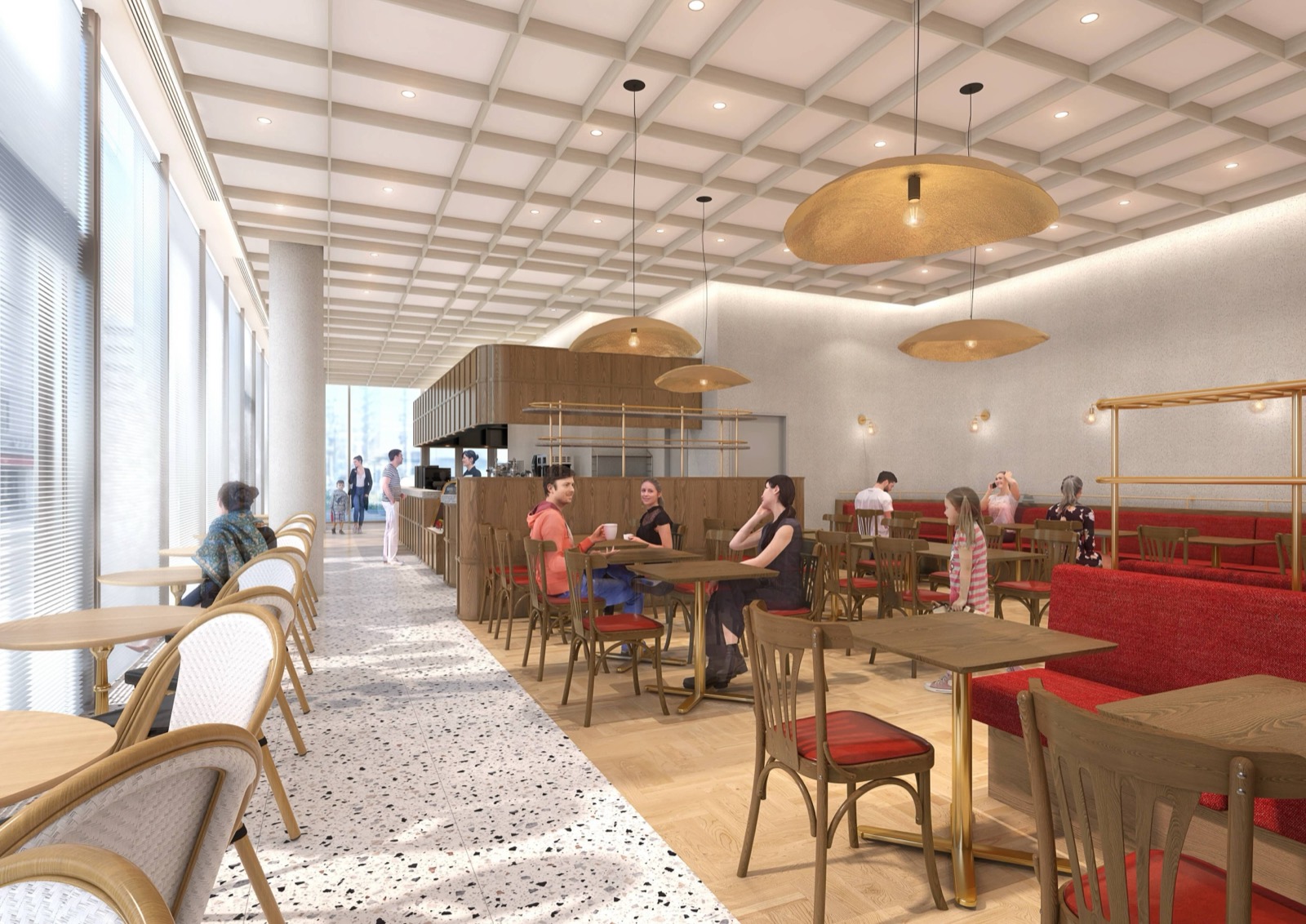
The second floor of a new complex in Ariake, Tokyo. Sixty seats across 202 square metres, and a cup of coffee runs 880 yen. At midday the kitchen sends out quiche; in the evening, duck confit. A specialty coffee roaster founded in 1990 has started serving dinner for the first time in thirty six years. Coffee alone could not fill those sixty seats.
1.HORIGUCHI COFFEE à la table opened on 12 June on the second floor of Tokyo Dream Park, in Ariake 3-chome, Koto ward. It is run by Horiguchi Coffee, a specialty roaster that began in Setagaya in 1990. Sixty seats in 202 square metres. The company describes it as its seventh directly operated store in Japan. The doors opened in June, but lunch service began only on 2 July and dinner on 14 July.
2.Line up the prices and the character of the place appears. Specialty coffee is 880 yen, espresso 550 to 605. Nothing there strays far from the Tokyo specialty average. Alongside sit lunch from 1,980 yen, à la carte plates from 660 to 3,960 yen after two in the afternoon, and wine by the glass from 770. The coffee price stays where it was, and a dining table is set on top of it. Service runs from noon to 8:30 in the evening, last order at eight.
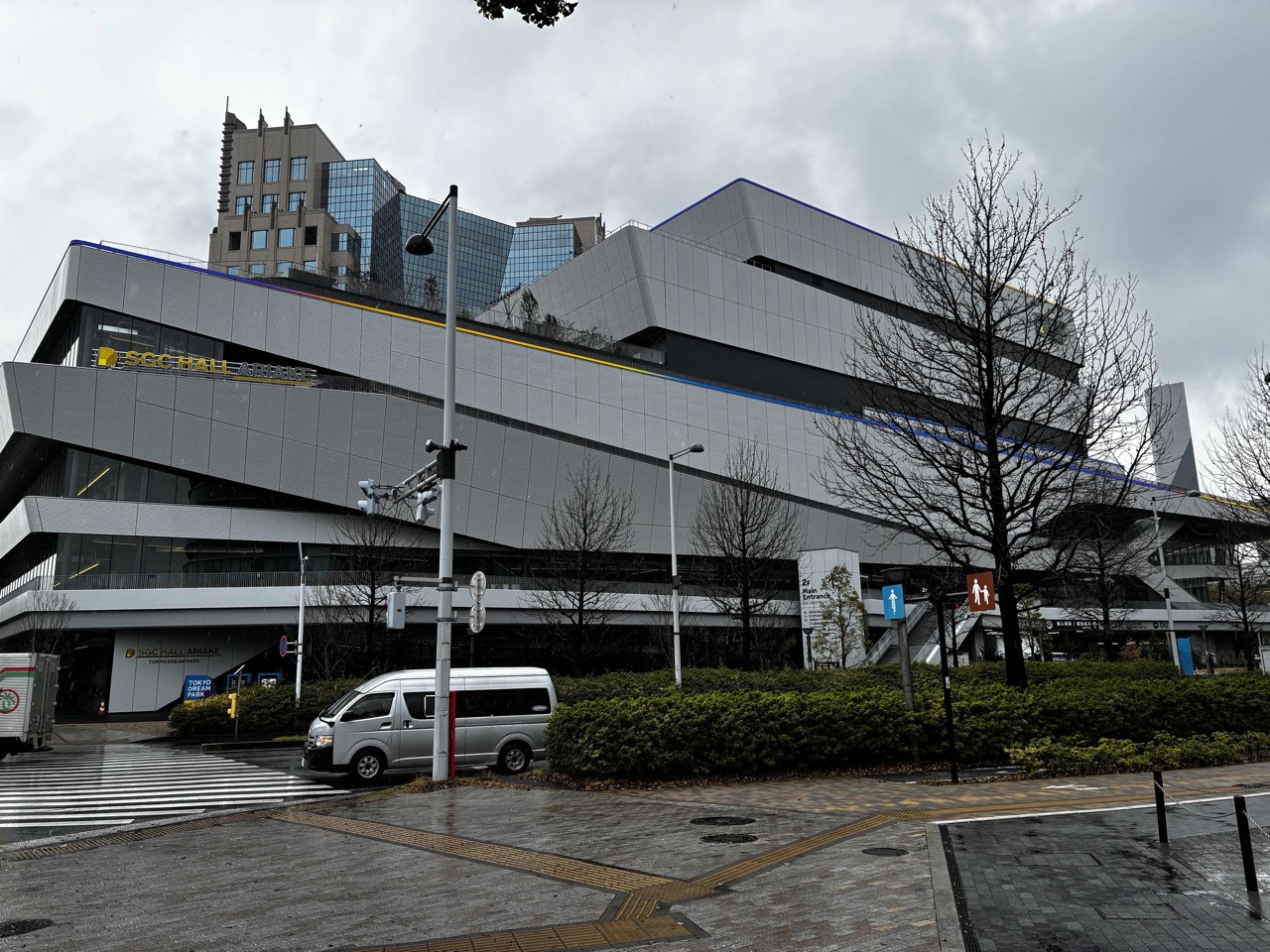
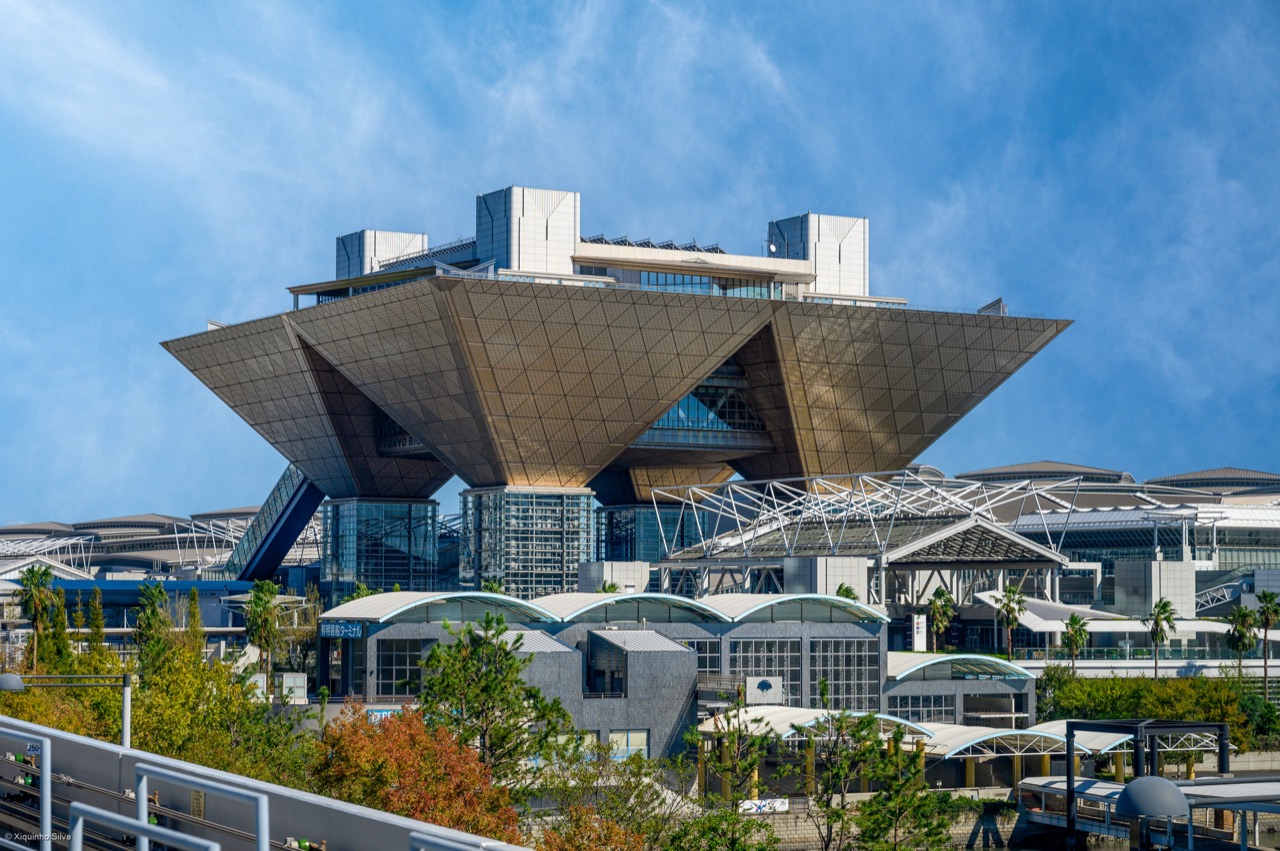
3.The building explains half of the decision. Tokyo Dream Park opened on 27 March under TV Asahi, with 46,500 square metres of floor area across eleven storeys and one basement level. Inside sit SGC Hall Ariake, a multipurpose hall with 3,767 fixed seats, and EX Theater Ariake with 1,500. Five minutes on foot from Tokyo Big Sight station on the Yurikamome line.
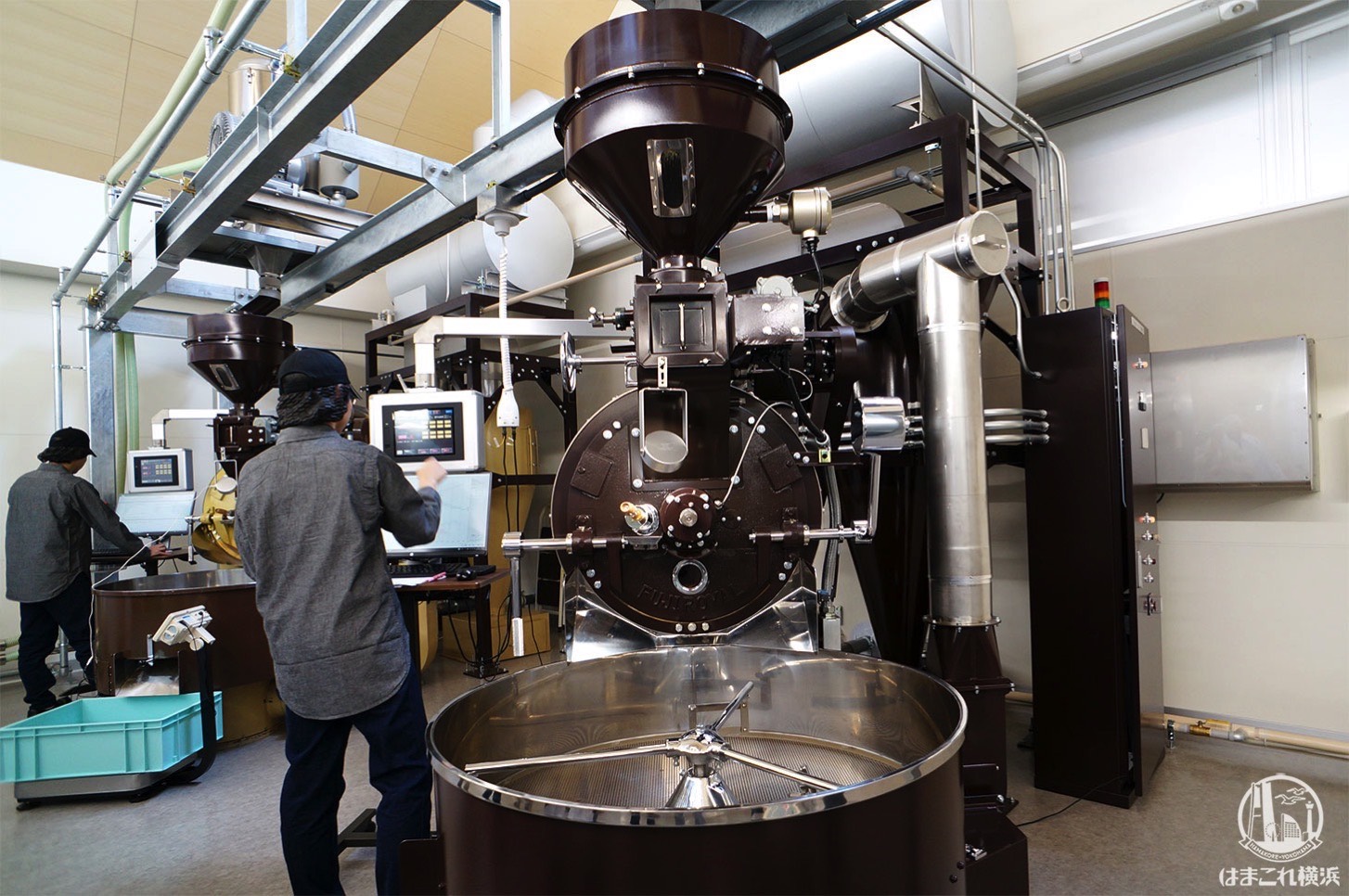
4.Akio Takatsuka drew the store. He studied at Kyoto University, then at La Villette in Paris, worked under Toyo Ito and opened his own office in 2010. This is his sixth job for Horiguchi Coffee. The Yokohama Roastery that won a Good Design Award in 2019 also came off his board, a two storey building of 499 square metres that moved the roasting plant from Setagaya to the Honmoku wharf in Yokohama, with a void cut so the production floor can be watched from above.
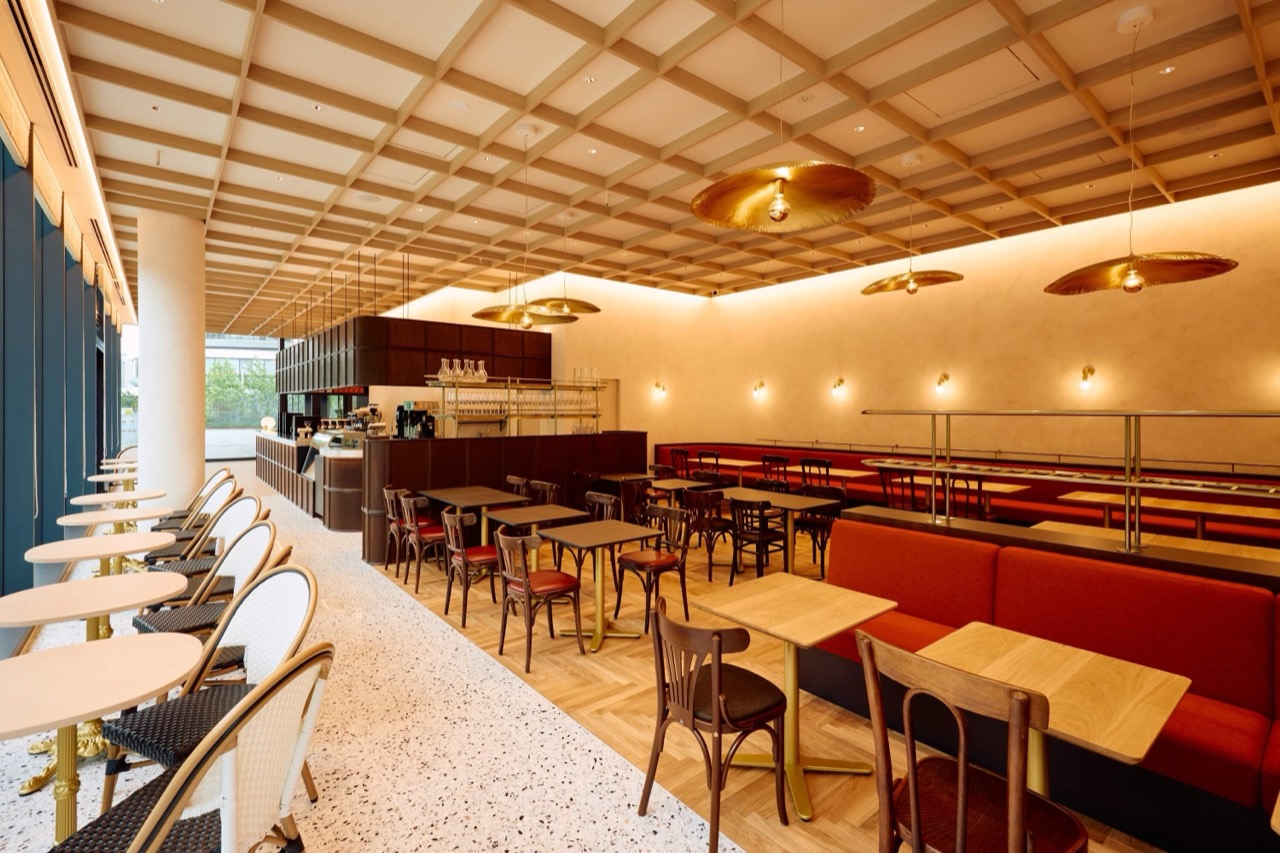
5.It starts with the walls. Plaster went onto a 3.6 metre wall with spent coffee grounds mixed in, and the built in furniture was sprayed with a material dyed using beans already pulled for espresso. The counter is hand beaten tin. Natural linoleum and recycled stone terrazzo tile on the floor, a solid timber lattice overhead. Brass for the shelves and pendants, recycled polyester on the sofas.
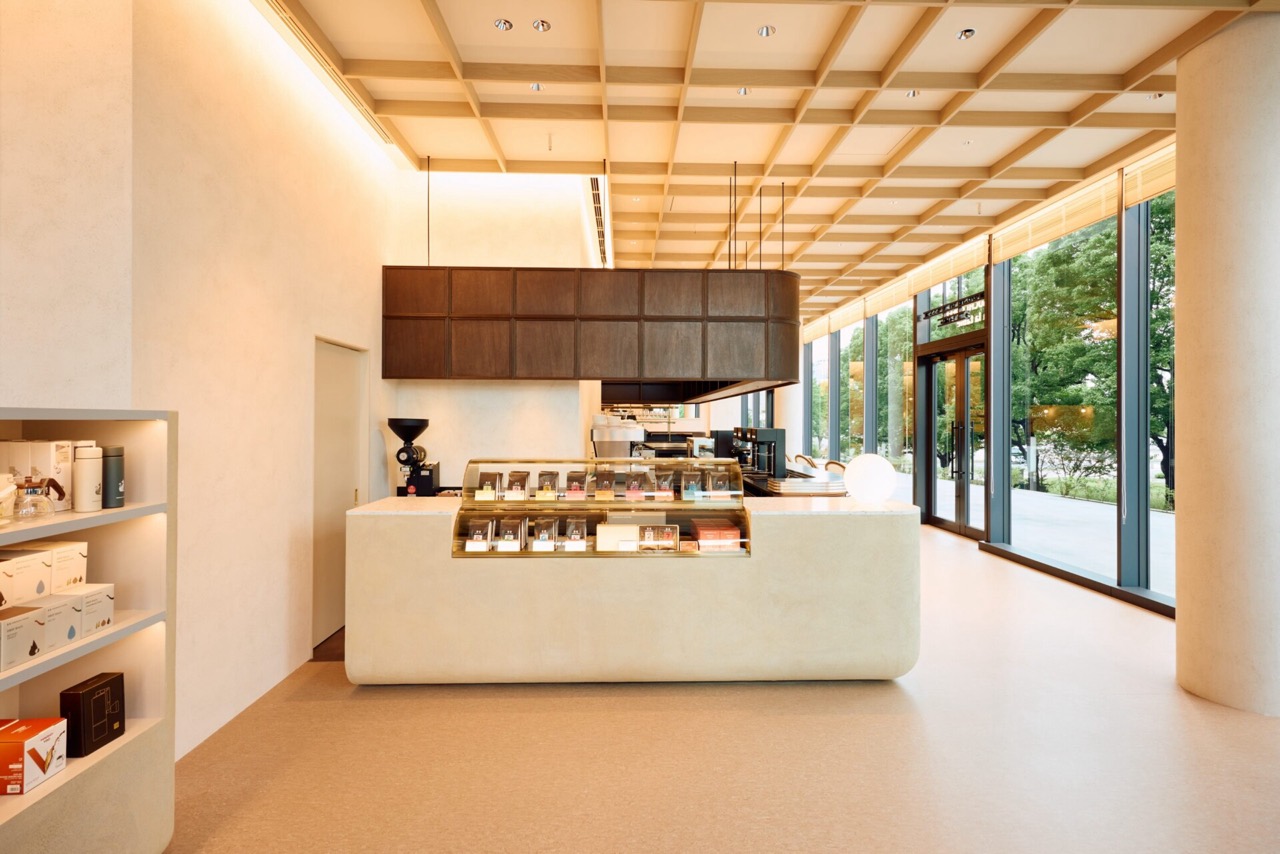
6.Plaster carrying coffee grounds eats the light. The wall reads white but throws nothing back, so shade lingers even at midday, and up close you can see brown grit sitting in the surface. What guests drank and left behind has come back as a wall. This is not a finish chosen for taste. Routing the disposal cost of the grounds into interior material cuts waste, and the story explains itself inside the room.
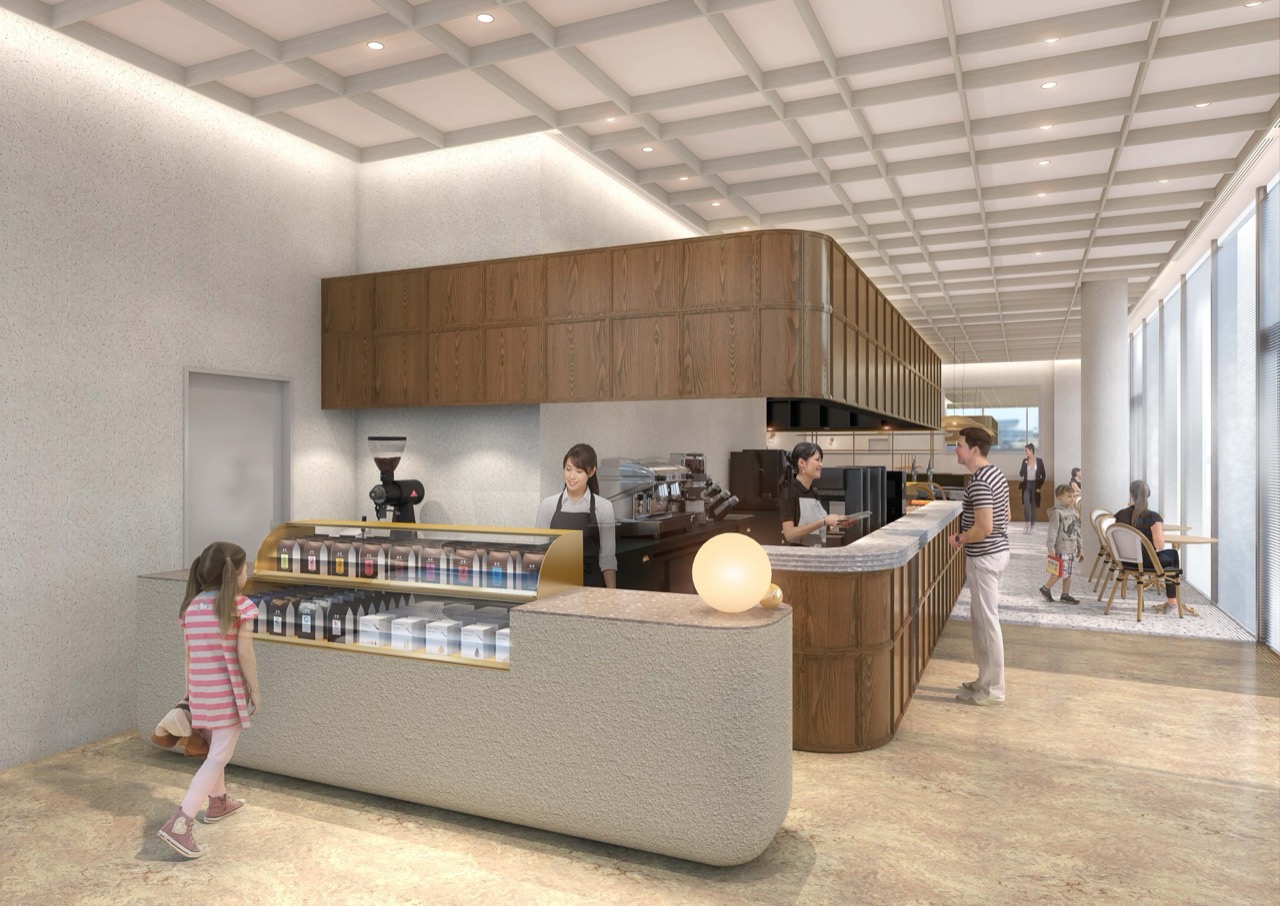
7.The coffee rests on nine CLASSIC blends. Number one, BRIGHT & CITRUSY, stands on the acid side, while number seven, BITTERSWEET & FULL-BODIED, carries the bitterness and sweetness of a dark roast. A drip bag called ARIAKE, sold only here, runs 1,620 yen for six, and the company calls it a bright dark roast with clean bitterness and full sweetness. A darker cup pushes its sweetness forward as it cools, and next to food that is the cup that lasts. A lighter roast gets erased by a mouth that sauce and fat have just passed through.
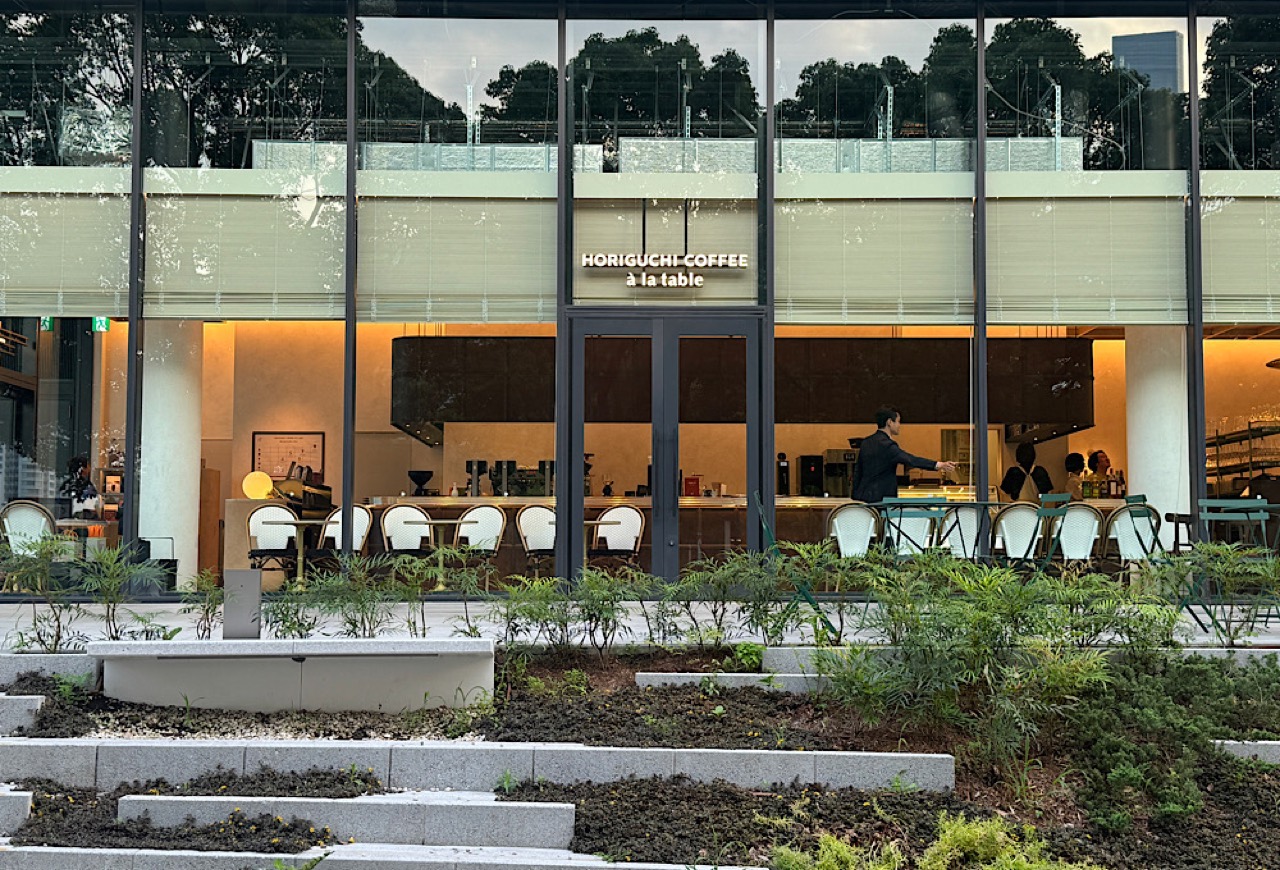
8.The number that catches the eye on the plan is area per seat. Sixty seats in 202 square metres gives each one 3.4 square metres. Cafes are usually laid out at 1.5 to 2.0 square metres a seat, and at that density this floor would hold well over a hundred. Forty seats given up from the start. This is a restaurant plan, not a cafe plan.
9.What does coffee alone produce here? Turn an 880 yen cup three times a day with half the seats filled and monthly revenue stops at 2.06 million yen. That is roughly 320,000 won per pyeong, the 3.3 square metre unit Korean operators price by. On the second floor of a Tokyo commercial complex, the figure does not cover rent and labour.
10.Set a table on top and the order of magnitude changes. Lunch with coffee comes to 2,860 yen a head, and an evening plate with a glass of wine lands in the 5,000s. The same sixty seats then produce something in the range of 11 million yen a month. That works out to 1.74 million won per pyeong, more than five times the coffee only case. Sixty seats is too wide to sell coffee and about right to sell meals.
11.Five times the revenue is not five times the profit. The beans in an 880 yen coffee cost 60 to 90 yen, under ten percent. A French plate puts ingredients alone near thirty percent, and adds someone to cook and someone to wash. Coffee arrives in thirty seconds, while duck confit sits in 85 degree fat for three or four hours. The trade multiplies revenue by five while tripling the cost ratio and nearly doubling the staff.
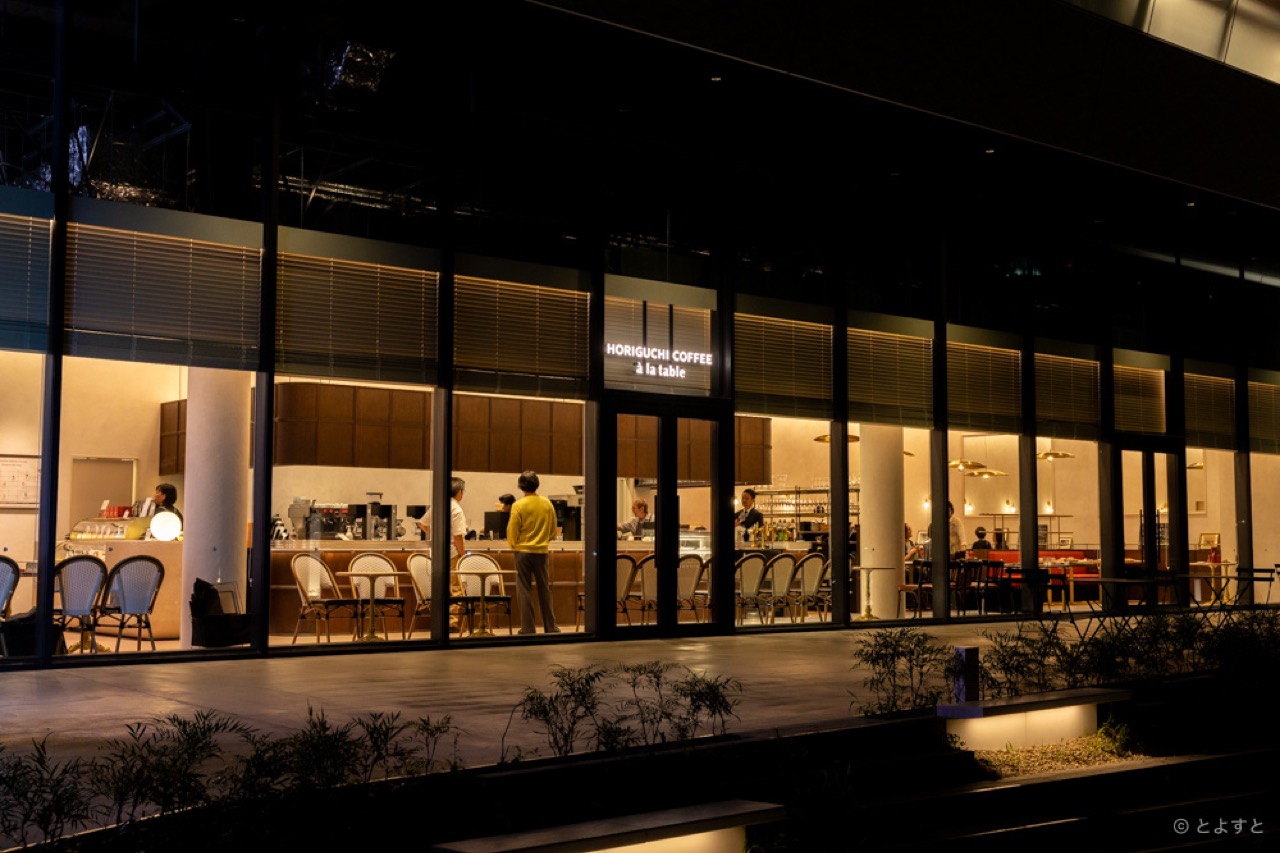
12.So who fills these seats during the day? On a night when the 3,767 seat hall has a show, this floor crowds on its own, but Ariake without a show is a quiet stretch of landfill. Lunch is the trade that covers that gap. People off the exhibition floor, residents of the towers behind, broadcast staff, all arriving without a ticket. Japanese commercial complexes often set rent as a share of sales, which spreads that swing between tenant and landlord.
13.Stores are not the body of this company. From the Setagaya days it ran a cafe, a retail counter and a wholesale desk at once, and in 2002 it set up a separate research arm to study how cultivation and processing attach to flavour. The seven stores are a window for selling beans. That is why the house only drip bag goes out at 1,620 yen for six. At 270 yen a bag, a third of the price of a cup in the room, and whoever tears one open at home buys a 200 gram bag next.
14.Kissaten sold food to begin with. Napolitan, morning sets and curry sat beside the coffee, and the coffee accompanied that table. The specialty wave of the 2000s stripped the food away and left the cup, putting a counter that explains origin and processing in its place. What this store did was not invent a format but reattach what had been stripped. The direction is reversed. Where food used to bring the coffee along, this time coffee brought the food.
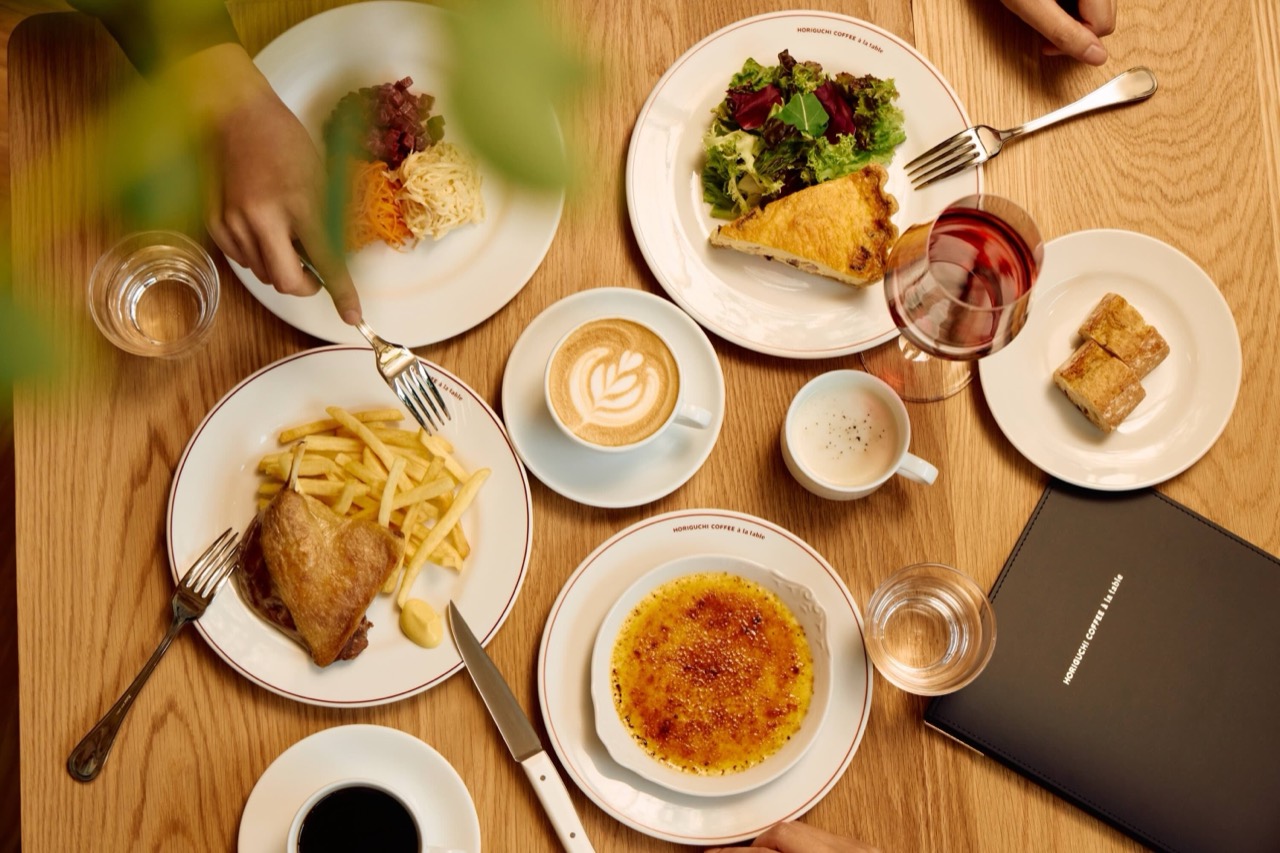
15.A Tokyo specialty roaster of thirty six years took 202 square metres on the second floor of a concert hall building, set out sixty seats, left coffee at 880 yen and began selling quiche at noon and duck confit at night. Revenue that would have stopped near 320,000 won per pyeong on coffee alone moves toward 1.74 million once the table is added. In Korea the first block is exhaust. A kitchen on a leased second floor means running ductwork to the roof with consent from the landlord and the tenants above, and the moment a cafe registered as a beverage business crosses into a full food service licence, septic capacity and kitchen area are reviewed from scratch. Deciding to put food beside coffee costs less than turning that decision into a drawing.