On 20 March a cafe opened in the lobby of a new office tower on Sydney's lower north shore. It trades eight hours a day, weekdays only, and closes on weekends. The operator is a social enterprise, and half the profit was earmarked to leave the business before the doors opened. The floors above are still less than half occupied and office vacancy in the suburb sits at 23.7%. Yet the customers here do not come down from upstairs.
1.The address is Level 2, Vic X Tower, 155 Miller Street, North Sydney. The cafe is called The Fold and it opened on 20 March. Trading runs from 7am to 3pm on weekdays, eight hours, with Saturday and Sunday closed. The operator is the Sydney social enterprise Two Good Co.
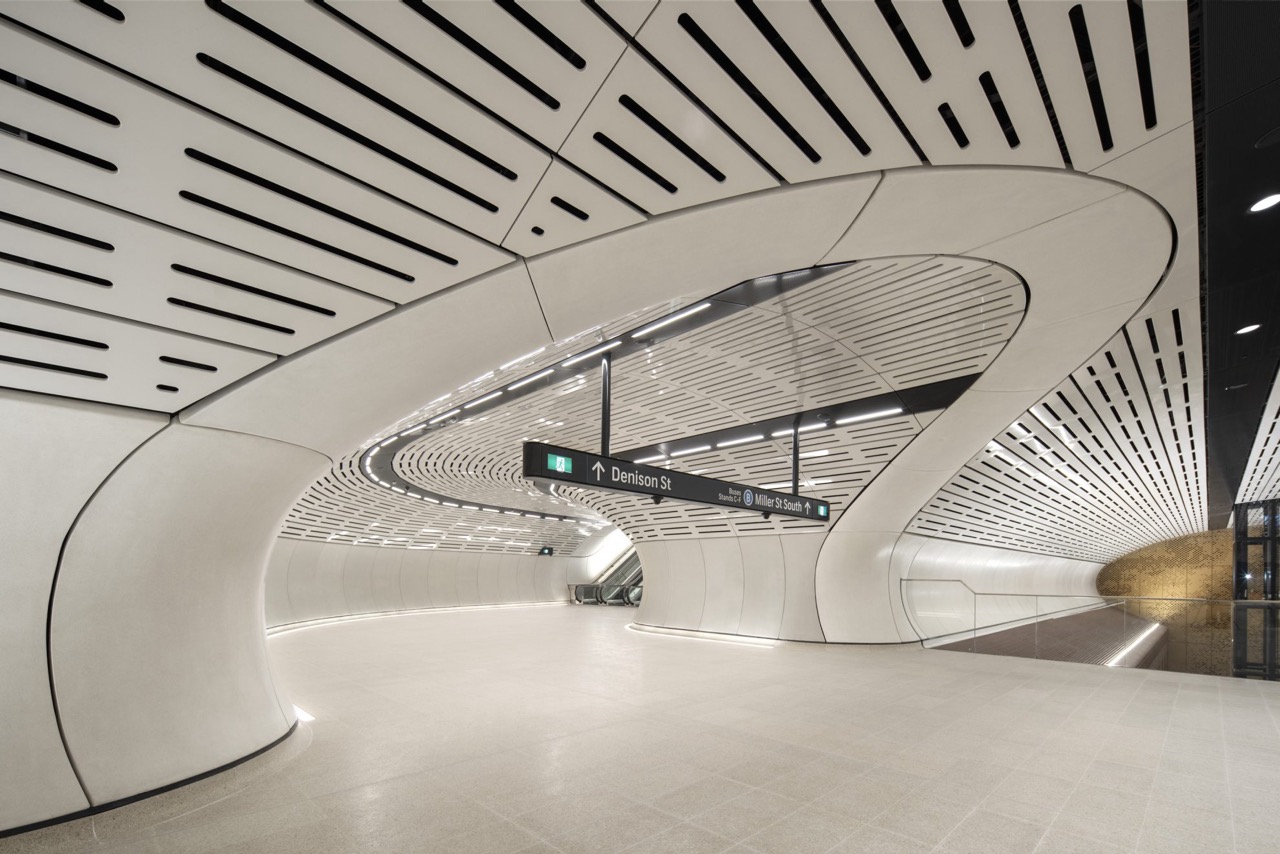
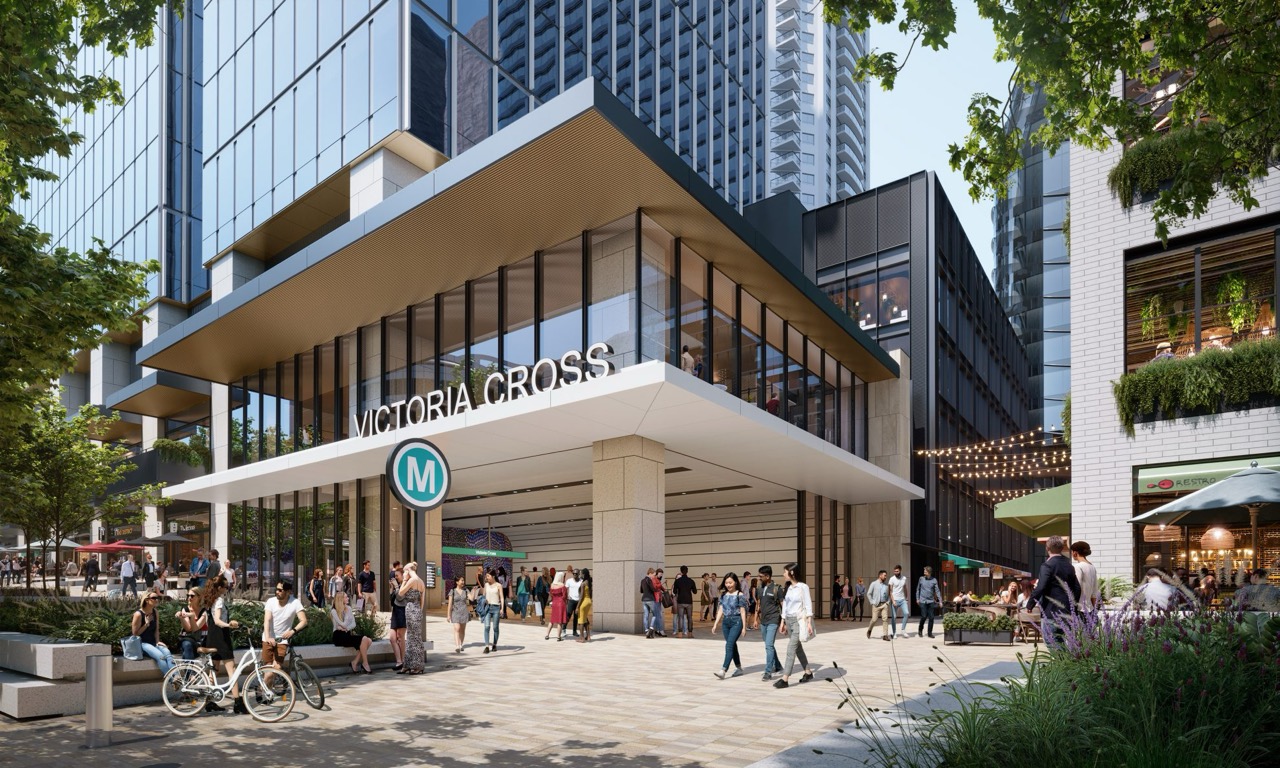
2.The building is Victoria Cross Tower: 42 levels, 55,315sqm of office net lettable area, designed by Bates Smart and delivered by Lendlease, with practical completion in the final quarter of last year. The official opening was 12 March. No gas was ever connected, and Sydney Metro's Victoria Cross station sits directly beneath.
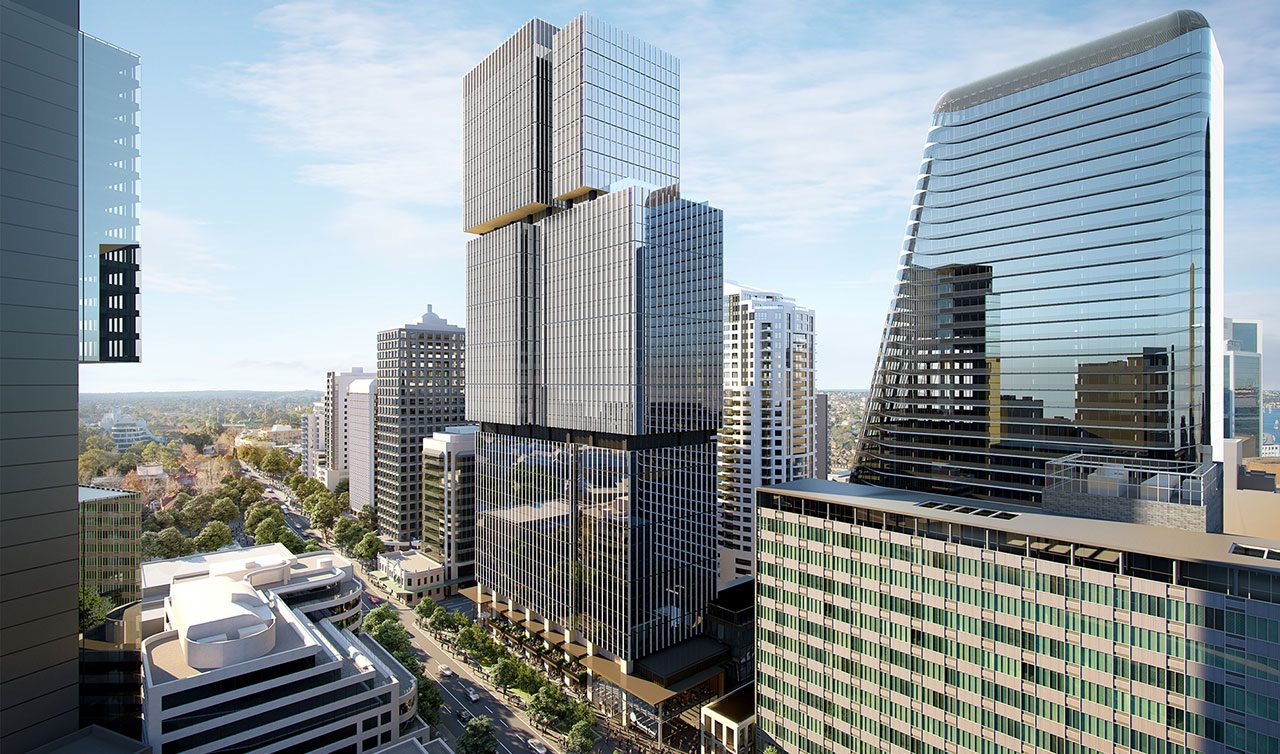
3.Upstairs is the problem. At opening, committed leases covered a little over 40% of the tower, and the largest single block of that was NBN Co across six floors and roughly 9,000sqm. North Sydney office vacancy stands at 23.7%. With nothing new under construction, the market expects no fresh office supply before 2029. For a lobby cafe, that means less than half its upstairs customers have moved in.
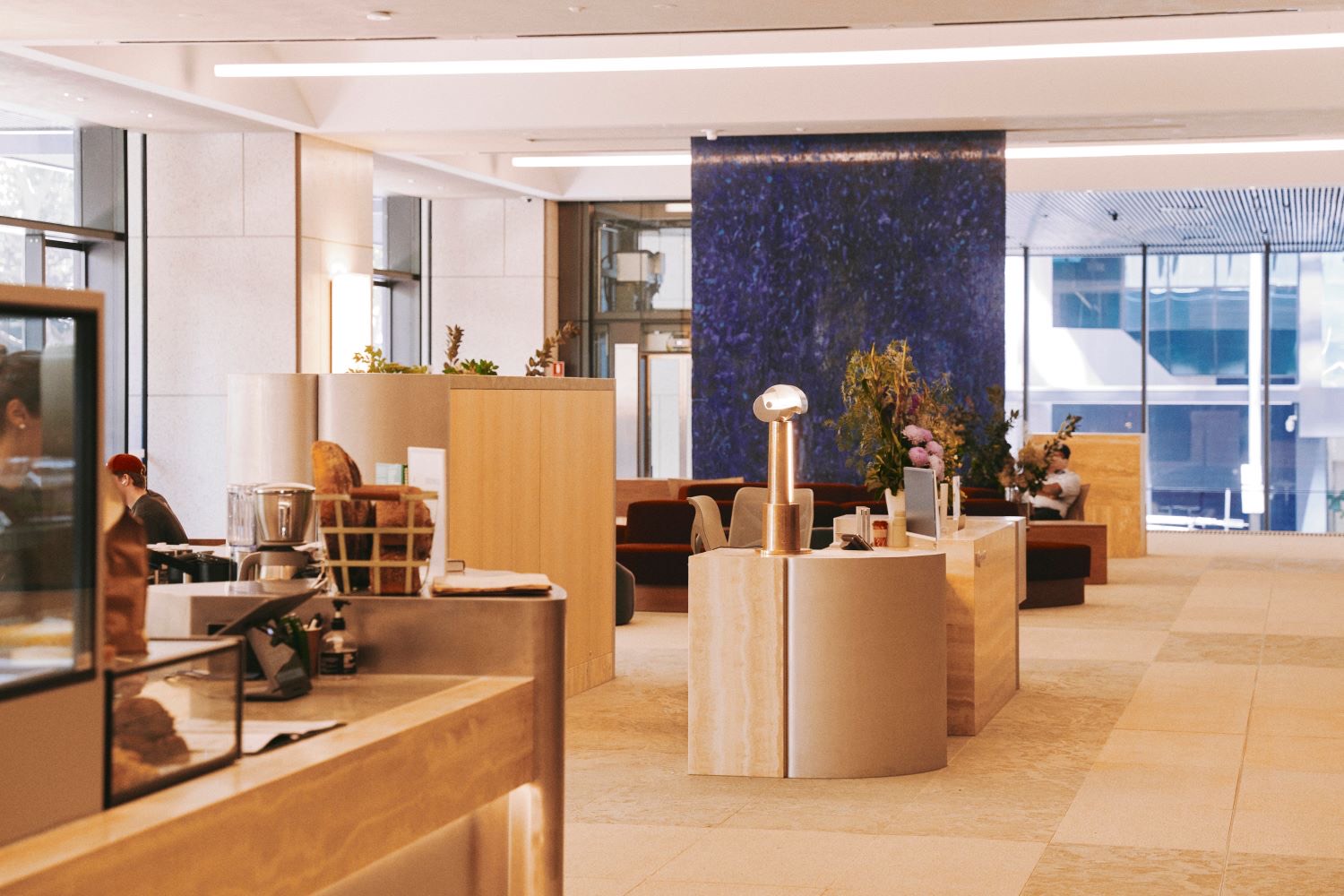
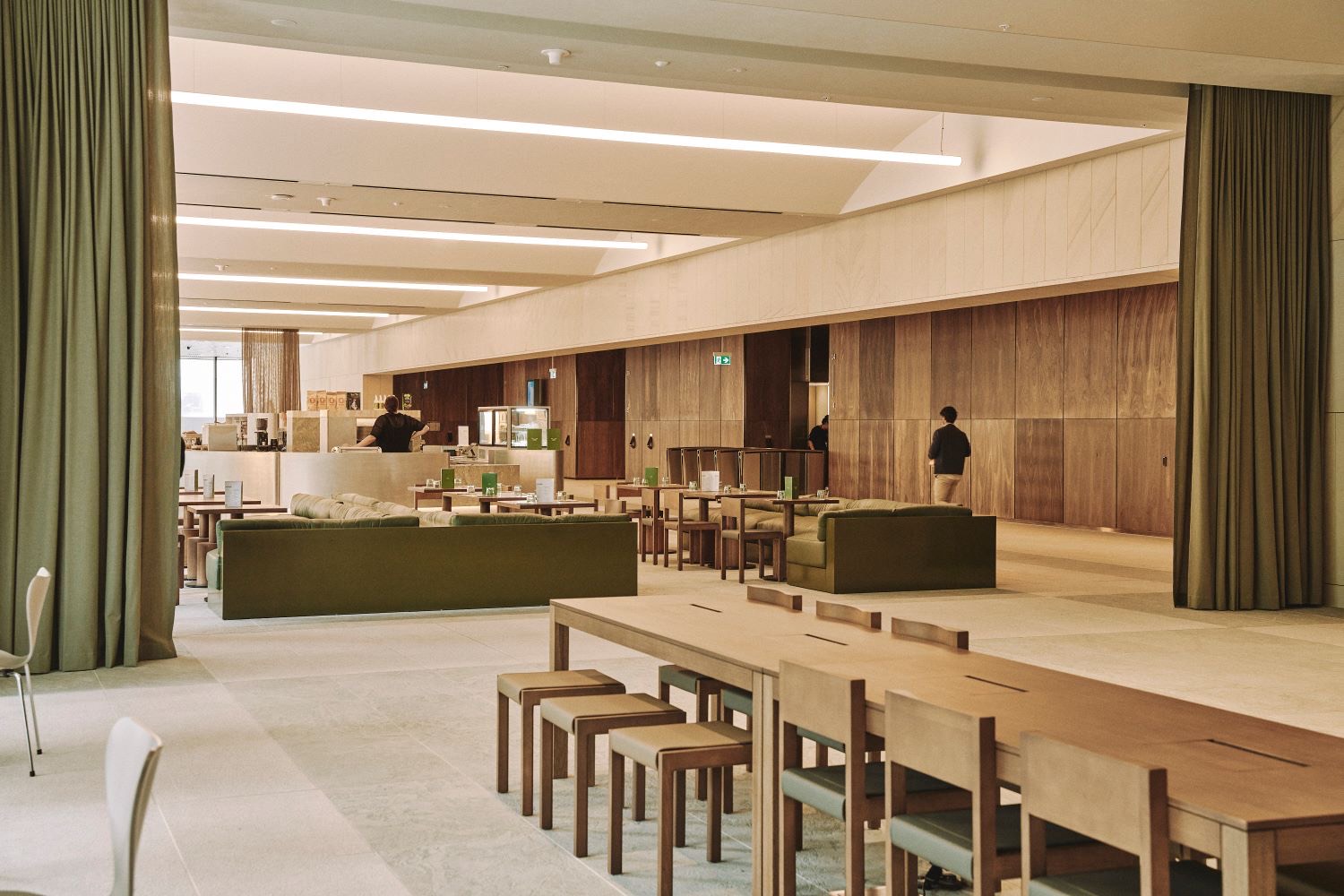
4.Interiors came from Melbourne studio Fiona Lynch Office. Developer and operator both describe the lobby by comparing it to the arrival floor of a boutique hotel. Next to the cafe sits The Landing, a single room that absorbs events, exhibitions and shared work. For the opening it holds an installation made with BVN and a photographic show by Jes Lindsay and Petrina Tinslay.
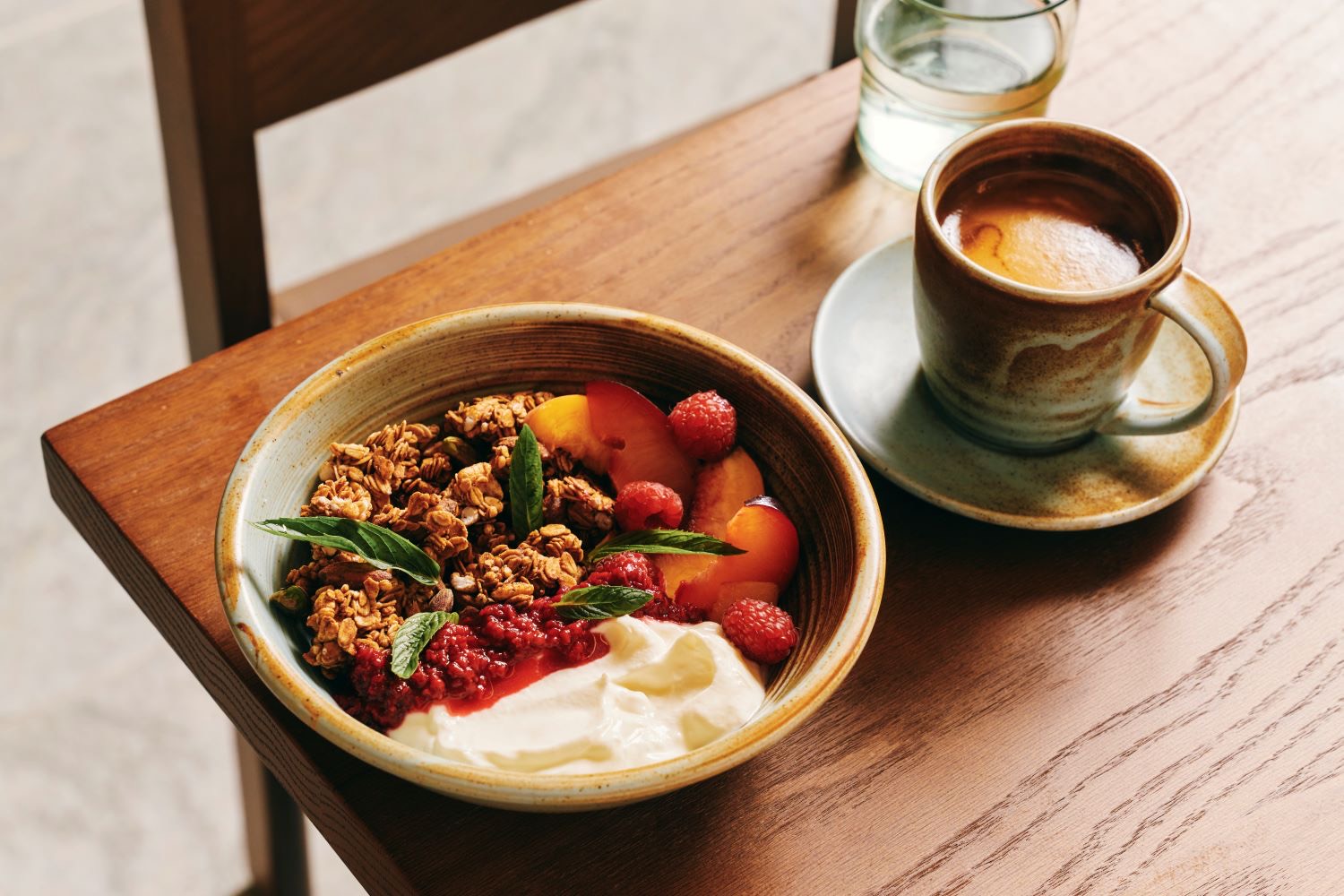
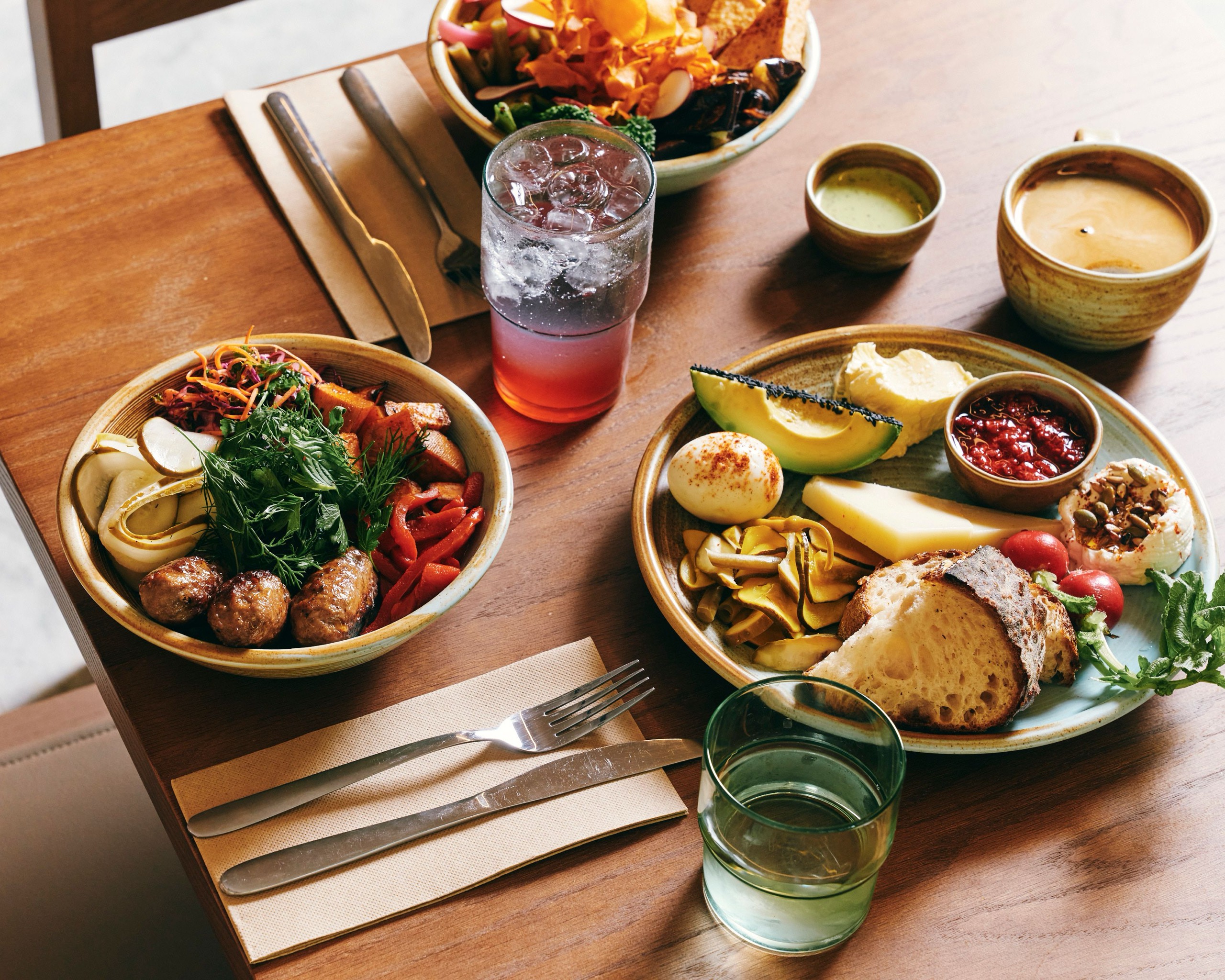
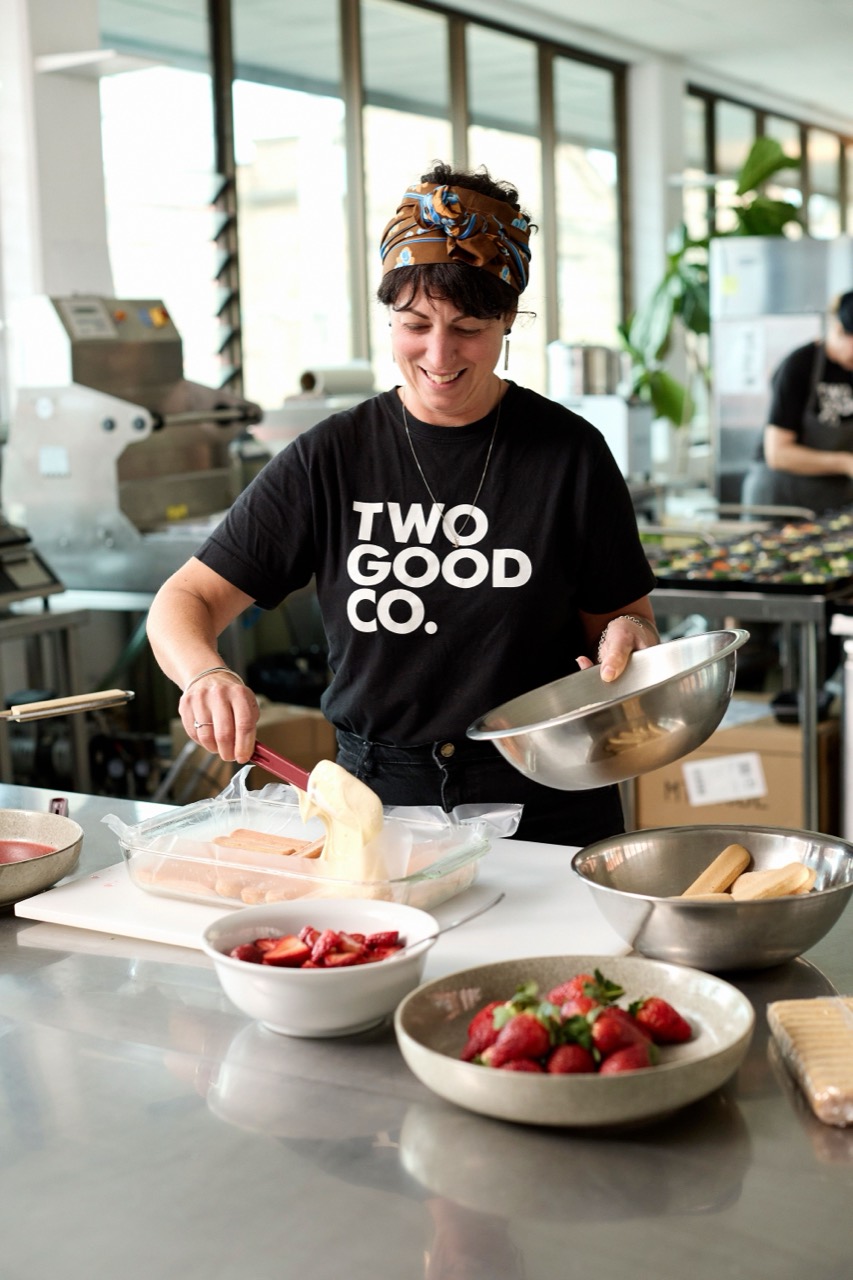
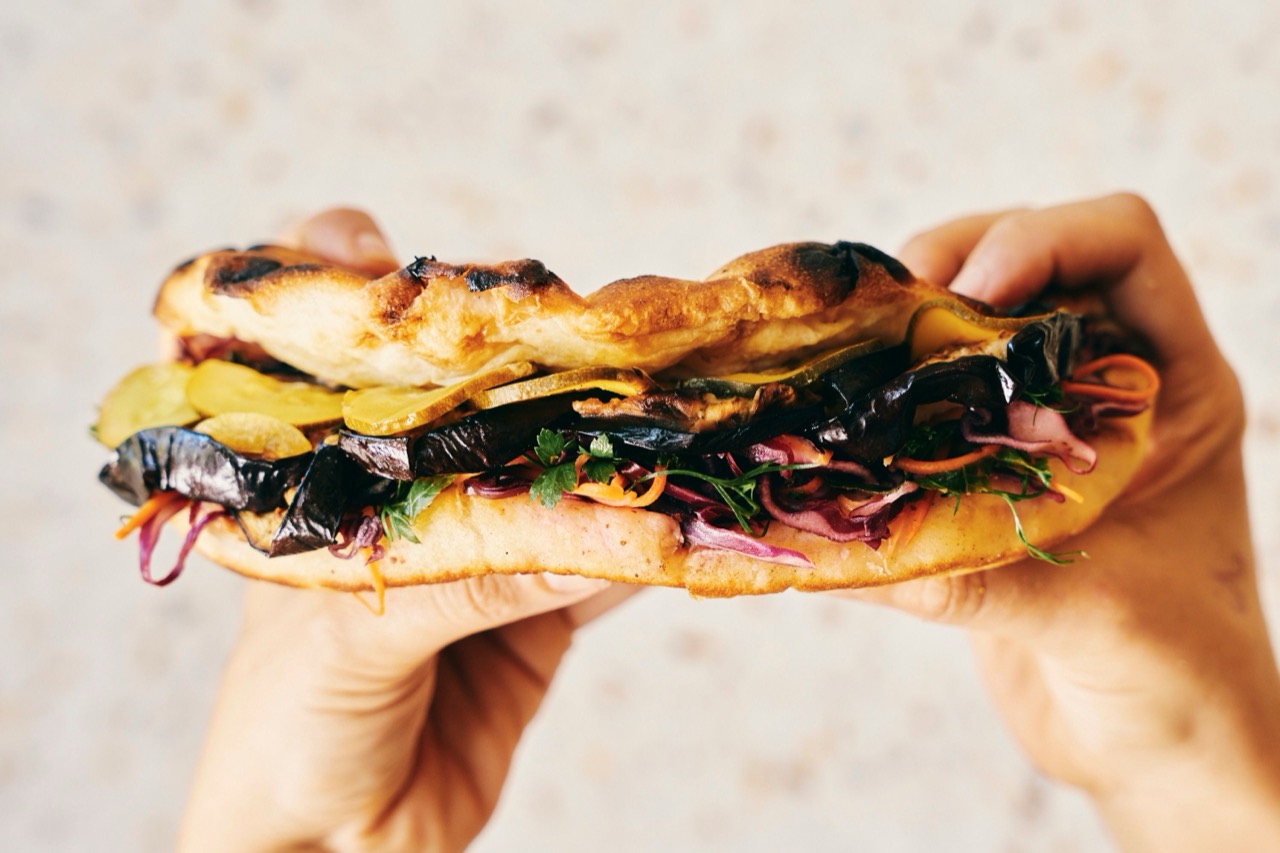
5.The kitchen is run by Ayse Moonen, who came through Aplenty and taught preserving workshops at Cornersmith Picklery. The signature is the fold, built in pita: lamb kofta with lemon sumac slaw, tahini and pickles, or charred eggplant dressed with tahini. Bread comes from Baker Bleu and is sold over the counter as it arrives. Coffee is Single O.
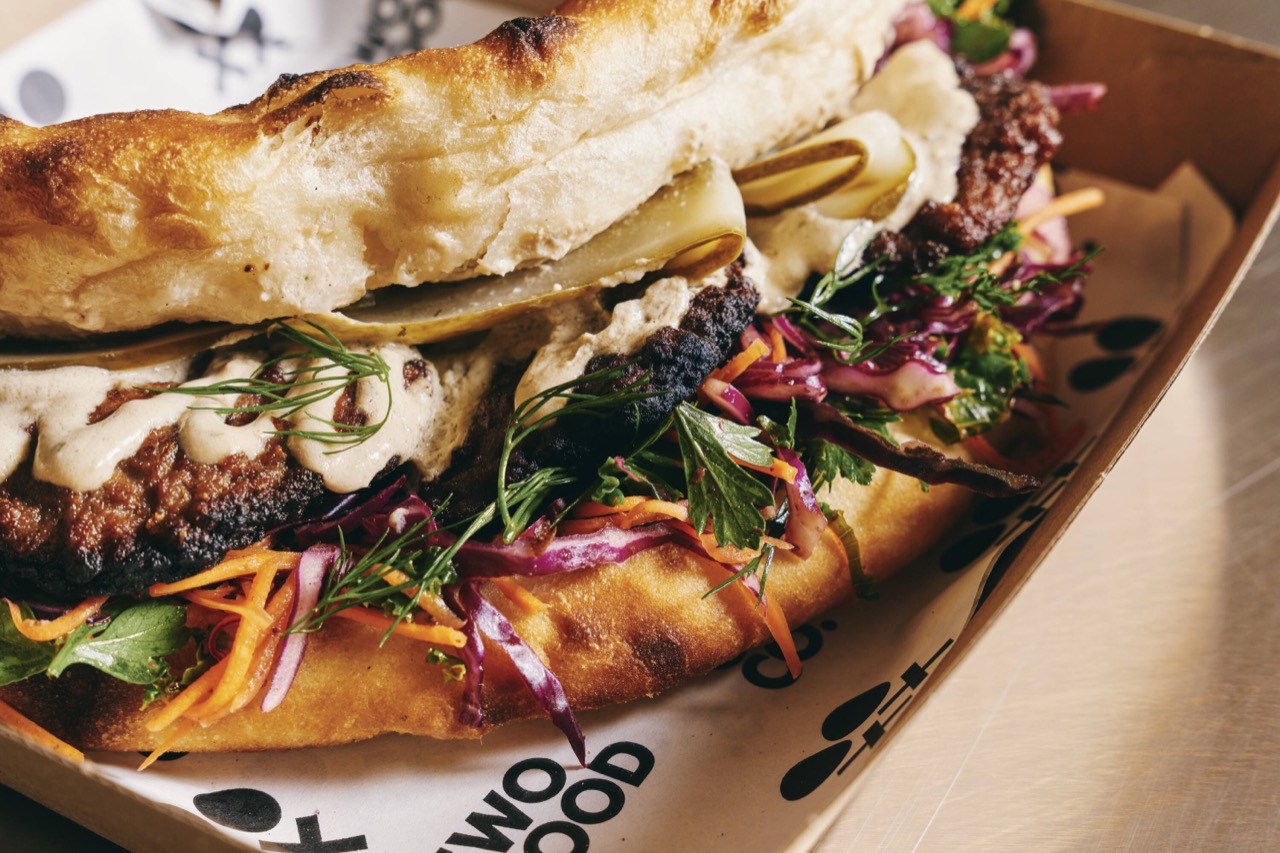
6.You can guess how this eats. Fold the pita and the inner face takes the juices and tahini first, while the outside stays dry in your hand. The sourness of sumac and the acid of the pickles sit exactly where they cut lamb fat, and the charred eggplant loosens as its sweetness rises. Food that travels in a hand rather than on a plate does not hold a seat for long. Here you can see why a shop that trades eight hours chose this format.
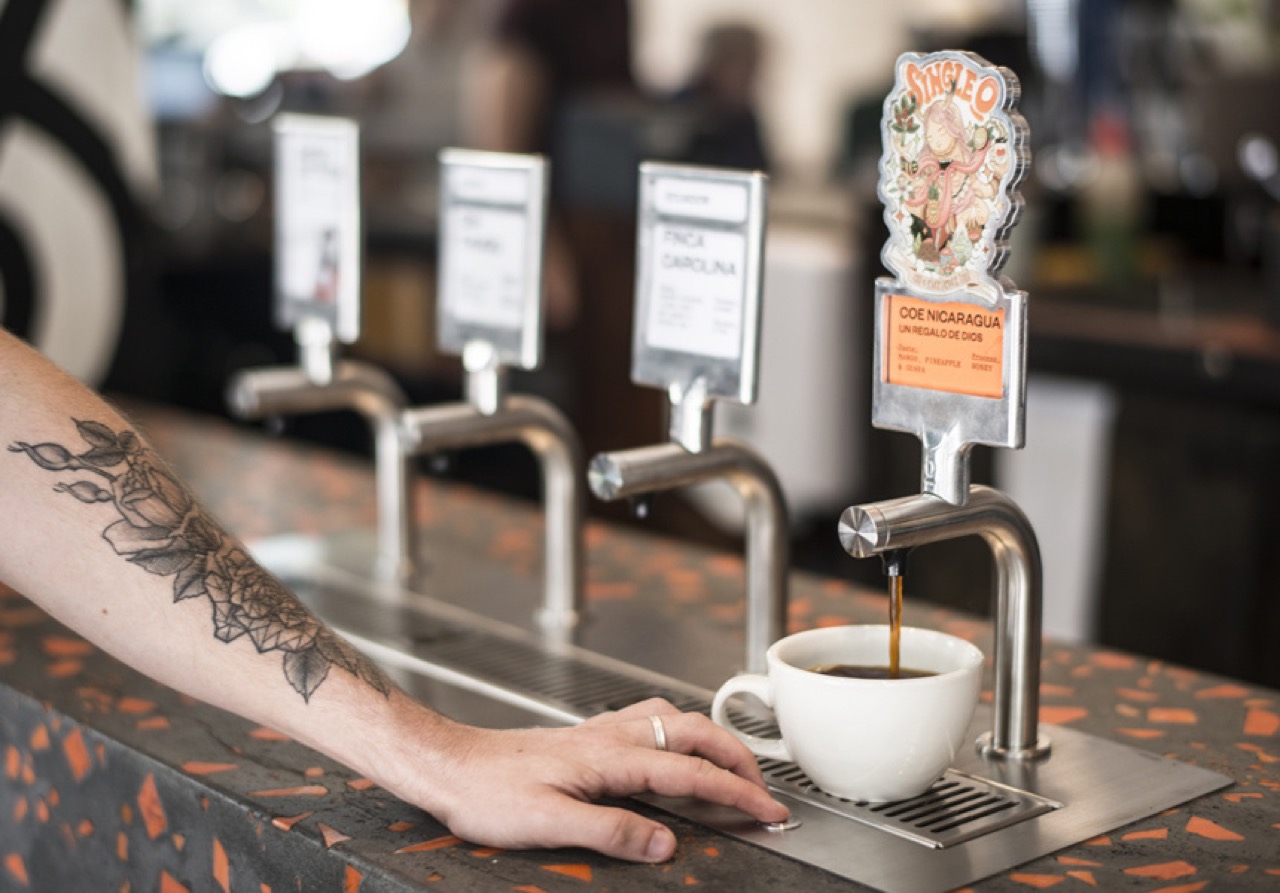
7.The coffee follows the same arithmetic. Single O has roasted in Sydney since 2003, and in 2019 it put self-serve batch brew taps into its Surry Hills shop, where a card tap and a button fill a cup in fifteen seconds. That is equipment bought to stop the morning peak queueing behind one espresso machine. For the opening the cafe listed a limited lot from ASMUCAFE, a women's producer group in El Tambo, Colombia. Lightly roasted Colombian washed coffee pushes its acidity forward as the cup cools, and milk presses that same note toward caramel.
8.None of this appeared overnight. Two Good Co had run a coffee cart in the laneway on this site since August 2024, the same month the station opened. Nineteen months of cart trading came before any cafe was built. Demand measured first, capital committed second.
9.The cart would also have shown where the customers come from. Victoria Cross station opened on 19 August 2024, and by February the following year 11,400 people passed through the gates in the morning peak alone. The 2036 peak forecast is 15,150. The Level 2 lobby sits on the path that flow takes as it rises to the street.
10.Trading hours are short. Eight hours across five weekdays comes to roughly 2,000 hours a year, under two thirds of the 3,200 hours a seven-day neighbourhood cafe runs. Rent and depreciation make no allowance for that. Who pays for the two days behind a closed door?
11.Labour is tighter still. Australia's minimum wage rose to A$26.44 an hour from 1 July, about KRW 23,800, with hospitality award rates lifting 4.75% alongside it. On top of that, this cafe puts Work Work participants on the floor. Because it trains women with lived experience of domestic violence, homelessness and complex trauma while it trades, one extra supervisor stands behind the same cup.
12.Run the numbers. Put five people on the floor, add prep and pack-down for fifty labour hours a day, and at an average A$32 an hour the wage bill lands near A$400,000 a year, roughly KRW 360 million. Hold labour at 32% of revenue and the year needs A$1.25 million, which across 250 trading days is A$5,000 a day. All of that is an estimate built from public figures and industry norms rather than anything the business has disclosed.
13.Blend a A$6.50 coffee with a A$20 fold and call the average spend A$14, and the day needs 357 people, forty five an hour across eight hours. The floors above cannot supply that. A full tower holds about 4,600 workers, so 40% occupancy gives 1,840, and one in five of them would have to come in every day. Add the gates downstairs and the same number falls to 3%.
14.Money from outside the cup is not a side note here either. The Landing takes events and exhibitions, catering goes up to the offices above, and Two Good Co also holds the building concierge contract. Baker Bleu bread and the enterprise's own products sell without using a seat. The weekends and evenings the cafe cannot trade belong to this column.
15.What the landlord bought deserves a look as well. Rob Caslick and Cahill Flaherty started this business selling lunches in June 2015, giving one meal to a shelter for every meal sold, and the company says the donated total now passes 190,000. It grew on procurement contracts rather than donations: one social procurement partnership with Charter Hall cleared A$1 million a year in FY24. Landing a prime lobby was a sales result, not a reward for good intentions.
16.A cafe that gives away half its profit took the best address in a new tower on Sydney's lower north shore, and it opens only forty hours a week. The floors above are 40% full, but the station below pushes 11,400 people out in the morning peak alone, so 357 customers a day makes the arithmetic work. In Korea the first obstacle is how ground floor lobby space gets priced. That space goes to whoever bids highest, and no line exists in local leasing practice for converting social procurement or a green rating into a rent discount. Without that line, this model runs on a landlord's goodwill alone.