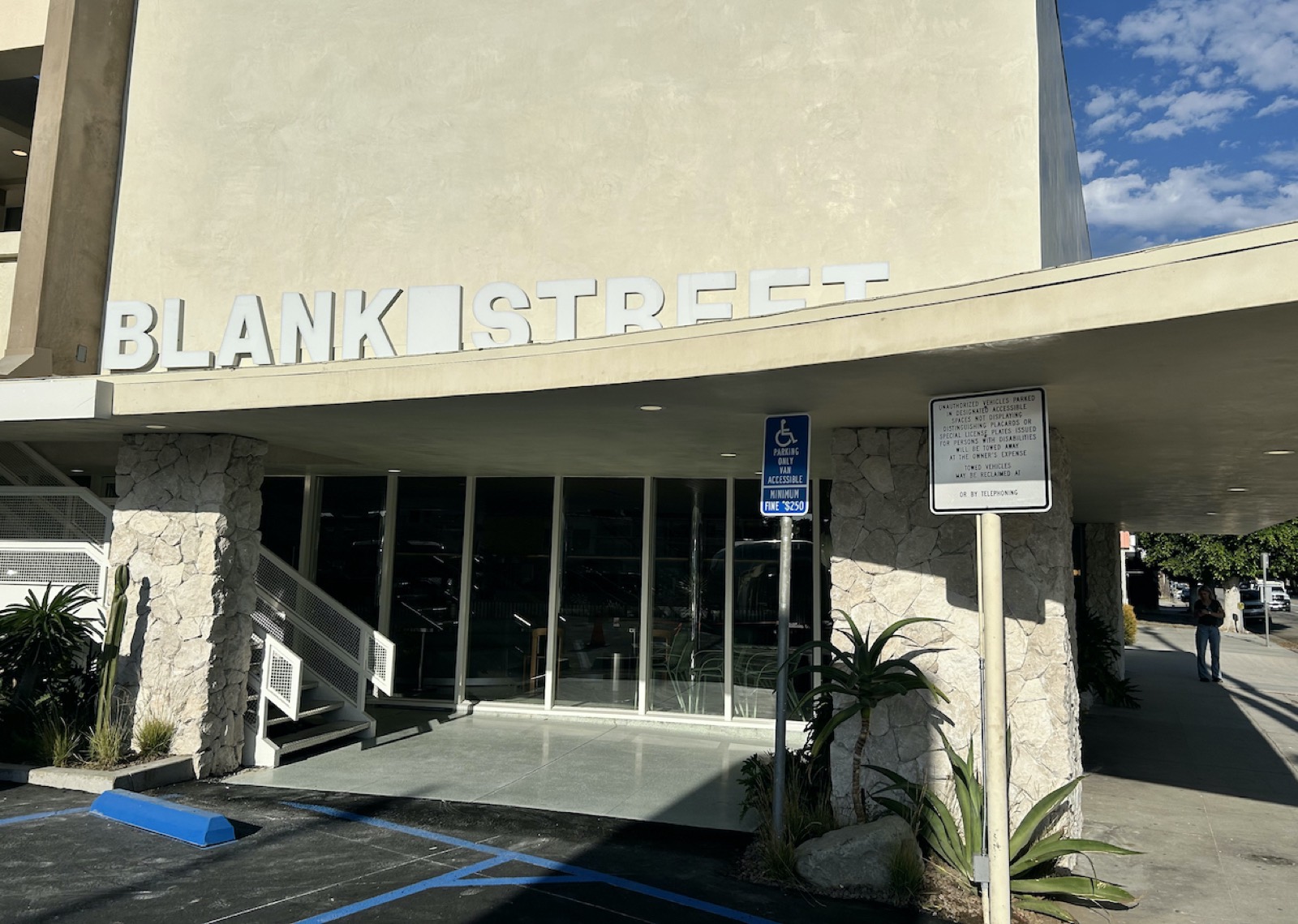
West Coast debut, August 1213273 Ventura Blvd, Studio City, Los Angeles. The 106th shop worldwide. ⓒBlank Street · Daily Coffee News
Daily drink
The company that won on 11 pyeong with no seats is now putting seats in (U.S. · small-format cafe)
2026.08.26
On August 24 a filing landed at the U.S. Securities and Exchange Commission. Total offering: $104,999,981. The money went to a company that began as a Brooklyn coffee cart and reached 106 shops in six years. Yet the stores it is building now run three times the size of the format it was built on.
1.The company is Blank Street. Of that offering, $75 million is new capital coming into the business and the other $30 million is existing shareholders selling down. The new capital alone comes to about KRW 109 billion. General Atlantic led the deal and six investors took part, none of them named publicly.
2.The round values the company at about $650 million. Twelve days before the filing, on August 12, Blank Street opened its first West Coast shop in Studio City, Los Angeles. The address is 13273 Ventura Blvd and it is the 106th location worldwide. Local press reported a line running down the block even though the afternoon hit 39 degrees Celsius. Next in order: Beverly Hills, West Hollywood and Malibu.
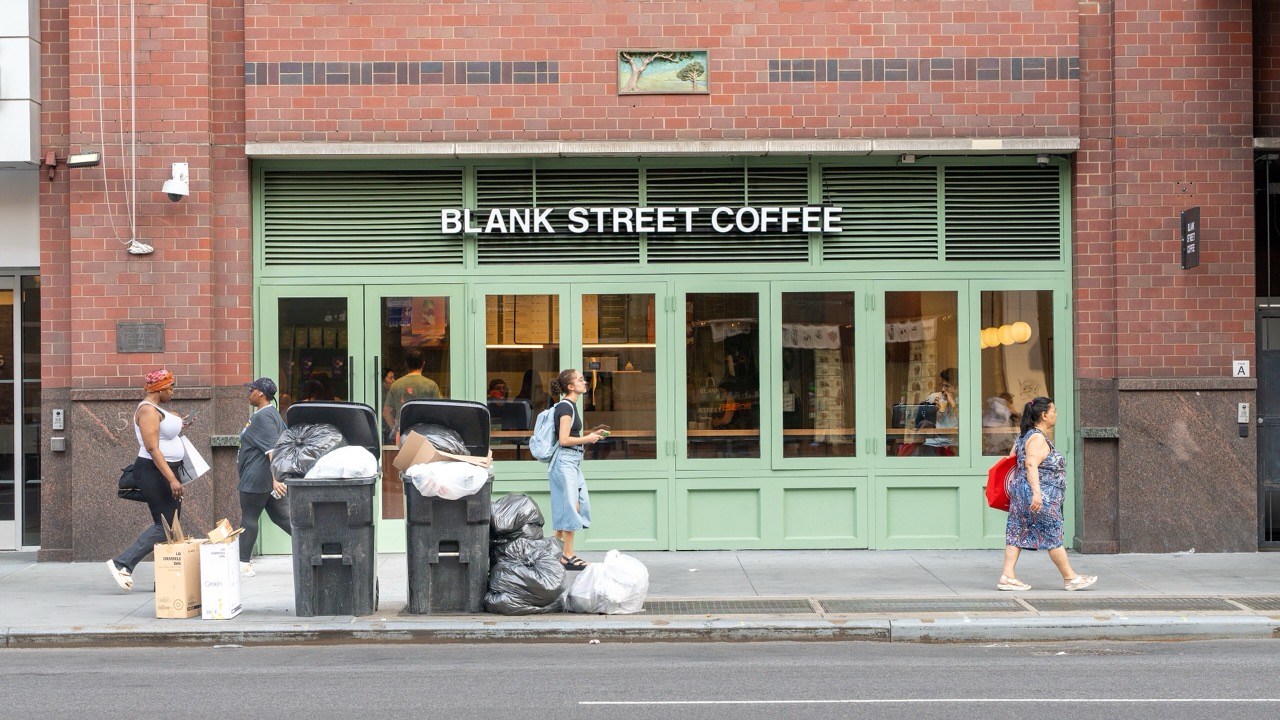
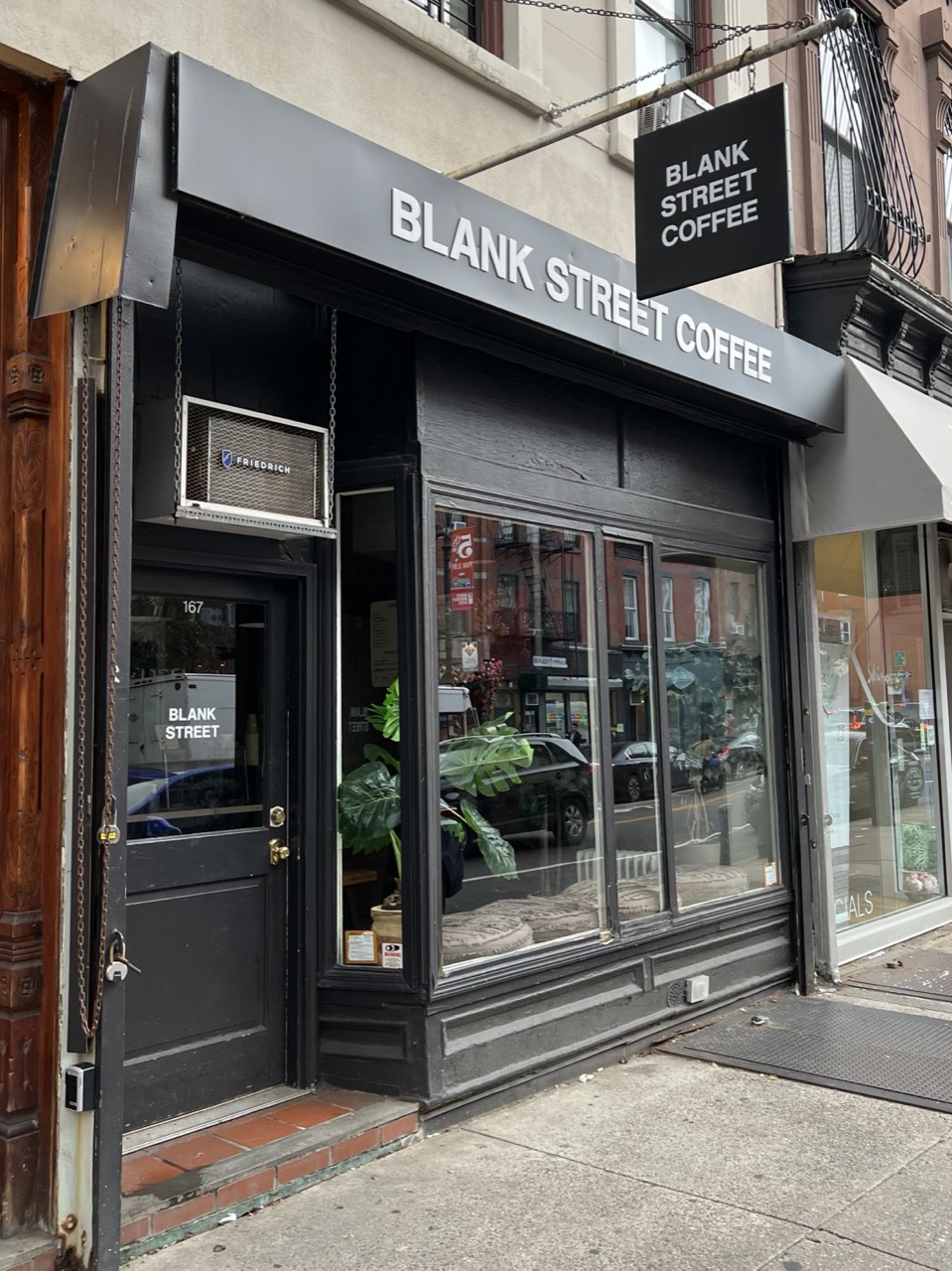
One brand greenA New York shop. The color on the sign and the awning is close to the only device that makes the store recognizable. ⓒajay_suresh · CC BY 2.0 · Wikimedia Commons
3.The standard shop runs 400 square feet. That is 37 square meters, roughly 11 pyeong. Seats do not fit at that size, and many of the early shops opened with nowhere to sit. Inside there is one counter, one automatic espresso machine and two or three people. A large share of the orders arrives through the app before the customer does.
The 11 pyeong formatOne window and one door fill the entire frontage. Early shops opened at this size. ⓒFytrdy · CC0 · Wikimedia Commons
4.The machine on the bar is an Eversys superautomatic. The Enigma, the higher model Blank Street tends to install, is rated by the manufacturer at 700 drinks an hour. Grinding, tamping and extraction happen inside one housing, so nobody knocks out a portafilter and no steam wand slaps at milk. Half the sound of a cafe disappears. What is left is ice dropping and lids clicking shut.
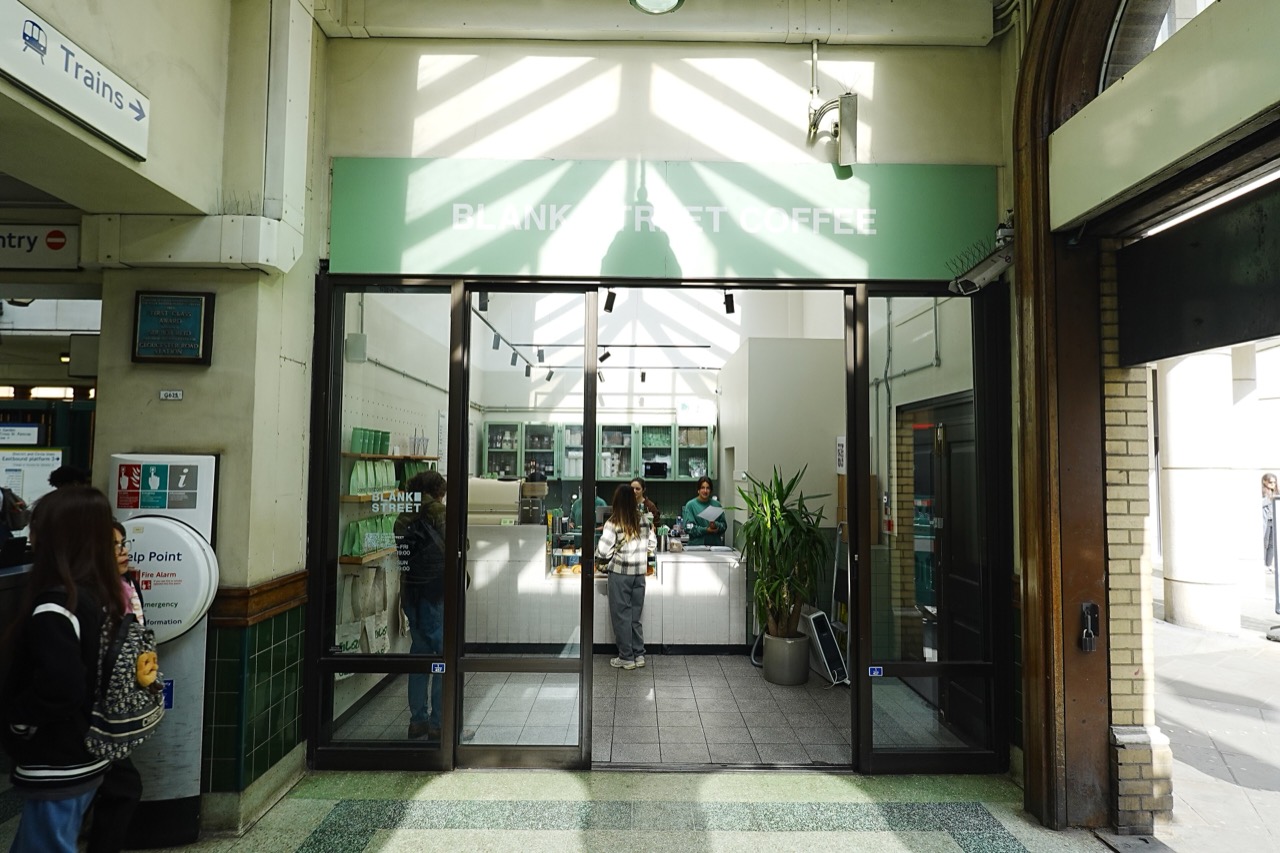
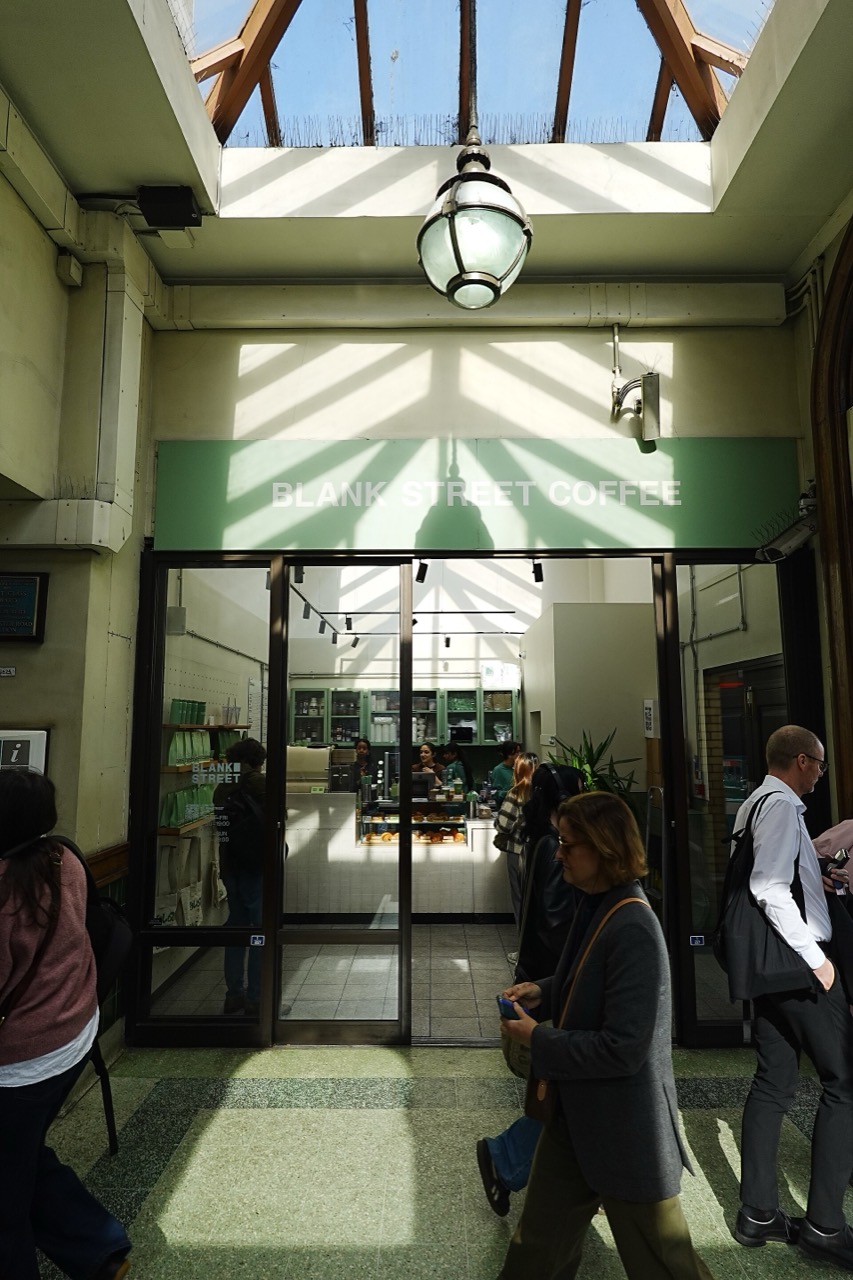
The format inside a stationGloucester Road Station, London. One counter fills the frontage and there is nowhere to sit. ⓒWutthichai Charoenburi · CC BY 4.0 · Wikimedia Commons
5.The Los Angeles shop breaks that format. The design borrows from the Case Study Houses this city left behind, mixing steel, glass and wood. Brand green sits on the booth fabric and in the terrazzo floor, and indoor seats come with an outdoor patio. There is a drink sold only here as well, the Cortado Cloud, built on Madagascan vanilla bean syrup.
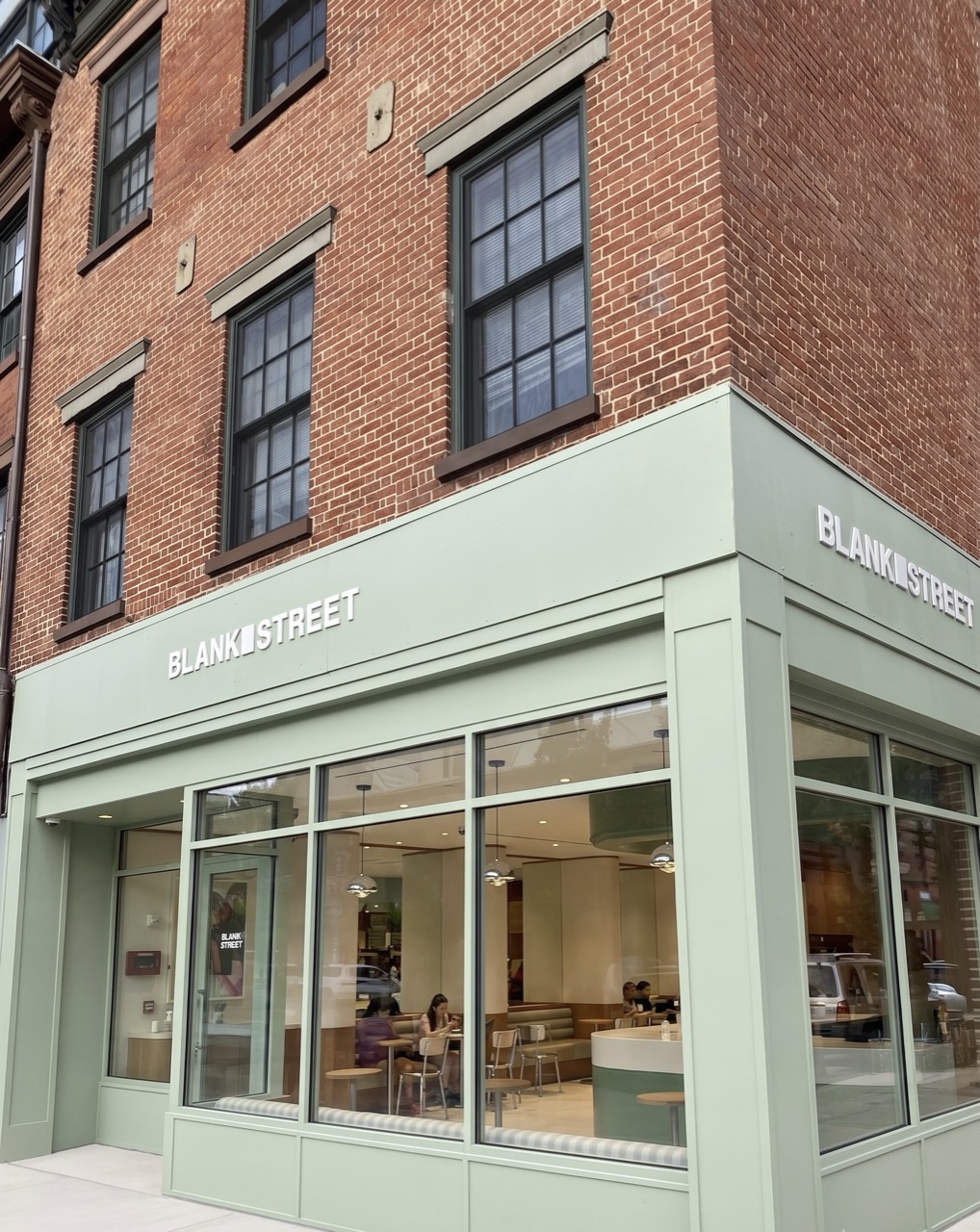
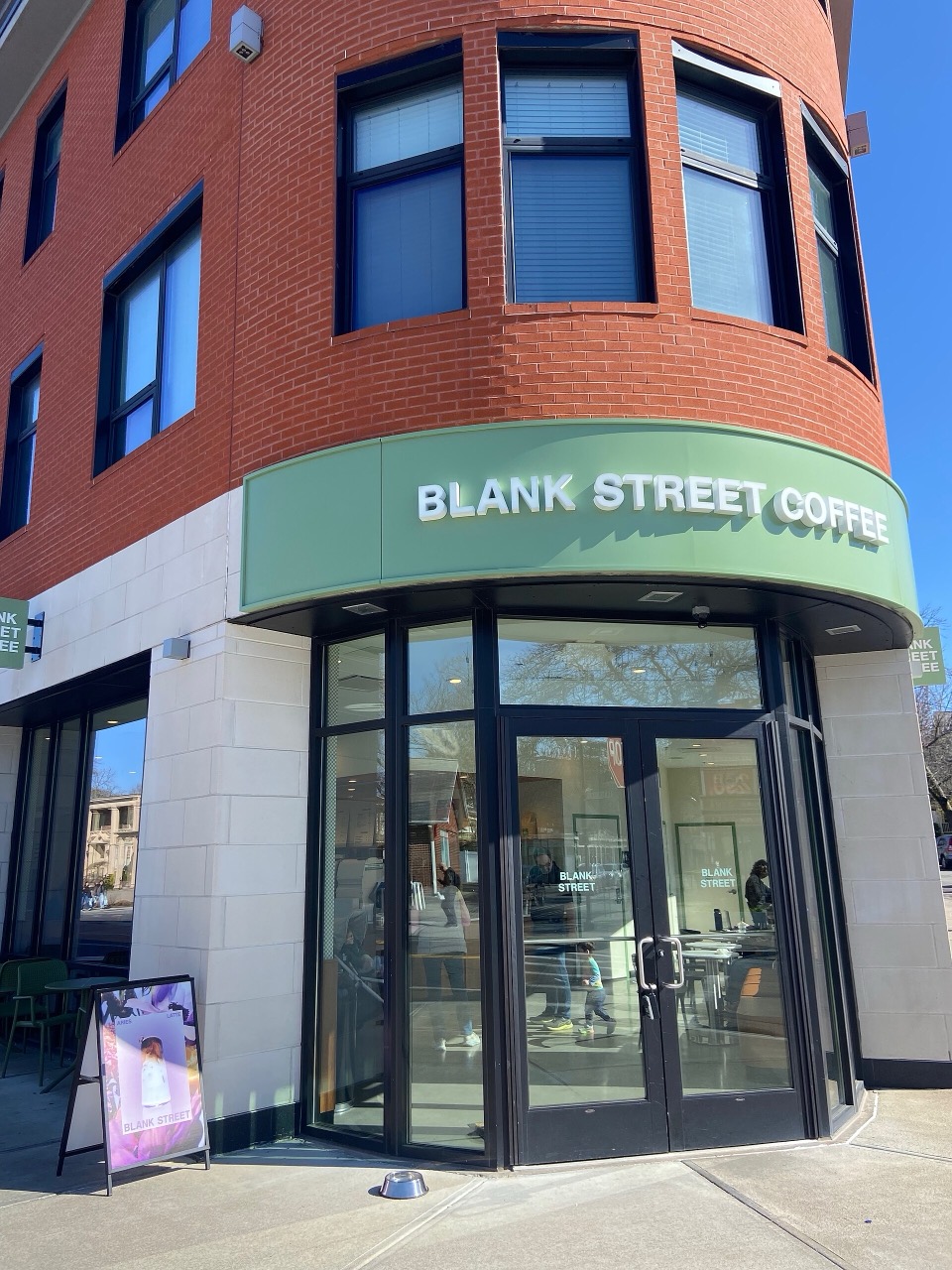
The face of the old formatPark Slope, Brooklyn. This frontage has been copied more than a hundred times. ⓒCityLimitsJunction · CC BY-SA 4.0 · Wikimedia Commons
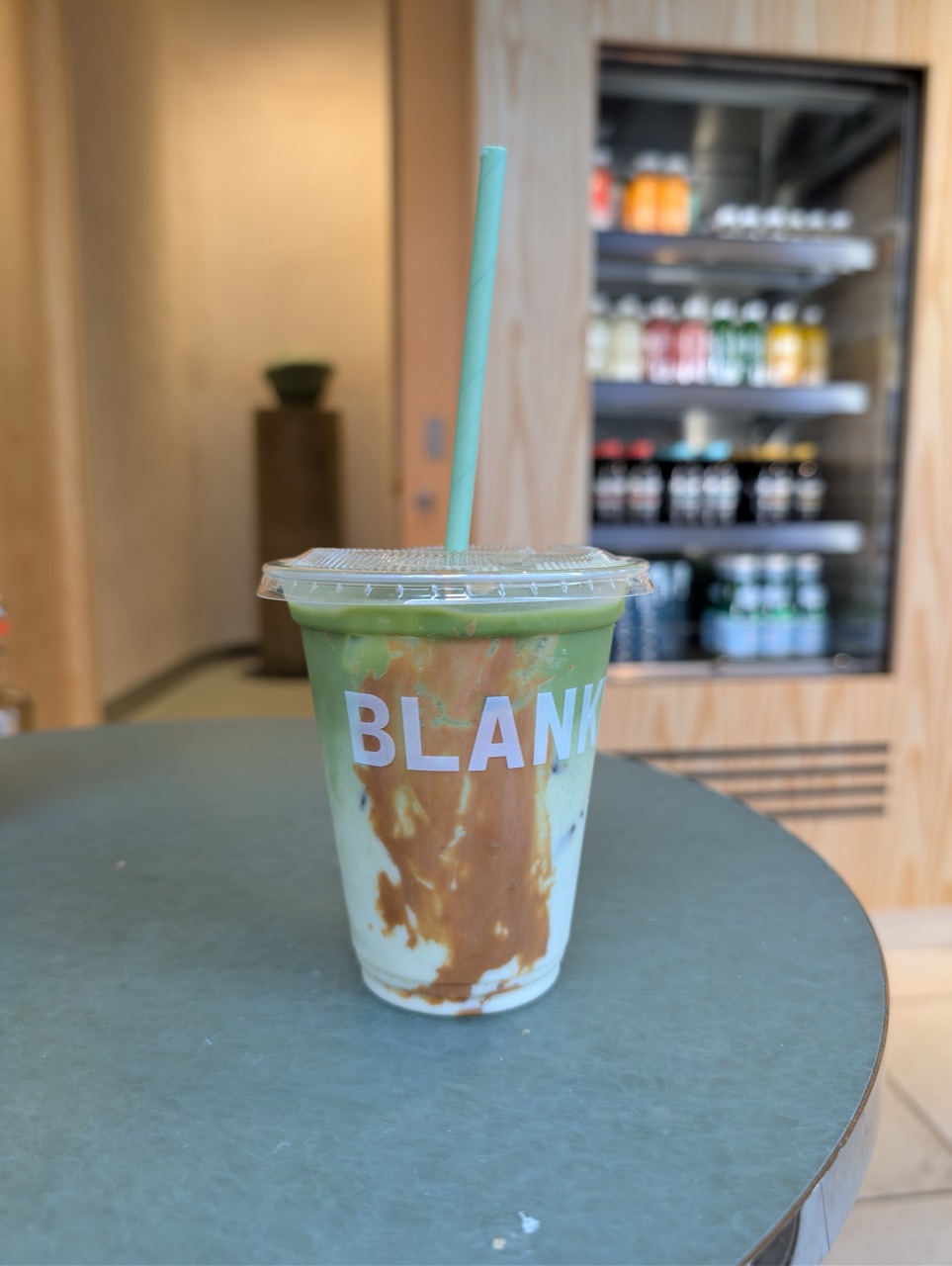
6.Matcha accounts for half of the company's drink sales. Whisked into milk it settles into a cloudy green, and the syrup on top draws a white line across it. The sweetness runs high. Published nutrition information puts as much as 25 grams of sugar in a single cup. In New York an iced strawberry shortcake matcha costs $8.06, about KRW 11,700.
Half of drink salesAn iced matcha sold in Brighton. This side of the menu, not coffee, carries the revenue. ⓒAndy Li · CC0 · Wikimedia Commons
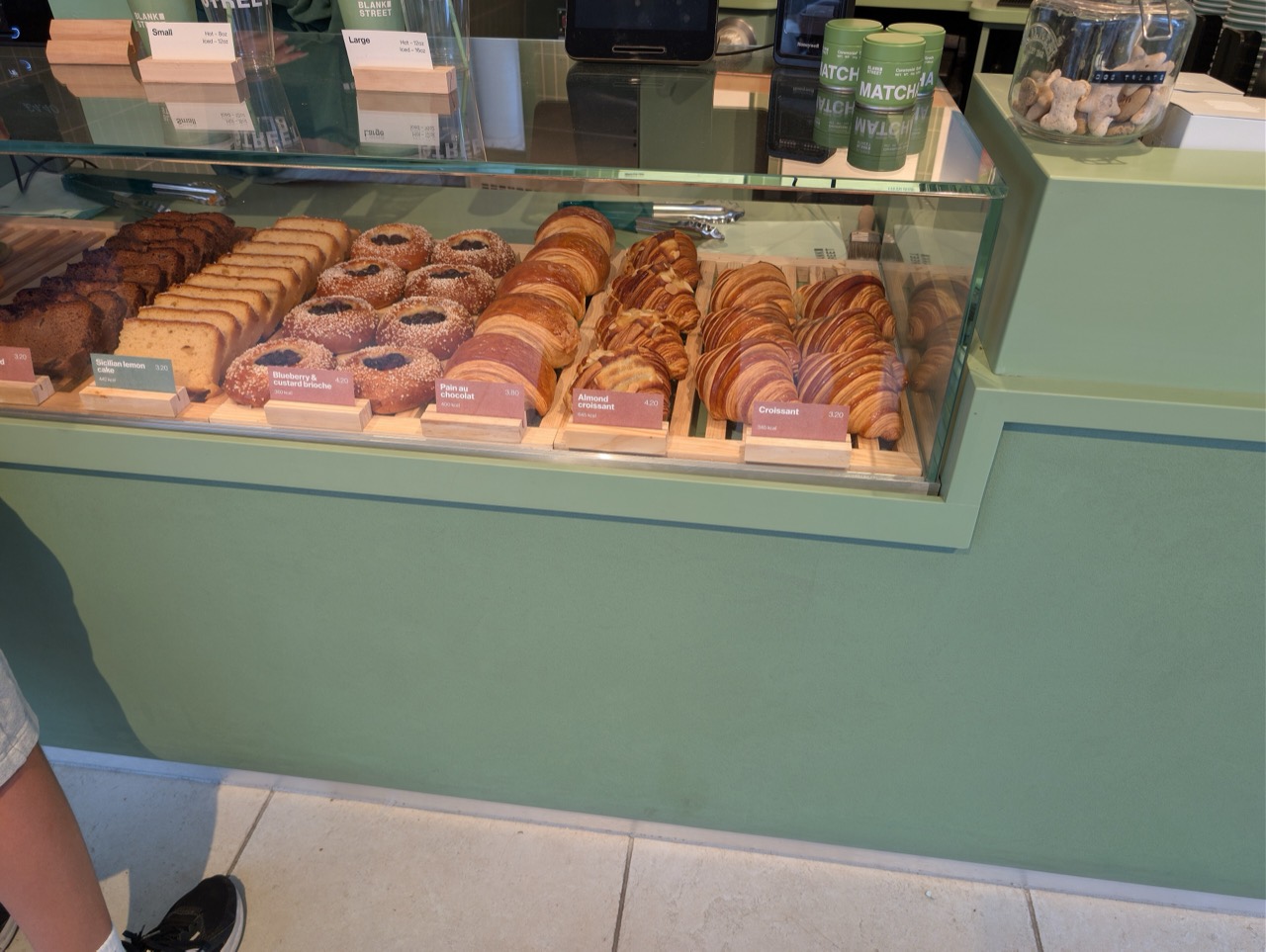
7.Blank Street admitted before anyone else that a coffee shop cannot win on coffee alone. Kendall Jenner and Emma Chamberlain were photographed holding the cup, and those pictures spread faster than the store count. What young customers bought was not caffeine. It was an object that looks good in the hand. The brioche and lemon cake on the counter follow the same logic.
The 30 centimeters before the tillBrioche and lemon cake sit directly on the payment path. This is where non-drink revenue attaches. ⓒAndy Li · CC0 · Wikimedia Commons
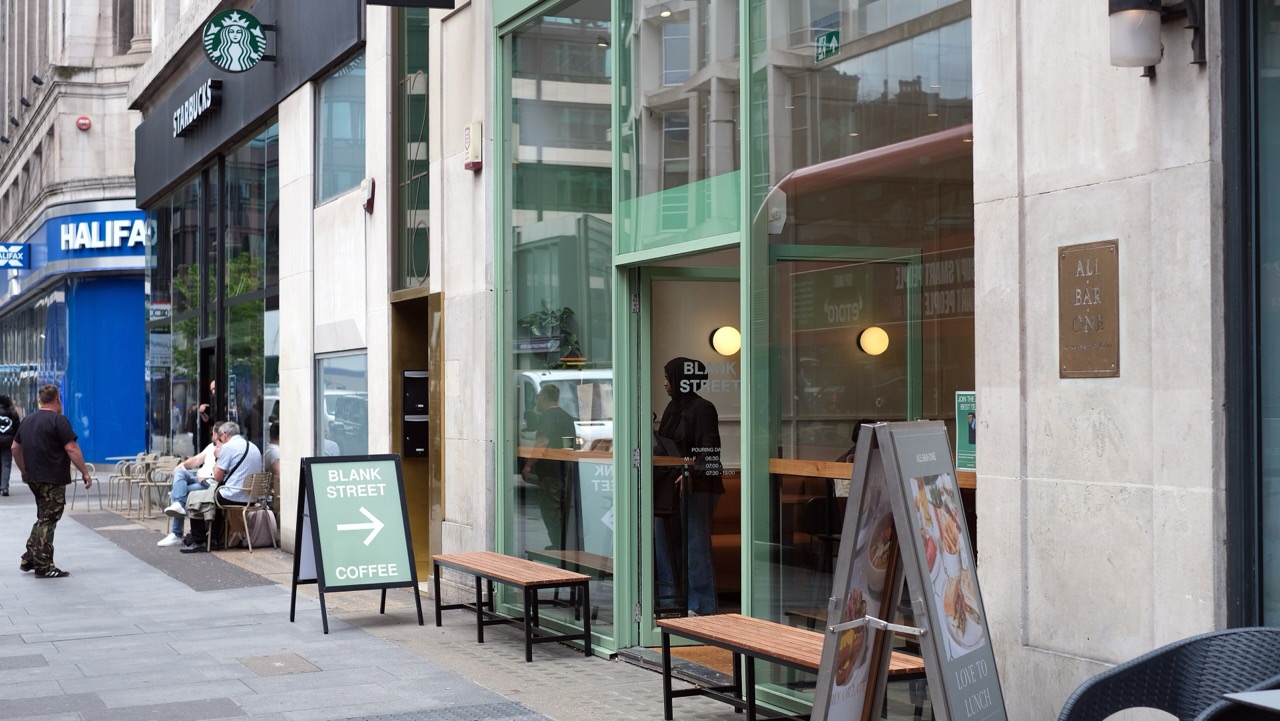
8.It began on price. Back in the 2020 cart days the drinks ran 25 percent below Starbucks, and that gap built the first queue. An iced latte in a New York shop now costs $6.75, about KRW 9,800. Set that beside Starbucks and it is hard to call cheap. The company has stopped calling it cheap as well.
Two shops side by sideNew Oxford Street, London. A relationship that started on a price gap now runs at almost the same price. ⓒRoy Katzenberg · CC BY 2.0 · Wikimedia Commons
9.What is left is time. The machines were bought and the seats were pulled to shave the few minutes between ordering on the app and walking back out with a cup. Strip seating out of 11 pyeong and the whole floor goes to making and handing over. On a commuter corridor that structure is hard to beat.
One bay on the flowA single opening onto the station passage. The layout measures how long a customer stops in seconds. ⓒWutthichai Charoenburi · CC BY 4.0 · Wikimedia Commons
10.Run the rent and the 11 pyeong explains itself. CBRE puts average ground-floor asking rent across Manhattan's 16 premier corridors at $682 per square foot a year. Move out to downtown or neighborhood corridors and the range drops into the $100s through the $300s. At $200 a year, a 400 square foot shop carries monthly rent of roughly KRW 9.7 million.
11.The new shops run 1,300 square feet. That is 121 square meters, 36 pyeong. On the same assumption monthly rent jumps to KRW 31.4 million. The extra 900 square feet goes to conversation booths and spots that photograph well, and seats do not raise the speed of production. A seated customer does not order three drinks.
What the extra 900 square feet costsThe rent per square foot is an estimate built on the corridor ranges CBRE publishes, not a figure the company has paid.
12.Divide the $650 million valuation by 106 shops and each one carries $6.13 million, about KRW 8.9 billion. Last July the company was valued at $500 million. In April this year it was reported to be raising $100 million at more than $1 billion. The number that actually printed is two thirds of that expectation. What changed in four months?
106 shops in six yearsBrookline, Boston. There were 40 shops in 2022 and the count passed 90 last year. ⓒLorenismapping · CC0 · Wikimedia Commons
13.Growth holds the answer. Bloomberg reported U.S. sales growth of 21 percent in 2025, against more than 50 percent in each of the two years before. Keep adding shops and growth still bends once each shop stops selling more. What the company reached for was floor area.
Six years in numbersFunding amounts and store counts are compiled from the SEC filing and public reporting.
14.Automation sends a bill. A shop hangs on a single machine, so espresso stops altogether when that machine stops, and an internet outage does the same. Shifts run two or three people, and once one is on the machine and one is on the register, cleaning, stocking and inventory split between that pair. In June 2025 the staff at a Boston shop filed to unionize.
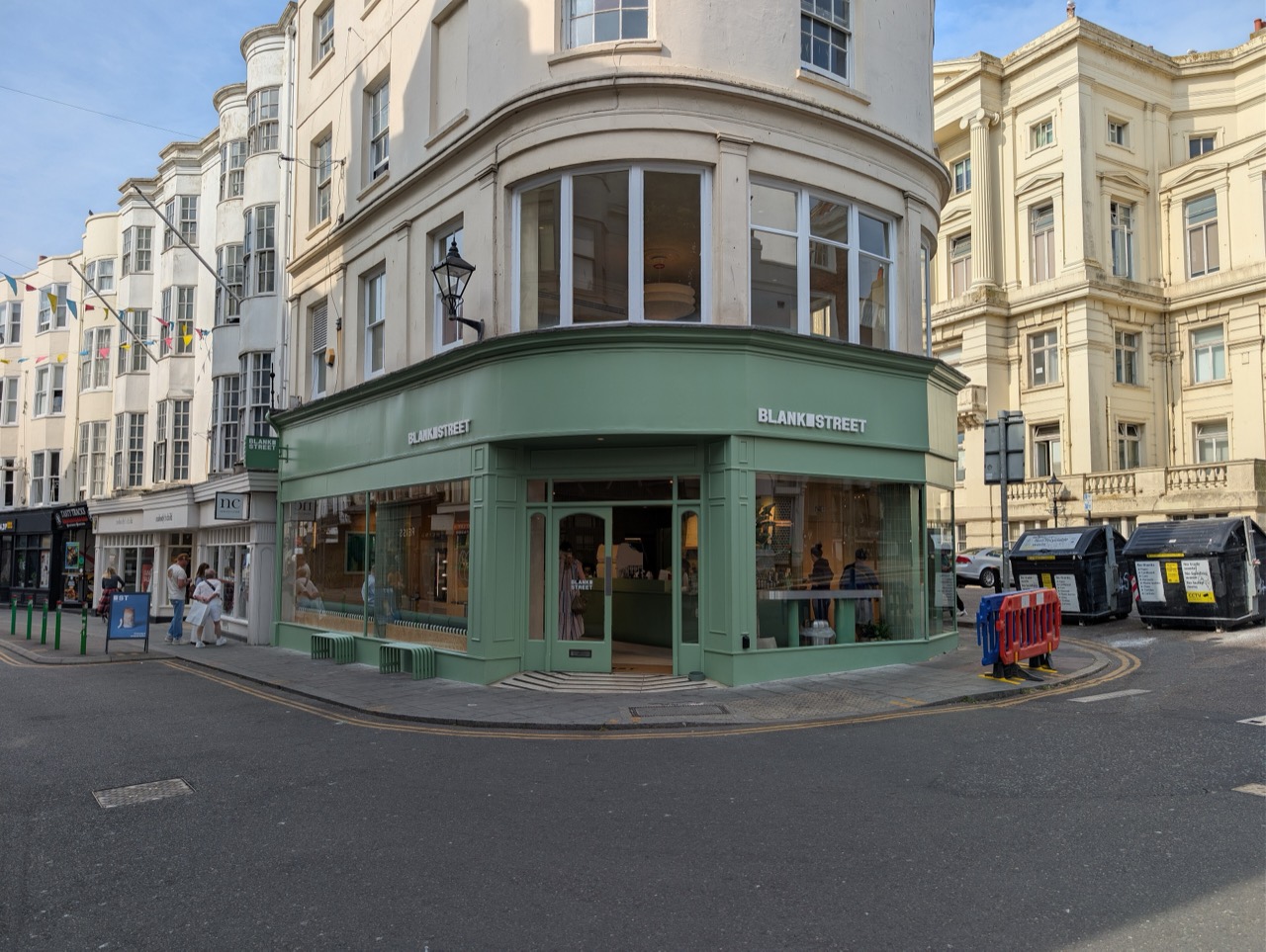
40 shops in the U.K. aloneEast Street, Brighton. The company started in London in 2022 and reached Scotland. ⓒAndy Li · CC0 · Wikimedia Commons
15.This model did not come out of the United States. Founders Issam Freiha and Vinay Menda have said they took the small footprint and the app ordering from HEYTEA in China and Kopi Kenangan in Indonesia. Where that model is heading now shows up in a single address. Ground floor, 32 Avenue of the Americas in Lower Manhattan, 2,900 square feet, 81 pyeong. Starbucks moved out of it.
16.A company that reached 106 shops on 11 pyeong with no seats is now building at 36 pyeong, and over the same stretch U.S. sales growth fell from above 50 percent to 21 percent. In Korea the first thing to bite is turnover. Add seats to lift the average ticket and the time spent in each seat lengthens first, and Korean cafes already hold customers longer than American ones do. If cups do not rise with the floor area, the only thing that rose is rent.
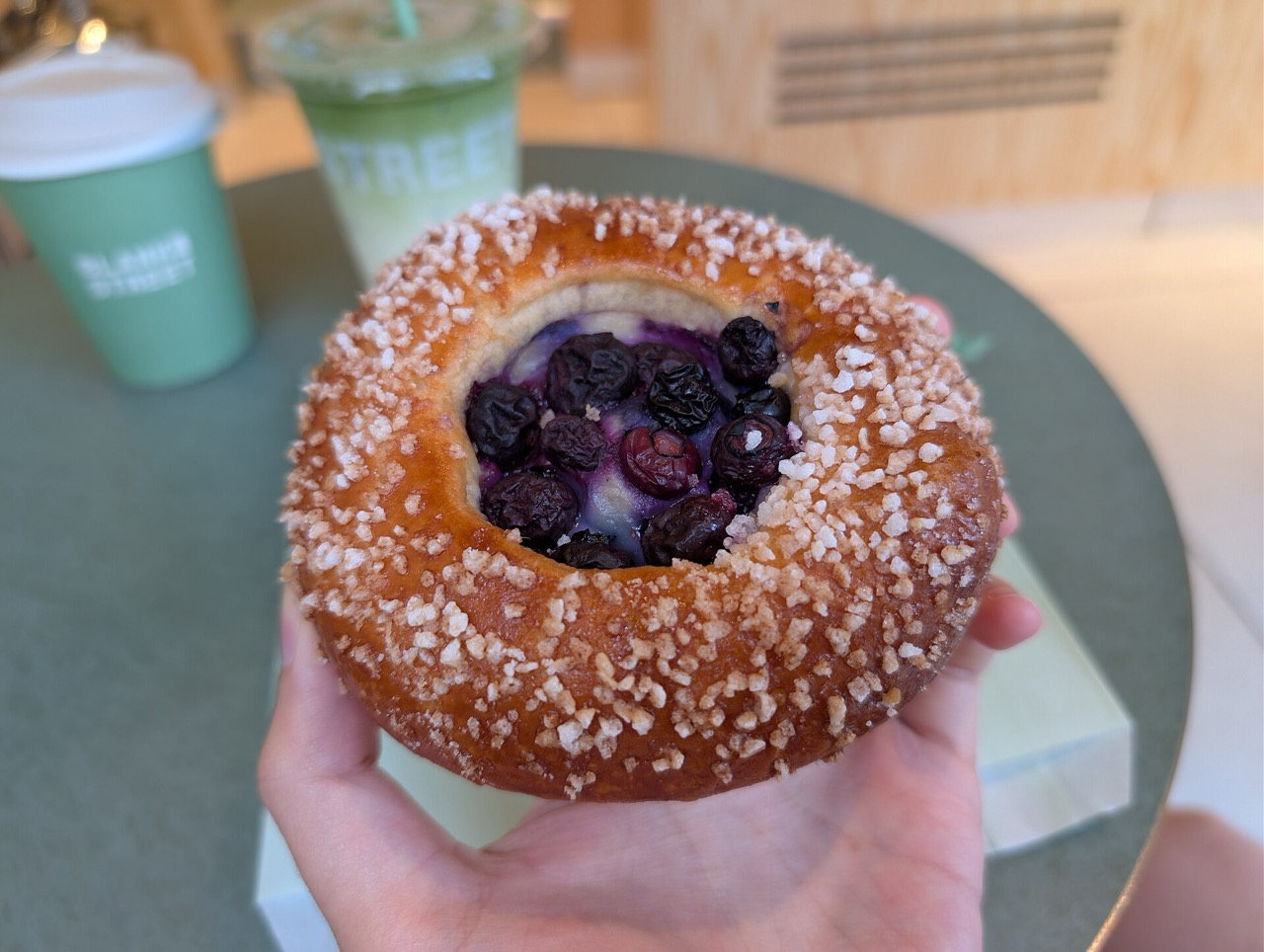
What sits beside the cupNon-drink revenue attaches without seats. Blueberry custard brioche in Brighton. ⓒAndy Li · CC0 · Wikimedia Commons