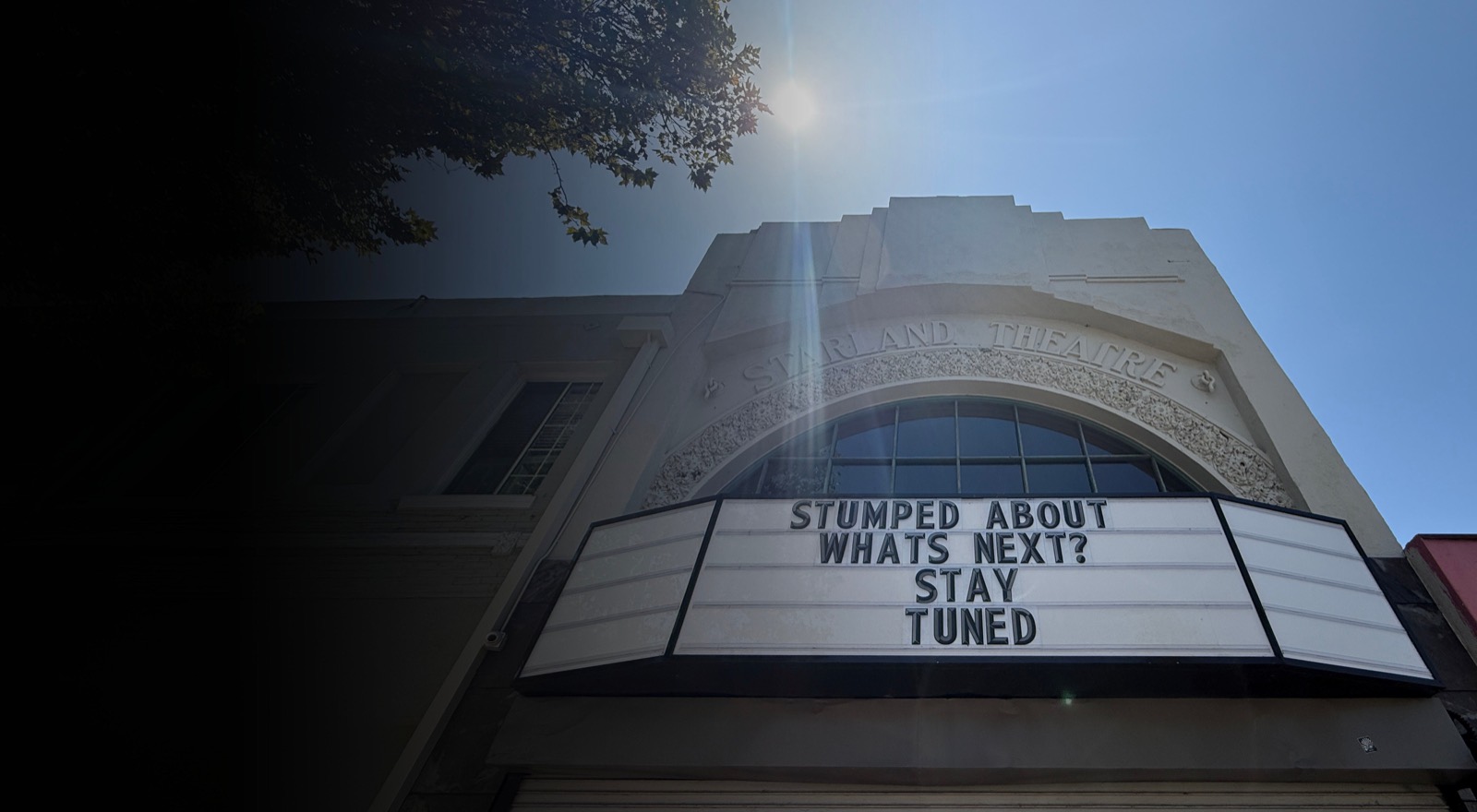
The sign stayed up2624 N Broadway. The terracotta lettering above the arch and the marquee both survived. Only the wording changed. ⓒStumptown Coffee Roasters
Daily drink
A roaster that closed a 7,000 sq ft flagship came back to one theater lobby (Los Angeles · roastery cafe)
2026.08.28
A theater went up here in 1913. Its auditorium came down in the summer of 1968 and became a parking lot, leaving only the lobby. On the 29th of this month a coffee counter moves into that lobby. The tenant is a company that shuttered its entire roastery in this city two and a half years ago.
1.The address is 2624 N Broadway, Lincoln Heights, Los Angeles. The incoming tenant is Stumptown Coffee Roasters, a roaster that started in Portland in 1999. Doors open Saturday, August 29 at 8 a.m.; from the next day the opening hour is 6:30 a.m. The company describes the shop as its Los Angeles training hub and retail cafe.
2.The company first came to Los Angeles in September 2013, opening a 650㎡ roastery and cafe on South Santa Fe Avenue in the Arts District. It closed in January 2024, exactly ten years in. A month later a neighborhood cafe opened in Pasadena, which makes this the third attempt.
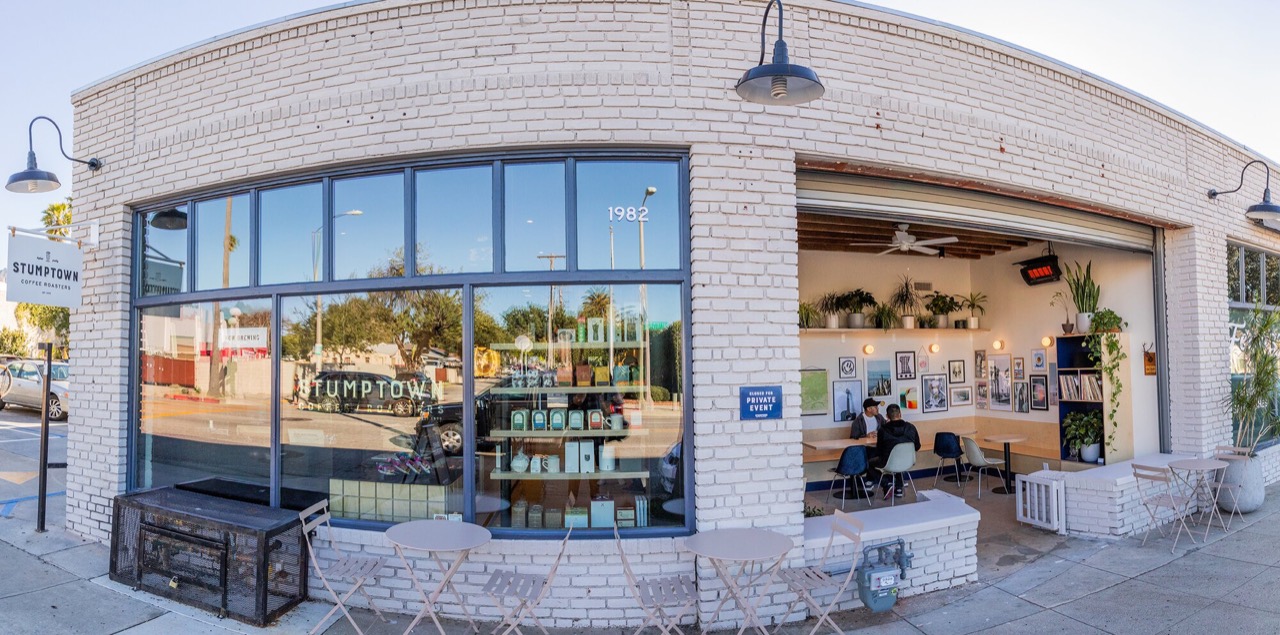
The 2024 answerThe Lincoln Avenue shop in Pasadena, opened the month after the roastery closed. ⓒStumptown Coffee Roasters
3.The theater opened in 1913 as Globe Theatre No.7. George B. Campbell drew it. All 850 seats sat on one flat level, and from 1915 the house was called the Starland Theatre.
4.The facade was torn off and rebuilt in moderne style in 1935. The theater went dark in February 1968, and by that summer the auditorium had been demolished for a parking lot, so what remains today is not a theater but a lobby.
5.During last year's renovation an arch and terracotta lettering reading 'STARLAND THEATRE' emerged from under the plaster, along with the original terrazzo floor and its bulb sockets. The company kept the facade and the floor, then changed only the wording on the marquee. "STUMPED ABOUT WHAT'S NEXT? STAY TUNED." This is not a new sign but the one the neighborhood read every week until the year the house went dark. Instead of mounting a large brand name, the company left the building's old name in place, so the effect is less a new shop arriving than a dead sign switching back on.
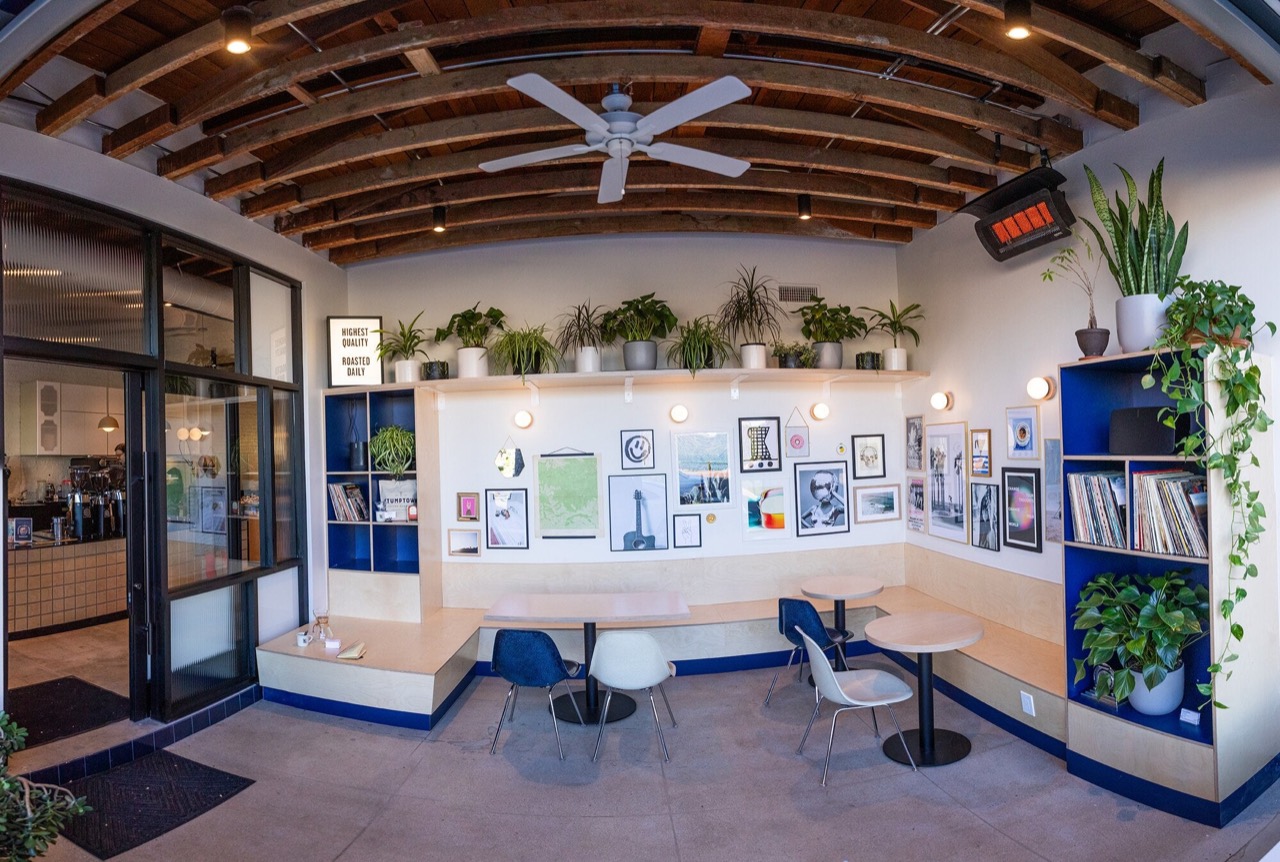
How this company handles an interiorInside the Pasadena shop. The bowed timber roof is left exposed and the walls carry framed art and records. ⓒStumptown Coffee Roasters
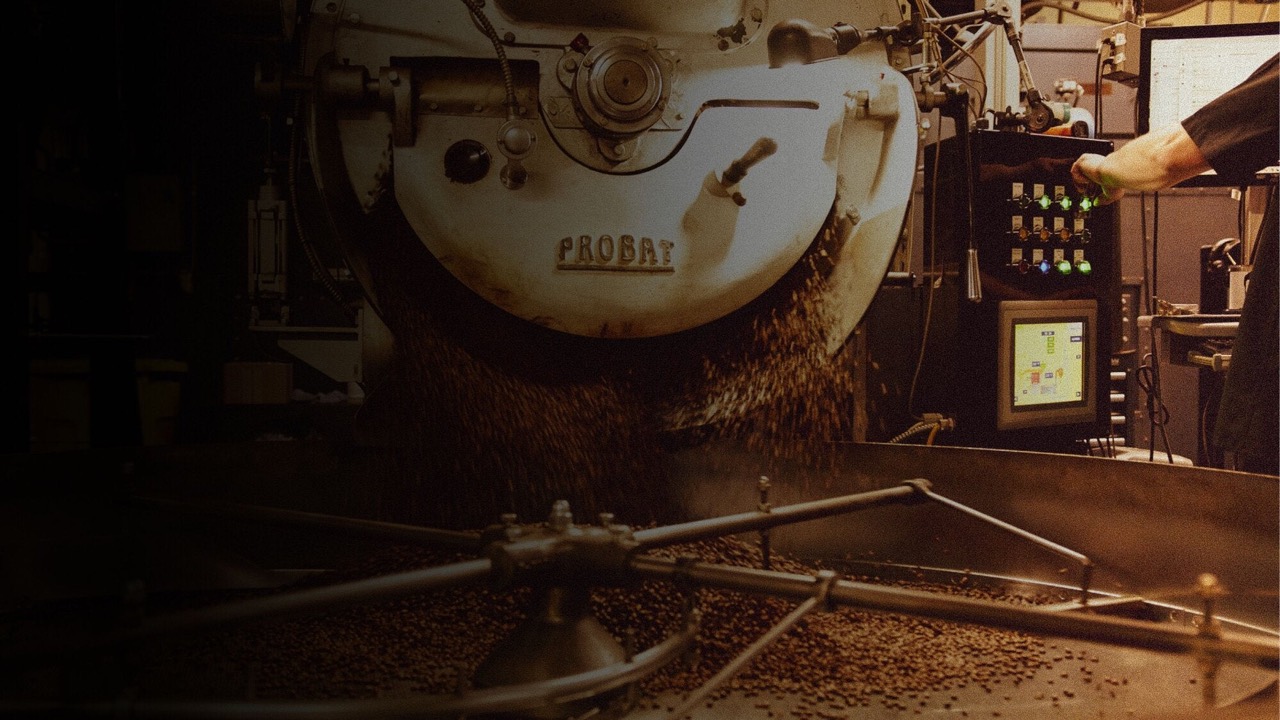
6.The coffee is green beans bought through Direct Trade and roasted in the company's own plant. Its signature is Hair Bender, a blend whose name has not changed since the first year, built from several origins and pushed toward dark chocolate and ripe red fruit. Add milk and the acidity steps back while the sweetness moves forward. This is not written from tasting. It goes only as far as the published blend and roast level allow.
7.Two more drinks join the menu on opening day: a passion fruit espresso tonic and a horchata cold foam shakerato. Horchata is a Latin American drink of ground rice and cinnamon, already sitting in every fridge on this street. The company put it where the milk foam goes.
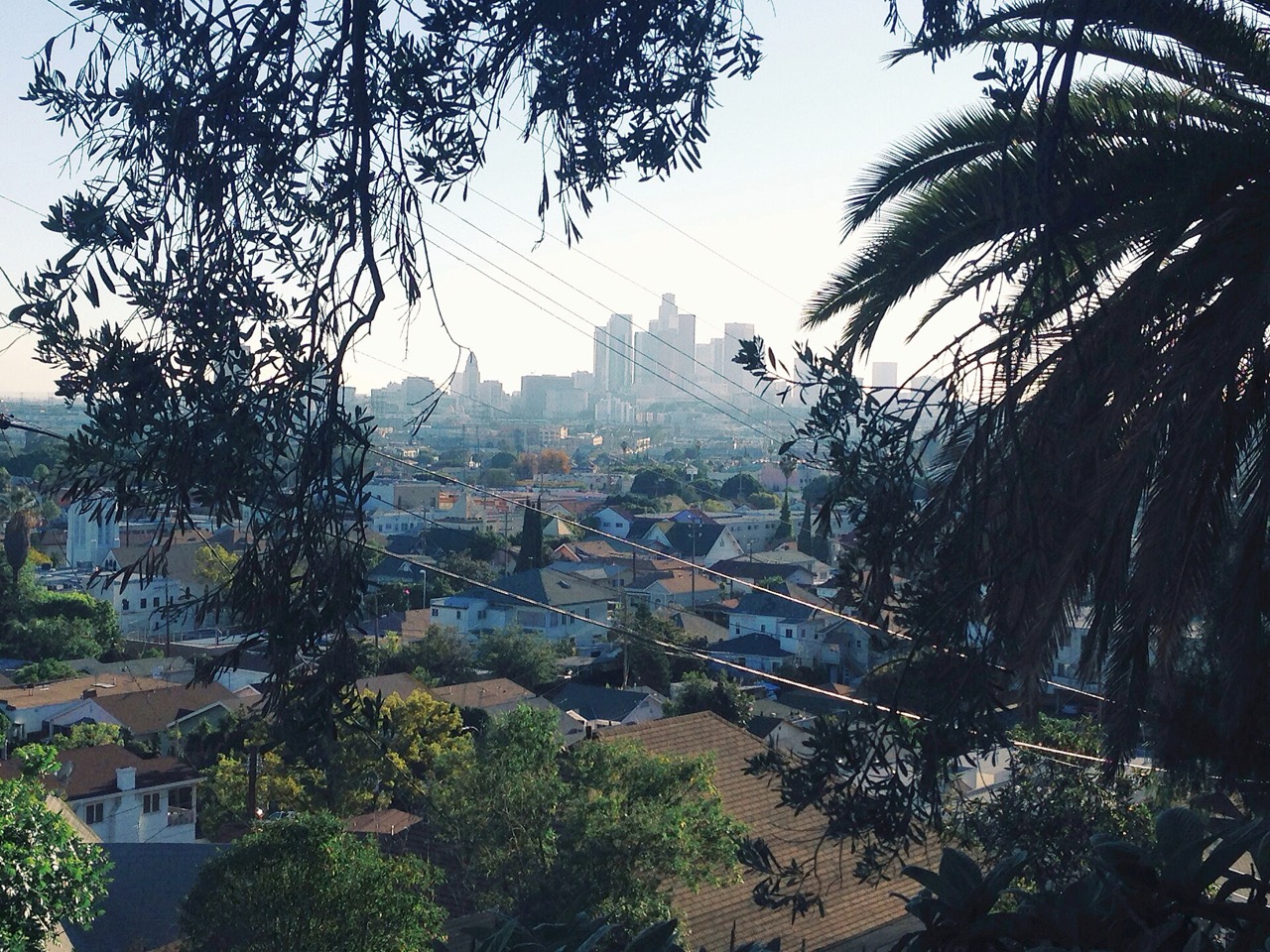
8.Lincoln Heights is the oldest suburb in Los Angeles and today its residents are heavily Latino and Asian. From the hill the downtown towers sit right there, just past the roofs of single-story wooden houses. Every time a new shop has arrived on this street in recent years, arguments about rent and displacement have followed.
A low neighborhood in sight of downtownDowntown seen from the hills of Lincoln Heights. The housing is low and the core is close. ⓒPatstewmart · CC BY-SA 4.0 · Wikimedia Commons
9.Putting the training function inside the shop is also a money decision. A separate barista training room earns nothing per square foot. Run the training beside a working counter and the same rent does two jobs, while new hires learn on real customers.
10.The average U.S. grocery price for ground roasted coffee hit $9.72 a pound in April 2026. That is the highest reading since the series began in 1980, up 18.5% in a year. Instant rose 22.8%.
A six-cent increaseThe retail average comes from U.S. Bureau of Labor Statistics data. The per-cup conversion and the share of menu price are estimates built on standard dose weights.
11.At 18g of coffee per latte, a pound yields 25 cups. That puts the bean cost at $0.39 a cup, against $0.33 a year ago. Even at a record price, coffee accounts for barely 5% of the menu price, and it takes milk and packaging together to build a real cost of goods.
Where the value gets addedBeans drop from the roaster into the cooling tray. The company buys green coffee and roasts it in its own facility. ⓒStumptown Coffee Roasters
12.The City of Los Angeles minimum wage rose to $18.42 an hour on July 1. Add 15% for employer costs and it becomes $21.18. Two people on the floor for twelve hours: $508. The rent for the same day does not reach a third of that.
Labor is three quarters of itAn estimate built on the Los Angeles city minimum wage and published market-average rents, not this shop's actual terms.
13.At this size the result turns on transaction count, not seat count. Divide $650 of daily fixed cost by $5.25 of contribution per ticket and you get 124. Given that U.S. specialty cafes usually land at a 2.5-7% net margin, whether a line forms in the first two hours matters more than adding a few chairs.
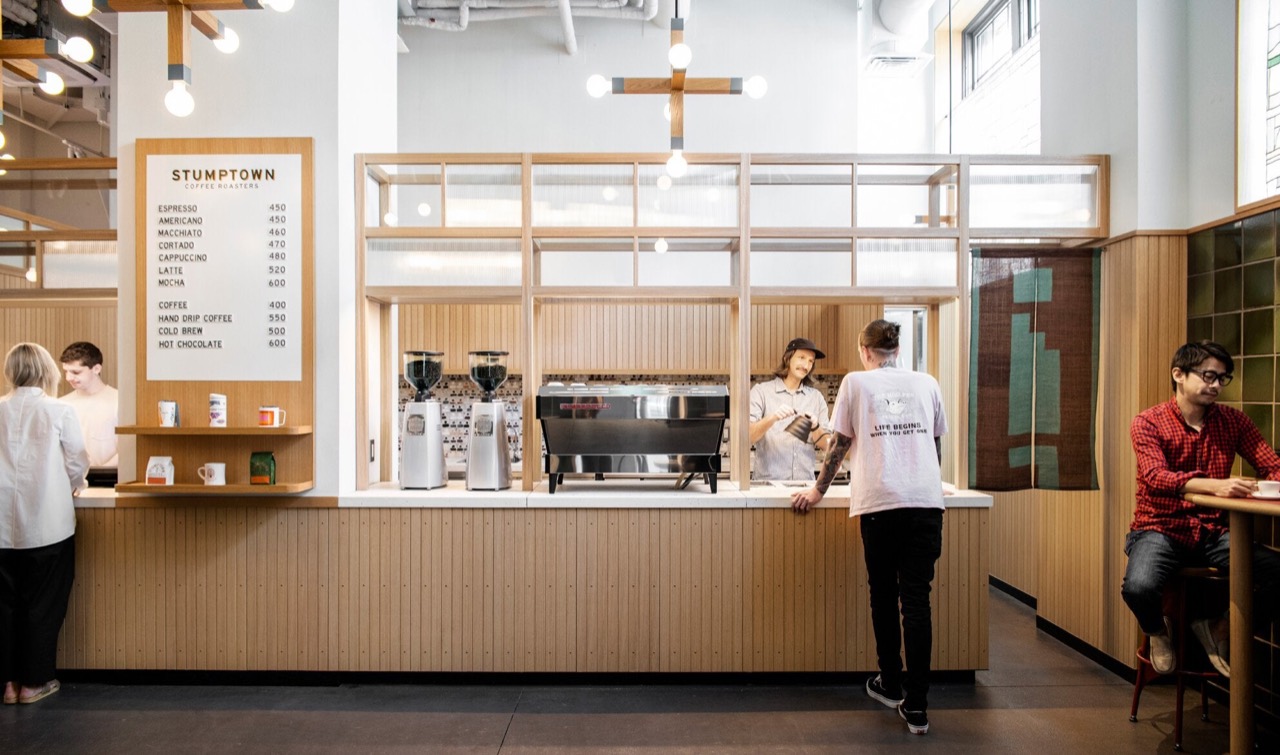
Same company, different price boardThe ground-floor shop at Ace Hotel Kyoto. The board in the photo lists a latte at 520 yen and hand drip at 550 yen. ⓒStumptown Coffee Roasters
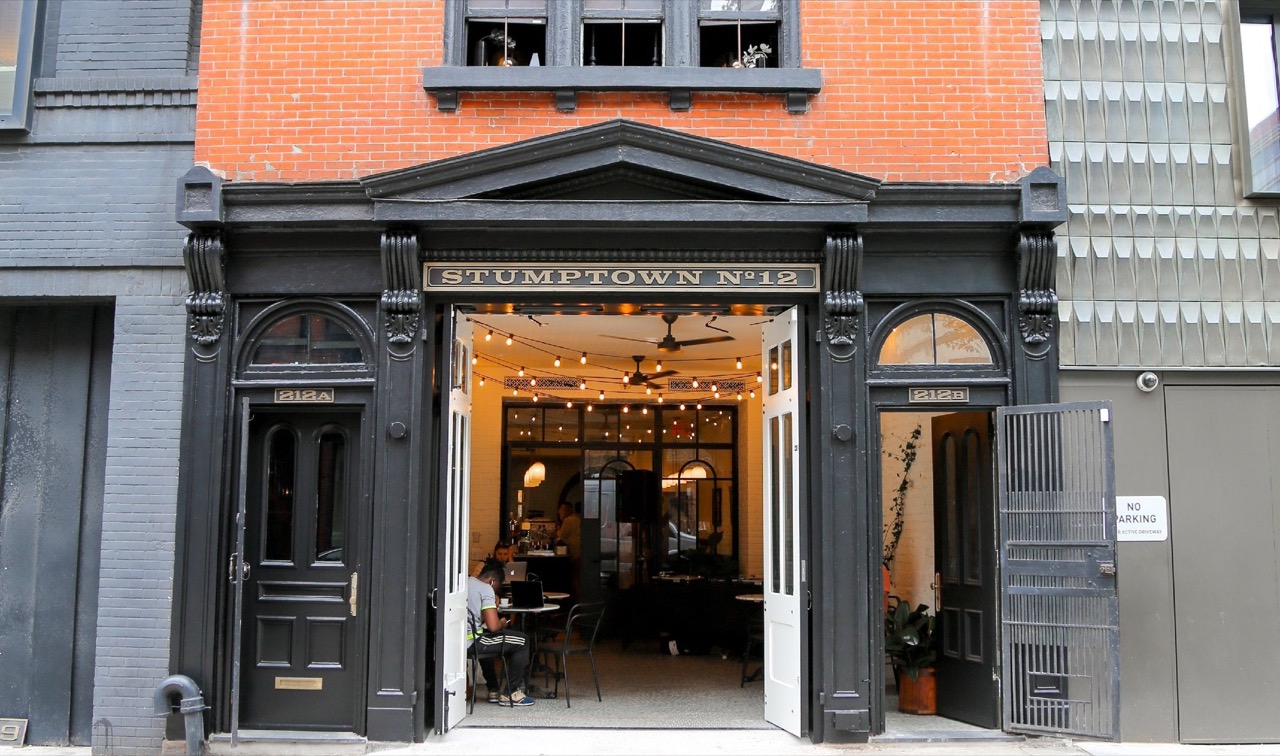
14.Line up the buildings this company picks and a taste emerges. The Brooklyn shop is a former firehouse with 'STUMPTOWN No.12' carved into the sign above the door. Its first New York shop sits on the ground floor of the Ace Hotel; so does the Kyoto shop. It takes the ground floor of somebody else's civic building or hotel and borrows the name the building already carried.
Engine 12The Pacific Street shop in Brooklyn. The firehouse number stayed on the sign. ⓒStumptown Coffee RoastersGround floor of a hotelThe Ace Hotel shop on West 29th Street, New York. No line was drawn between lobby and cafe. ⓒStumptown Coffee Roasters
15.This is no longer an independent roaster. Peet's bought it in 2015, and on April 1 this year Keurig Dr Pepper completed its purchase of parent company JDE Peet's. The deal moved $18.4 billion, and the buyer has said it plans to spin the coffee business back out. For a company that makes its money on grocery shelves and canned drinks, a cafe is where you show customers what the brand came from. So where does this counter's performance actually show up? Not on this shop's income statement.
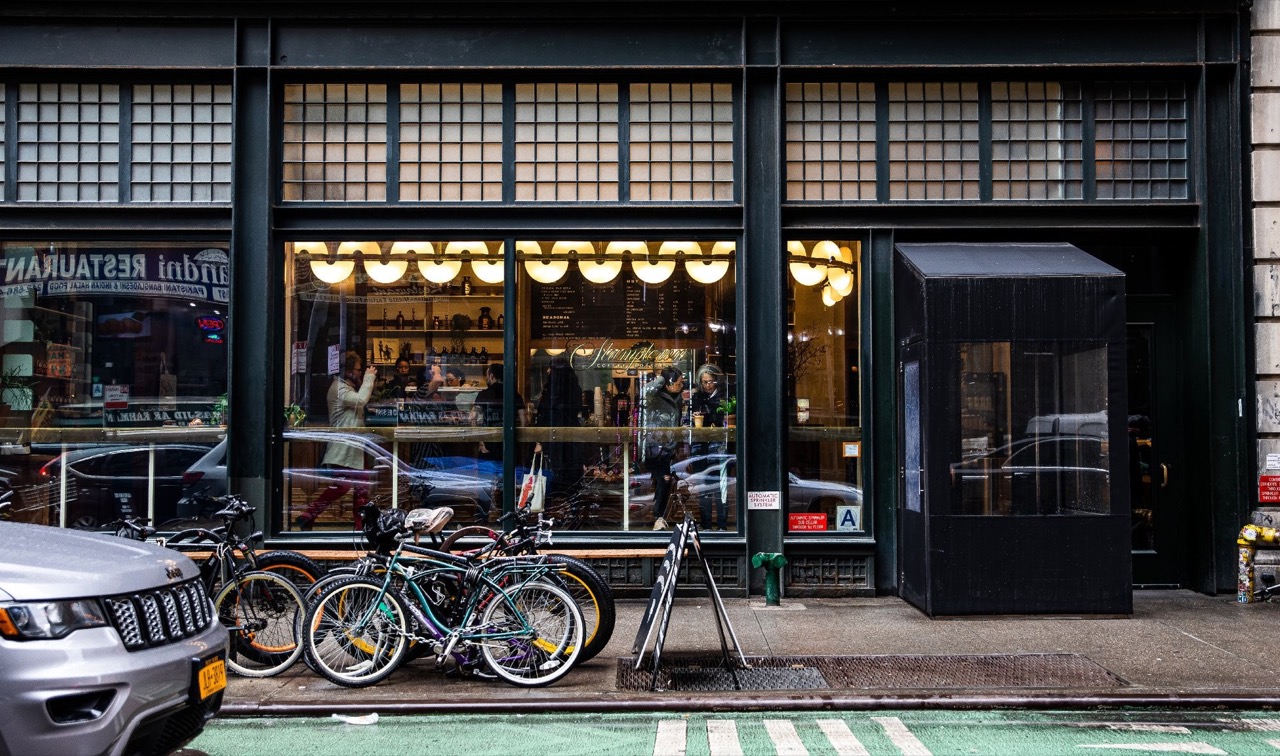
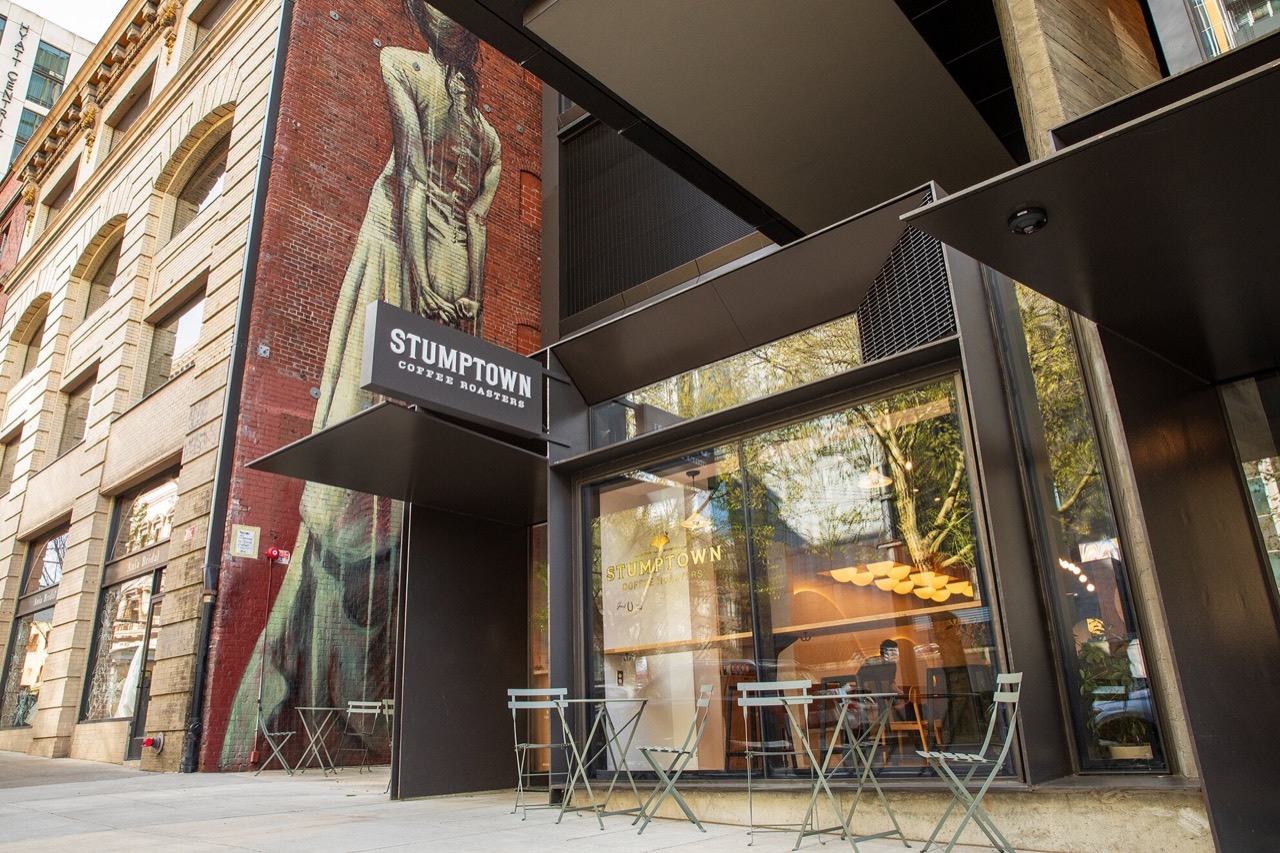
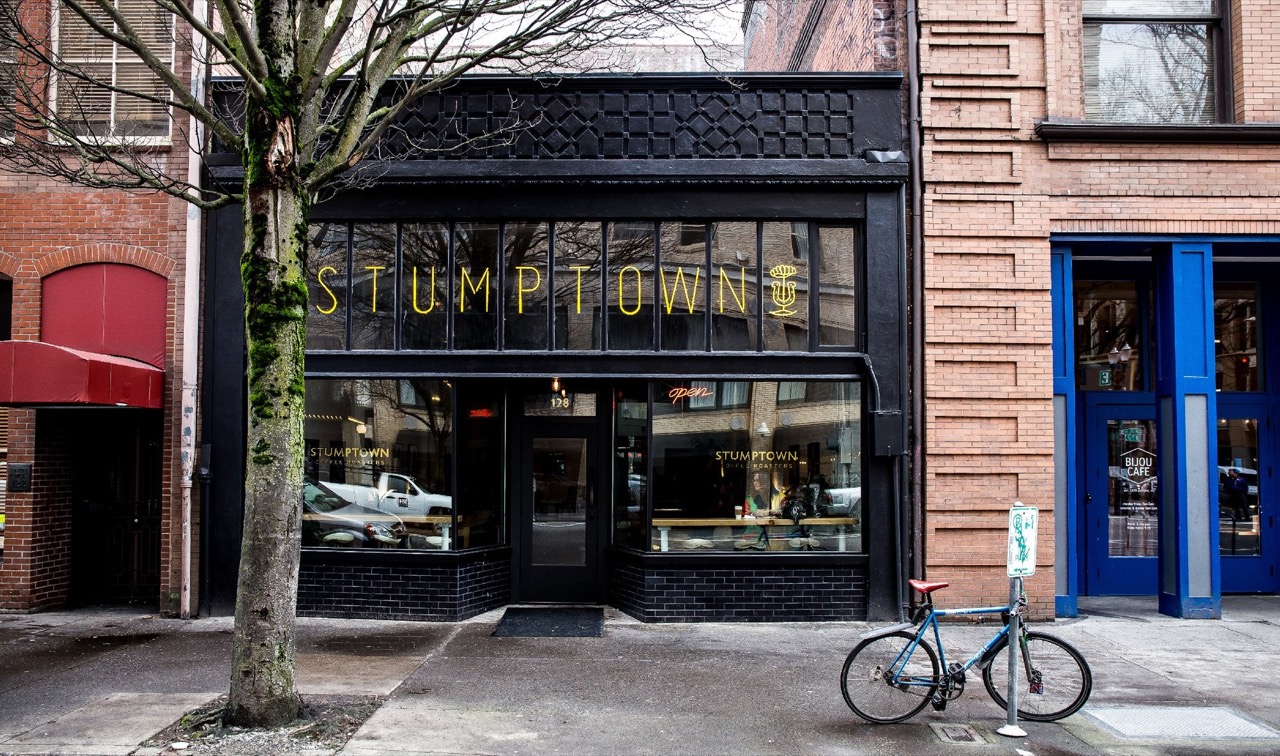
The city it started inThe Southwest Washington Street shop in Portland. Five shops still operate in the city where it began in 1999. ⓒStumptown Coffee RoastersWhere it startedThe Southwest 3rd Avenue shop in Portland, a downtown store in the city of the 1999 founding. ⓒStumptown Coffee Roasters
16.The ground where 850 seats once stood became a parking lot, and the surviving lobby has taken in a coffee counter. It is a shop that needs to clear 124 transactions a day to cover labor and rent, and three quarters of that fixed cost is people. Converting the ground floor of a building registered as a theater or performance hall into a food-service unit in Korea brings a use-change process and a septic capacity calculation, and the older the building, the worse those numbers line up.