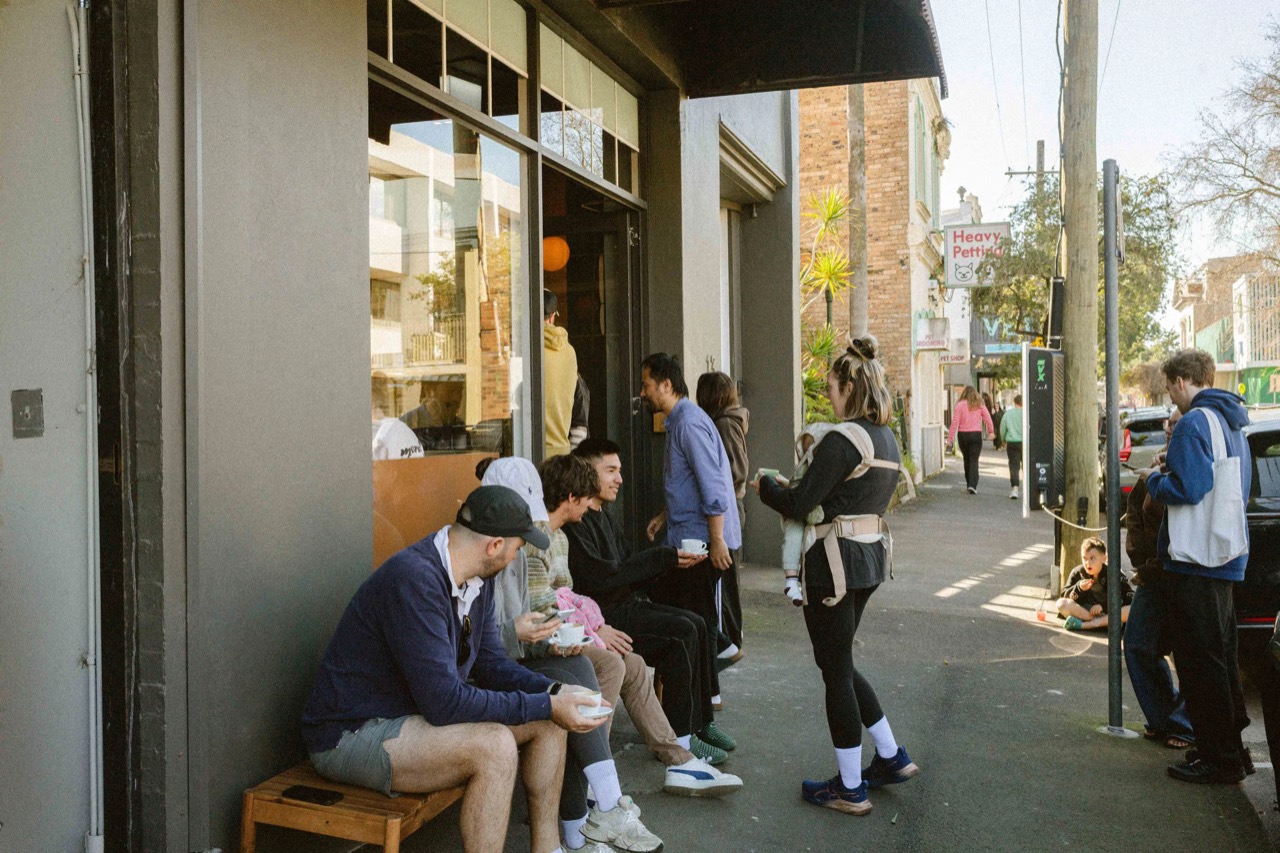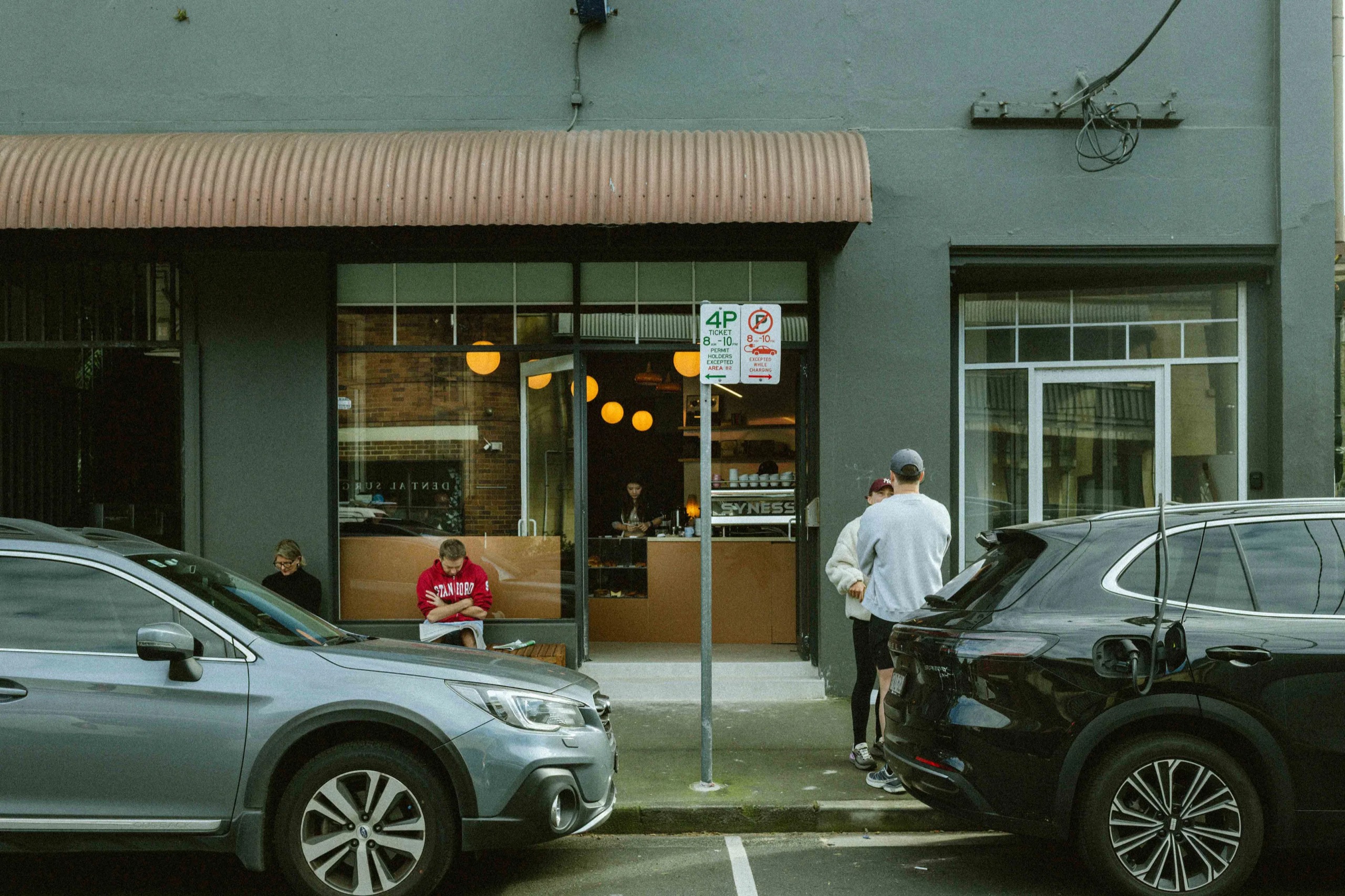
A coffee shop has opened in a residential pocket on Sydney's western peninsula, in a unit left empty by a gluten free doughnut shop. One speaker hangs on the wall above the bar, and the back room is turning into a second hand record rack. Doors open at 6am and close at 3pm.
1.The address is 13 Beattie Street, Balmain, and the name is Phono Stage. It took the space Nutie's doughnut shop used to hold, and the local title Broadsheet covered it on 12 August. Open every day from 6am, shut by 3pm. The published menu is coffee, matcha and pastry.
2.The owner is Kevin Tu. He spent 15 years behind espresso machines in Sydney, moving through training, wholesale and store operations. This is the first shop under his own name. He calls it a kissa, the word for the small coffee bars scattered through Tokyo's back streets, and local coverage says Balmain has not had one before.
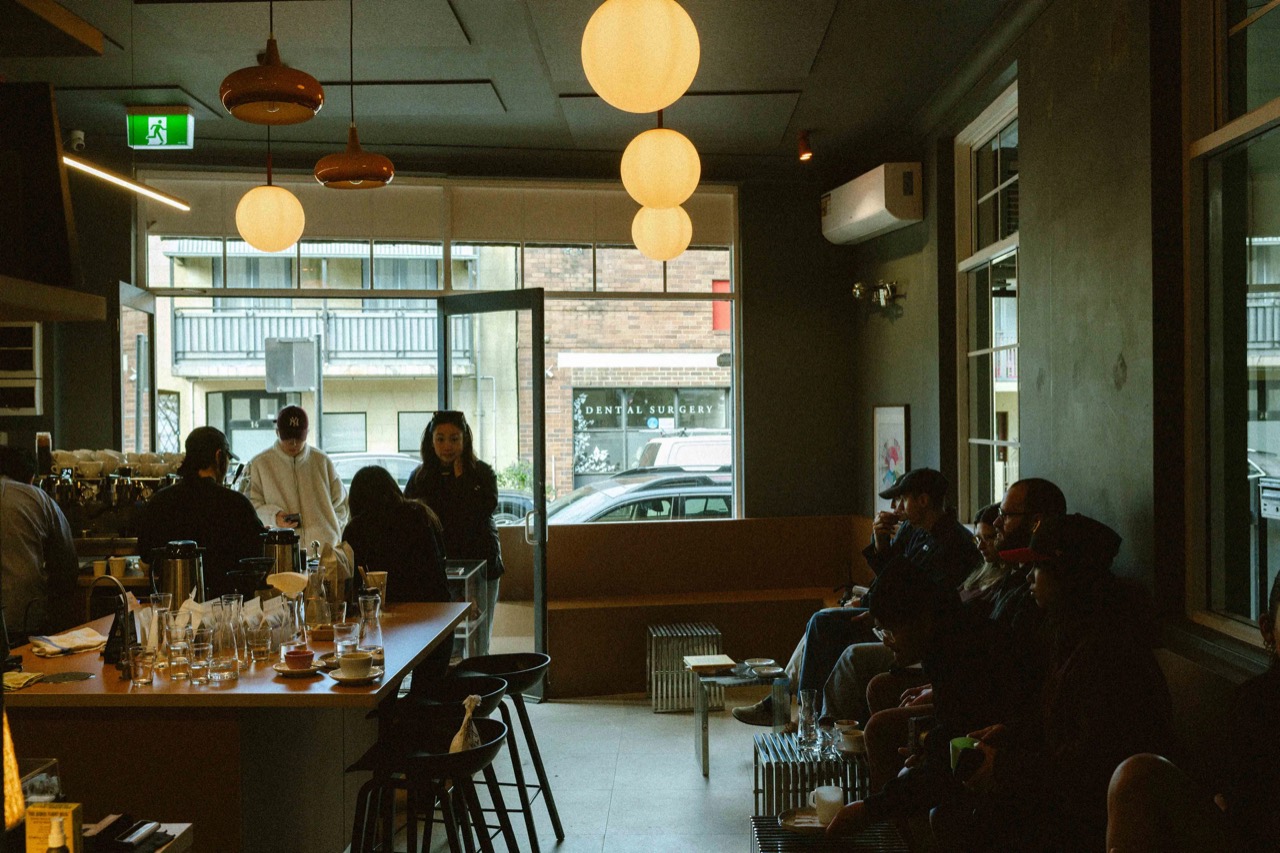
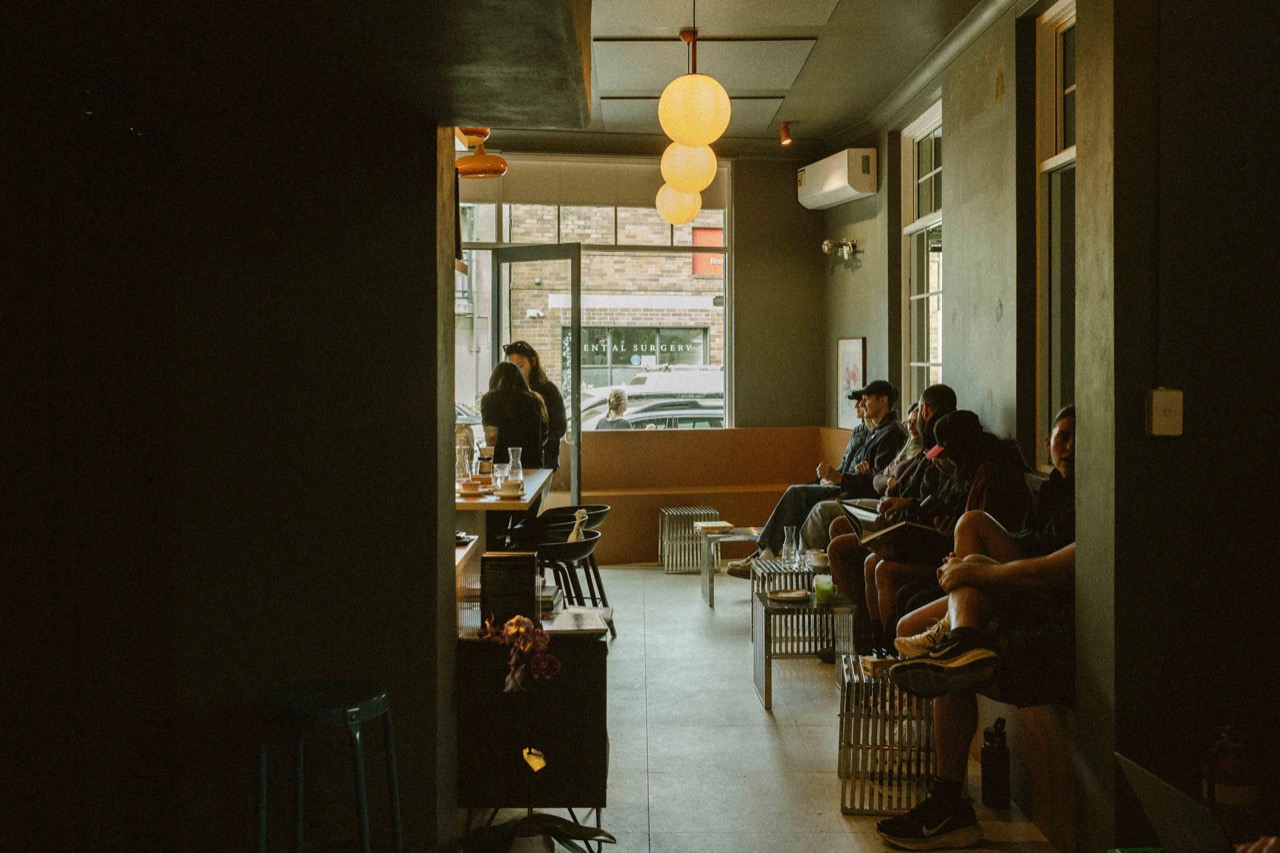
3.The plan runs deeper than it is wide. Past the glass frontage a bar counter and stools sit on the left, while a built in banquette runs along the right wall to the back. The silver metal side tables in front of the banquette come up to knee height. Light is gathered toward the street, so it darkens as you walk in, and the bright seats go first to the morning crowd.
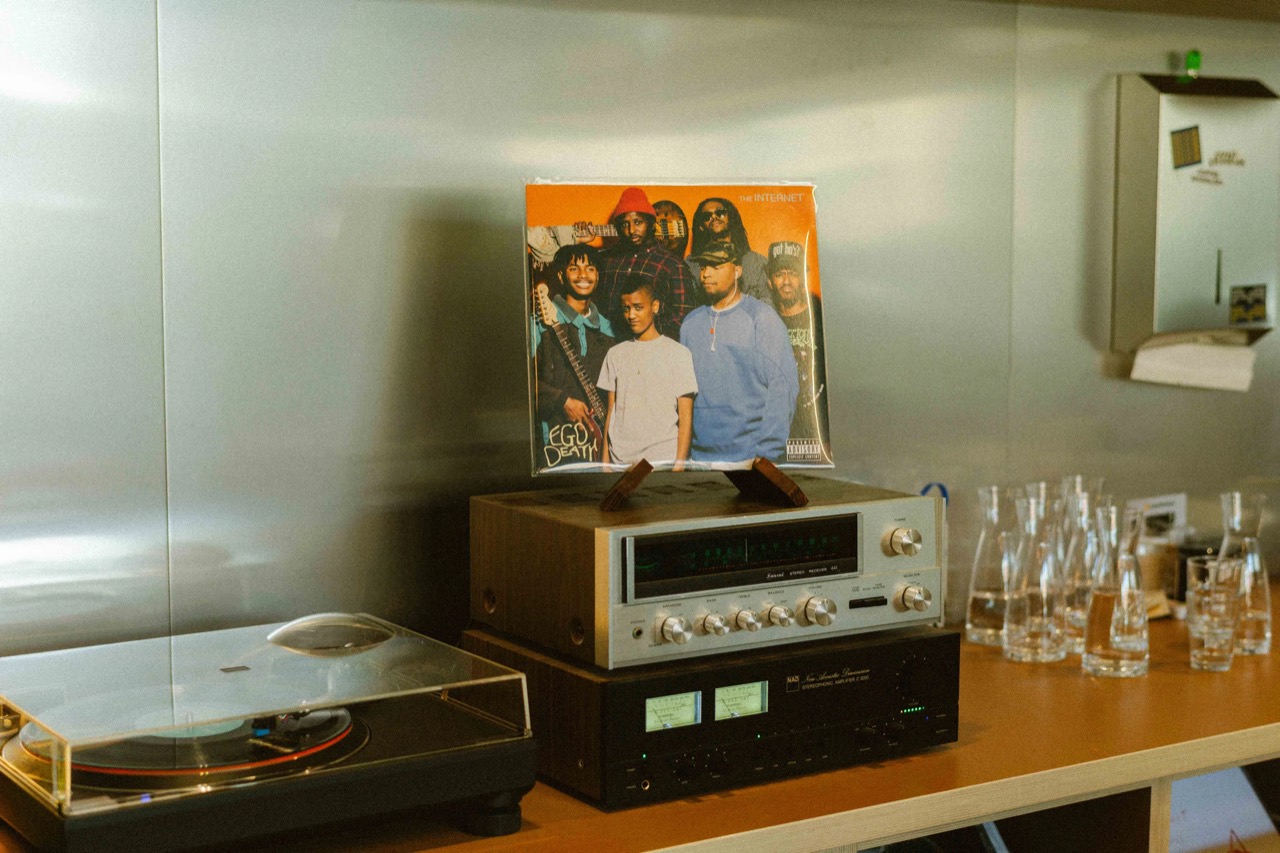
4.The sound comes out of one box. A vintage speaker hangs on the wall above the bar, and a turntable sits on a low cabinet at the back with a Sansui receiver and a NAD amplifier stacked beside it. The record in play has its sleeve propped on a wooden stand. Look up and you see what is on. With a single speaker the sound does not fill the room evenly, it arrives from one side. Not a volume that covers conversation, but one that fills the gaps in it.
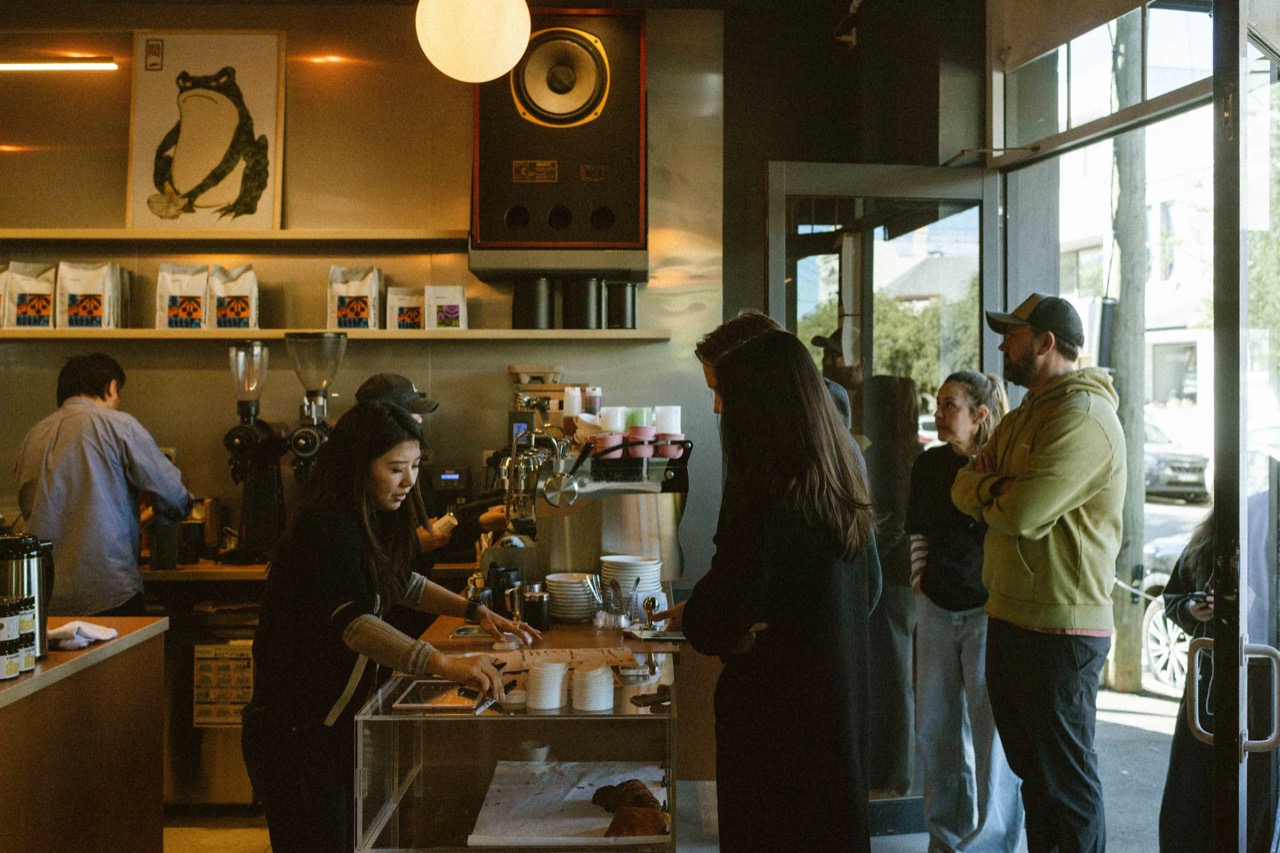
5.The house blend is roasted by Mecca Coffee. It began in 2005 as a basement espresso bar on King Street in Sydney and now roasts out of a warehouse in Alexandria, and it sits among the roasters that opened Australian specialty with direct trade and light roasting. Batch brew rotates through Primary, Made of Many, Beam and Ratio. Lightly roasted East African coffee through a filter puts acidity out front and sweetness behind it, which is what the published origins and roast levels allow rather than a cup anyone here has tasted.
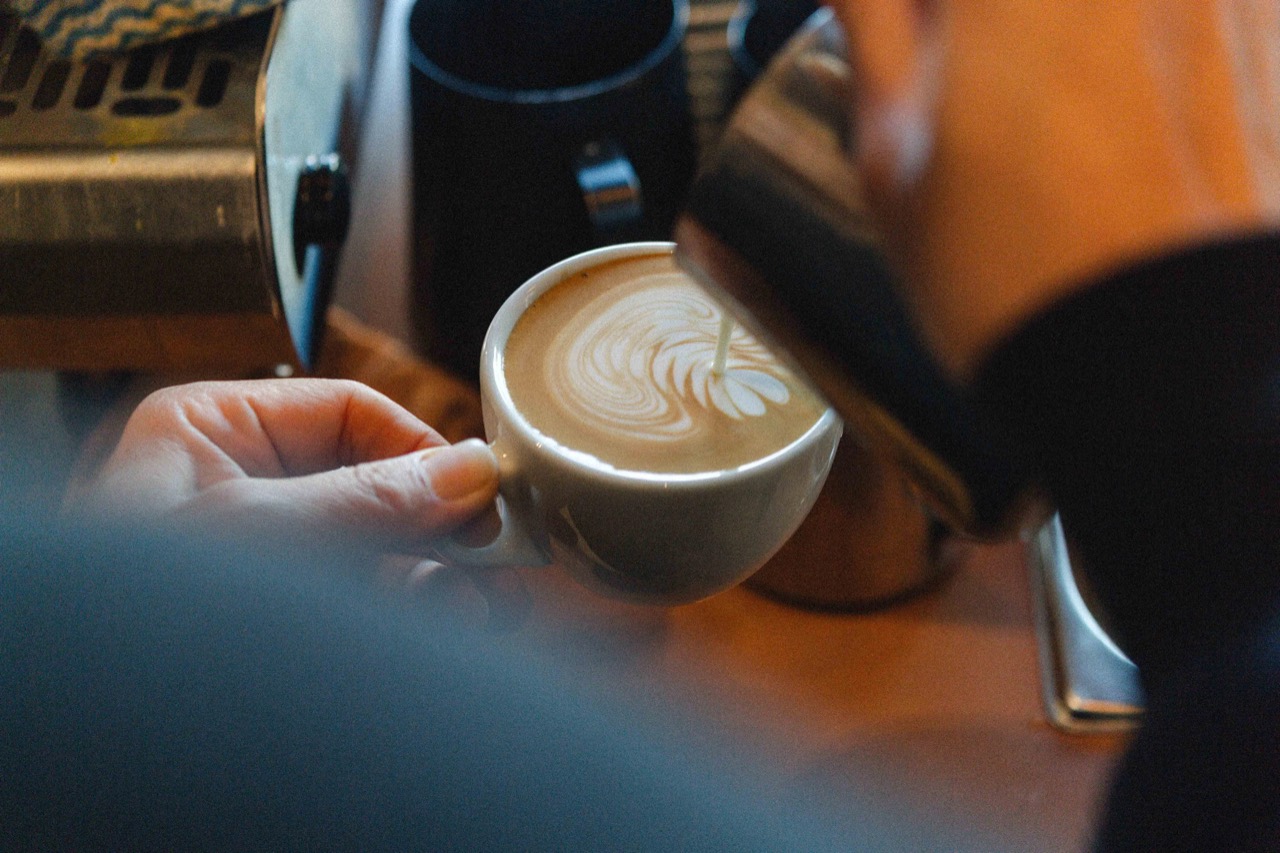
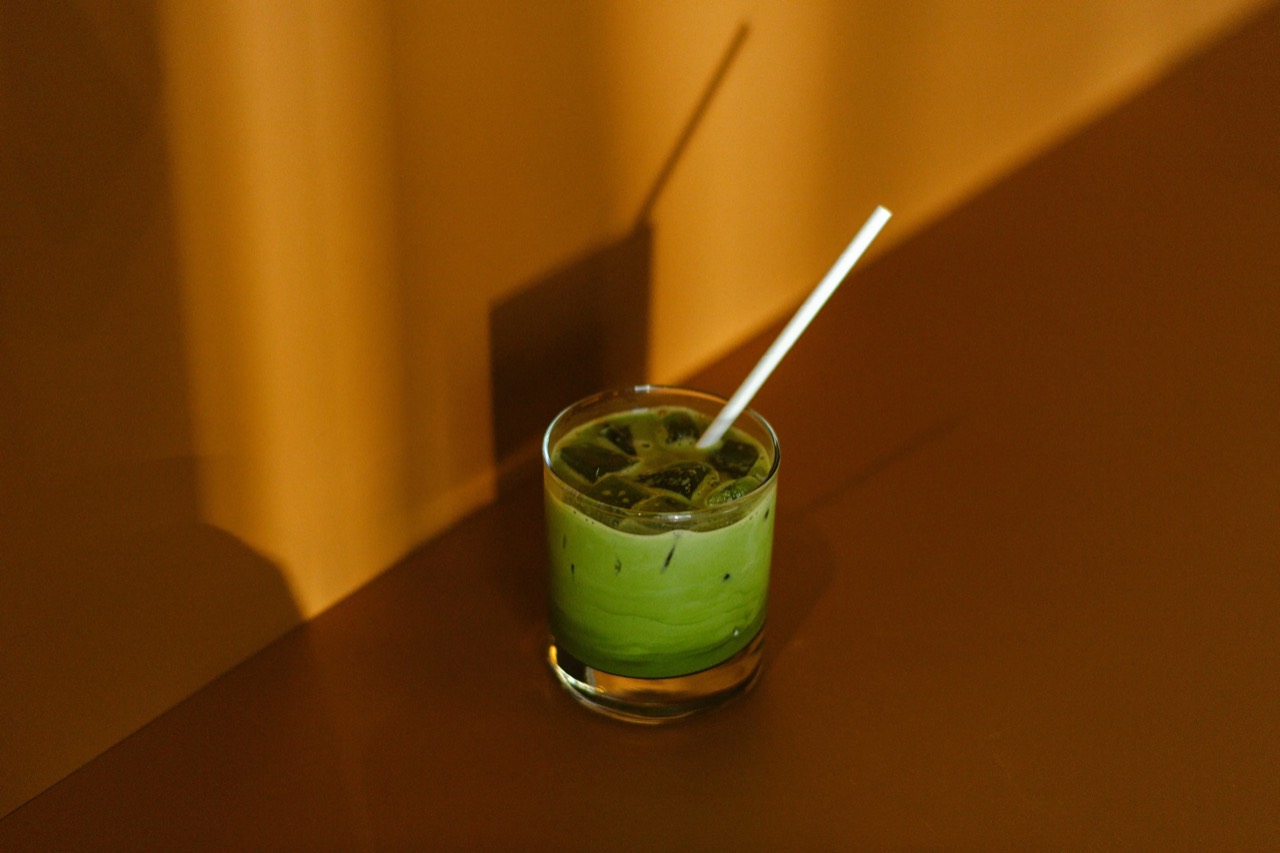
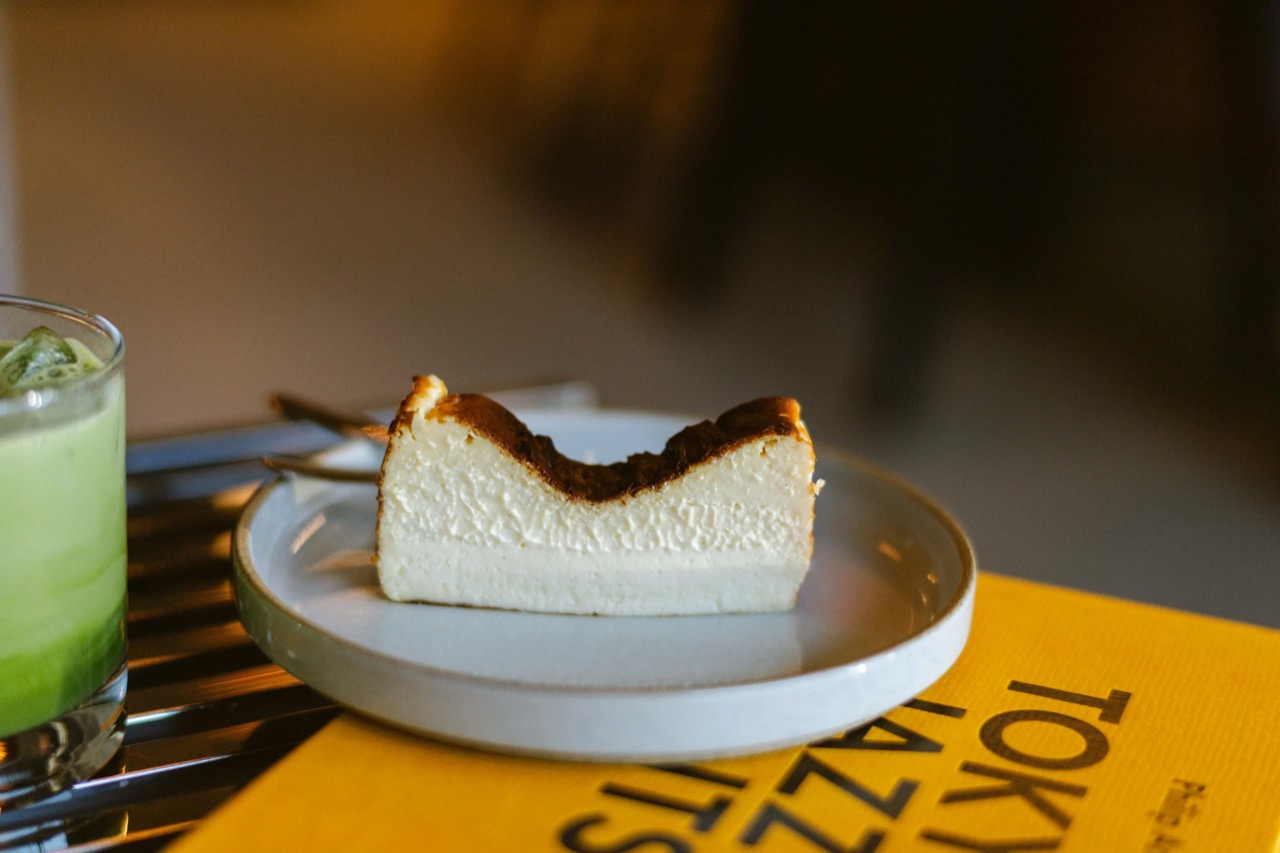
6.After the milk drinks, the one people reach for is matcha with house made yuzu honey. Pastries come from Penny Fours, a short walk away, and the Basque cheesecake is baked by Hue Coffee. A burnt top cheesecake wants a night of rest before the centre settles. Convenient for a shop that opens at 6am and takes delivery the day before.
7.Nine hours a day. Opening at 6am and closing at 3pm leaves no evening trade at all. Australian hospitality wages change with the hour, and penalty rates on evenings, weekends and public holidays push the effective rate 25 to 50 per cent above base. Giving up the evening costs revenue and drops the most expensive hours with it. Nine cheap hours, chosen on purpose.
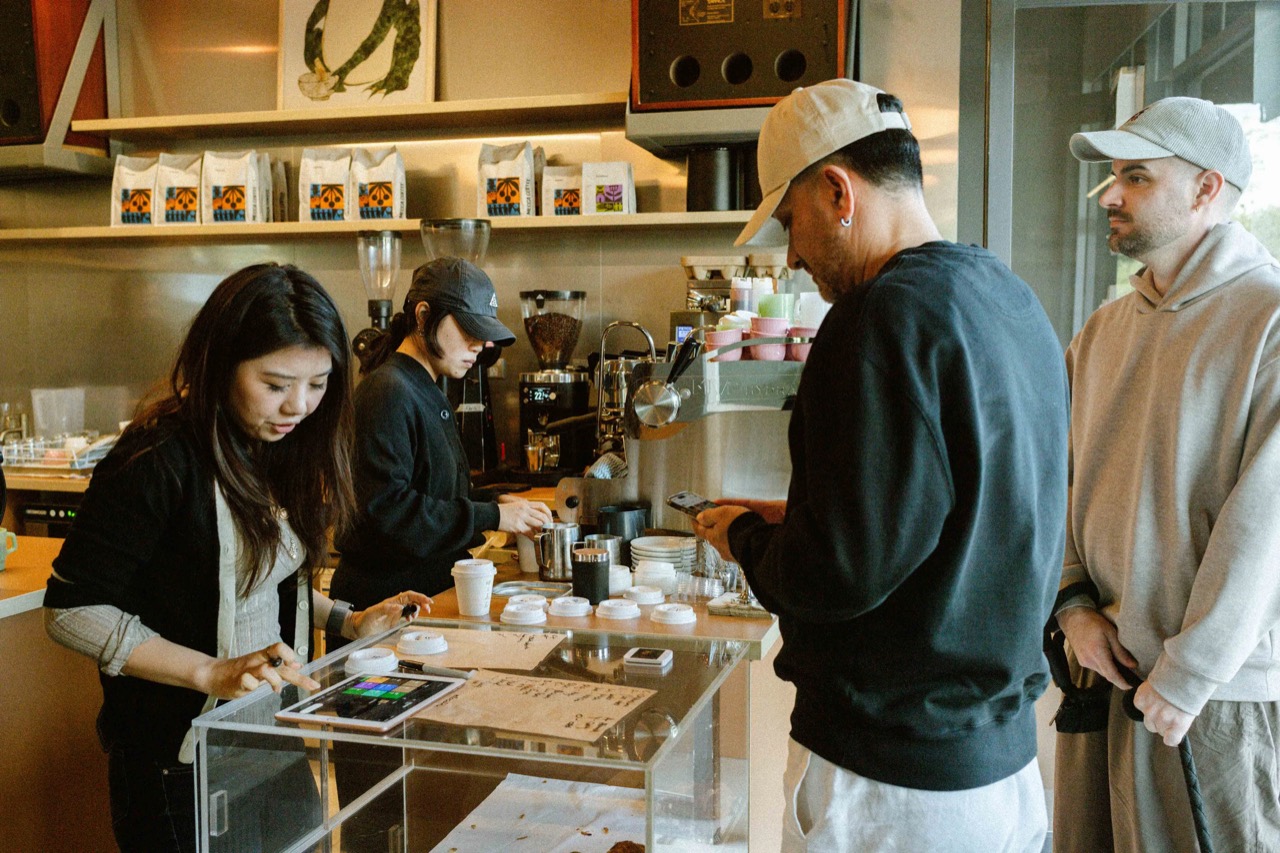
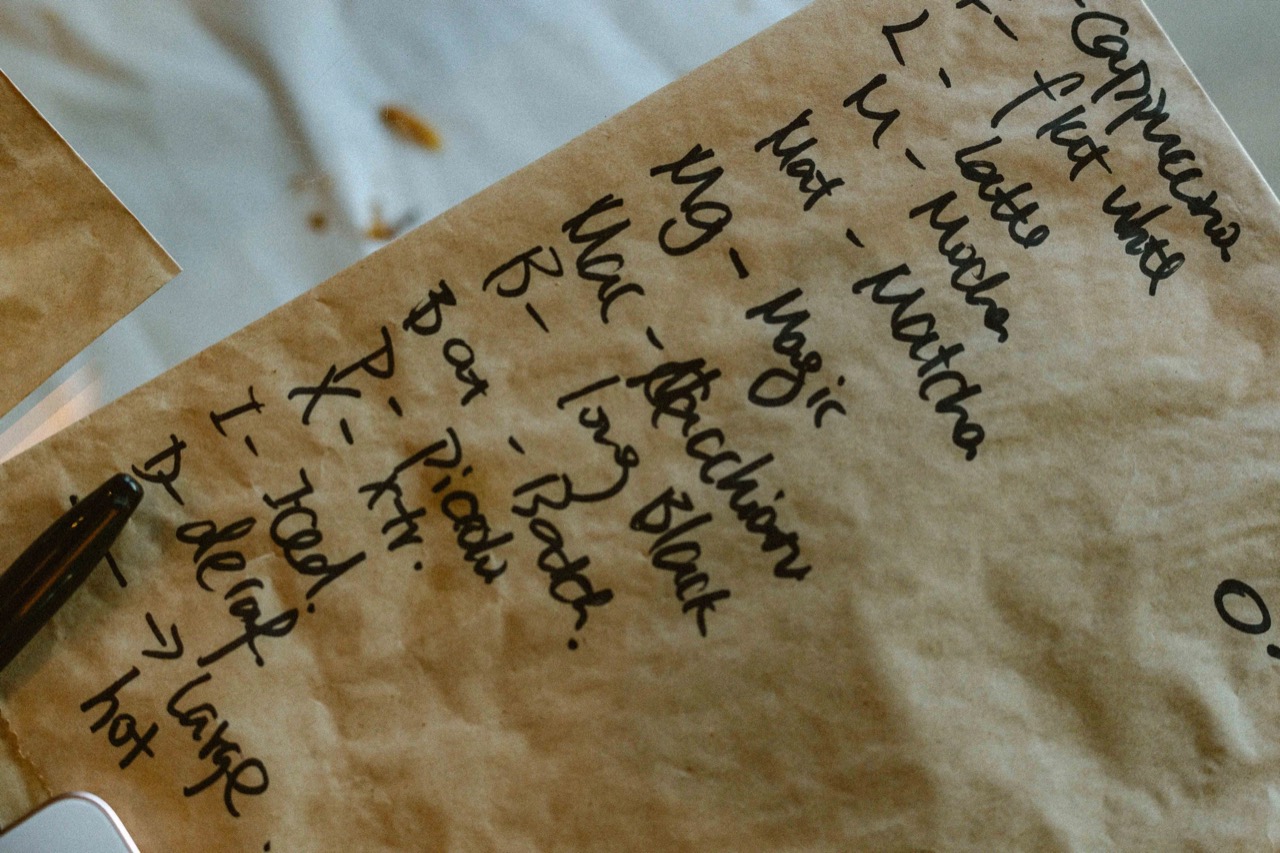
8.A flat white in Sydney averages AUD 4.82. Inner city specialty shops charge 6, and the rise since the pandemic runs to 30 per cent. Is the bean the only thing pushing that up?
9.Ingredients and labour together come to around 70 per cent of revenue. Add rent and outgoings, and what is left for an independent Australian cafe is a net margin of 2 to 6 per cent. One bad site can swallow a year of profit, which is why the structure starts to shake once occupancy costs pass 10 per cent.
10.Put the shop at 90 square metres with 24 seats, and it needs to clear 146 transactions a day before wages and rent are covered.
11.146 transactions across nine hours is 16 an hour. Filling that from seats alone would mean turning each one six times, and an album runs about 40 minutes. Can a shop that tells you to stay a while make its numbers on turnover? The count only works if takeaway cups in the morning are more than half of it.
12.The lounge nook at the back is becoming a second hand record rack. Retail coffee bags line the shelf behind the counter, and the crate below holds a Japanese pressing of John Coltrane and an album by Michael Jackson. Records move slowly as stock, but the cost ratio when one sells is lower than coffee, and above all the floor area is already paying rent and now does two jobs. Whether there is something to flip through on the way out is what separates one average ticket from another.
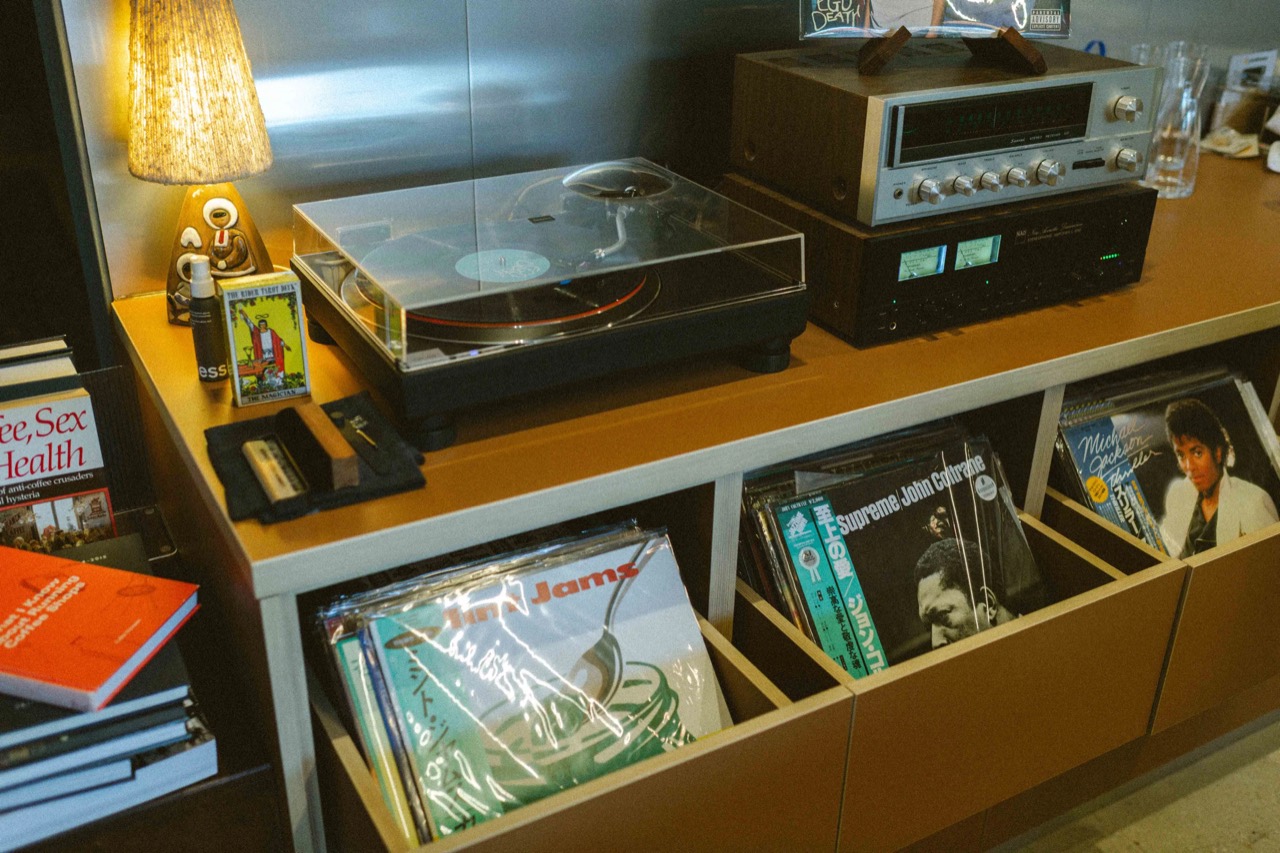
13.People do not sit here because it is quiet. Music makes sitting alone feel unremarkable, and a built in banquette facing the wall is kinder to the solo customer than a table for two. What the owner says reads more like an operating rule. "When you're playing an LP, you play the entire album from start to finish. It's a journey. People see the cover and notice what I'm listening to. It's not just something in the background, it's intentional."
14.Kissaten began playing music in Tokyo at the end of the 1920s. Records and playback gear cost more than a person could buy, so the shop bought them instead and the customer rented the sound with the price of a coffee. The conditions have flipped. Recordings all live in your pocket now and cost close to nothing. What has become scarce is not the record but the time to hear one through.
15.Most of the shops that carried the kissa west open at night and sell alcohol. Spirits carry a higher gross margin than coffee, and evening customers sit longer and order more rounds, which is how that arithmetic works. This one shut that back door itself. Daytime only and dry, there is nothing to lean on but transaction count.
16.A coffee shop moved into the space a doughnut shop left, hung one speaker on the wall, and will soon turn the back room into a record rack. A 24 seat shop has to ring up 146 transactions a day before wages and rent are covered, and the ones making that number are not the people staying but the ones carrying a cup out in the morning. In Korea the first thing you run into is the music. Playing records in a venue triggers a public performance fee once the floor area crosses the threshold, and selling second hand records means registering retail on top of the food service licence.