retailHoteldiningdrinkCultureSpaceCafeBrand
ArticlesTravel
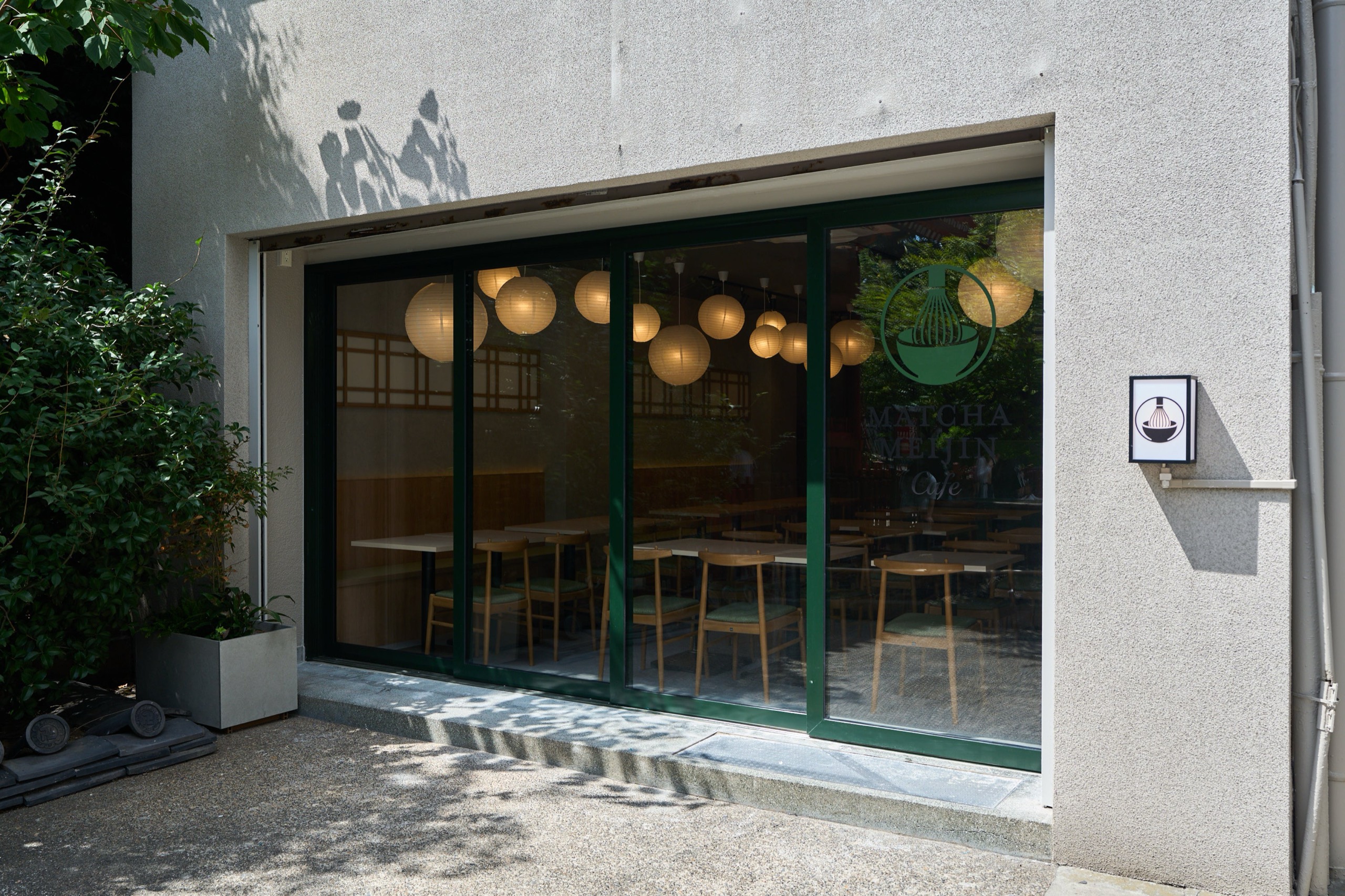
One sliding bay onto the street · A glass slider in green sashes set into a grey exterior wall. The yellow globe lights hung inside are visible from outside. ⓒ株式会社丸三
One sliding bay onto the streetA glass slider in green sashes set into a grey exterior wall. The yellow globe lights hung inside are visible from outside. ⓒ株式会社丸三
Daily drink

Four and a half tatami upstairs out-earn 24 seats below (Tokyo, matcha cafe)

2026.08.30

A matcha cafe has opened one block off the busiest temple approach in Asakusa. The ground floor holds two-seater tables under white paper lanterns, the floor above a tea room laid with four and a half tatami mats. This is the year the base leaf behind matcha went up 2.3 times in price. Doors open at 8 a.m.

1.The address is 2-3-61 Asakusa, Taito Ward, Tokyo, floors one and two of the Nitenmon Building II. The shop is called MATCHA MEIJIN Cafe and it opened on August 6. It opens at 8 a.m. and closes at 6 p.m. Last order, 5:30.
2.Marusan Co., Ltd. runs it. Founded in 1982 and headquartered in Izumo, Shimane Prefecture, the company is led by Tsutomu Hatehara. Its businesses cover amusement, food service, hotels and hot spring inns, solar power, gyms and boxed meals. A company whose core business was never tea or coffee has laid tatami beside the most heavily walked temple in Tokyo.
3.Ten or so white paper lanterns drop low over the ground floor room. Tables are light wood and seat two, and the bentwood chairs carry pale green cushions. The back wall is finished in moss-coloured plaster with the bar counter standing in front of it. Black exposed ceiling with track lighting, grey mortar floor. The lanterns hang evenly, but through the day light only comes in from the glass side. A room that darkens the deeper you go.
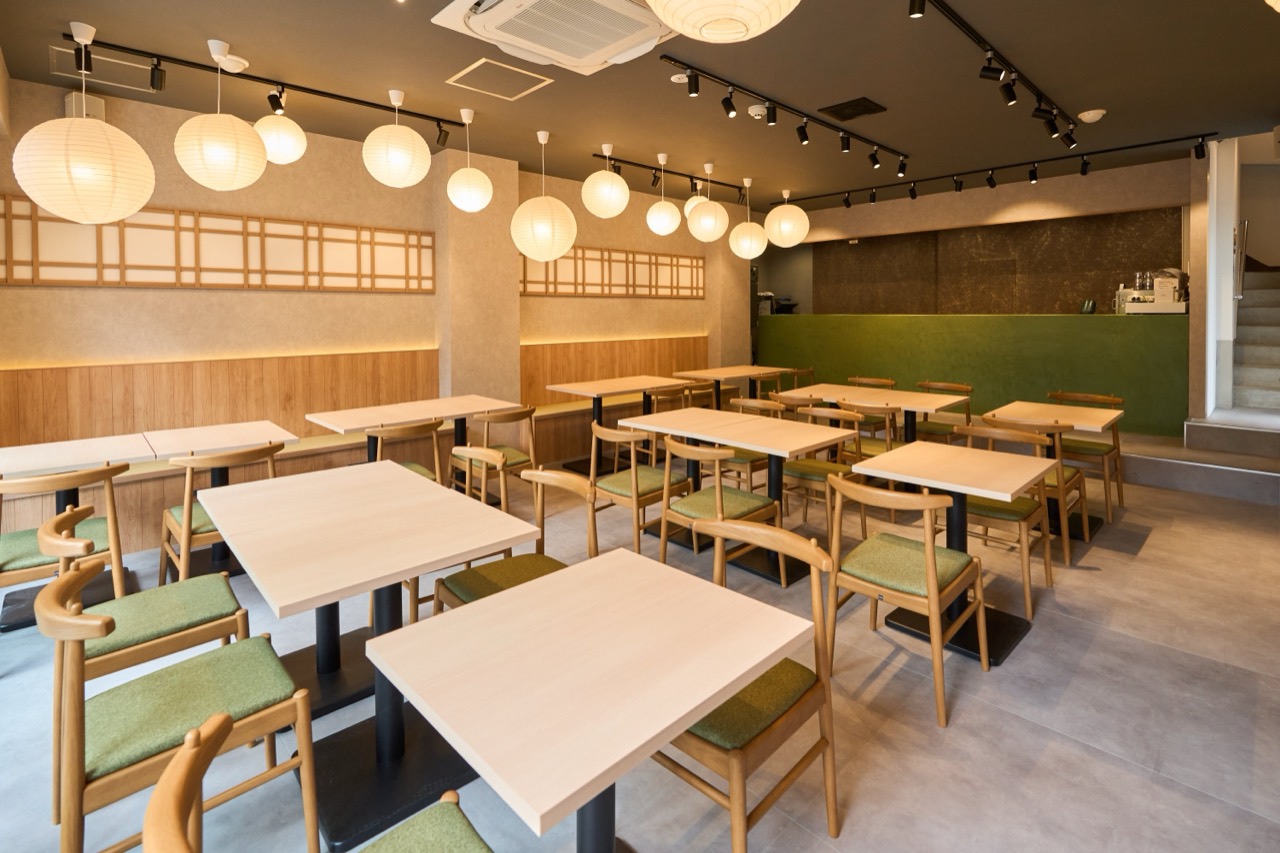
Two-seaters under paper lanterns · White paper lanterns drop low from the ceiling. The bar counter sits in front of the moss-coloured back wall. ⓒ株式会社丸三
Two-seaters under paper lanternsWhite paper lanterns drop low from the ceiling. The bar counter sits in front of the moss-coloured back wall. ⓒ株式会社丸三
4.The signature drink is a matcha latte called tatetate. Ground powder is whisked with water and poured over milk, so deep green gathers at the top of the cup while white milk stays below. Whether you stir it or drink it as it comes decides the first mouthful. Whisked matcha holds a fine foam on the surface, but poured over ice that foam does not last. Which is where the clear plastic cup earns its place. The layers have to be visible for the drink to explain itself.
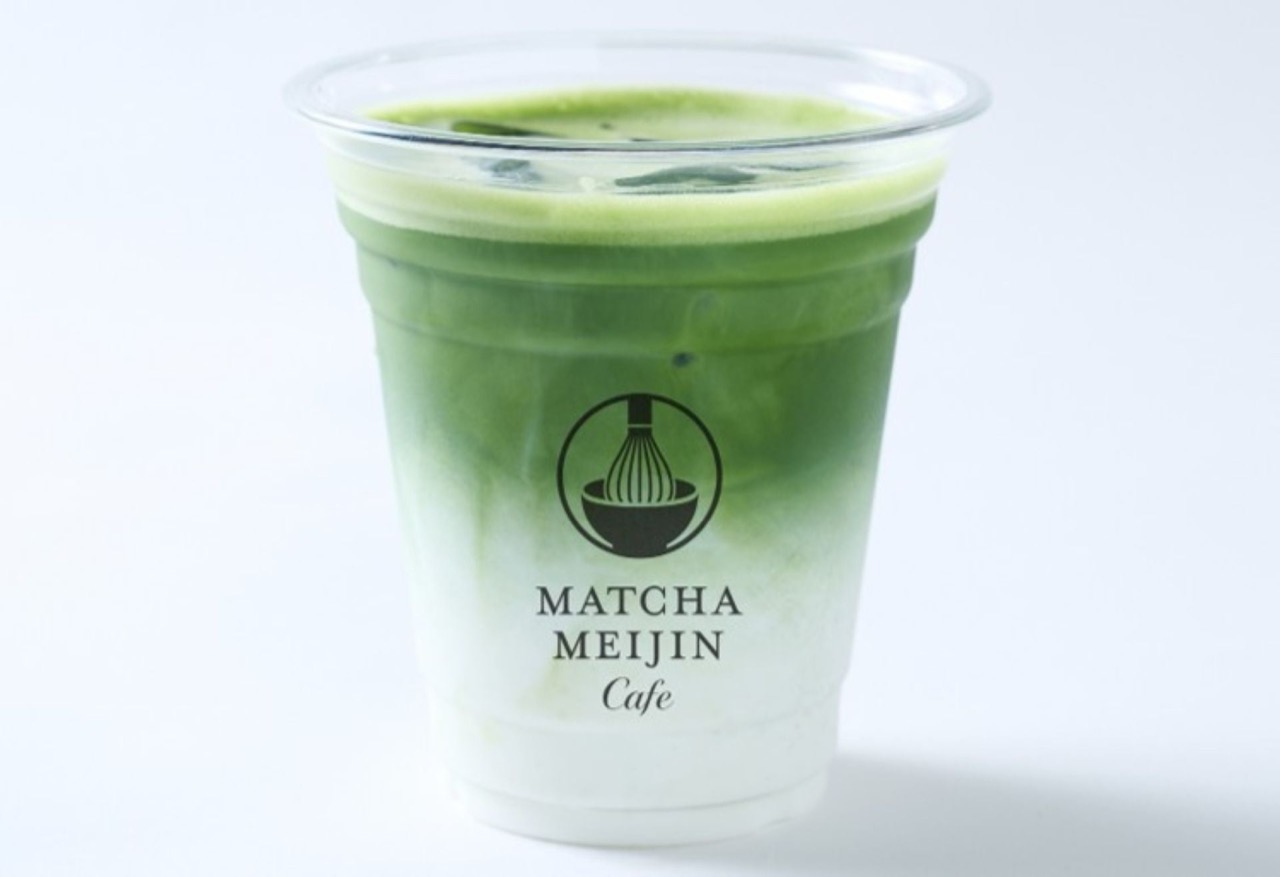
Served unstirred · Matcha poured over milk and served in two layers. The logo printed on the cup is a tea bowl and a chasen. ⓒ株式会社丸三
Served unstirredMatcha poured over milk and served in two layers. The logo printed on the cup is a tea bowl and a chasen. ⓒ株式会社丸三
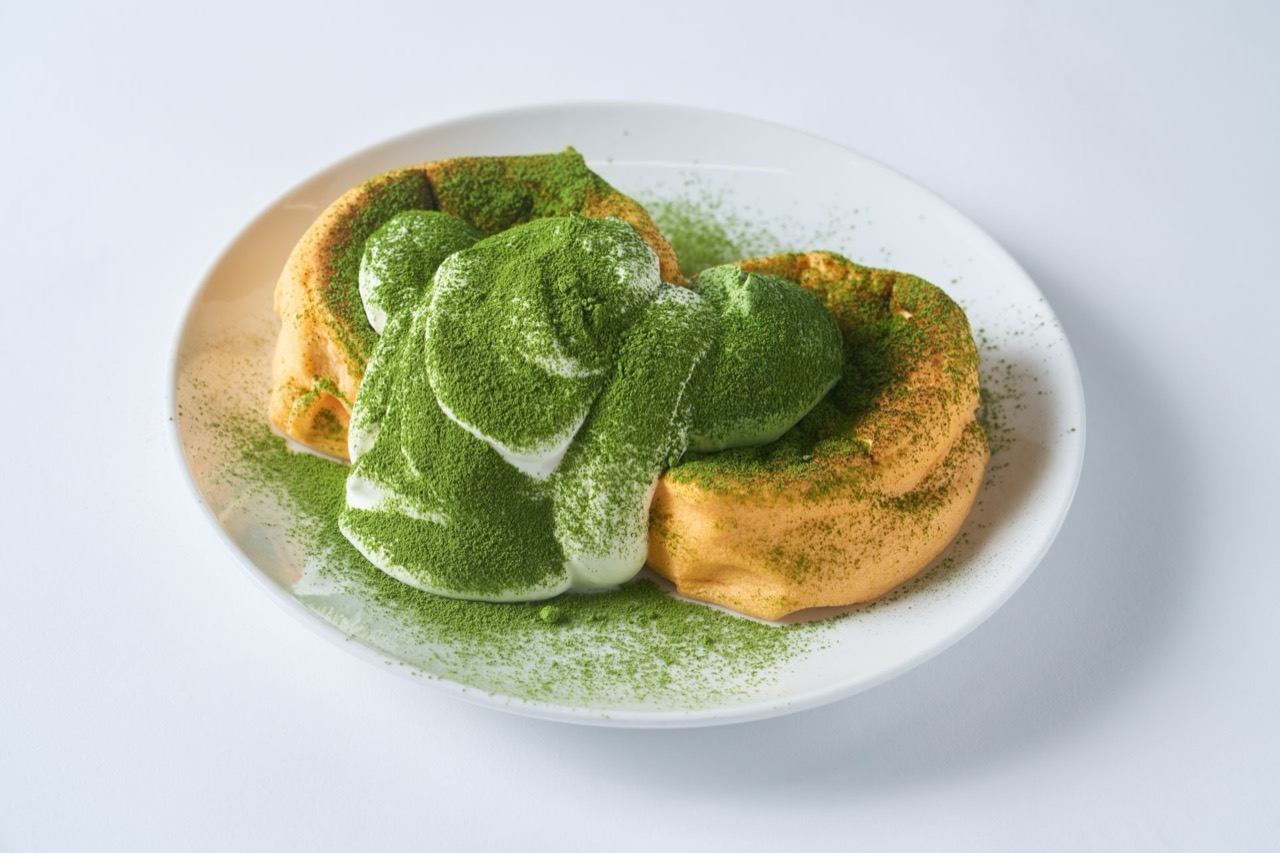
Baked to order · Matcha pancakes. Matcha powder is dusted over the cream again before serving. ⓒ株式会社丸三
Baked to orderMatcha pancakes. Matcha powder is dusted over the cream again before serving. ⓒ株式会社丸三
5.The second floor is up the stairs. It is a tea room laid with four and a half tatami on a platform raised one step, and indirect light from beneath that platform lifts the green edging of the mats out of the dark. A hanging scroll and a single flower in the tokonoma ahead, three shoji panels to the left. Here a tea practitioner demonstrates the whisking, guests take the chasen themselves, then three kinds of matcha are shared. English is available, the shop says.
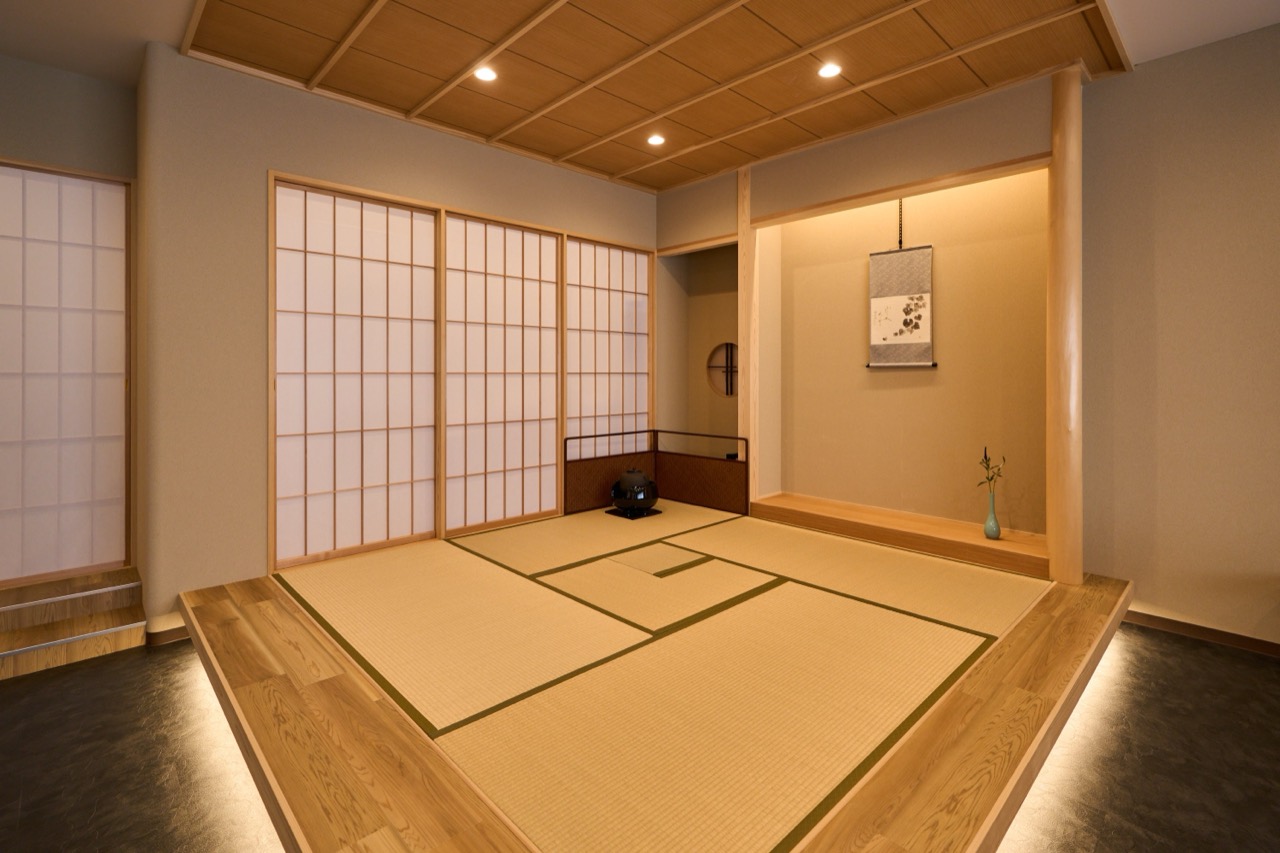
Four and a half tatami · The floor is raised one step with lighting set beneath it. The alcove on the right is the tokonoma. ⓒ株式会社丸三
Four and a half tatamiThe floor is raised one step with lighting set beneath it. The alcove on the right is the tokonoma. ⓒ株式会社丸三
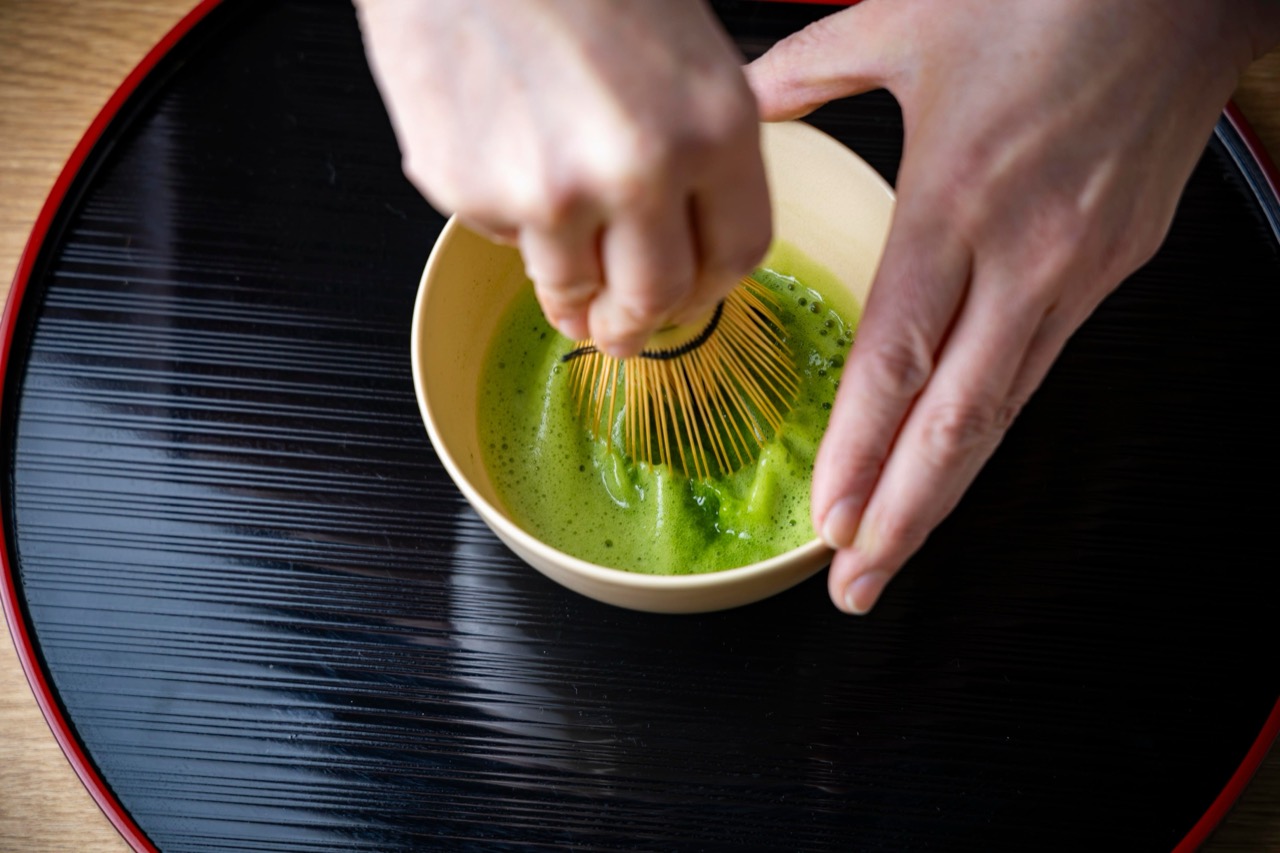
Guests hold it themselves · After the demonstration, guests take the chasen. The photo shows the tea ceremony at the same company's Ginza location. ⓒ株式会社丸三
Guests hold it themselvesAfter the demonstration, guests take the chasen. The photo shows the tea ceremony at the same company's Ginza location. ⓒ株式会社丸三
6.People arriving in Asakusa already have something in their hands by the time they walk into a cafe. Coming through the Nakamise arcade they bought a ningyoyaki or a senbei, and what makes them want to sit down is their feet rather than their stomach. Opening at 8 a.m. reads that sequence. The temple is quietest in the morning, so how many cafes in this neighbourhood are open at that hour?
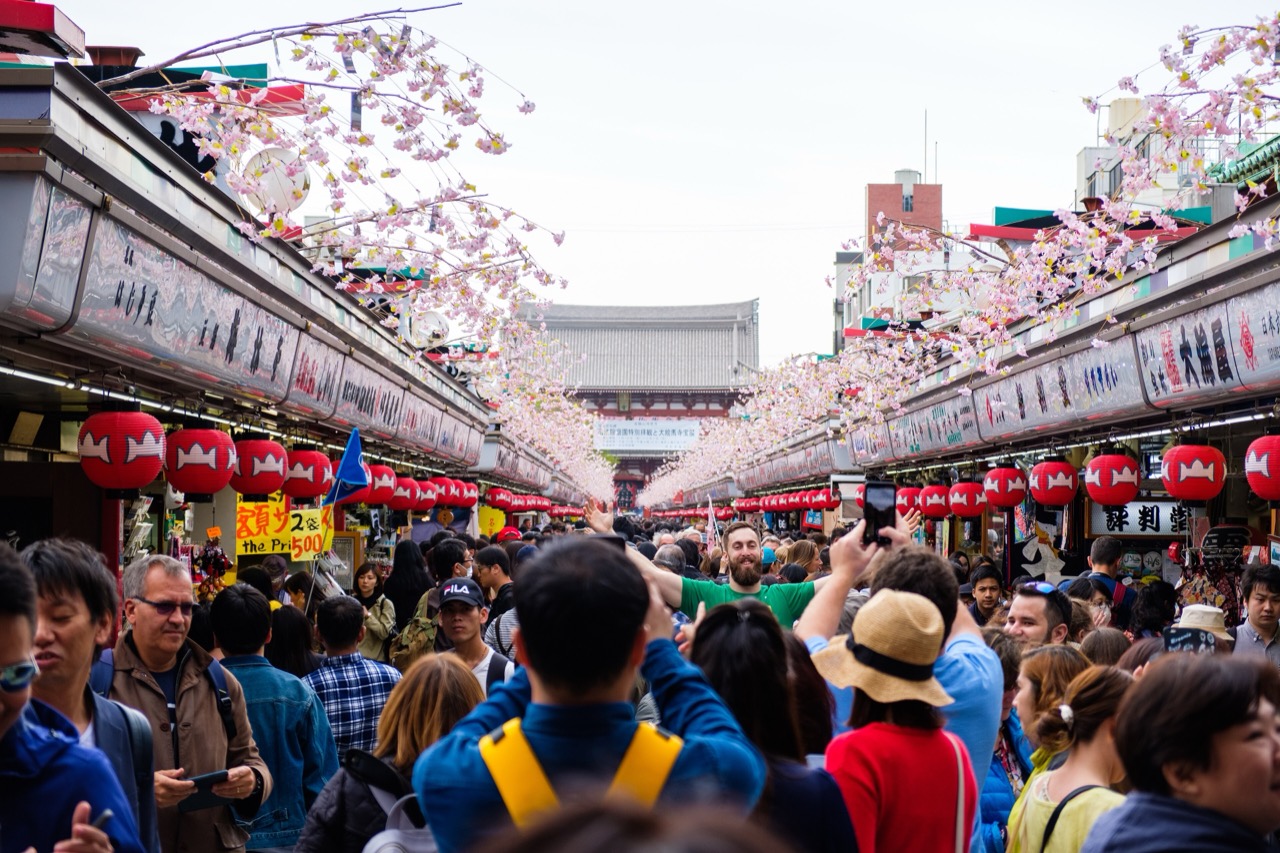
Passing through with full hands · The Nakamise arcade leading to the temple. Under red lanterns and cherry blossom decorations, the crowd never thins. ⓒjessedyck · CC0 · Wikimedia Commons
Passing through with full handsThe Nakamise arcade leading to the temple. Under red lanterns and cherry blossom decorations, the crowd never thins. ⓒjessedyck · CC0 · Wikimedia Commons
7.Nitenmon is the eastern gate of Sensoji. It stands one block back from the north-south axis that links the main hall and Nakamise. That much less foot traffic goes past. Thirty million people a year are said to come to this temple, and this shop did not attach itself to that axis. A spot you can call quiet costs less in rent than a crowded one.
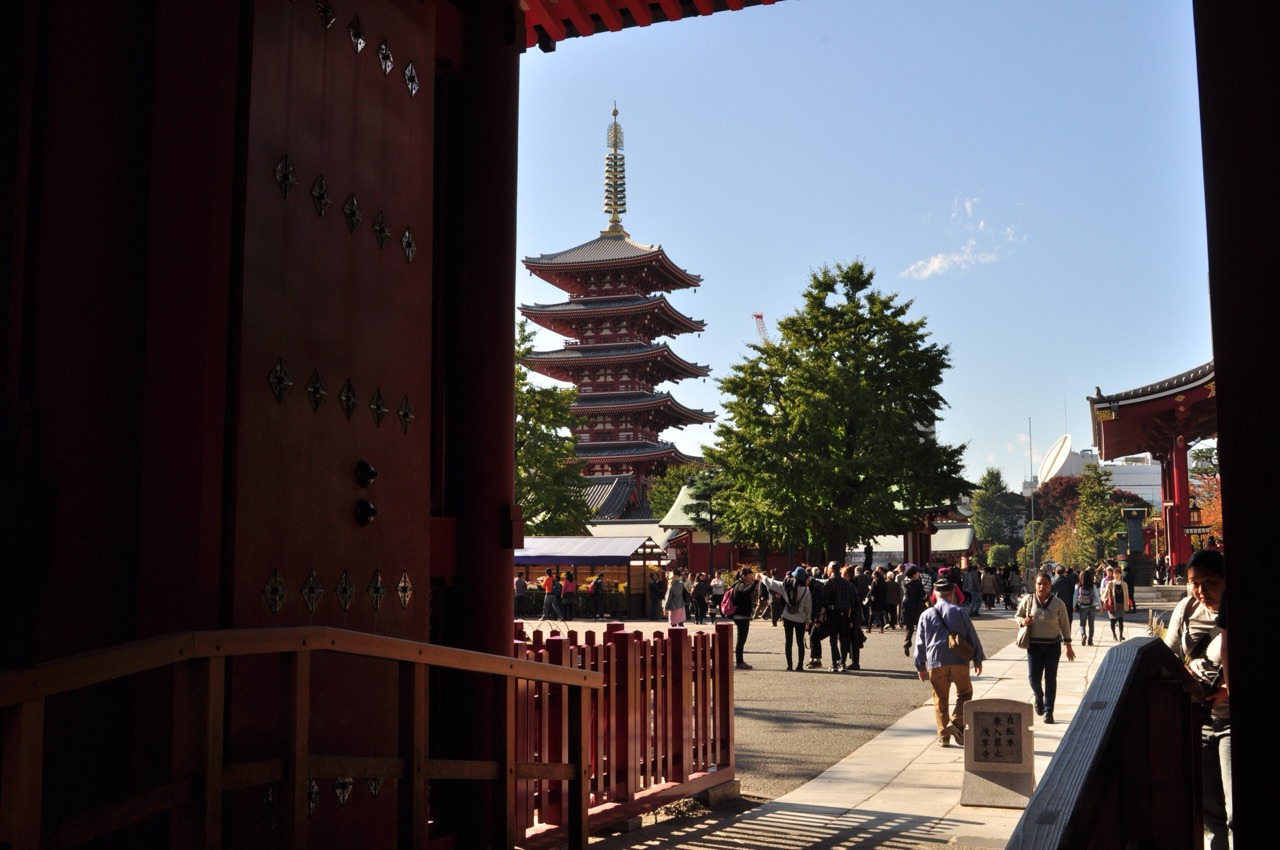
The eastern gate · The grounds seen from Nitenmon. The five-storey pagoda and the axis toward the main hall lie to the right. ⓒJoe Mabel · CC BY-SA 3.0 · Wikimedia Commons
The eastern gateThe grounds seen from Nitenmon. The five-storey pagoda and the axis toward the main hall lie to the right. ⓒJoe Mabel · CC BY-SA 3.0 · Wikimedia Commons
8.The layout works because drinks are not the only thing on sale. LPC JAPAN STUDIO, which the same company runs in Ginza and Asakusa, sells tea ceremony, wagashi making, yukata dressing, ukiyo-e colouring and ninja sessions for between 3,300 and 11,000 yen. Experiences arrive by reservation, and a guest who booked is not a guest who wandered in. Make people come to you and the need for a prime corner drops.
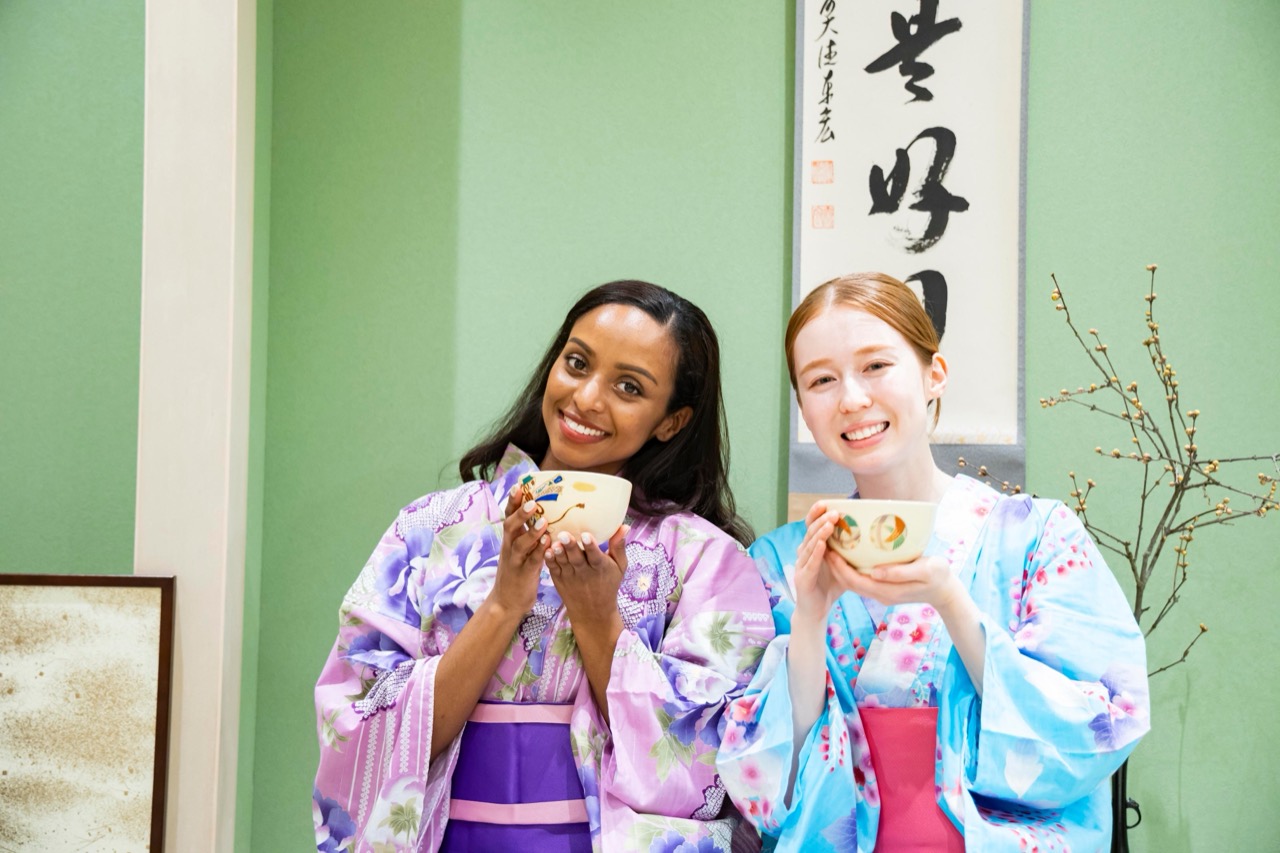
Experience first, drink second · The tea ceremony at the same company's Ginza facility. Yukata rental is bundled in. ⓒ株式会社丸三
Experience first, drink secondThe tea ceremony at the same company's Ginza facility. Yukata rental is bundled in. ⓒ株式会社丸三
9.Ground floor retail rent in Asakusa averages 36,819 yen per tsubo a month, and the 2-chome block where this shop sits is where the top figure is recorded. In the 2026 published land prices, commercial land across Tokyo rose 12.2% while Asakusa alone cleared 20%. The reason is simple. Foreign visitors get off here.
10.Put the two floors together at 40 tsubo and apply the average rate, and monthly rent lands around 1.26 million yen. Seats countable on the ground floor in published photos come to about 24. Can seating alone carry that rent? The arithmetic says no. Rent for a cafe belongs below 10% of revenue, and on seats alone it runs to five times that.
11.Raw material prices did move sharply this year. The trade price of the leaf behind matcha jumped 2.3 times in twelve months. But a cup uses 3g, so what lands on a single drink is under 100 yen. What shakes this shop is not the raw material.
좌석만 세우면 93%, 다실을 더하면 61% (추정) 재료비와 인건비, 임대료를 합한 비율 · 업계에서 보는 안정선은 매출의 70% 안정선 70% 1층 좌석 영업만 93% 재료비 14% · 인건비 30% · 임대료 49% 두 층 합산 61% 재료비 12% · 인건비 30% · 임대료 19% 재료비 인건비 임대료 좌석 영업만으로 세우면 공과금 전에 이미 적자 임대료 하나가 매출의 절반을 가져간다 위층 매출이 들어오면 임대료 비중 19% 같은 임대료를 큰 매출로 나눈 결과
Same rent, different denominatorThe industry ratios are published figures, while revenue and the labour ratio are estimates built from published photos and comparable markets. The rent figure is identical in both calculations.
12.A room laid with four and a half tatami is 2.2 tsubo. Run 45-minute sessions in that room and one space upstairs passes what the whole floor below makes turning over three times a day. The floor that sells time rather than area wins. Seats charge for one drink, the tea room charges for 45 minutes.
2.2평이 22평보다 많이 번다 (추정) 아사쿠사 평균 임대료와 좌석·체험 회전으로 세운 월 단위 계산 1층 좌석 영업 월 259만엔 24석 · 하루 3회전 · 객단가 1,200엔 2층 다실 체험 월 396만엔 4인 · 45분 · 하루 6회 · 1인 5,500엔 1층 임대료 22평 월 81만엔 2층 임대료 18평 월 45만엔 평당 월 매출 1층 11.8만엔 · 다실 180만엔 두 층을 합친 월 매출 655만엔 임대료 비중 19% 두 층 임대료를 1층 매출로만 세면 49% 체험 한 자리가 대신하는 잔 수 라테 6.9잔 타이야키와 원두 소매는 넣지 않았다
The wide floor and the expensive oneRent rates and experience pricing are published figures, while area, seats, turnover and average spend are assumptions built from published photos and comparable venues, not numbers this shop disclosed.
13.Shops selling tea ceremony to tourists in Asakusa are nothing new. What is new is who does the selling. Not a tea wholesaler and not a confectioner, but a company that ran arcades, hot spring inns and solar plants in Shimane built this product. The brand names are tied together under meijin, so the sibling shop in Asakusa selling soba is Shio Meijin and this one is Matcha Meijin. A name built first, with the line of business hung underneath it.
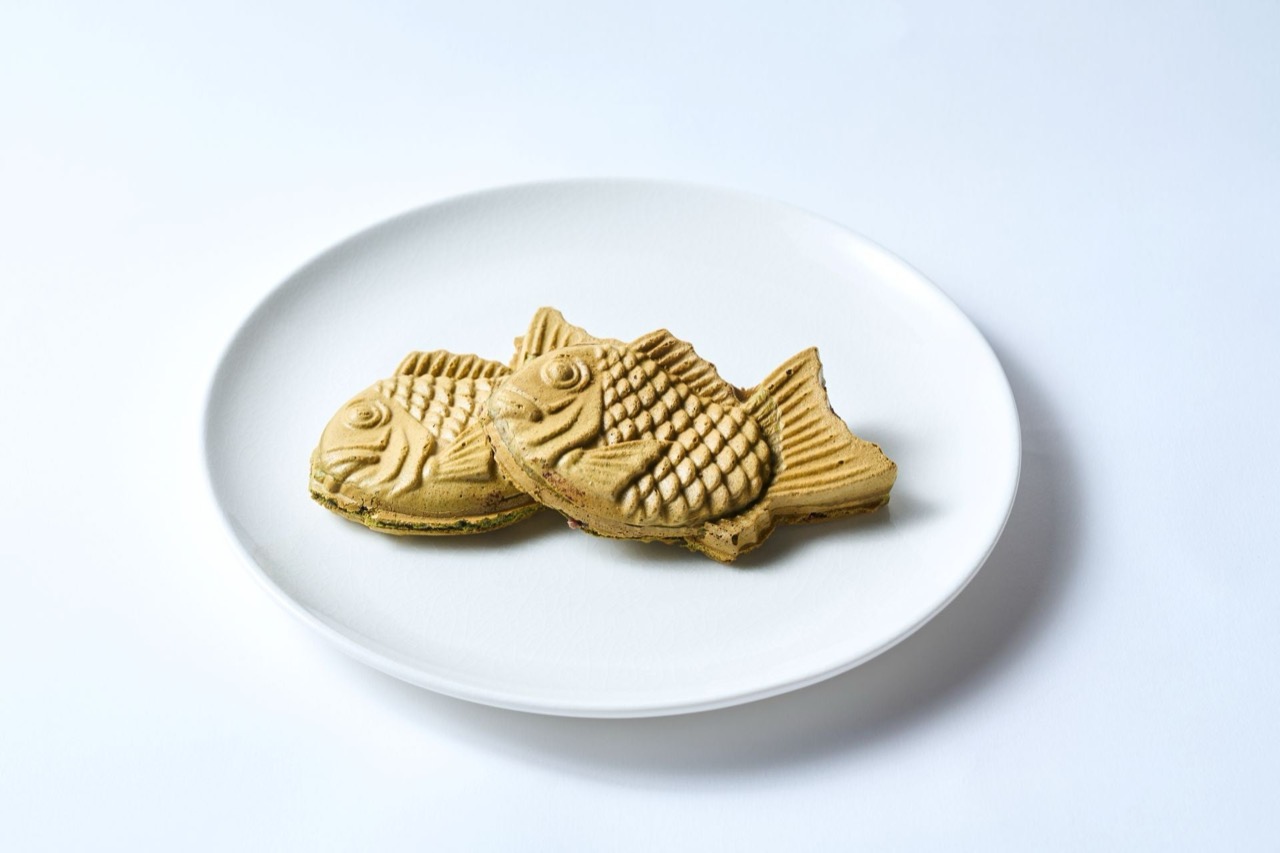
Something to carry out · Matcha taiyaki. The item that catches guests who buy rather than sit. ⓒ株式会社丸三
Something to carry outMatcha taiyaki. The item that catches guests who buy rather than sit. ⓒ株式会社丸三
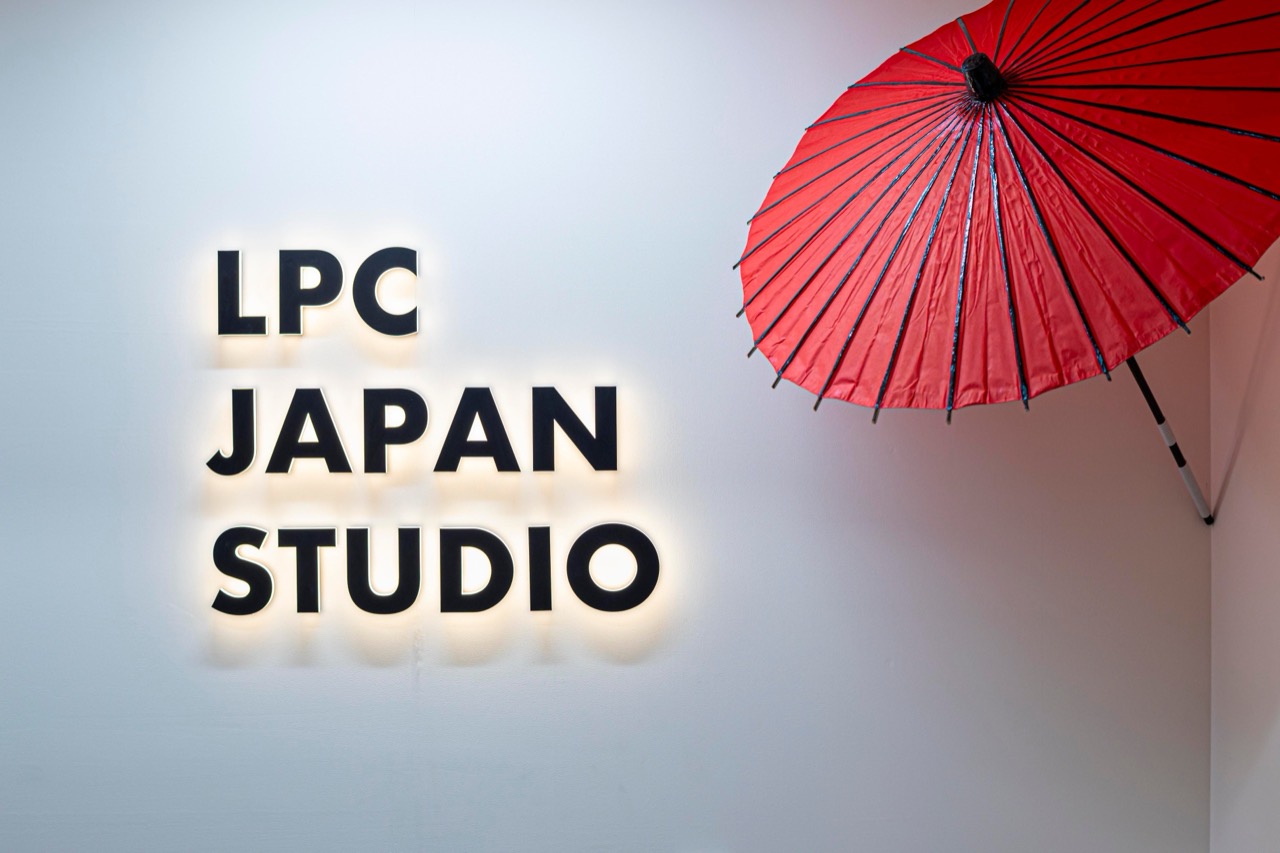
The sign came first · The same company's Japanese culture facility. It opened in Asakusa in October 2025 and in Ginza this January. ⓒ株式会社丸三
The sign came firstThe same company's Japanese culture facility. It opened in Asakusa in October 2025 and in Ginza this January. ⓒ株式会社丸三
14.Foreign visitors to Japan came to 21.08 million in the first half of this year, down on the year before. It is the first half-year decline on record, caused by arrivals from China falling by more than half. Korea and Taiwan filled the gap. A company expanding experience venues in a year the count fell is not watching headcount. Between April and June each visitor spent 244,000 yen in Japan.
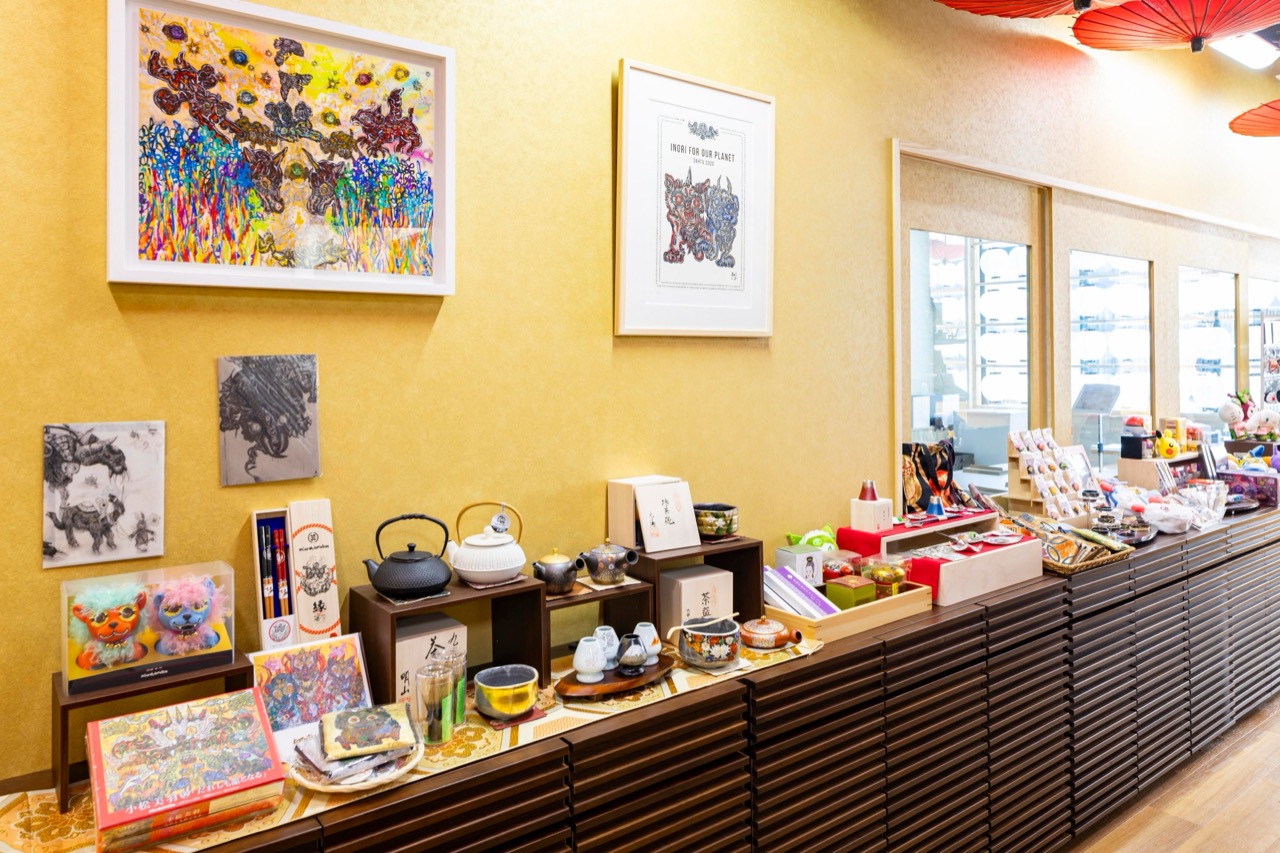
One more time on the way out · The retail counter at the same facility. Ukiyo-e, tea utensils and crafts are sold together. ⓒ株式会社丸三
One more time on the way outThe retail counter at the same facility. Ukiyo-e, tea utensils and crafts are sold together. ⓒ株式会社丸三
15.A matcha cafe that opens at 8 a.m. and closes at 6 p.m. has moved in beside one of the temple approaches where land prices rose fastest in Tokyo, with 24 seats below and four and a half tatami above. The arithmetic says the floor actually carrying the rent is not the wide one downstairs but the 2.2 tsubo one upstairs. Doing the same thing in Korea, the upstairs is what catches you first. Serving tea and sweets in a tea room falls under a food service registration, and the moment you charge a separate experience fee that money has to be classified as either food or service before the tax maths holds.
Sources: Marusan Co., Ltd. press release, 「浅草に『静かで上質な抹茶時間』を提供する新たな拠点!旗艦店『MATCHA MEIJIN Cafe 浅草店』が2026年8月6日(木)よりグランドオープン」 (August 2026 · 2-3-61 Asakusa, Taito Ward, Tokyo, Nitenmon Building II floors 1-2 · open 8:00-18:00, last order 17:30 · cafe on the ground floor and tea room above · four and a half tatami upstairs · practitioner demonstration and chasen session, tasting of three matcha, English available · menu covers the tatetate matcha latte, matcha pancakes baked to order and matcha taiyaki · operated by Marusan Co., Ltd., Izumo, Shimane Prefecture, representative director Tsutomu Hatehara). Marusan Co., Ltd. press release, 「銀座に誕生する、日本文化を“体験から知る”複合施設LPC JAPAN STUDIO 銀座本店 2026年1月2日(金)よりオープン」 (Ginza opened 2 January 2026 · 5-9-1 Ginza, Chuo Ward, Tokyo, 4th floor · experiences 3,300 to 11,000 yen covering tea ceremony, wagashi making, manga, ukiyo-e colouring, wooden coasters, ninja and yukata · MATCHA CAFE & STUDIO and a retail counter inside · the first Asakusa branch opened October 2025 with 「十割そば 塩名人 極 浅草」 on the ground floor and 「MATCHA STUDIO 浅草店」 above · Marusan founded 1982, operating amusement, food service, hotels and hot spring inns, solar power, gyms and boxed meals). Opening coverage by 鉄道チャンネル and グルメプレス (grey-green plaster counter and bronze-toned walls on the ground floor, full tea room above). Japanese tea market data (2026 crop base leaf averaging 13,910 yen/kg against 6,013 yen the previous year, about 2.3 times · first-flush base leaf 17,797 yen/kg, up 22.4% · Kagoshima first-flush leaf tea averaging 5,228 yen/kg, the highest since 1975). Property data (as of July 2026, ground floor retail rent in Asakusa averaging 36,819 yen per tsubo per month with a top figure of 57,143 yen in Asakusa 2-chome · upper floors averaging 24,996 yen with a 2-chome top of 44,444 yen · 2026 published land prices showing Tokyo commercial land up 12.2% and Asakusa above 20%). JNTO and Japan Tourism Agency data (21.084 million foreign visitors in the first half of 2026, down 2.0% year on year · China at 2.058 million, down 56.4% · Korea 5.675 million, Taiwan 3.972 million, United States 1.821 million · inbound spending of 2.5096 trillion yen from April to June, 244,000 yen per visitor). Sensoji receives more than 30 million worshippers a year. Japanese food service benchmarks (cafe material costs 24-35%, labour 25-36%, rent ideally 7-10% of revenue, the three combined below 70% · monthly revenue calculated as seats times turnover times average spend times trading days). The areas of 22 tsubo on the ground floor and 18 tsubo above, 24 seats, three turns a day, an average spend of 1,200 yen, experiences at 5,500 yen for four people six times a day, 3g per cup, finished matcha wholesale priced at 1.5 times the base leaf rate, and material costs of 12-14% with labour at 30% are estimates built from published photos and comparable market data, not figures this shop disclosed. Notes on taste and aroma hold within what the published preparation method supports and are not the result of tasting at this location. Photographs are cited with attribution from the operator's published materials and freely licensed Wikimedia Commons images. Remarks on Korean business registration and tax classification are general to the sector and vary with venue conditions and local authority interpretation.