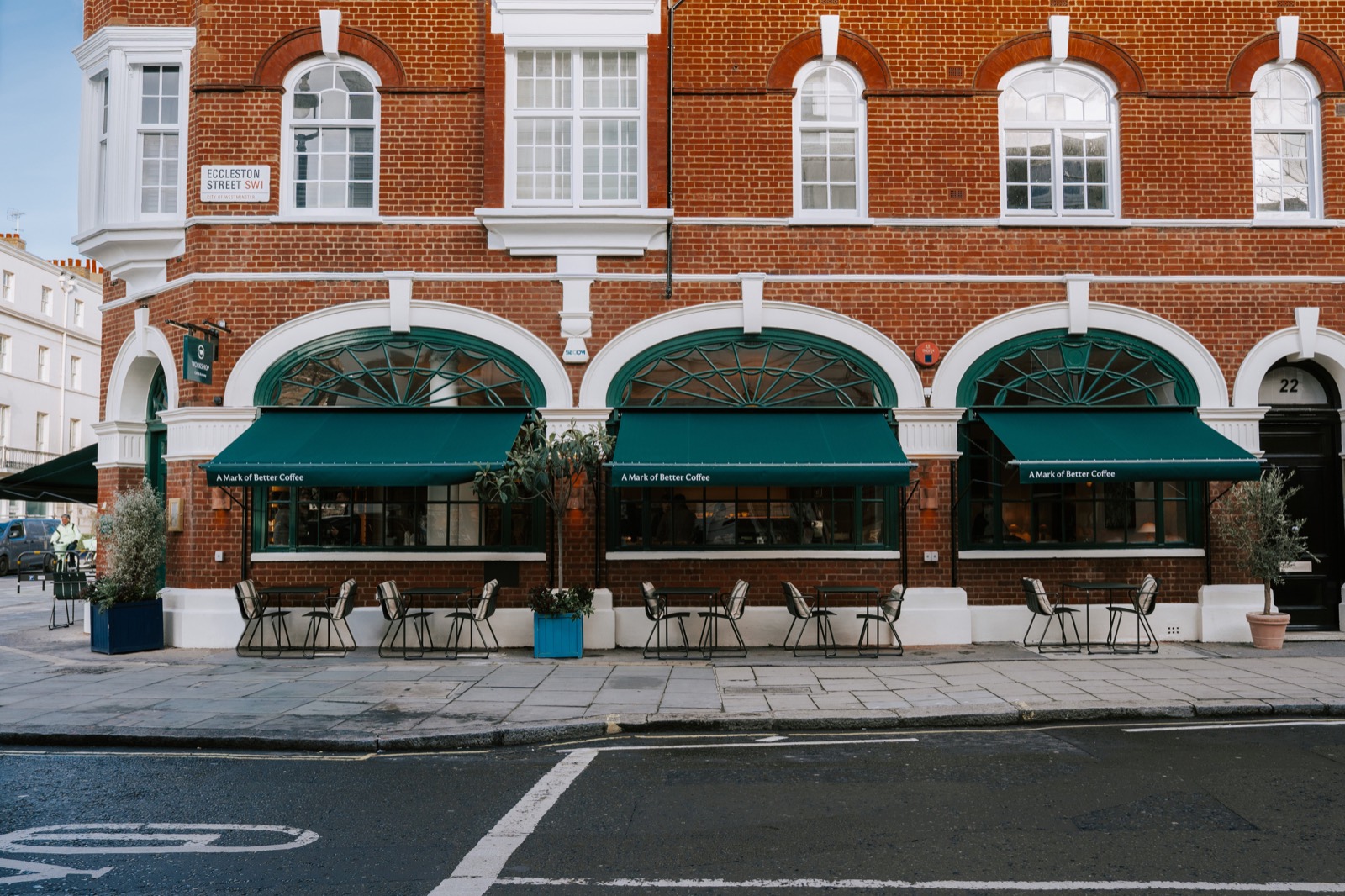
Three deep green awnings now hang across the ground floor of a red brick building in London's Belgravia. A roaster that started in London in 2011 closed its last shop in September 2024, lived on wholesale and online sales alone, and came back to this address in February. Café upstairs, classroom downstairs. A £4.50 flat white sitting on top of a £300-a-day course.
1.The address is 22 Eccleston Street, Belgravia, a five-minute walk from Victoria Station. The name is Workshop Cafe & Academy. It is run by Workshop Coffee, a roaster that opened in London in 2011. Doors open at 7am on weekdays, 9am at weekends.
2.The company began as a roastery and café, ran several shops, then changed direction. It leaned into roasting for other cafés and selling online, and shut its last remaining shop in September 2024. For fifteen months there was nowhere to meet a customer face to face. This building holds the café, the wholesale desk and the training room all at once.
3.The building is a Victorian red brick mansion with three arched windows across the ground floor. Each window carries a green awning printed with A Mark of Better Coffee in white. Metal chairs and small round tables sit out on the pavement, and the Eccleston Street sign is fixed to the wall left of the door. George Cosby Studio designed it, 3Stories built it.
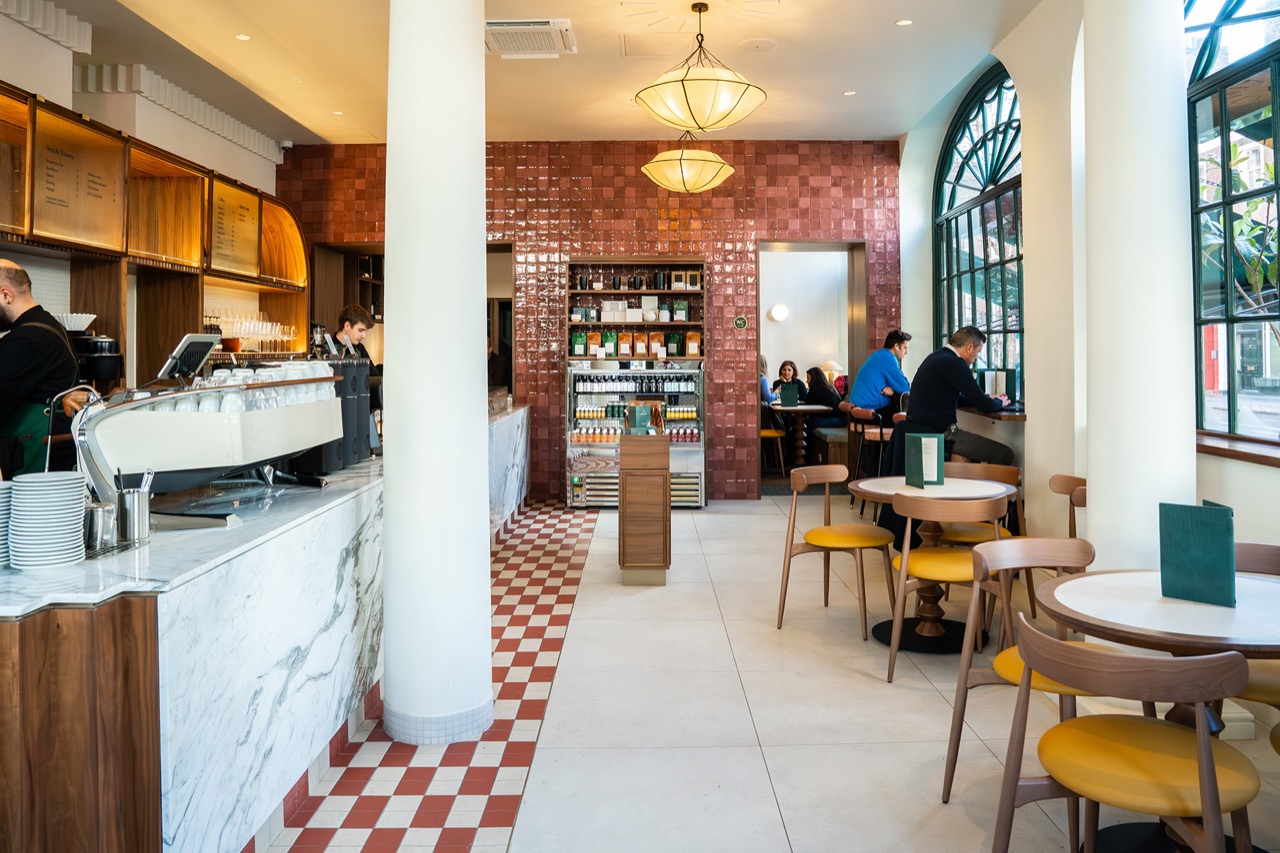
4.Inside, a white marble counter runs the length of the left wall. The floor is red and white checkerboard tile, laid only along the passage in front of the counter, with large cream tiles taking over further in. One inner wall is finished in red terracotta tile, a chilled case and coffee shelving against it. Seating splits four ways. Window stools, round tables in the middle, an alcove at the back, and the pavement.
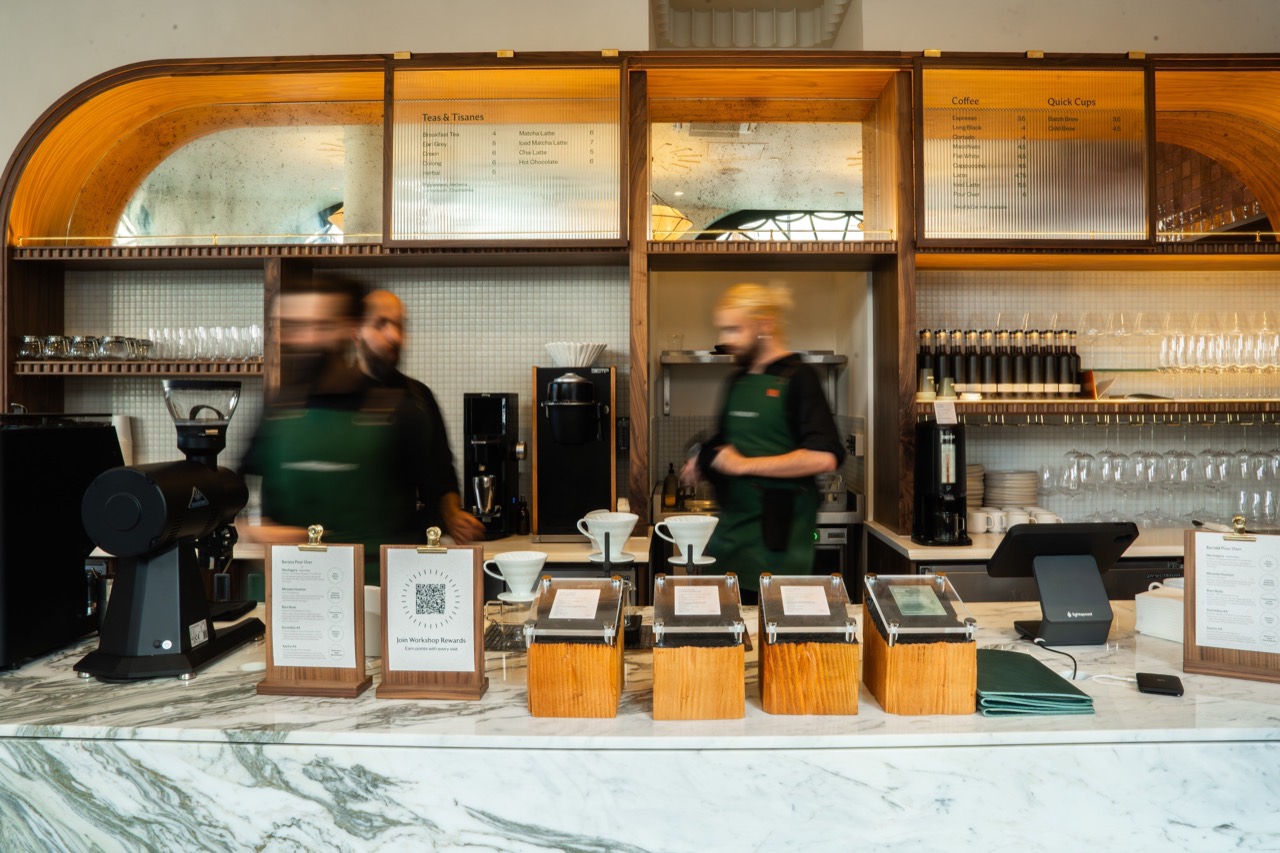
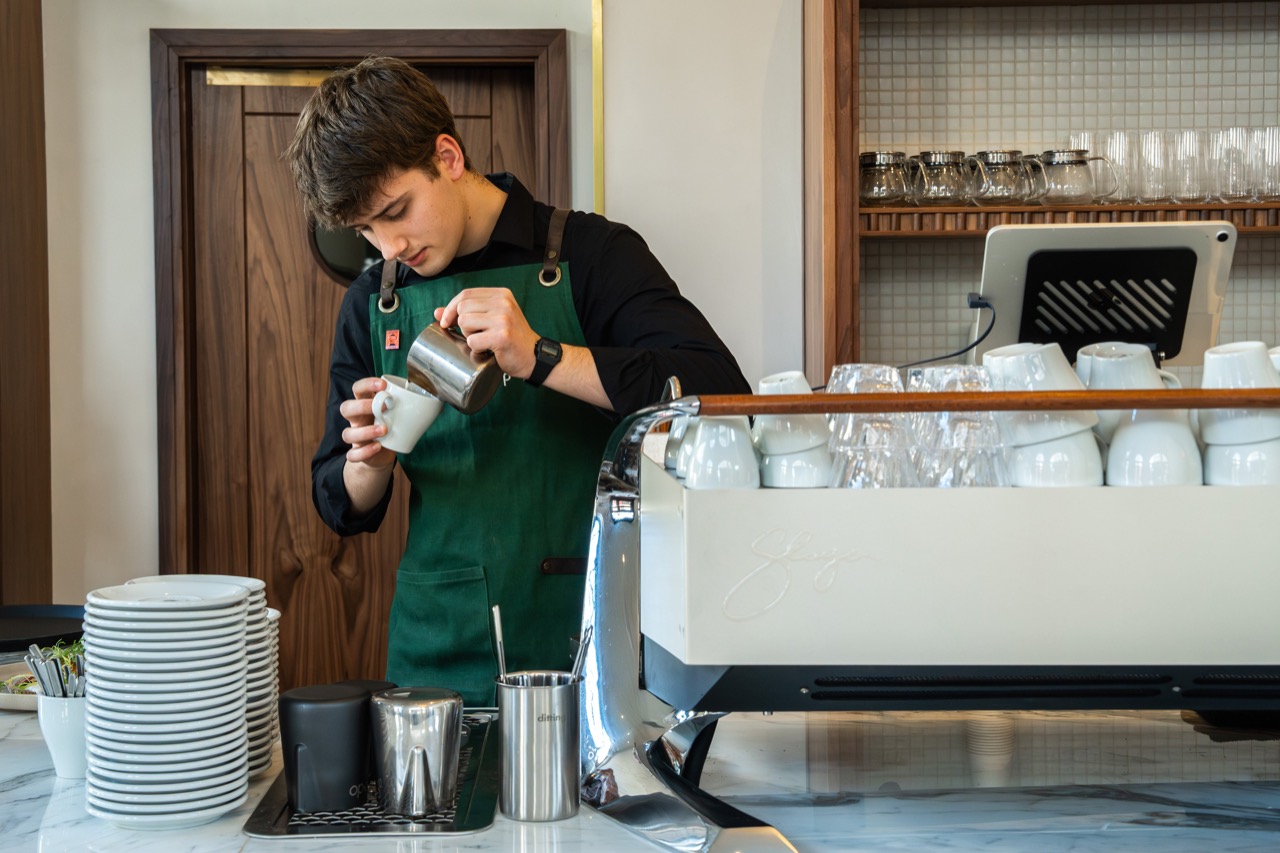
5.Reeded glass doors close the arched shelving above the counter, with the menu boards behind them. Tea on the left, coffee and batch brew on the right. Four wooden bean boxes stand on the counter top, each with an origin card slotted into the lid. Two white drippers beside them, a black grinder at the far left. The baristas in green aprons.
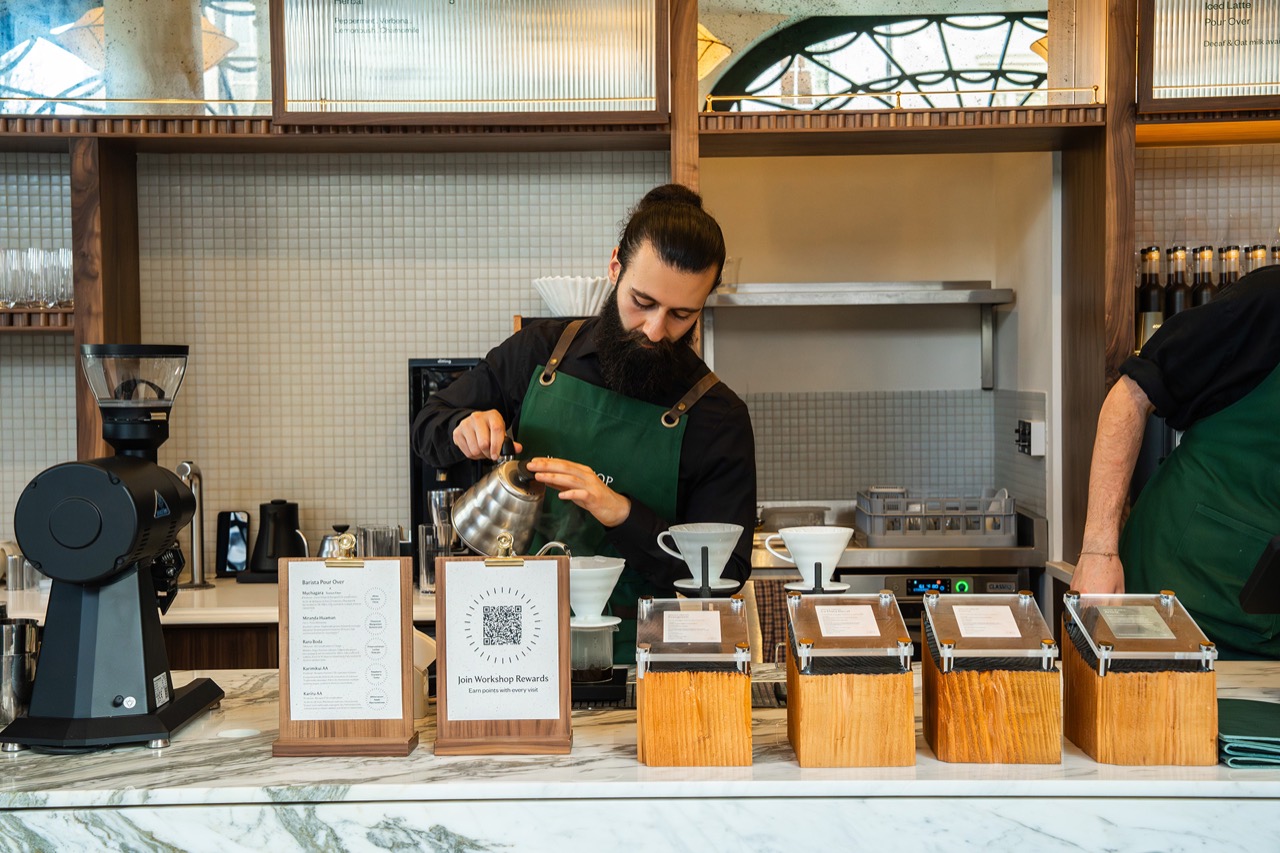
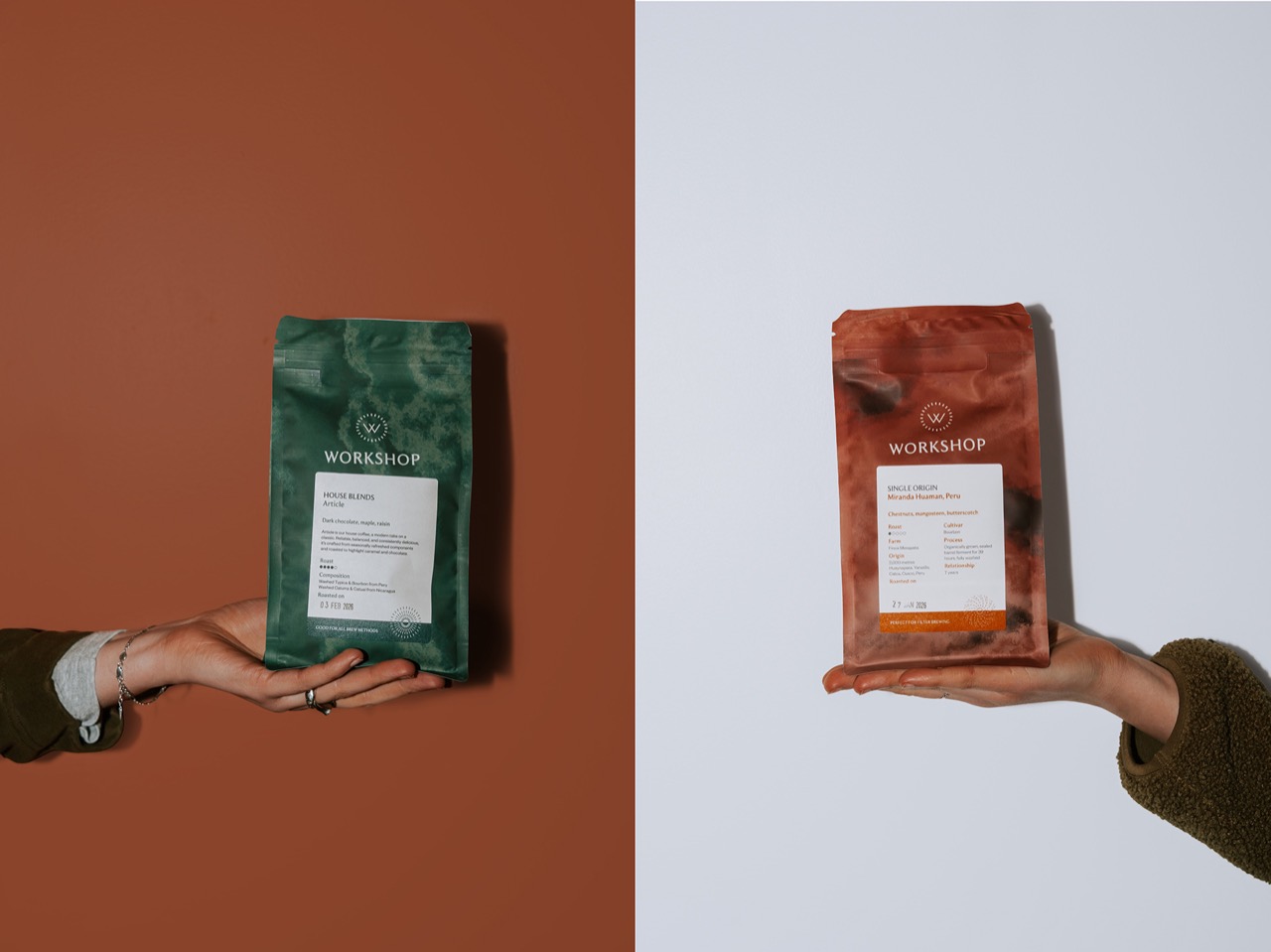
6.The house espresso is a blend called Article, with single origins rotating alongside it by season. The company describes its roasting as washed-forward, clean, sweetness leading. It says it buys from smallholders across nine countries, from Ethiopia, Kenya, Rwanda, Burundi and Uganda to Peru, Colombia, Nicaragua and Brazil. Washed coffee is pulped and rinsed before drying, so fermentation notes stay faint and the outline of the acidity holds. Half of that outline disappears the moment milk goes in. Which is why the drippers never leave the bar.

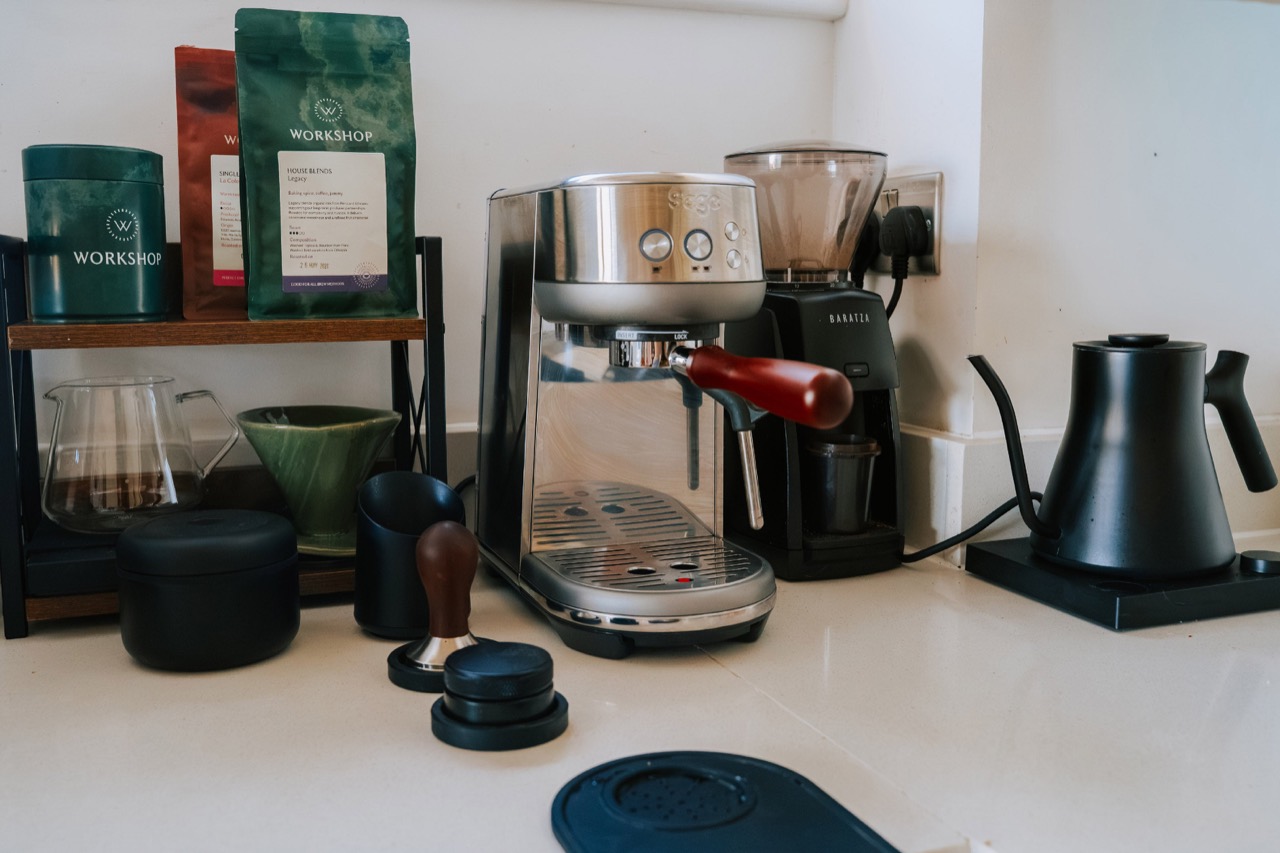
7.The stairs lead down. The checkerboard tile follows, but the ceiling is painted red, inverting the colours of the floor above. A low counter in birch ply wraps the walls, lined with domestic espresso machines, grinders and kettles. Workshop At Home is written on the wall. The inner room holds a long table, six chairs and a wall screen. There is no lift.
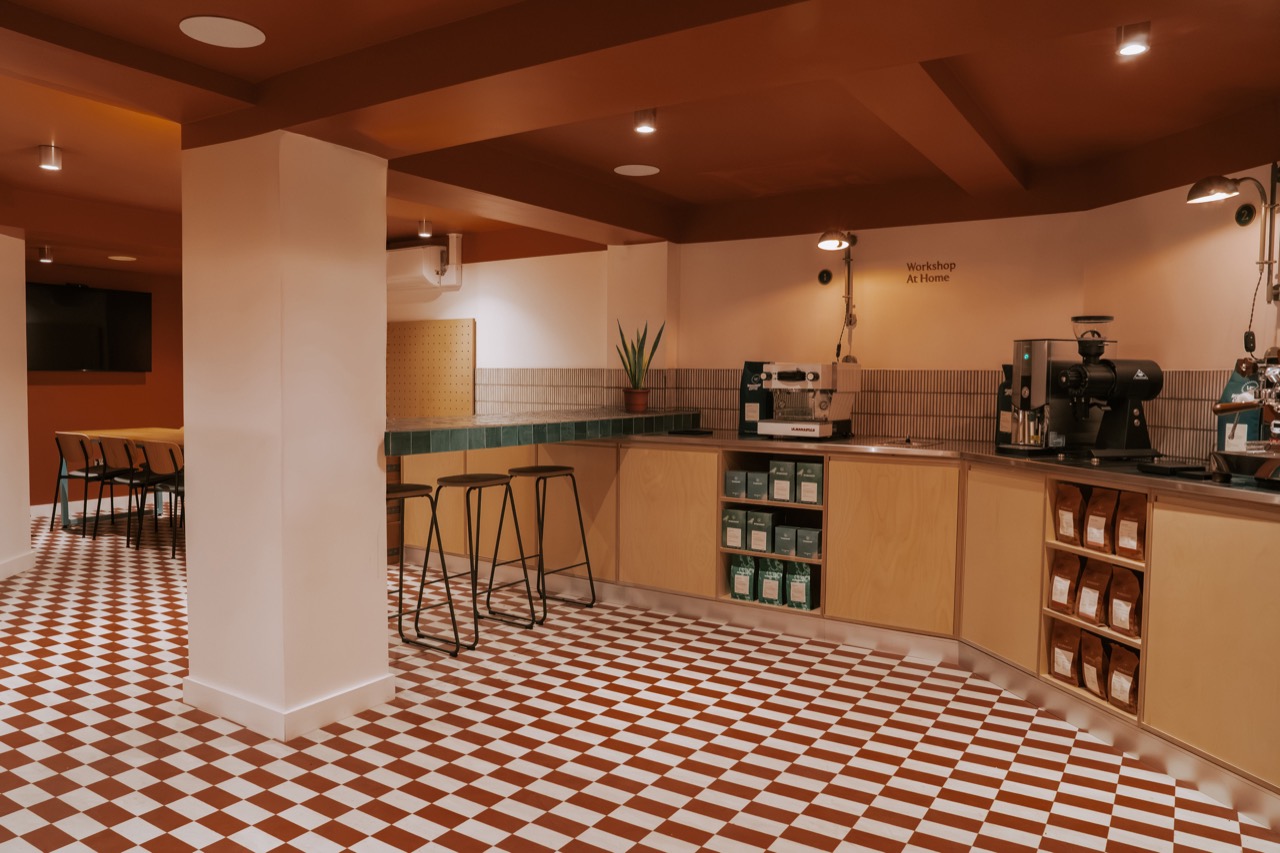
8.What is sold down here is teaching. Home espresso, three hours, £95. Filter brewing, three hours, £95. The monthly cupping, origin changing each time, is £10 for two hours. Certification is priced differently. SCA Barista Skills Foundation and Brewing Foundation run £300 for a day, Brewing Intermediate £550, with a £45 enrolment fee on top.
9.For a roaster, a shop is proof before it is revenue. Wholesale alone leaves nowhere to show what a cup of your coffee is supposed to taste like, and online sends the bag out without following what happens to it. That is what stood empty for fifteen months. Train the baristas of a client café in your own classroom, and the coffee contract holds for as long as those people stay behind that bar.
10.Standing the home kit and the retail bags next to the classroom follows the same arithmetic. Someone who has just spent three hours on a machine wants to try it at home, and picks up a 250g bag on the way out. Customer to student, student to repeat buyer: the whole path fits inside this one building. Moving between the stages takes one flight of stairs.
11.Espresso £3.50, long black and cortado £4, flat white and cappuccino £4.50, latte £4.75, pour over £6. The London Coffee Index put the median flat white at £3.50 in August this year. A pound more here. In Korean money, the difference between about 8,300 won and 6,500 won.
12.The bigger gap is downstairs. Put six students in a day-long certification course and the classroom turns over £1,800 in a day. Earning the same upstairs means selling 400 flat whites. If an independent London café runs somewhere between 200 and 300 cups a day, one basement room with six people in it beats a whole day on the ground floor. No seat turnover, no lunch peak.
13.Read it as property and the layout sharpens. Retail rent is priced on the frontage at the window and the pavement, and discounted generously as you move back. The basement is the cheapest square in that calculation, which is usually why it holds storage or toilets. So what went in here? This company picked one of the most expensive neighbourhoods in London, then put its most expensive product on the cheapest floor of the building. Teaching does not need a window.
14.Roasters attaching education to a shop is nothing new in London. Several houses here have trained baristas in a room behind the café for years, and there are schools running their own certified campuses. What differs is the order. The café usually comes first and the teaching is added later, whereas this company ran wholesale with no café at all and then opened the classroom and the counter on the same day. The first listed weekday closing was 4pm; it now stays open until 9. The glasses hanging upside down behind the counter follow from that.
15.A roaster that stacked a café, a wholesale desk and a classroom into one building is back in front of customers after fifteen months, and the floor below, with six students on it, out-earns the floor above that charges a pound more per cup. Anyone doing this in Korea runs into the basement itself first. Building code sets separate daylight and ventilation requirements for below-grade rooms, and running classes there on a standing basis means settling how that room is classified. Costs that cannot be added to the price of a coffee get decided at the drawing stage.