A cafe opened on September 1 on the ground floor of a 1988 building in Jingumae 2-chome, Tokyo. One hundred square meters, sixteen seats. It opens at 9am, closes at 5pm, and locks its doors on Saturdays and Sundays. The company behind it does not sell coffee. It builds and sells cosmetics and apparel brands, and that single fact explains the entire layout.
1.The address is 2-30-32 Jingumae, Shibuya, Tokyo, a six-minute walk from Kita-sando Station. The name is THE PATH COFFEE. The building is Park Lane Plaza, seven storeys, completed in April 1988. In Omotesando terms this is the back side, off the tourist circuit. Opening day: Tuesday, September 1, 2026.
2.Coogee runs it. Not a coffee business. The company builds and sells its own cosmetics and apparel brands through Korean and Chinese production and distribution networks, and it also operates an agency managing beauty YouTubers and makeup artists. Its own labels include CILY, MIYOUR'S, MILKTOUCH and &LOTTIE. Thirty employees, with the head office a few minutes' walk away in Sendagaya 3-chome.
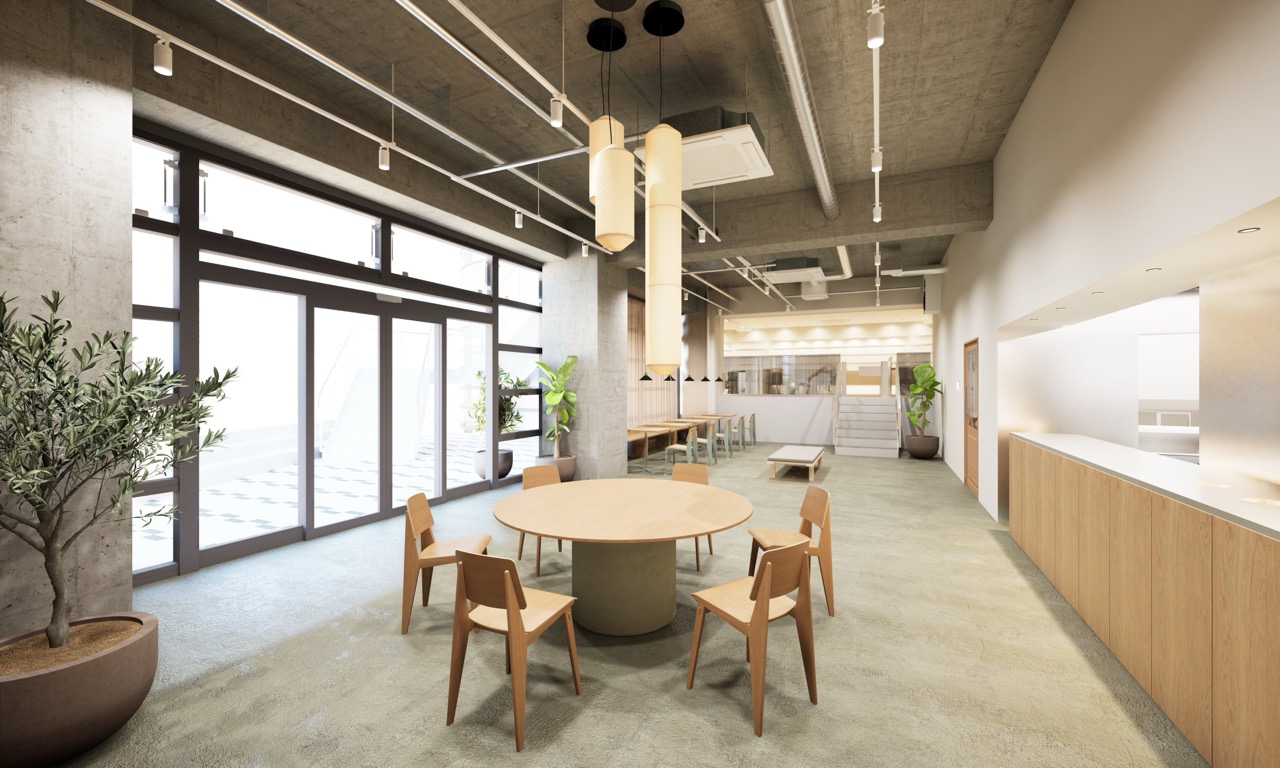
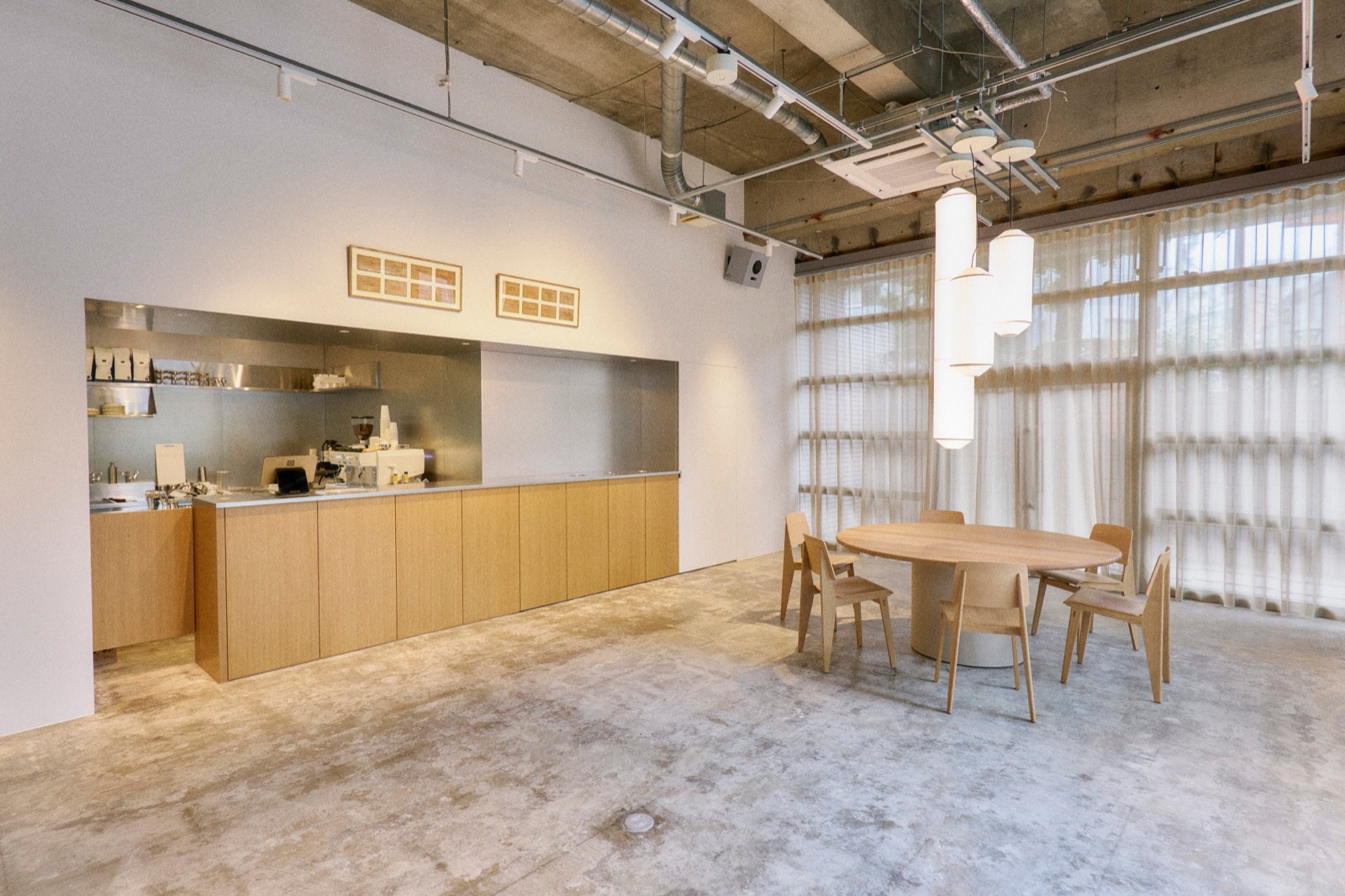
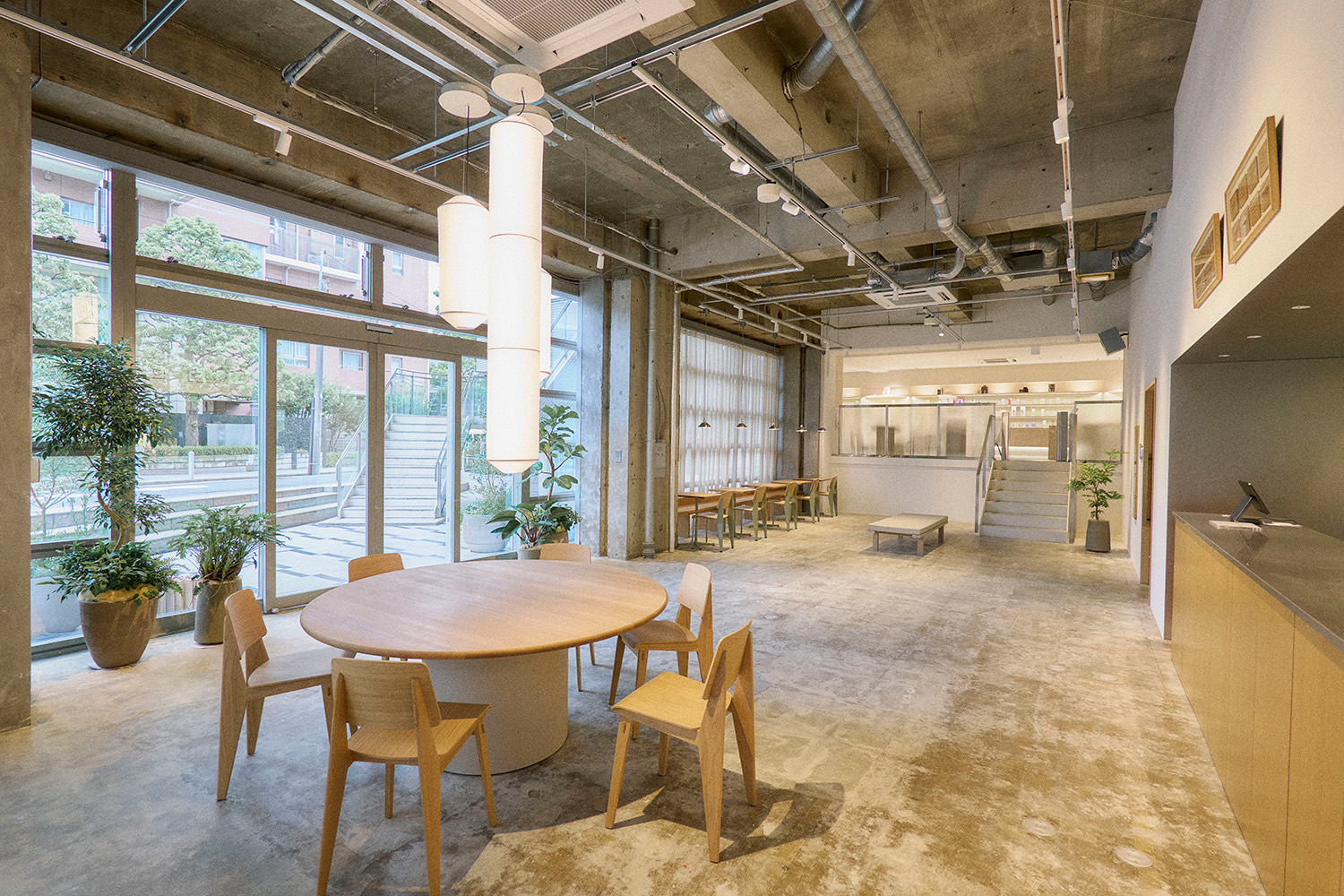
3.Walk in and the ceiling has been stripped. Pipework and cable trays sit exposed on the concrete slab, with track lighting running beneath. The floor is ground cement, still carrying stains like handprints, and an oak panel counter runs the length of the left wall. Only the top is stainless. The window wall is covered in loose-weave curtain. Even noon light arrives filtered.
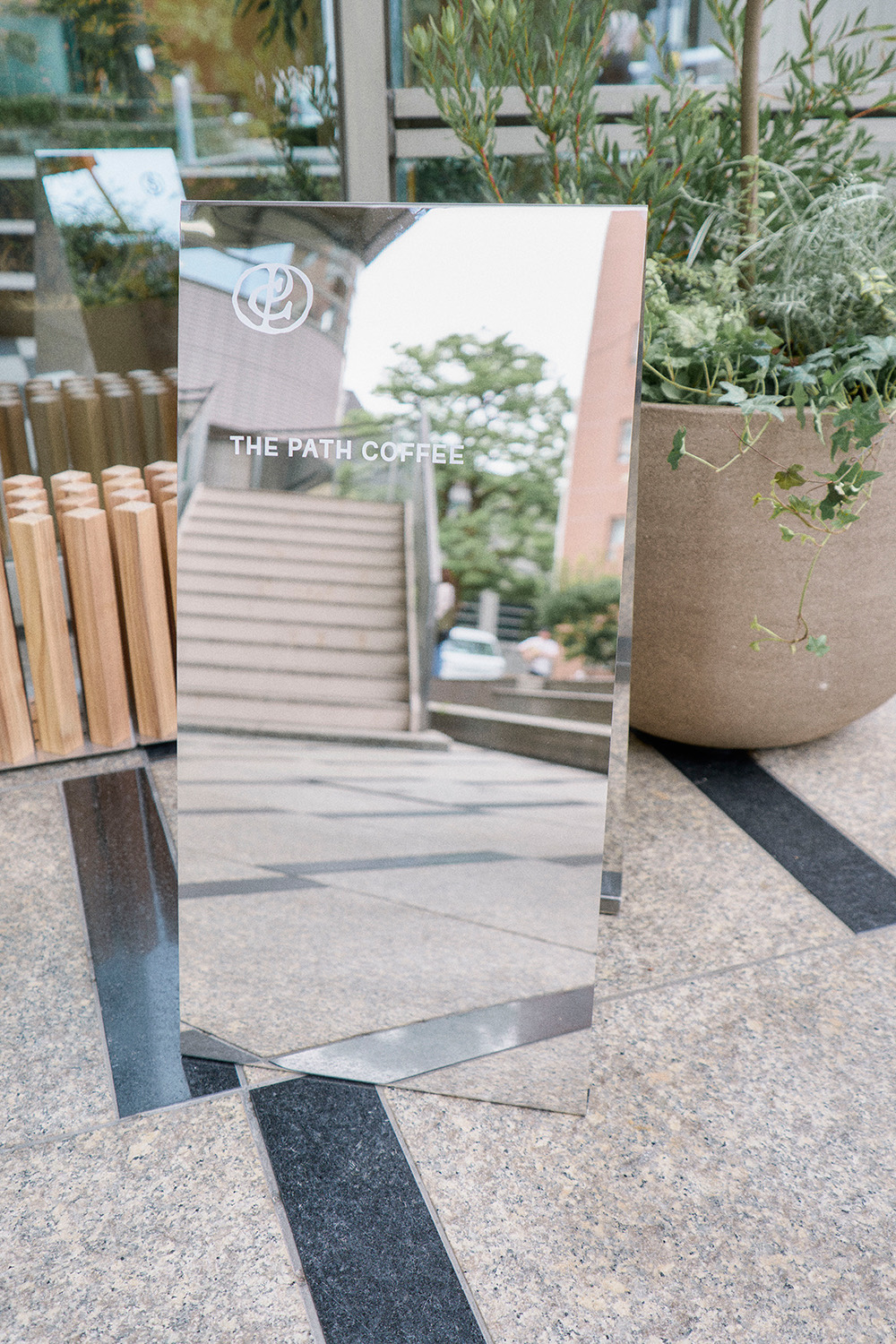
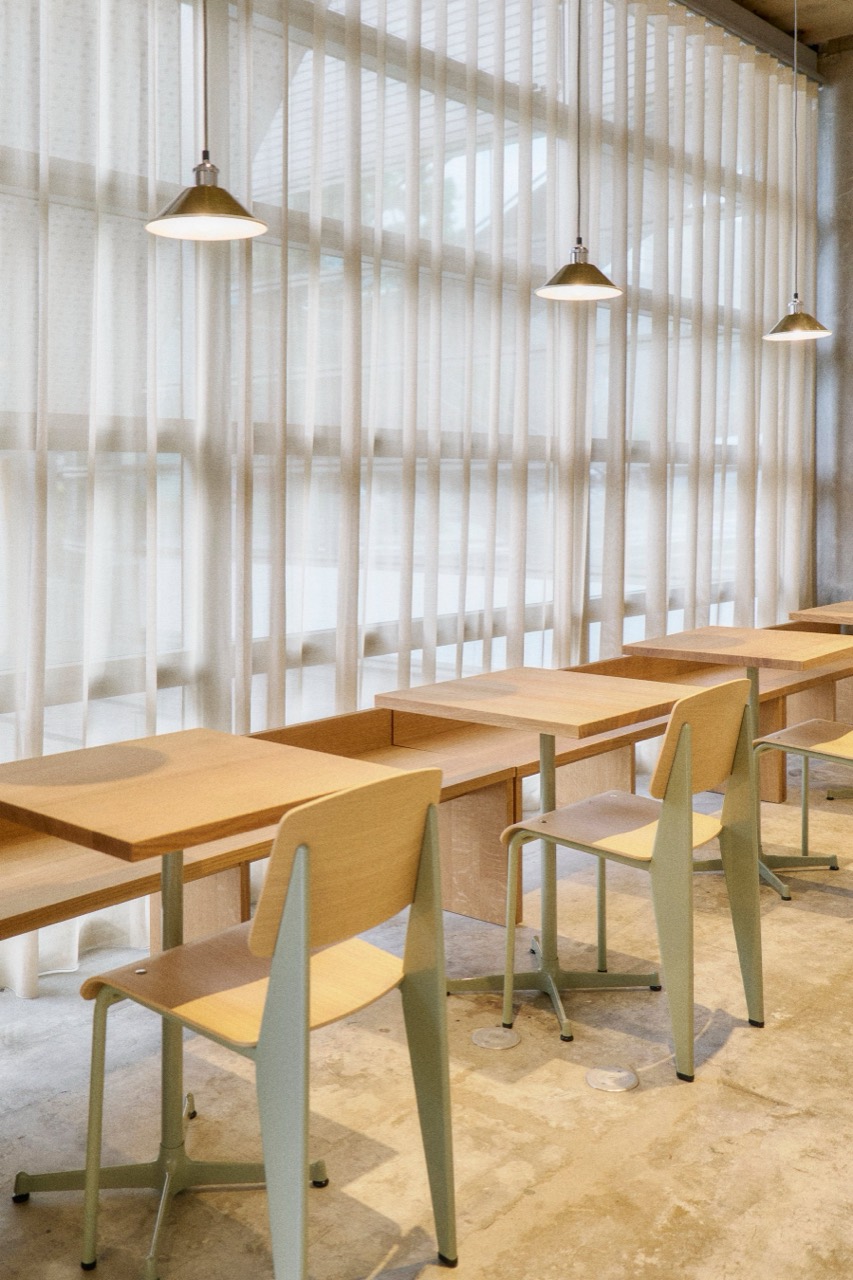
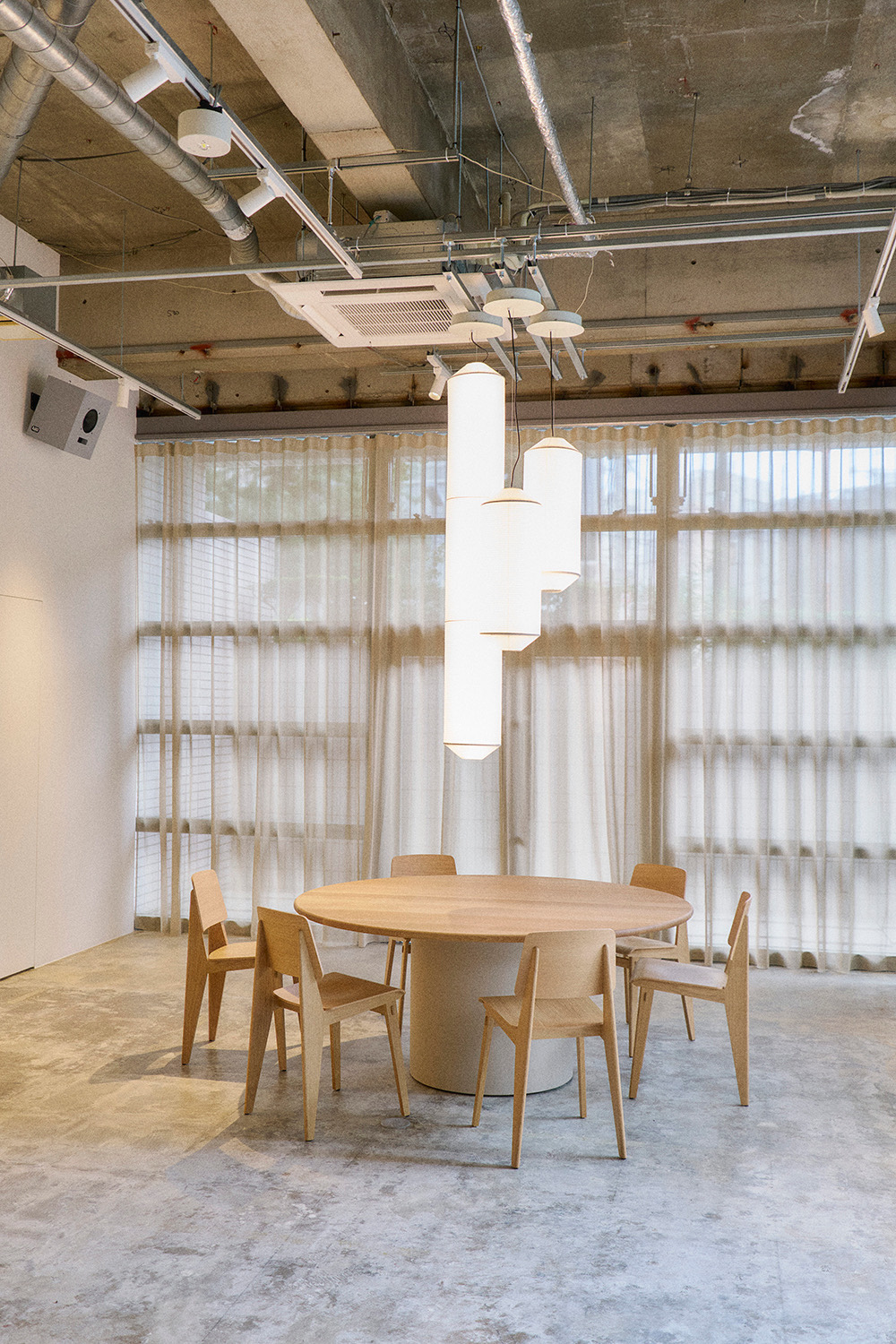
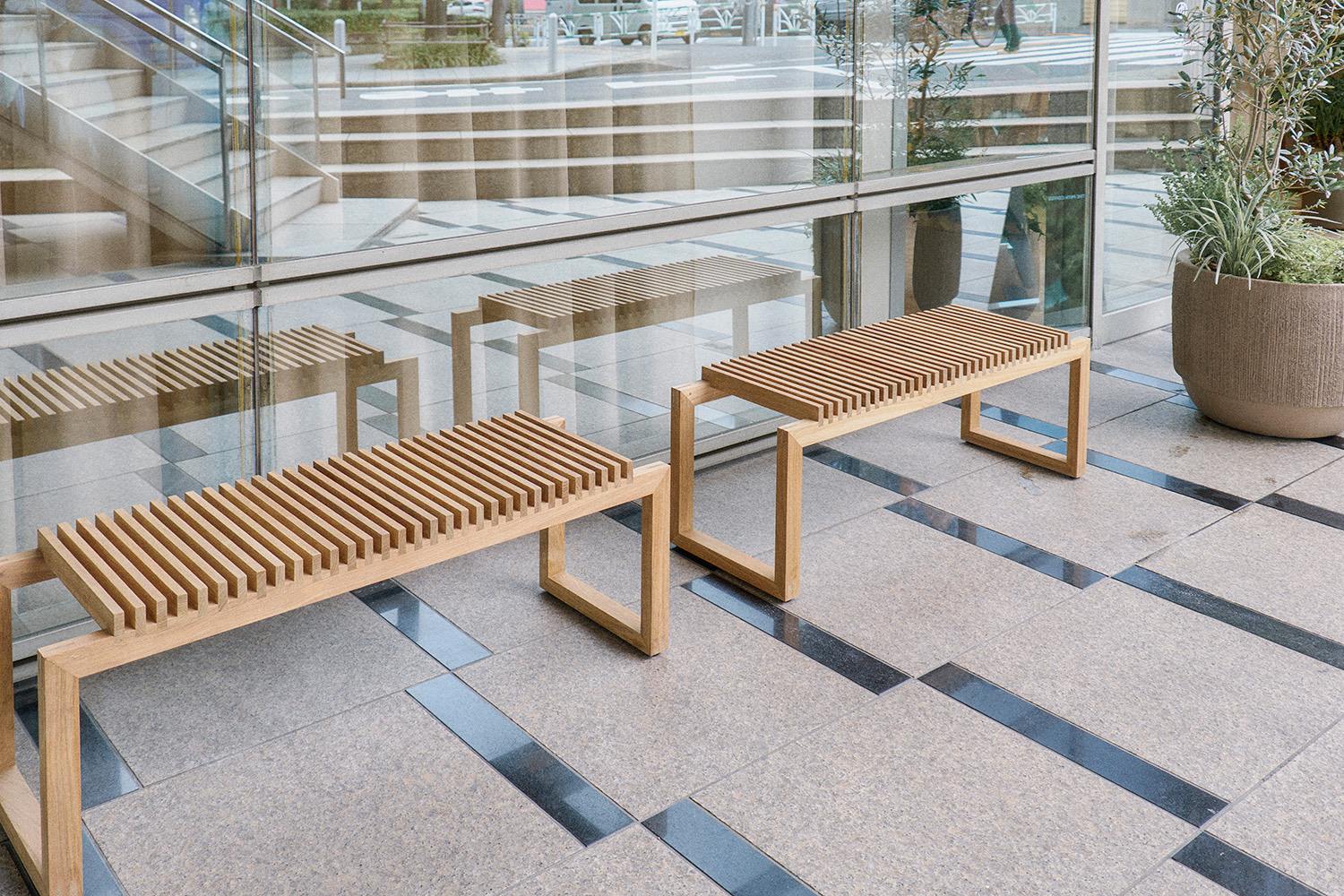
4.Seating splits into two blocks. Ten places along the window, oak tops against Jean Prouvé's Standard Chair as made by Vitra, and six around a wide round table in the middle of the room, ringed with wooden chairs. Four cylindrical paper lights by Santa & Cole drop over the round table at staggered lengths, and three brass shades hang above the window run. Outside, two slatted wooden benches sit apart from the count.
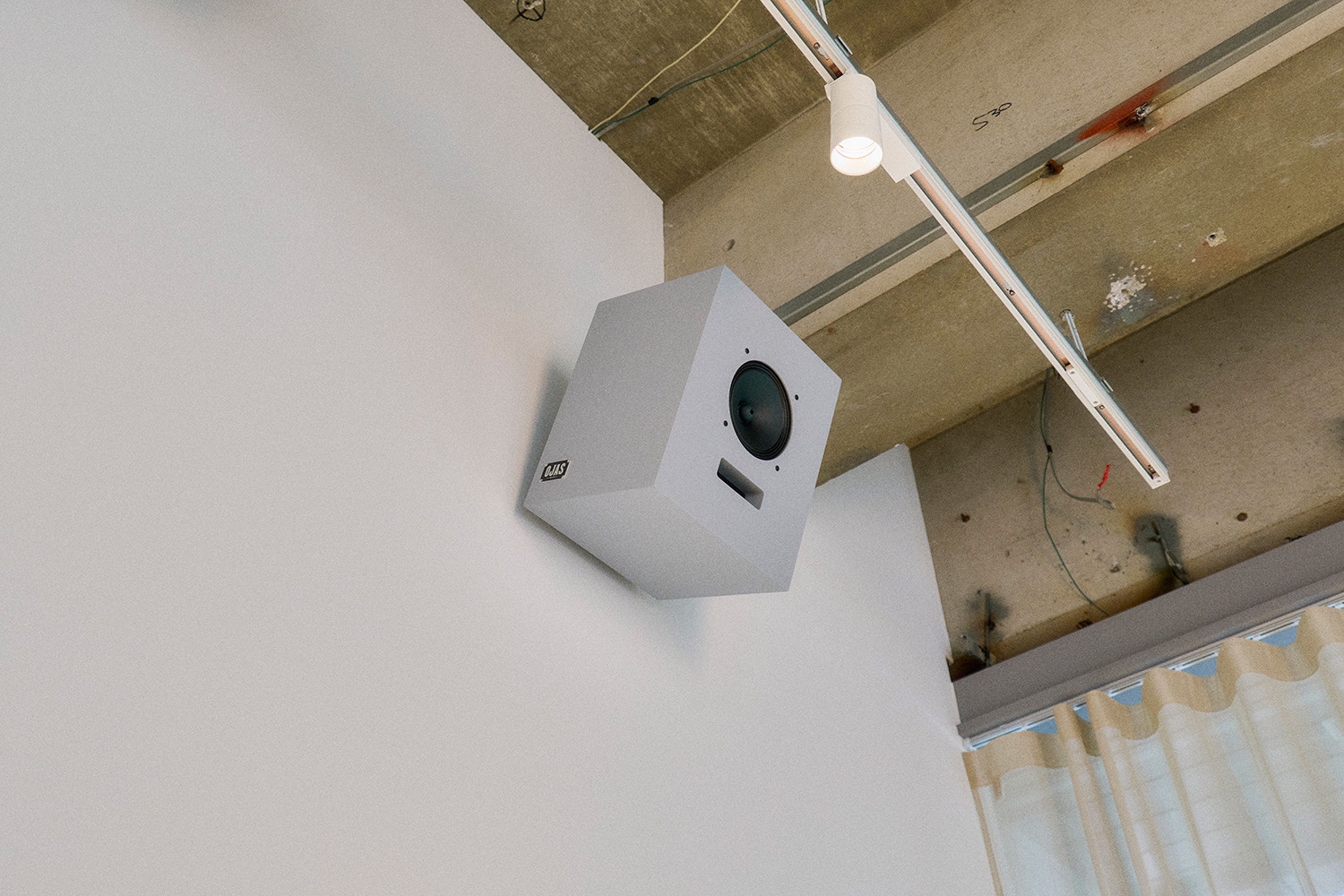
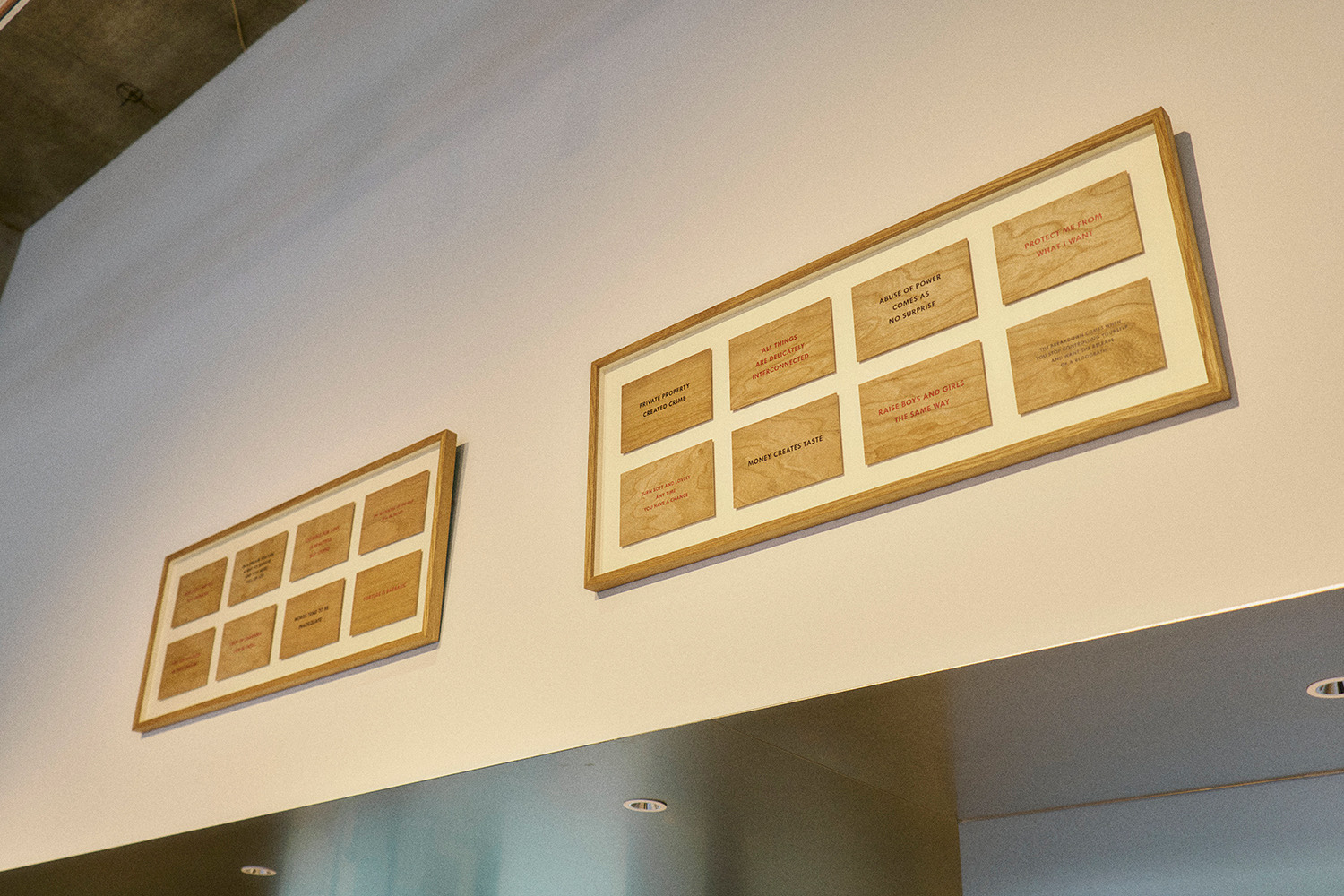
5.Two timber frames hang high on the wall. Inside them, wood plaques are set in a grid, each cut with red lettering. MONEY CREATES TASTE. PROTECT ME FROM WHAT I WANT. ABUSE OF POWER COMES AS NO SURPRISE. Jenny Holzer's Truisms. On the opposite wall a grey OJAS speaker is mounted at an angle, with counter light falling below it. A company that builds and sells brands has hung the line about money making taste on its own cafe wall.
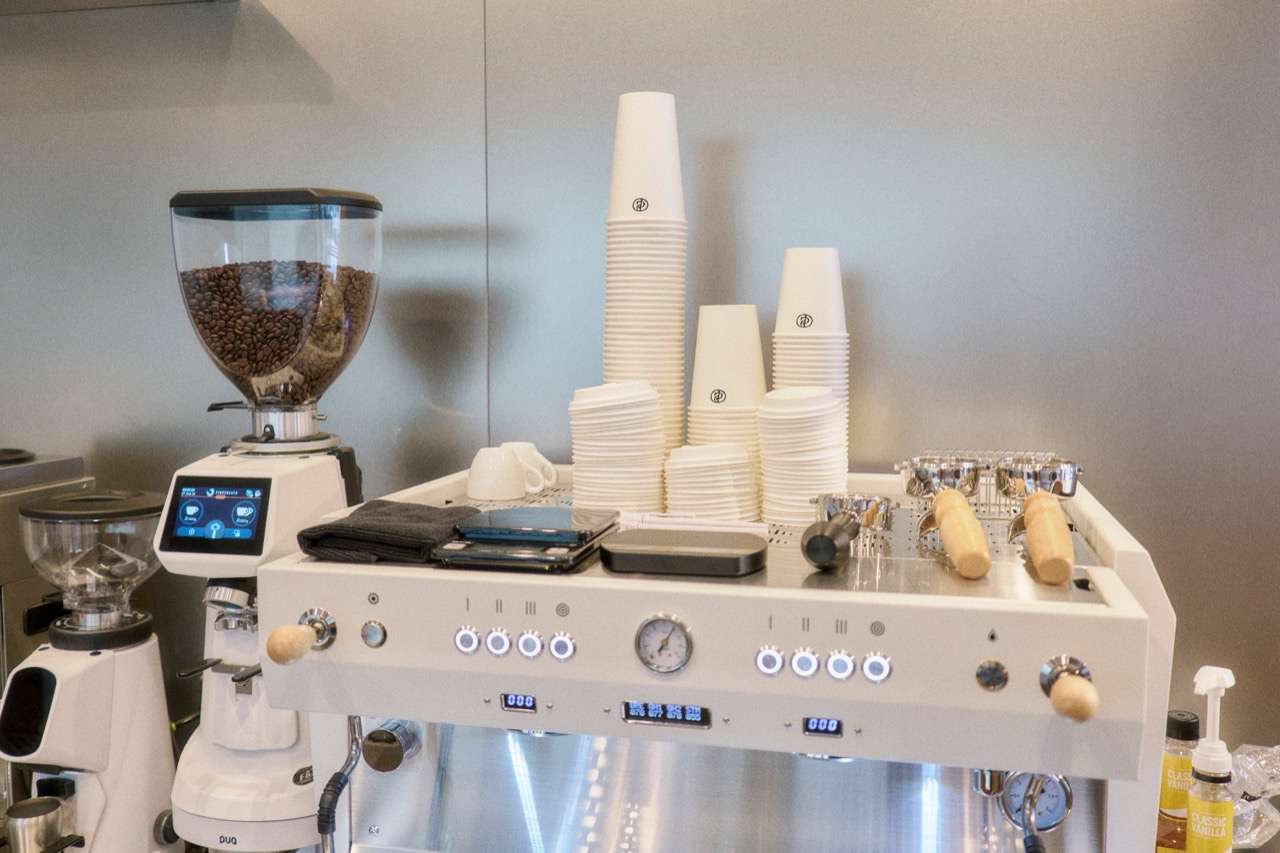
6.The house blend is called LOST IN TOKYO, Colombia and Tanzania, described as caramel and toasted almond. Both origins lean toward sweetness and body rather than sharp acidity, so the outline survives a pour of milk. The matcha comes from Ippodo Chaho in Kyoto, a house that opened in 1717. To eat: clam chowder, salt bread, baked goods, BIG BABY ice cream.
7.Open the numbers and the layout turns strange. One hundred square meters is 30.25 tsubo, and sixteen seats means each one occupies 6.25 sq m. Cafes normally seat a person in 1.5 to 2 sq m. The same floor could have held fifty to sixty-five. This company installed a quarter of what would fit.
8.Rent attaches to the empty floor just the same. As of September 1, ground-floor retail around Jingumae asks an average of 55,101 yen per tsubo, rising to 100,001 yen in Jingumae 6-chome and falling to 25,963 yen at the bottom. This building sits in 2-chome, is thirty-eight years old and six minutes from the station, so it belongs below the average. At 40,000 yen per tsubo, 30.25 tsubo comes to 1.21 million yen a month. That is market rate applied from outside; the actual lease figure has not been disclosed.
9.Now the revenue side. A latte with a baked good or a bowl of soup puts the average ticket around 1,100 yen. Turn sixteen seats three times and add twenty-odd takeaway cups and the day holds seventy people, which multiplies to 77,000 yen. Five days a week gives roughly twenty-one trading days, so 1.62 million yen a month. Take 30 percent for cost of goods and 480,000 yen leaves; two staff at 1,300 yen an hour for eight hours each adds 440,000 yen. With rent, the month costs 2.13 million yen.
10.The month is short by 510,000 yen. Filling the floor to fifty seats would close that gap, but then the round table and the paper lights come out. Price the chairs and the shape of the calculation gets clearer. The Standard Chair carries a Japanese retail list price of 138,600 yen, and the ten at the window come to 1.38 million yen. The chairs alone exceed a month's rent. Spread over five years of depreciation, the return still has to be found outside cafe revenue.
11.So where is that outside. What this company sells is brands. Putting one cosmetic product into the world means meeting creators, seating buyers, running shoots, showing samples to distribution staff. That work goes badly in a meeting room. Half a day in a central Tokyo shooting space runs 50,000 to 100,000 yen. How often would a company with four labels and a creator roster need that room in a month.
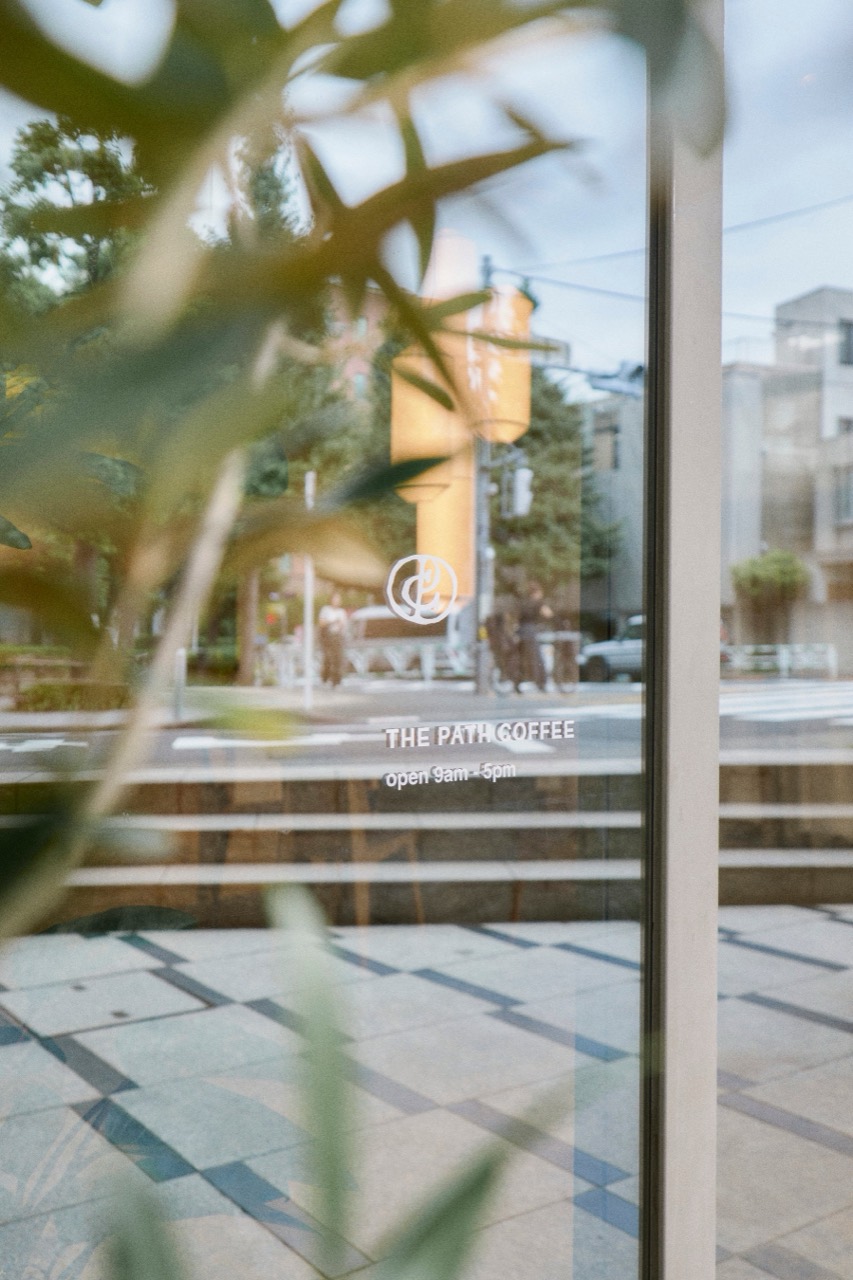
12.The opening hours answer for them. Nine to five, closed Saturdays, Sundays and public holidays. These are office hours, not cafe hours. A cafe that throws away the whole weekend, its busiest stretch, was never trying to win as a cafe. The notice adds that closing days may shift when there is an event. That one line says what happens on the days it stays shut.
13.The space was supervised by Tomohiro Konno of NEXUSVII., who leads the military and vintage-based clothing label he started in 2001. Coffee is not new ground for him. Seven or eight years ago he produced a mobile coffee stand called BLACK COFFEE, and he has released collaboration beans with a roaster in his home prefecture of Shizuoka. Clothing people doing coffee has run through Tokyo for more than twenty years. The logo was drawn by Chikage Takizawa.
14.What changed this time is who stands where. Spaces like this have belonged to the clothing brand, with coffee as the guest. Here the owner does not do coffee at all, and the clothing man came in as supervisor. A brightly lit display shelf stands against the back wall, with stairs climbing beside it. The plan says before anything else that this is not only a place that sells coffee. The opening notice did not use the word cafe either; it called the room a place where people, brands and creators connect.
15.A company that builds and sells brands took 30 tsubo of Tokyo ground floor and installed a quarter of the seats that would fit, and roughly 510,000 yen a month does not come back through coffee. Booked instead as the cost of hosting and shooting, the arithmetic lands cheap. Try the same thing in Korea and the drawings stop you first. Putting a food and beverage use into a floor zoned as office requires a change of use, and that pulls septic capacity and exhaust routing along with it. Those construction costs cannot be added to the price of a cup.