retailHoteldiningdrinkCultureSpaceCafeBrand
ArticlesTravel
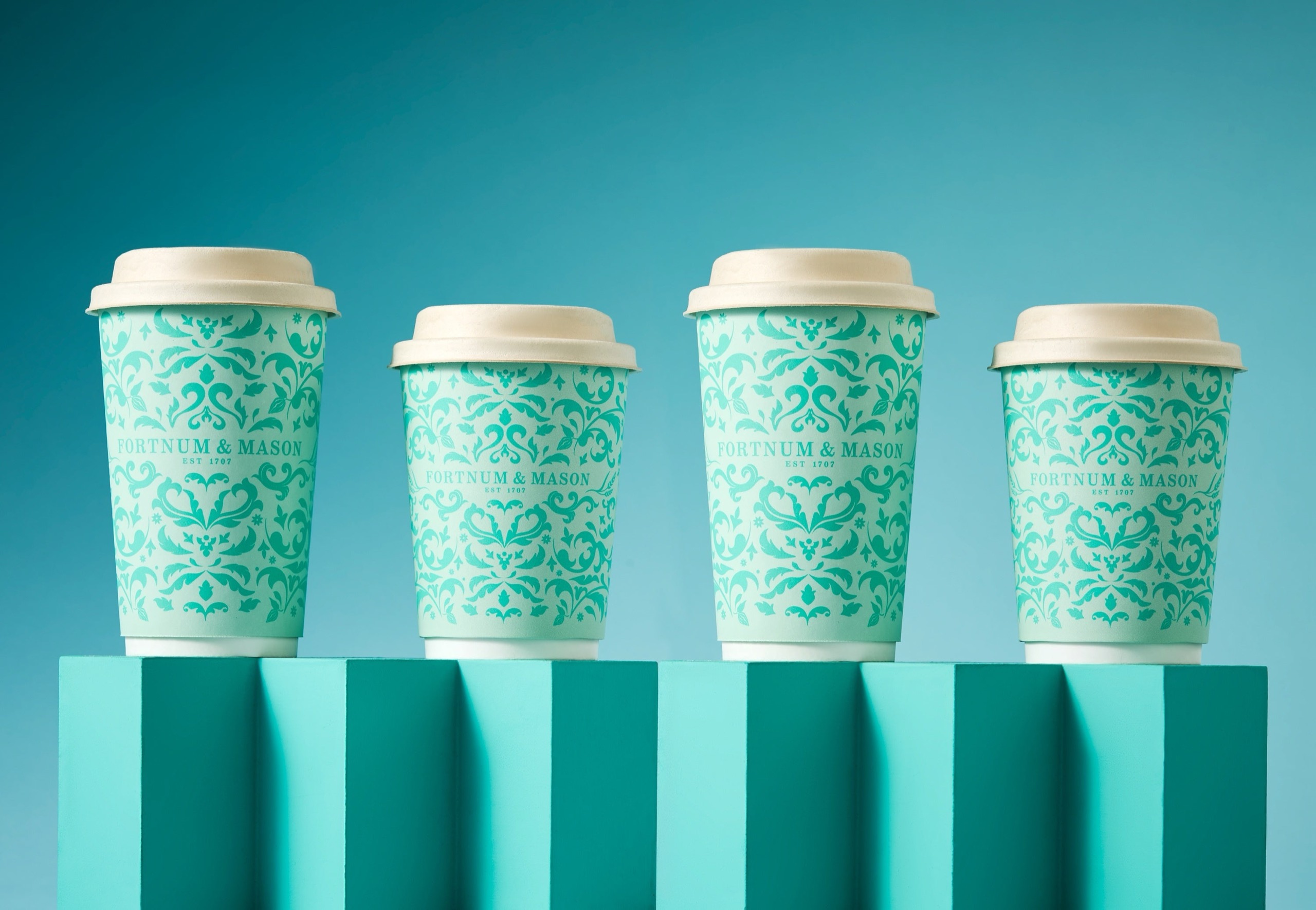
The cup came first · Takeout cups in pale green with a damask pattern and the logo, capped with white lids. Two sizes, M and L. ⓒ株式会社ユーハイム (PR TIMES)
The cup came firstTakeout cups in pale green with a damask pattern and the logo, capped with white lids. Two sizes, M and L. ⓒ株式会社ユーハイム (PR TIMES)
Daily drink

A black tea you can only buy inside the ticket gates arrives under Tokyo Station (Tokyo · British tea stand)

2026.09.11

On Wednesday, September 16, a Fortnum & Mason (Fortnum from here on) tea stand opens inside the ticket gates on the first basement level of Tokyo Station. It is the first takeout shop in Japan for a company that started as a London grocer in 1707. Until January, the same corner sold tea bags and jam; now the shop comes back holding a cup. A medium black tea costs 475 yen, about 4,100 won. Only people who have tapped a ticket or transit card can reach this counter.

1.The site is the B1 Marunouchi zone inside the gates of Gransta Tokyo. The former Marunouchi-zaka area closed in January for construction and reopens that day with 26 shops. Ten are new brands, and eleven return under a new name or format. Fortnum is one of the returners: the concept shop that sold tea bags and jam here becomes a stand that pours tea.
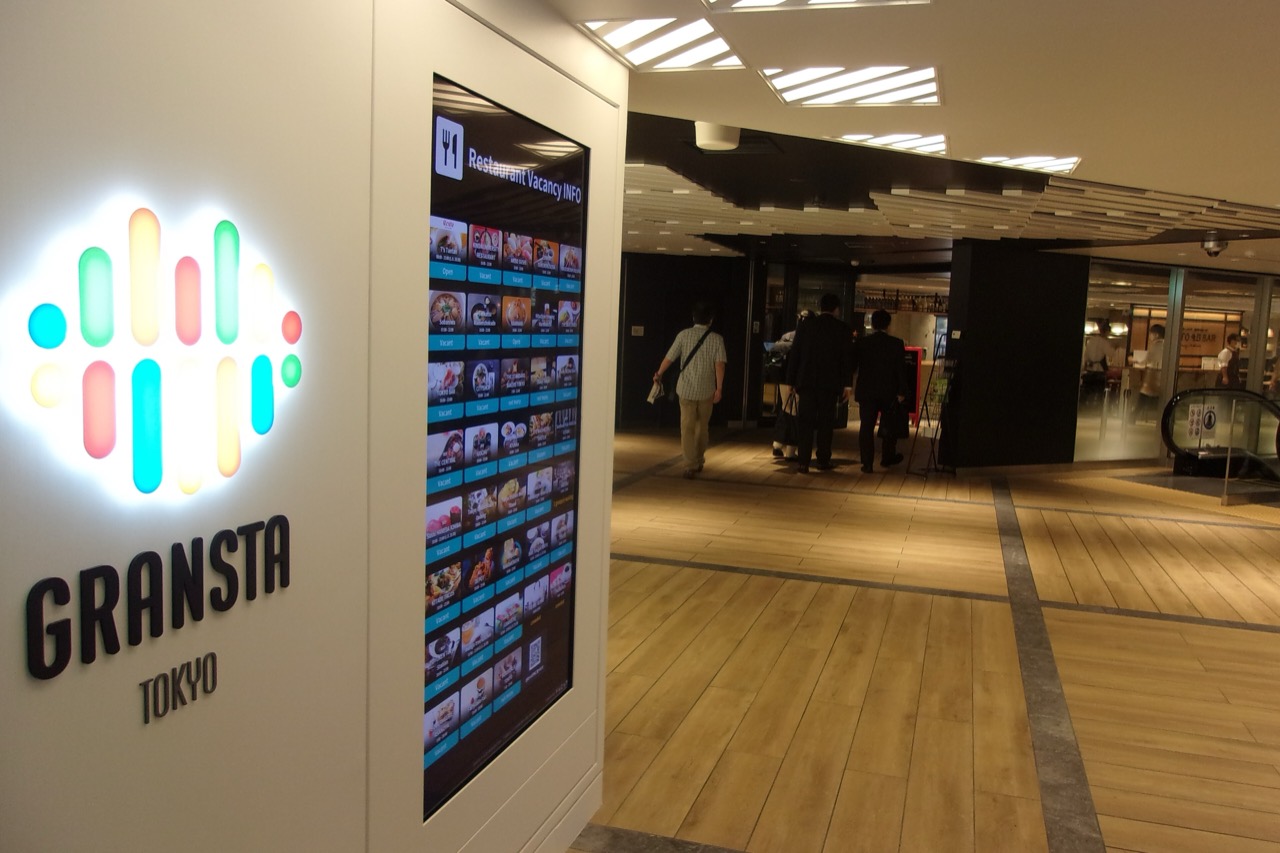
A mall inside the gates · The entrance to Gransta Tokyo, JR East's retail complex spread across both sides of Tokyo Station's ticket gates. ⓒ電車(新幹線)でゴー! · Wikimedia Commons (CC BY-SA 4.0)
A mall inside the gatesThe entrance to Gransta Tokyo, JR East's retail complex spread across both sides of Tokyo Station's ticket gates. ⓒ電車(新幹線)でゴー! · Wikimedia Commons (CC BY-SA 4.0)
2.The company opening the shop is not the London head office but Juchheim. Its roots go back to a confectionery that the German baker Karl Juchheim opened in Qingdao in 1909, and he moved the business to Yokohama in 1922. Today it is a baumkuchen maker headquartered in Kobe. When a Fortnum concept shop opened in the annex of Nihonbashi Mitsukoshi in 2004, Juchheim was the company behind its bread. A German confectioner sells British tea in a Japanese railway station.
3.The published rendering splits the shop in two. Left of the entrance, dark wooden shelves stacked with tea tins and boxes form the grocery section; to the right stands a pale green counter with vertical fluting. White vertical louvres rise behind the counter, and the menu runs down a gold-trimmed column. The pale green is what the brand calls Eau de Nil, the colour of Nile water. No seating appears in the drawing.
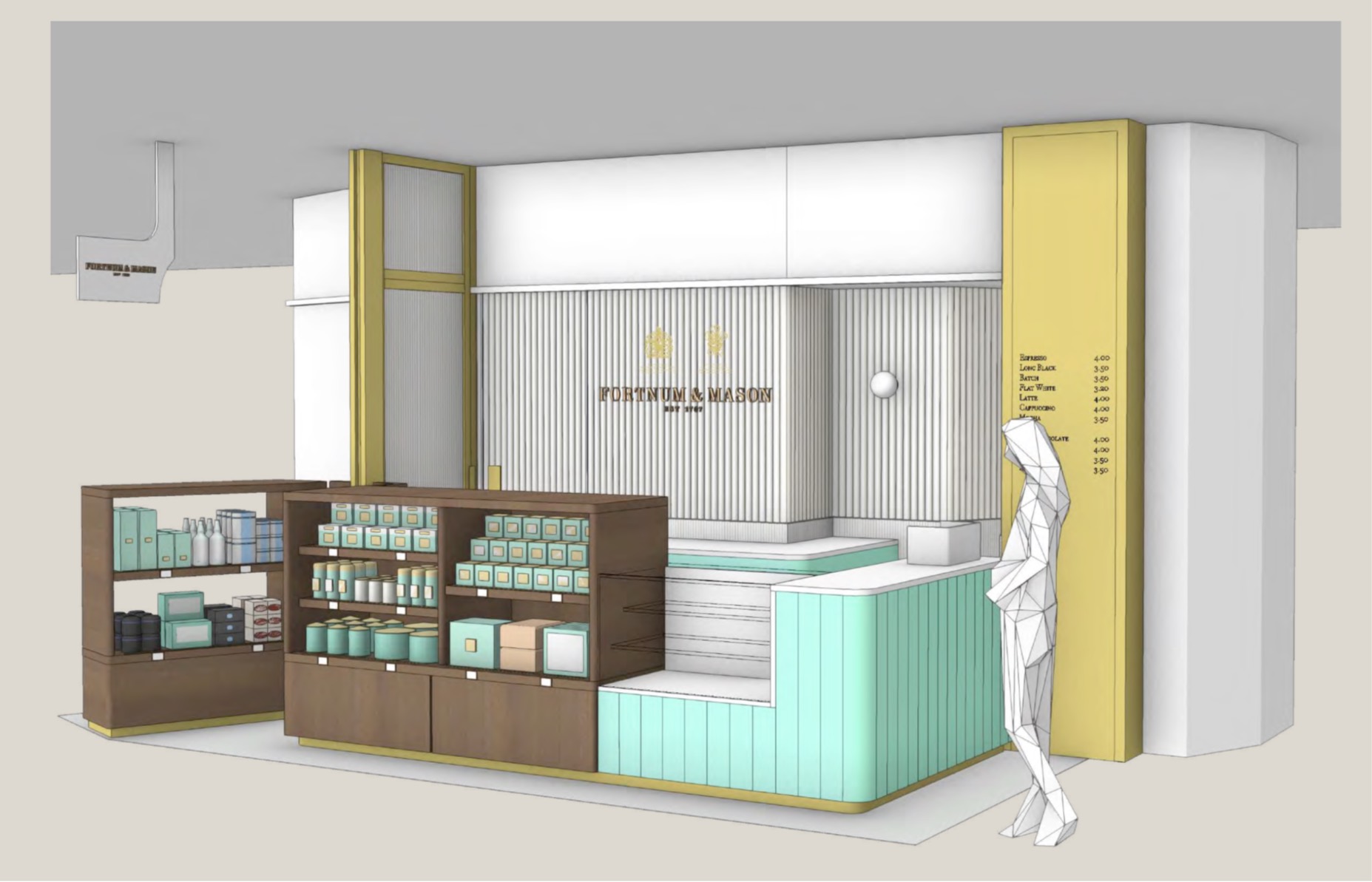
Two counters, no chairs · Shop rendering. The wooden shelves on the left are the grocery section; tea is served from the pale green counter on the right. ⓒ株式会社ユーハイム (PR TIMES)
Two counters, no chairsShop rendering. The wooden shelves on the left are the grocery section; tea is served from the pale green counter on the right. ⓒ株式会社ユーハイム (PR TIMES)
4.There are three black teas, including Earl Grey Classic and Royal Blend, all 475 yen for a medium. Milk tea is 550 yen. Two items are sold only at Tokyo Station: a scone sandwich, a split scone pre-filled with cream and jam, and a cream tea set of two scones plus one drink for 1,296 yen. The Japan-only tea soda mixes Earl Grey with strawberry jam and sparkling water. Coffee is a single specialty option.
5.Royal Blend is said to have been first blended for Edward VII in 1902, Ceylon flowery pekoe laid over malty Assam. When hot water hits the leaves, a honeyed sweetness rises first, while the Earl Grey sends bergamot oil straight to the nose. This tea, though, is drunk in a passage inside the gates where suitcase wheels and departure announcements never stop, and the aroma escapes through one small hole in the lid. The moment you really smell it comes later, when you open the tin at home.
6.The scone sandwich is cream tea redesigned for eating on the move. A proper cream tea is a scone on a plate, split and spread with clotted cream and strawberry jam by knife, and because UK rules require clotted cream to carry at least 55% milk fat, it melts more lightly than butter. Cream first or jam first is an order Cornwall and Devon have argued over for generations. The scone sandwich settles it before the scone reaches your hand.
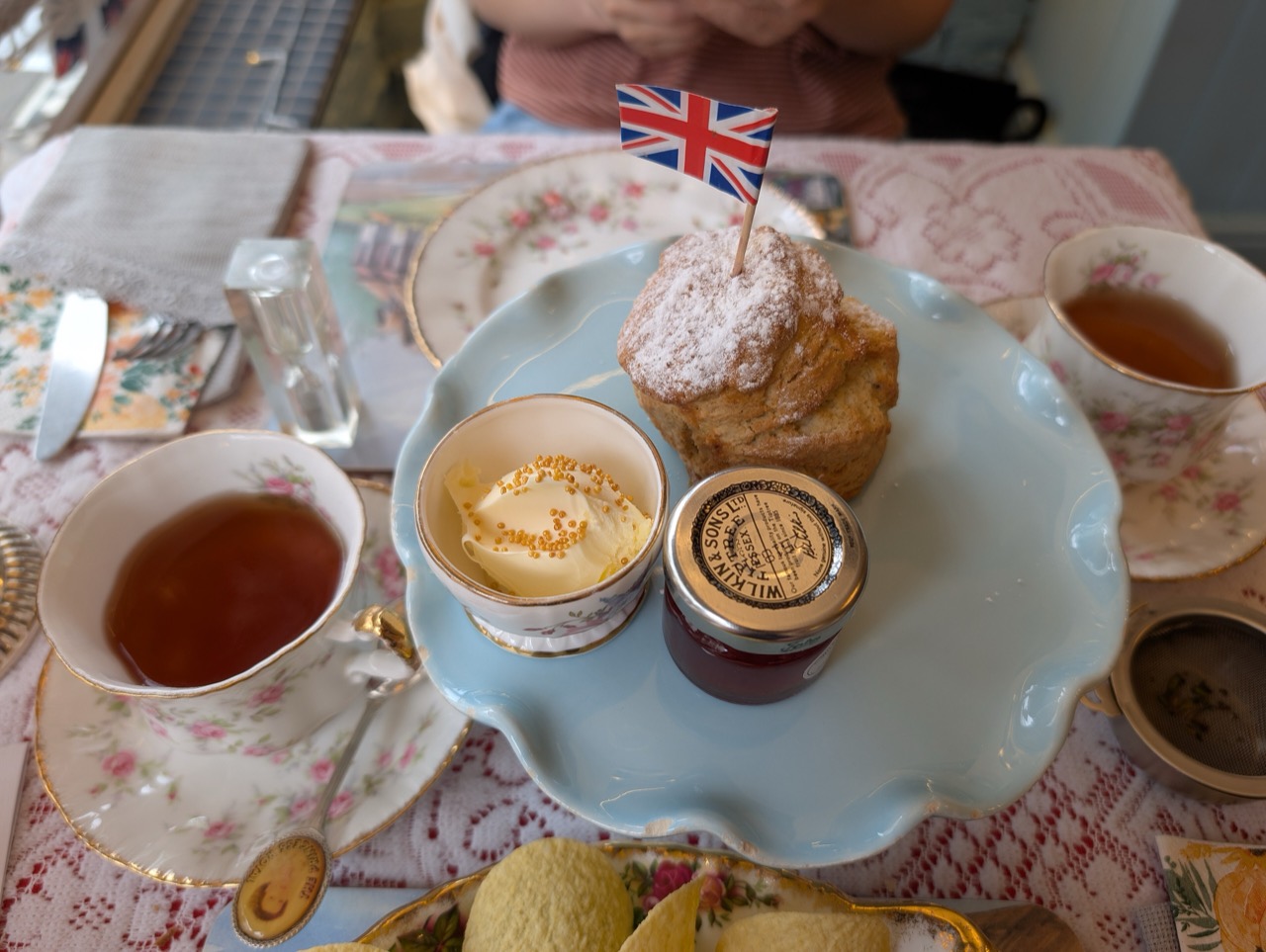
Originally a dish on a plate · An English cream tea. Clotted cream and jam sit beside the scone for the guest to spread. ⓒAndy Li · Wikimedia Commons (CC0)
Originally a dish on a plateAn English cream tea. Clotted cream and jam sit beside the scone for the guest to spread. ⓒAndy Li · Wikimedia Commons (CC0)
7.Demand for black tea in Japan has been rising for several years. Imports reached 15,039 tonnes in 2024, up nearly 10% on the year before, and in January to September of the following year imports of small packs rose another 13%. The Japan Tea Association credits the spread of nun-katsu, touring hotel afternoon teas, among young women. Tea served seated on a three-tier stand caught on first, and that demand is now moving down to a cup you carry.
8.At the cheap end, convenience stores have moved in. Seven-Eleven rolled out Seven Cafe Tea, brewed by an in-store machine, to about 2,000 stores by February 2026 and says it will reach 10,000 by the following February. A regular iced milk tea costs 241 yen. Fortnum charges 2.3 times that for a medium milk tea. So who pays the difference?
홍차 한 잔과 캔 하나의 가격 단위 엔 · 세금 포함 · 2026년 9월 공개 가격 편의점 아이스 밀크티 R 241 Fortnum 밀크티 M 550 크림티 세트 · 도쿄역 한정 1,296 Royal Blend 125g 캔 3,456 캔 하나가 블랙티 M 7잔 값 · 우리지도 않고 컵도 들지 않는다
The floor price and the shelf priceThe convenience store figure is Seven Cafe Tea; the rest are Fortnum's Tokyo Station menu and its Japanese official online shop.
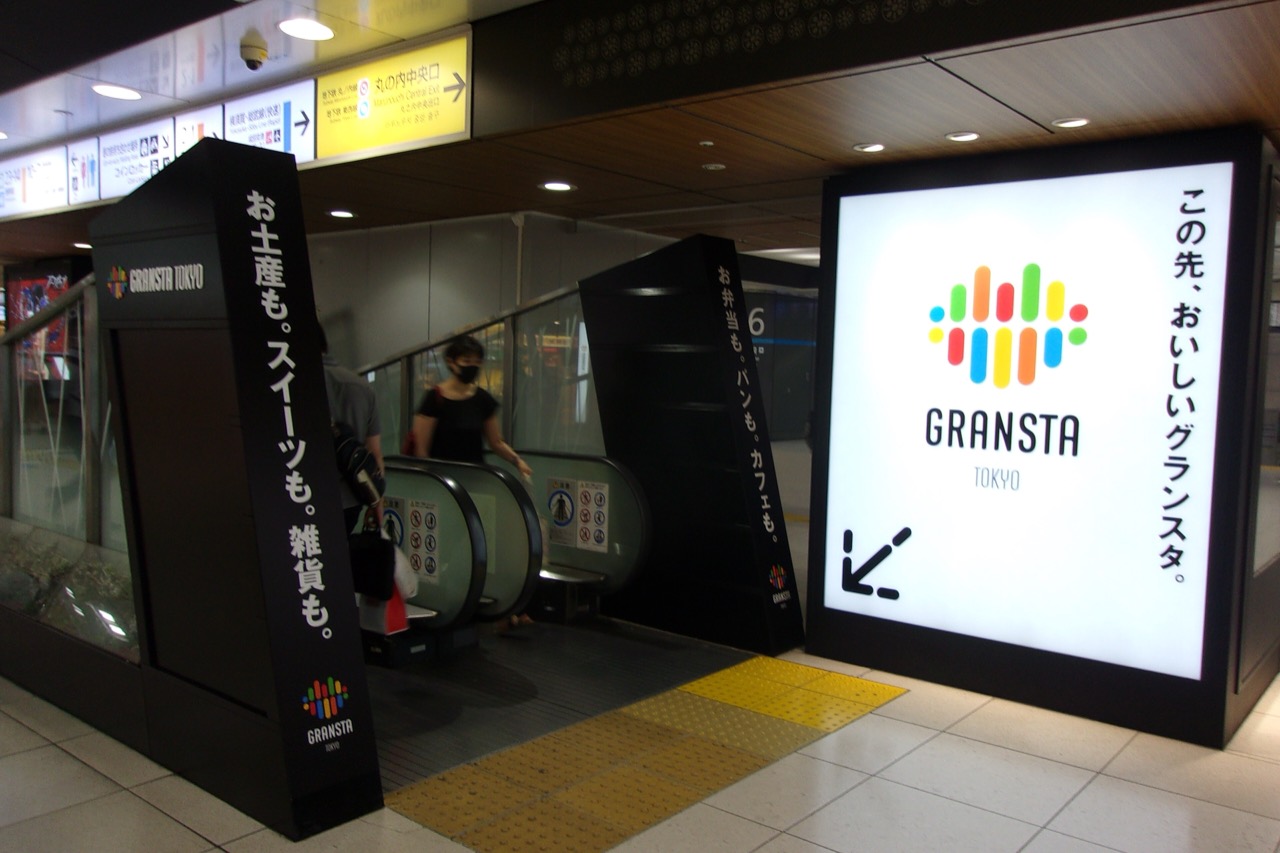
9.On average, 434,564 people a day board JR East trains at Tokyo Station (fiscal 2024). The stand sits inside the gates, so nobody from outside the station can reach it, and every customer is either catching a train or has just stepped off one. What people buy before boarding at Tokyo Station is a bento and a gift. The three phrases on the Gransta sign, 「お土産。スイーツも。雑貨も。」 (gifts, sweets, sundries), say exactly what this zone sells.
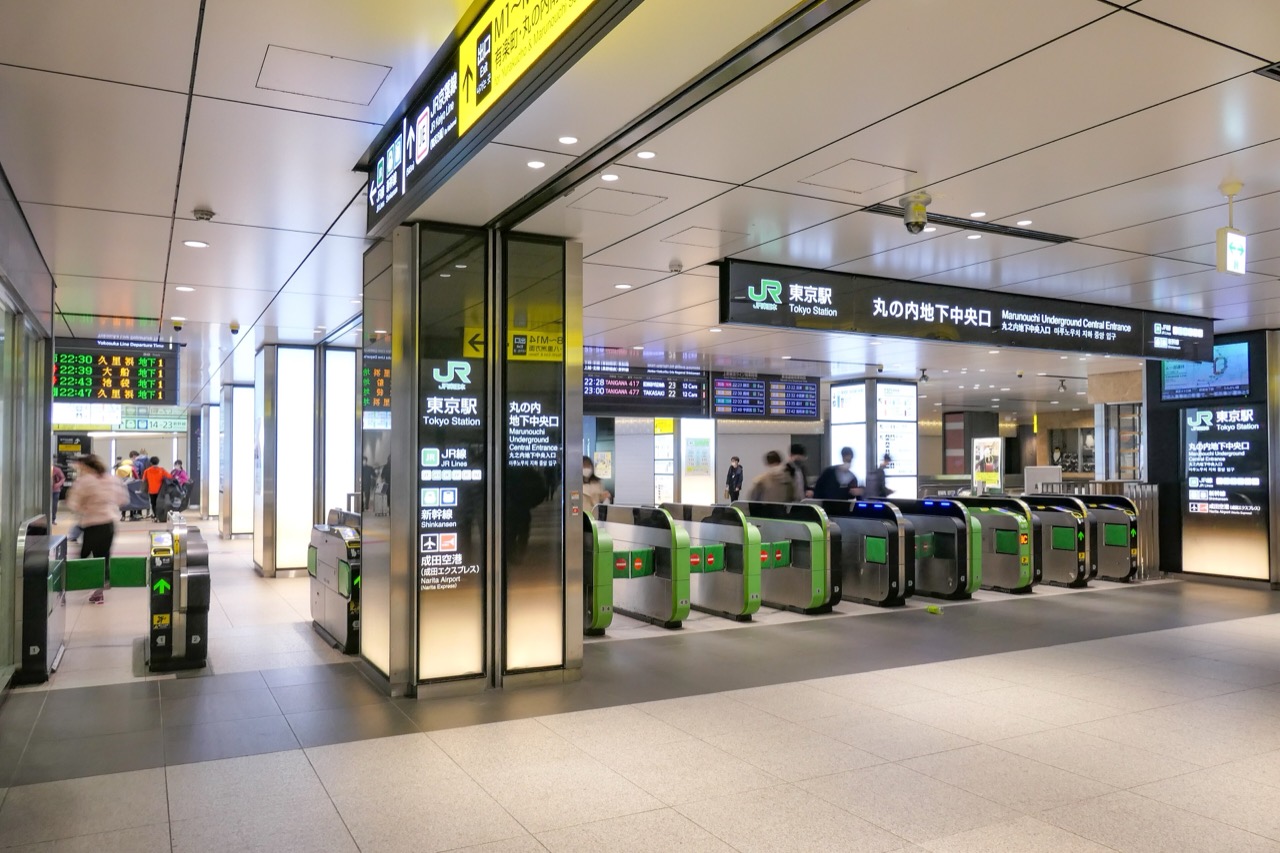
Tap in to enter · The Marunouchi underground central gate at Tokyo Station. The stand's zone lies beyond these ticket gates. ⓒMaedaAkihiko · Wikimedia Commons (CC BY-SA 4.0)
Tap in to enterThe Marunouchi underground central gate at Tokyo Station. The stand's zone lies beyond these ticket gates. ⓒMaedaAkihiko · Wikimedia Commons (CC BY-SA 4.0)
Gifts, sweets, sundries · A sign beside the escalator down to Gransta Tokyo, spelling out what customers buy here. ⓒ電車(新幹線)でゴー! · Wikimedia Commons (CC BY-SA 4.0)
Gifts, sweets, sundriesA sign beside the escalator down to Gransta Tokyo, spelling out what customers buy here. ⓒ電車(新幹線)でゴー! · Wikimedia Commons (CC BY-SA 4.0)
10.How much of a 475-yen black tea is ingredients? As takeout it carries the reduced 8% consumption tax, and leaves plus cup and lid come to roughly 13% of pre-tax sales (an estimate based on Japanese retail prices). A cup needs only a few grams of leaf, and for black tea without milk, that is the whole ingredient list.
11.The weight falls on rent and people. Station shops usually pay rent linked to sales, and the rate is not disclosed. Assume 15%, take out tax and ingredients, and 319 yen is left per cup. The shop is open 97 hours a week.
475엔 한 잔이 남기는 돈 단위 엔 · 블랙티 M 기준 · 재료와 역 수수료 15%는 추정 세금 35 재료 55 역 수수료 66 남는 돈 319 세금 뺀 매출 대비 재료 13% · 찻잎과 컵·뚜껑을 합친 값 두 사람 14시간 · 시급 1,400엔 하루 39,200엔 · 123잔이면 덮는다
What remains goes to wagesTax is calculated at the reduced 8% rate. Ingredients are estimated from Japanese retail prices, and the station fee and hourly wage from typical industry terms.
12.Those 319 yen have to pay for staff. To cover two people standing 14 hours a day, the stand must sell 123 cups a day (estimate). That is one cup for every 3,500 people boarding at Tokyo Station. The hourly wage is set slightly above Tokyo's minimum wage, which rises in October.
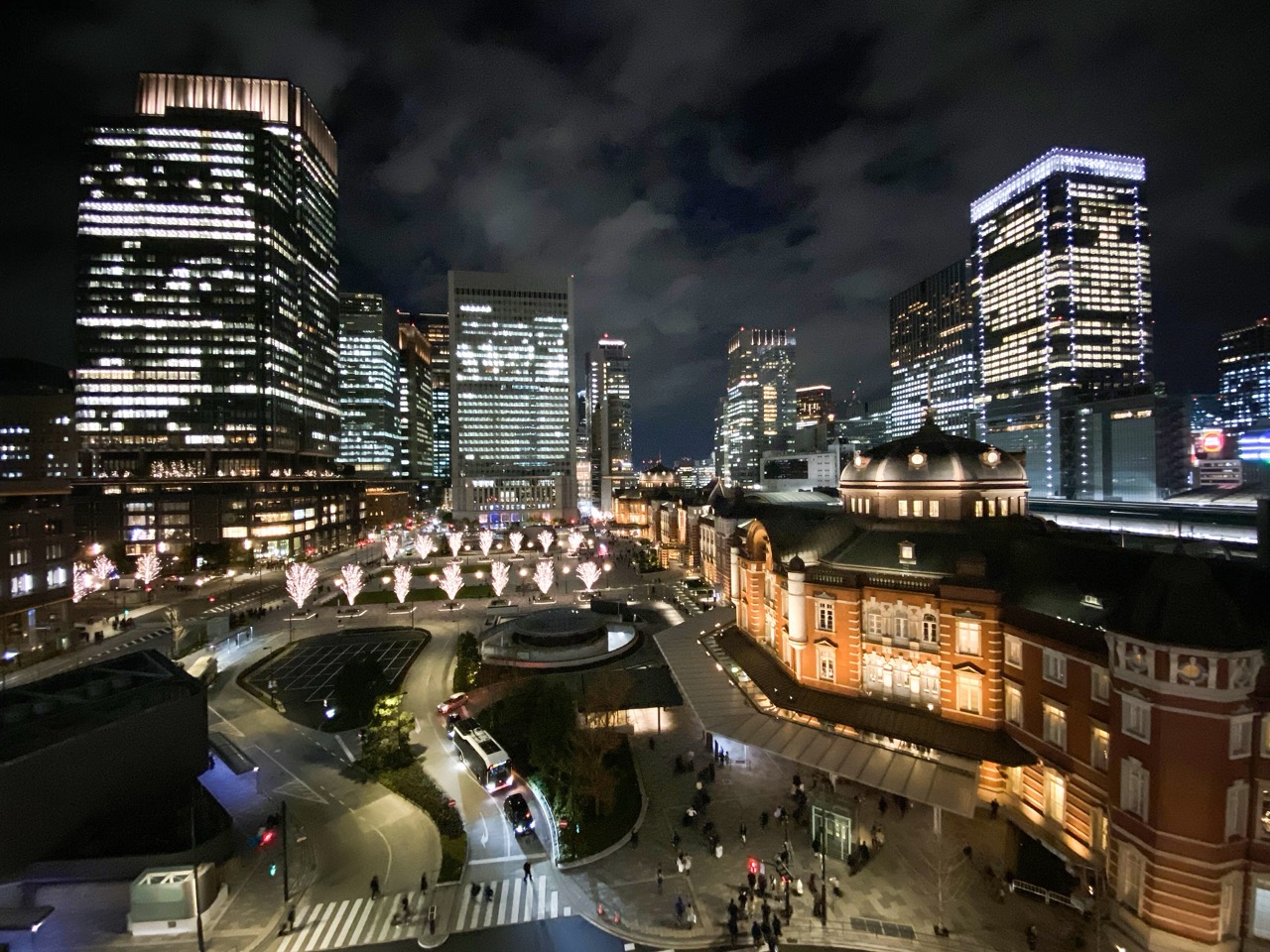
A station with 430,000 boardings a day · The Marunouchi station building. The stand opens inside the gates beneath it. ⓒWpcpey · Wikimedia Commons (CC BY 4.0)
A station with 430,000 boardings a dayThe Marunouchi station building. The stand opens inside the gates beneath it. ⓒWpcpey · Wikimedia Commons (CC BY 4.0)
13.What changes the arithmetic is the shelf by the entrance. The old concept shop never brewed tea. It sold tea bags, jam and bottled iced tea as gifts, and even with a counter added, those shelves stayed at the entrance. One tin of Royal Blend costs as much as seven black teas, and a tin needs no brewing and no cup: it goes into a bag and the sale is done. In a station where queues form outside the sweets shops, these shelves could out-earn the cups. The shelf area is not published, but in the rendering it is almost as wide as the counter.
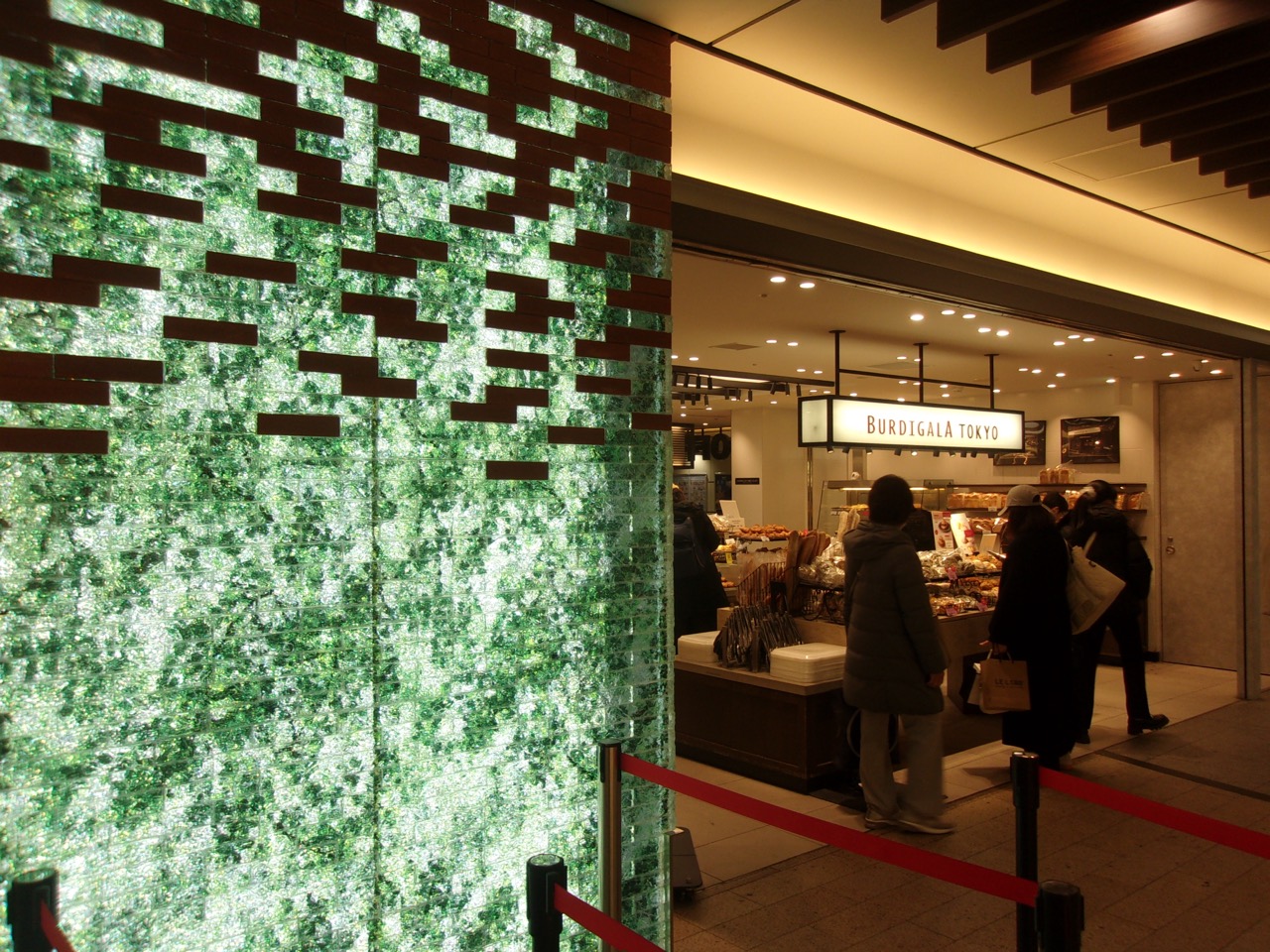
Queues inside the station · A queue line in front of a bakery in Gransta Tokyo's sweets zone. At this station, people line up to buy gifts. ⓒ電車(新幹線)でゴー! · Wikimedia Commons (CC0)
Queues inside the stationA queue line in front of a bakery in Gransta Tokyo's sweets zone. At this station, people line up to buy gifts. ⓒ電車(新幹線)でゴー! · Wikimedia Commons (CC0)
14.Fortnum began as a grocer that William Fortnum and Hugh Mason opened on Piccadilly in London in 1707. Its owner today is the private investment company Wittington Investments. In the 12 months to July 2025, revenue was £239 million and pre-tax profit £15 million, up more than 60% on the year, with growth reported both at the flagship and in overseas online sales.
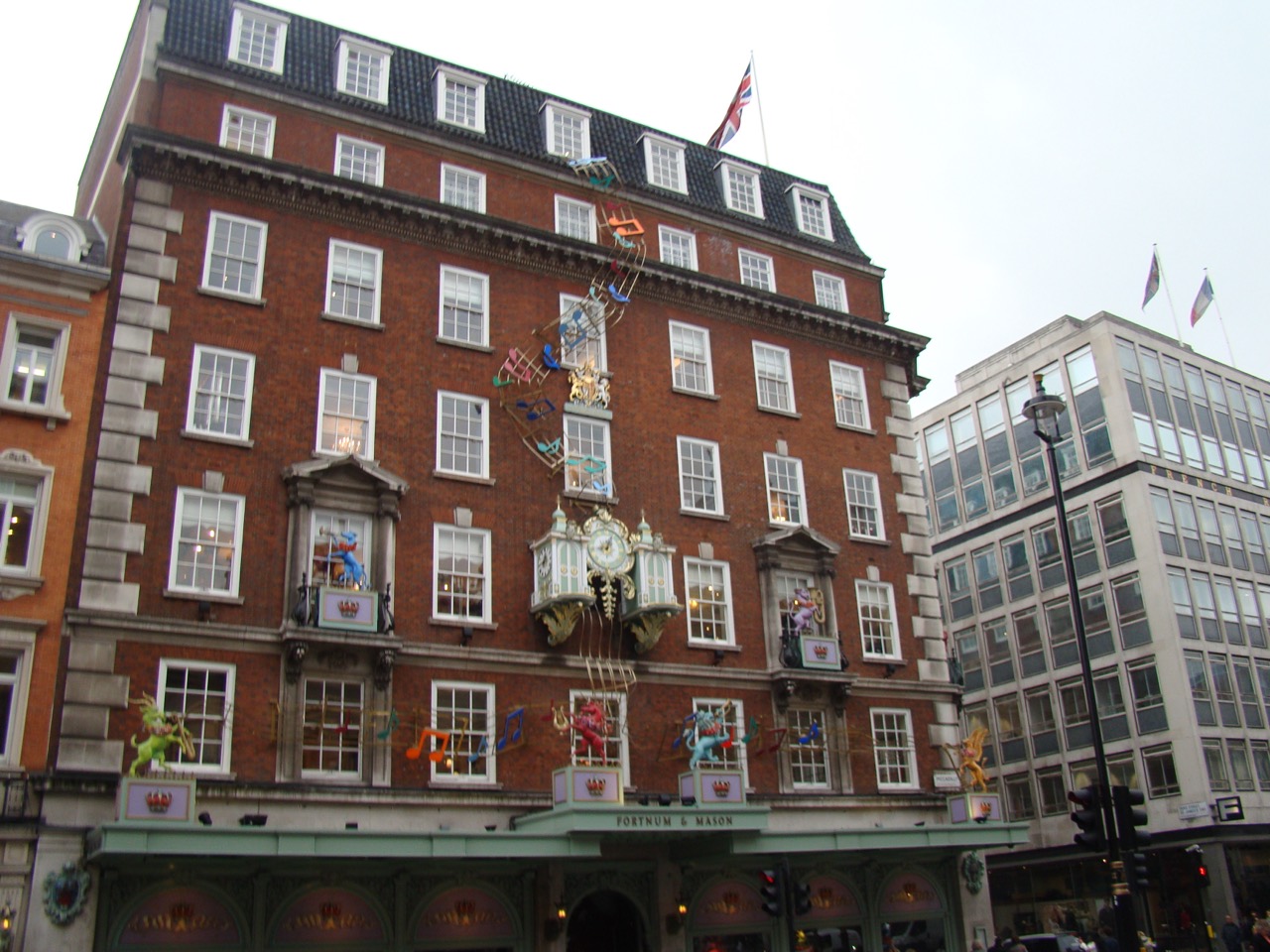
The grocer of 1707 · Fortnum's flagship on Piccadilly, London. The clock on the facade is the building's landmark. ⓒRobert Lamb · Wikimedia Commons (CC BY-SA 2.0)
The grocer of 1707Fortnum's flagship on Piccadilly, London. The clock on the facade is the building's landmark. ⓒRobert Lamb · Wikimedia Commons (CC BY-SA 2.0)
15.In Japan the brand lives mostly in department store food halls: the tea shop at Nihonbashi Mitsukoshi, and counters at Ginza, Sapporo and Sendai Mitsukoshi and at Isetan Urawa. The Tokyo Station concept shop sold the same goods. Department store shoppers come downstairs knowing what they want; shoppers inside the gates walk with one eye on the departure board. In the same spot where it once sold only tins, the brand now holds out a cup first to people walking past.
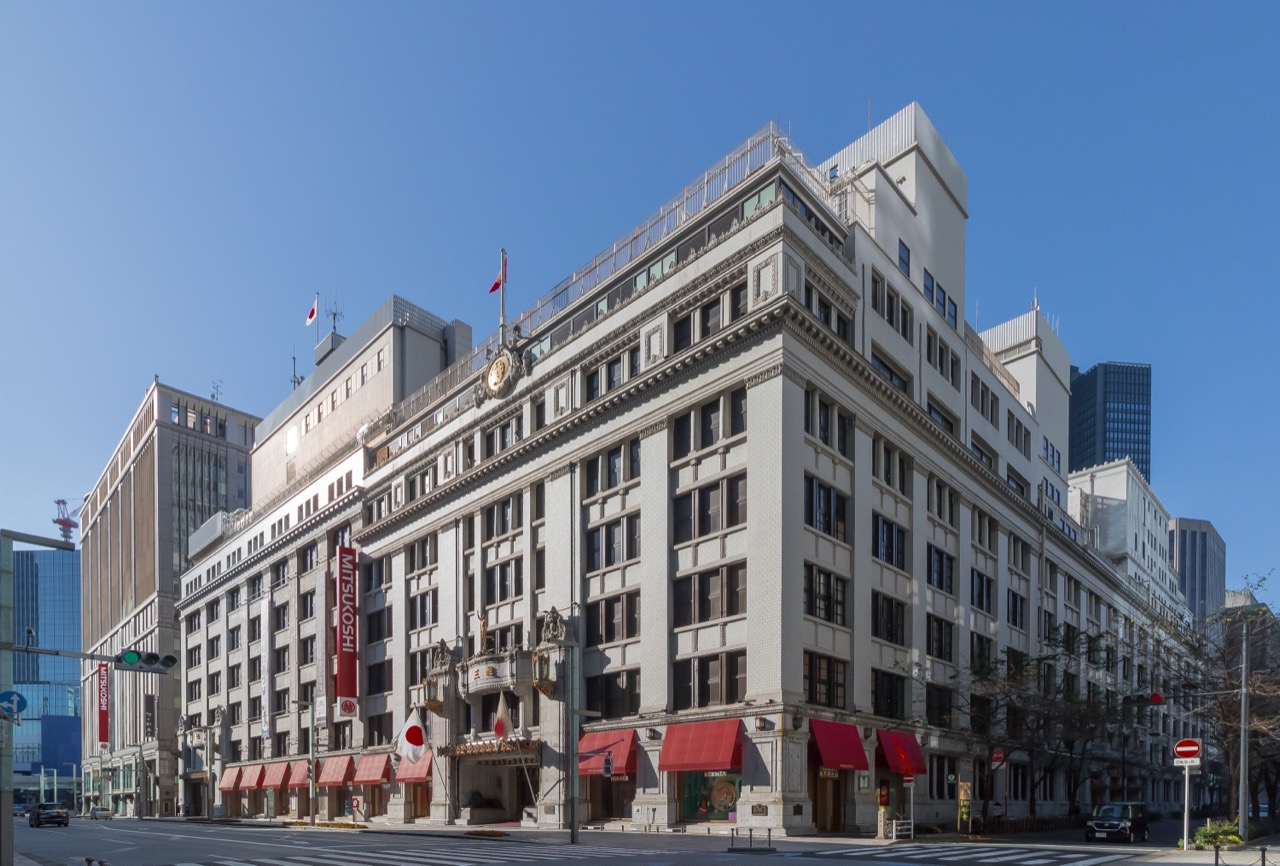
Where it has been · Nihonbashi Mitsukoshi main store. Fortnum's tea shop is on B2 of the annex. ⓒKakidai · Wikimedia Commons (CC BY-SA 4.0)
Where it has beenNihonbashi Mitsukoshi main store. Fortnum's tea shop is on B2 of the annex. ⓒKakidai · Wikimedia Commons (CC BY-SA 4.0)
16.An old London grocer is turning its shop inside the gates of Tokyo Station from a tin shop into a tea stand with no chairs. The line for covering two people's wages comes out at 123 cups a day (estimate), and the tin shelves by the entrance stand behind it. In Korea, a shop like this inside a station would first have to win a Korail Retail tender. In 2024 the bakery site at Daejeon Station was put out with a fee benchmark of 17% of average monthly sales, and five tenders failed. Only after an advance consultation with the Board of Audit and Inspection lowered the benchmark did it go for 133 million won a month. When a sales-linked fee lands on a drink with a low ticket price, the margin runs short first where wages are paid.
Daily Drink #034 · 2026.09.11 · Sources and verification. Shop facts were cross-checked against the PR TIMES release by 株式会社ユーハイム 「英国王室御用達フォートナム・アンド・メイソンのティースタンドが日本初出店 JR東京駅構内「グランスタ東京」内に9月16日(水)オープン」, ファッションプレス 「フォートナム・アンド・メイソン日本初ティースタンドが東京駅に」, and グルメプレス (opening Wednesday, September 16, 2026 at 10:00 · 東京都千代田区丸の内1-9-1 JR東日本東京駅構内 グランスタ東京 B1 丸の内改札内エリア · weekdays and Saturday 8:00-22:00, Sundays and holidays 8:00-21:00 · takeout format · grocery section attached · black teas Fortnum, Earl Grey Classic, Royal Blend M 475 yen/L 540 yen · milk teas Breakfast, Earl Grey Classic M 550 yen/L 637 yen · Irish Breakfast M 649 yen/L 693 yen · herbal tea M 507 yen · specialty coffee M 496 yen · tea soda L 756 yen (Japan only) · scone 432 yen · scone sandwich 540 yen and cream tea set 1,296 yen (Tokyo Station only) · brand colour オー・ド・ニール (Eau de Nil)). The zone renewal follows the PR TIMES release by 株式会社JR東日本クロスステーション 「グランスタ東京『地下 丸の内改札内エリア』2026年9月中旬リニューアルオープン」, ファッションプレス and 8and (エイトアンド) of September 5, 2026 (former 丸の内坂エリア closed January 18, 2026 · about eight months of work · about 1,080㎡ · 26 shops · 10 new brands · 11 renewals or rebrands · 12 Tokyo Station exclusives, 13 in September reports · nickname FAV ZAKA). Fortnum's listing under 「リニューアル/リブランディング オープン」 comes from the official Gransta notice 「グランスタ東京(丸の内坂エリア) 一部ショップ営業終了および新ショップオープン日のお知らせ」, and the old concept shop's range (tea bags · jam · flavoured teas · bottled iced tea) from an August 2020 visit report (gift.shelly99.biz). The list of Japanese stores is from the 店舗案内 page of Fortnum & Mason's Japanese official site (日本橋三越本店 新館B2 · 銀座三越 · 札幌三越 · 仙台三越 · 伊勢丹浦和店 · グランスタ東京), and the Royal Blend 125g tin at 3,456 yen from the same site's shop page. The October 2004 opening of the concept shop in the 日本橋三越本店 annex and Juchheim's role in its bread come from All About (October 26, 2004); Juchheim's history (founded 1909 in 青島 · 1922 横浜 · head office 神戸 · revenue 27.6 billion yen for the year to March 2025) from company materials and Wikipedia. The 1902 Edward VII origin and composition of Royal Blend are as described on Fortnum & Mason's UK official site. Fortnum & Mason results (revenue £239 million in the 12 months to July 2025 · prior year £227.8 million · pre-tax profit £15 million · prior year £9.3 million) were cross-checked across Retail Gazette (January 2026), The Grocer and City AM. Tokyo Station boardings are from JR東日本 「各駅の乗車人員 2024年度」 (daily average 434,564). Black tea imports are 日本紅茶協会 confirmed figures (2023: 13,703,584kg · 2024: 15,039,494kg) and the same association's 「2025年紅茶業界10大ニュース」 (small-pack imports January to September at 113% year on year · nun-katsu · 267 certified tea shops). Seven Cafe Tea follows 流通ニュース (March 27, 2025) and 日経クロストレンド (about 2,000 stores by February 2026 · 10,000 by February 2027 · iced milk tea R 240.84 yen including the reduced 8% tax). The 55% minimum milk fat for clotted cream is a UK food regulation. The Daejeon Station bakery tender was cross-checked against Asia Economy and Newsis reports of September 27, 2024 (fee benchmark of 17% of average monthly sales, 441 million won · five failed tenders · benchmark lowered after an advance consultation with the Board of Audit and Inspection · awarded at 133 million won a month). The exchange rate used is 864.62 won per 100 yen (Seoul Money Brokerage base rate, September 4, 2026). The 13% ingredient ratio, 55 yen of ingredients per cup, 15% station fee, 1,400-yen hourly wage and 123 cups a day in paragraphs 10-12 and the second chart are not published figures but estimates built from Japanese retail prices, published hours and prices, and typical terms for station retail. Floor area, lease terms and staffing were not disclosed.