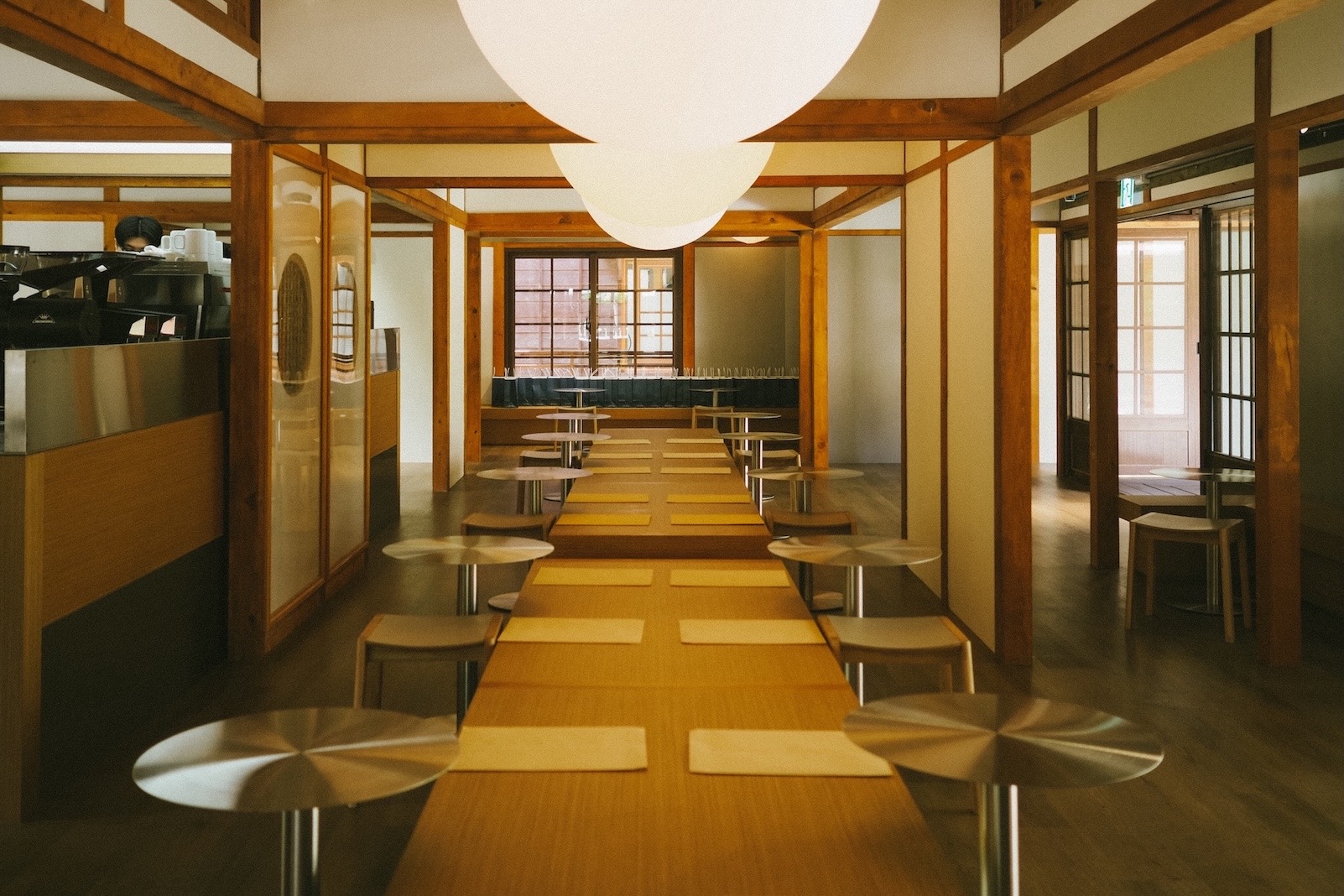
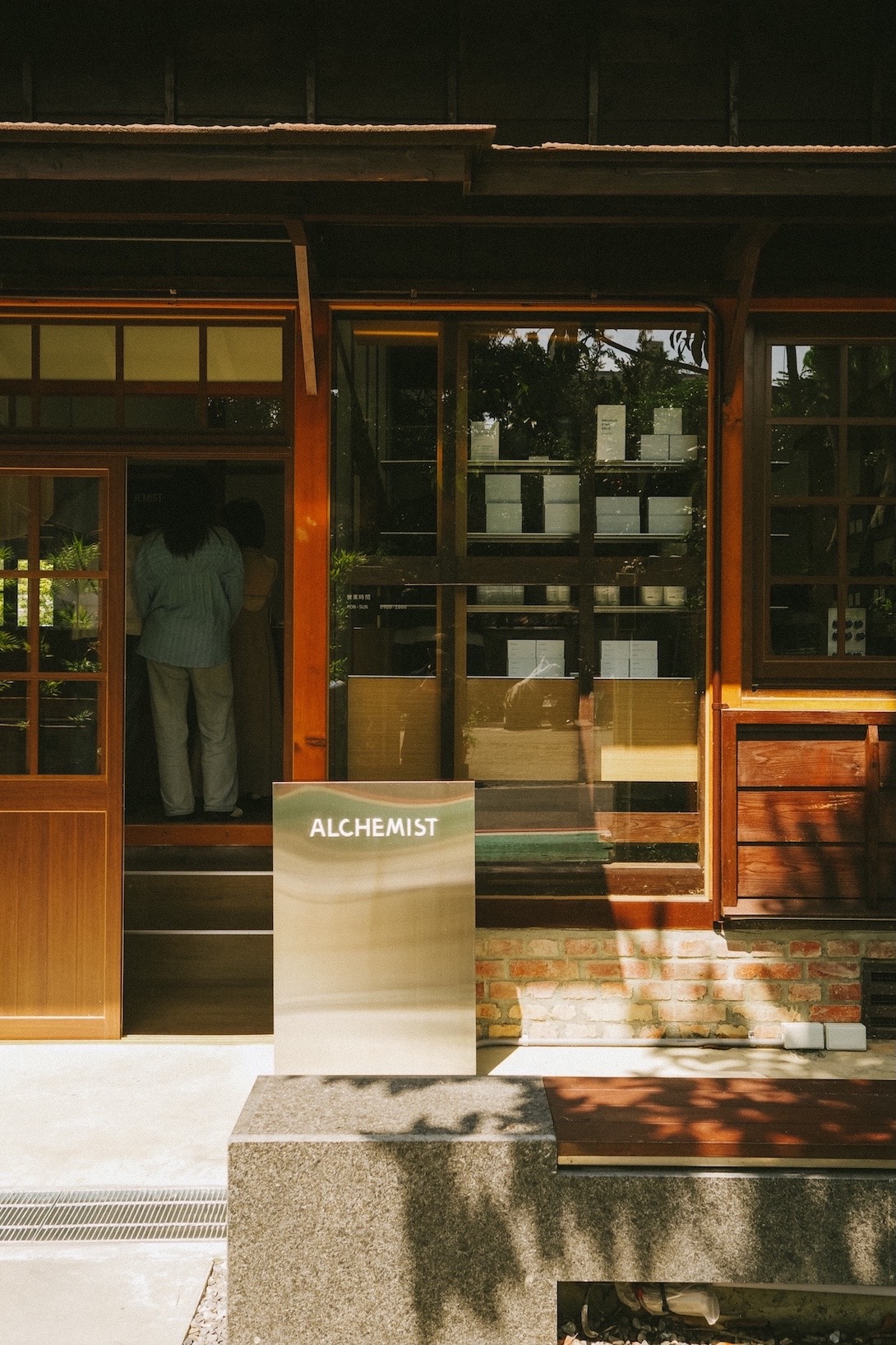
Beans roasted in Singapore and flown in are brewed on the raised timber floor of a Japanese-style official residence built in 1930. In March 2026 the Singapore coffee brand Alchemist opened a shop in one of these old residences in Taipei's Daan District. Two months later the whole compound of six residences opened, after a private company spent more than NT$140 million (about KRW 6 billion) restoring it. That money has to come back through the fees its tenant brands pay. An iced white coffee costs NT$180, roughly KRW 7,700.
1.The shop sits down a lane off Section 2 of Hangzhou South Road. It is a five-minute walk from exit 6 of Guting MRT Station, opens at 9 a.m. and closes at 6 p.m. Order a single drink and you can stay as long as you like. On 15 May the compound it belongs to, the Jinding Japanese-style Dormitories, opened in full under the name Guang Zai Jinding, and six brands now share the houses: coffee, cast-iron skillet pancakes, Kyoto-style tofu hot pot, Nordic furniture and records.
2.Will Leow started Alchemist in 2016 as a 12㎡ stand in Singapore's central business district. After growing to 11 shops at home, the brand opened its first overseas branches in Tokyo's Aoyama and Asakusa in June 2025, and reached Taipei's Dadaocheng at the end of September that year. The Dadaocheng shop is mostly takeaway, with a few round metal tables. Daan is the largest shop in Taipei, and every bean is roasted in Singapore and sent by air.
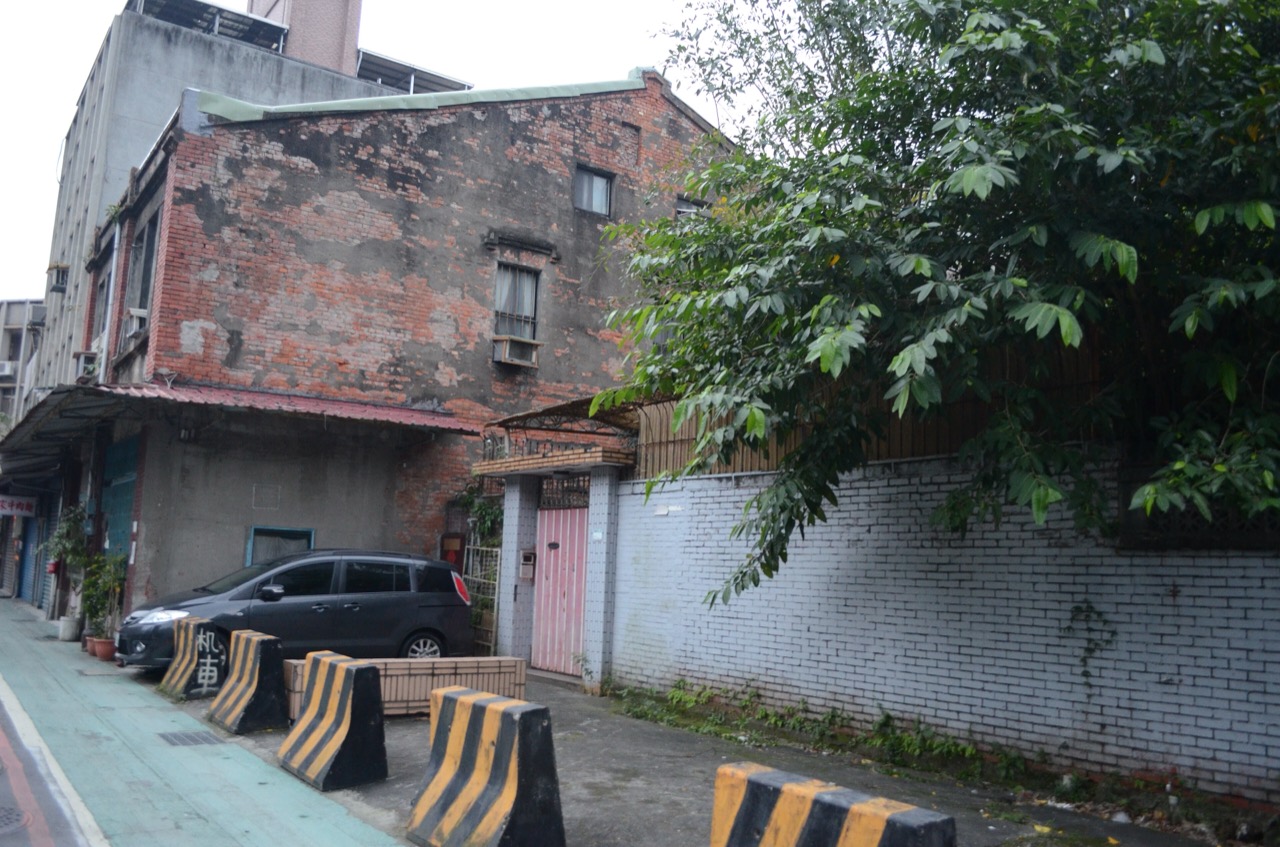
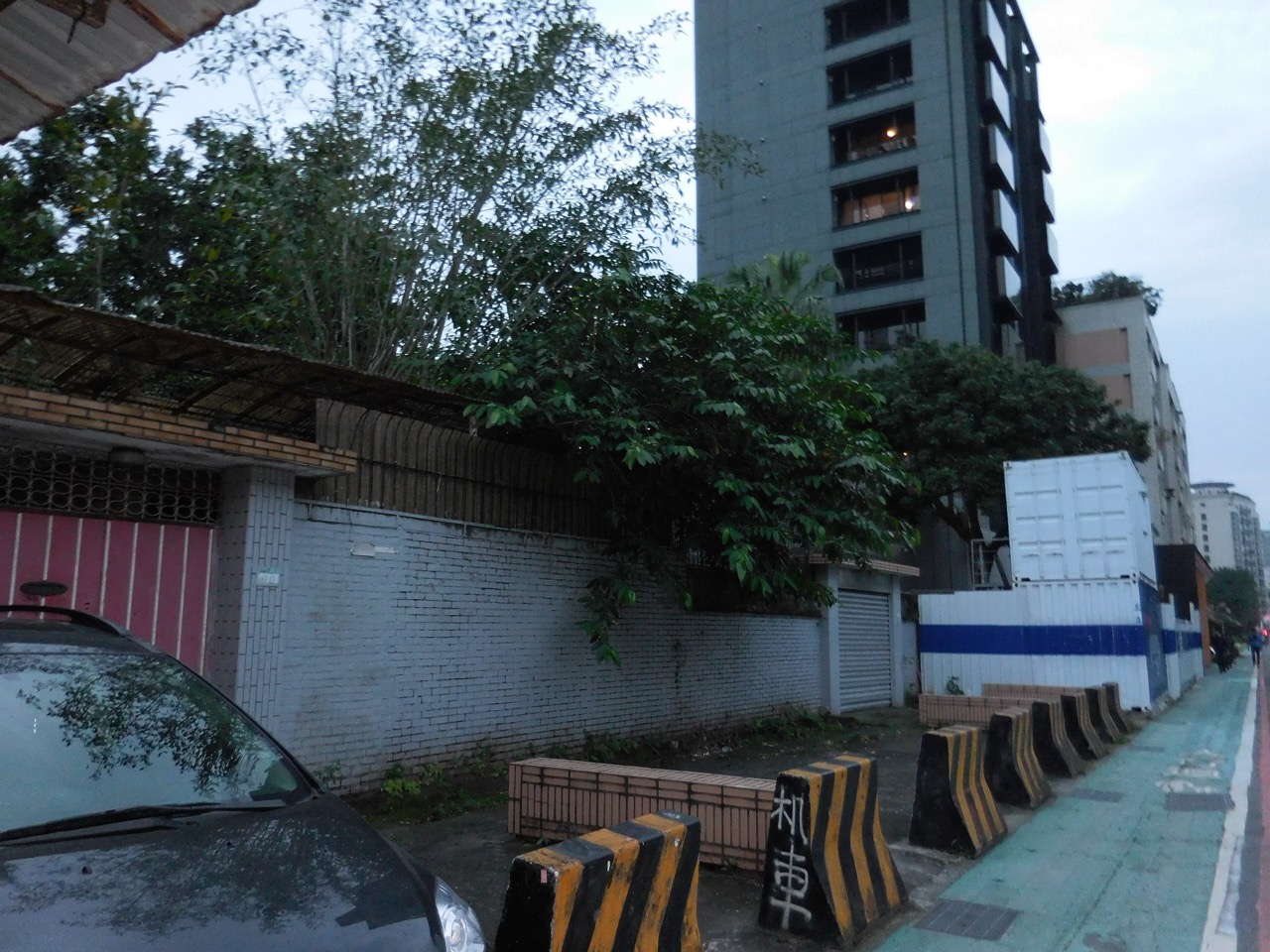
3.Jinding was the Japanese-era name for this neighbourhood. The timber houses, built in the 1920s for mid-ranking officials, passed after the war to the Tobacco and Wine Monopoly Bureau, and in 2007 they were registered as a Taipei historic building. Even after registration they stayed hidden behind brick walls and iron gates, squeezed between apartment towers.
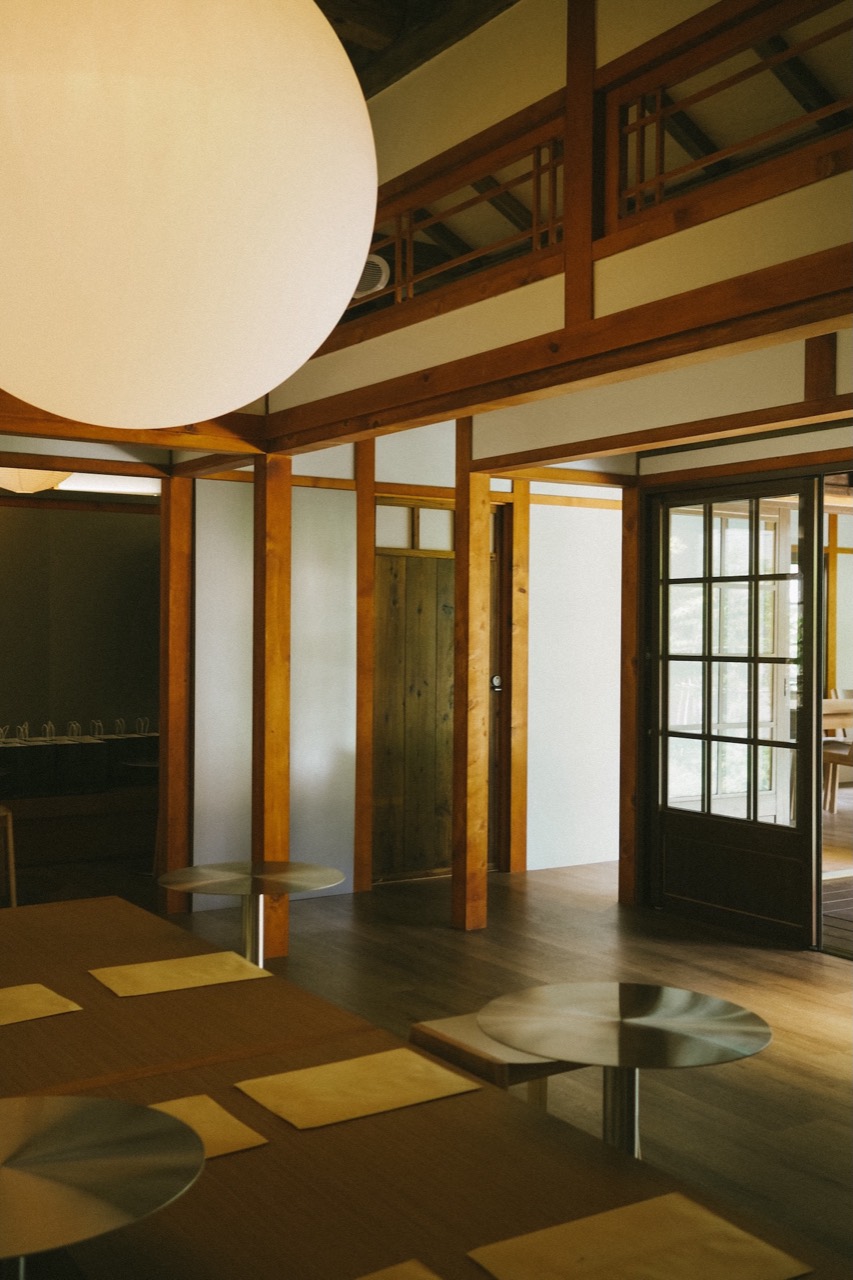
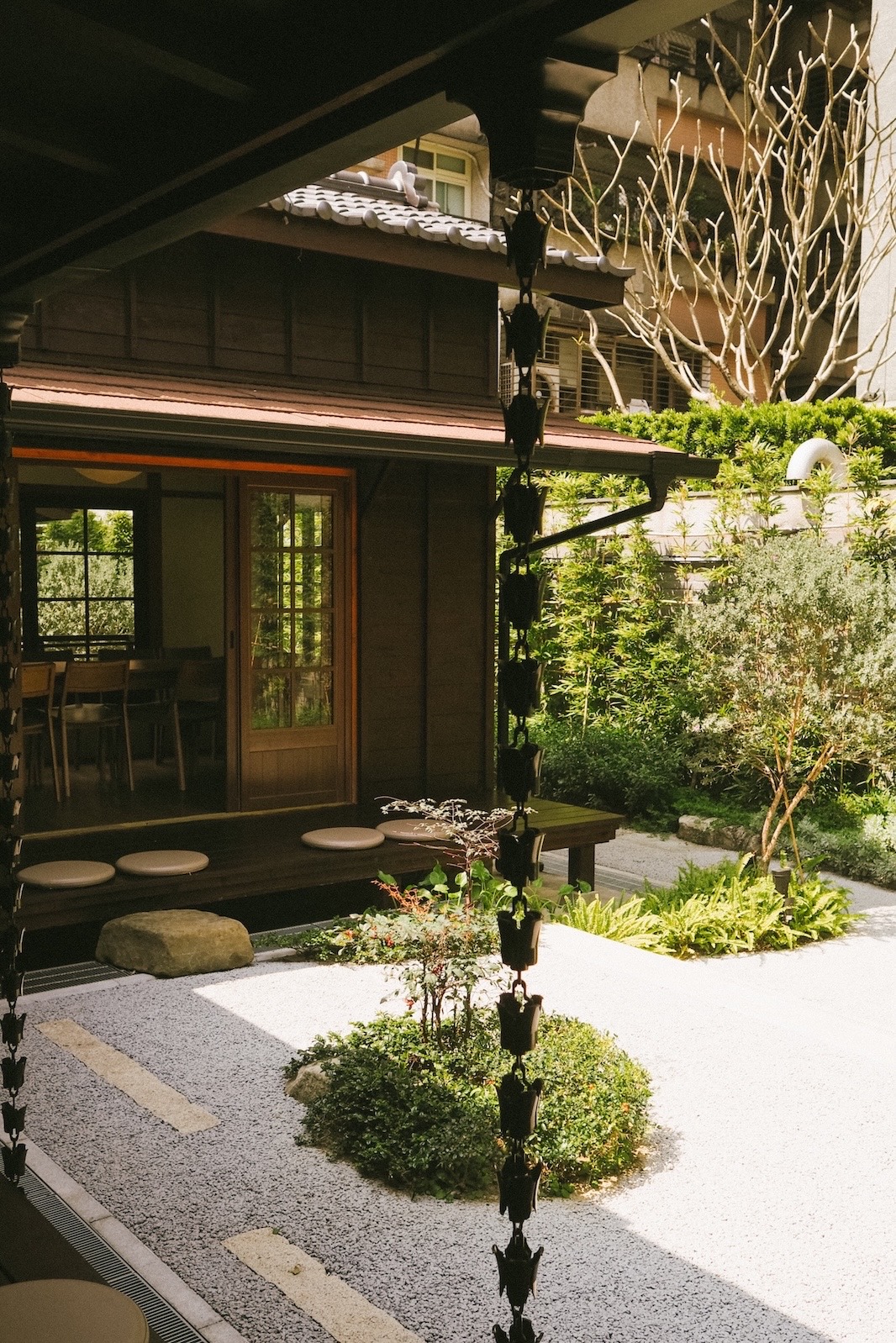
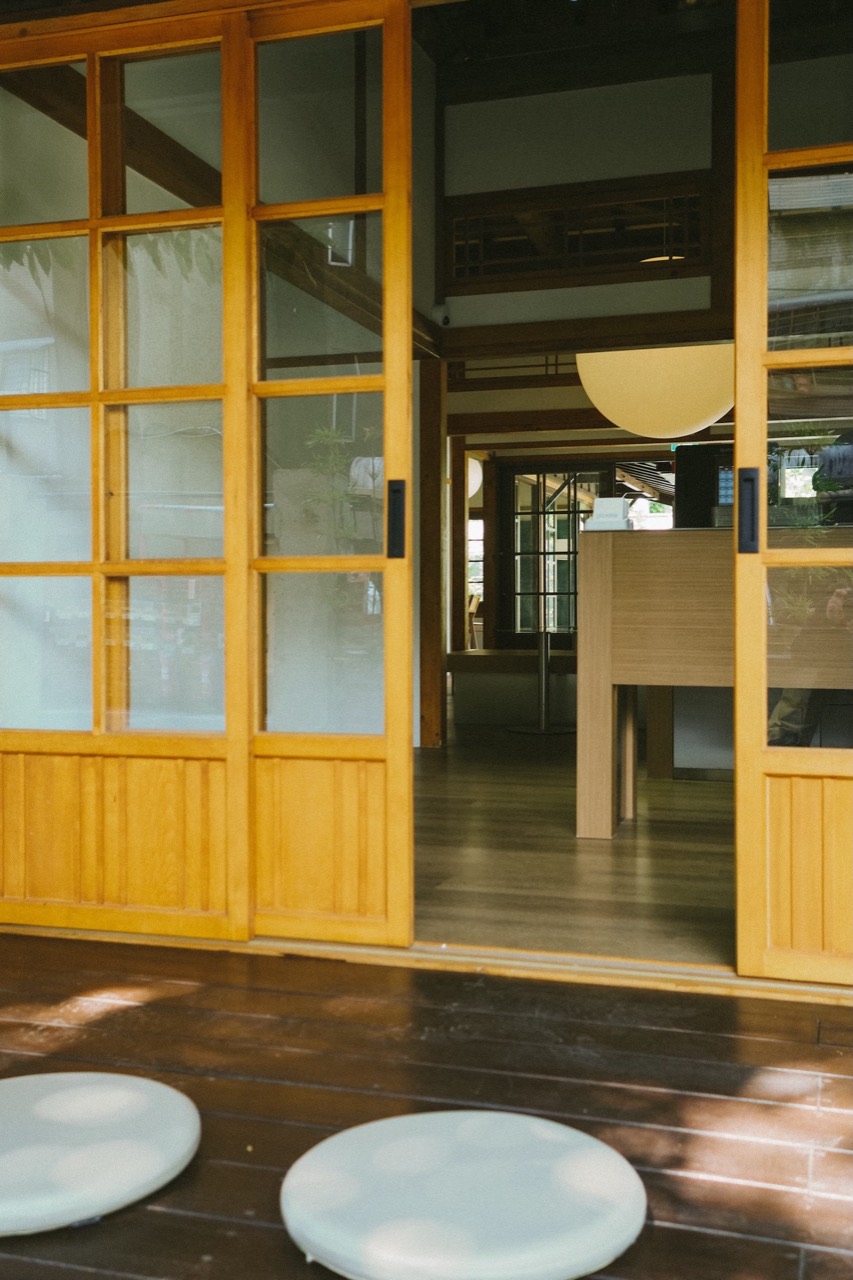
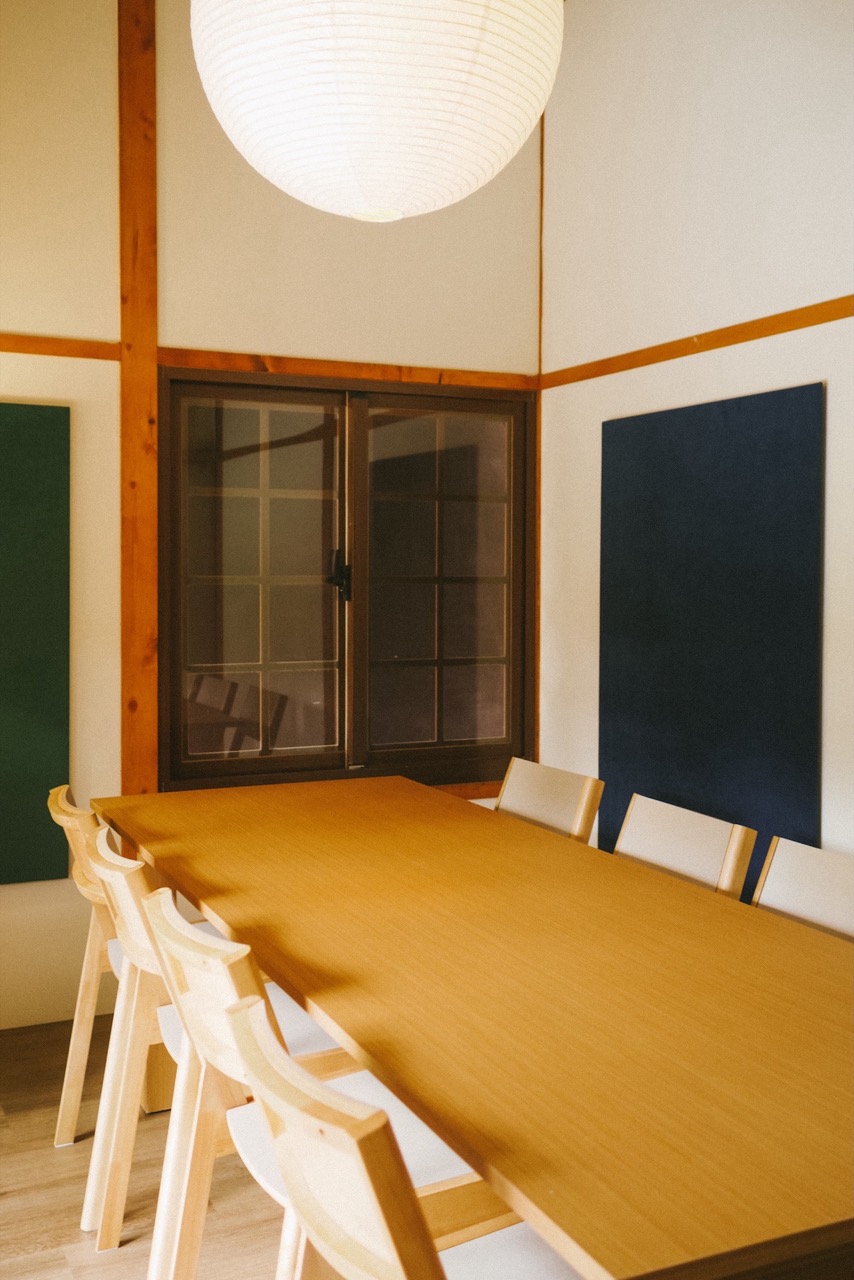
4.Restoration began in July 2022 and took almost four years. The black tile roofs, clapboard walls, floors lifted off the ground and paper doors were restored as they were, and Alchemist kept two original 1930 window frames inside the shop. The raised floor gives a hollow knock with every step, and light that has passed once through paper spreads evenly over the long communal table. Stainless steel disc tables and furniture made from recycled coffee grounds are mixed in among the timber pieces, and past the rear veranda a garden of white gravel opens up.
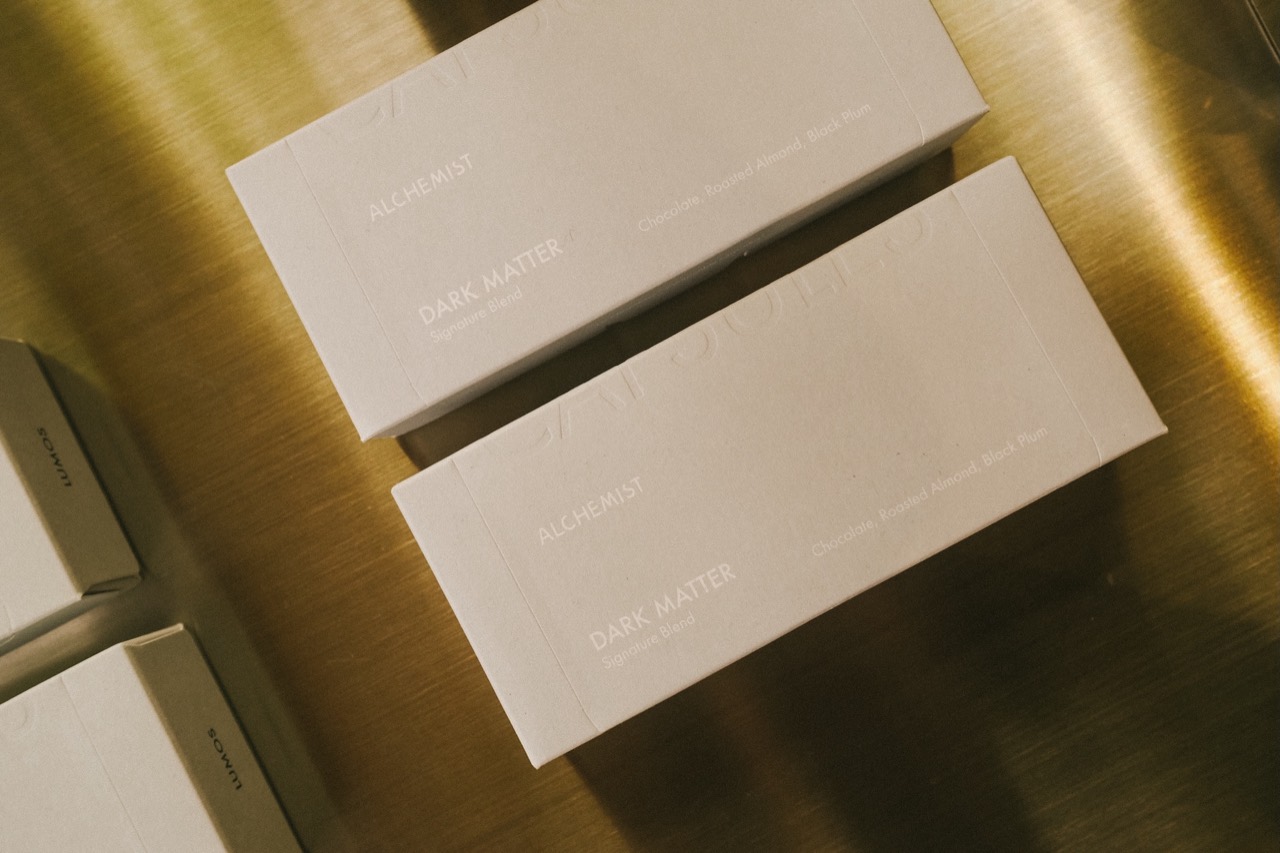
5.Espresso comes from a choice of three blends: Dark Matter, which leans heavy toward cocoa and nuts; Equilibrium, which balances acidity and sweetness; and Lumos, which puts florals and bright acidity up front. Pour-overs rotate through four origins with the harvest. El Cipres, a Parainema from Nueva Segovia in Nicaragua, brings brown sugar sweetness behind orange. Doi Pangkhon from Chiang Rai in Thailand carries a starfruit and kumquat acidity on a smooth body. Cascara, tea brewed from dried coffee cherry skins, tastes of dried fruit. Pastries are not baked on site; the shop rotates 8-9 kinds made with a local bakery.
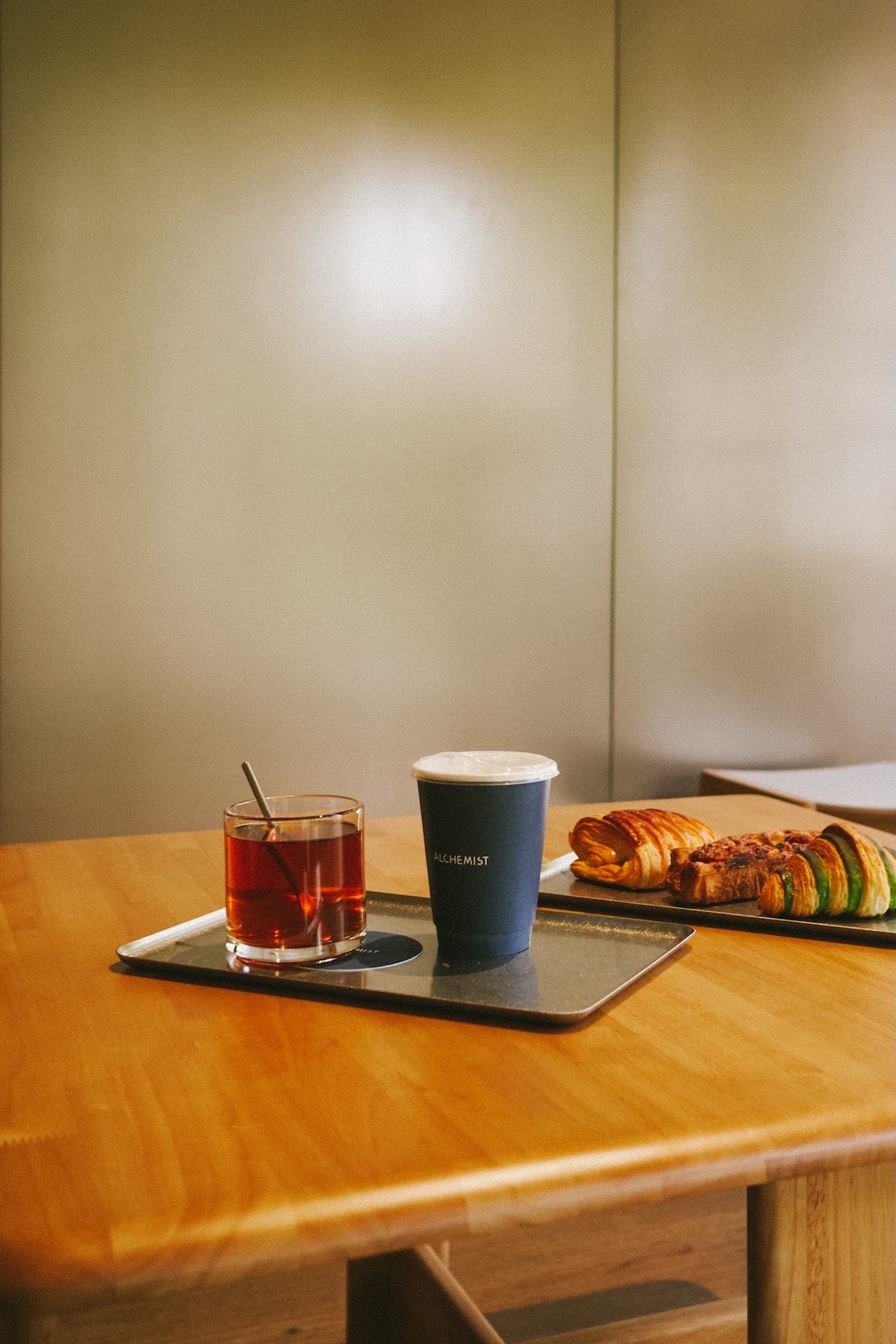
6.The same year, a Korean budget coffee chain opened a shop in Taipei's Zhongshan District selling americanos for NT$45. Alchemist's iced white coffee is four times that, at NT$180, and pour-overs run NT$200-240. What the difference buys is less the cup than the room. Taiwanese media describe the shop as 偽出國, a place that feels like going abroad without boarding a plane, and never fail to mention that one drink buys unlimited time.
7.Yongkang Street, with its food alleys, is nearby, so tourists already walk this neighbourhood. The city's Old House Cultural Movement has so far had 26 heritage sites repaired with private money and reopened. Still, a compound takes only six brands, which makes a place scarce. Alchemist opened two months before the whole compound did.
8.The founder has said that abroad he would rather open meaningful shops than simply add numbers. In Tokyo he chose Asakusa, crowded with tourists, and Aoyama, full of fashion stores; the Aoyama shop has 30 seats in 140㎡ and Asakusa 70 seats in 200㎡. Every staff member must hold a barista qualification. The Dadaocheng menu is in English only.
9.The compound was restored by Dalesi Creative (大樂司文創), part of the storage media maker RITEK (錸德). The city says the company put in more than NT$140 million; the company itself says more than NT$200 million. That is KRW 6-8.6 billion. Under this scheme, the private party's restoration spending is offset against the rent it owes the city, and the operator earns from tenant fees and events. The original agreement ran nine years.
10.Recovering only the city's figure of NT$140 million over nine years would take NT$1.3 million a month, about KRW 56 million. Split evenly among six brands, that is NT$216,000 each, about KRW 9.3 million. The actual fees are not public, and this sum leaves out running costs and interest. It is the floor just for getting the restoration money back.
11.Take the seating as 40 (an estimate; the figure is not public). With no time limit, assume 2.5 turns a day, with each seated guest spending NT$280 on a drink and a croissant; add 60 takeaway cups and the day comes to about NT$39,000. Over 30 days that is NT$1.16 million, about KRW 50 million, a little short of one month of the compound's restoration cost.
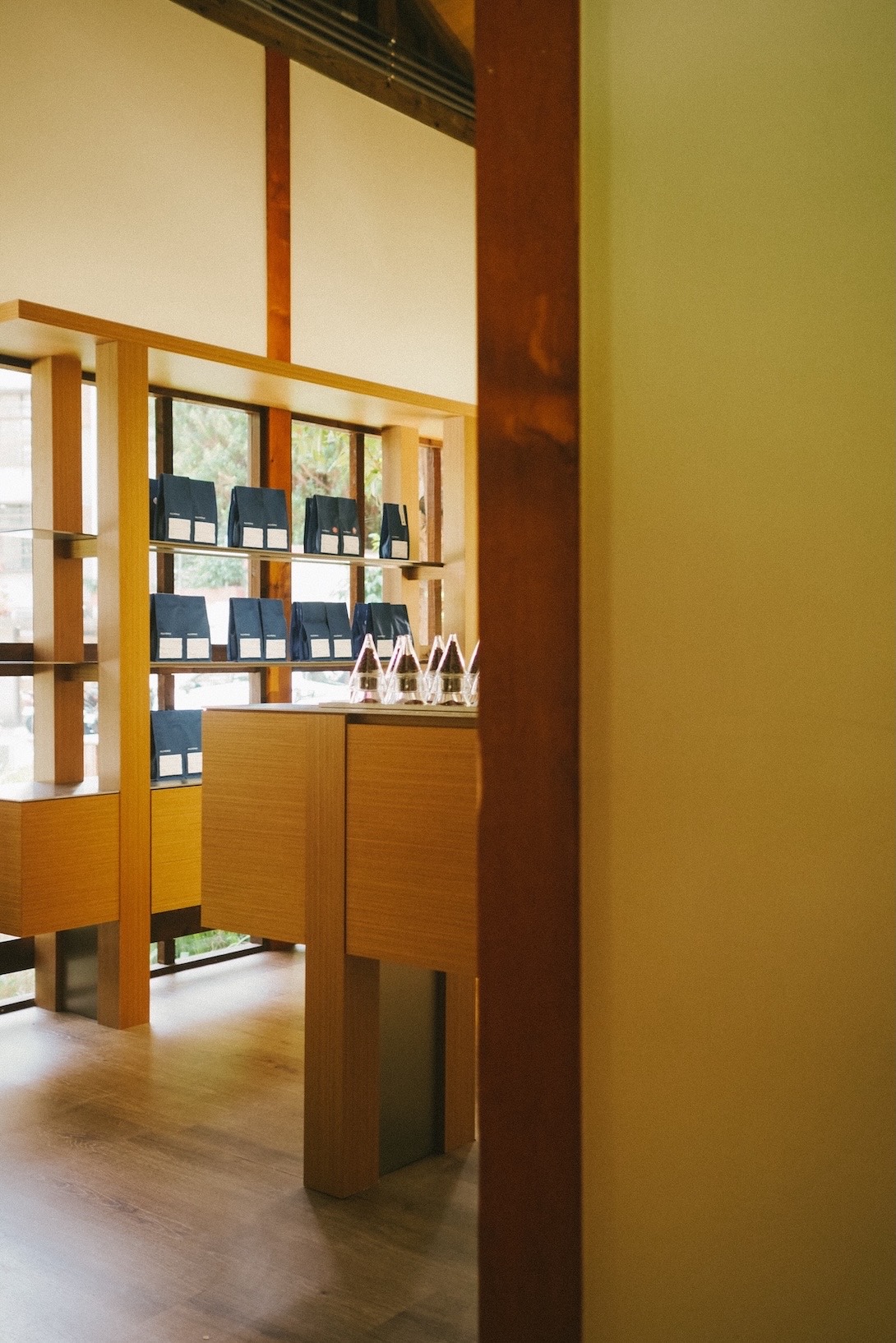
12.The heavy cost is the plane. With roasted beans flown in from Singapore, the bean cost has to be assumed higher than at a shop that roasts locally (estimate). Shelf sales, on the other hand, are not tied to seats. The shelves hold more than 15 kinds of bagged beans, capsules, drip bags and cascara tea bags, plus soap, scrub and body wash made from spent coffee grounds. As much as unlimited seating slows turnover, this shelf has to make up for it.
13.The city's cultural affairs department had already revived a former US military housing compound on Yangmingshan the same way. The model, in which private money restores and food and drink bring people in, draws pushback too. After the opening, councillors from both ruling and opposition parties toured the site and asked for a balance between commerce and culture, and cultural affairs commissioner Tsai Shih-ping (蔡詩萍) replied that without visitors there is no way to promote historic buildings.
14.Of the six brands, two sell coffee. Besides Alchemist, the compound has Sweet & Sour Coffee Wave, a collaboration with the music and record brand Frisson. The operator says it will run the compound by time of day from morning to night, and Alchemist, opening at 9 a.m., takes the morning. Beans flown in from Singapore draw the morning crowd to a Taiwanese heritage compound.
15.A coffee brand that began as a 12㎡ stand in Singapore has opened its largest Taipei shop in a 1930 official residence, and the NT$140 million spent restoring six houses has to be recovered by the operator through tenant fees. Where would the same thing stall first in Korea? The term. A use permit for a local government building is in principle limited to five years under the Public Property Act, so a private party can hardly make the numbers work on KRW 6 billion of restoration. Putting a coffee bar into a timber heritage building also means meeting fire safety and building use rules separately.