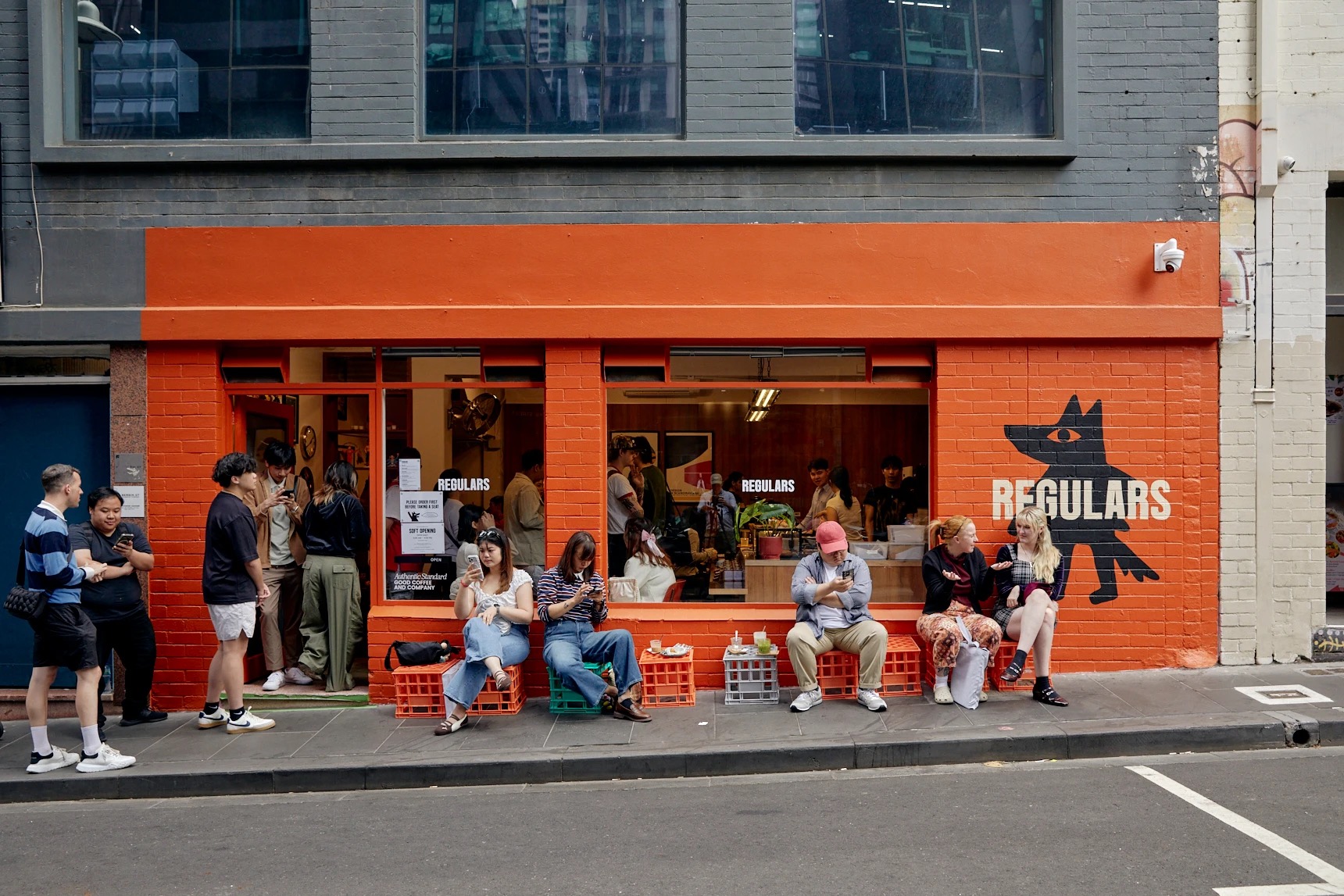
Pour milk into a glass just pulled from the freezer and it freezes along the walls. A short shot of espresso goes on top. Regulars, a 16-seat cafe on a back lane in central Melbourne, opened at the end of December 2025 and within three weeks was selling more than 600 of these a day. It started with 18 glasses and ordered 200 more after one week. What sets the daily volume here is not the barista's hands but how many glasses fit into a -85°C freezer at once.
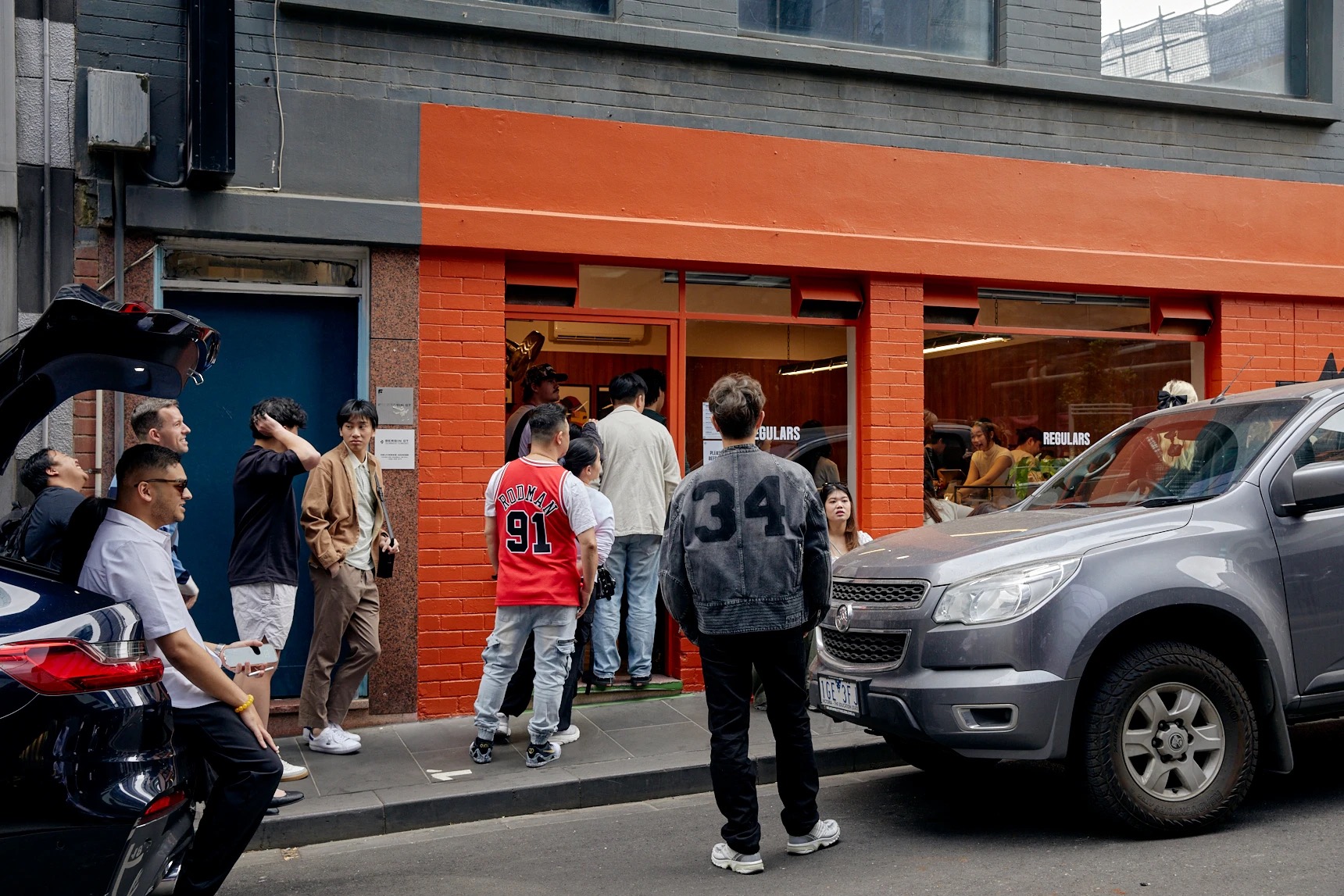
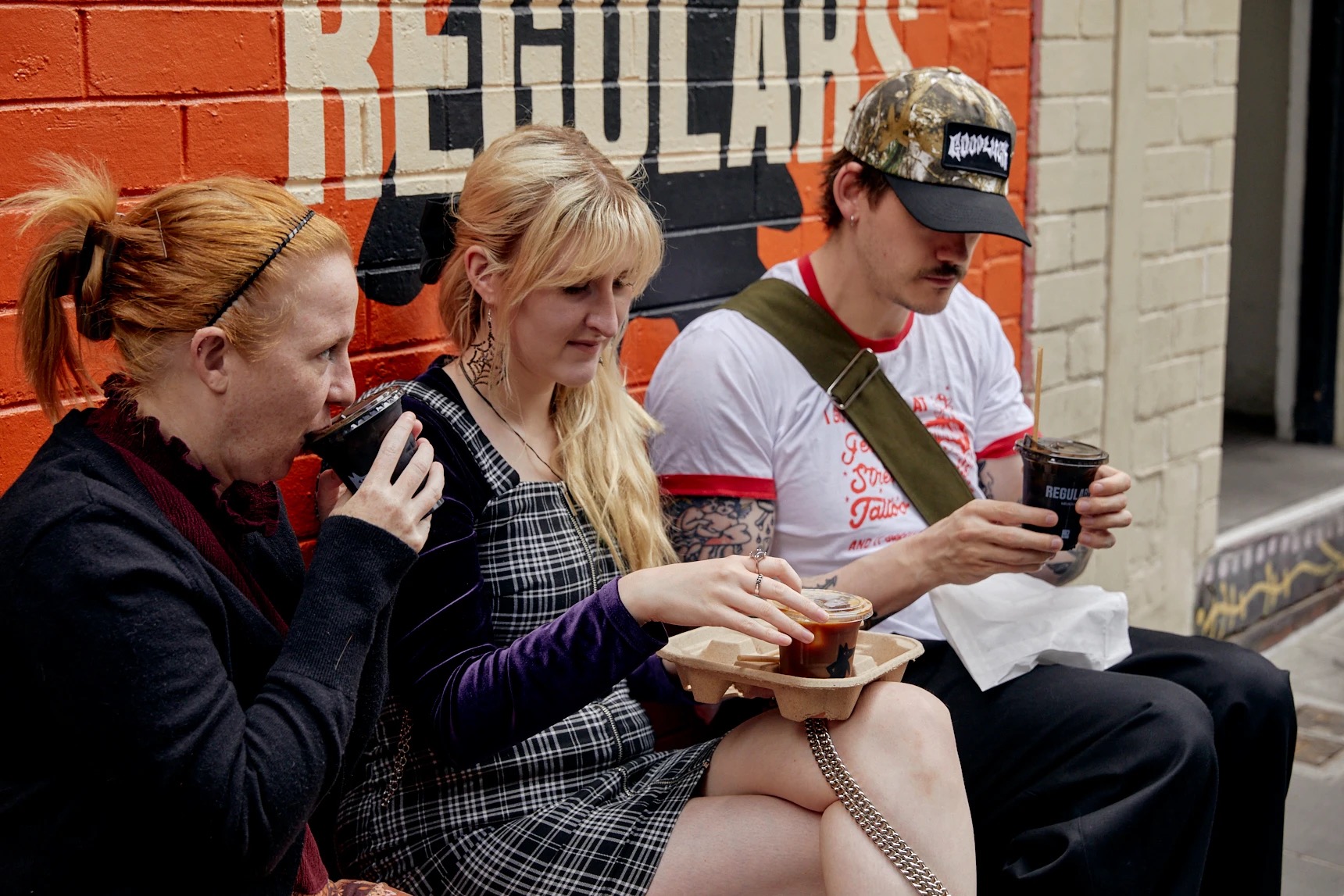
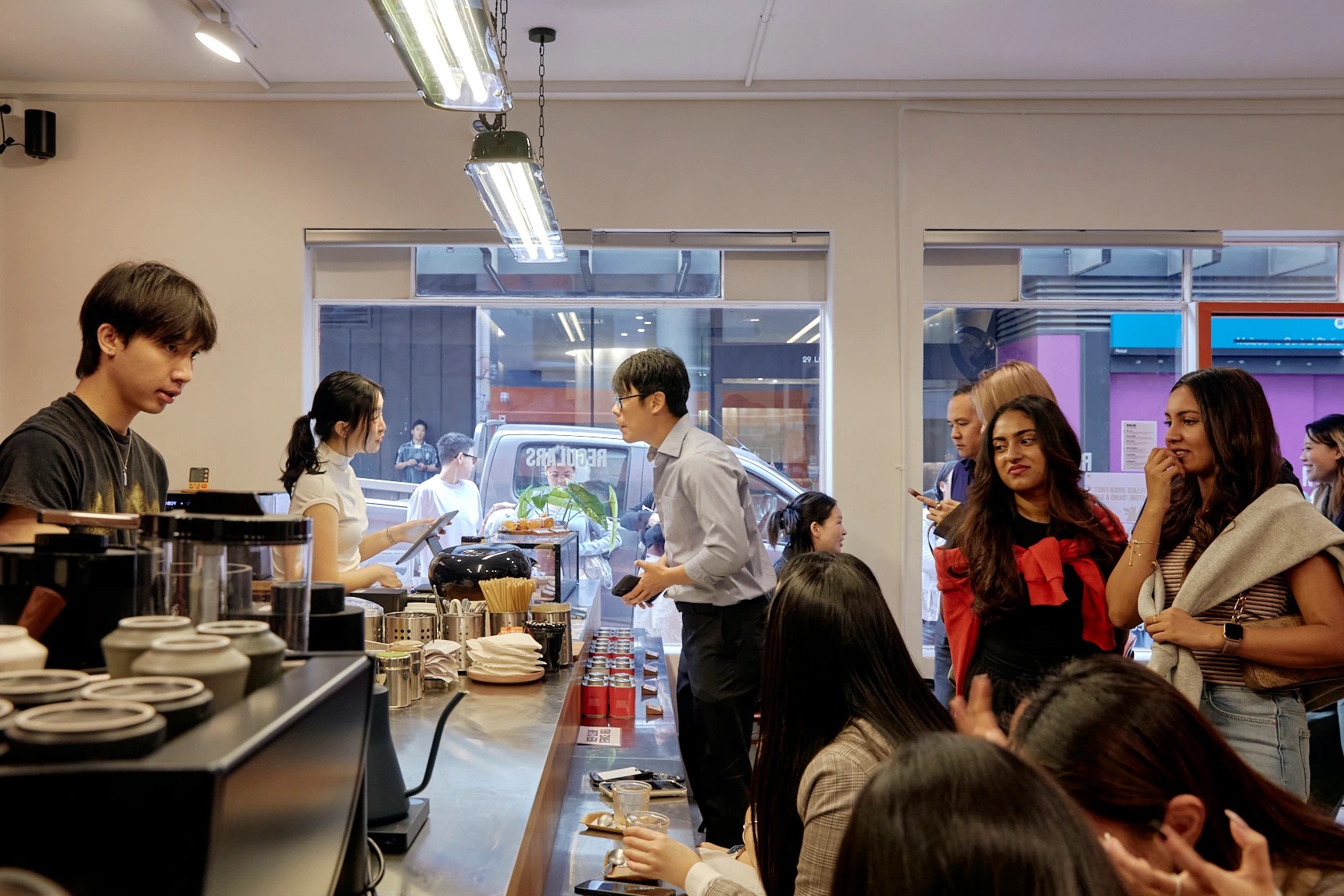
1.The address is the ground floor of 38-40 Little La Trobe Street, open every day from 9am to 4pm. The whole brick facade is painted orange, with the shop's name written large beside a black character drawing. Inside there are 16 seats. Orange plastic crates sit upside down on the footpath out front, and customers perch on them.
2.The cafe is run by husband and wife Eddy Pan and Prem Pan. Eddy became Thailand's barista champion in 2016 and placed 41st at that year's World Barista Championship. He spent seven years as head roaster at the Melbourne roastery St Ali and is a certified Q grader. He roasts the beans himself at a workshop in the eastern suburb of Balwyn. The signage and interior are the work of Prem, a graphic designer. Eddy says he pictured a quiet backstreet place to linger, like a small Japanese cafe, yet within three weeks of opening the queue stretched down the lane.
3.Each glass goes through the freezer twice. First it is chilled at -20°C so the temperature shock does not crack it, then it moves to the -85°C freezer. When an order comes in, the barista lifts the glass out with metal tongs and pours in milk infused with vanilla bean. The milk is unhomogenised full-cream from St David Dairy. Where it touches the wall it freezes at once, while the centre stays liquid, and a ristretto on top finishes it. No ice, no steam.
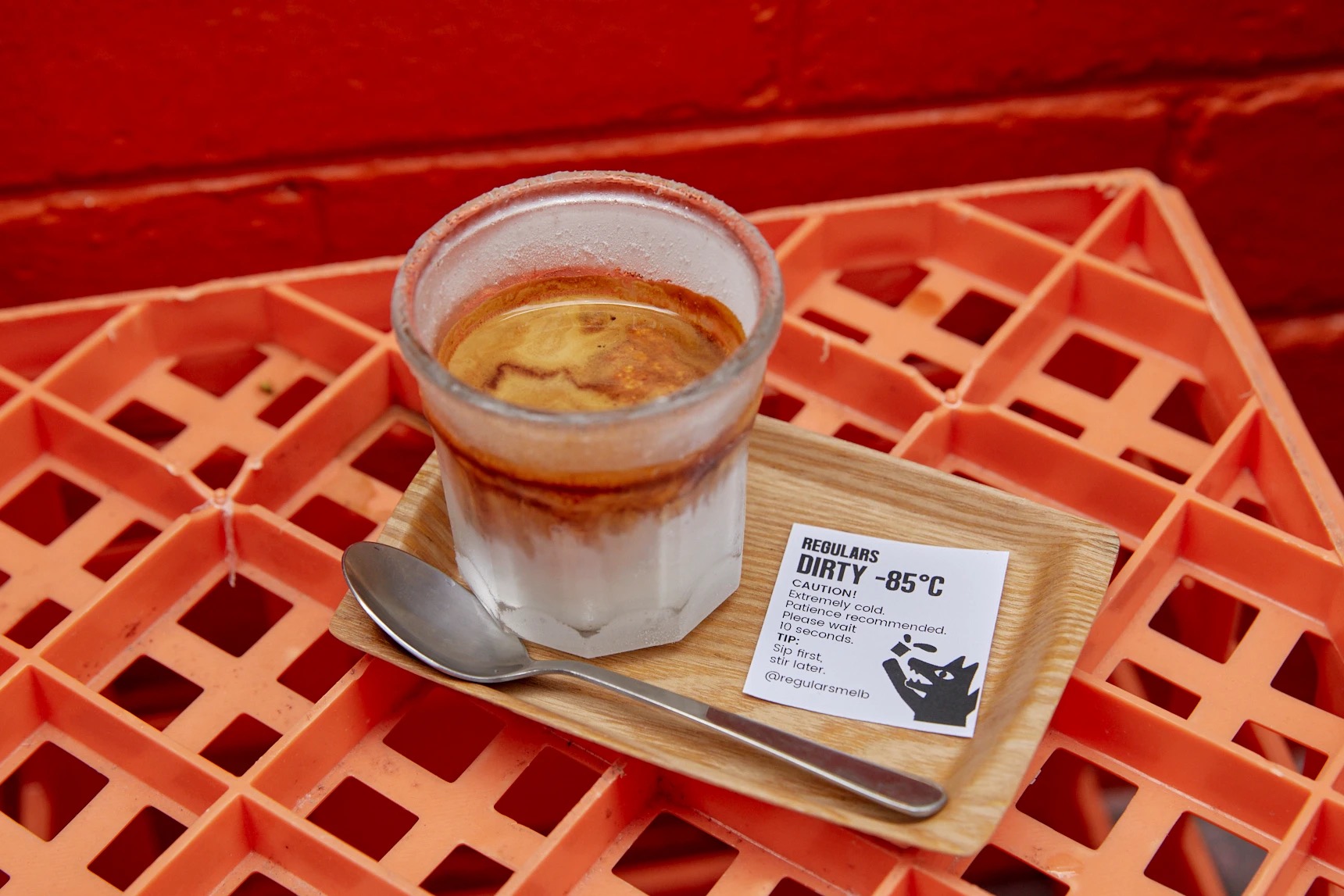
4.Hold the frosted glass and the cold reaches your fingertips first. The espresso seeps slowly through the thin shell of frozen milk on the wall, and from above you can watch the brown bleed along the white layers. In Broadsheet's words, it is ice-cream-like yet easy to sip. The original shop in Shanghai tells customers to drink within 30 to 40 seconds of the milk going in, and it will not shake, stir or pack the drink to go. A glass does not last a minute.
5.The beans are a Brazil and Colombia blend with notes of nuts, chocolate and cream. When a drink is cold, the tongue picks up less sweetness and aroma. That seems to be why the shop chose a nutty coffee over one with bright acidity, and steeps vanilla bean in the milk to bring the sweetness in advance. Unhomogenised milk has larger fat globules, so the cream rises and the texture sits heavy on the tongue. Once the hot espresso lands, the glass warms quickly, the frozen wall melts and the milk thins out.
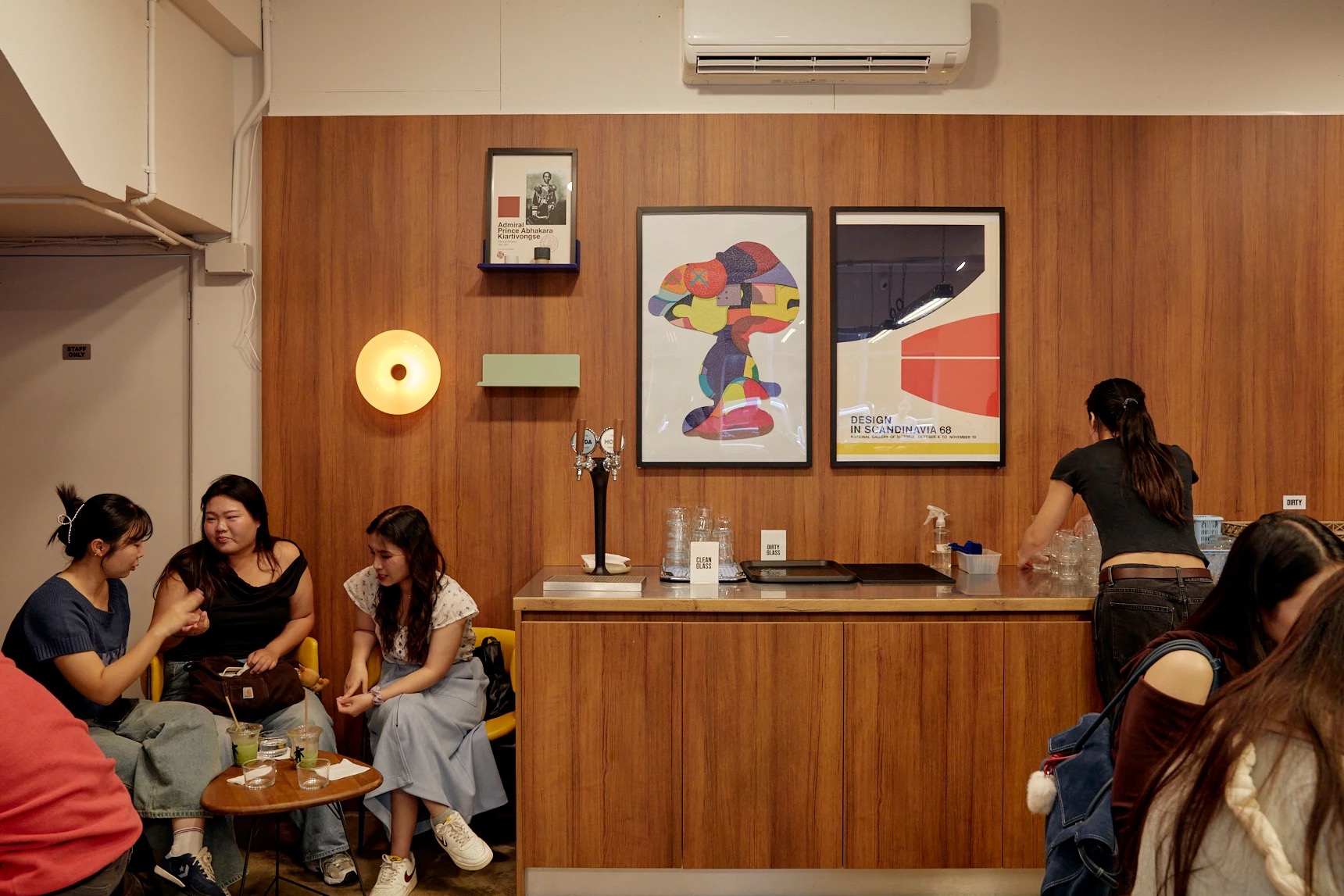
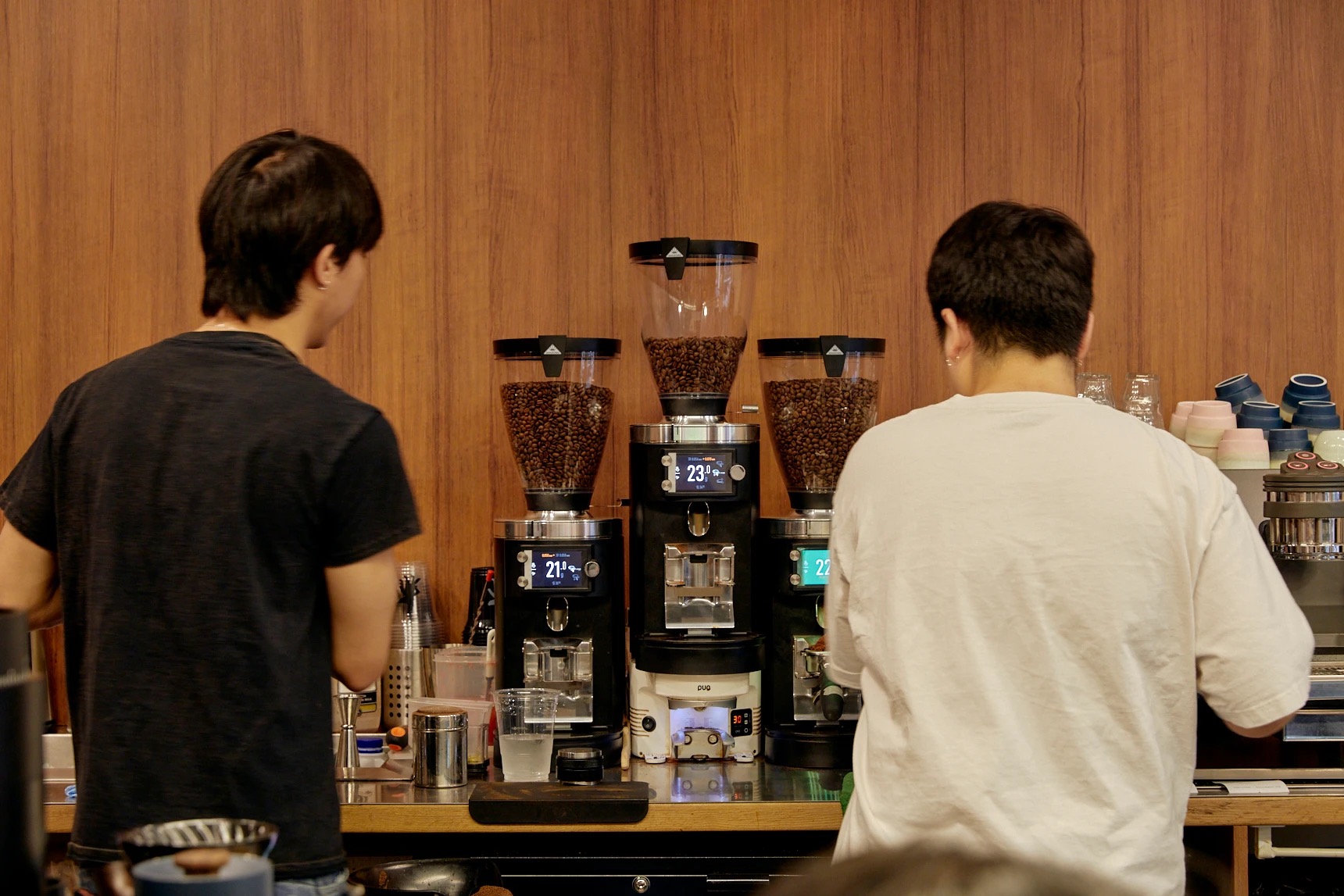
6.The interior is Prem's mid-century Scandinavian take. Timber panelling lines the walls, hung with a few framed pictures and a round lamp. The bar runs long by the entrance, with three grinders standing in a row on the wall behind it. With only 16 seats, many customers drink standing at the bar or on the crates outside. Who would settle in for long with a glass that has to be finished within a minute?
7.Melbourne is a flat white city, built on hot milk. This glass cannot be made at home or at the cafe next door, because it needs an ultra-low-temperature freezer of the kind labs use to store samples. Since it has to be drunk within a minute, customers finish it in front of the shop, and the line on the footpath plus the frosted glass turn straight into TikTok videos. The queue is the advertising.
8.The drink drew its first queues in Shanghai. On 20 June 2025, Sanlifang (三立方) opened a dirty specialty shop on Yongkang Road, its name set alongside that of the German grinder maker Mahlkönig. A glass cost 26 yuan, about 4,900 won. Local media reported 500 glasses on weekdays and 800 on holidays, with people lining up even in heavy rain. In Singapore, Slow Boat caps sales at 100 glasses a day, and the wait in line runs to two hours.
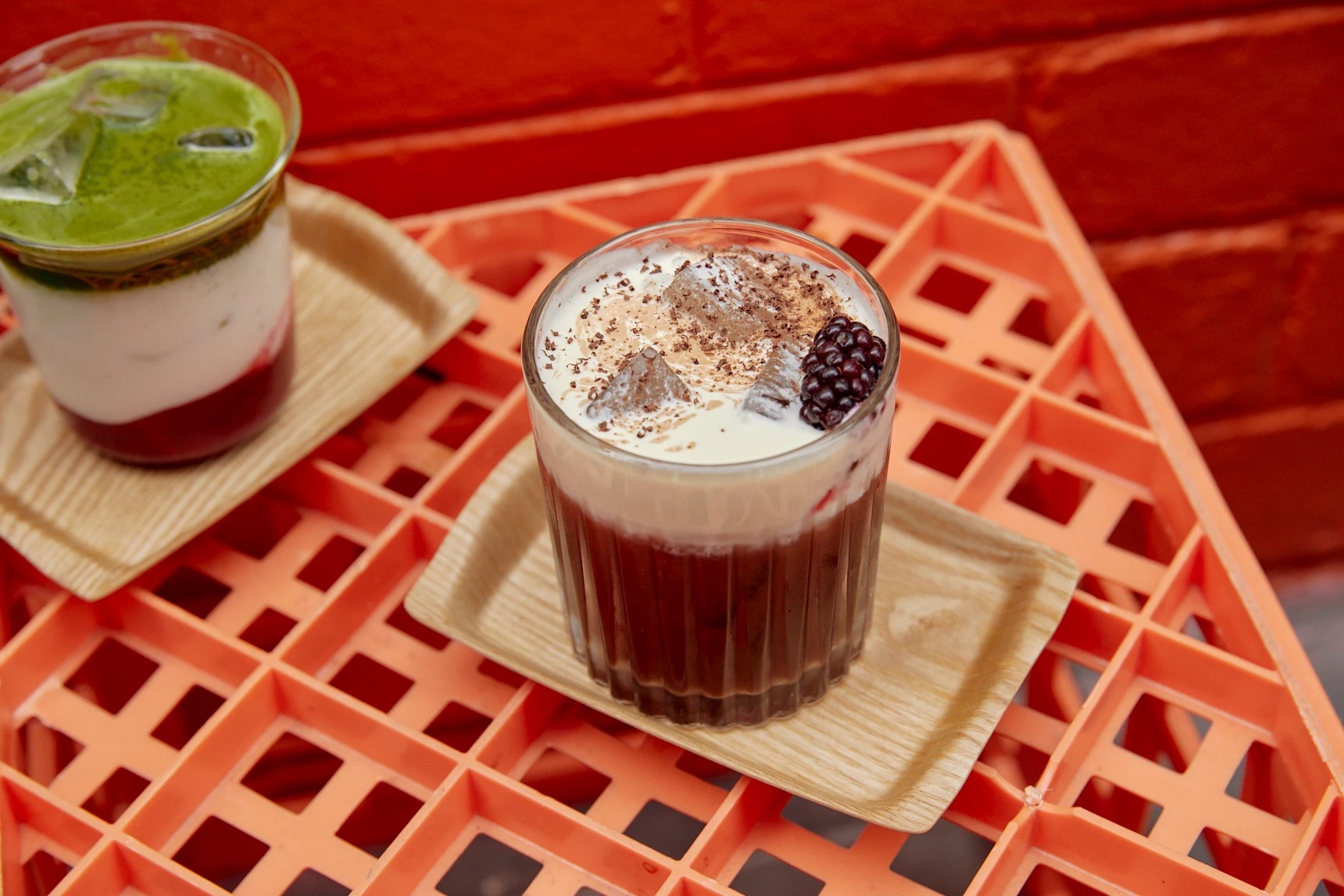
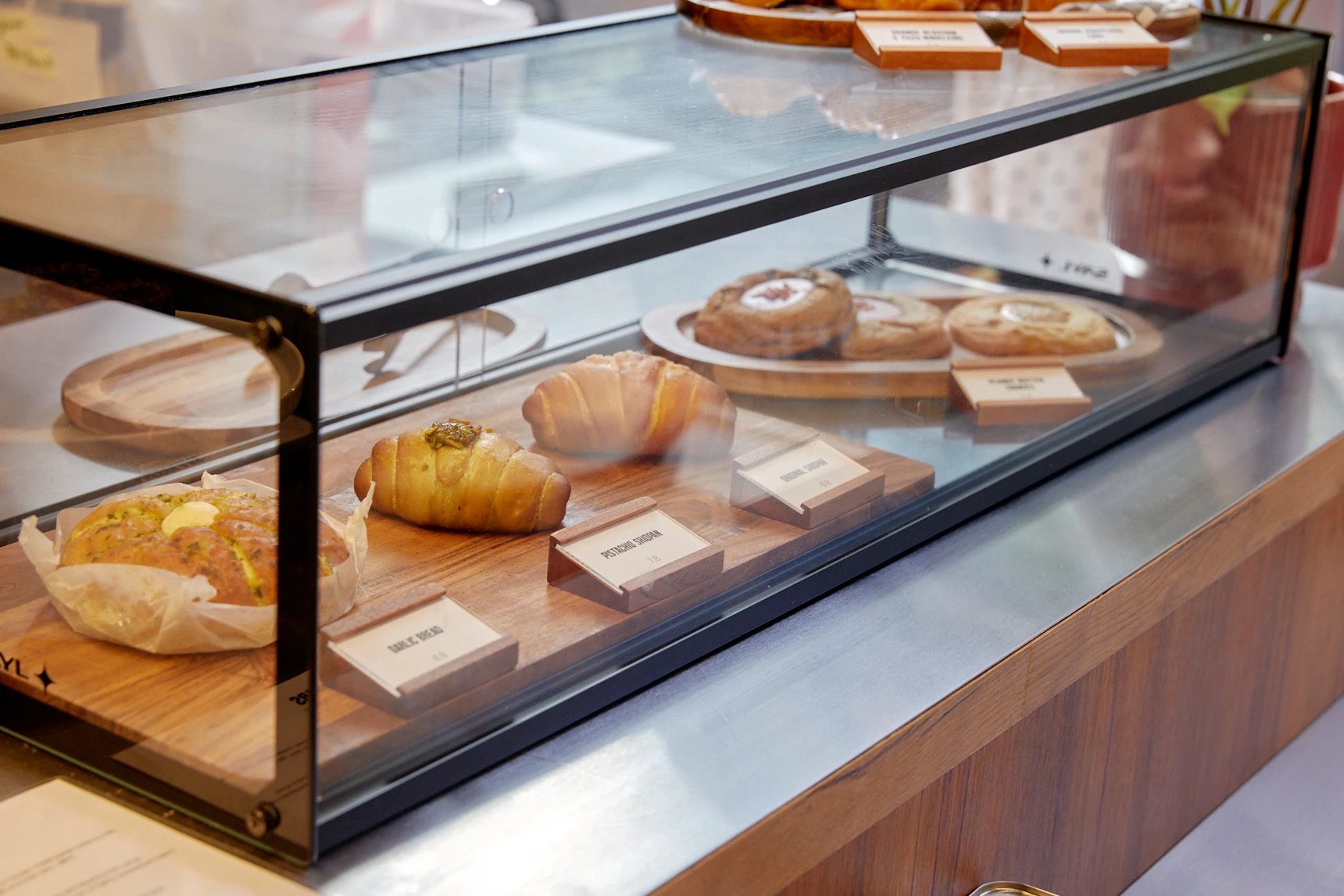
9.The name itself, Regulars, means the customers who keep coming back. A poster on the wall reads Good coffee and company. Yet the moment it opened, the queue filled with first-timers who had seen it on TikTok. Turning that queue into regulars falls to the rest of the menu: an 18-hour cold brew with redcurrant, grape and passionfruit syrup, the Pomelo Sunrise of Ethiopian cold brew with pomelo syrup, and matcha with pistachio or strawberry-lingonberry syrup. Syrups and foams are made in house, and the baked goods come from Tori's.
10.We could not confirm the menu price. Given that a latte at a specialty cafe in central Melbourne runs around A$6 and Slow Boat charges about S$10, we put a dirty at A$8.50 (estimate). That makes A$5,100 a day from the dirty alone, about 4.6 million won. Over 30 days, about 138 million won.
11.Ingredients are light. With 20g of beans for the ristretto, 180ml of milk plus vanilla, and washing and breakage added on, a glass comes to about A$1.25, roughly 15% of the price by our estimate. The paper cup and lid drop out, and broken glassware takes their place. The heavy money goes into equipment. A new lab-grade ultra-low-temperature freezer runs about A$15,000 to A$30,000 per unit (estimate), and Melbourne Food and Wine Festival described this shop's freezer as monster-sized.
12.Six hundred glasses in seven hours is one every 42 seconds. To serve 600 with 218 glasses, each glass has to go round 2.8 times a day. A full lap, from the customer's empty glass through washing, drying and -20°C back down to -85°C, has to finish within two and a half hours on average. The ceiling on sales here is not the 16 seats but the number of freezer slots and the time it takes a glass to chill. The manager of the original Shanghai shop also said they had swapped the freezer for bigger ones several times and planned to do it again.
13.The drink's prototype lives at Bear Pond Espresso in Shimokitazawa, Tokyo. It is the shop that Katsuyuki Tanaka, who worked at advertising agencies in Japan and New York and at FedEx before 18 months of barista training, opened in 2009 in a former candy shop. By the following year, a blog review was already describing the Dirty: a ristretto poured over well-chilled milk, made with the barista's hands and the milk's temperature instead of a freezer. Fifteen years later, Shanghai bolted a lab freezer onto that glass.
14.Money buys a freezer. Within a month of the Shanghai shop taking off, similar glasses appeared in Chengdu, Nanjing, Dalian and Kunming, and one shop in Dalian brought out -196°C liquid nitrogen. When the contest moves to the temperature number, flavour falls behind. Eddy says his is the only place in Melbourne where you can get these beans. The cafe in the next lane can install a freezer too, but it cannot buy the beans roasted in Balwyn.
15.A 16-seat cafe on a back lane sold 600 glasses a day with a -85°C freezer and 218 glasses. In Korea, the first snag would be the name. In Seoul in 2018, dirty coffee meant a cup with cream overflowing the rim and cocoa powder dusted on top, a name spread by the cafe Brancusi in Yongmun-dong, Yongsan-gu. Because that trend has already come and gone, a shop using the same name would remind customers of a glass from eight years ago rather than a new one.