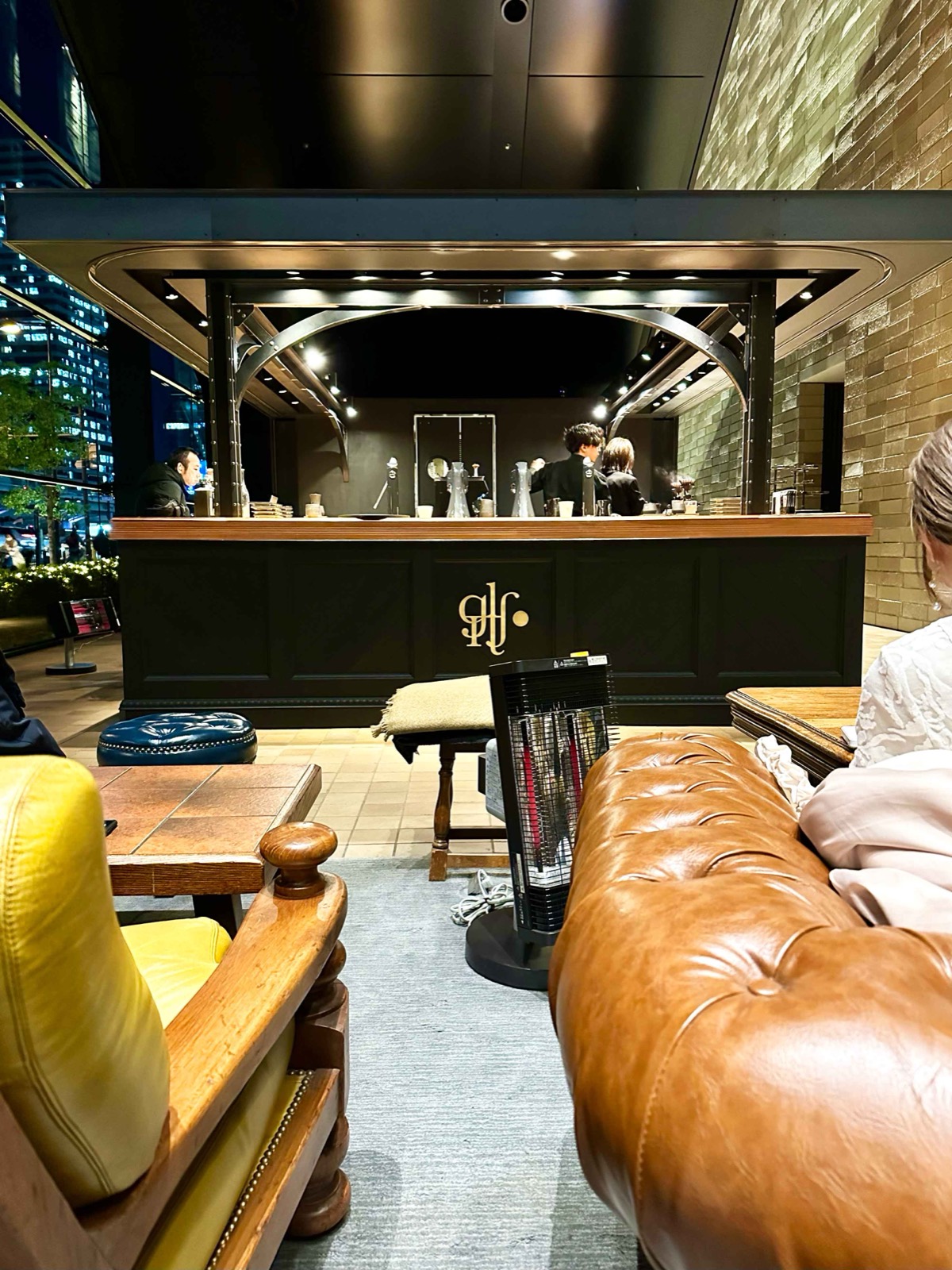
On the ground floor of a 41-storey tower in Osaka's Nakanoshima, a 9.8-tsubo counter has five stools attached to it. Most people who pick up a coffee never sit on them. They carry the cup across the building's atrium to a leather sofa. GLITCH COFFEE OSAKA opened in June 2022 charging 700 to 2,500 yen for a hand-drip cup, and by early 2025 the cheapest cup had become 1,000 yen. What caps its daily sales is not the number of seats but the hands of the baristas standing at the drippers.
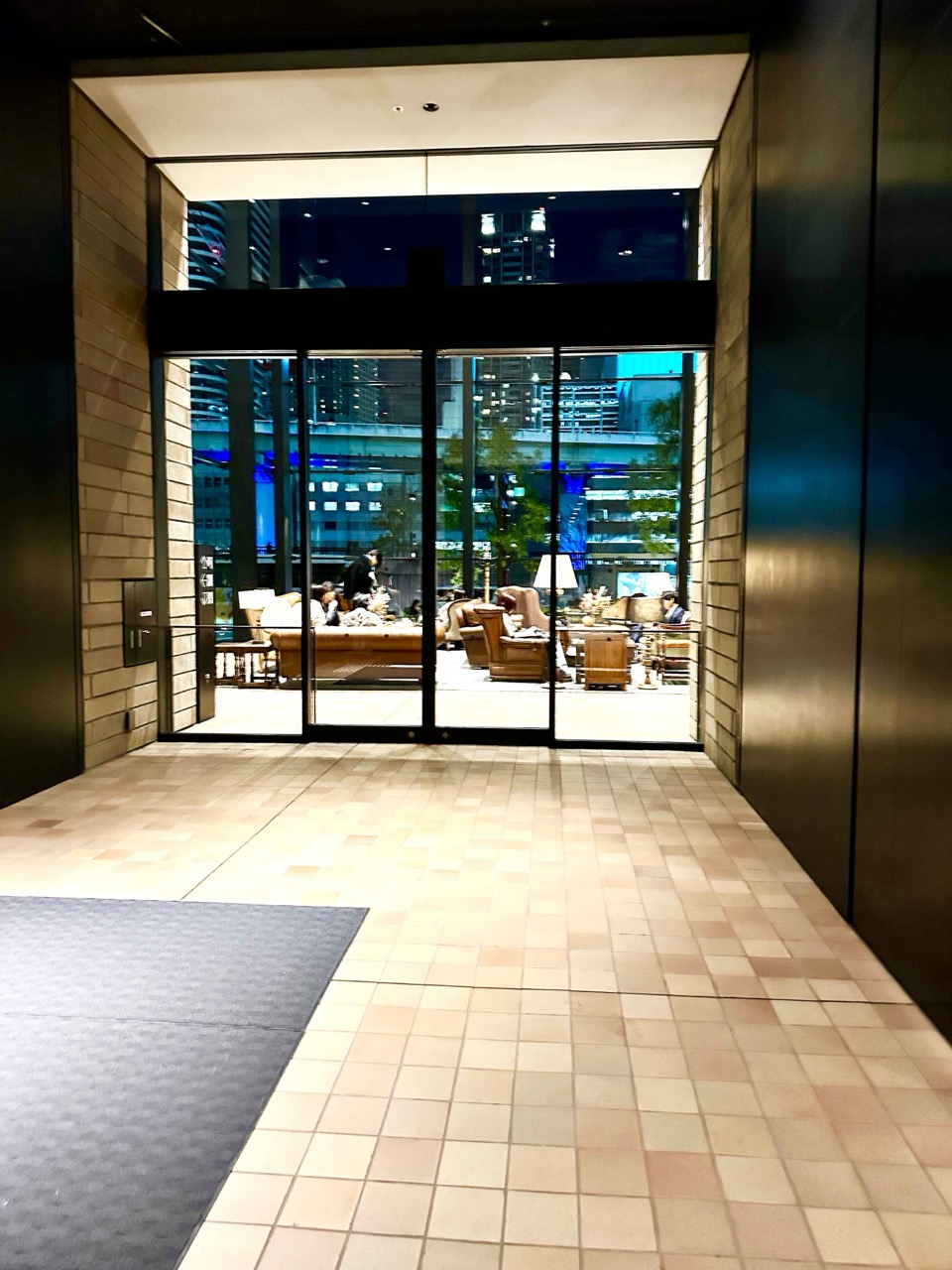
1.It opened on 10 June 2022 on the first floor of Nakanoshima Festival Tower West. The shop measures 9.8 tsubo, and five stools line the counter. Next to the seat count, the press release added a note: shared facility seating available. Its closing days simply follow the building's.
2.The building is a 41-storey tower with Conrad Osaka stacked above the office floors, completed in 2017, and the Kosetsu Museum of Art occupies the 4th floor. Higobashi Station on the subway and Watanabebashi Station on the Keihan line both connect straight into it underground. The operator is GLITCH COFFEE & ROASTERS, which began in Tokyo's Jimbocho. Founder Kiyokazu Suzuki opened the first shop in 2015, and Osaka is his third shop and the first in the Kansai region.
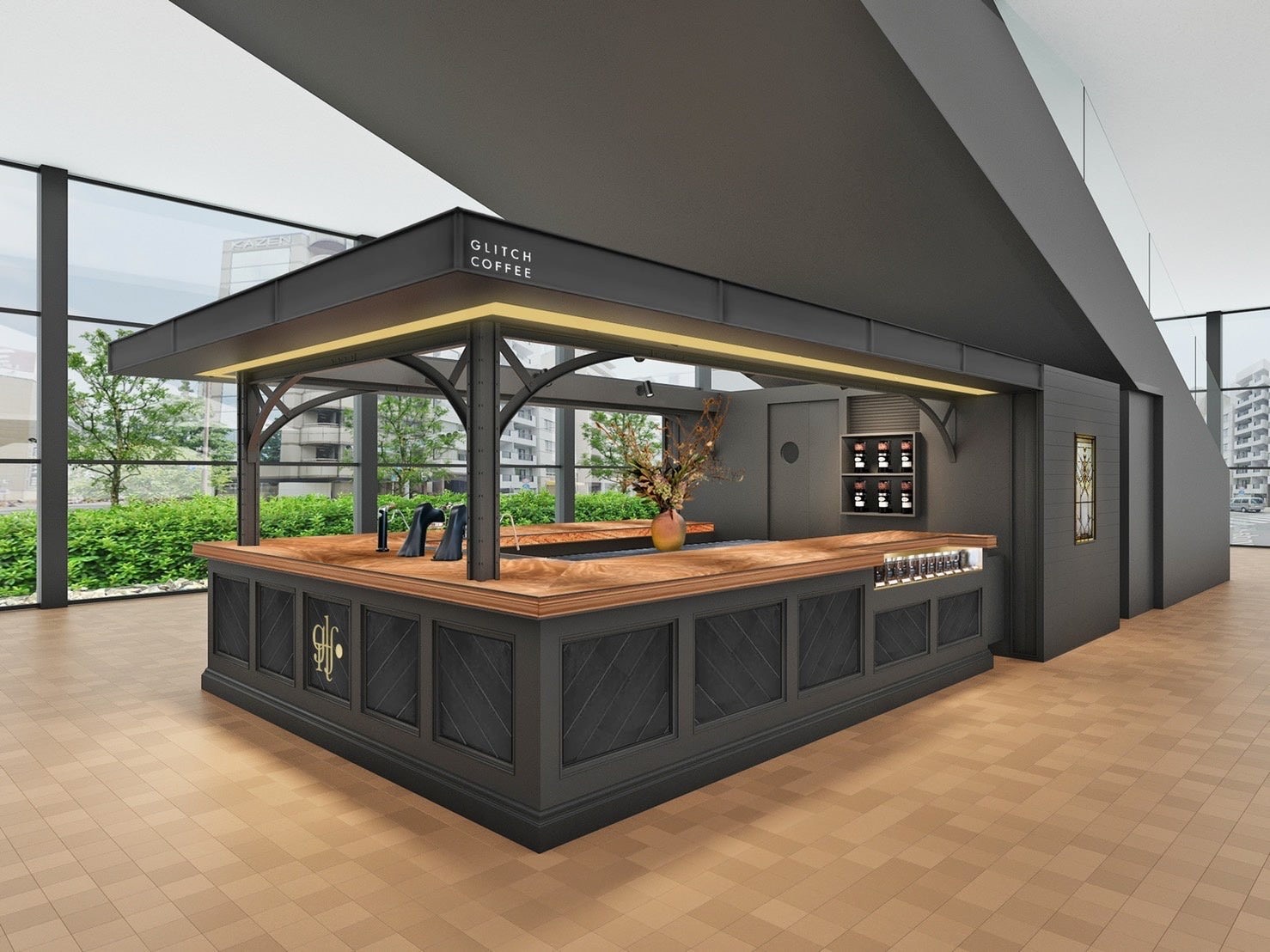
3.The counter does not touch a wall. It stands on the atrium floor like an island. The rendering released before opening shows a black steel canopy resting on four posts, with a line of light running under its edge. Below the timber top sits a dark grey panel, and on the front, a single logo. Open on all four sides, it lets a customer walking in from any direction step straight up to the counter.
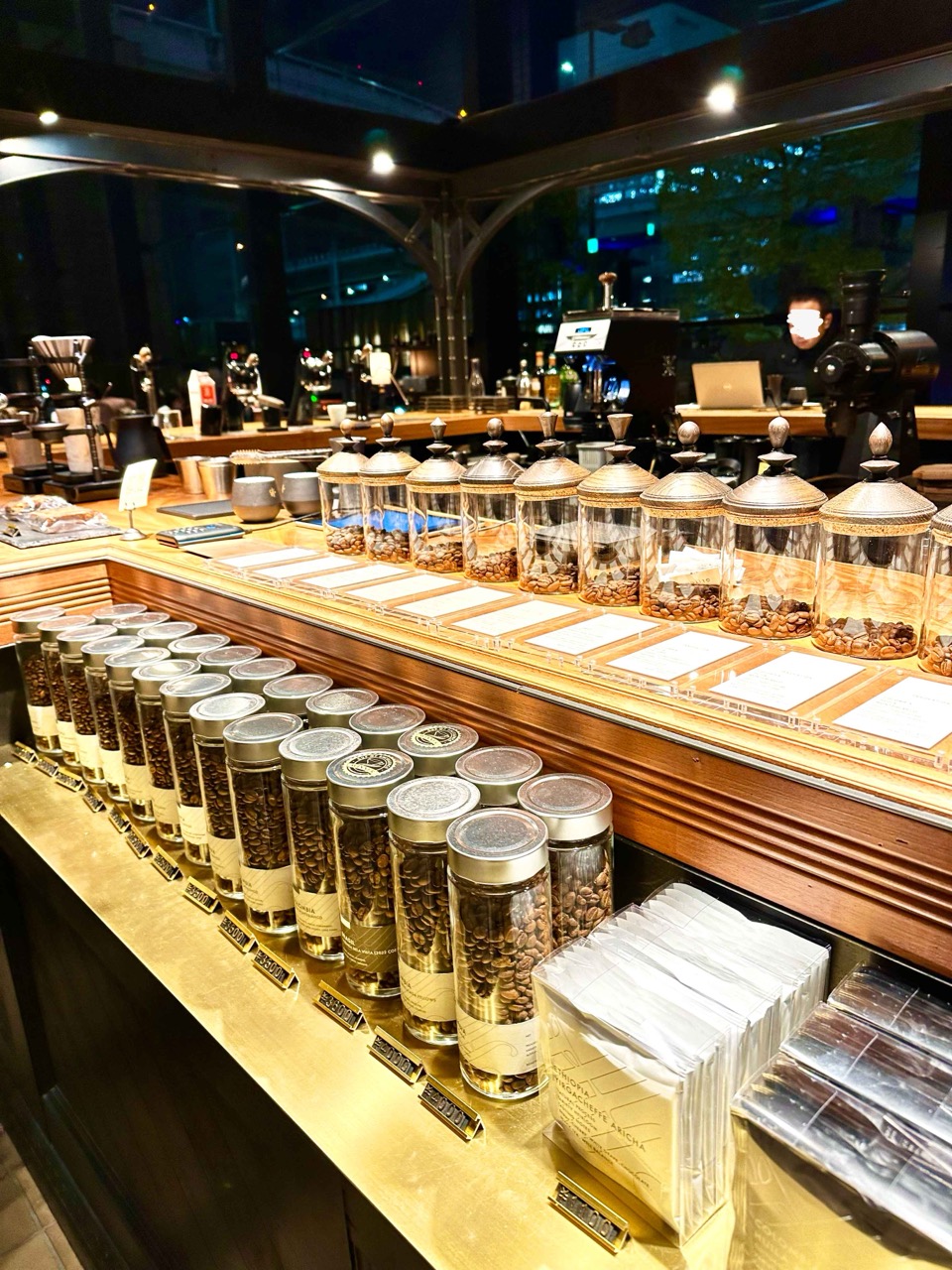
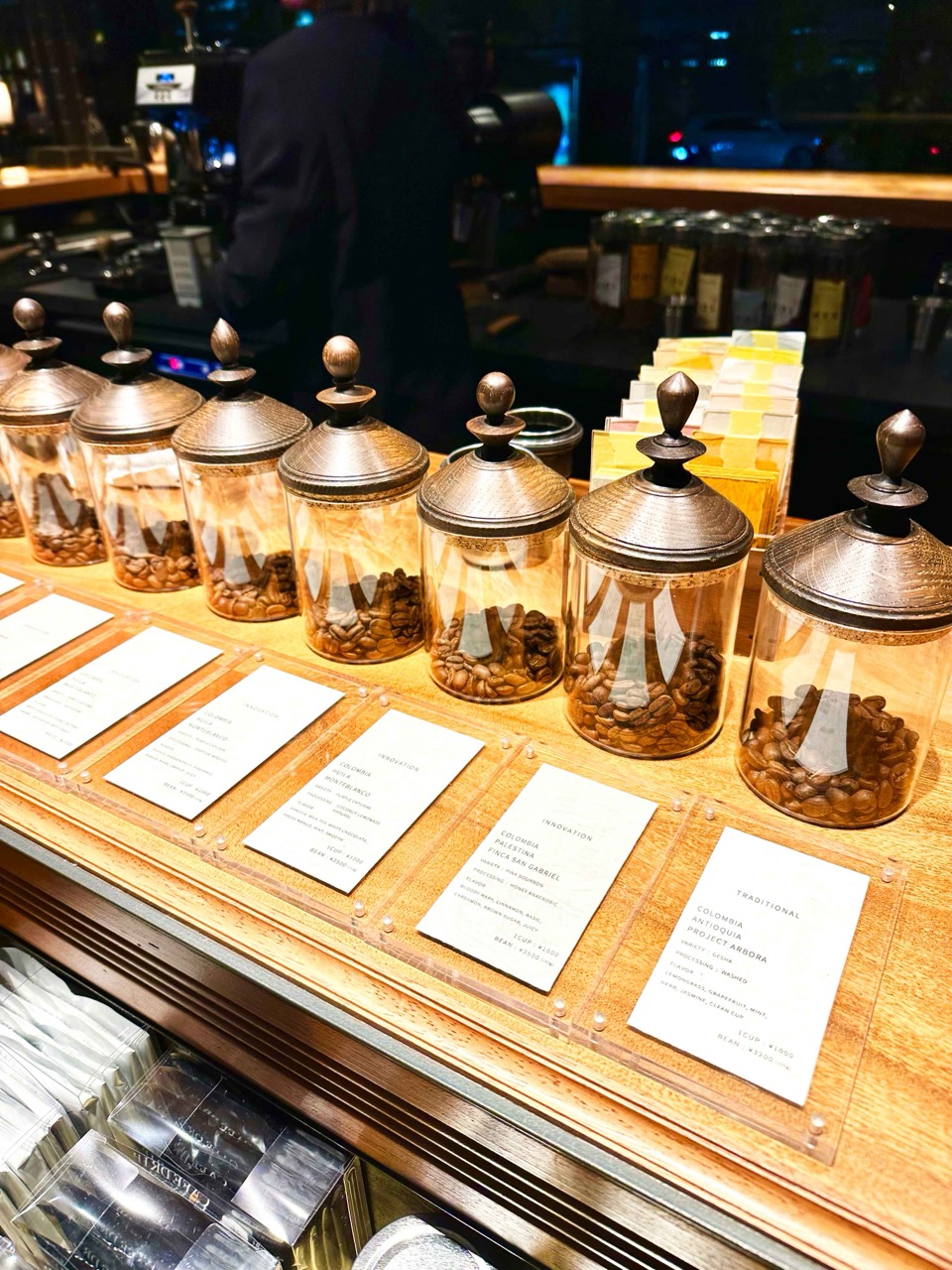
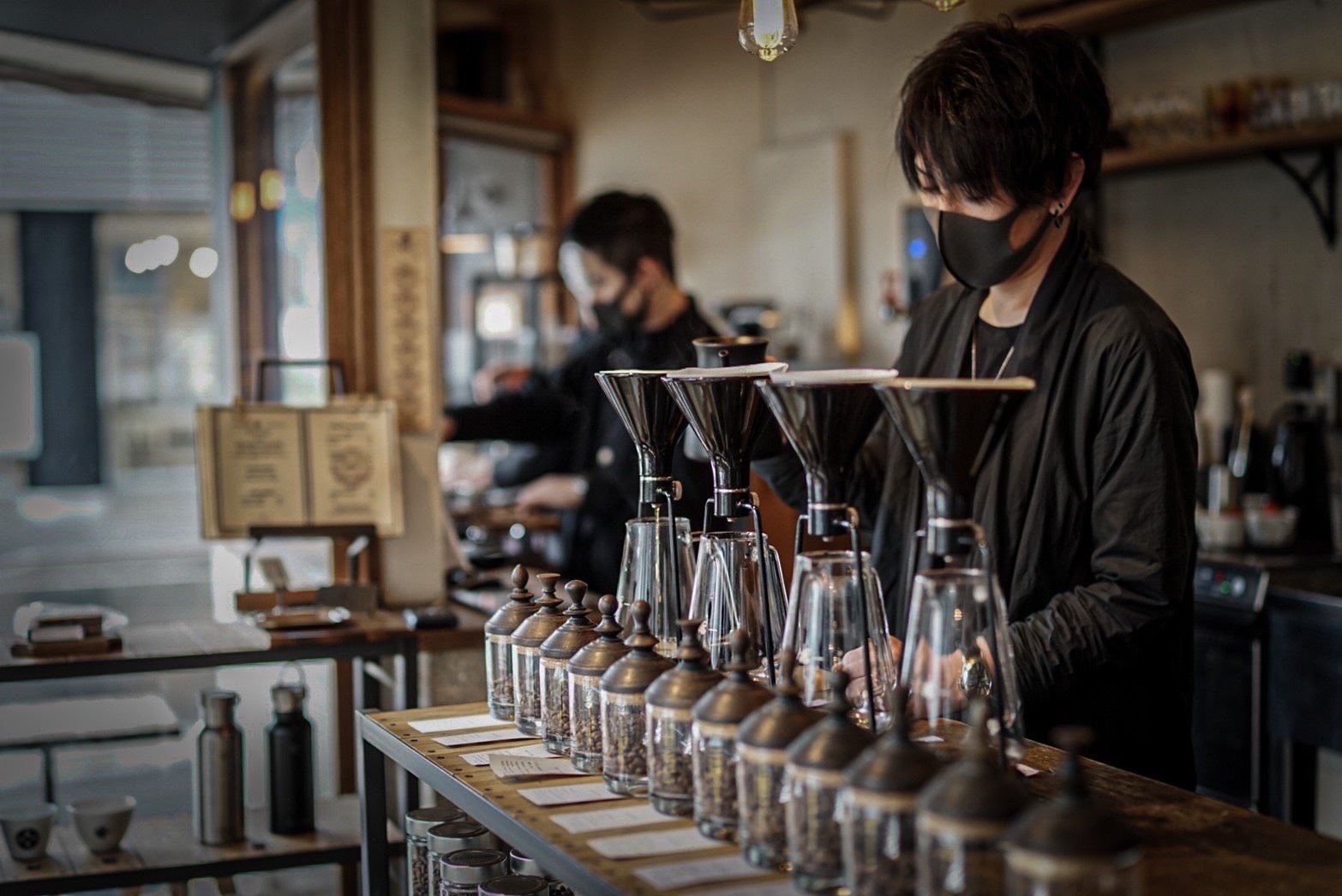
4.Lidded glass jars line the edge of the counter, each fronted by a card describing the beans. About 30 coffees are sold as beans, and around 15 of them are always on the brew menu. There are no blends and no dark roasts. What remains is single-origin coffee from individual farms, all roasted light.
5.In January 2025 the Singapore food blog Daniel Food Diary drank the most expensive cup on the menu: a hand drip of beans from the Altieri farm in Boquete, Panama, at 4,000 yen. The writer noted red apple, raspberry and grape up front, with a gentle acidity following behind. Light-roasted coffee shows its fruit more clearly once it has cooled a little than straight after brewing. A cup takes five to six minutes to make, so by the time you have carried it to a sofa and settled in, it has reached that temperature.
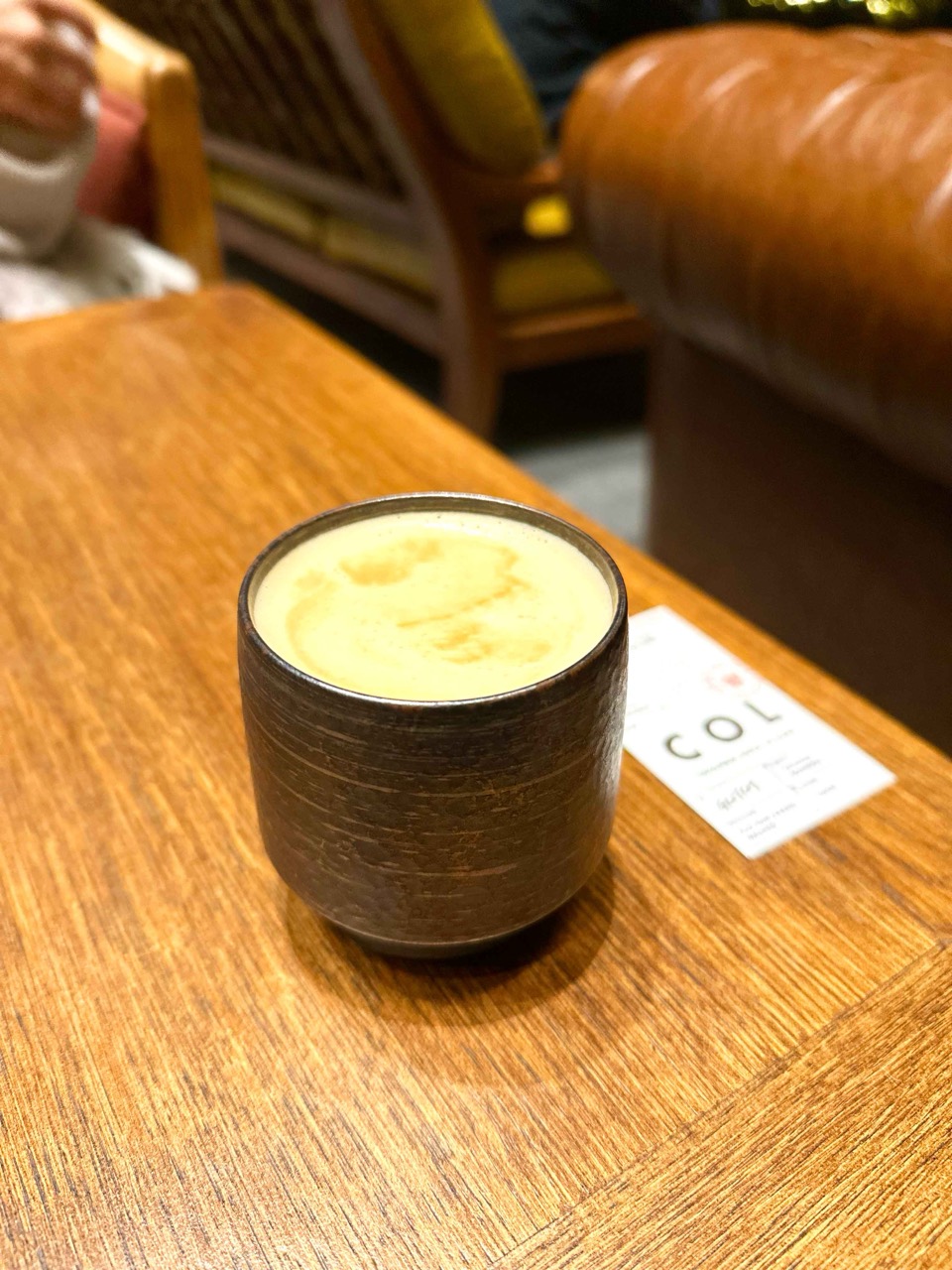
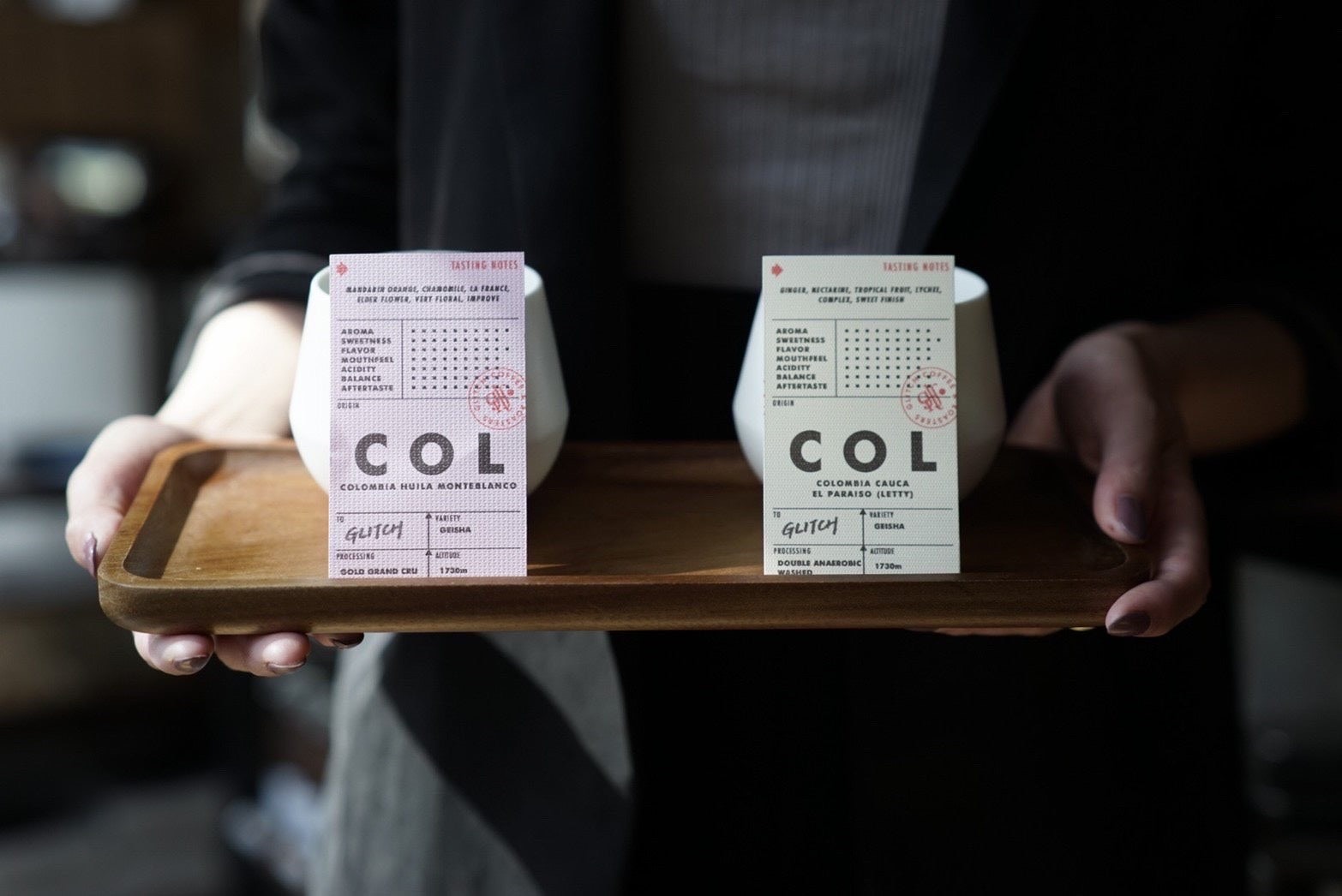
6.Cups with milk go the other way. On the same visit, a latte made with La Loma beans from Huila, Colombia, cost 1,200 yen and tasted of vanilla, rum and milk chocolate. The coffees introduced at opening already covered a wide range: a Colombian that recalls tomato juice, a Kenyan as cool as mint, an Ethiopian with berry aromas and more body. Beside each cup, one card with the name of the beans.
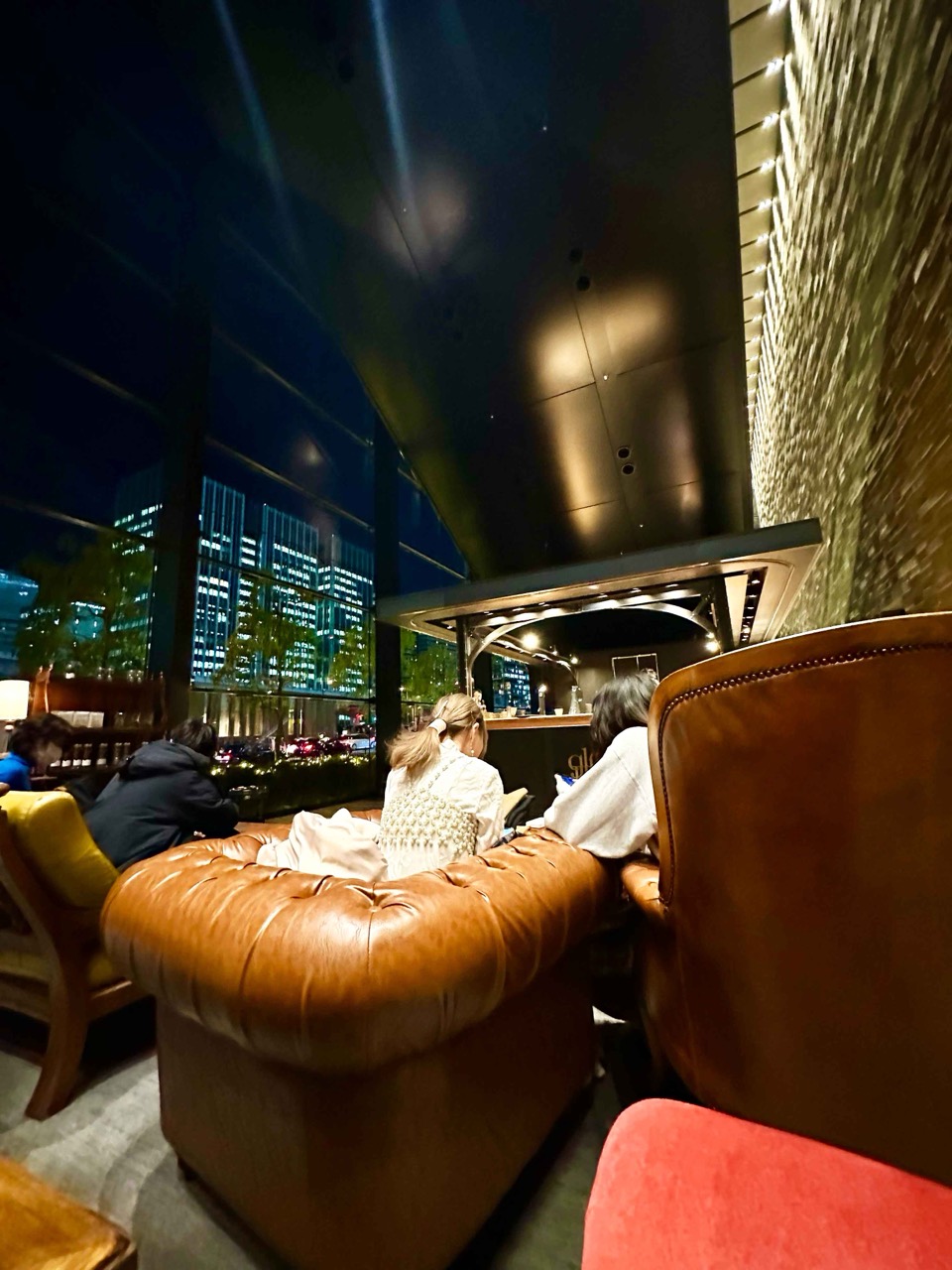
7.When all five stools are taken, where do people sit? Behind the counter, the atrium is scattered with button-tufted brown leather sofas, wooden chairs upholstered in yellow and floor lamps, while office towers glow through windows that run up to the ceiling. The building laid out a seating area like a hotel lounge, and this shop simply placed one counter in the middle of it.
8.The Ginza shop in Tokyo gives a clue about the clientele. When it opened in April 2023, Time Out Tokyo reported that around half its customers were overseas tourists. The Osaka ratio is not public, but Conrad guests sleep upstairs and office workers commute in below. The 8 a.m. opening is set for those people. Suzuki has long said he wants to show the world Japan's own hand-drip kissaten culture. For a traveller, a cup you wait more than five minutes for is a sight in itself.
9.Sales are not disclosed. Assume an average spend of 1,500 yen and 150 cups a day (estimate), and a month comes to 6.75 million yen, about 63 million won. Divided by 9.8 tsubo, that is roughly 690,000 yen per tsubo per month.
10.Rent is not public either. At an assumed 30,000 yen per tsubo per month for a ground-floor unit in a large central Osaka tower, the shop pays about 290,000 yen, a little over 4% of estimated sales. Seating the same customers inside would take around 30 tsubo, and at the same rate that costs 900,000 yen a month. The building is effectively supplying the 20 tsubo for chairs and sofas.
11.Bean prices rose before the price list did. In February 2025 New York arabica futures passed 4 dollars a pound and set a new record, and around then the cheapest cup, 700 yen at opening, became 1,000 yen. Bean cost is put at about 100 yen for a 1,000-yen cup and about 600 yen for the 4,000-yen Panama (estimate). Cost ratios are similar at 10-15%, but what each cup leaves behind splits wide, 900 yen against 3,400 yen, close to four times.
12.Hands, not seats, limit sales. A hand drip takes five to six minutes, and even with several drippers lined up and brewed at once, one barista puts out around 20 cups an hour (estimate). Two baristas brewing nonstop for 11 hours would reach 440 cups, and in reality time for explaining beans and taking payment gets in between. The sale that needs fewer hands is a bag of beans. From 1,800 yen per 100g, it costs more than a cup, but filling a bag takes a minute.
13.Suzuki was born in Tochigi Prefecture and came to coffee after making furniture, then worked under Paul Bassett for more than ten years. Paul Bassett is the Australian who became World Barista Champion in 2003 at 25. Suzuki trained baristas and roasters at Asian shops carrying that name, and in 2014, a year before going independent, he became Japan's AeroPress champion. In Korea, a Maeil Dairies affiliate runs more than 140 shops under the same name.
14.The two businesses that grew from that name part ways over seating. Paul Bassett in Korea fills large shops with seats and adds ice cream and bread to sell time spent staying. GLITCH went from 15 seats at its Jimbocho first shop and 30 at Nagoya down to 5 in Osaka. A visitor's post reported that the Nihonbashi shop, opened in September 2025, plans to install a 22kg Probat roaster. Money is moving from chairs toward the roaster.
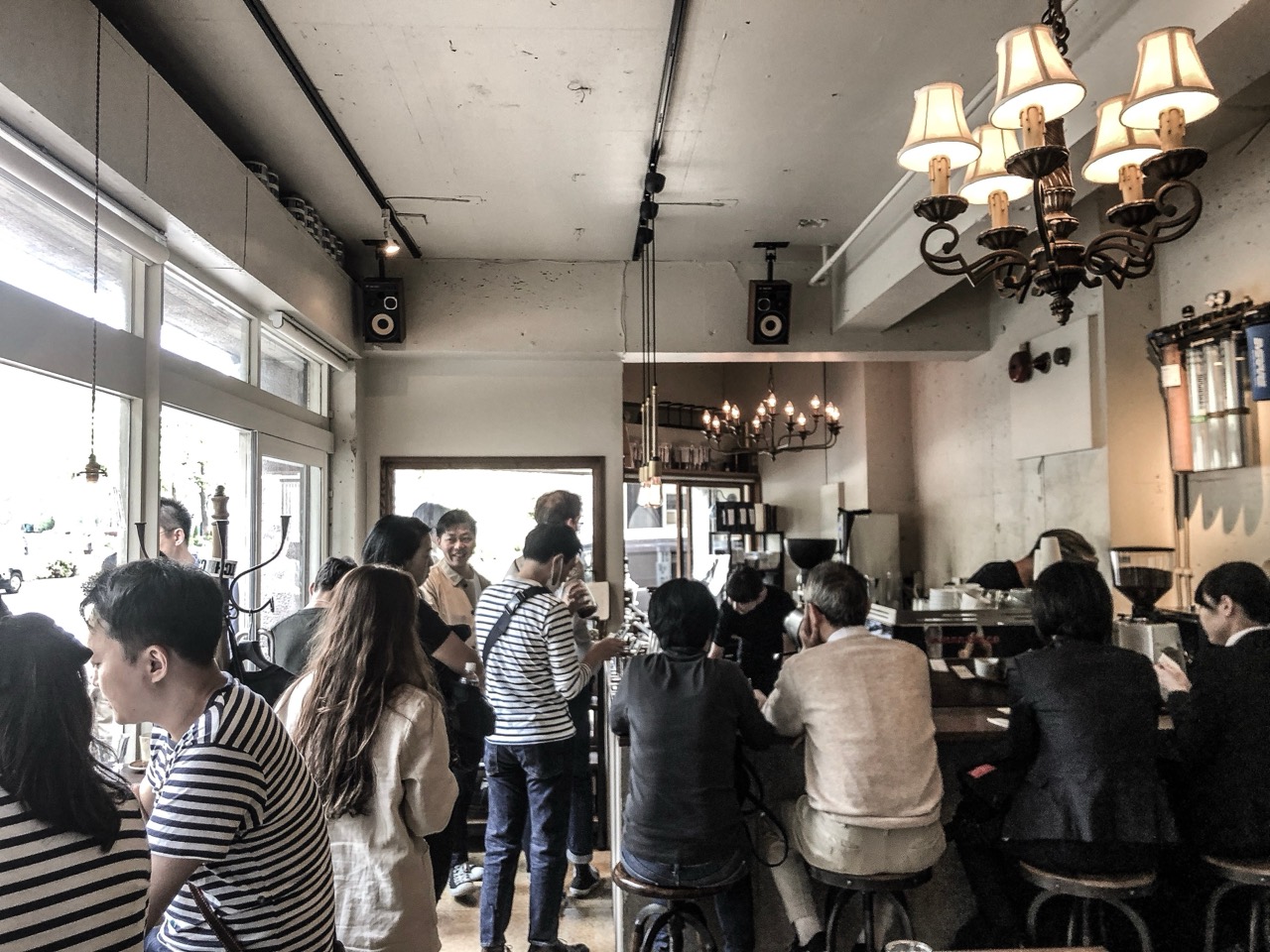
15.A cafe that keeps five stools on 9.8 tsubo and leaves the rest of its seating to the atrium sofas of a 41-storey tower sells hand drip at 4,000 yen a cup. Estimated rent is a little over 4% of sales. Try the same setup on the ground floor of a large Korean office building and the first thing you hit is the building's management rules. Lobby sofas belong to the landlord and the management body, so a tenant cannot add or move them. Once staff start carrying cups to those sofas and clearing them, the shop is operating outside its registered business floor area. So this model starts not with a shop lease negotiation but with how the building decides who gets to use its lobby.