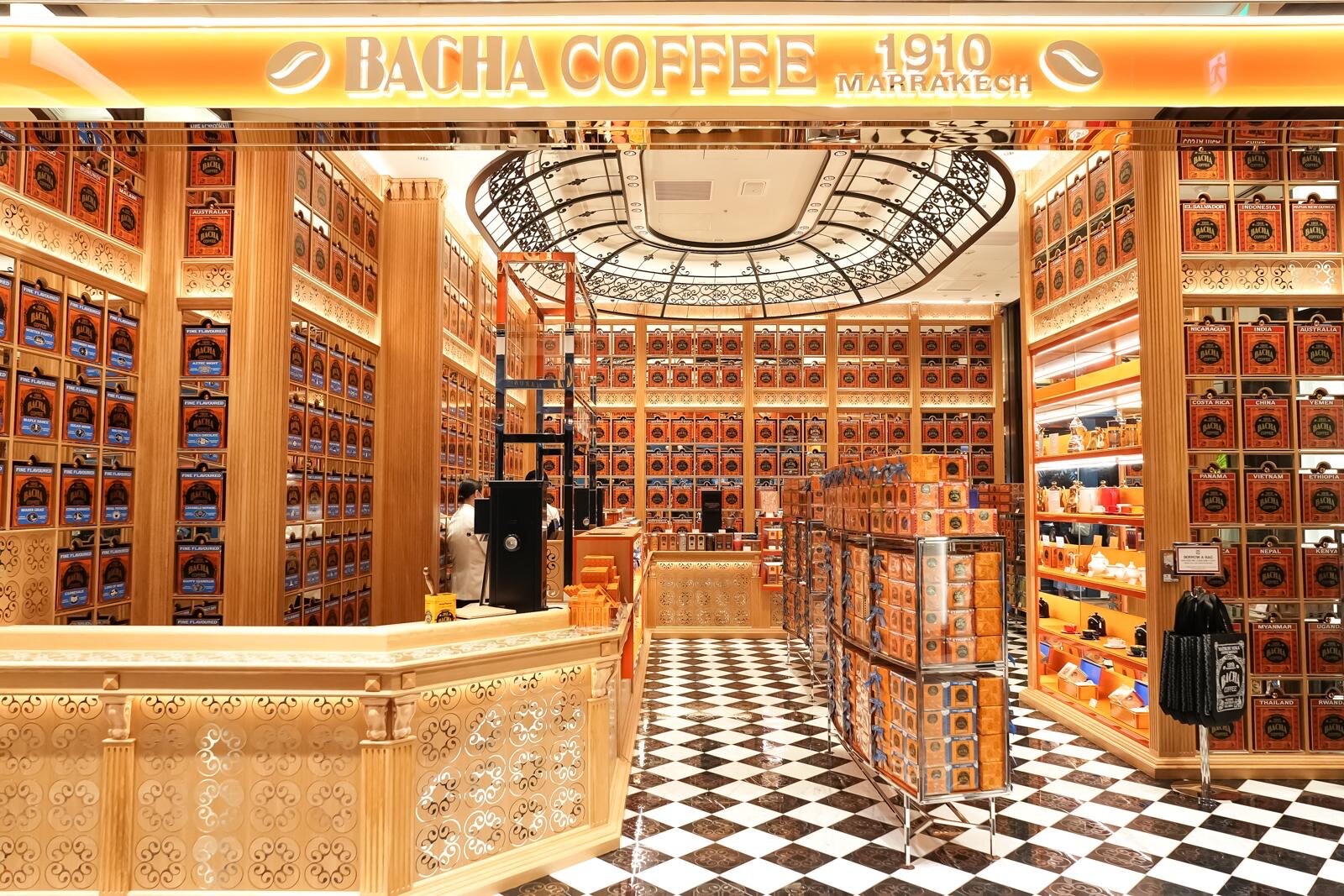
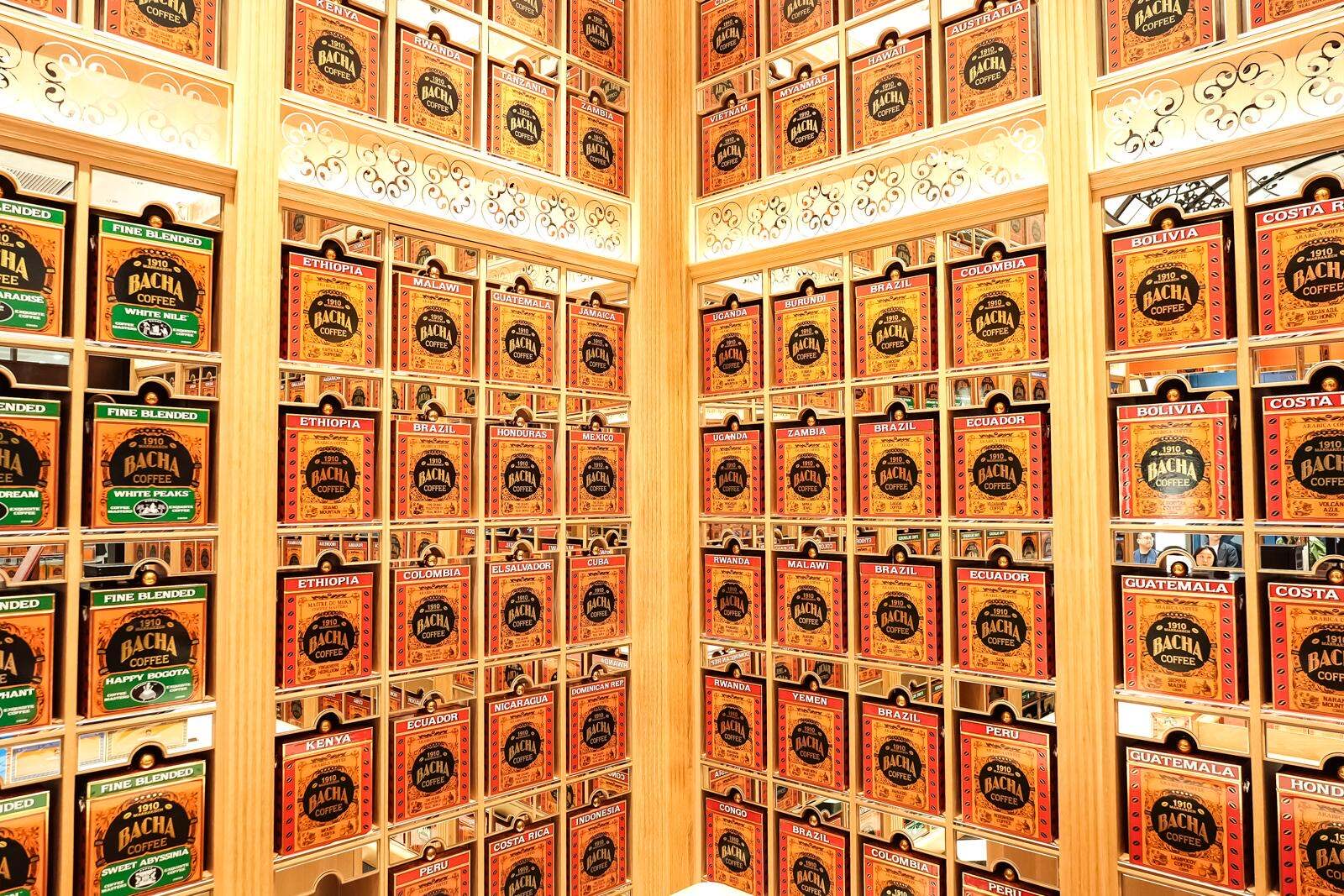
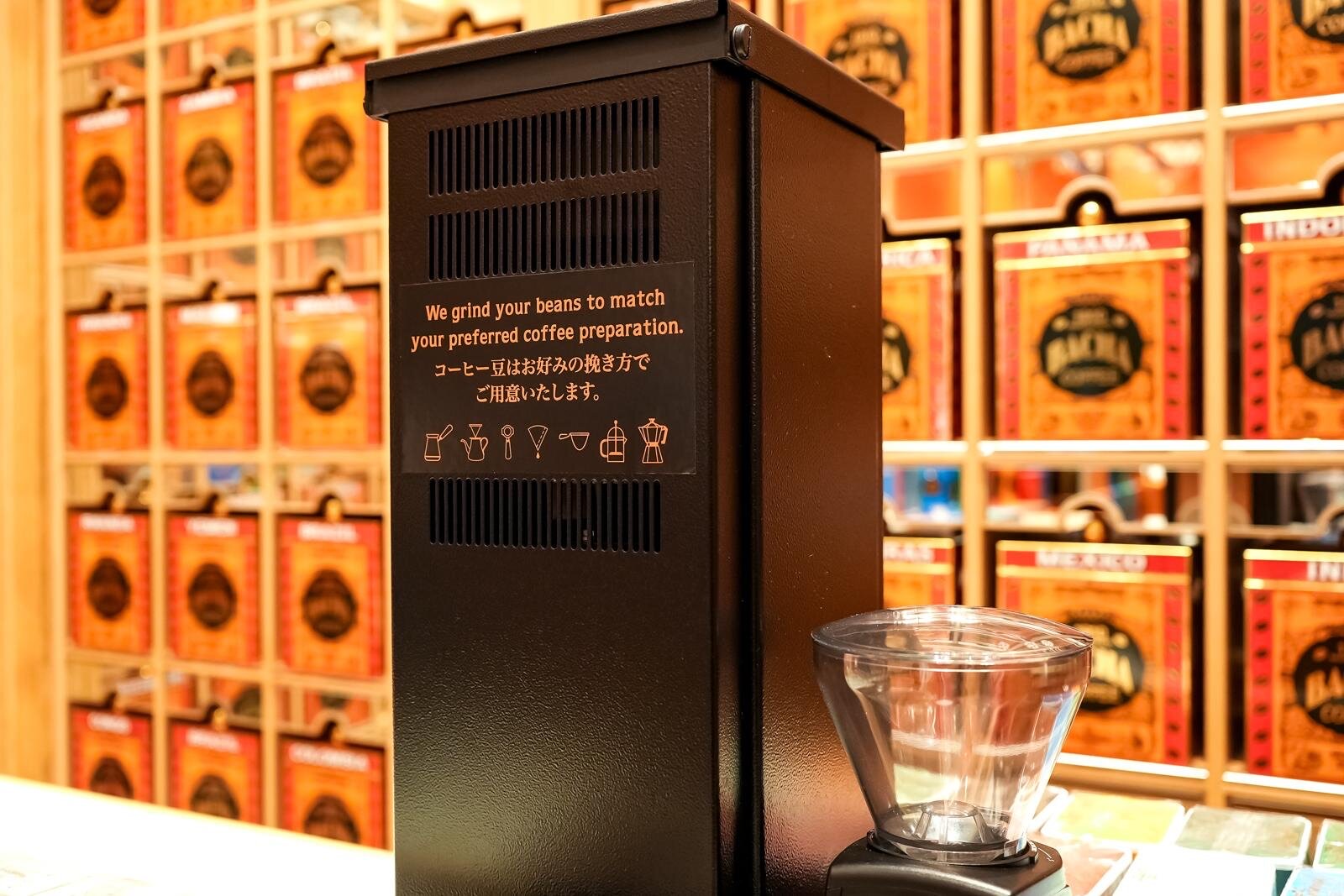
Bacha Coffee, the coffee brand that takes its name from Marrakech in Morocco, opened its second Japanese store on June 11 on the ground floor of the Shin-Marunouchi Building, across from Tokyo Station. Six months ago the same brand had hundreds of people queuing in Ginza. This store has no coffee room. It sells more than 200 coffees, drip bags and gift boxes, and nothing else.
1.The first store opened on December 11, 2025, in Ginza 5-chome. Its three floors add up to 377㎡. The ground floor holds a coffee boutique and a takeaway counter, the second and third floors are the coffee room, and there are 40 seats in total. Hundreds lined up on opening day, and because it takes no reservations, staff still hand out numbered tickets at busy hours. The operator cited the strong response in Ginza as its reason for opening a second store, yet that second store has not a single chair.
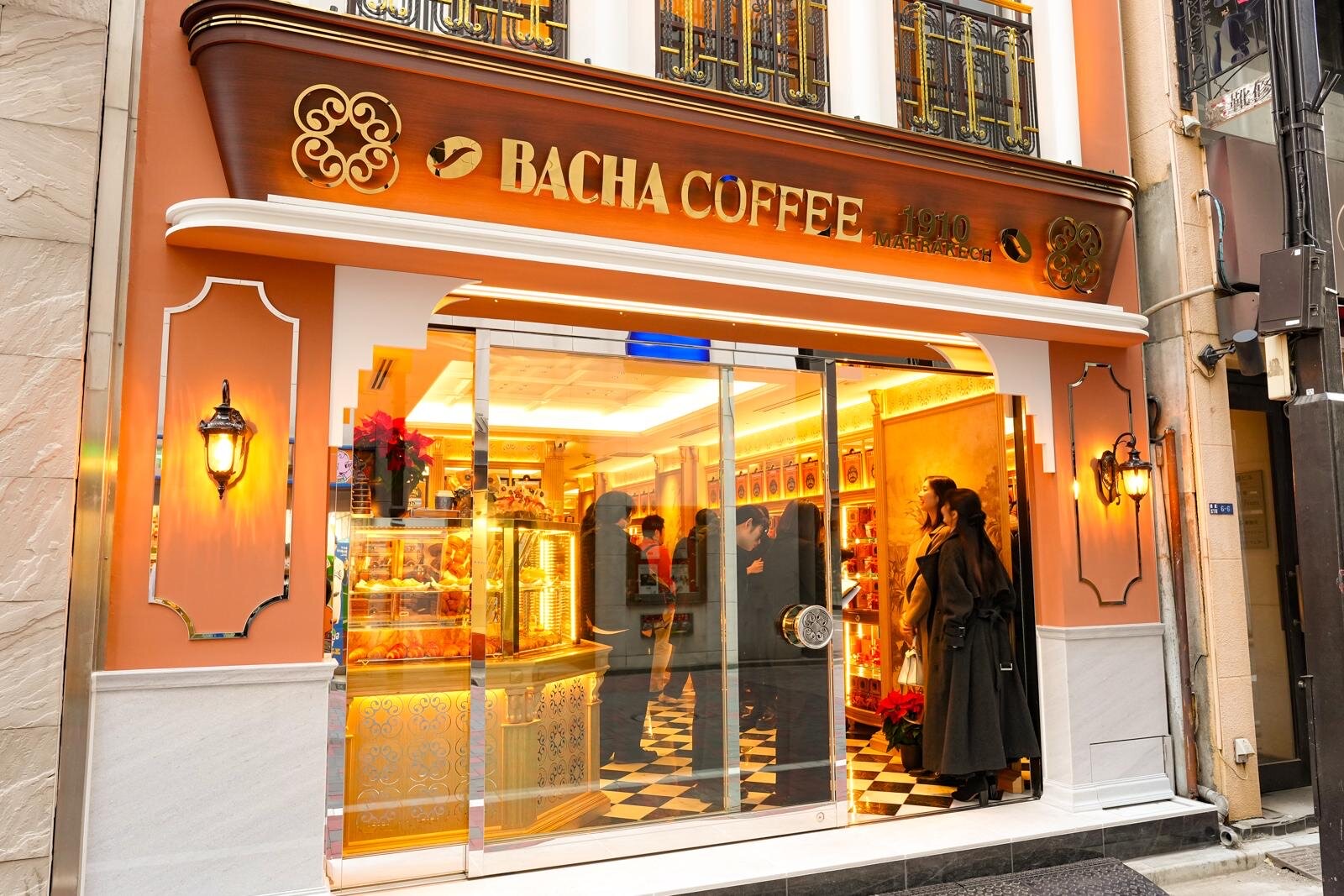
2.The brand belongs to V3 Gourmet of Singapore, which also owns the tea brand TWG Tea. In Japan the stores are opened under a franchise agreement by Tokyu Gourmet Front, the food arm of the railway group Tokyu. Worldwide there are 45 stores in 16 cities. V3 Gourmet chief executive Taha Bouqdib told Nikkei Asia he hopes to have 40 to 50 stores in Japan within ten years.
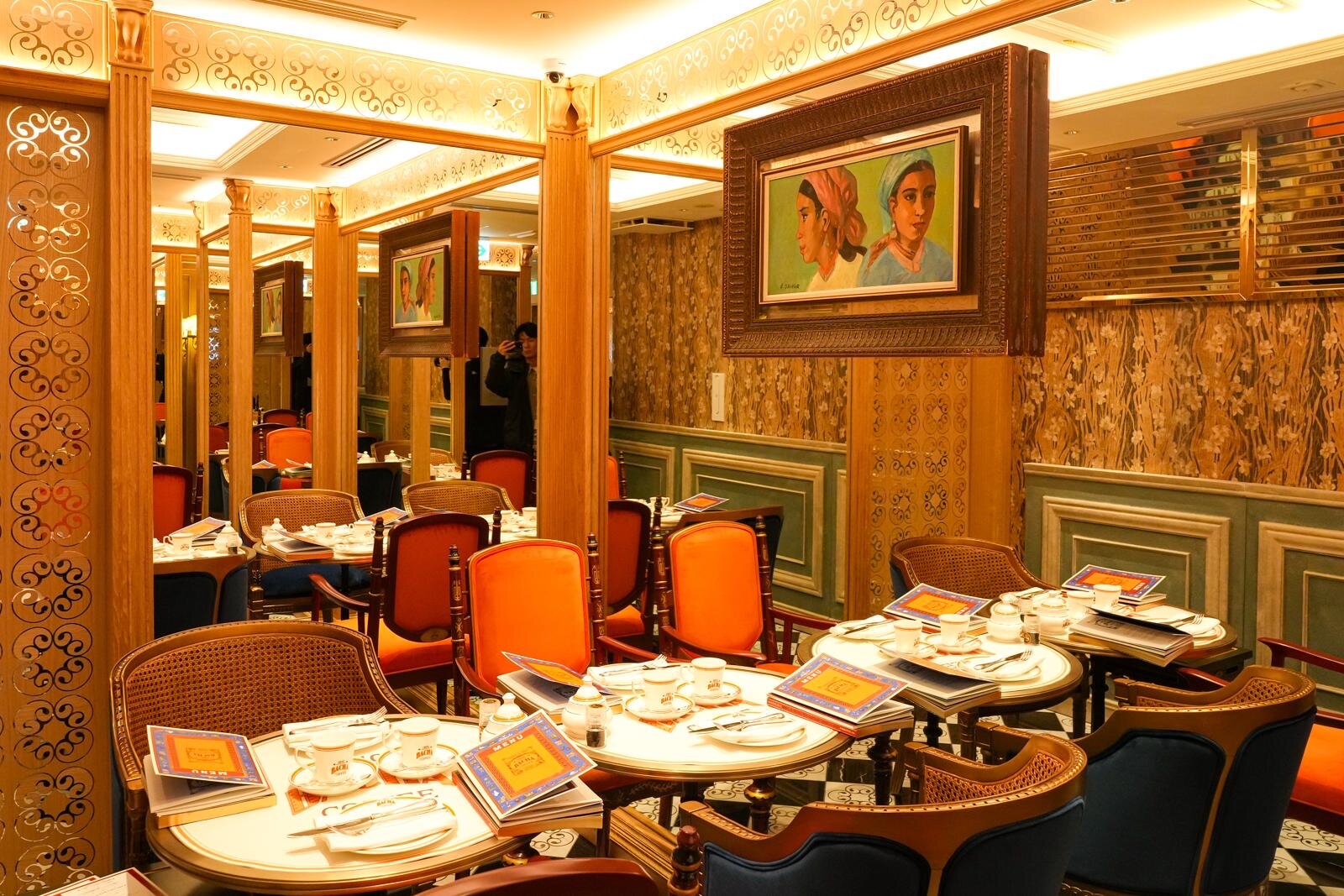
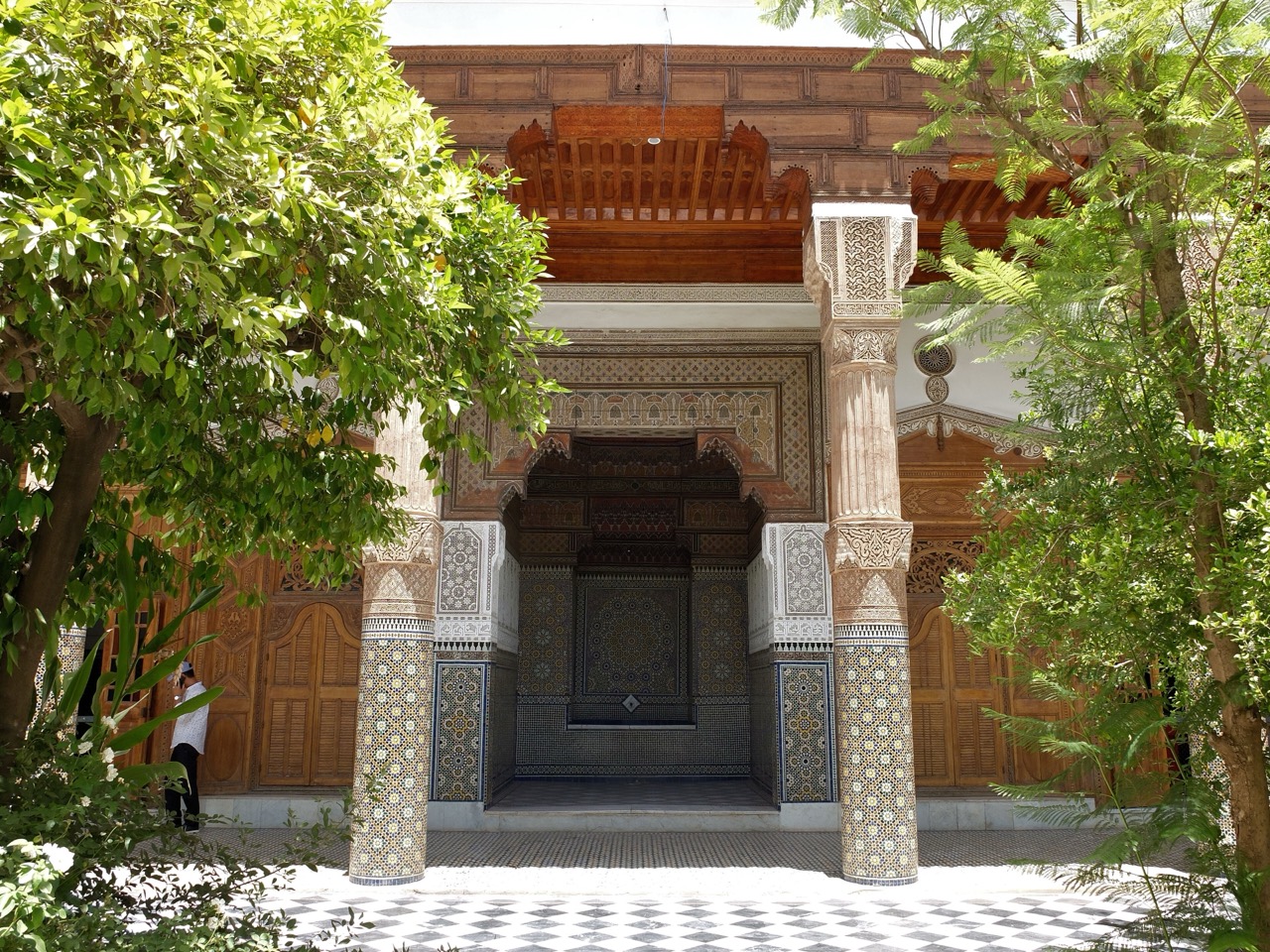
3.Push open the door in Ginza and the floor underfoot is black-and-white checkered marble. The ceiling is carved cedar, the corridor walls are saffron, and the lower parts of the columns are clad in zellige, the Moroccan mosaic tile. Up the stairs is the coffee room, with orange velvet chairs and white round tables, and portraits in gilt frames on the walls. The staff who carry the trays wear black suits and ties.
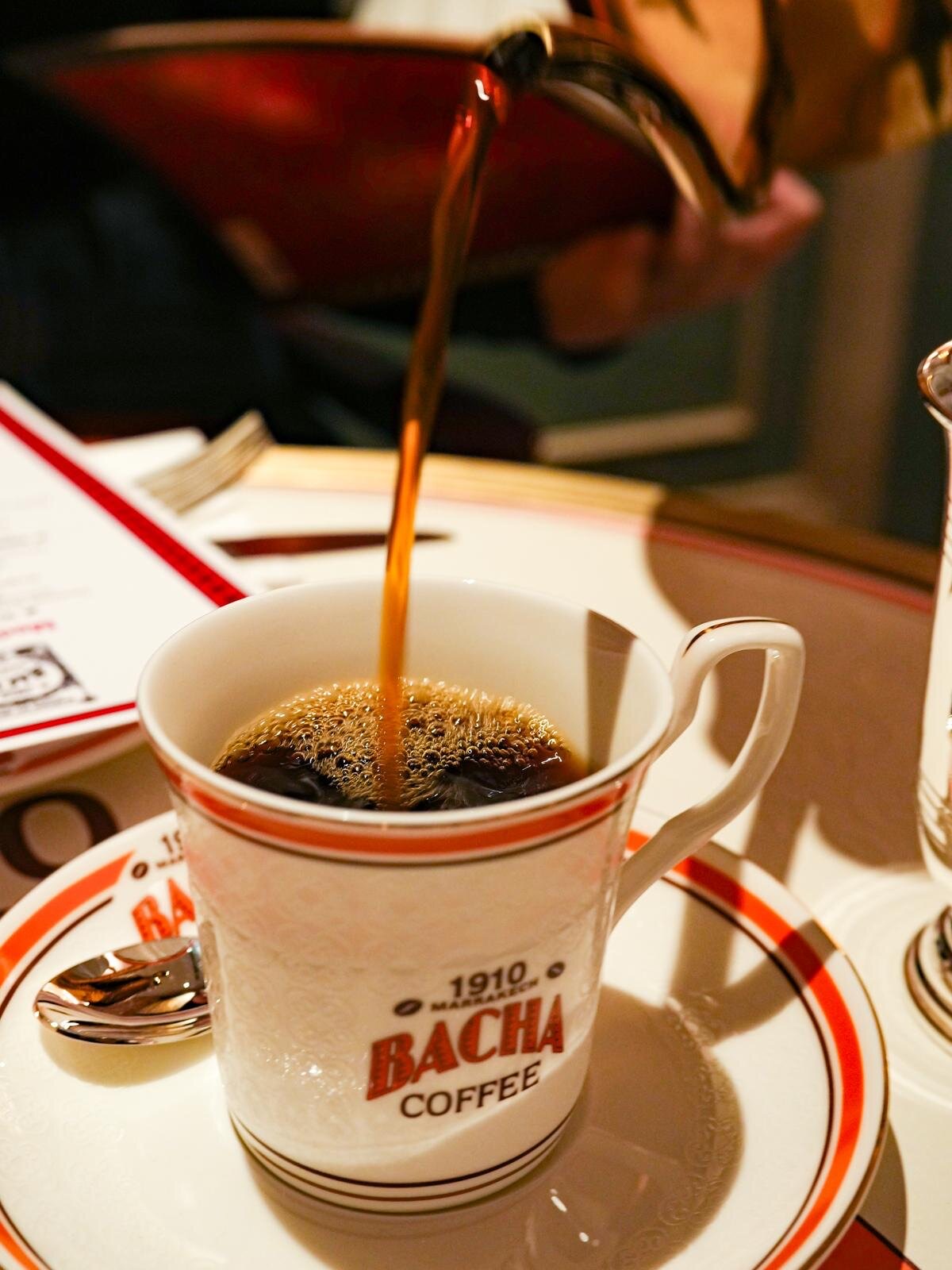
4.Coffee comes by the pot, not the cup. The white cup has a red rim and the year 1910 printed on it, and alongside come Chantilly cream mixed with vanilla bean and a sugar stick. The beans are 100% Arabica, more than 200 kinds from 35 countries including Yemen, Ethiopia, Jamaica and Hawaii. Single origins speak through acidity and body; the flavored coffees, coated with chocolate or fruit aromas, speak through the smell that rises when the pot lid comes off. Cream rounds off the bitterness, and a cup of coffee doubles as a plate of dessert. That is the case for charging 1,800 yen a pot.
5.Takeaway on the ground floor starts at 1,200 yen. The cup, printed with a mosaic pattern, is set on a box shaped like a tray, packed with cream, a sugar stick and a reusable glass straw. One reviewer wrote that carrying that tray down a Ginza street felt a little embarrassing. Embarrassed or not, the customer walking with the tray is the signboard.
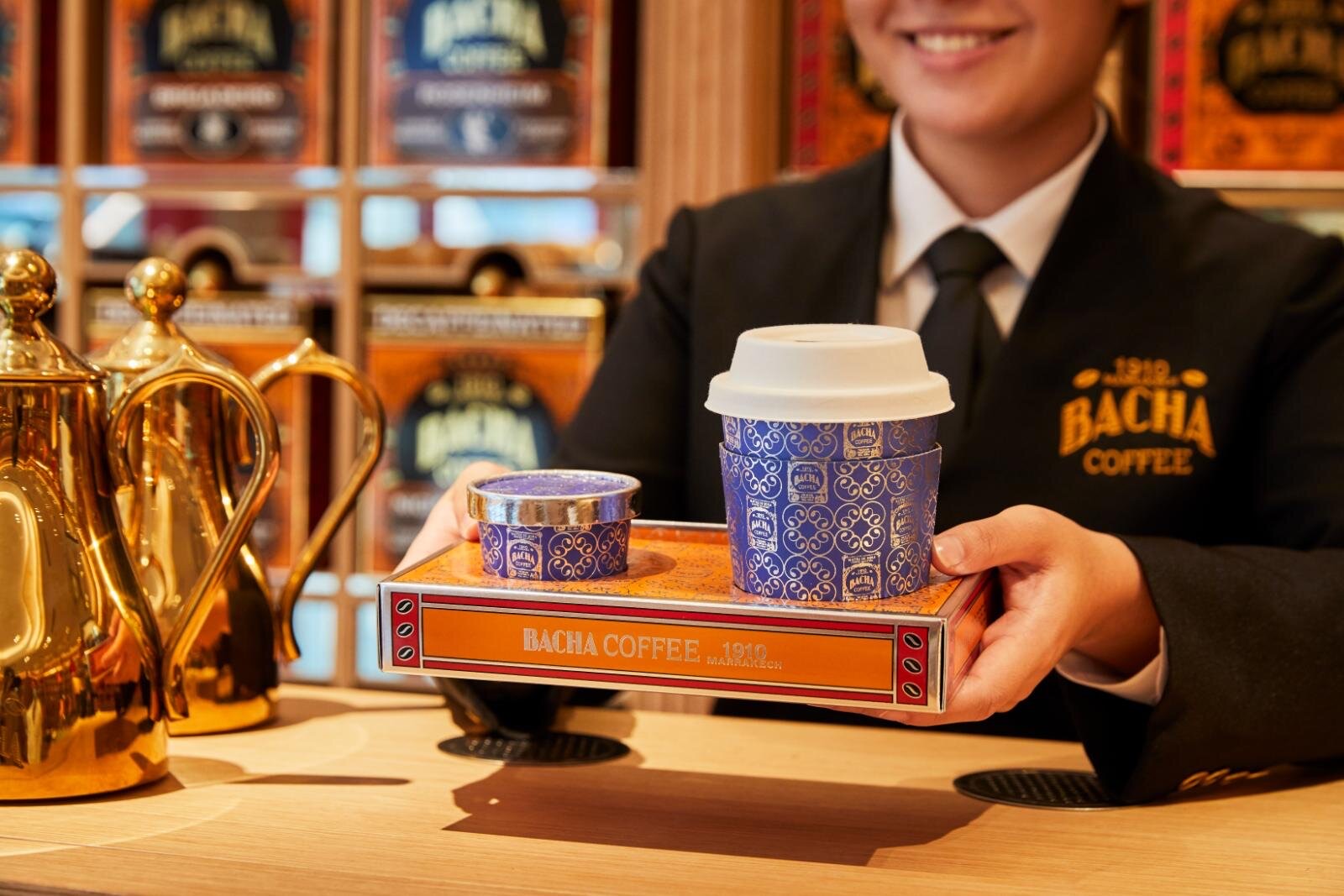
6.What the people in line end up buying is the tin more than the coffee. Beans go into tins and bags stamped with a gold logo, and at the till the staff tie a ribbon and wrap them as gifts. Bean prices start at 6,900 yen and climb to 56,400 yen. Japan has the custom of temiyage, bringing a gift when you visit someone's home or a client, and Ginza and the office district in front of Tokyo Station are where people buy those gifts. The tin takes the place where a box of sweets used to go.
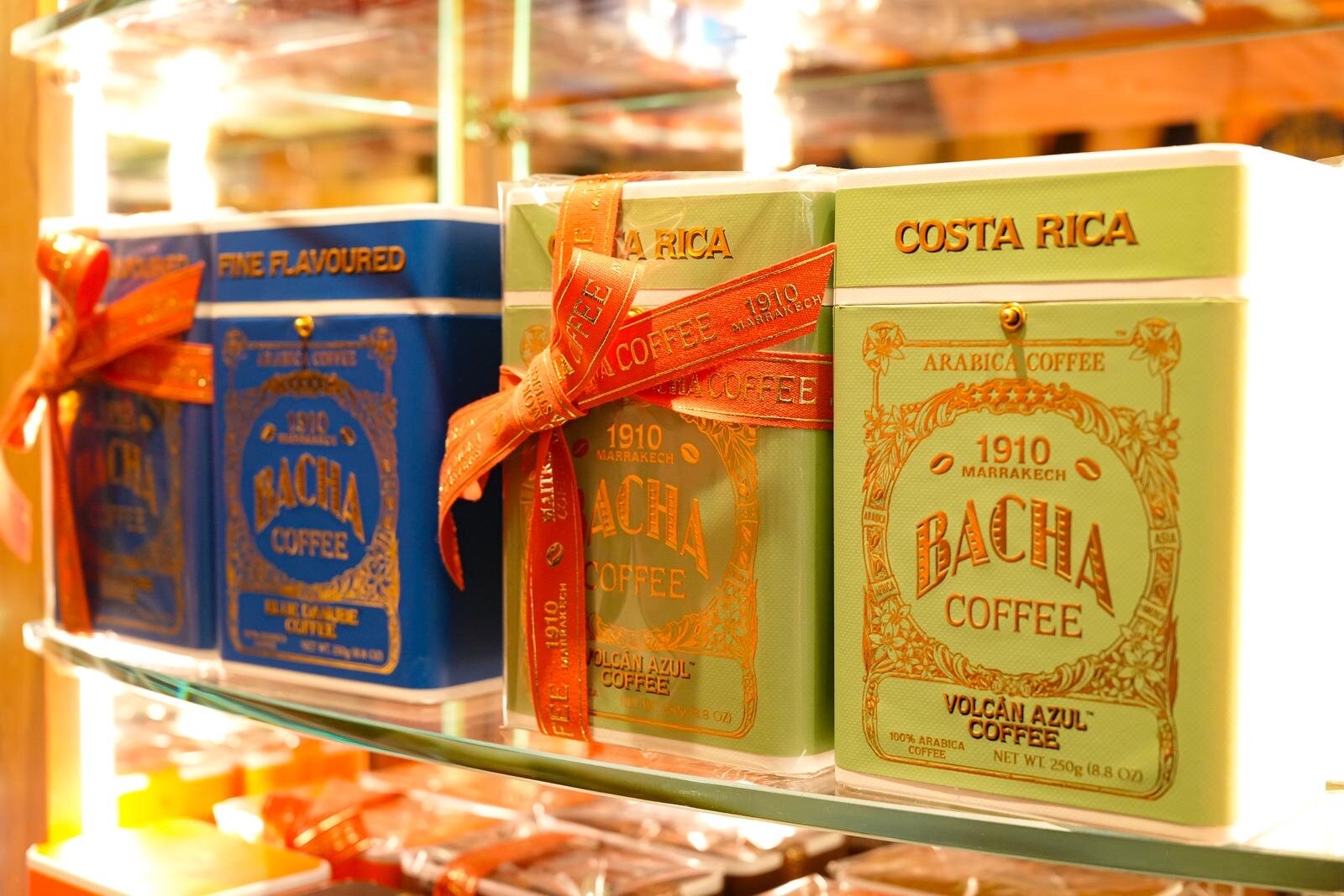
7.The South China Morning Post described V3 Gourmet's two brands as affordable luxury. People who cannot buy a bag worth millions of yen will still buy a tin wrapped like a luxury good. The year 1910 and the name Marrakech hold up the price. The marble floor and suited staff of the coffee room work more like a stage that makes the price of the tin believable.
8.What one person spends in the coffee room: most pots are 1,800 yen, two croissants are 1,250 yen, each guest must order at least one item, and a 10% service charge is added. Coffee and pastry alone come to a little over 3,300 yen. Plates of food run 3,300-4,950 yen and afternoon coffee sets start at 6,500 yen. Reviews most often put spending per person in the 3,000-yen range.
9.Forty seats do not earn much in a day. The store opens at 11:00 and takes last orders at 19:30, eight and a half hours of service, and if a party stays about 75 minutes each seat turns five times a day. At 80% occupancy that is 160 guests a day, 560,000 yen at 3,500 yen each, or around 17 million yen a month (estimate). Against that sit the rent on two floors, the serving staff, the kitchen and the dishwashing.
10.The ground-floor boutique works differently. A gift box of 12 drip bags is 4,400 yen, a box of 25 is 8,800 yen, and a single canister for beans is 3,500 yen. These customers take no seat and leave no dishes. One 6,900-yen tin of beans equals what two people spend in the coffee room, and the line at the till moves faster than the wait for the coffee room.
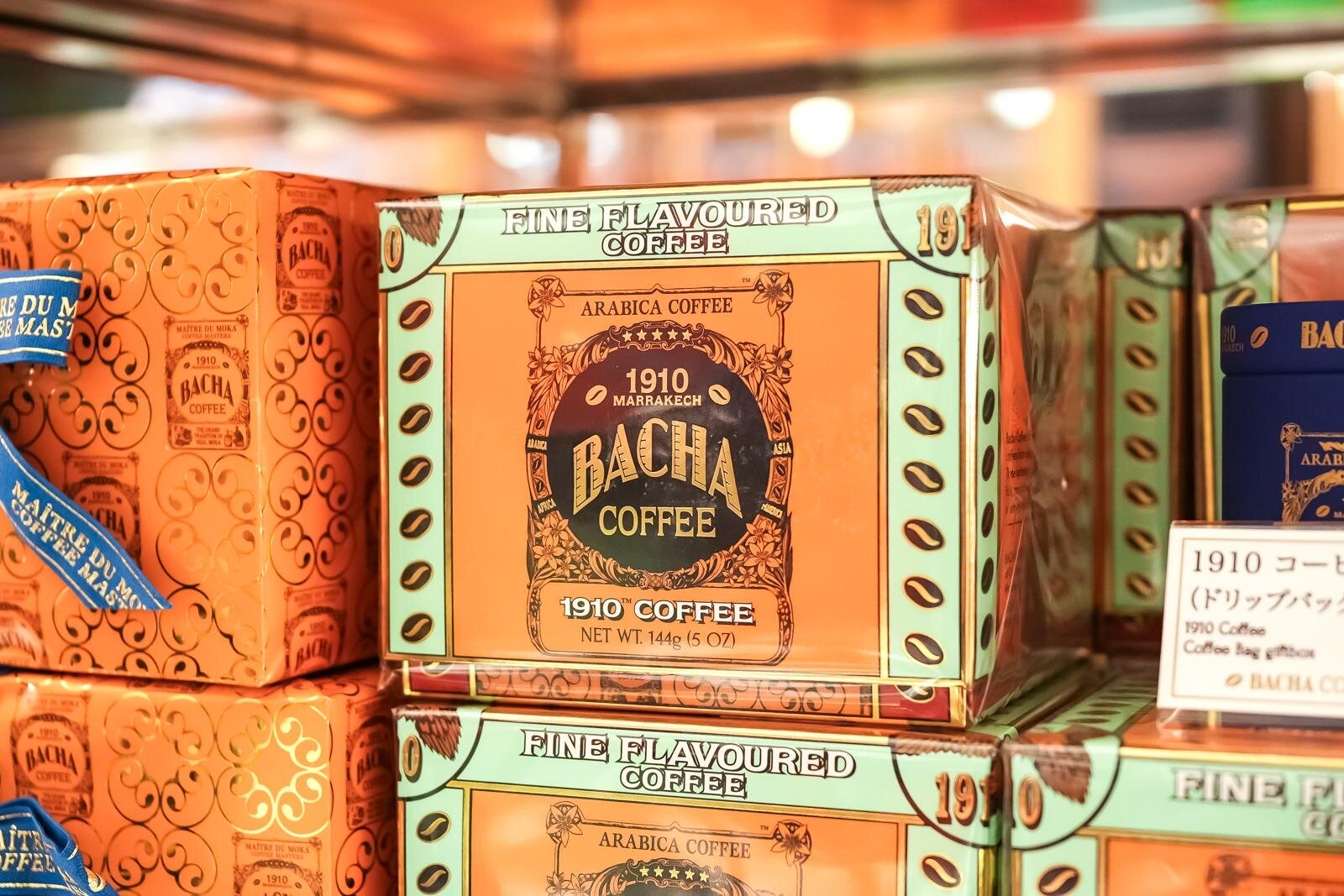
11.The boutique also keeps more of what it takes. In the coffee room, even if beans cost only a tenth or so of the cup price, labor and rent take close to half of sales (estimate); the boutique pays for tins and packaging but runs on a few staff at the till. The ground floor of the Shin-Marunouchi Building faces the Marunouchi exit of Tokyo Station and is among the most expensive ground floors in Tokyo. Put chairs there and what would sales per square meter be tied to? The turnover speed of a coffee room.
12.The name goes back to Dar el Bacha, a mansion in Marrakech. It was the home of Thami El Glaoui, the pasha of Marrakech, and the brand takes as its starting point the story that coffee was brewed in this house in 1910. Morocco's national museums foundation reopened part of the mansion as a museum in 2017, and Bouqdib restored the old coffee room and opened it as Bacha Coffee in 2019. The first overseas store followed the same year at ION Orchard in Singapore. The checkered floor and zellige columns of the Ginza store appear to be taken from this courtyard.
13.Seoul took a different road. Lotte Department Store signed an exclusive franchise agreement for Korea in September 2023 and opened a flagship in Cheongdam-dong on August 1, 2024, where a pot runs from 16,000 won to 480,000 won. The store on the third floor of Lotte's main branch, opened on April 10, 2025, went the other way and added a 15-seat coffee bar. Inside a department store, chairs keep shoppers on the floor; on a ground floor facing Tokyo Station, they slow the turnover.
14.For this brand, the coffee room is less a shop than an advertisement. Forty seats on two floors in Ginza create the line, the line and the checkered floor spread as photos, and someone who saw the photos buys a tin at Tokyo Station on a business trip. How many of the 50 stores Bouqdib mentioned will have a coffee room is not yet known. The operator said only that it will decide on further openings while watching the brand's head office and the Japanese market.
15.Bacha Coffee filled 40 coffee-room seats in Ginza, and within six months it opened a chairless coffee shop on a ground floor across from Tokyo Station, where a single 4,400-yen box of drip bags outsells what one person spends in the coffee room. In Korea, a seatless store selling only beans and gift boxes is simple while it sells finished tins, but the moment it weighs out beans or grinds them in front of customers, it has to check whether it needs a food repackaging business or an on-site food manufacturing and processing registration. Department stores and station buildings often tie fees or rent to sales on the ground floor, so unless the cost ratio of a single tin is set first, even a boutique keeps nothing.