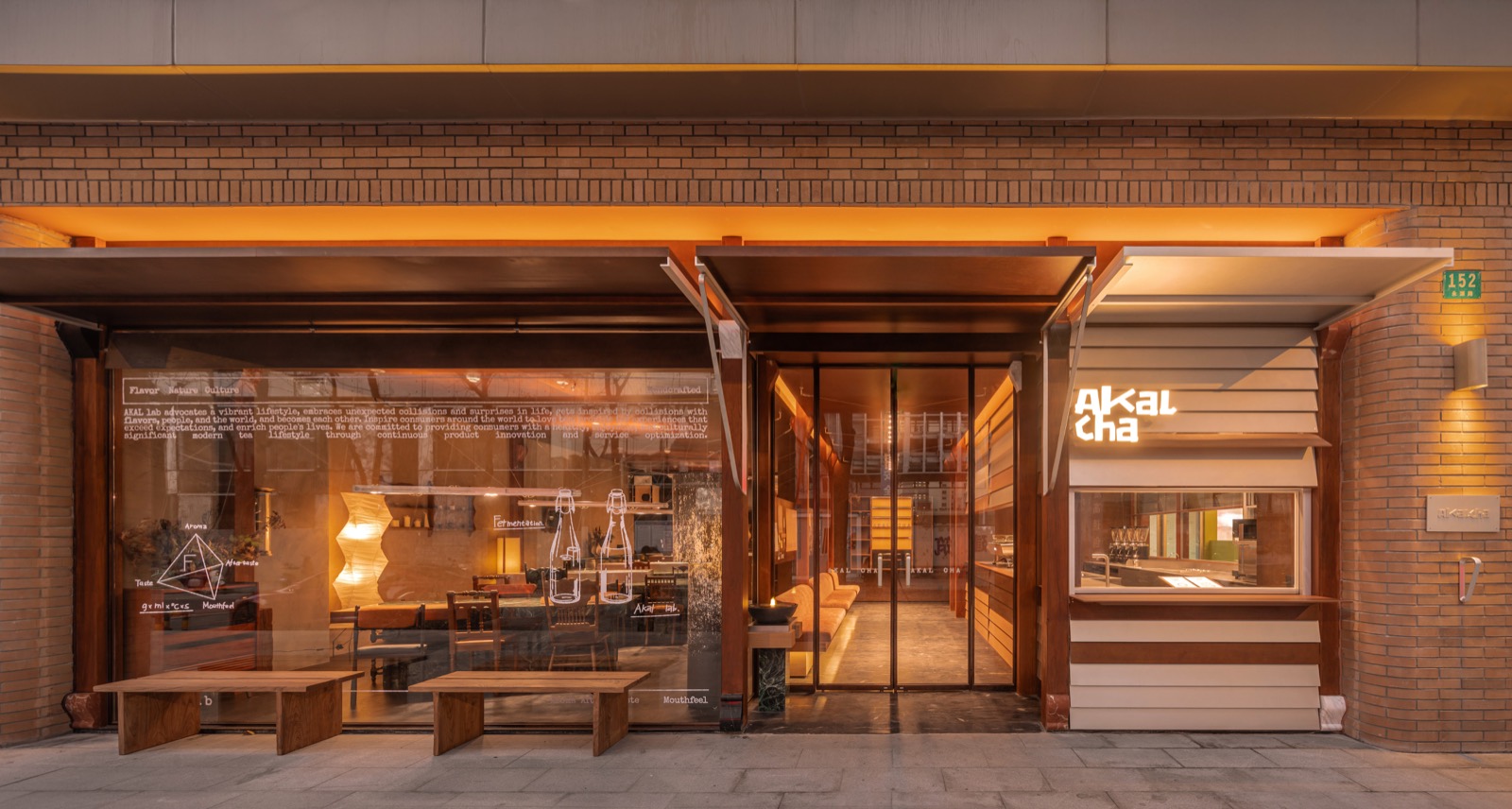
In March 2026, the Chinese tea brand AKALCHA opened its first shop in a lane behind Jing'an Temple in Shanghai. At the street window it sells tea to go for around 30 yuan; at the marble bar inside it seats you and pours tea for around 60 yuan. One small shop holds a fast shop and a slow shop side by side.
1.The address is Yongyuan Road, a lane behind Jing'an Temple. On this 500-metre street, about 300 metres from the temple, AKALCHA opened its first shop in March 2026. It covers roughly 100㎡. The single unit is split in two: the street window sells fast, the bar inside sells slow.
2.At the window, tea lattes, siphon-brewed tea and kombucha mixed to order cost 27-32 yuan. The six signature teas served at the inner bar cost 55-65 yuan, about twice as much. Big Chinese tea-drink chains usually sell a cup in the 10-20 yuan range, so even the window prices sit a step above them.
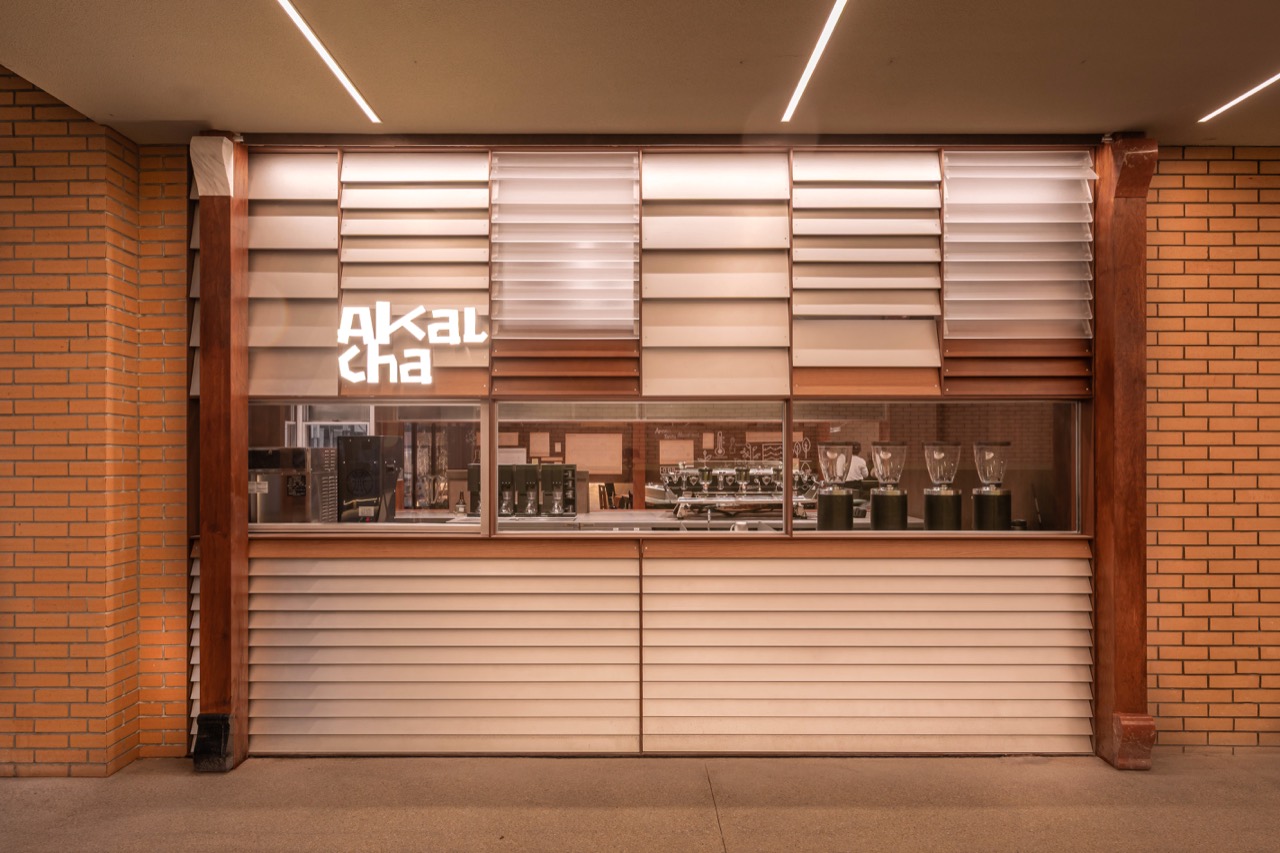
3.The brand only registered its trademark in February 2025. In an interview with a Jing'an district outlet, the founder said they had flown as an airline captain, then spent six years in the tea supply chain before quitting to start the brand. The pitch fits in one line: do Chinese tea the way specialty coffee is done. Jason Design Group, which designed the shop, read that as a shop that opens the whole brewing process to the customer, start to finish.
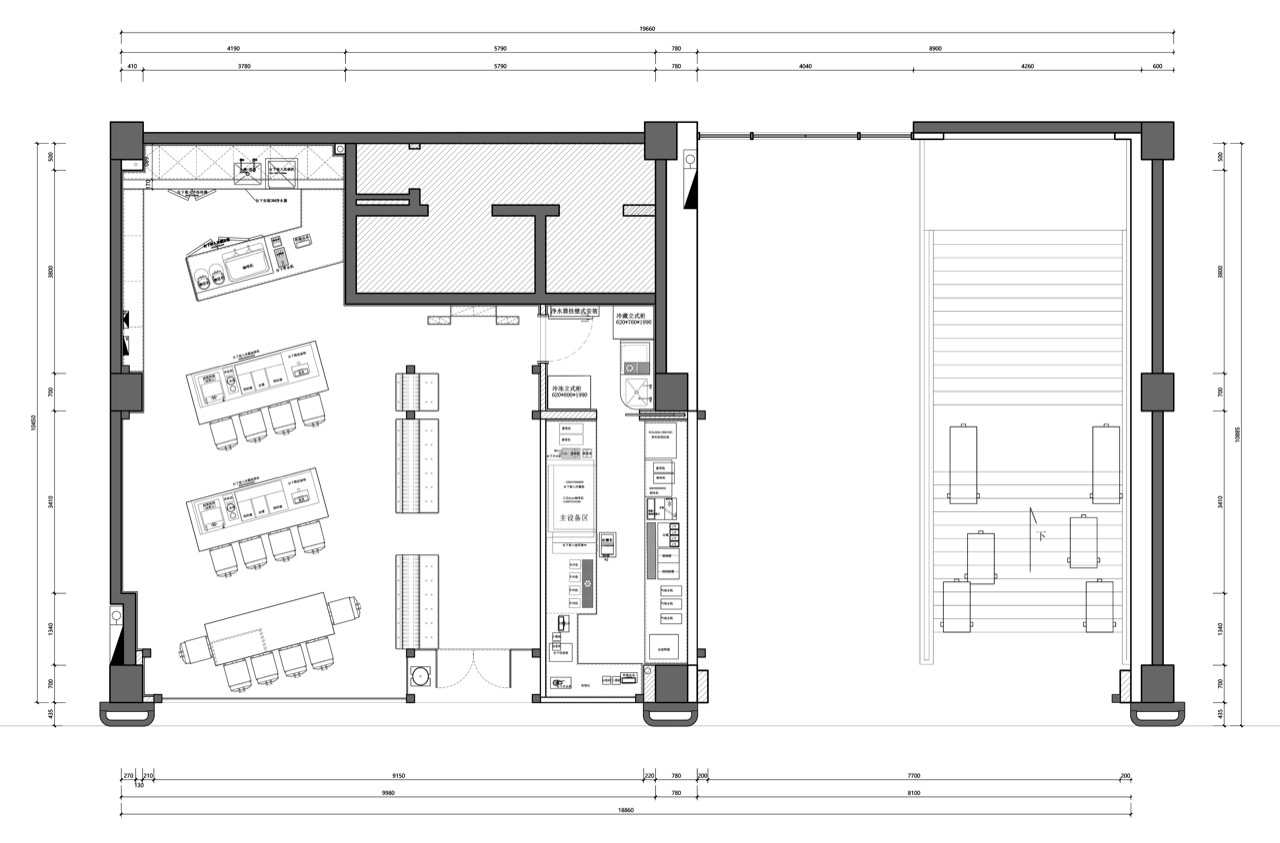
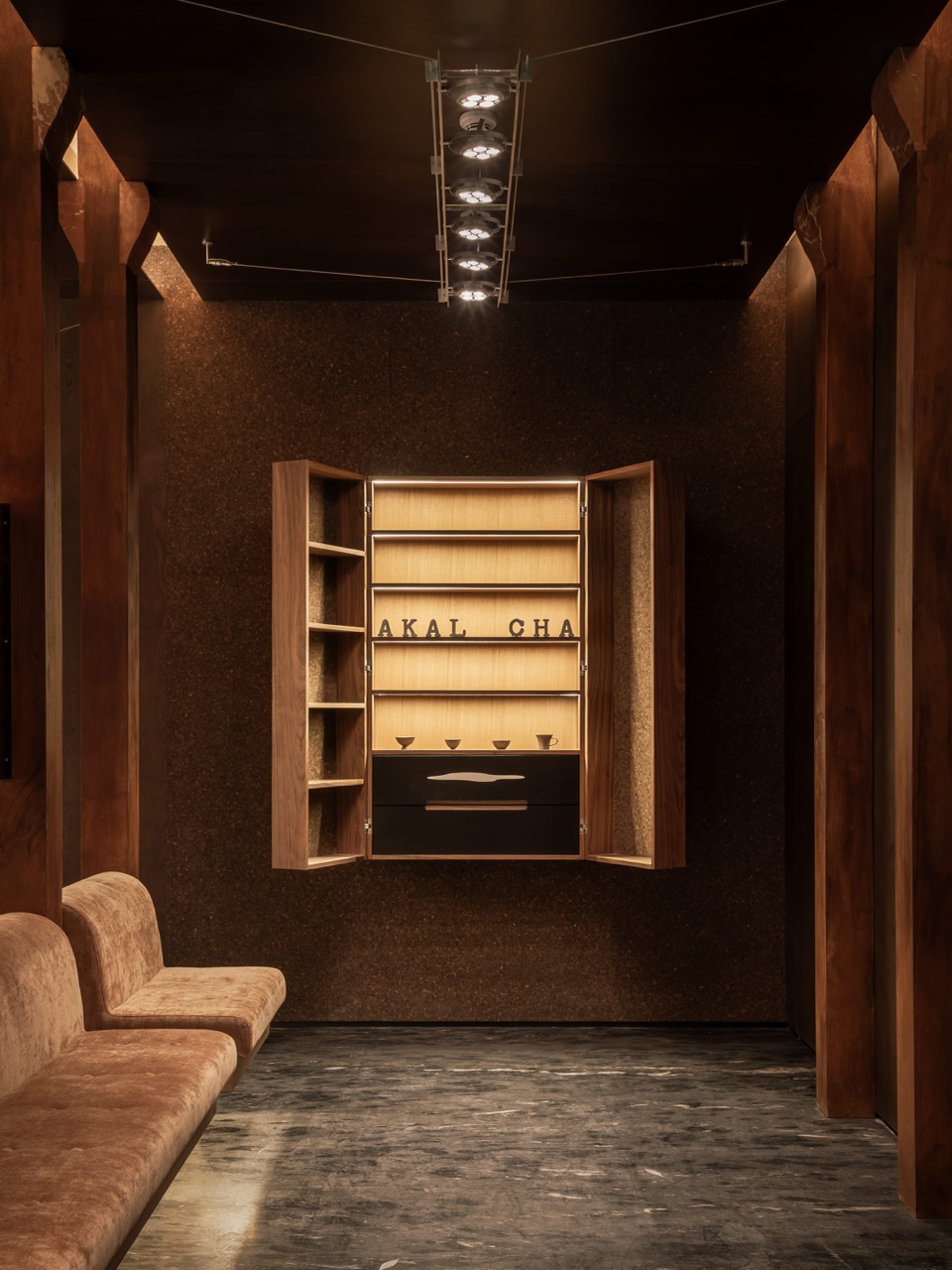
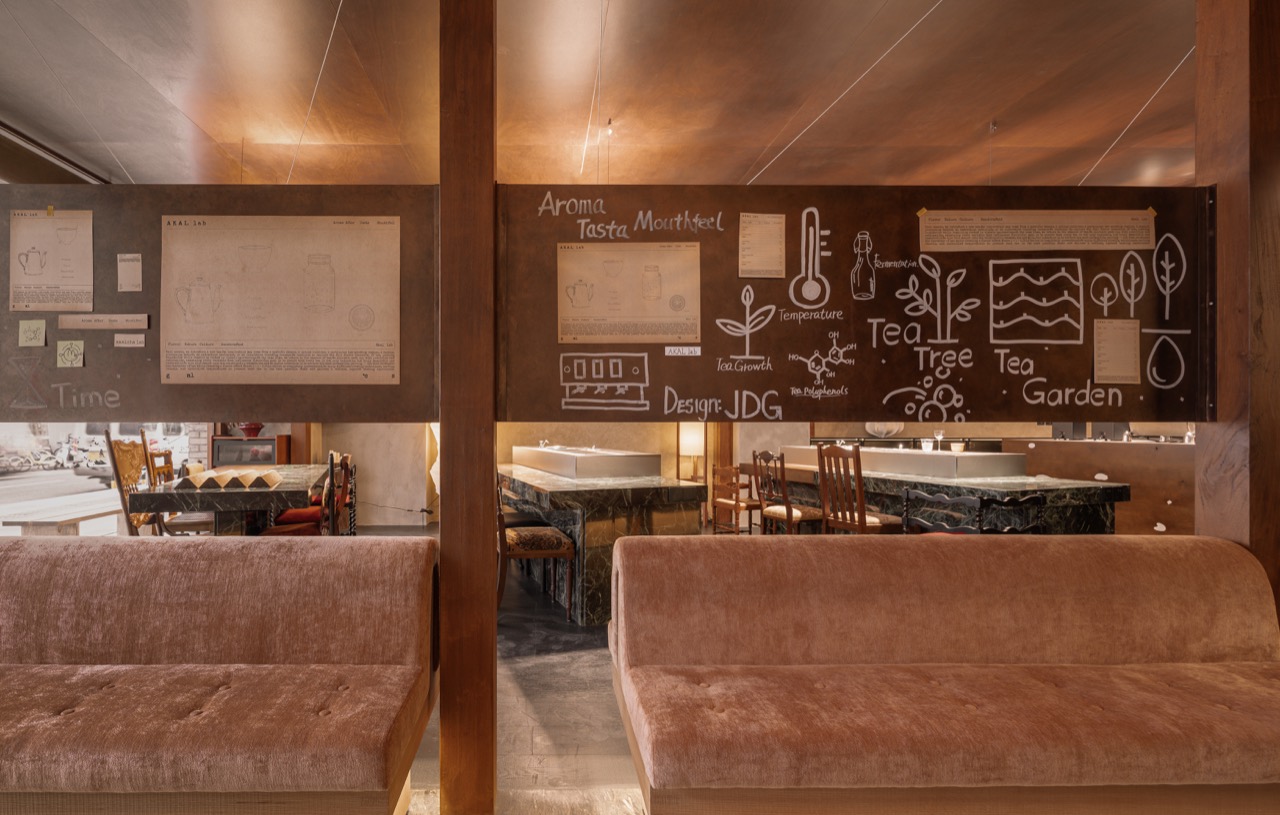
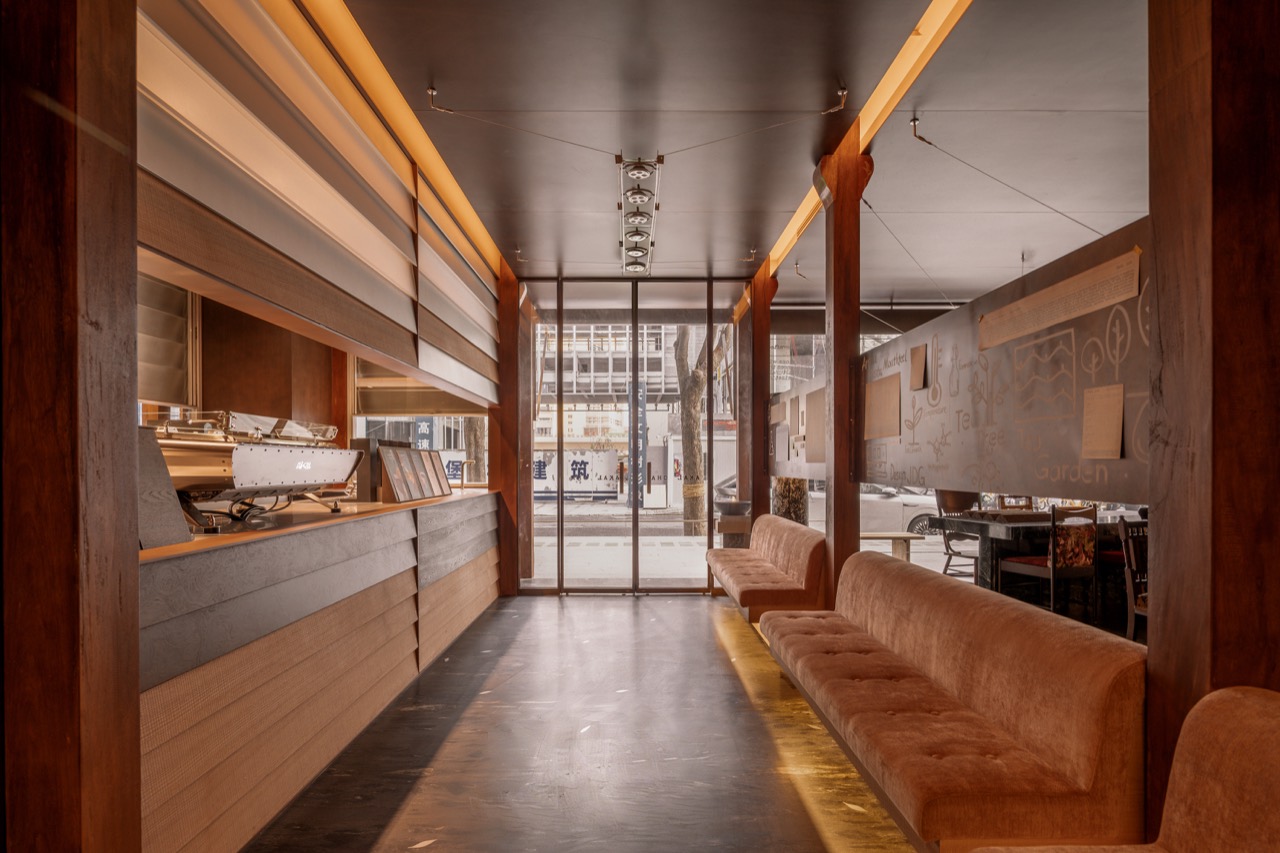
4.On the plan, a shop a little over 10 metres wide splits lengthwise into two. The long bar running along the right wall is the window side; the wide room on the left is the LAB. Along one wall of the corridor between them runs a long brown velvet sofa where window customers can sit and wait. On the window bar stand tea grinders, a three-group espresso machine, four automatic pour-over brewers and three sparkling-water units in a single row.
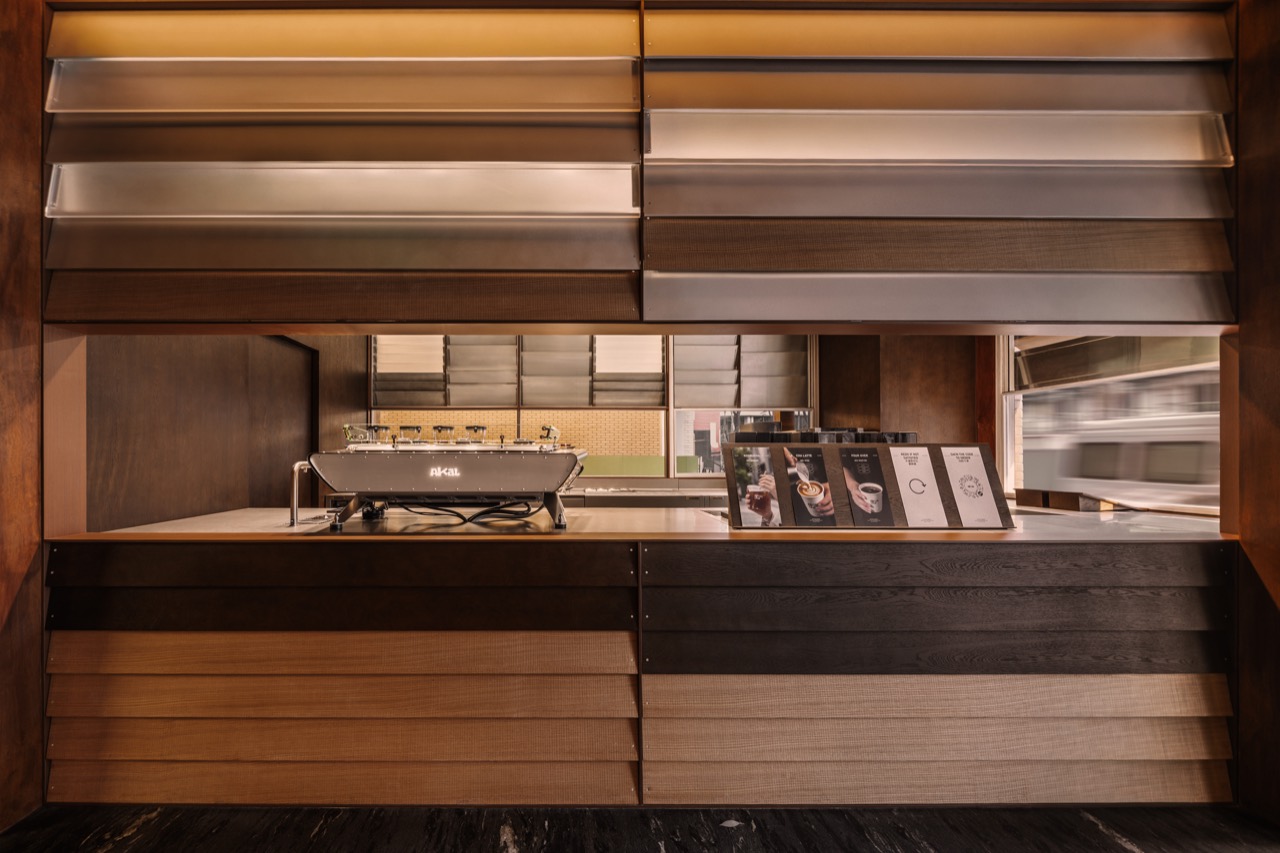
5.The window side took its equipment straight from a coffee bar. Tea leaves go through a coffee grinder, and the espresso machine pulls a high-caffeine tea concentrate that is then mixed with coffee. Shanghai food and drink site NOMFLUENCE named that cup as the signature. Grind tea and push water through it under pressure and the astringency and bitterness arrive together, stronger than in steeped tea; milk and coffee file down the edges. At the siphon, customers watch water rise in a glass flask and the leaves open, right across the bar.
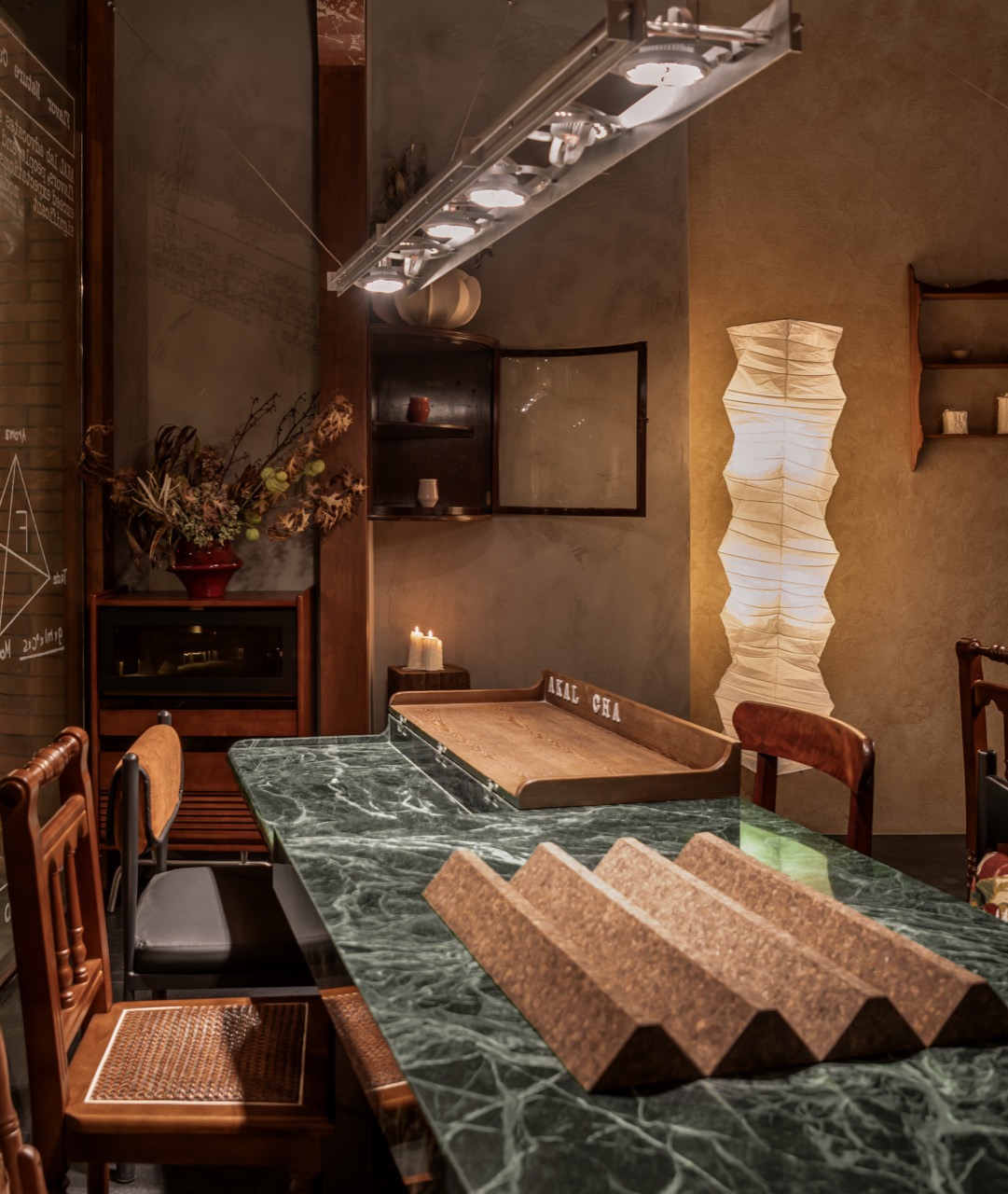
6.Step into the LAB and the light drops a notch. Two dark green marble bars seat four each, and a long table behind them seats six: 14 seats, counted from the plan. Each bar has its own work station with ice and ingredient wells, so staff standing inside brew each cup right in front of the guest. A local article called the setup a tea omakase and compared it to a whisky bar. The brand names its leaf teas by flavour rather than origin: Stone Milk Coconut, Peat Storm, Roasted Sweet Potato.
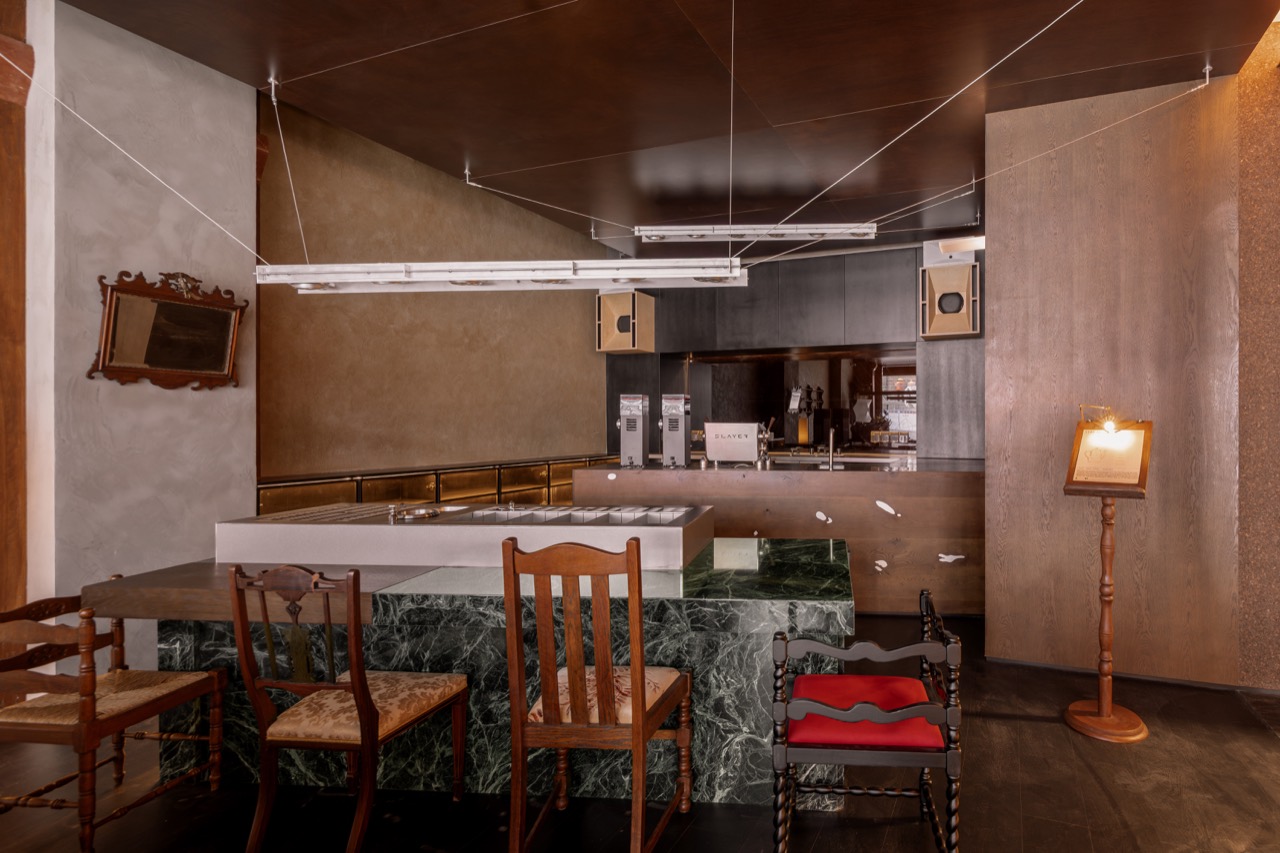
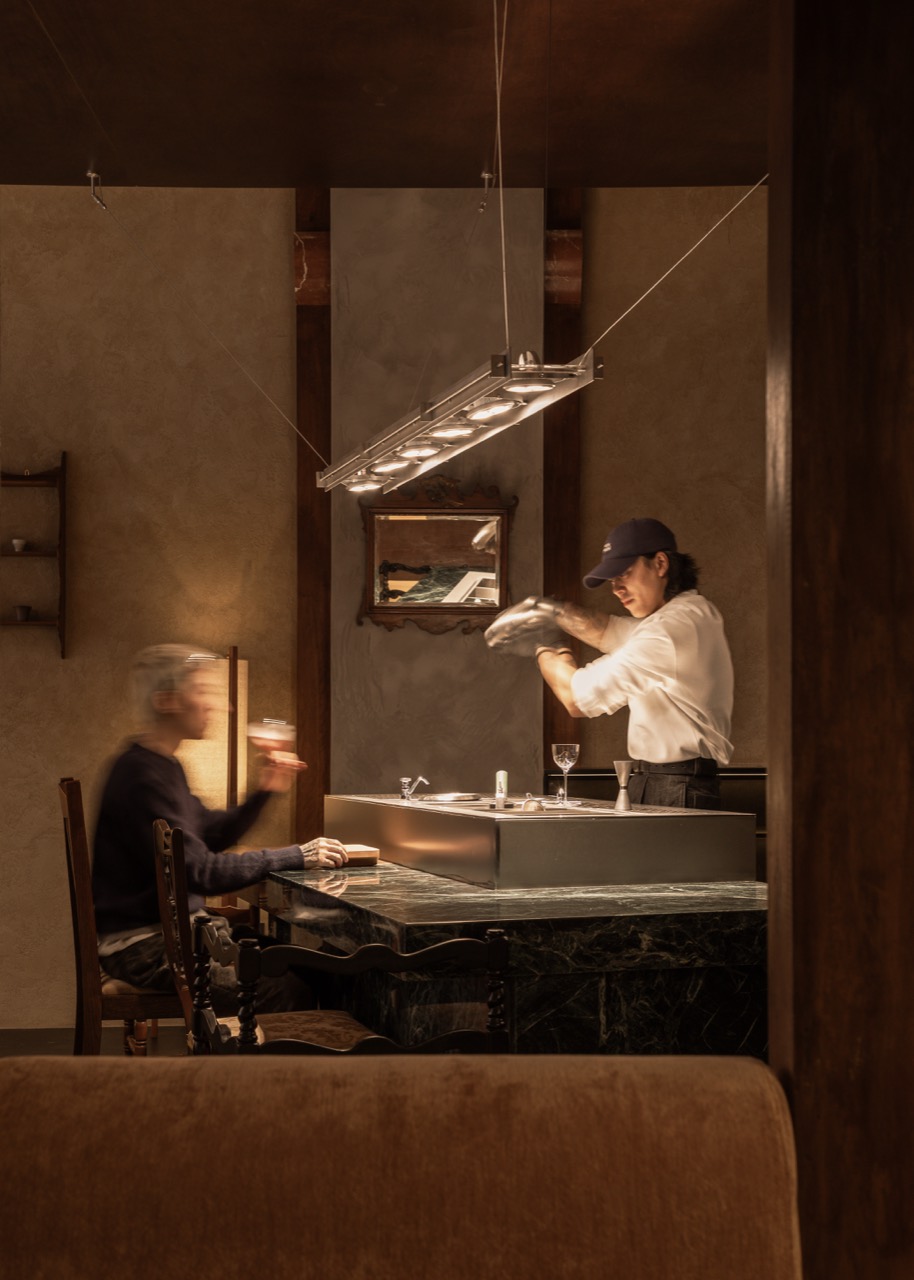
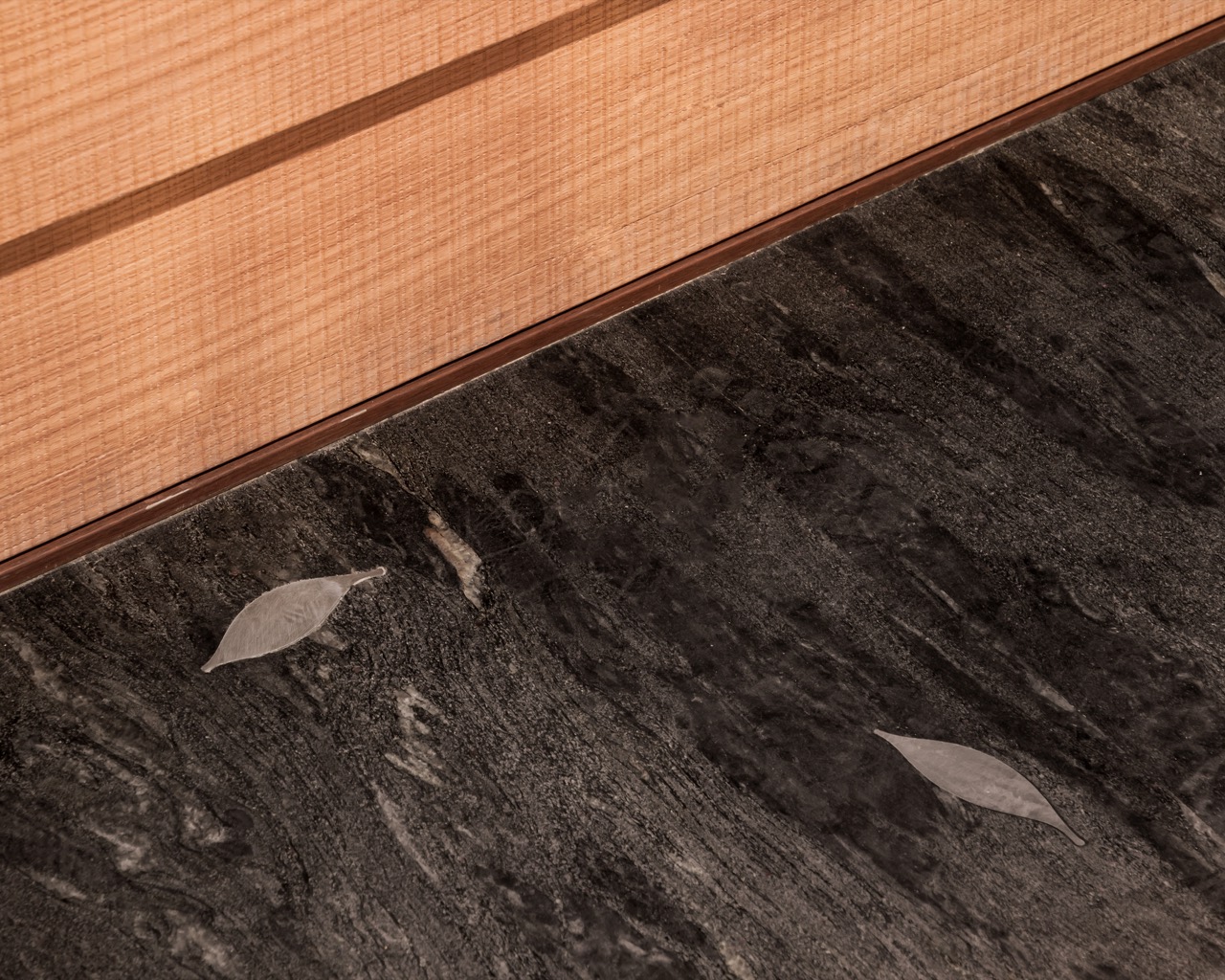
7.The floor is dark-veined stone, with a few metal tea leaves set into it. Linear lights hang low on wires above the marble bars, and the wall shelves carry pleated paper lamps and dried flowers. The designers say they set new materials such as micro-cement and stainless steel against handmade tiles, natural wood and stone. At the end of the corridor, a timber cabinet with its doors left open is built into a cork wall, teaware stacked shelf by shelf.
8.China's tea-drink market is large, but it grew at the cheap end. While the big chains fight on price with cups in the 10-20 yuan range, properly steeped leaf tea stayed in teahouses and tea rooms. A tea room means renting a room and holding a pot for hours, a high threshold for dropping in after lunch. AKALCHA walked into that gap carrying the format of a coffee bar. It borrowed the speed of takeaway from the chains, and from specialty coffee the habit of choosing leaves and showing the extraction.
9.The lane brings the customers. Yongyuan Road's operator says it rejects the white-box mall, has each shop designed separately, and fills vacancies with brands' first stores. At the shoe brand PANE on the same street, foreign visitors make up 30% of traffic and 35% of sales, according to the Shanghai government's Japanese-language site. When the founder explained the choice of this lane, the reason was not the lease terms. It was that the operator respects young brands and is willing to build with them over the long run.
10.Sales figures are not public. If the window sells 200 cups a day and the LAB 40, monthly revenue comes to about 250,000 yuan. That is an estimate. The LAB sells a fifth as many cups as the window, but each cup costs twice as much, so 14 chairs carry close to 30% of revenue.
11.Put ground-floor rent in the lanes around Jing'an Temple at 10-15 yuan per ㎡ per day, and this shop pays 30,000-45,000 yuan a month. That is 12-18% of the revenue above. Also an estimate. The brand picked a spot far cheaper than frontage on Nanjing West Road, and lets the lane bring the customers.
12.Ingredients are light. A cup of leaf tea takes a few grams of leaves, so even good tea costs only a few yuan per cup, and outside the milk lattes the raw-material share comes in below coffee's. The heavy cost is people. In the LAB, each bar has a staff member brewing and explaining, which puts two people on 14 seats; at the window, siphon and manual brewing mean more hands per cup than at a chain. Labour takes back the cost advantage tea gives.
13.Big chains built on leaf tea already exist. CHAGEE, founded in 2017 in Kunming, Yunnan, grew to thousands of stores selling milk tea made with freshly steeped leaves and listed on Nasdaq in 2025. What that chain sold was cheap, fast leaf tea. AKALCHA chose the other side: charging for the choice of leaves and the brewing itself. Tea is retracing the path coffee took, where specialty followed the chains.
14.Yet what this shop really leans on is coffee equipment, not tea. Espresso machines, grinders and automatic drippers are proven in coffee bars, and the know-how to run them rides on barista training. Tea rooms stored the skill of brewing well in people; this shop moved that work into machines. When the brand opens more stores, the machines are what travel intact. The LAB, which depends on human hands, is harder to multiply.
15.For now the lane fills with weekend shoppers and tourists. Yongyuan Road is building two office towers and serviced apartments in its second phase, and the operator expects 9,000 to 10,000 office workers to move in. If the window's target is the after-lunch cup on a weekday, that demand arrives only once the buildings fill. Until then, the LAB carries the weekend. The window is waiting for the towers.
16.A tea brand in a Shanghai lane split 100㎡ into a window and a LAB, charged two different prices in one shop, and handed extraction to coffee machines. Set against a Korean café menu, a cup from the window would cost 5,000-6,000 won, and a cup from the LAB over 10,000 won. The equipment can come straight from a coffee bar, but the moment you put one staff member at each of the two LAB bars, 14 seats have to earn wages loaded with the minimum wage and weekly holiday pay. To charge more than 10,000 won for tea, guests need to know why before they sit down, and the person who explains it is, again, the one behind the bar.