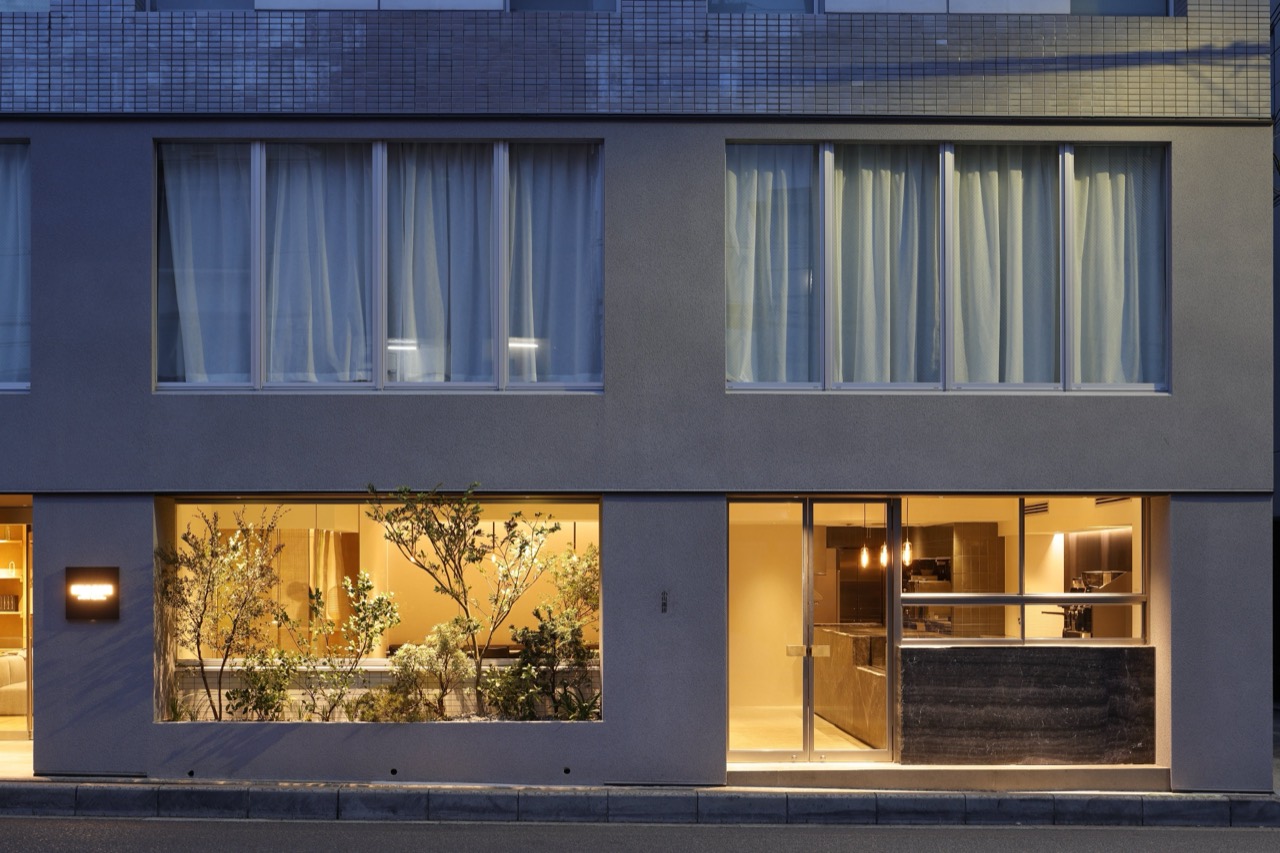
A 40-year-old lodging reopened with the same 18 roomsMUJI BASE KYOTO kiyomizu, opened May 20, 2026. A renovation of the old Amenity Hotel Kyoto, within walking distance of Kiyomizu-dera. ⓒ Ryohin Keikaku / PR TIMES
Daily Hotel
MUJI BASE KYOTO kiyomizu: same 18 rooms, twice the rate
2026.07.27
There was a budget lodging house that traded for more than 40 years at the foot of the hill below Kiyomizu-dera. Capsules and Japanese-style rooms with bunk beds sat side by side, and it sold at around 4,000 yen a person. Last May that building reopened with the same 18 rooms. This time from 20,600 yen a night. The shell is unchanged and the room count is unchanged. What changed is how many people go in one room, and that is all. It is the first urban lodging where a retail brand stood at the operating desk itself, and 26 days after it opened, Japan's lodging regulations changed wholesale.
1.On May 20, 2026, at 171 Kiyomizu 4-chome, Higashiyama ward, Kyoto. Amenity Hotel Kyoto, trading for over 40 years, reopened under the name MUJI BASE KYOTO kiyomizu. 18 rooms, from 20,600 yen per room a night. The operator is Ryohin Keikaku, the company that runs MUJI.
2.The pre-renovation rates for this building are still on booking platforms. Standard 8,750 yen a room, family room 11,070 yen a room. With two people that was 4,380 yen each. Room types were capsules, Japanese-style rooms with bunk beds, and plain Japanese-style rooms. Which is to say it was a lodging that split the same 18 rooms by head count and sold them that way.
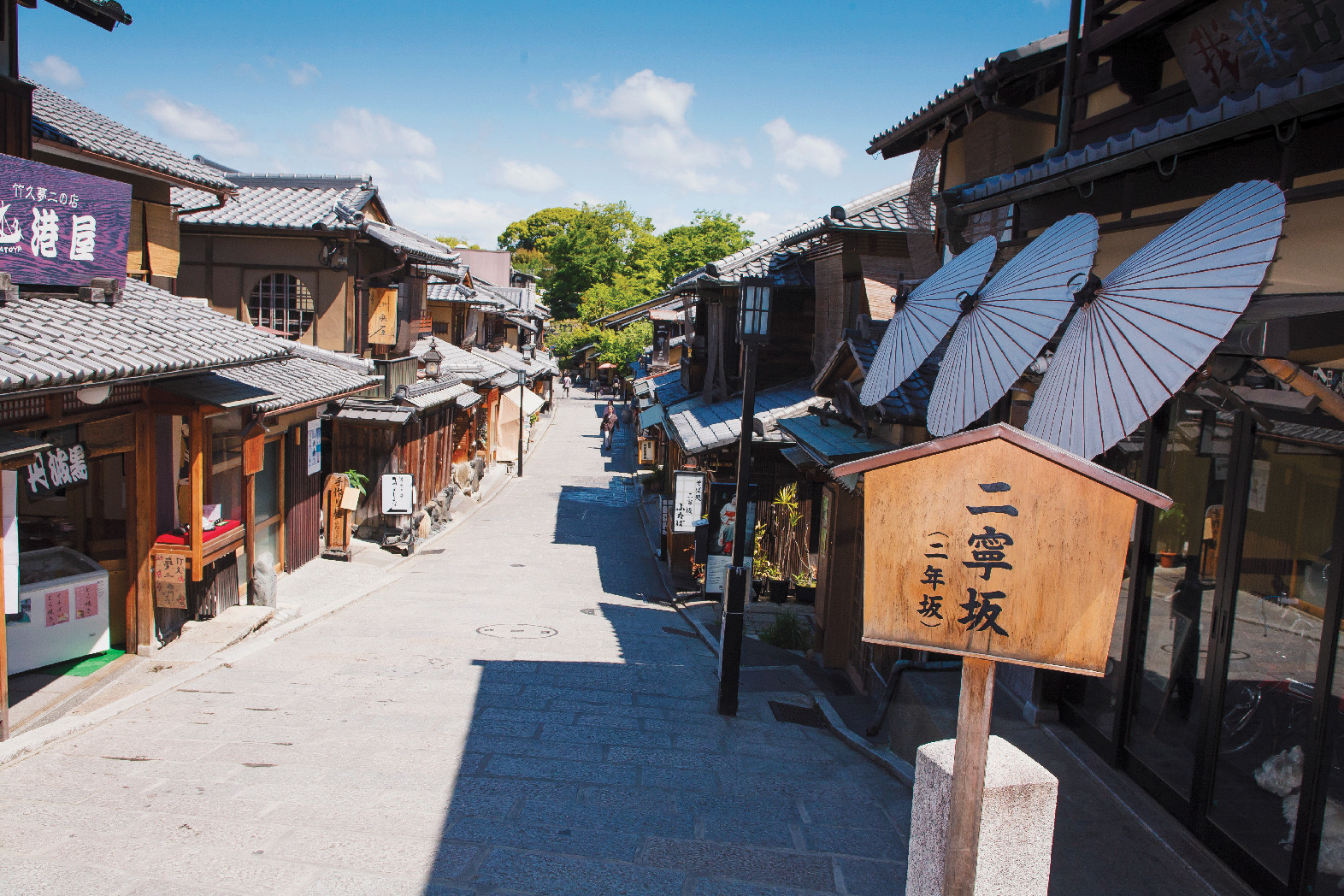
By day, one of the most crowded hills in the worldThe approach to Kiyomizu-dera. This lodging sits right beside the Kiyomizu-michi bus stop, where the hill begins. ⓒ Mapple
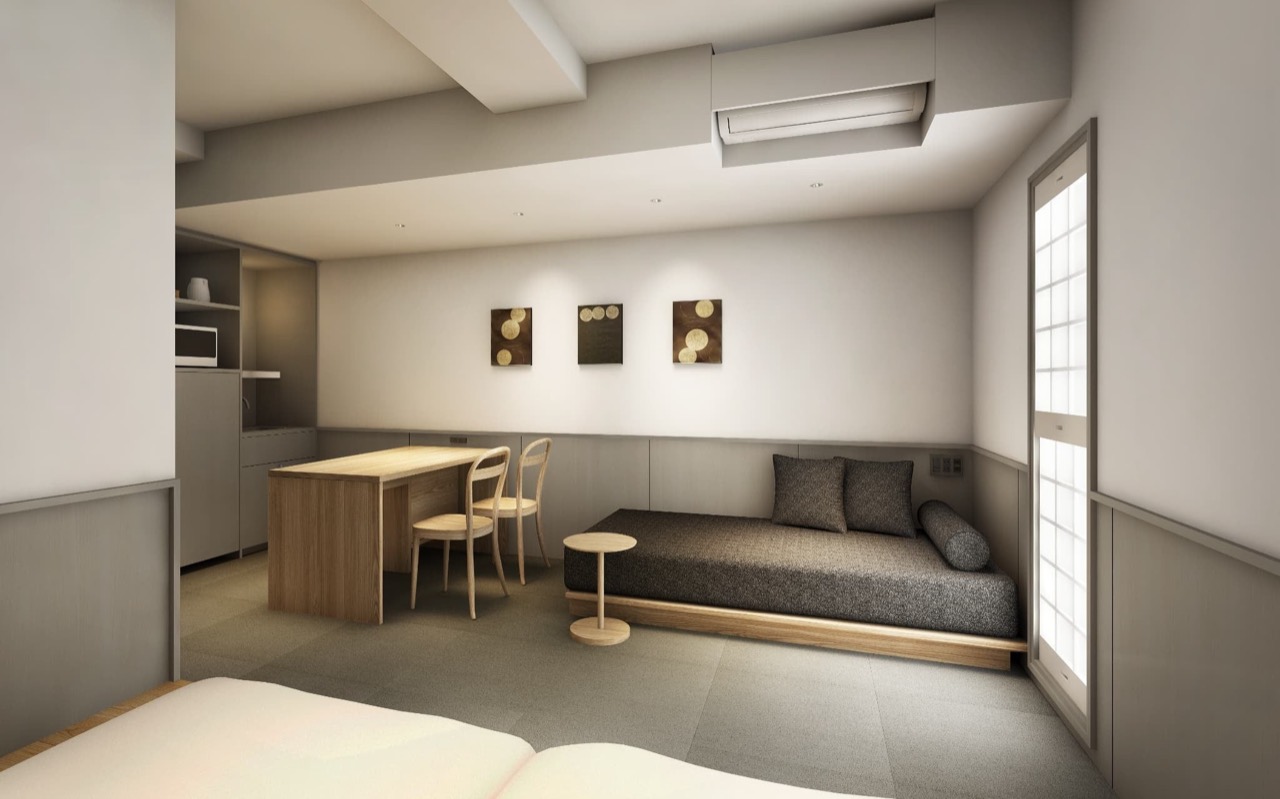
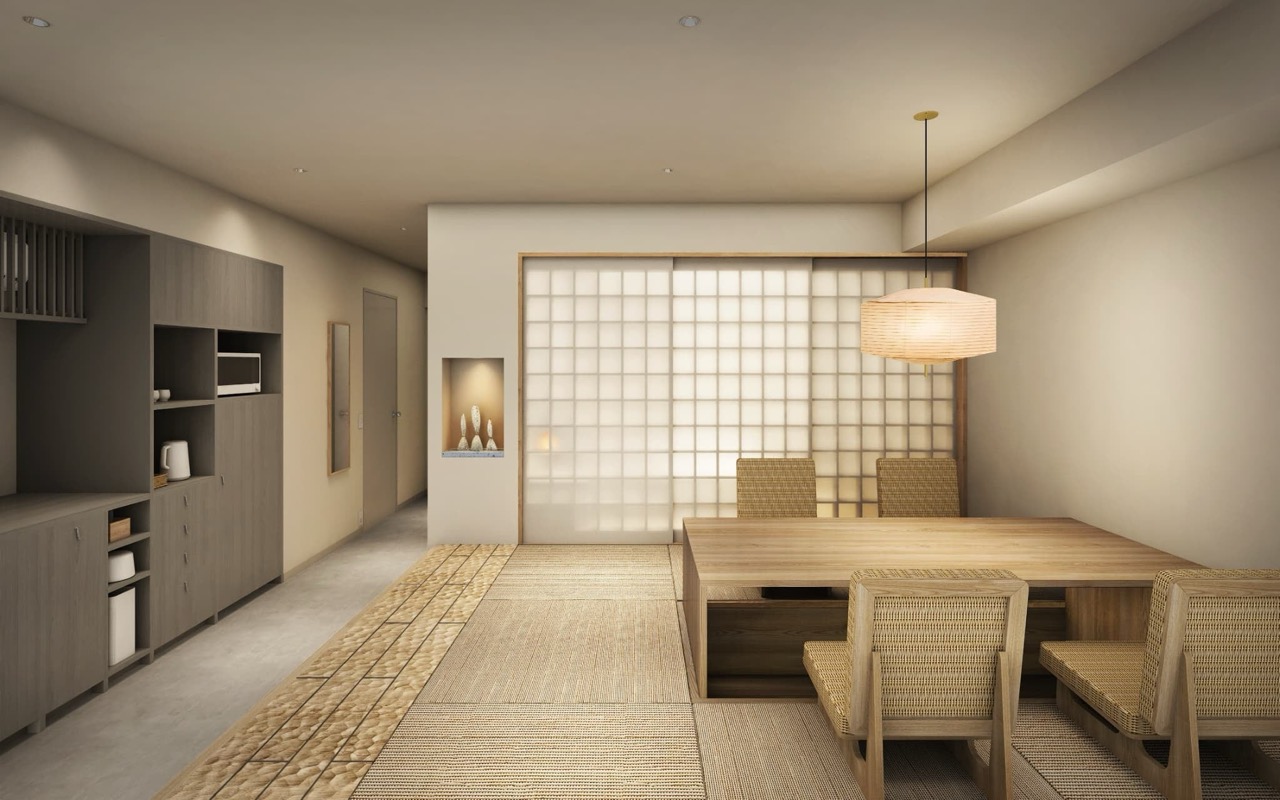
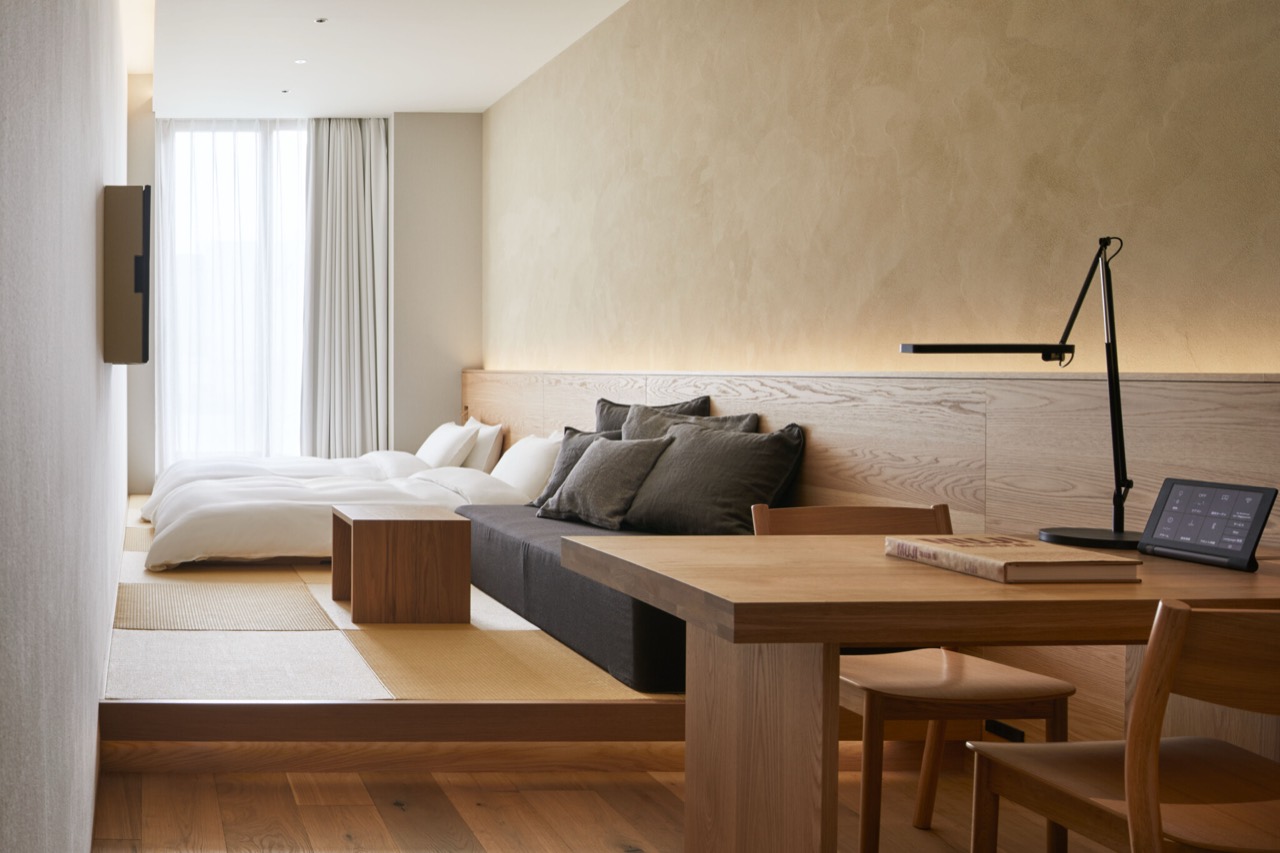
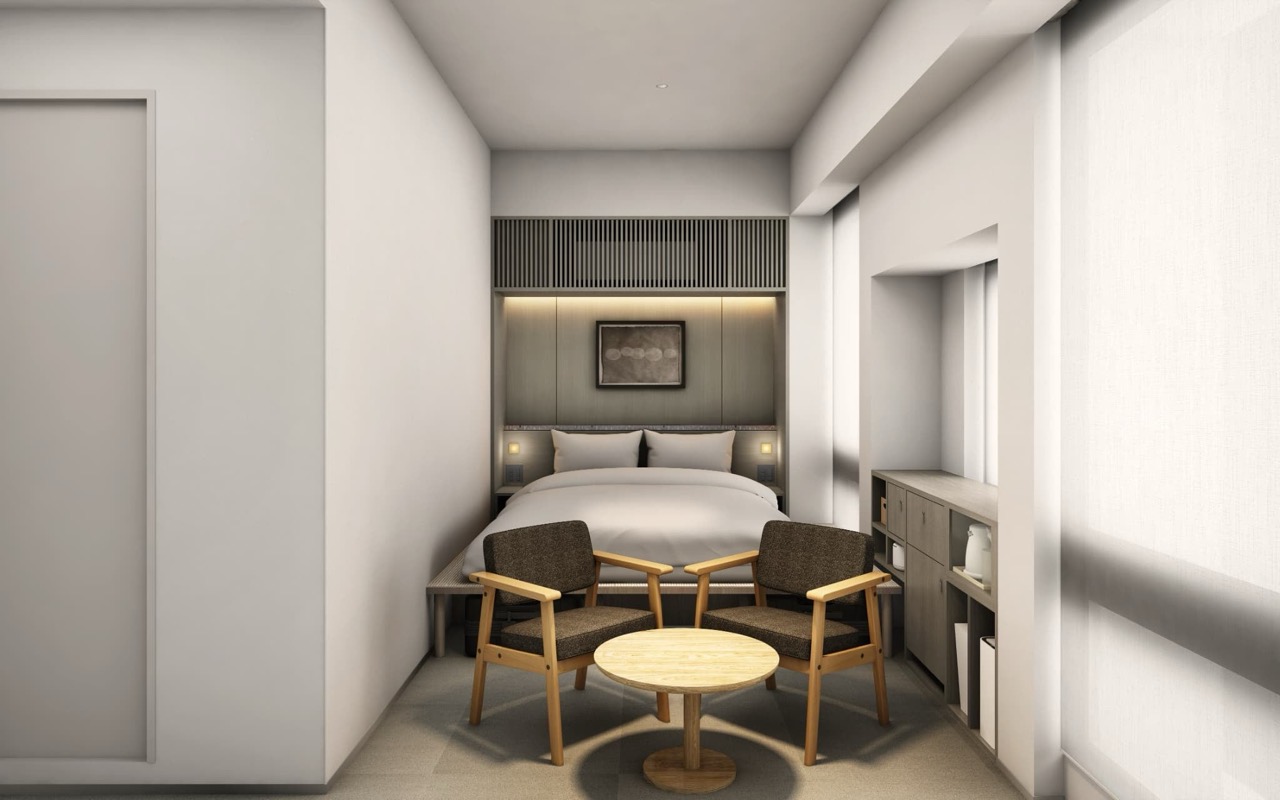
3.There are four room types now. Double at 18.1 to 18.8㎡, twin at 25.6㎡, twin with a bathtub at 29.8 to 30.9㎡, and a family room of 53㎡ holding four double beds. Producing that schedule of areas with the room count unchanged means the rooms were neither divided nor combined, only the occupancy was lowered. The walls were left alone. The bed layout and the price list were not.
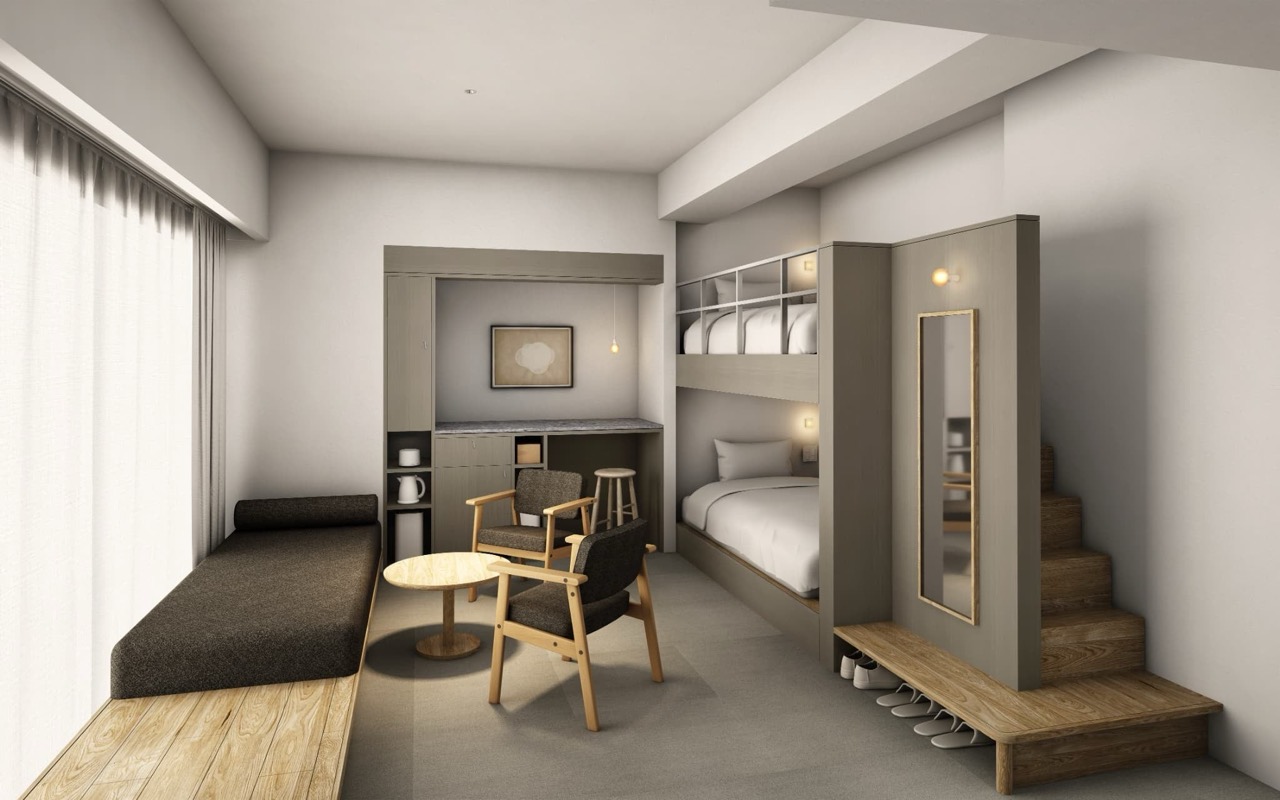
25.6㎡, up to three peopleThe twin is a bunk bed with a day bed. That same bunk bed was the basis for 4,380 yen a head before the renovation, and is now a component of a room at over 20,000 yen. ⓒ Ryohin Keikaku / MUJI STAY
4.The list of things put inside the rooms states the character of this lodging. Every room has a mini sink, a fridge, a kettle and tableware, and three types add a microwave. The second-floor utility room holds a washer and dryer (800 yen each, cashless only), a water purifier and an ice maker. Not the list for a hotel room, the list for a studio apartment with a kitchen.
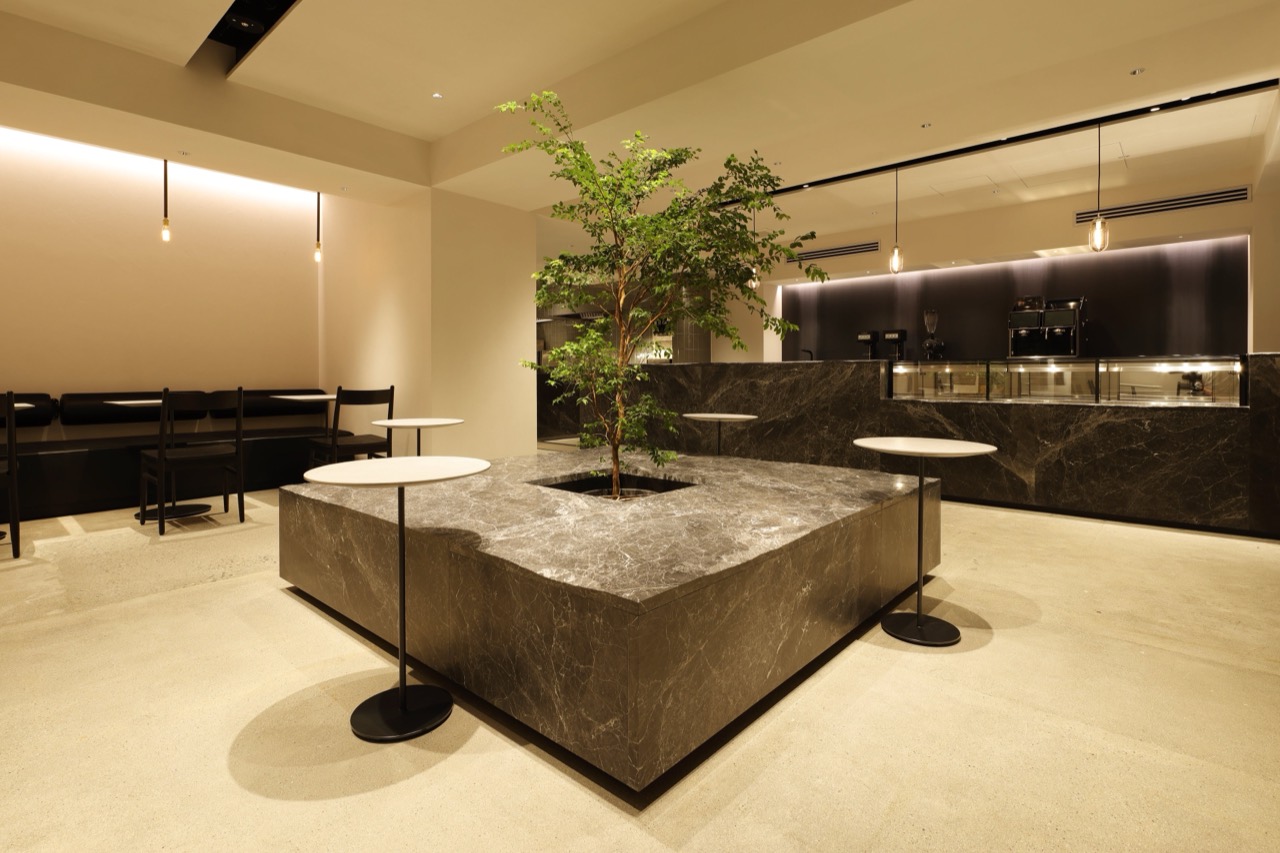
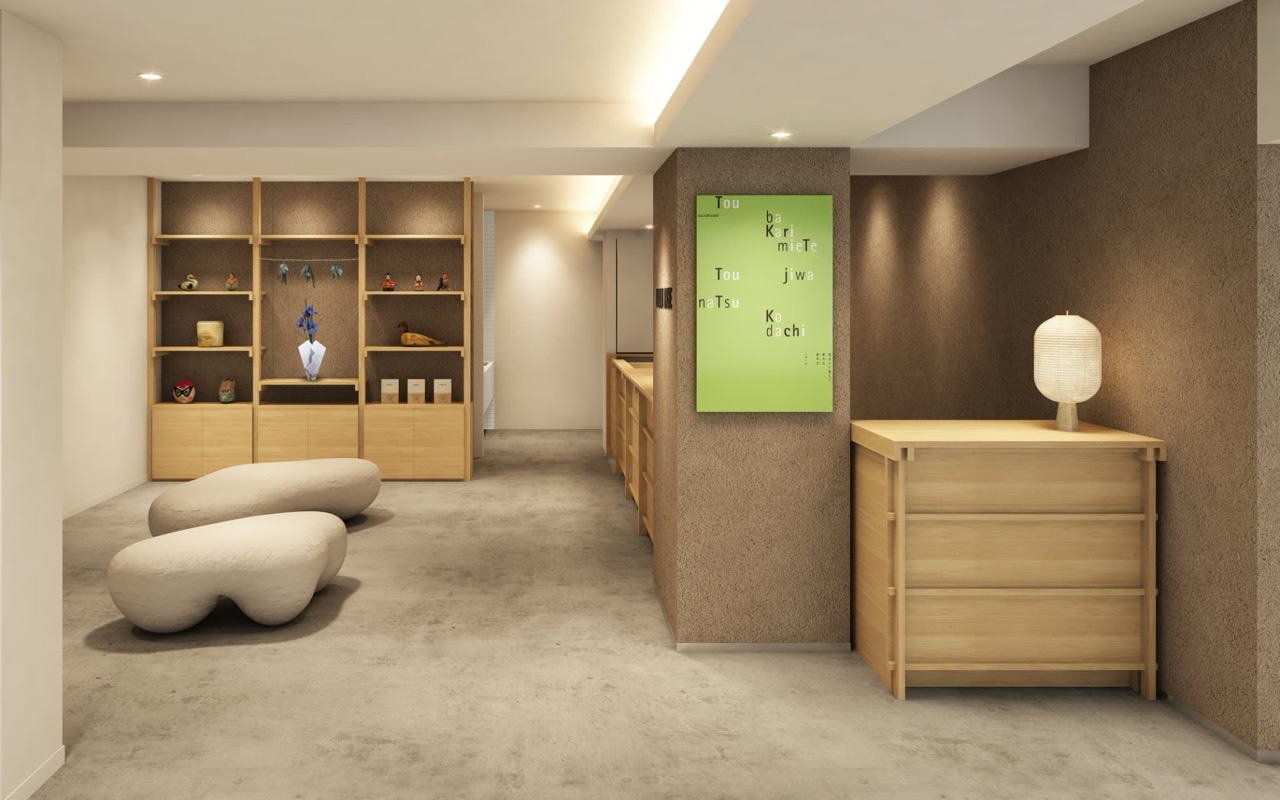
5.The ground floor was handed over whole. A new site of Ogawa Coffee, the Kyoto roaster founded in 1952, moved in, trading from 8 in the morning to 8 in the evening. When a coffee shop that opens at 8 sits inside the building, the smell of roasting climbs the stairs. Rather than making breakfast itself, the lodging buys the smell and the breakfast menu at once from a tenant.
The ground floor went to a tenantA new site of Ogawa Coffee, the Kyoto roaster founded in 1952. Trading 8:00 to 20:00, with a guests-only breakfast at 2,500 yen by prior reservation. ⓒ Ogawa Coffee
6.Operation and revenue from here. Lay the market baseline first. On figures from the Kyoto City Tourism Association, ADR at 117 major hotels in the city (18,759 rooms) was 31,296 yen in April 2026, the highest since the count began in 2014. Occupancy that month was 85.1%, down 4.8 percentage points year on year, and RevPAR was 26,633 yen, down 3.6%. A market where rate rises while occupancy falls.
7.Lay this lodging's numbers over it. Rates, occupancy and revenue below are estimates, not figures published by the operator. Taking the published floor of 20,600 yen with seasonal movement, put effective ADR at 24,000 yen and first-year occupancy at 80%, below the city average, and RevPAR is 19,200 yen. On 18 rooms that gives annual room revenue of about 126 million yen, around KRW 1.2 billion (assuming 100 yen equals KRW 950). One room carries 7 million yen a year.
What it means to double the rateThe same shell and the same room count, with only the per-room rate replaced. The market it entered, though, is one where rate rises while occupancy falls. The revenue figures are all estimates.
8.Convert it per area. Adding the published room areas by type gives about 450㎡ of rooms alone. Add corridors, stairs, common areas and the ground floor cafe and gross floor area comes to 800㎡, about 242 pyeong (estimated). Divide the room revenue above by that area and you get KRW 4.95 million per pyeong a year, KRW 410,000 a month. Roughly the band where small urban lodging can step into the same ring as a retail tenant.
29.8 to 30.9㎡, twin with a bathtubWithin the same 18 rooms, grades are spread by area and fittings. The difference in area across four types creates the range of rates. ⓒ Ryohin Keikaku / MUJI STAY
9.Every won earned outside the room carries its own price. A guests-only breakfast at 2,500 yen (prior reservation), a morning Kiyomizu walk leaving at 5:40 for 1,500 yen, late checkout at 11 for 2,200 yen a person, laundry and drying at 800 yen each. Put attachment at around 40% for breakfast and 10% for the tour and it comes to about 13 million yen a year, a little over 10% of room revenue (estimated). And the retail corner on the ground floor sells sunscreen, masks, socks, towels and suitcases.
10.People are kept to a minimum. Check-in runs on a self-service tablet at the front desk, reception from 15:00 to midnight, after which the entrance locks and opens by intercom. There is no curfew. Staffing for 18 rooms is estimated at six to eight including front desk and housekeeping, with labor at around 17% of revenue. On top comes the Kyoto city lodging tax. The March 2026 revision set it at 400 yen per person per night, so two people in one room means 800 yen of tax a night. Before the revision it was 200 yen.
How to make revenue outside the room without a kitchenBreakfast, the tour, late checkout and laundry all carry their own price. F&B goes to the ground floor tenant, and the brand sells on the ground floor what it already sold anyway.
11.Tens of millions of people worldwide have already put this brand's furniture and storage in their homes. For them this room is not a new experience but the finished version of something they already know. A store imitates a room in order to sell things, while here the room charges a rate and works as a showroom besides. The retail corner on the ground floor is the device that makes that loop visible.
From 21:00 to midnight, a lounge with free teaThe ground floor cafe turns into a guests-only lounge at night. A composition that uses the same area twice by time of day. ⓒ Ryohin Keikaku / MUJI STAY
12.The second thing is the time of day. The hours when the person ahead of you sets your walking pace on the approach are daytime hours, and the programs this lodging sells leave at 5:40 in the morning. Kintsugi, an old teahouse, a morning bathhouse, nine local experiences bound into a map and put in the room. The arithmetic is that the busier the day gets, the more the early morning is worth, and only someone living within walking distance can run it.
53㎡, four double bedsThe largest room is a family room for four. Unlike the other rooms, where occupancy came down, here the area takes the people. ⓒ Liniere
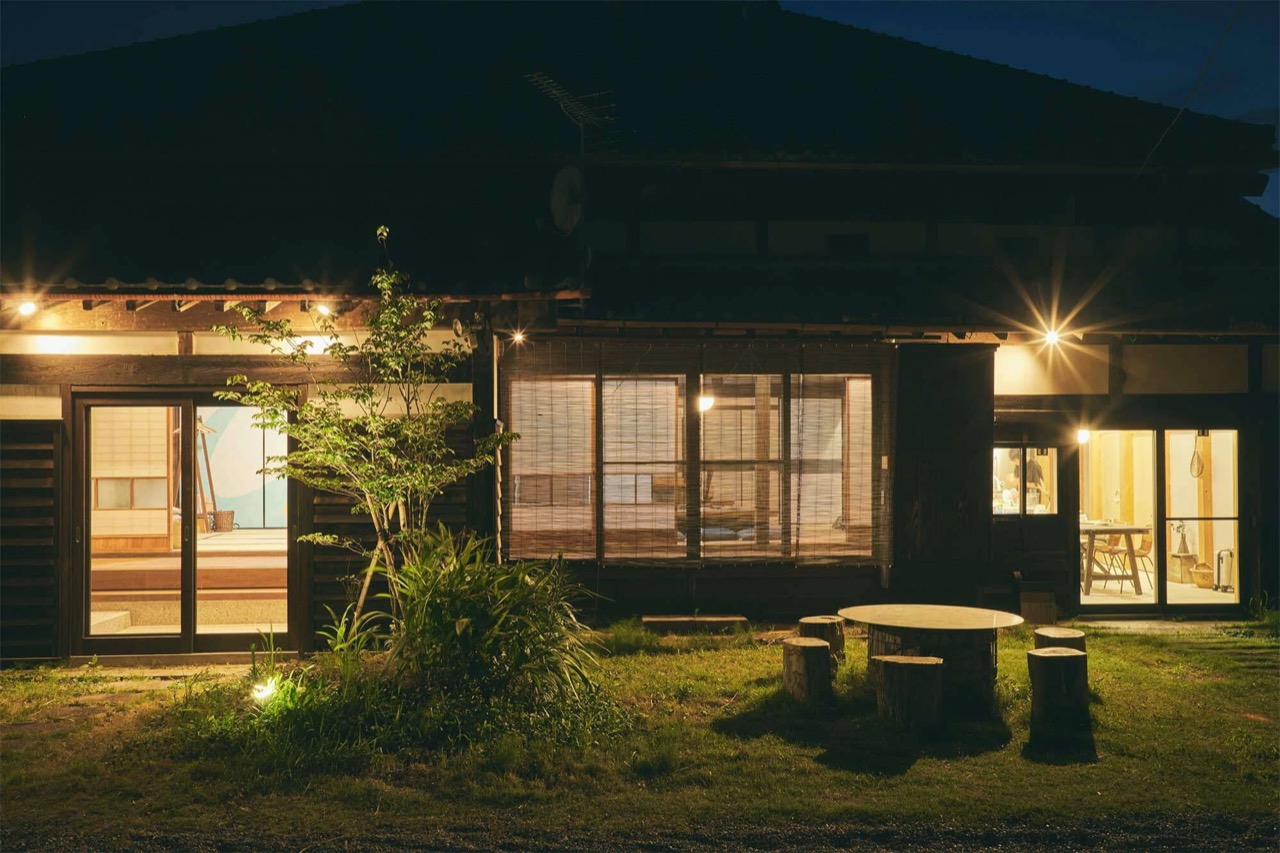
13.Look at the record and this is the third stage. The first was a 79-room hotel in Ginza, Tokyo that opened in April 2019, where the brand handled only the concept and interior supervision while planning, design, operation and management went to the specialist operator UDS. The second was the series of whole-house rentals in the regions, starting with a 100-year-old folk house in Kamogawa, Chiba in August 2023 (gross floor area 156㎡, up to five people, 55,000 yen for two nights), reaching four sites through Teshima and Oikawa. This Kyoto site is the fifth and the first urban, room-by-room one, and the first where the brand company put its own name down as operator.
The first was one country folk houseKamogawa, Chiba, August 2023, a 100-year-old folk house of 156㎡ let whole. 55,000 yen for two nights. ⓒ Time OutSomeone else ran the 79 rooms in GinzaOpened April 2019. The brand handled concept and interior supervision, while a specialist operator took operation and management. This is where Kyoto parts from it. ⓒ UDS
14.The timing is the turn. On June 15, 2026, 26 days after opening, the revised Inns and Hotels Act took effect. The minimum room count, ten rooms for hotel operations and five for inns, was abolished, so operations became possible from one room, and a front desk is no longer required on condition of staff reaching the site within about ten minutes in an incident and identity verification by video. The minimum floor area for one room is 7㎡ (9㎡ with a bed). The 39 sites due to open in Kyoto in 2026 average 12 rooms. The whole market tilted toward smaller and unstaffed.
A ground floor that opens at 8Guest breakfast and neighborhood customers are taken in the same room. The cheapest way for an 18-room lodging to secure morning revenue. ⓒ Ogawa Coffee
15.Within that current, the direction this lodging chose is close to the opposite. Check-in went to a tablet, and yet the program that actually takes money is a person walking out in front at dawn. The risk sits in the same place. With 18 rooms, one empty room swings occupancy by 5.6 percentage points, and Kyoto is in a phase where occupancy is falling. The decision to double the rate stays a right decision only while occupancy holds.
The finished version of something already knownFor someone with the same furniture at home, this room is not a new experience. Bed, storage and lighting are the same combination seen on the store display. ⓒ Ryohin Keikaku / MUJI STAY
Summary
It comes to this. A 40-year-old budget lodging, without a single wall touched and with the room count left at 18, lowered only the number of people per room and swapped a 4,380 yen per person room for a 20,600 yen per room one. Breakfast, the morning walk and the laundry all carry their own price, and F&B went to the ground floor tenant. If one number survives, it is 7 million yen a year per room, KRW 4.95 million per pyeong a year (estimated). Anyone attempting the same operation in Korea runs first into the register and the drawings rather than the price list. Cutting rooms in a 40-year-old building to raise the rate is not in itself a filing matter, but if the building's designated use is not already lodging, the change of use runs first into parking count calculations and septic tank capacity, and once major repair is involved, fire safety and evacuation rules apply at current standards retroactively. Unlike Japan, which has now removed the minimum room count and conditionally released the front desk requirement, the bottleneck for small lodging in Korea still sits on the area and equipment side.