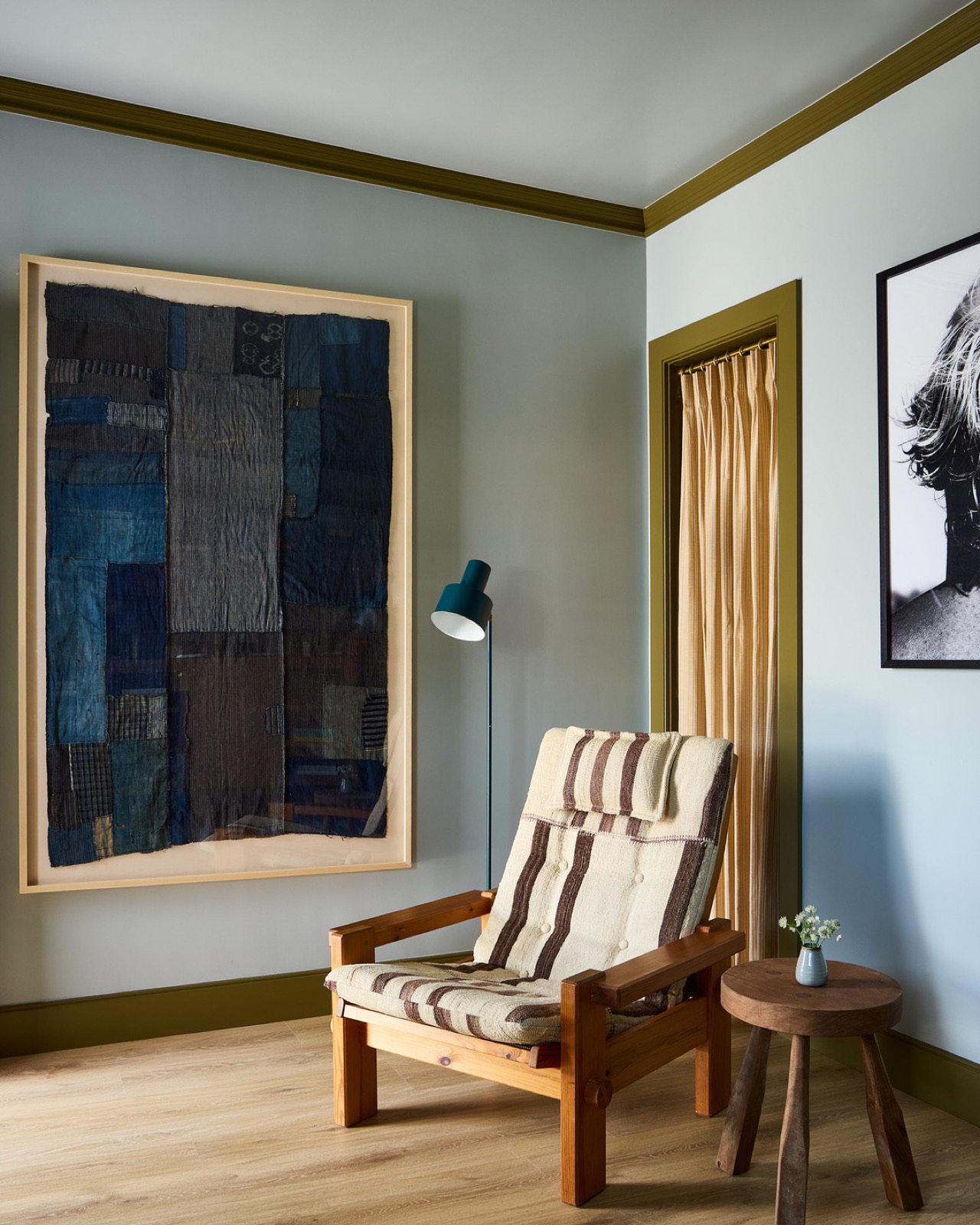
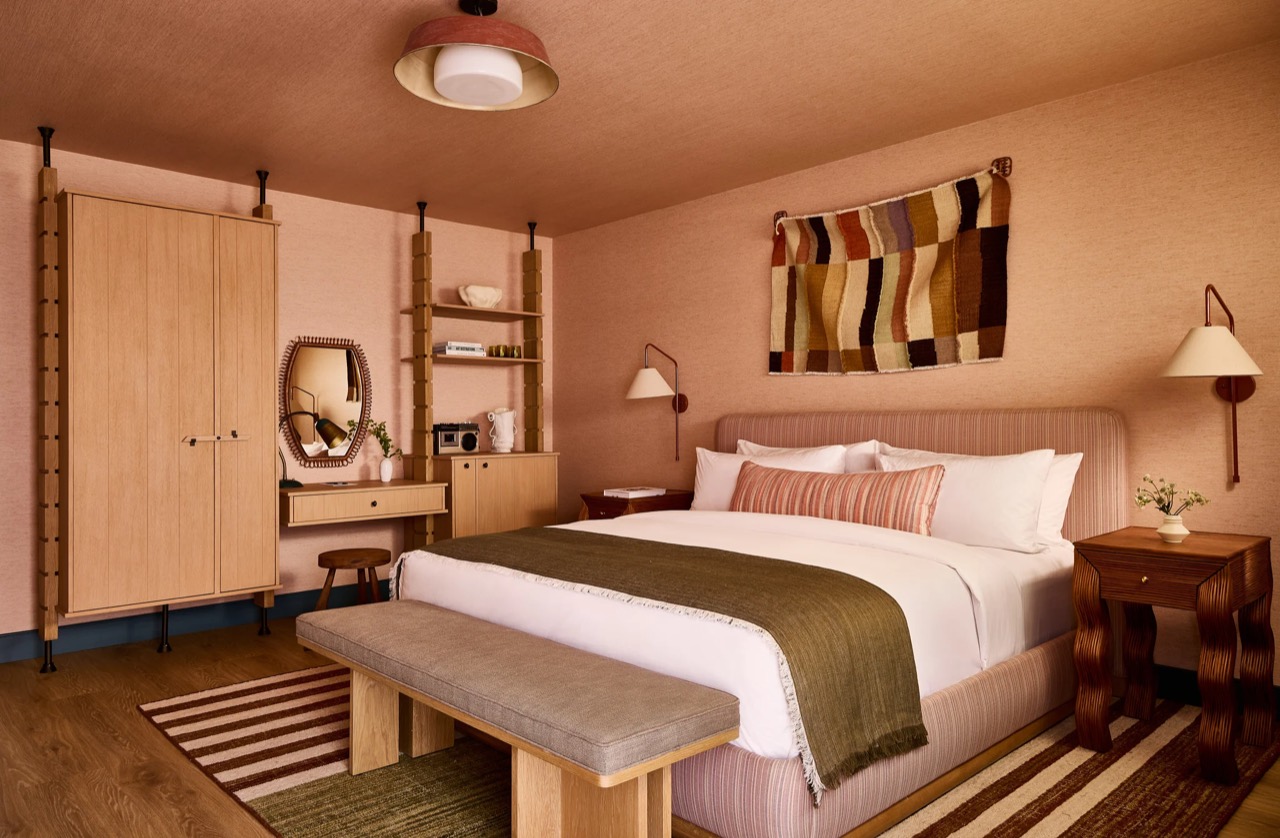
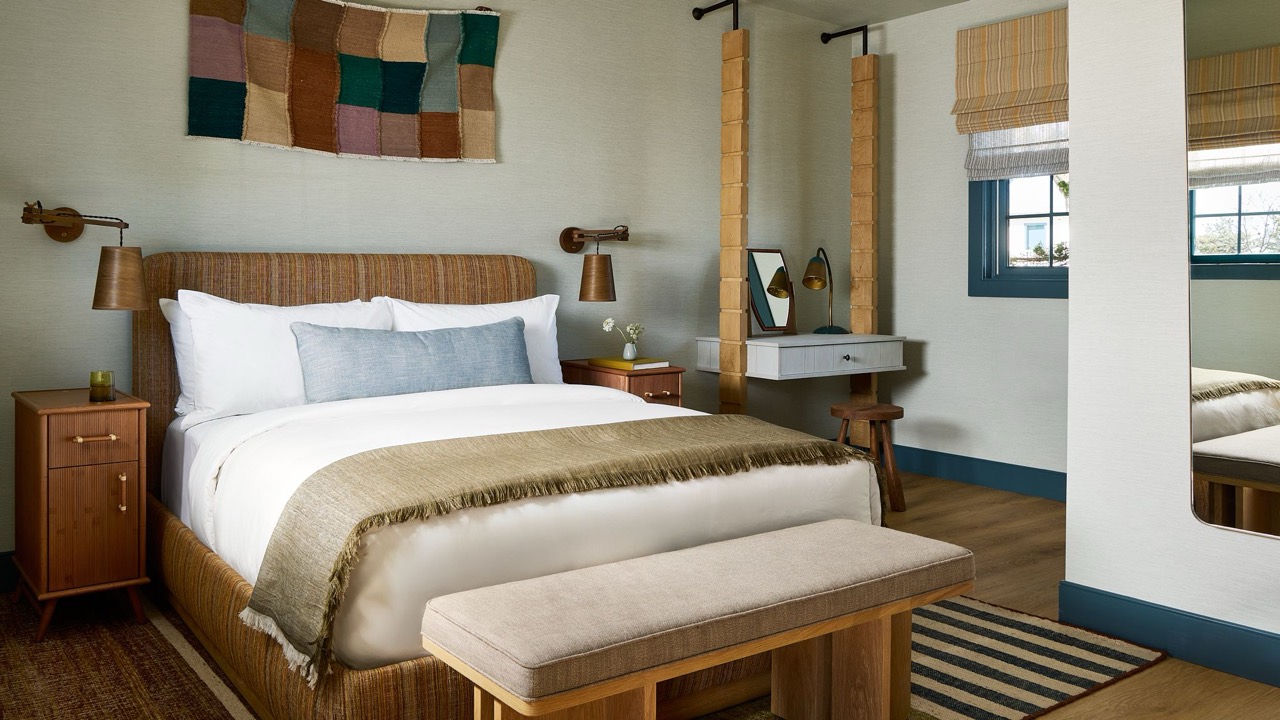
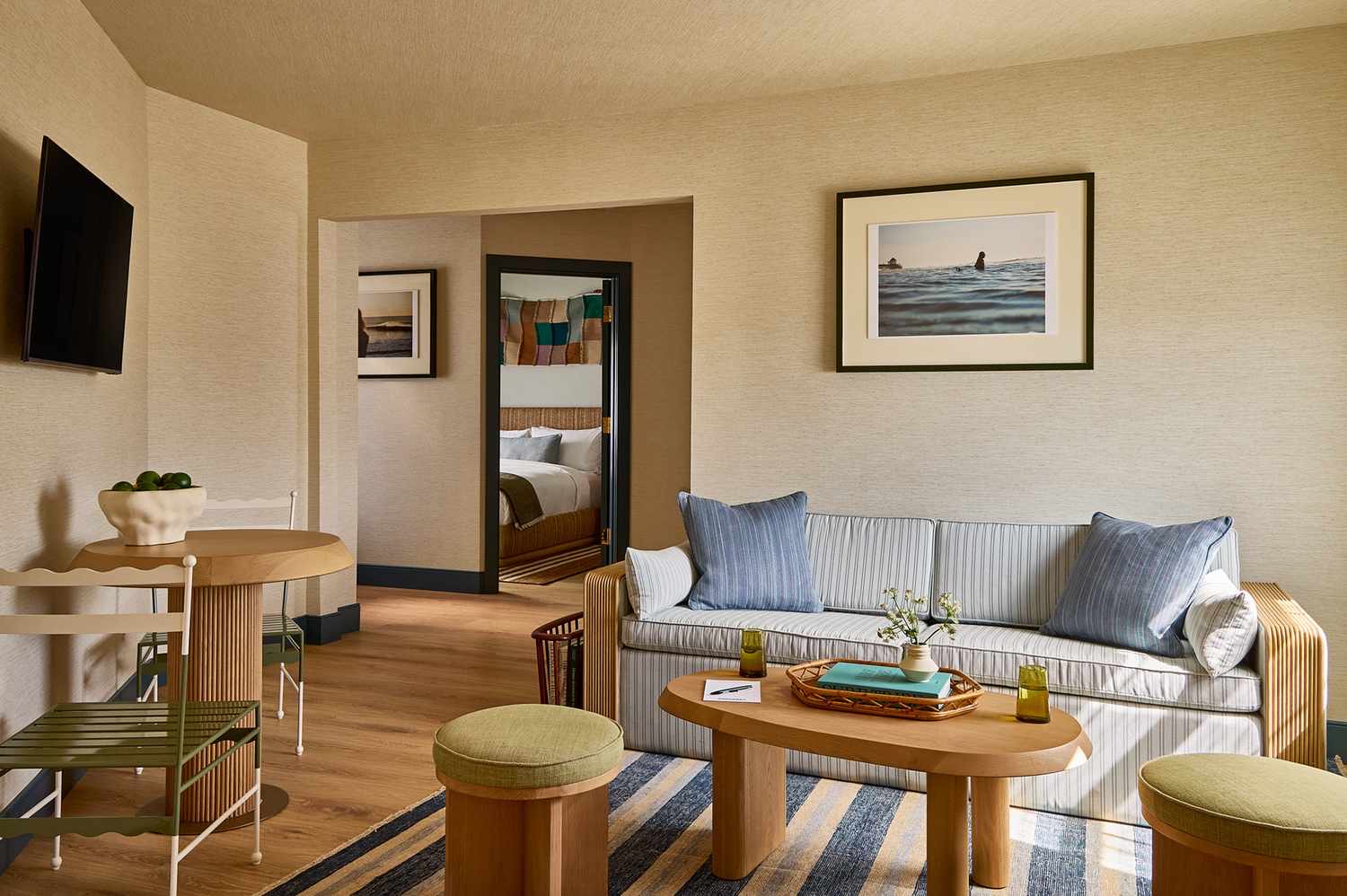
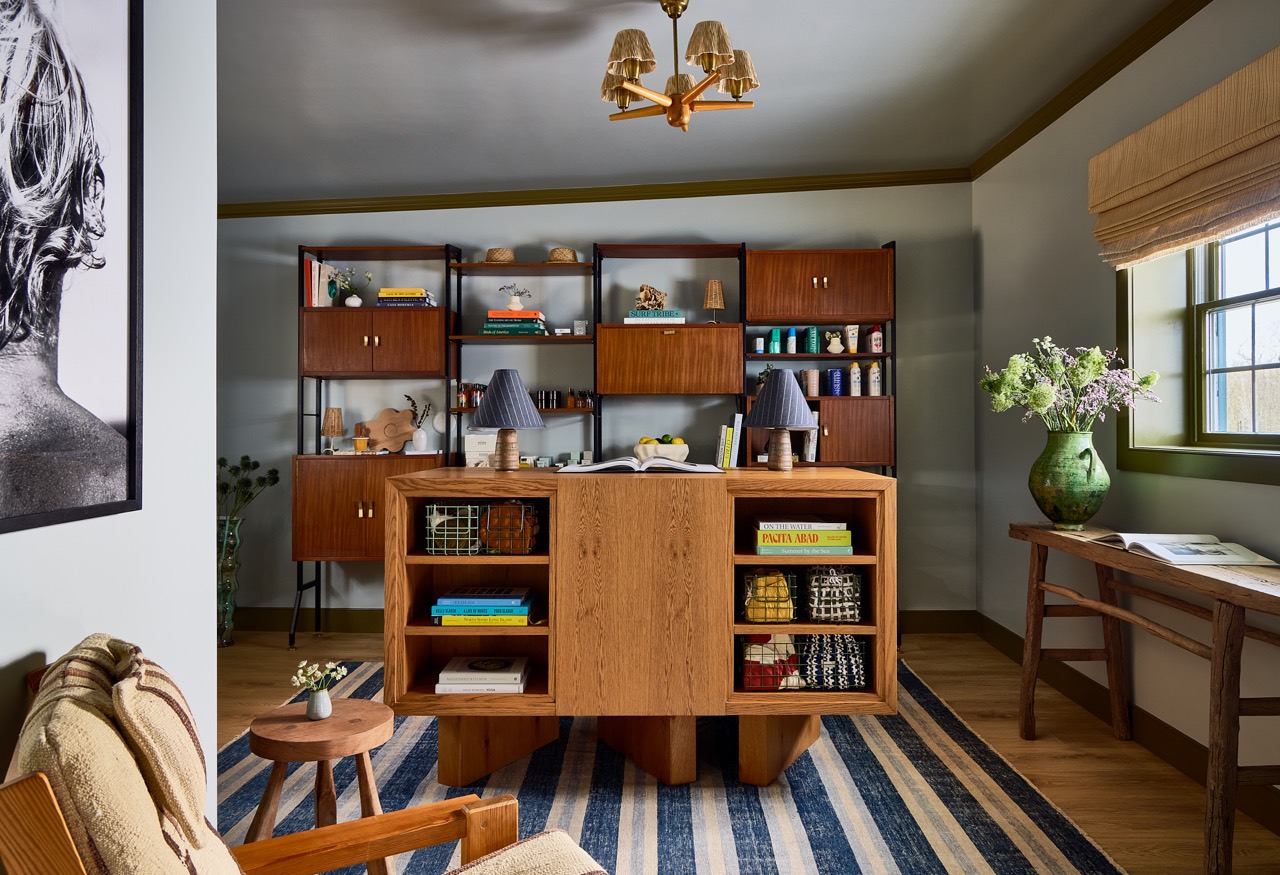
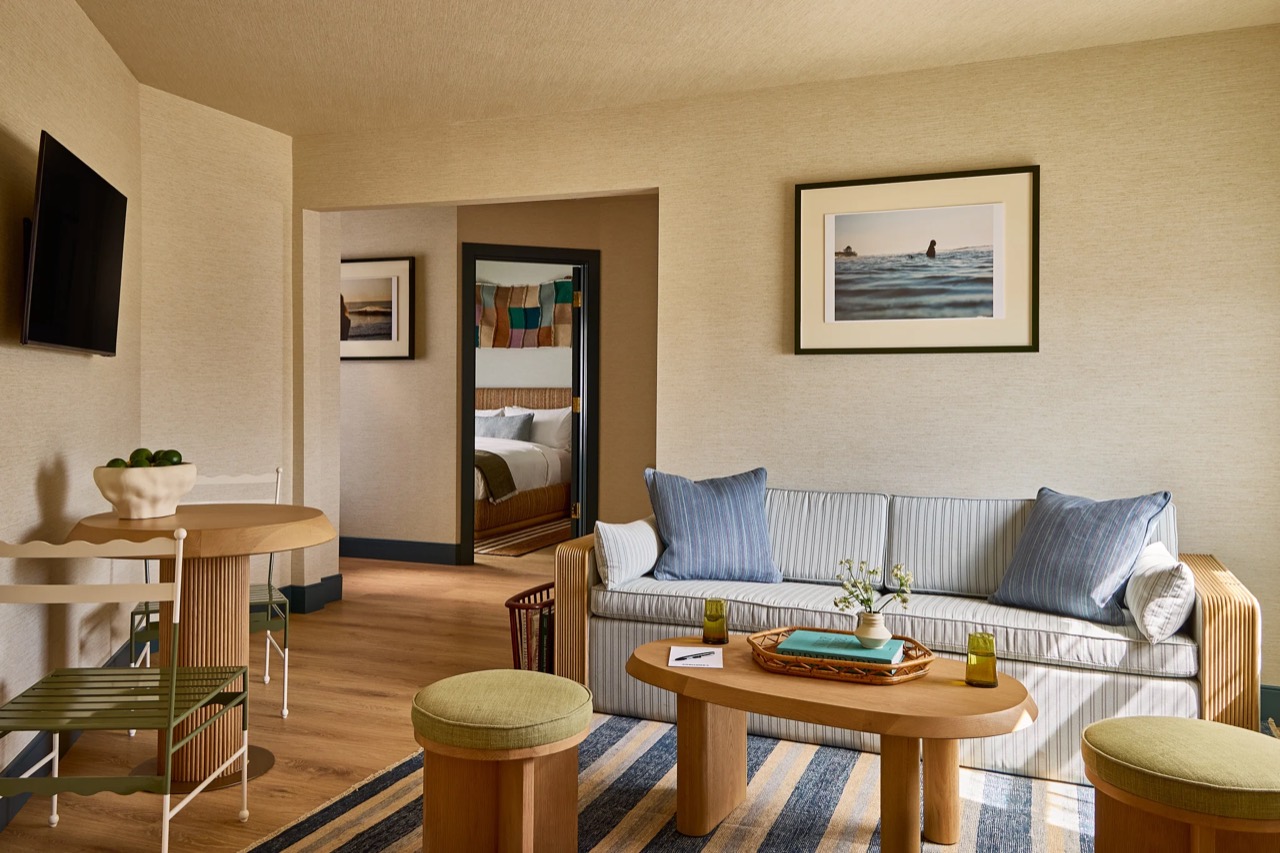
A lobby built like a surf clubInteriors by Ward + Gray, drawing color and material from 1960s coastal living. ⓒHotel Corduroy
Daily Hotel
1983년 모텔을 29실로 고쳤다, 그런데 1년의 절반은 문을 닫는다
2026.08.08
Three hours east of Manhattan, where Long Island runs out, a 29-room hotel opened in Montauk in May. Rooms start at $295 and climb to $995 at the height of summer. And nobody comes here in January.
1.Hotel Corduroy opened on May 8 at 540 West Lake Drive in Montauk, New York, with 29 rooms. An owner bought the 1983 motel known as Sunset Montauk and swapped out the name along with everything inside. Blue Flag Capital owns it, Collared Martin Hospitality runs it.
2.Montauk sits at the eastern tip of Long Island, the farthest corner of the Hamptons summer-house belt. Crowds arrive for three months and the rest of the year goes quiet. Short-term rentals here average $41,766 in revenue during August and $1,868 in January. Twenty-two times over.
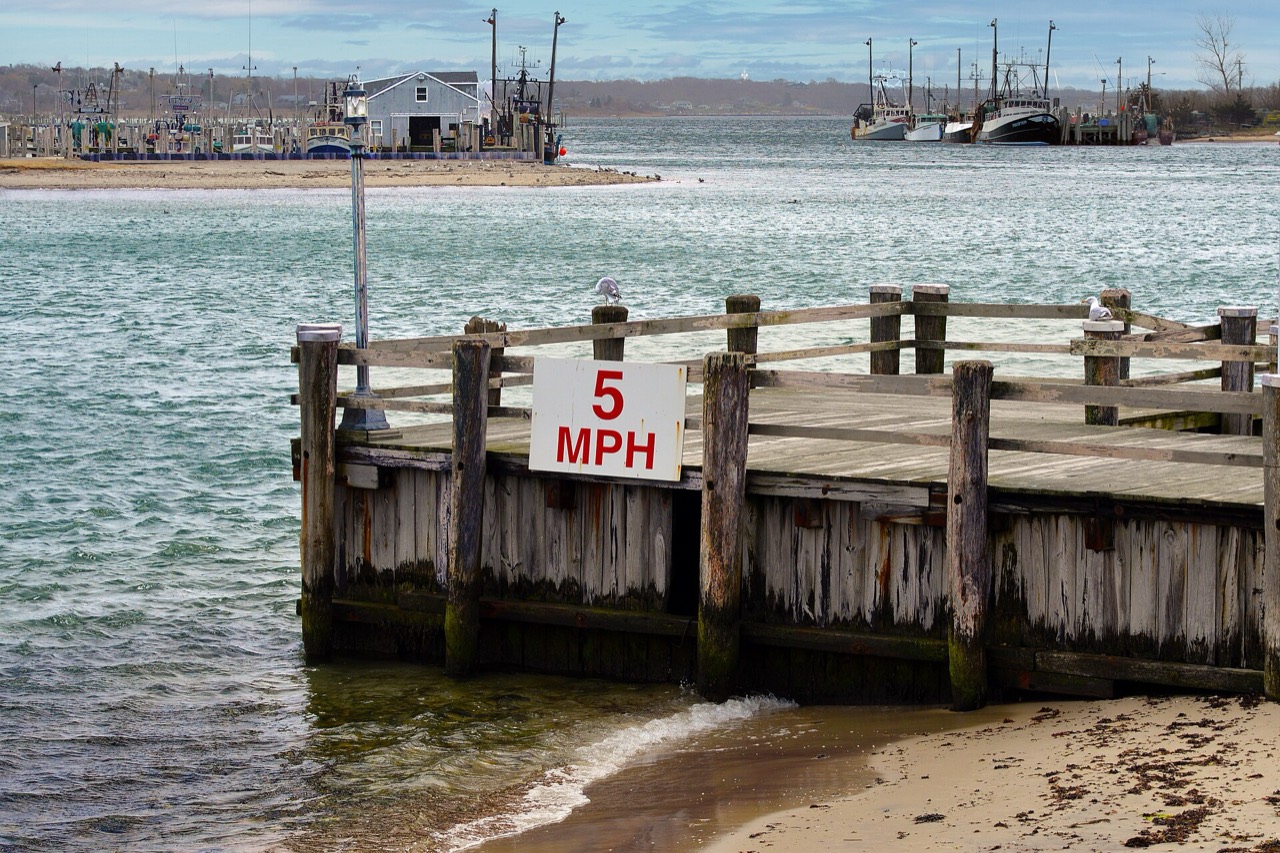
The hotel sits on this waterMontauk Inlet. West Lake Drive faces the lake, not the ocean. ⓒDon Ramey Logan / Wikimedia Commons
3.Workshop/APD handled the architecture and left all three 1983 buildings standing. The firm says it kept the massing and character, reworking only circulation, scale and the order in which guests move. Rooms open straight onto outdoor walkways in the standard American motel arrangement, which is why the lobby is small and the corridors are short.
The bay sizes date from 1983Room width and depth were fixed in the motel years. Those dimensions set the floor of the rate range. ⓒHotel Corduroy / Travel + Leisure
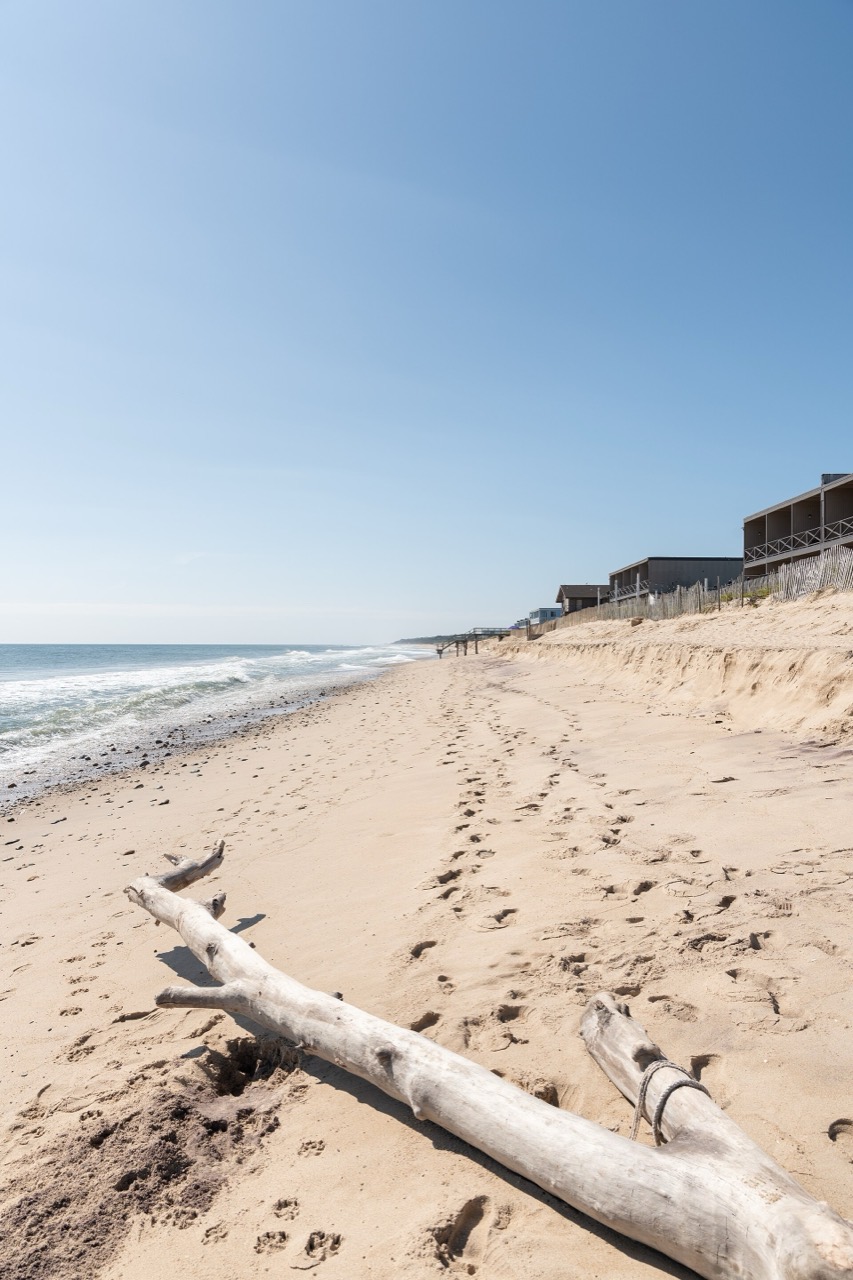
4.This layout already holds what a new build cannot buy: a courtyard between the three buildings, a private exterior door for every room, generous parking, and a beach 100 yards away on foot. The hotel put fire pits on the lawn and lined up a summer of retail pop-ups and brand events. What sells here is the space between the rooms, not inside them.
100 yards on footSouth Edison Beach. Guests get a private stretch plus bikes, beach chairs and towels at no charge. ⓒWikimedia Commons
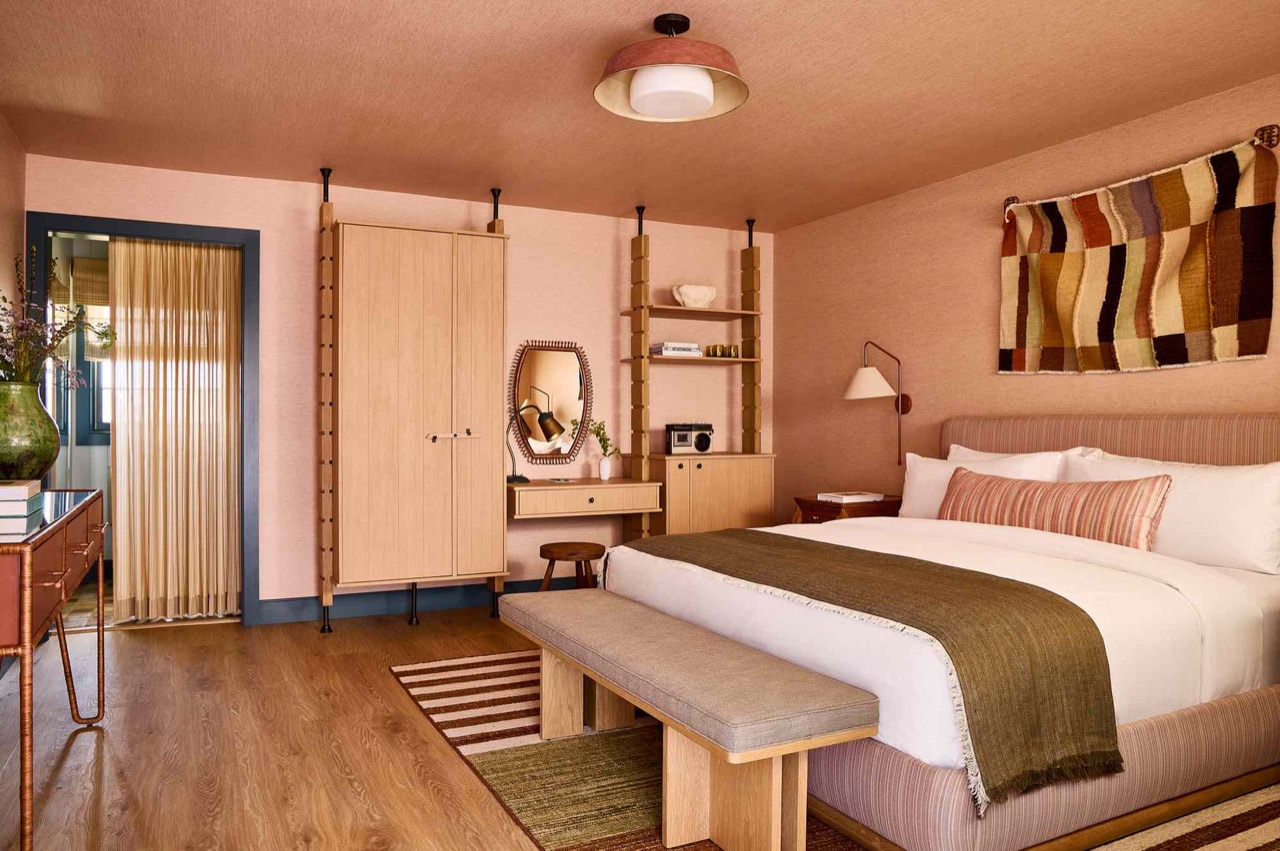
5.Walls come wrapped in grasscloth, furniture in rattan. Lighting borrows its shapes from boats, and a cassette player sits beside a Bluetooth speaker at the bedside. Around four in the afternoon the sea breeze crosses the courtyard, salt catches in the screens, and that briny damp settles into the grass fibre and cane. Neither material handles moisture well. A hotel that sells four months and shuts can live with that. One running year-round would be replacing those finishes inside three years.
Sounder Ocean KingGrasscloth on the walls, rattan on the furniture. Not a combination that shrugs off humidity. ⓒHotel Corduroy
6.Every revenue and staffing figure from here on is an assumption made in this article rather than a company disclosure. Three numbers are public: 29 rooms, a $295 floor, a $995 peak. Short-term rentals in Montauk average $813 a night against a New York State average of $381, so the effective summer rate here should land near $900.
Eight months earned in fourA seasonal hotel lives on 75 summer days of occupancy, not on an annual figure.
7.That works out to roughly 117 million won per key, three or four times what a Korean three-star produces. A 130,000-won rate at 78% occupancy stops a room somewhere near 37 million won a year. The Montauk money, though, has to arrive inside 165 days. Divide by 365 and RevPAR drops to $222, count only open days and it rises to $491. The same hotel scores twice as well depending on the divisor.
Beacon QueenThe smallest of the three collections. This is where the $295 floor comes from. ⓒMatt Kisiday / Condé Nast Traveler
8.Staffing works nothing like a year-round property. Summer needs roughly 25 people across front desk, housekeeping, bar and retail to keep 29 rooms moving, and by November that number approaches zero. The real cost of a seasonal hotel is not payroll but hiring and training a new crew every year, and in a resort town with Montauk housing prices, finding beds for those workers lands on the employer too.
A living room instead of a corridorIndoor common space the motel never had. Summer evenings stretch out here. ⓒHotel Corduroy / Travel + Leisure
9.So 29 rooms cannot carry this business alone. Load a general manager, revenue management, accounting, maintenance and marketing onto 29 keys and the per-room burden stops working. Blue Flag Capital answered by clustering assets in one region. On the East End alone it holds Sunset Montauk and Haven Montauk in Montauk, the Greenporter on the North Fork, Oyster Estate in Greenport, and Baron's Cove in Sag Harbor.
A satellite does not stand aloneA small hotel works when a large one already sits in the same region.
10.The numbers show the structure. Baron's Cove in Sag Harbor was bought for $66.5 million and is being rebuilt as the 67-room Faraway Sag Harbor, with another $54 million borrowed for the work. Call it roughly $1.8 million a key. The 29-room property kept three buildings and changed only the interiors, so its cost per key lands nowhere near that.
11.A star-rated hotel would earn its non-room revenue here from ballrooms, weddings and buffets. There are no such spaces in 29 rooms. Instead a corner of the lobby sells Faherty snacks, sun care and apparel, and the same brand supplies staff uniforms. Four months of lawn pop-ups and collaborations stand in for F&B, and from the brand side the deal amounts to renting 29 rooms and a courtyard in peak-season Montauk outright.
A retail counter where the ballroom would beLobby and shop share one room. This counter and the lawn events replace a star hotel's non-room revenue. ⓒMatt Kisiday / Galerie Magazine
12.So what does $995 buy. Location and time. Two summer weekend nights three hours from Manhattan cost $995, while renting a whole house here that same weekend runs $1,638 a night. Montauk's price tag, scaled down to a single room, found its place between the two.
Drifter 2BR SuiteKnock two motel rooms together and you have a suite. A way to lift the ceiling of the rate range without building anything. ⓒHotel Corduroy
13.This is not Blue Flag Capital's first run at the model. It has worked the same shape under the Faraway brand on Martha's Vineyard and Nantucket, both islands that fill only in summer. Buy a small hotel in a seasonal resort cheap, put a brand on it, tie it into the regional cluster. The company has done this before.
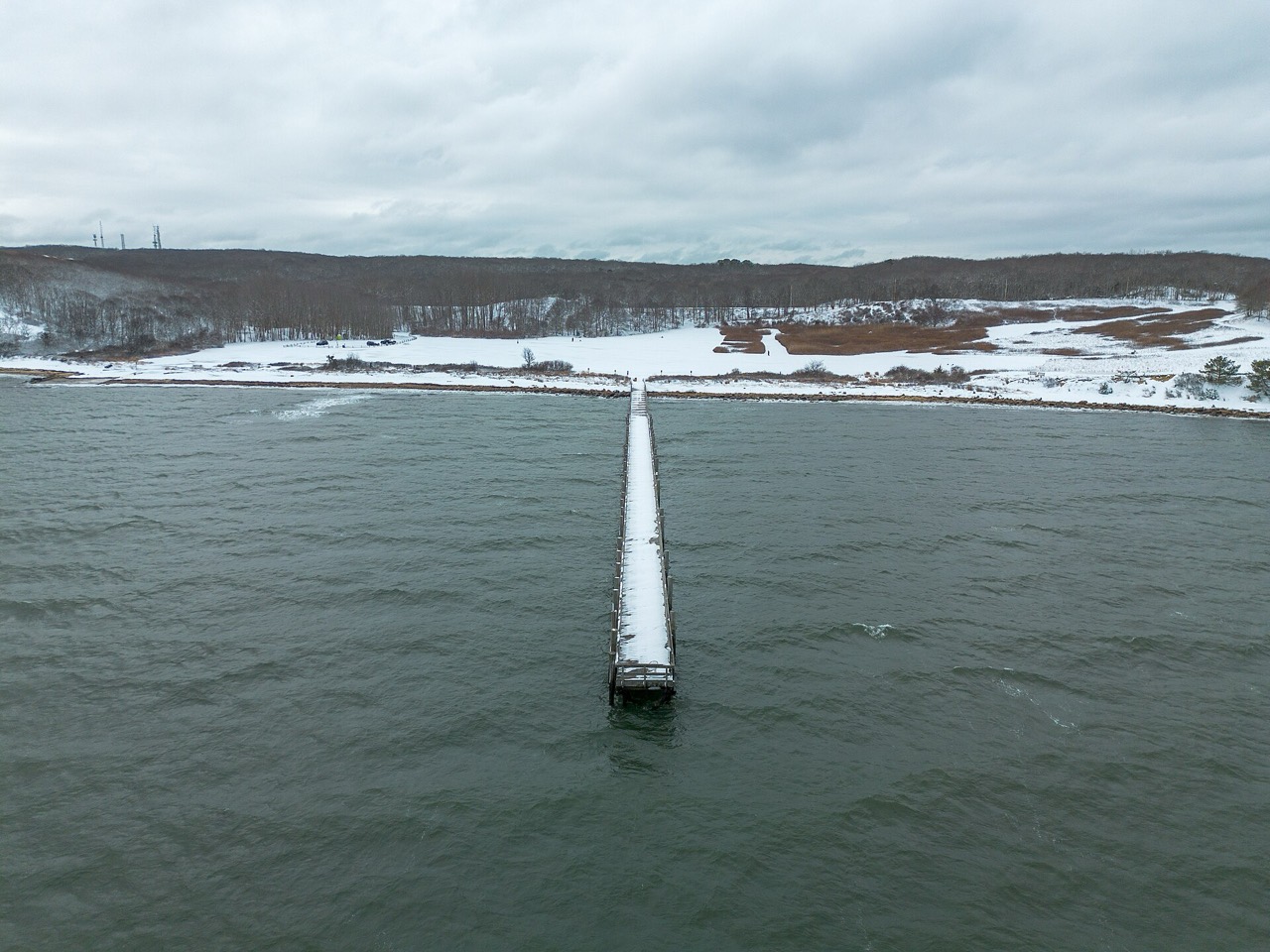
The North Fork and the East EndNavy Beach pier. Five of the company's properties sit within a 90-minute drive of one another. ⓒWikimedia Commons
14.The weakness sits in the same place. Cluster five properties in one region and the overhead gets cheap while the risk piles up. A bad East End summer is bad for all five at once, and a single hurricane erasing August takes half the year with it. Which is likely why the company opens a 90-room mountain hotel in Teton Village, Wyoming this August. Attach a market that fills in winter and the seasons run opposite each other.
Summary
Three motel buildings from 1983 were left standing, the interiors were rebuilt, and a 29-room hotel opened in May. It charges $995 across four summer months and effectively shuts for winter, and each key produces around 117 million won a year, three or four times a Korean three-star. What makes that work sits in the portfolio rather than the hotel. The same company holds five properties within a 90-minute drive, and one 67-room asset carries the organization, which lets 29 rooms operate as a satellite. Anyone drawing the same picture in Korea hits turnover first, not the rooms. Aging motels are already being converted to foreign overnight guests, some doubling their rate, but that switch also throws away the two or three daily turns of hourly rental revenue. Then come change-of-use under the Building Act, recalculated parking counts, fire safety standards and septic capacity, and the required facilities split again depending on whether the property stays a lodging business under the Public Health Control Act or registers as a hotel under the Tourism Promotion Act. The paperwork costs more than the rooms.