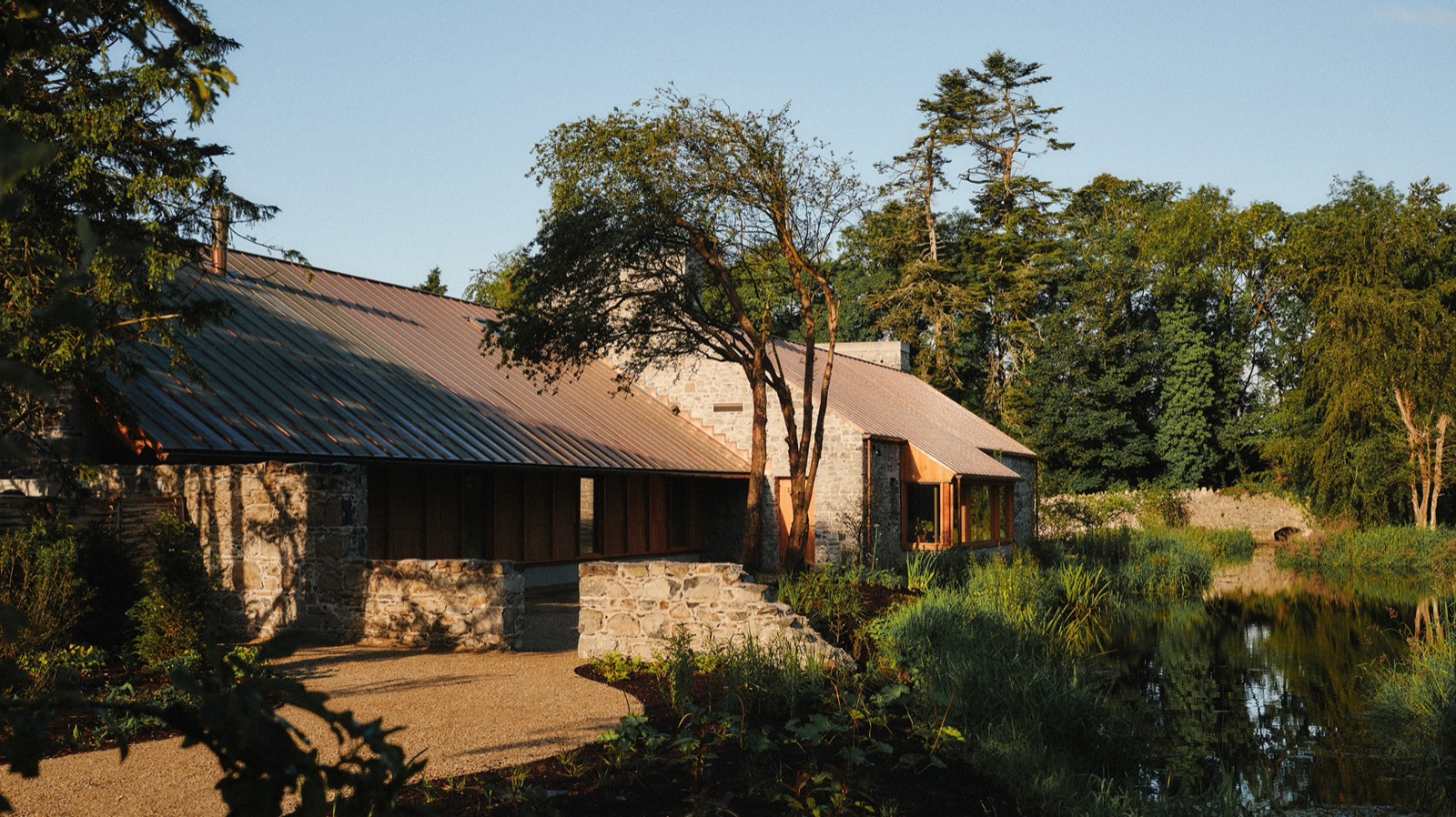
The restaurant sits at the millpondCopper roof, rough stone walls, set low against the water. ⓒÓmós
Daily Hotel
폐가를 6억에 사서 공사비로 96억을 썼다
2026.08.09
Ninety kilometres southwest of Dublin, on the edge of a village of 1,897 people, a sixteen-room guesthouse opened on 7 July. Rooms start at 395 euro and dinner runs 175 euro a head. And the place only sells Tuesday through Saturday.
1.Ómós opened on 7 July. It sits outside Abbeyleix in the Irish midlands, in Millbrook House, built in 1885, now holding sixteen guest rooms, with a new forty-seat restaurant beside it. Chef Cúán Greene is the majority shareholder and the operator. The name is the Irish word for respect, carried straight onto the sign.
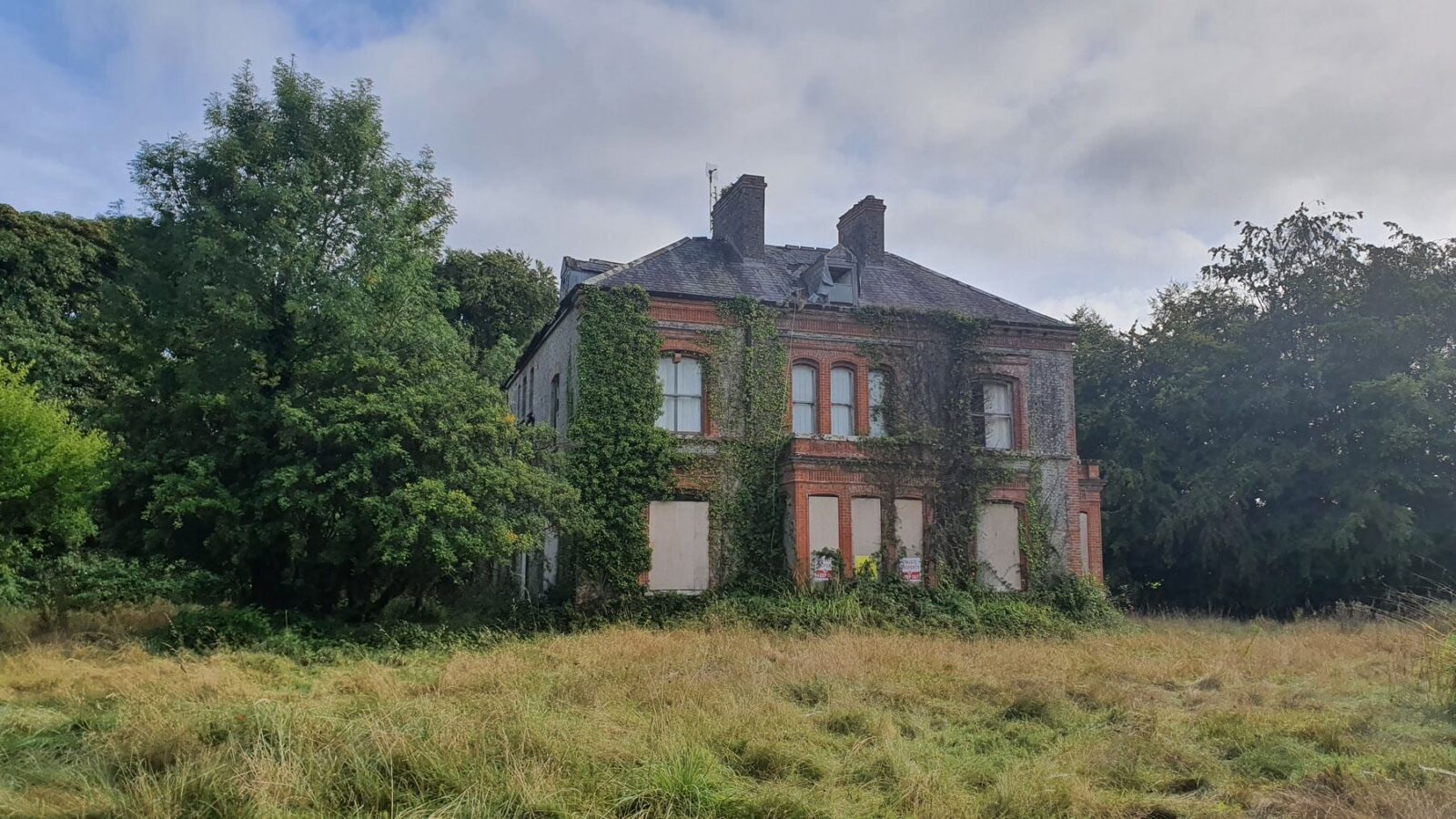
2.What happened to this house before the opening is the frame of the business. Millbrook House stood empty for years until ivy reached the roof, and in 2021 the local authority took it by compulsory purchase. The buyer the following year was Comhlacht na Feirme, a Jersey company set up by the Collison brothers of Stripe. Purchase price: 400,000 euro, about 640 million Korean won. The restoration filed with the planners came to 6 million euro.
Millbrook House before the saleWindows boarded, ivy up to the eaves. The council seized it and put it on the market. ⓒHegarty Demolition
3.Land to construction runs one to fifteen. In ordinary development that ratio is inverted, or at best even. So why does the market leave a building like this alone. Not because it cannot be priced, but because pricing it locks in the loss.
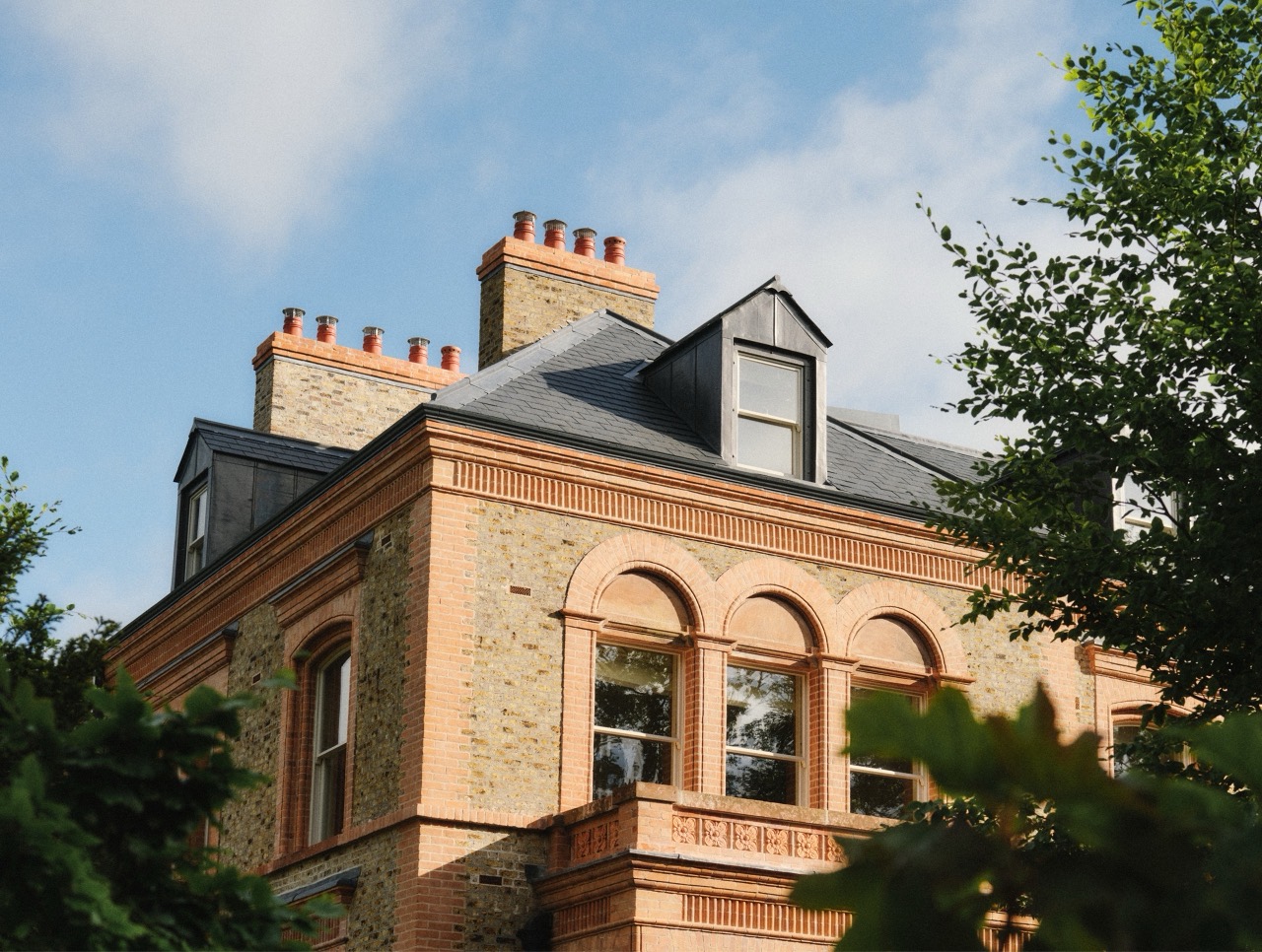
The same house nowArched windows and brick banding put back where they were, with new roof dormers. ⓒÓmós
4.The planning file splits the floor area three ways. Main house with extension at 899 sq m, coach house at 145, a new one-and-a-half storey building at 139. That is 1,183 sq m for sixteen rooms, or 74 sq m of gross floor area per room, about 22 pyeong. Korean business hotels work at 30 to 35 sq m a room, so this is more than double. The rooms are not what grew. The hall, the corridors and the lounges took that area. The site runs 1.7 hectares with parking for 42 cars.
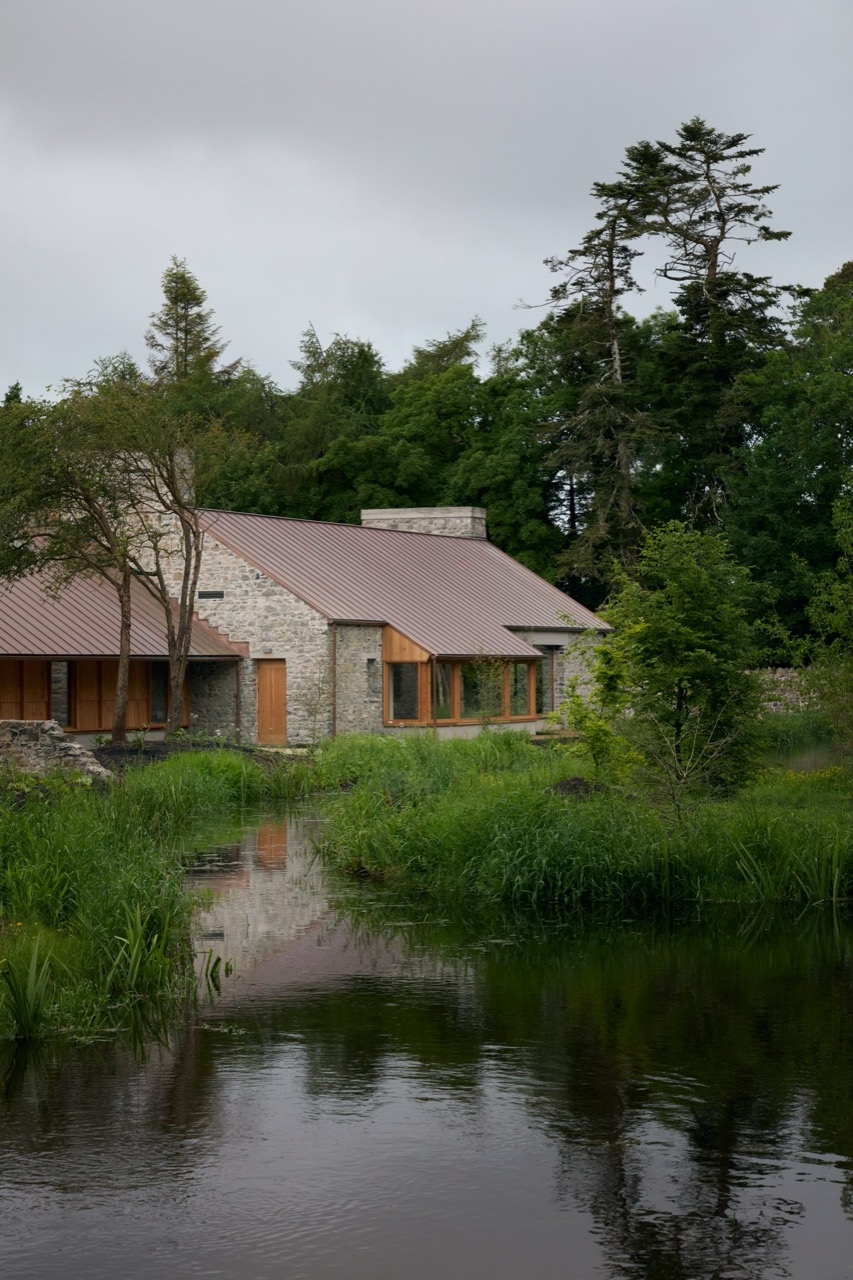
5.The restaurant was not a conversion. It went up on an empty field. Ryan W Kennihan Architects read that field, with old stone walls on two sides and a slope running south, as a walled kitchen garden, then scattered four volumes across it to make a series of yards between them. Each yard holds a slightly different climate, so the vegetables are split among them. Copper on the roof, local stone on the walls, timber in the windows. The practice says it chose materials for how they would age.
From across the water it reads as a farmsteadThe stance of an Irish farm, taken straight. The low volume on the left is the restaurant, the main house behind. ⓒÓmós / Dezeen
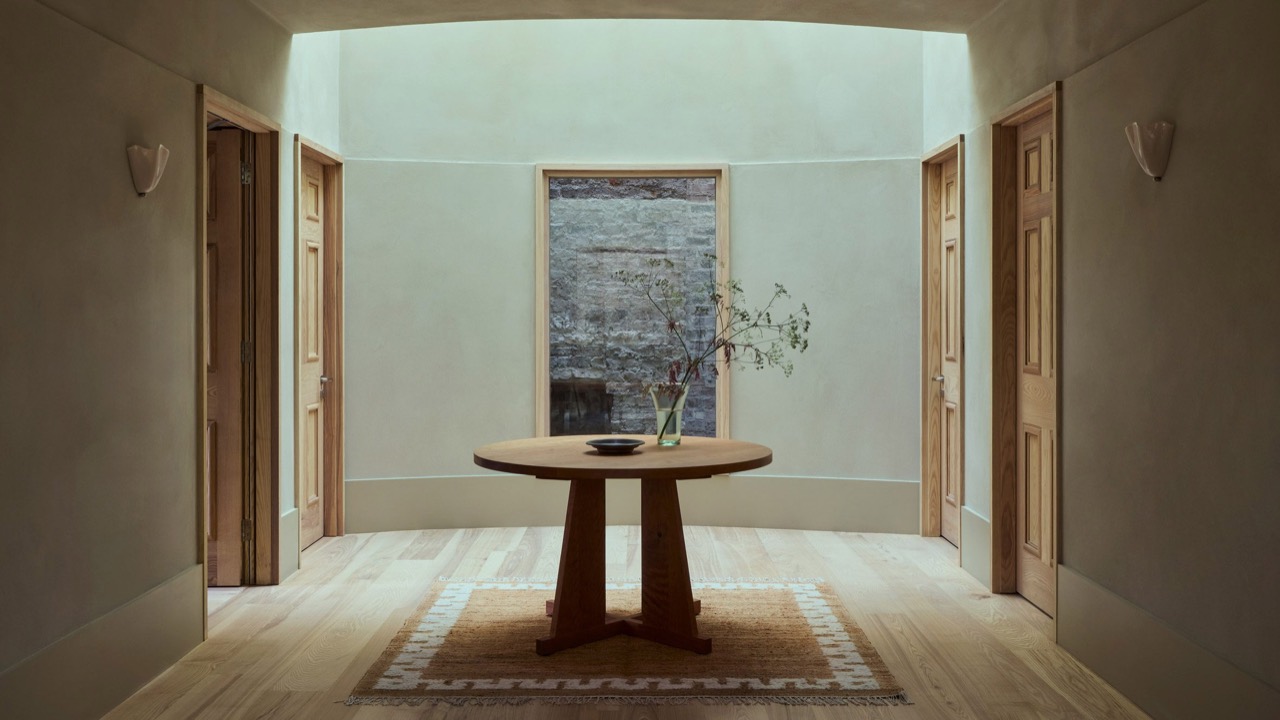
6.Inside, the first room is an entrance hall whose walls curve. Lime plaster laid on by hand catches light differently at every turn, and indirect light spilling from the ceiling perimeter follows the curve around. What sits beyond the far window is not a garden but an old stone wall. New work and kept work face each other across a single opening.
The hall that curvesLime plaster laid by hand, doors and floors in Irish ash. Beyond the window, the wall they kept. ⓒÓmós / Dezeen
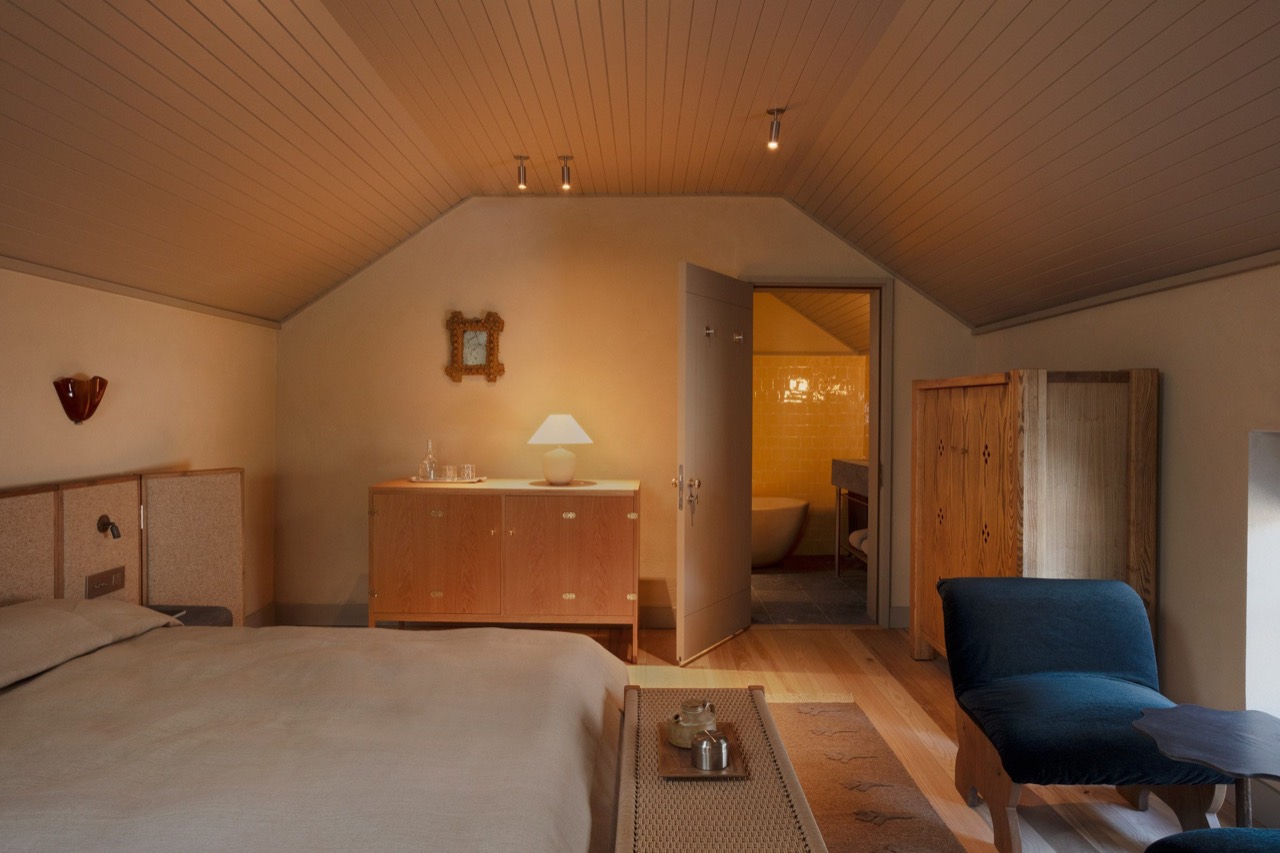
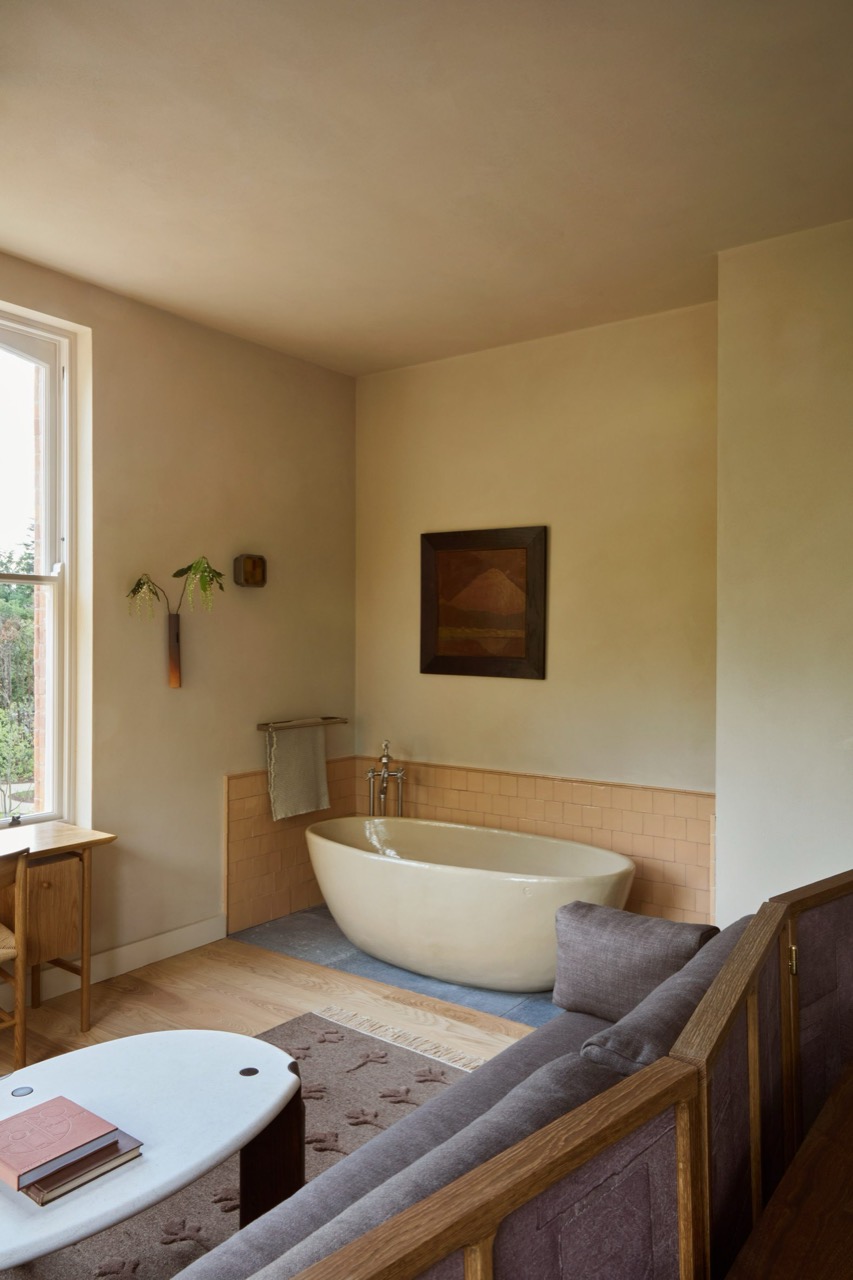
7.Rooms go all the way up into the attic. A bed under a boarded pitched ceiling, one door opening onto a bathroom lined in yellow tile. In some rooms the tub stands in the bedroom itself with a sofa pulled up beside it. Open a window in the morning and the smell of water comes in with wet grass, and that damp stays in the plaster and the timber all day. These finishes ask for a lot of hands. A house that decided to hire heavily can carry them. A house cutting payroll would see the wear inside three years.
A room in the atticThe roof pitch left as the ceiling. Through the door, a bathroom in yellow tile. ⓒÓmós / Dezeen
8.The rate card is short. Rooms open at 395 euro and suites clear 1,000. Dinner is one route of fifteen plates at 175 euro, Saturday lunch alone at 150, wine from 99. Two people staying a night with dinner and wine start somewhere near 950 euro. About 1.52 million Korean won.
A tub set in the bedroomThe bathroom is not walled off. It comes into the room. ⓒÓmós / Dezeen
9.The fixed selling days are the first constraint here. Check-in Tuesday to Saturday, check-out Wednesday to Sunday. The restaurant serves dinner Tuesday to Saturday and lunch once, on Saturday. Sixteen rooms across 260 nights gives 4,160 room-nights a year, against the 5,840 a year-round hotel holds. A third of the inventory, erased on purpose.
Rooms 34, food and drink 66The ratio a graded hotel runs, stood on its head.
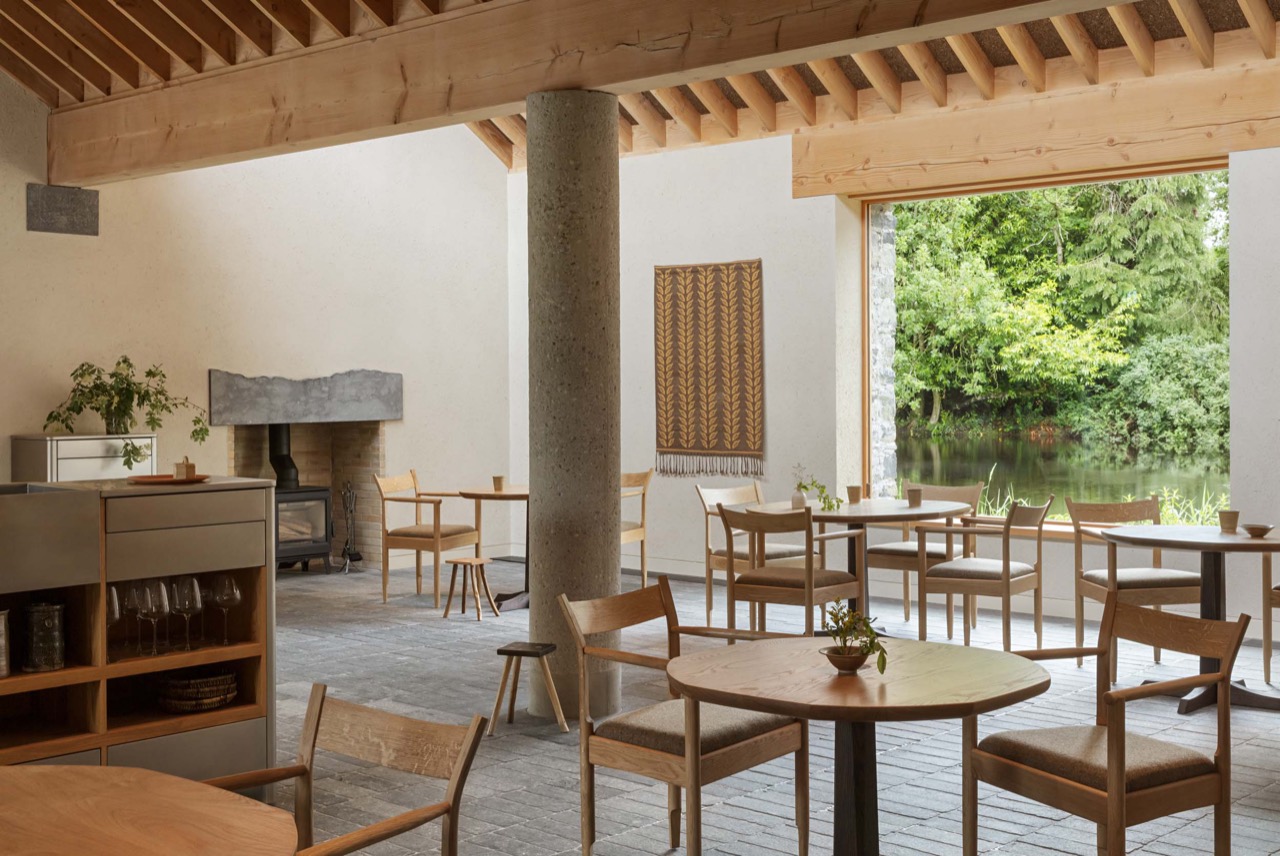
10.Then there are the forty seats. A room booking carries a dinner reservation with it, so a full house of sixteen rooms with two to a room puts thirty-two guests at the table. That leaves eight seats in the main dining room for anyone booking from outside. When rooms empty, restaurant seats open. When rooms fill, the restaurant closes. Two products push against each other over the same inventory.
Forty seats and one windowThe window opens wide to the water and the seat count stops at forty. Wood stove on the left wall. ⓒIrina Boersma·César Machado / AN Interior
11.Staffing came to forty. A general manager and a marketing lead of their own, and in the kitchen a head chef, a sous chef, a head baker and a head sommelier each in post. That is 2.5 staff per room. The restaurant is folded into the same organisation, so it is not a figure to set against other hotels. Regional Irish hotels do run near 0.4 per room, though. The kitchen works a four-day week. Payroll went up first, to keep people from leaving.
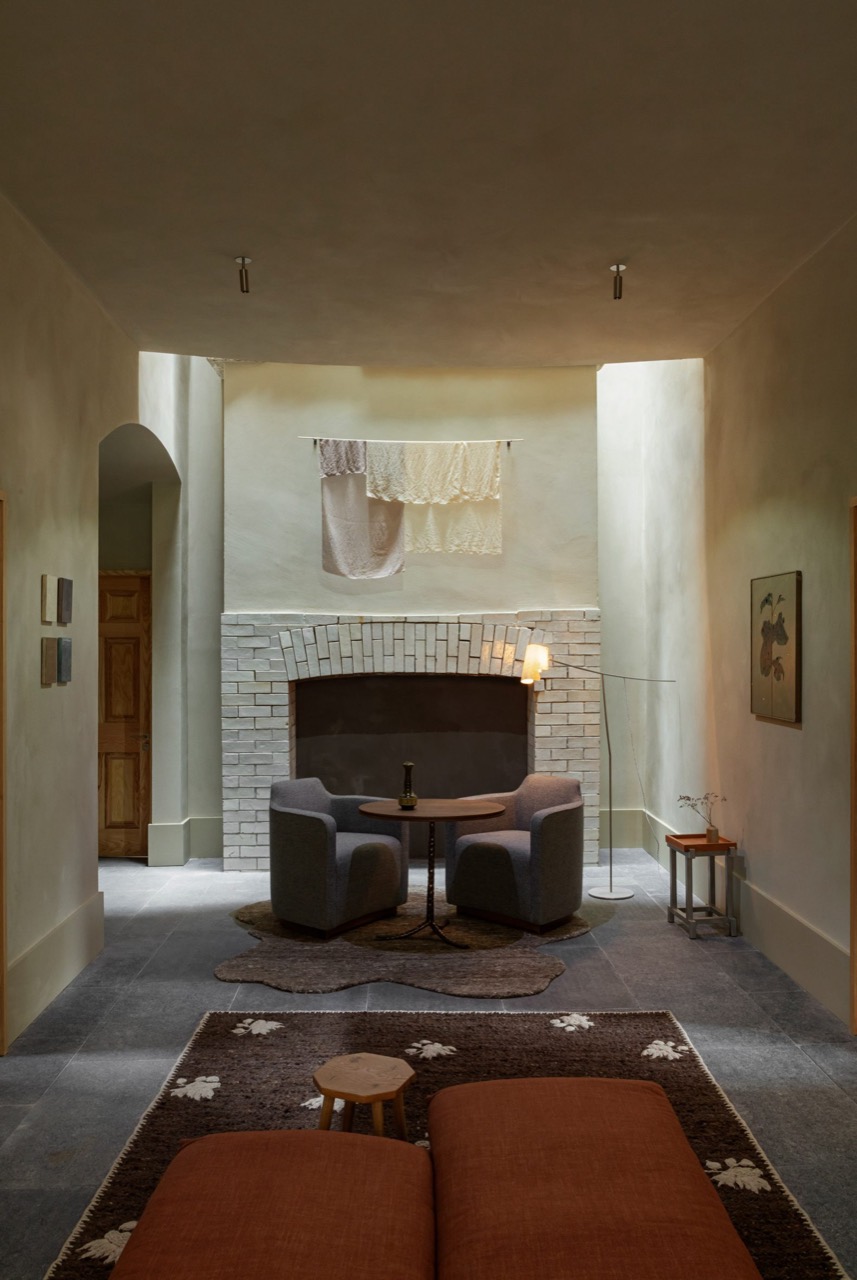
The lounge in the main houseThe fireplace reopened, with two seats in front of it. On the wall, Irish lace. ⓒÓmós / Dezeen
12.From here on the numbers are this article's own. Forty people at 38,000 euro each puts payroll at 1.52 million euro, 37 percent of revenue. Allow 800,000 for food and drink cost and 700,000 for energy, garden upkeep, laundry, insurance and repairs, and 1.03 million euro is left. Add roughly 2 million for the new restaurant, the gardens, furniture and kitchen plant to the 6.4 million spent on purchase and restoration, call it 8.4 million, and the payback lands a little past eight years. The trouble is that this picture hangs on a single occupancy assumption.
A high-payroll house swings hardThe larger the fixed cost, the more one notch of occupancy moves the whole payback.
13.So why do people drive out here. A good restaurant in a city asks you to book and hand over two hours. This asks for the whole day. Ninety kilometres out, into the sauna, through the garden, fifteen plates, a bed, breakfast, home. Making guests spend time, then putting several things in front of them to spend it on, is what carries the spend per guest to two or three times a graded hotel. Not open all year. Sold deep for one day.
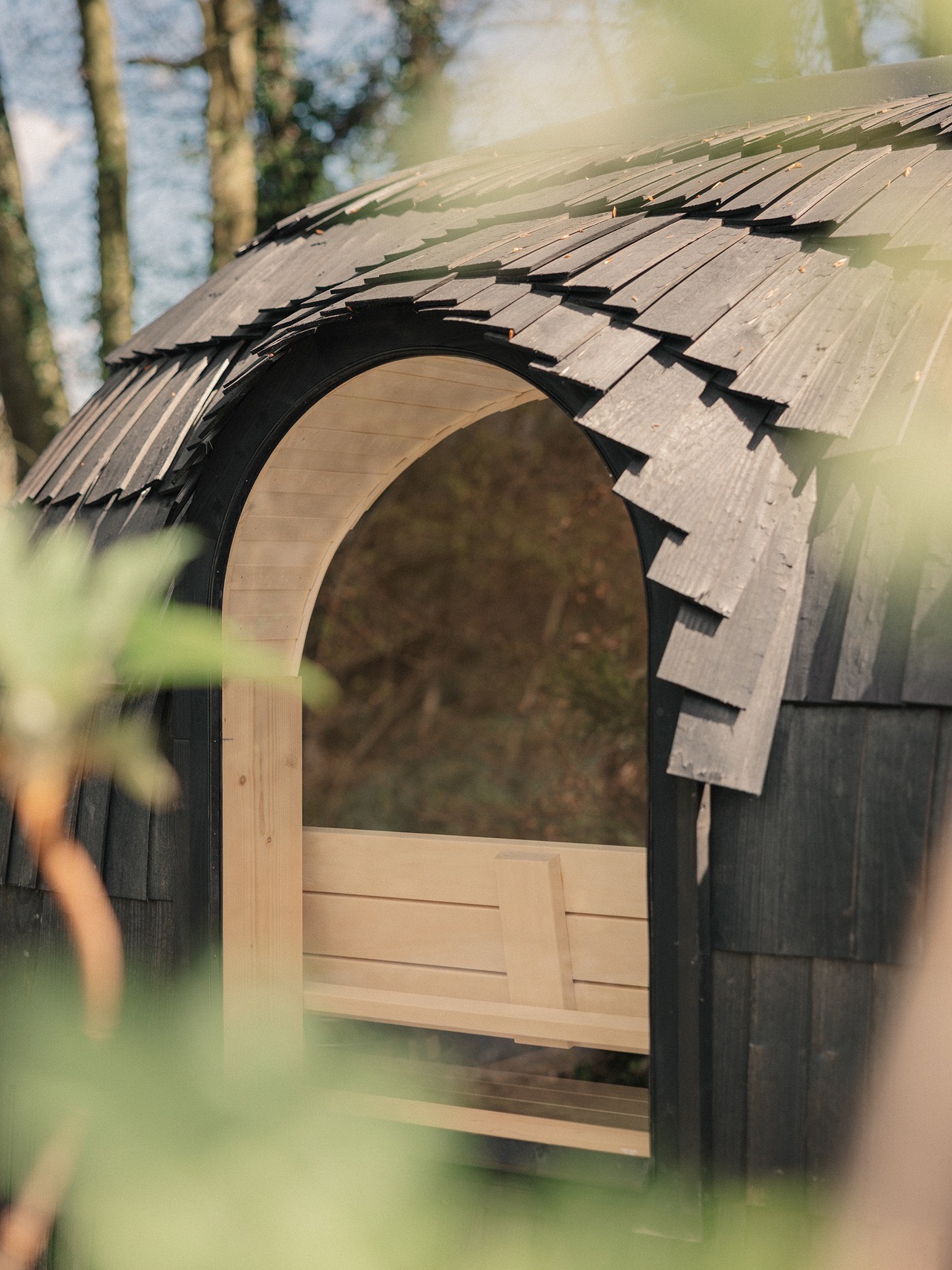
The sauna faces the millpondBuilt in Douglas fir and charred outside. Set close enough to step straight into the water. ⓒÓmós
14.In a graded hotel this money would have come from elsewhere. Ballrooms, weddings, buffets, meeting rooms. Missing a hundred rooms still leaves a week covered by two Saturday sittings, and one large room is what builds that cushion. Ómós has no such room. Fifteen plates, the sauna, the kitchen garden and An Siopa Beag, the small shop selling bread and pottery, divide the work between them instead. All four are tied to one dinner service. In a week when dinner bookings drop, all four empty at once.
15.This is not the first house of its kind in the Irish countryside. Ballymaloe House, which started as a farmhouse dining room in Cork in 1964, is called the starting point of this country's cooking, and in England The Newt in Somerset, built by a South African couple out of their own money, runs the same shape. What the three share is neither the food nor the gardens. The money that went in never asked when it would come back. Draw this on bank debt and rural property values fall short of the build cost, and it stops at the first step.
16.The risk comes from the same place. The case for a 175 euro dinner rests on one chef's name, so if he leaves, the rate card moves first. Finding forty people, again and again, in a village of 1,897 also remains, and whether the finished asset appraises at half of what went into it is unknown. For capital with no intention of selling, none of the three is a problem. For capital that has to sell, all three are.
Summary
A derelict house seized by the council and put up for sale was bought for 400,000 euro, restored for 6 million, and opened in July with sixteen rooms and a forty-seat restaurant. About 840 million Korean won went into each room, and each room looks likely to make 400 million a year, of which only 140 million is the room rate. The rest comes from a fifteen-plate dinner and the drinks beside it. Cutting the selling year to 260 days and staffing at more than twice the room count was possible because of the character of the capital, not the cooking. Doing this in Korea stalls at the order the money arrives in. A rural ruin carries almost no value in a collateral appraisal, and a plan showing construction at fifteen times the purchase price does not clear credit review. On top of that, registering as a rural homestay, as lodging under the Public Health Control Act, or as a hotel under the Tourism Promotion Act each demands different facilities, and change of use under the Building Act, access road width, fire safety standards and sewage treatment capacity all follow. Unless the decision to build with your own money comes first, no drawings get made.