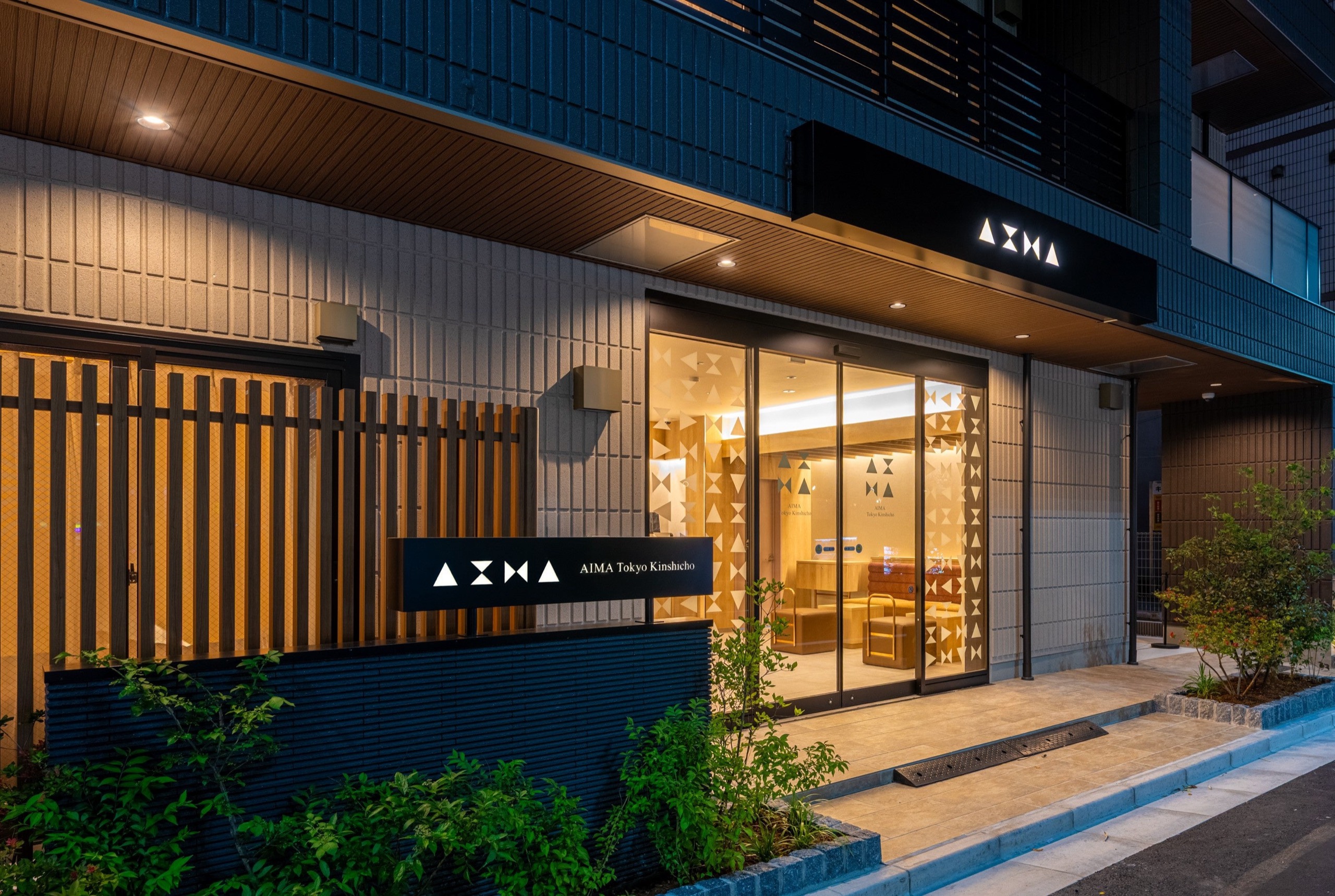
AIMA Tokyo Kinshicho, from the streetNot on the main road, one block in. The ground floor holds the entrance and the front desk. ⓒカソク株式会社 / PR TIMES
Daily Hotel
객실을 40㎡로 키우고 식당은 만들지 않았다
2026.08.10
A sixteen-room property opened on July 20, a five-minute walk from Kinshicho Station on Tokyo's east side. Rooms average 40.3 sqm, and every one of them has a kitchen and a washer-dryer. What it does not have is breakfast, a restaurant, or a lobby bar.
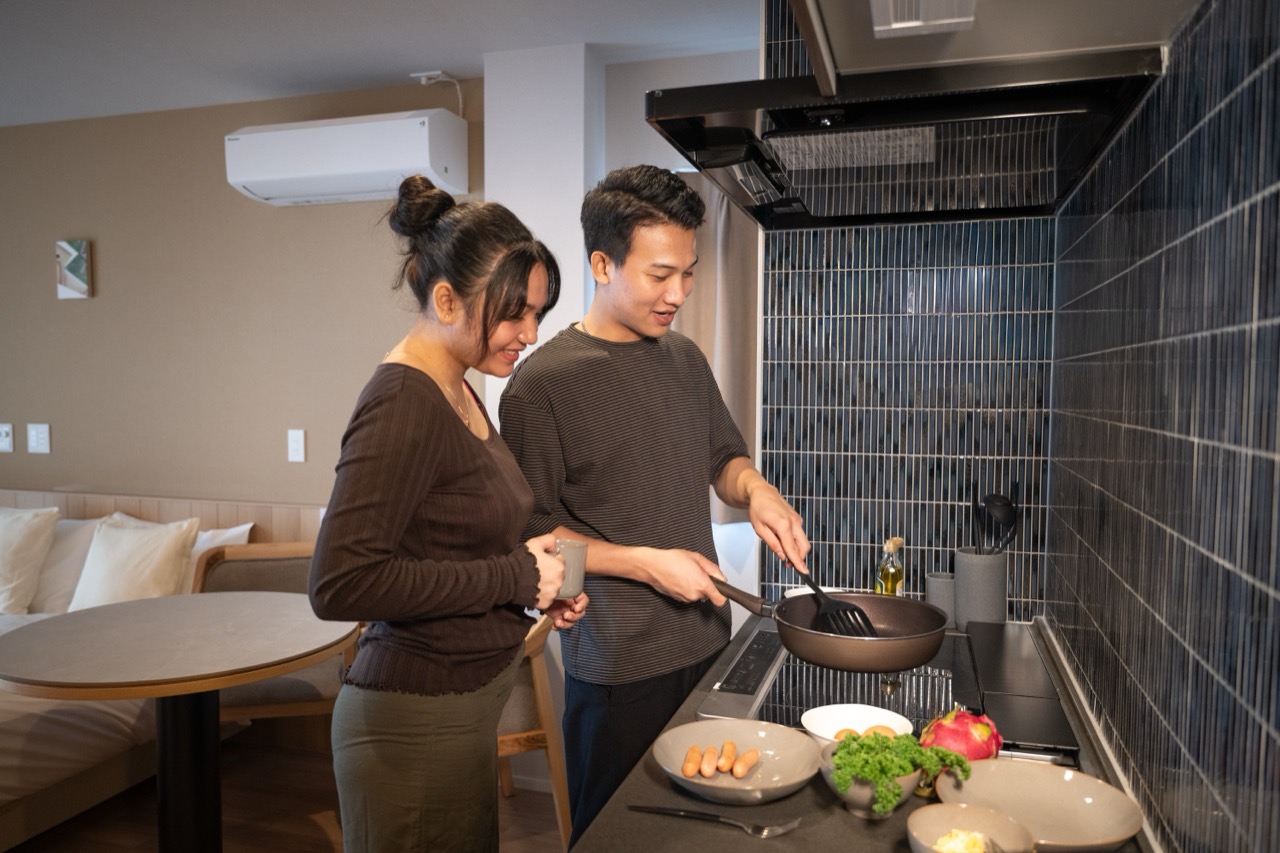
1.AIMA Tokyo Kinshicho is open. The address is 2-1-11 Kotobashi, Sumida-ku, Tokyo, five minutes on foot from Kinshicho Station on the JR Sobu Line and the Tokyo Metro Hanzomon Line. There are only sixteen rooms, and each carries a full kitchen, cookware, a refrigerator, a microwave, and a drum-type washer-dryer. Check-in 16:00, check-out 11:00. There is no parking on site. Guests are pointed to the coin lots nearby.
2.The operator is Kasoku, founded in 2015, which runs more than thirty-six lodging buildings across eleven prefectures. Architectural design and supervision came from Asahi Kasei Homes, planning and direction from ADDReC, interiors from Leaf Design Park. AIMA is the brand Kasoku launched this year, with seven Tokyo buildings promised before the end of it. Higashi-Asakusa, Iidabashi, and Nihonbashi are already trading.
The AIMA brand key visualThe line it runs on is "between living and staying." Seven Tokyo buildings this year is the stated goal. ⓒカソク株式会社 / PR TIMES
3.There are four room types. The smallest is 35.44 sqm, the largest 45.90 sqm, and the sixteen-room average lands at 40.3 sqm. A Japanese business hotel room usually sits between 13 and 18 sqm. Two and a half times over.
Floor area is the productAll four types clear 35 sqm. That dimension is the premise of the whole business.
4.Total capacity comes to seventy-four. Five Family Rooms take six people each, and the remaining eleven rooms take four. Counted in keys it is guesthouse scale, but counted in beds it stands where a thirty-room business hotel stands.
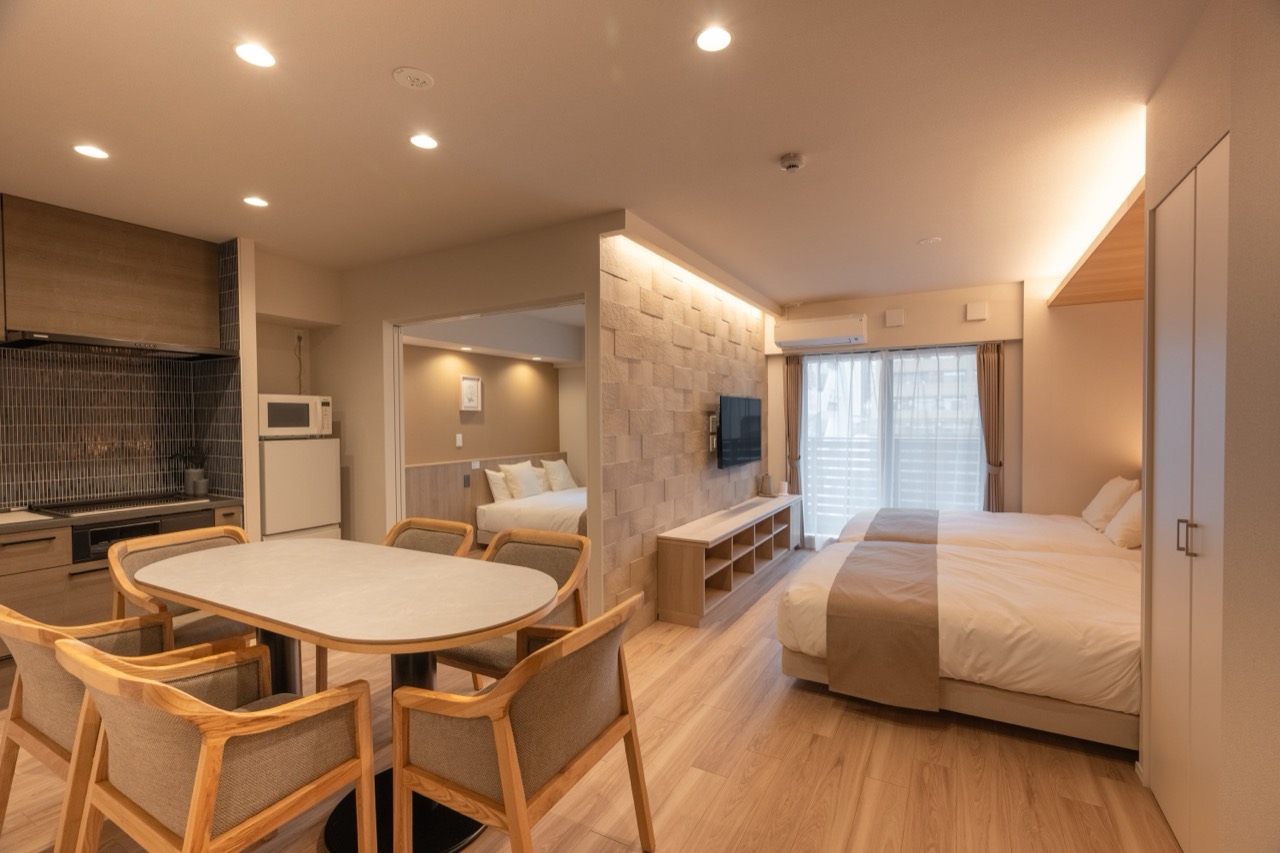
40.3 sqm per room on averageBedroom, living space, and dining table are divided inside a single room. ⓒカソク株式会社 / PR TIMES
5.The dimensions make sense once you see who drew them. Asahi Kasei Homes builds Hebel Haus and Hebel Maison, and it moved into non-residential work through Hebel Builds, its mid-rise line, now at eighty completed projects. A plan that fits a kitchen, a washer, and a private bathroom into roughly 40 sqm comes off a rental-housing drawing, not a hotel drawing.
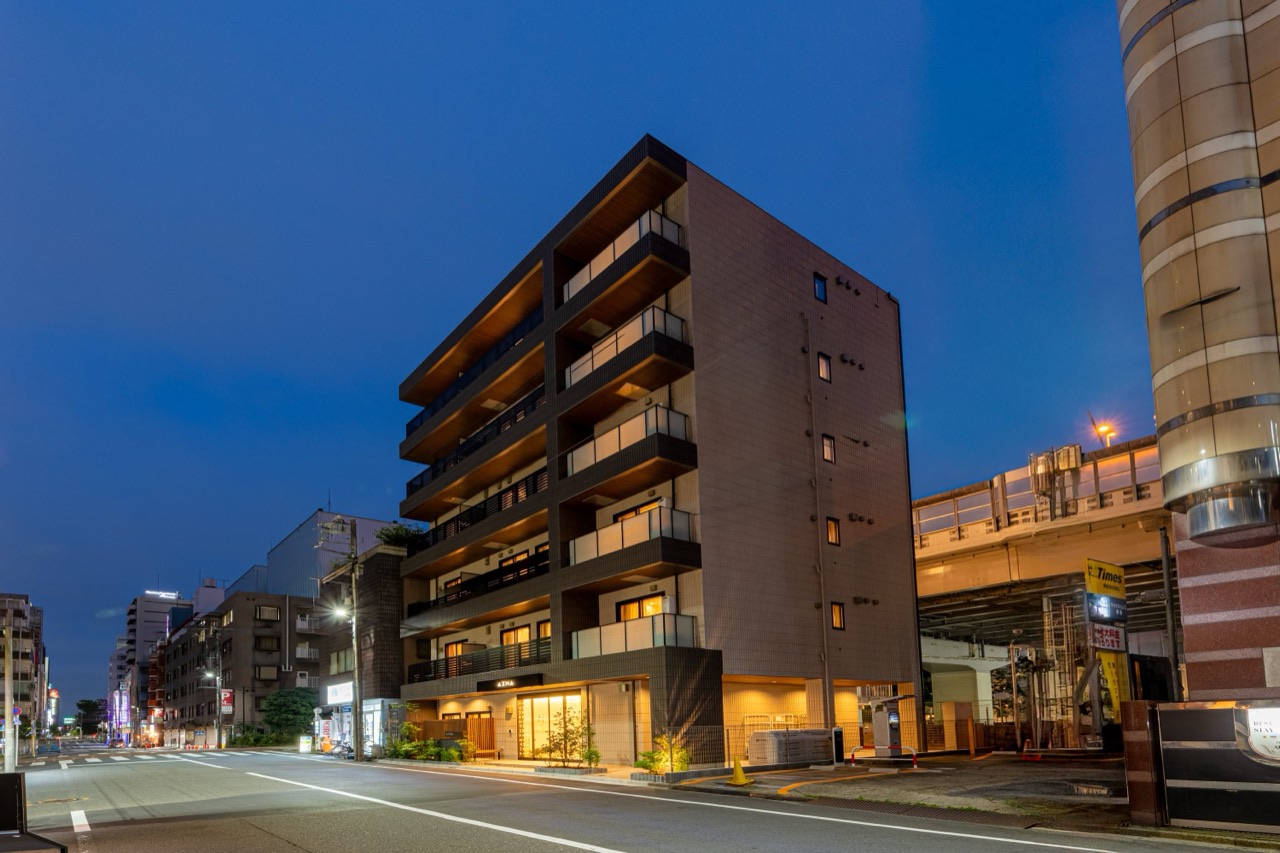
The same building from another angleIdentical floor plates stacked one on the next, exactly as rental housing is built. ⓒカソク株式会社 / PR TIMES
6.At six in the evening this building does not sound like a hotel. Instead of a cleaning cart rolling down the corridor, you hear a washing machine hitting its spin cycle in one of the rooms. On another floor, a pot coming to the boil. Curry and detergent share the same hallway. Making those sounds and smells bearable is the design problem of this format, which is why the wall assemblies and the exhaust runs come in heavier here than in a hotel of the same size.
The household inside the roomA full kitchen, cookware, tableware, and a drum-type washer-dryer go into every room. ⓒカソク株式会社 / PR TIMES
7.No rate card has been published. The same company's hotel aima in Ueno currently sells from USD 123 a night against an average of USD 203, which is around 32,000 yen at today's rate. This piece prices Kinshicho at that number. Tokyo business hotels averaged 21,400 yen in April and city hotels 42,700 yen, so it falls squarely between them.
8.Divide it and the number changes character. Four people to a room is 8,000 yen each, and six in a Family Room is 5,333 yen. Four people sleep for the price of one Tokyo business hotel single. Families and groups come here for the arithmetic, not the design. The kitchen takes two of three daily meals out of Tokyo restaurant prices, and the washer takes weight out of the suitcase.
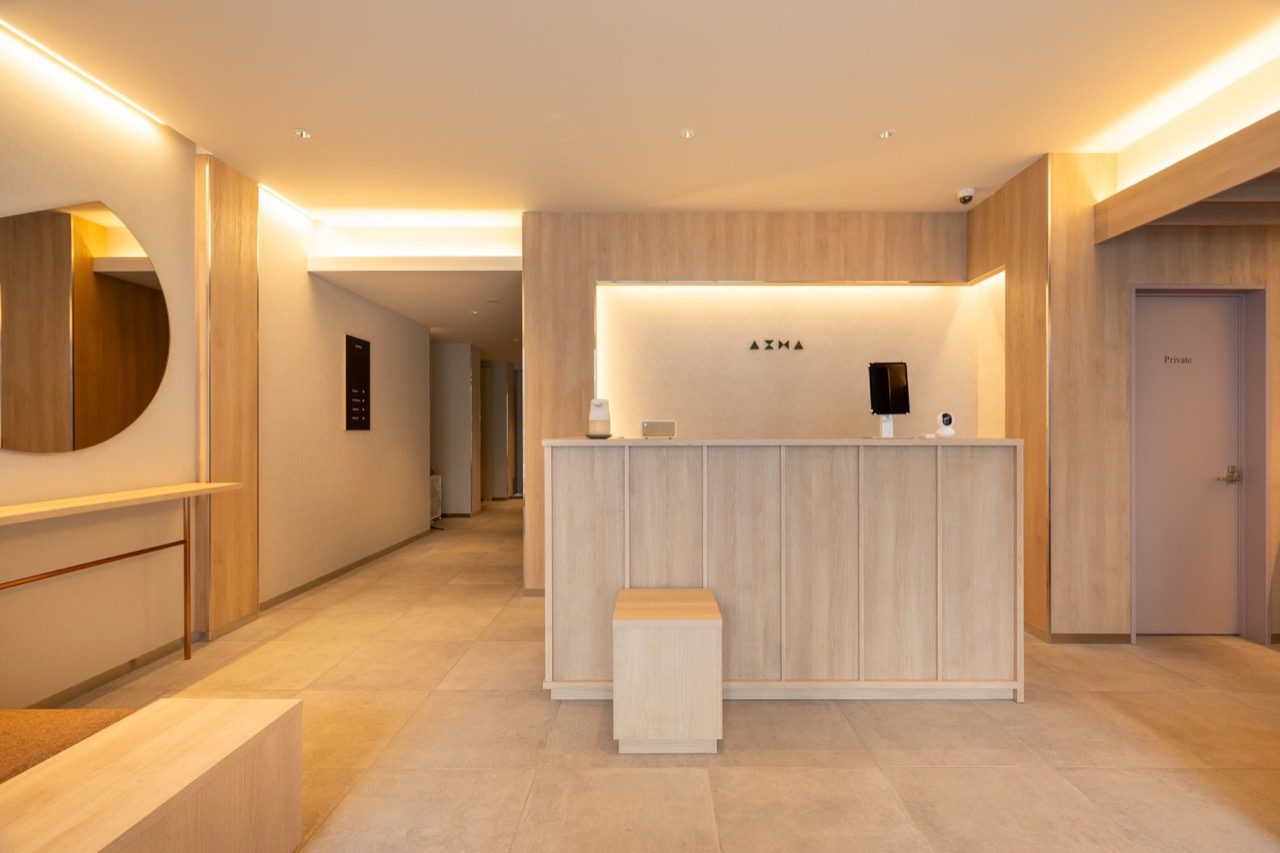
The ground-floor front deskOne counter. In a sixteen-room building this position absorbs most of the payroll. ⓒカソク株式会社 / PR TIMES
9.Run a year at 85 percent occupancy. That is 408 room-nights sold a month and 13.06 million yen in revenue. Over twelve months, 156.67 million yen. RevPAR sits at 27,200 yen and each room produces 9.79 million yen a year. Divided across 644.93 sqm of room area, monthly revenue works out to about 20,200 yen per sqm.
One room split four waysThe room rate is high and the per-person rate is low. Both numbers hold at once.
10.Labour is thin. Kasoku has forty salaried staff and roughly 250 contractors and part-timers, and that headcount runs thirty-six buildings. Barely one salaried employee per building. A serviced apartment cleans a room once to three times a week where a hotel cleans daily. The longer the stay runs, the lower the daily cleaning cost falls, and the linen changes fall with it.
11.Where would this money have come from in a star-rated hotel? Breakfast buffet, banquet hall, room service, lobby lounge. None of that exists here. All revenue comes from rooms, and in exchange there is no kitchen payroll, no food cost, no spoilage. In an industry where food and beverage gross margin runs at half the room margin, that subtraction is not a loss. Dinner money goes to the Kinshicho shopping streets instead.
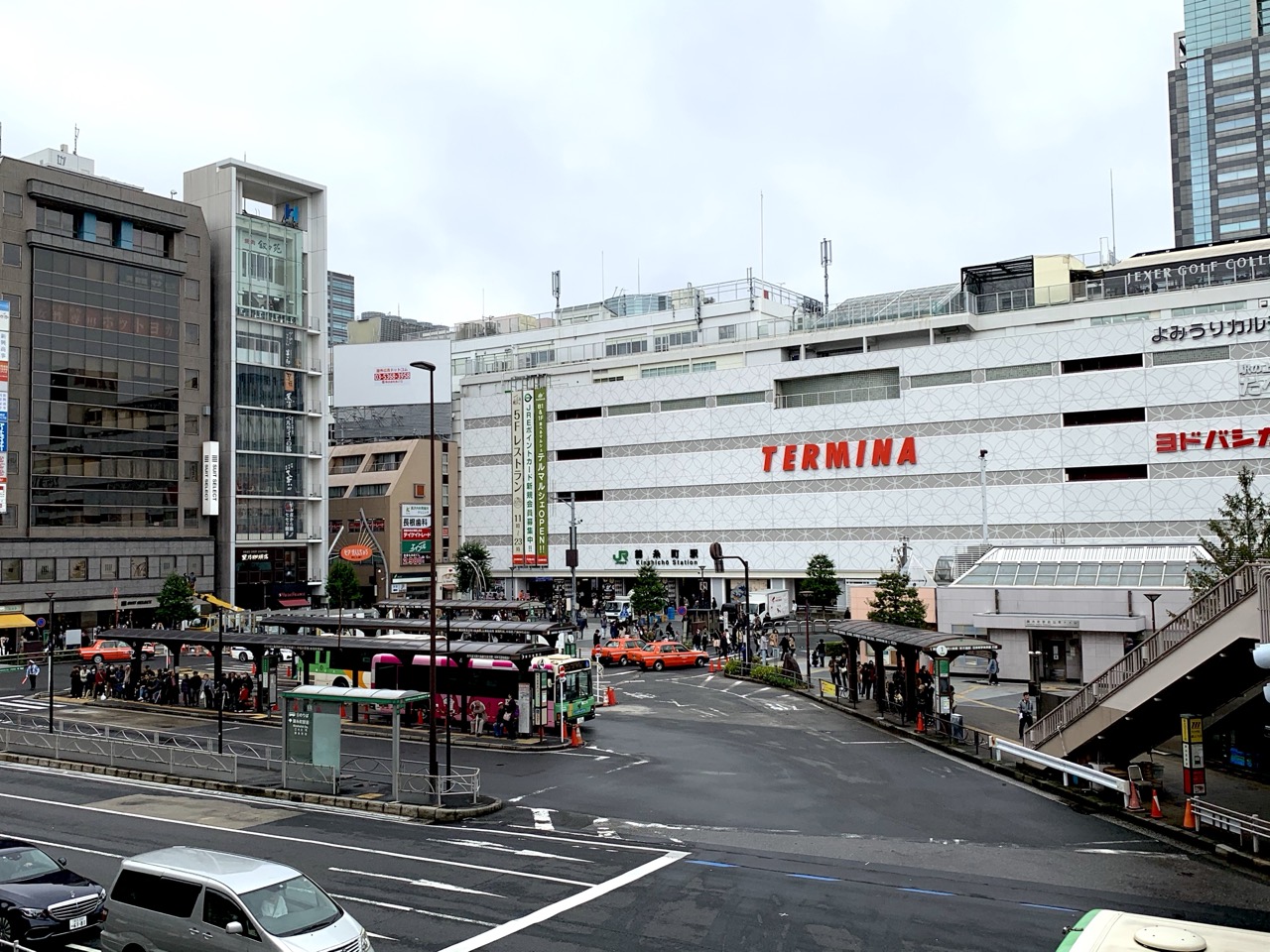
The south exit of Kinshicho StationRetail is attached to the station building, and the restaurant blocks run behind this plaza. ⓒWikimedia Commons
12.Japan received 42.68 million foreign visitors last year and 9.4559 trillion yen in spending. Both figures were records. Tourism authorities count arrivals as up 15.8 percent year on year. What matters more than the totals is the shift in how people stay. As longer stays in one city grow, the unit a property sells moves from a night to a week.
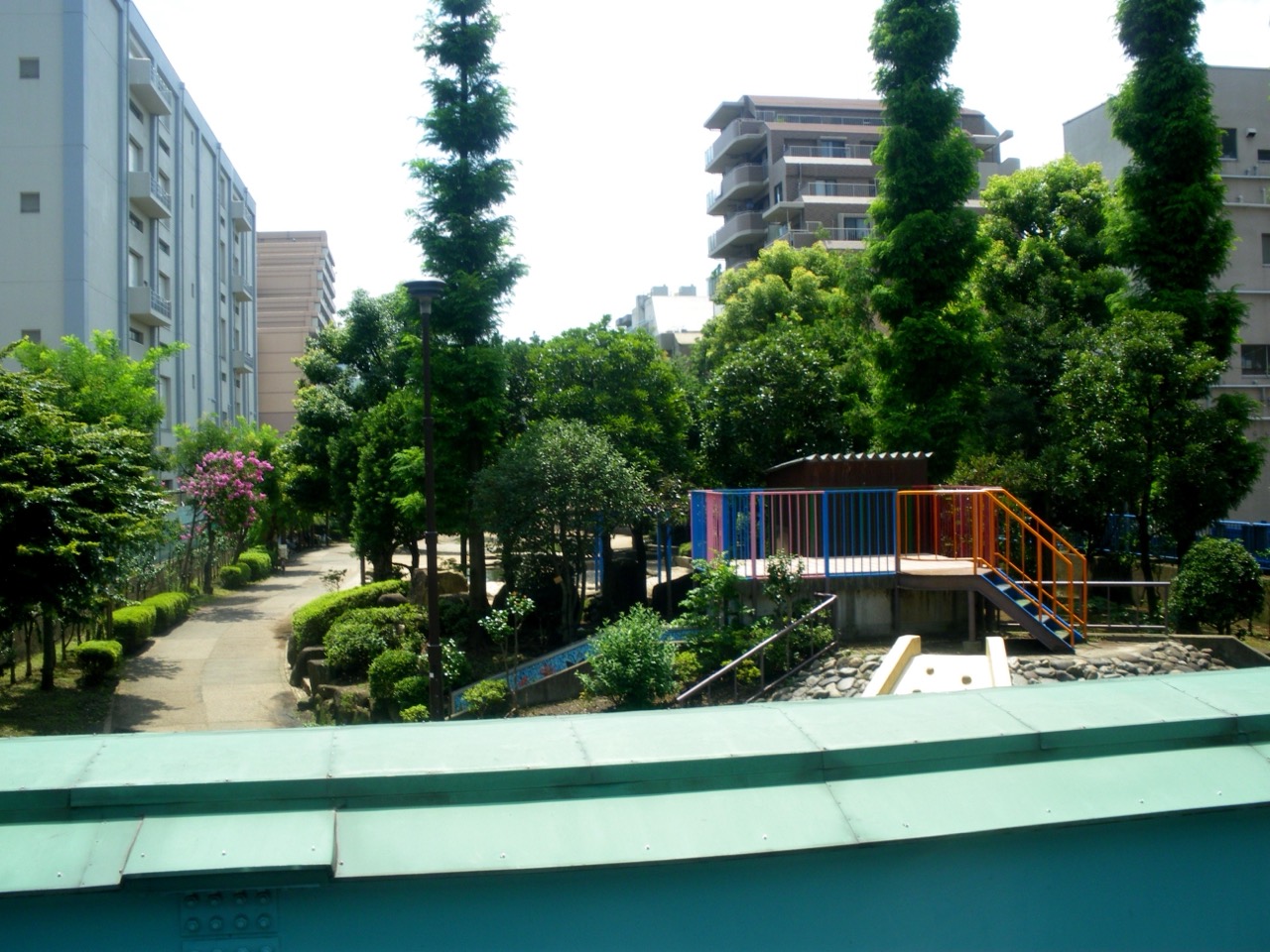
Oyokogawa Shinsui ParkAn old canal filled in and turned into a 1.85 km ribbon of park. Walking distance from the property. ⓒWikimedia Commons
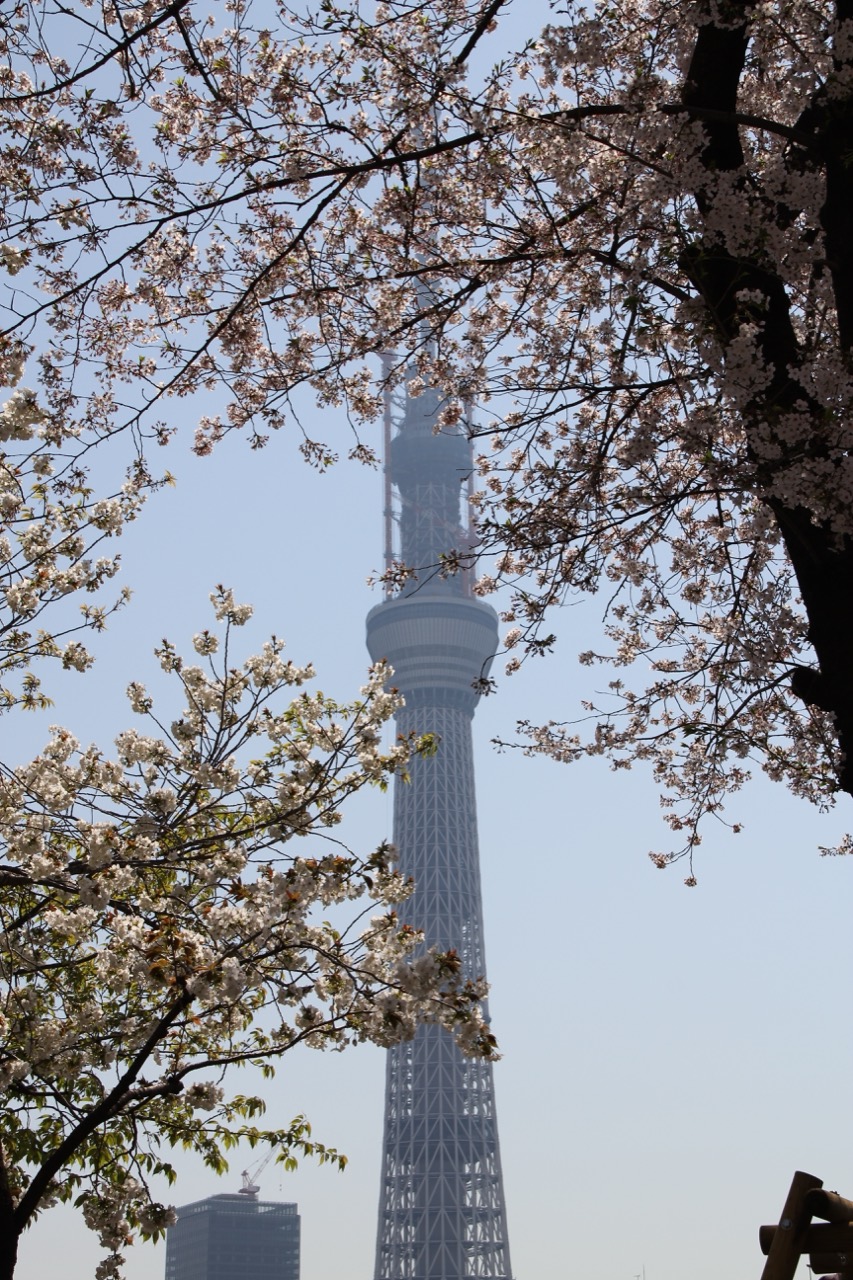
13.Kinshicho was chosen on the same logic. Tokyo Skytree is three minutes away by train, Ryogoku and the Sumida Hokusai Museum are within walking distance, and Asakusa and Tokyo Station are both reachable without a transfer. You book a room at half to two thirds of central Tokyo pricing while the sightseeing routes stay the same as they are downtown.
Tokyo Skytree seen from the Sumida RiverThree minutes from Kinshicho by train. It is the axis that created lodging demand in this district. ⓒWikimedia Commons
14.Putting a washing machine in the room is not a new idea. Tokyu Stay opened its first property in 1993 under the line "add hotel functions to a home," and reached 5,192 rooms across thirty-one properties as of April 2023. The difference is scale. Where Tokyu Stay puts 100 rooms or more into one building, Kasoku says it will scatter sixteen-room buildings across seven Tokyo sites.
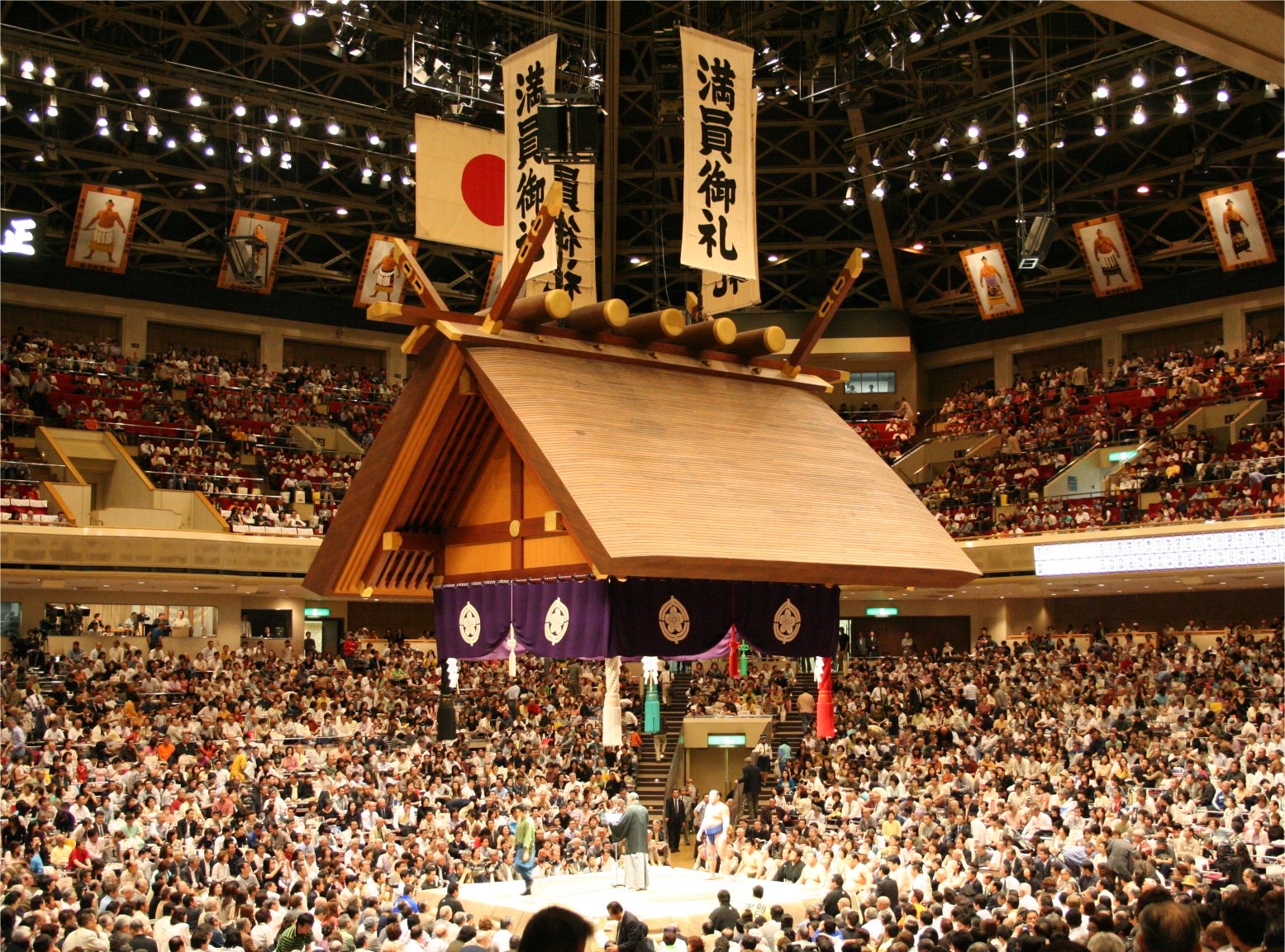
Ryogoku KokugikanThree tournaments a year. For those fifteen days the rooms in this neighbourhood become a different market. ⓒWikimedia Commons
15.The scattering carries its own risk. At sixteen rooms per building, putting one person behind the front desk sends the payroll ratio jumping, so unattended hours are what decide the margin in this model. Kasoku says it will develop hotels averaging 2 billion yen in asset value at a pace of twenty buildings a year, and supply piling up at that speed will move the 32,000 yen number first. Add 10,000 yen to it and the competitor set turns into city hotels.
Summary
Sixteen rooms averaging 40.3 sqm opened on July 20, five minutes on foot from Kinshicho Station. Every room carries a kitchen and a washer-dryer, and no restaurant was built. At 85 percent occupancy and 32,000 yen a night, annual revenue works out to 156.67 million yen and each room produces 9.79 million yen. The money a star-rated hotel earns from breakfast and banquets is money this one never earns and never spends. Anyone trying the same thing in Korea hits the kitchen first. The Public Health Control Act enforcement decree splits lodging into the general category, without cooking facilities, and the residential category, with them, so fixed kitchens in every room push the building into the residential-lodging use class. That class has been tightened since the disputes over people living in them, so anything built after the amendment can only be used for lodging business, and the requirements follow: a bathroom in each room, a front desk and lobby, one linen room per thirty rooms. Strip out the kitchens and move microwaves and laundry into shared space and the general category opens up, but half of what this model sells disappears with it.