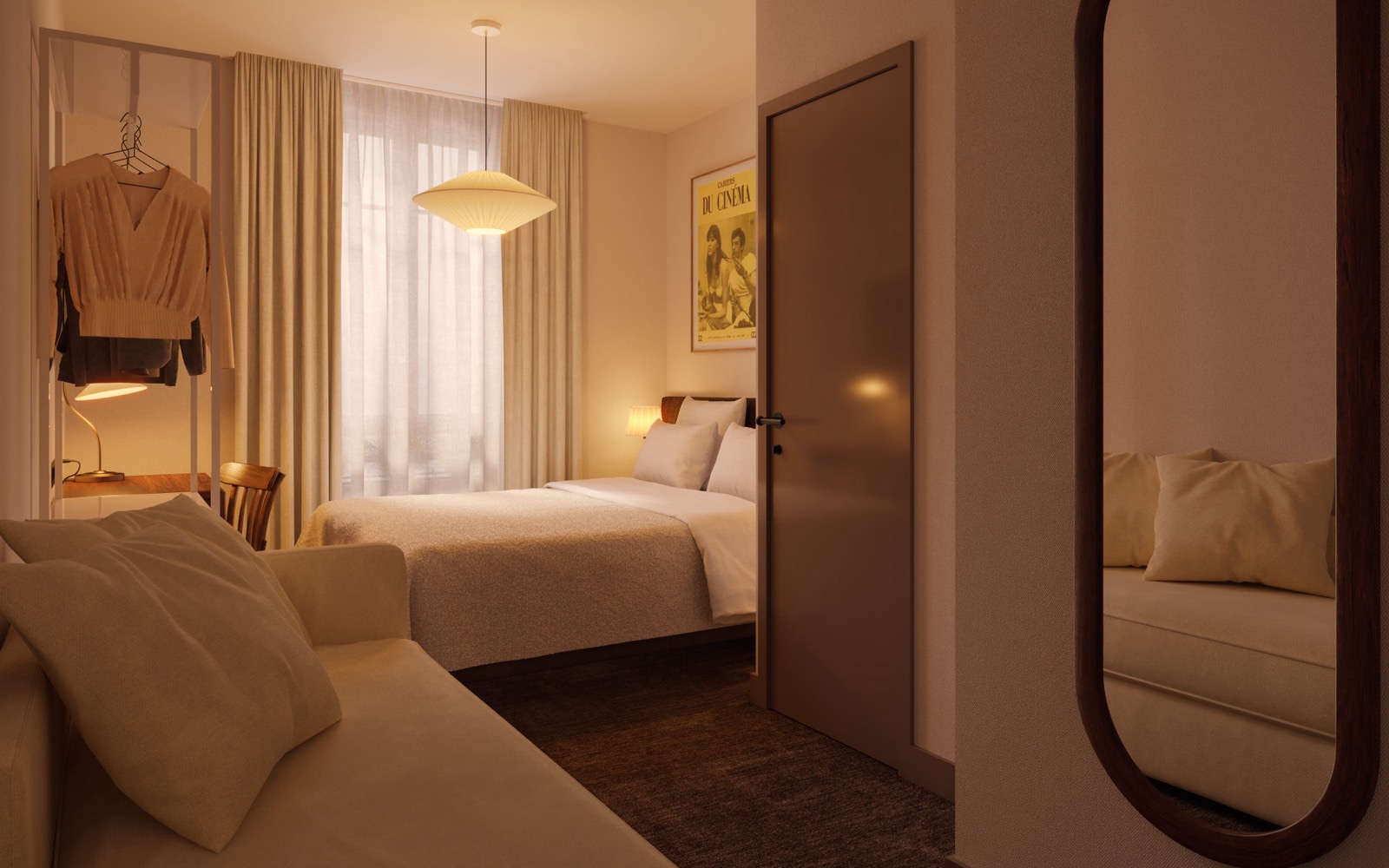
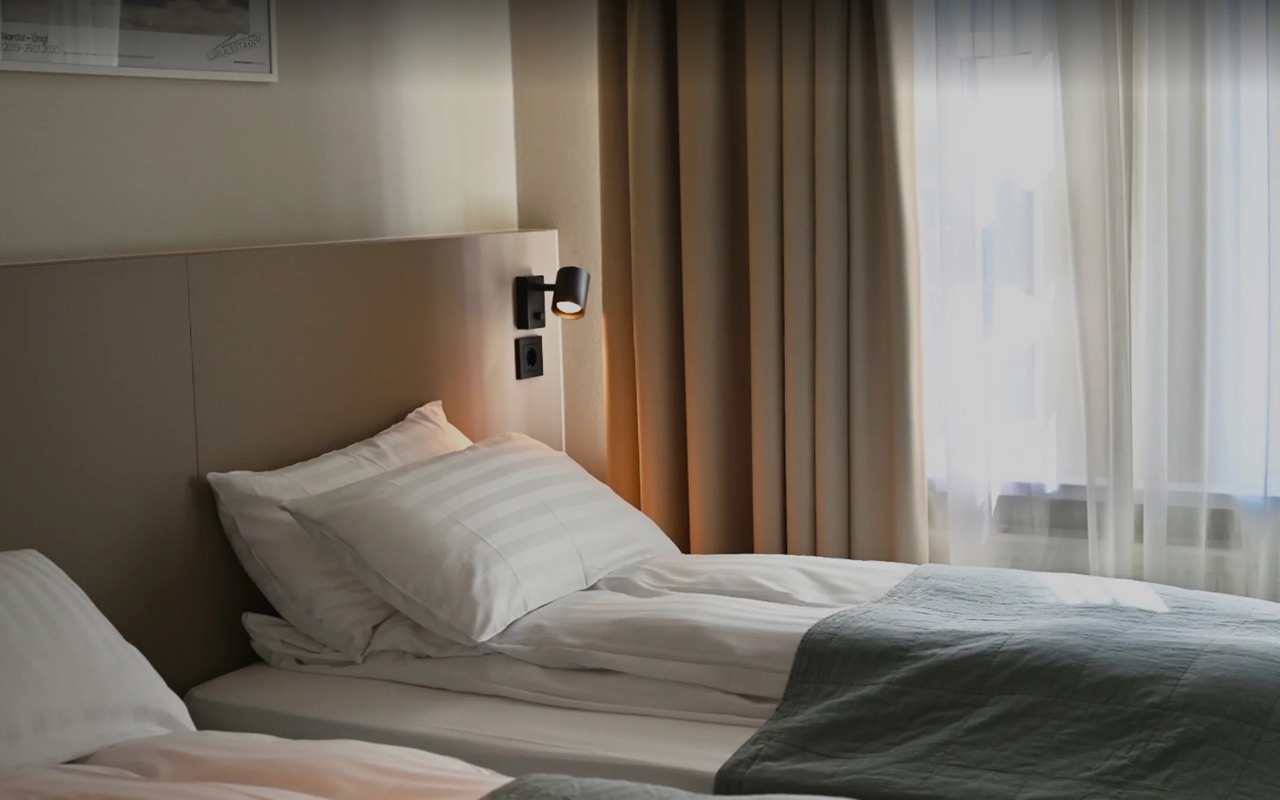
31 rue Albert ThomasThe forty rooms come in four categories: Petite Double, Single, Double Superior and Balcony. ⓒLocal 101 Hotels
Daily Hotel
They didn't add a single room, and the rate doubled anyway
2026.08.26
A three-star hotel in Paris's 10th arrondissement closed in January and reopened in July. Same forty rooms, new sign out front. One other thing changed. They opened the ground floor to the neighbourhood.
1.Local 101 Beaurepaire opened on 8 July. The address is 31 rue Albert Thomas in the 10th arrondissement, a few minutes' walk from Place de la République. Forty rooms above, a bar and bistro on the ground floor. The operator is Local 101 Hotels, and this is the second hotel they have opened.
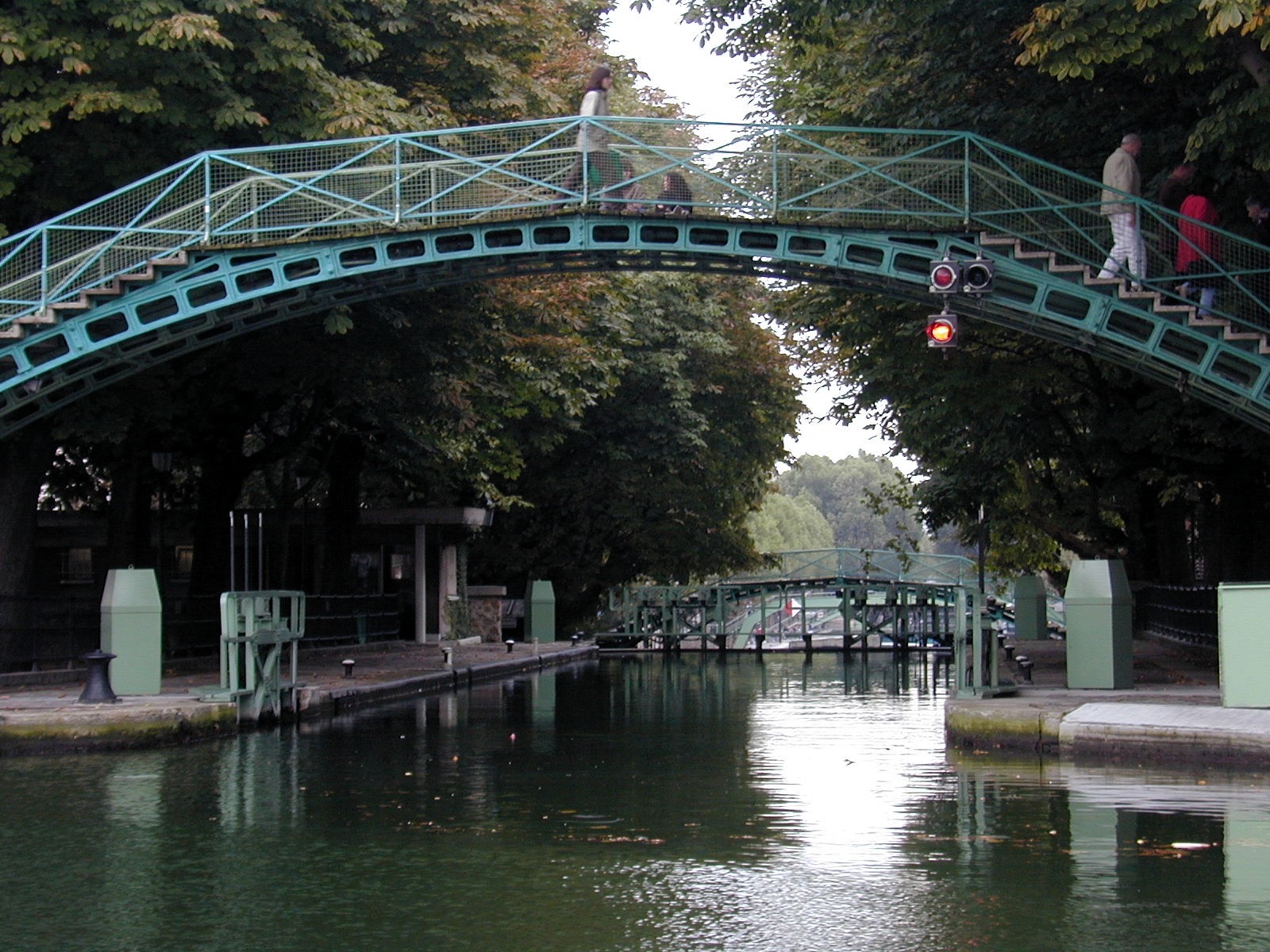
2.What stood here before was Hôtel Beaurepaire, a budget three-star. It stopped trading in January this year and spent six months being gutted and rebuilt inside. Room count: forty before, forty after. Ten minutes on foot to Gare de l'Est and Gare du Nord, three minutes to the Canal Saint-Martin.
Canal Saint-MartinThree minutes from the hotel. Iron footbridges and lock gates line this stretch of water, which is not a tourist route but where Parisians sit in the evening. ⓒAtlant · CC BY 2.5
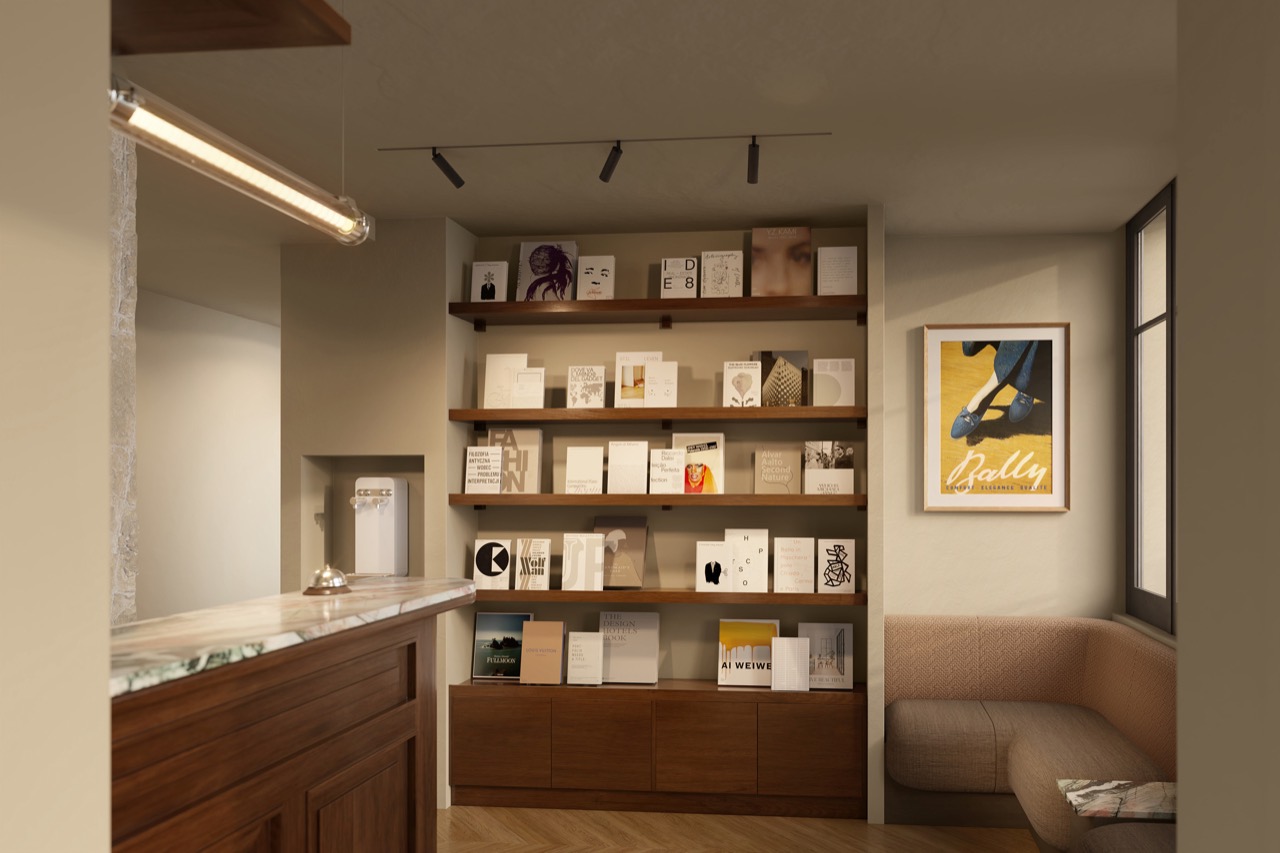
3.Walk into the lobby and the front desk is not the first thing you see. The counter is short, a marble top with a single bell on it, and the wall beside it is shelving from floor to ceiling. Five tiers of photography books and design titles, faced outward, with a bench sofa pushed to the window opposite. There is more room here for sitting than for checking in.
The lobbyShort counter, long bookshelf. The space taken from the front desk went to somewhere to stay put. ⓒLocal 101 Hotels
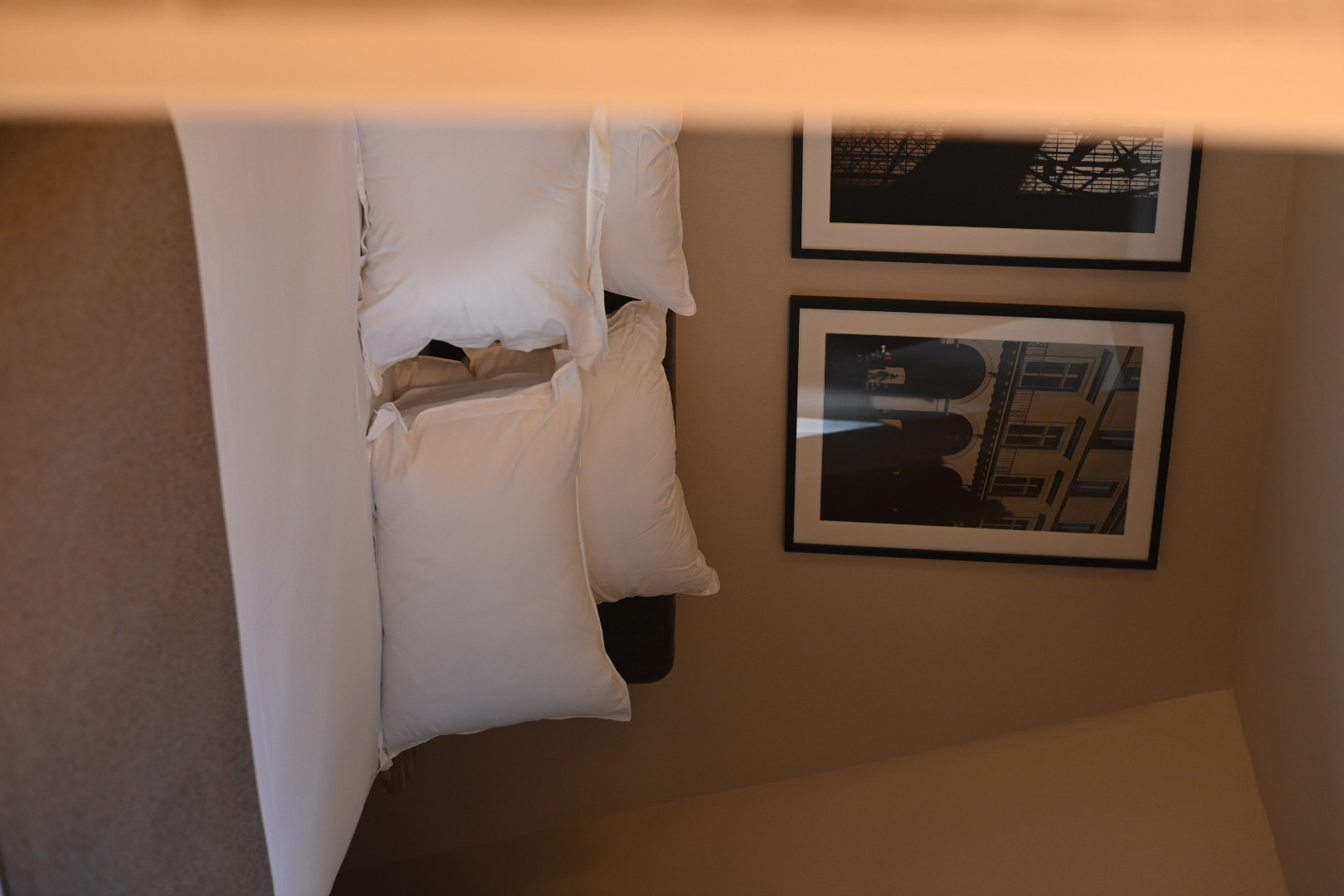
4.The rooms keep the dimensions of an old European building. The brand's line for it is The Art of Less, But Better: spend the money on the bed, the curtains and the bathroom finishes, and stop competing on floor area. A three-star room in a Paris building of this vintage usually runs 12 to 16 square metres, and no two have the window in the same place.
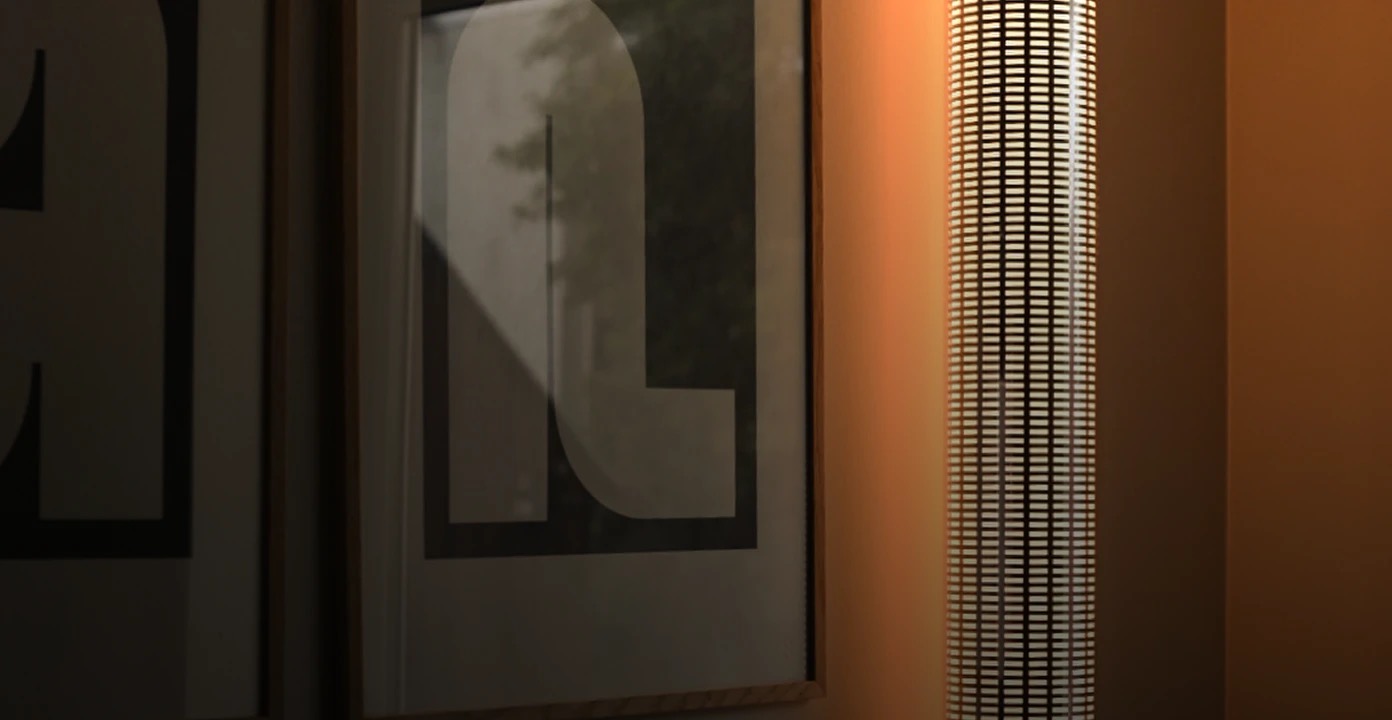
What hangs on the wallWork commissioned from a Paris-based photographer and a neon artist, hung in the guestrooms. ⓒLocal 101 Hotels
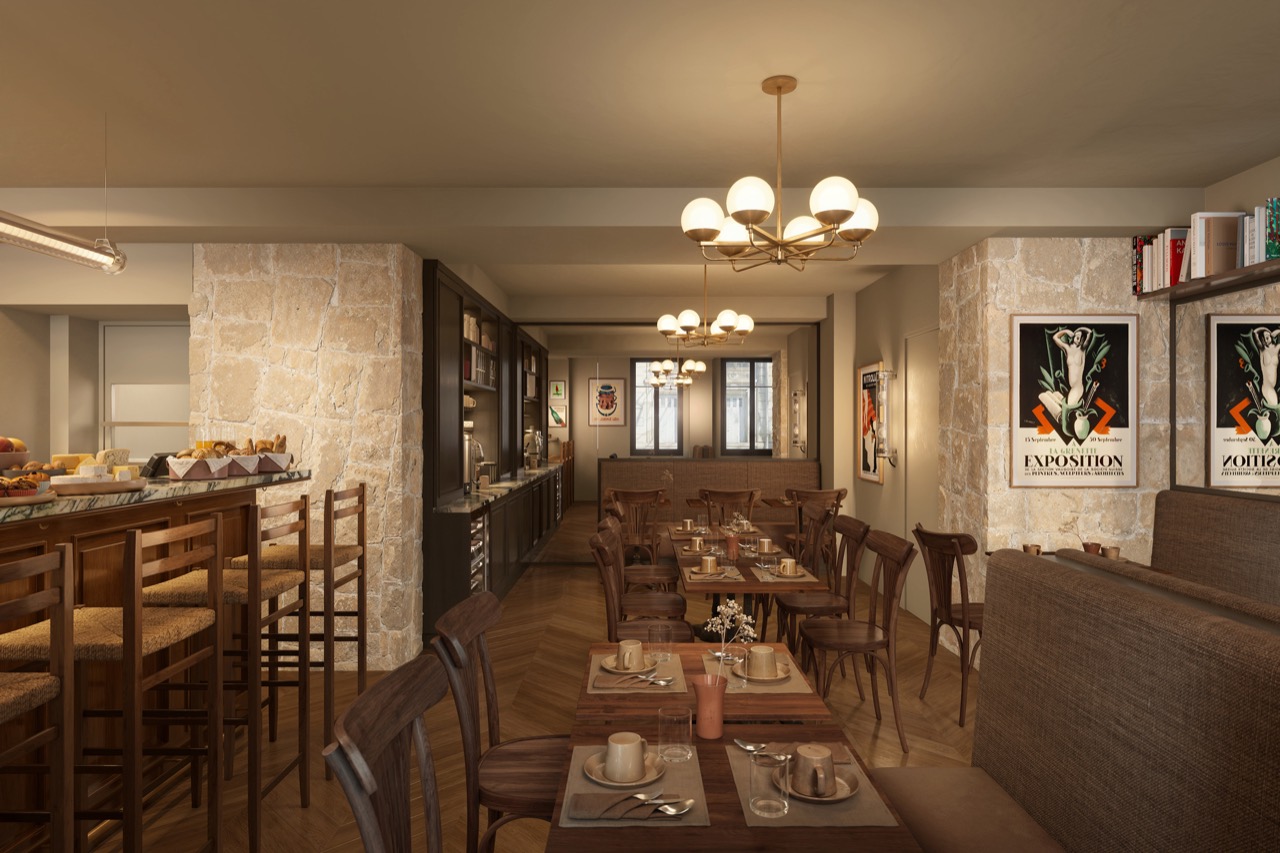
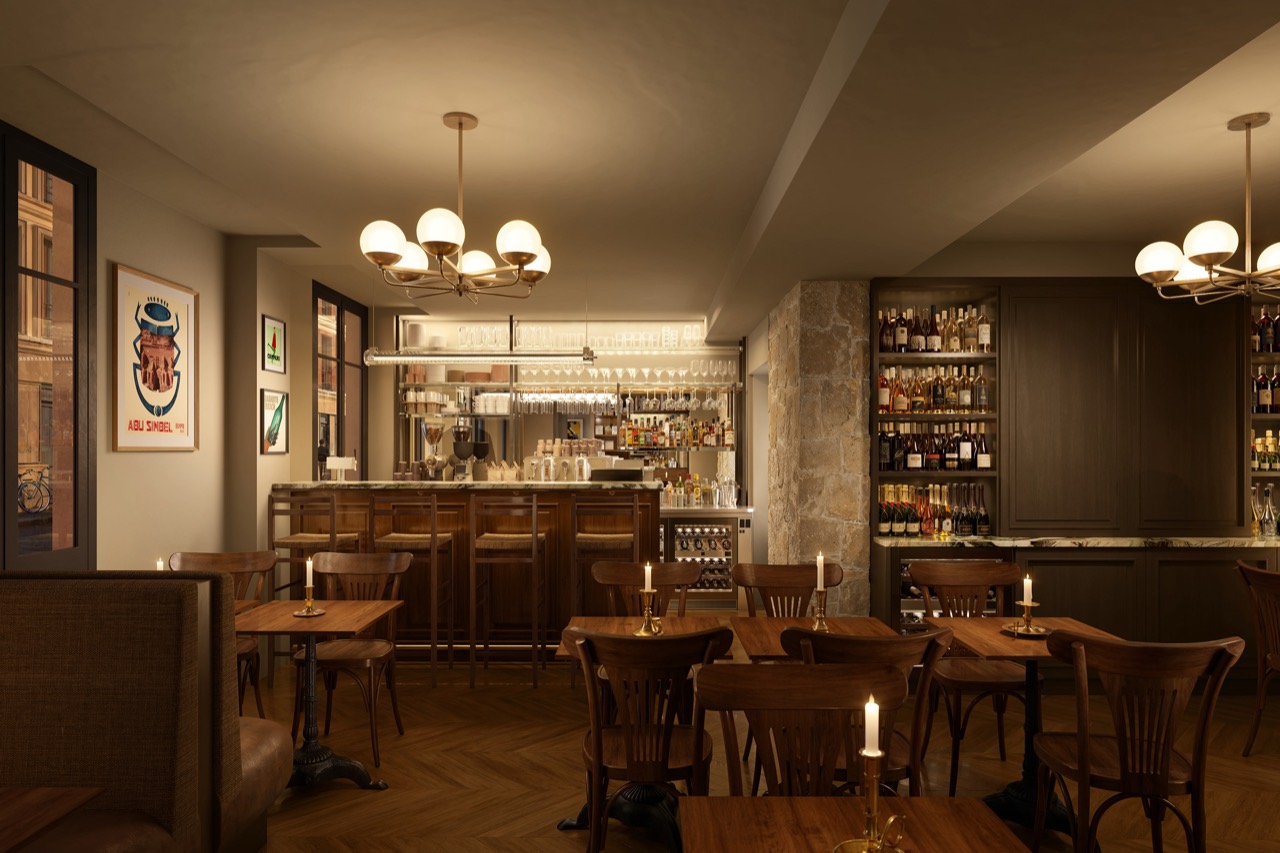
5.The back wall of the ground floor has been stripped to bare limestone and the floor is herringbone parquet. In the morning the room smells of bread. Loaves arrive from Sain and go out along the marble counter; the coffee is Terres de Café. At three in the afternoon candles go onto the same tables and the glassware comes out. The breakfast room and the bar are not two rooms. They are one.
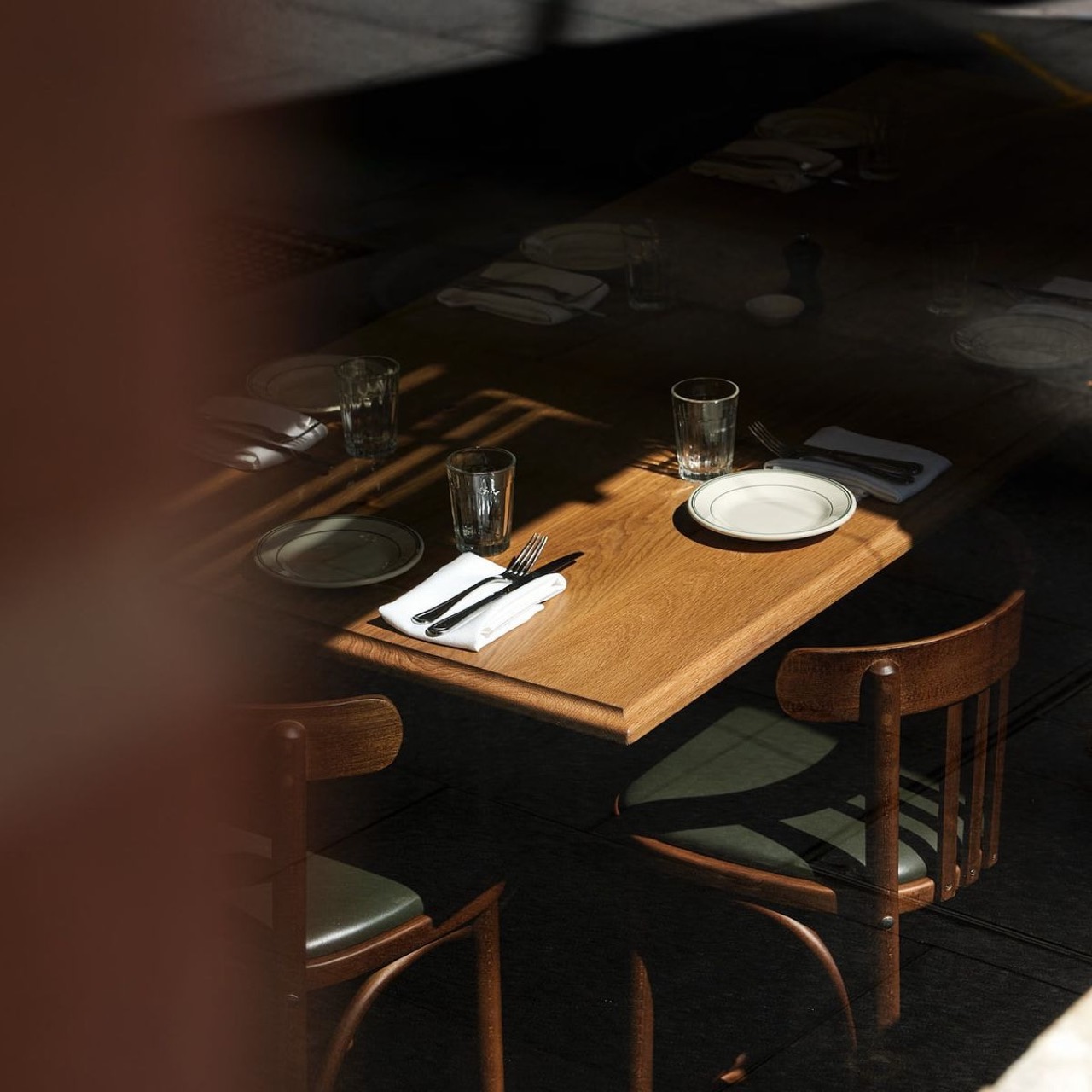
Eight in the morningBread along the counter, coffee cups on the tables. The limestone wall and the parquet do not change. ⓒLocal 101 HotelsThe same room after threeLe Beaurepaire. Light the candles, lay the glasses, and it is a bar. Around thirty covers by the look of it. ⓒLocal 101 Hotels
6.In a forty-room hotel what this arrangement really buys is floor area. Separate the breakfast room from the bar and you give up the equivalent of two guestrooms downstairs, with half of it sitting empty in either half of the day. Selling one room twice a day, two different ways, doubles what that area earns.
7.Published rates start at 170 dollars a night in low season and 400 in high. In euros that is roughly 155 to 364. The Paris average daily rate is 134 euros for three-star and 203 for four-star, so this hotel has left the three-star bracket and come back with a four-star rate card. A chain three-star in the same streets is asking 107 to 136 today.
The rate ladderCharging four-star rates from a three-star address is what the six months of works were for.
8.From here on these are the writer's estimates. Put first-year ADR at 200 euros and occupancy at 70 per cent and RevPAR comes to 140, with annual room revenue of 2.04 million euros. Run the three-star years back through the Paris three-star average and you get 1.53 million. Same building, same number of beds, half a million euros more a year.
9.The bar sits on top of that. Thirty covers at an average spend of 30 euros lands somewhere near half a million a year. A hotel restaurant normally serves guests only and empties out by evening. This one runs from three in the afternoon to half past ten at night and does not do lunch at all. Happy hour stretches across four of those hours for the same reason. The people who come at that time are not guests, they live nearby.
Le BeaurepaireDaily from three in the afternoon to half past ten. No lunch service. ⓒLocal 101 HotelsA year of trading, and the paybackRate, occupancy, bar revenue and construction cost are all the writer's estimates, drawn from published market figures.
10.Where would a graded hotel have found this money? Banqueting and conference space, room service, and sheer room count. Run two hundred keys and you can afford a sales manager who fills the low season with groups. Forty keys has neither the floor area nor the payroll for that. What it does instead is cut one ground-floor room into two dayparts and pull custom in from outside the guest list.
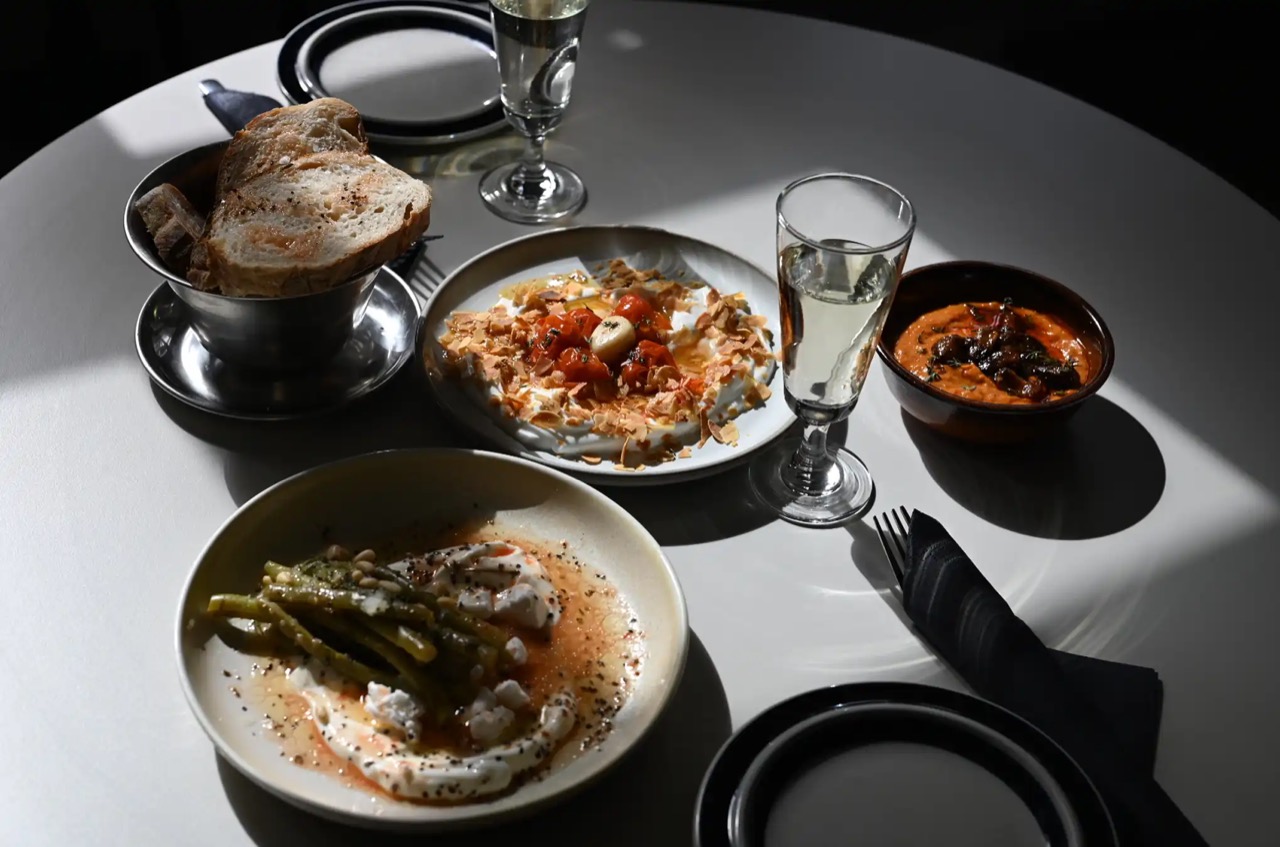
The evening platesSteak frites, baked brie, a French 75. One hour on Tuesday evenings belongs to champagne. ⓒLocal 101 Hotels
11.The distribution decision here is easy to miss. When the name changed, they did not open new listings on the booking sites; they kept the old hotel's. Which is why the Booking.com page still carries some 330 reviews from the three-star years. The problem every new hotel has, six months at zero reviews and nowhere in the rankings, this one started out having already skipped.
12.There is a calculation behind the neighbourhood tie-ups too. Coffee from Terres de Café, bread from Sain, bathroom products by Frédéric Malle. These are names a Parisian recognises, and they give someone with no reason to sleep here a reason to walk in downstairs. It is a move available to a hotel that sits where people live rather than where they sightsee.
13.Who did this? Alma Bremond and David Siklos, both of whom finished their degrees in 2018. One read political science and economics, the other urban studies with a concentration in real estate and development. The building was not bought by them but by the Icelandic property company Bergey fasteignafélag; the two of them took the brand and the operation. This is not the structure where you buy a building with your own money and go from there.
14.They had run the play once already, in Reykjavík. The first property, Local 101 Vesturbær at Ránargata 4a, is a 1961 building and one of the oldest hotels in Iceland. It traded as the Metropolitan Hotel. In spring 2023 the interior was redone, the sign was changed, and a neighbourhood bar called Litli Barinn went into the ground floor. The order of operations in Paris is identical. Do not build. Buy a tired three-star. Open the ground floor to the street.
Vesturbær, ReykjavíkBuilt in 1961 and long traded as the Metropolitan Hotel, until the sign changed in 2023. ⓒLocal 101 Hotels
15.The weak spot is scale. Two hotels cannot carry the layer above the general manager, which is to say revenue management, marketing and accounting. Forty keys in Paris is the size where payroll takes a third of turnover, and booking-site commission lands on top of that at 15 to 22 per cent of the booking. Fail to build direct bookings and the rate increase leaks straight back out as commission. Half a million euros bought with six months of closure can thin out that fast.
The corridorThe brand's claim, that the money went into finishes and lighting rather than square metres, shows up in places like this. ⓒLocal 101 HotelsBooks in the lobbyShelved face out. They exist to give you a reason to sit down. ⓒLocal 101 Hotels
In closing
A three-star in the 10th arrondissement shut for six months, changed its name and reopened, and the room count went from forty to forty. What grew was one rung on the rate card and the traffic on the ground floor, and at half a million euros a year that difference takes four and a half years to repay the works and the closure. Anyone trying this in Korea hits the ground floor first. To sell drinks and food to the neighbourhood while the building is classified as lodging, that portion has to be carved out as neighbourhood commercial use and separately registered as a restaurant under the Food Sanitation Act, and the moment the use class splits, sewage generation is recalculated and the septic capacity becomes the binding constraint. Which is why opening a room that only served guest breakfasts to the street in the evening is not something a revised drawing finishes.