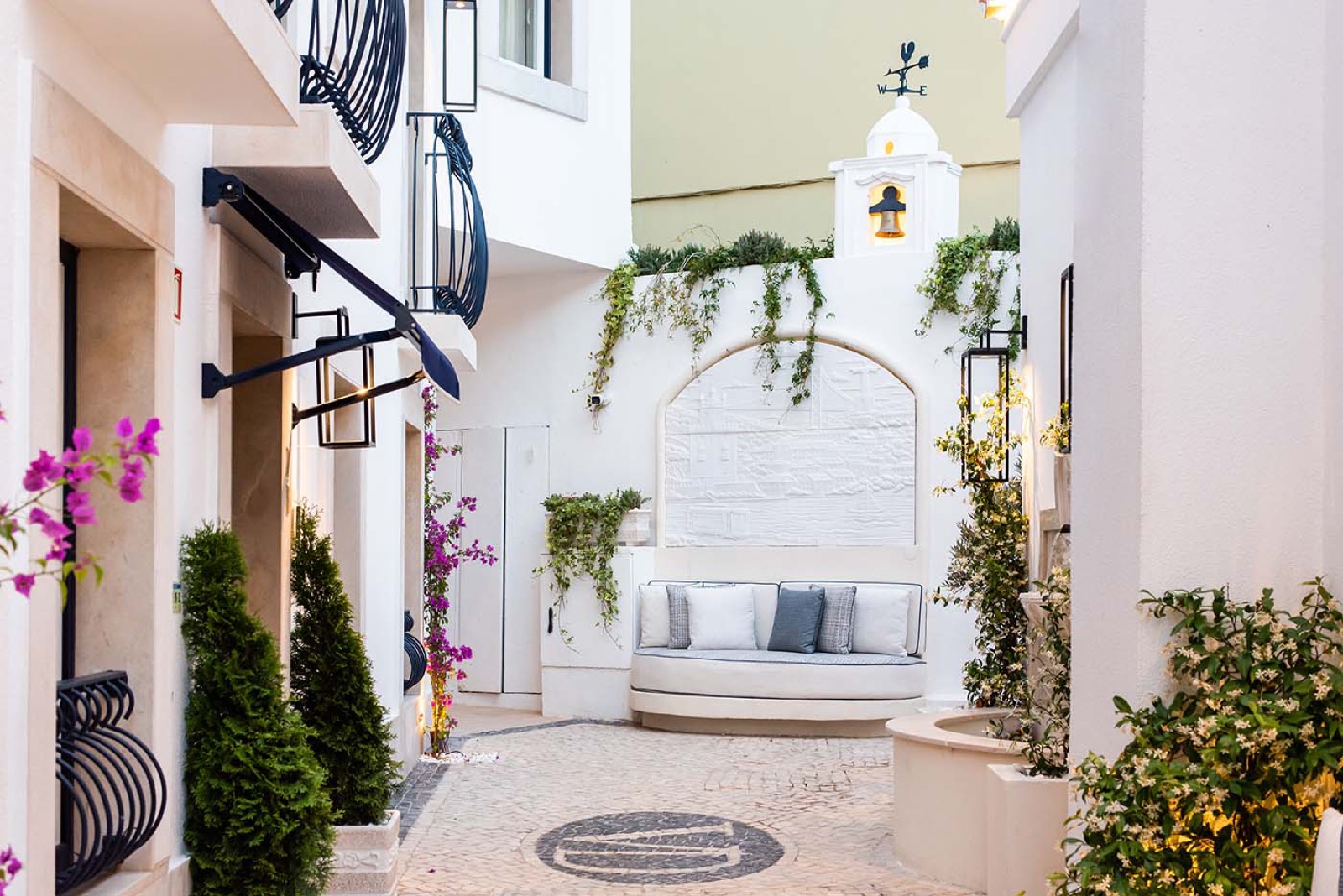
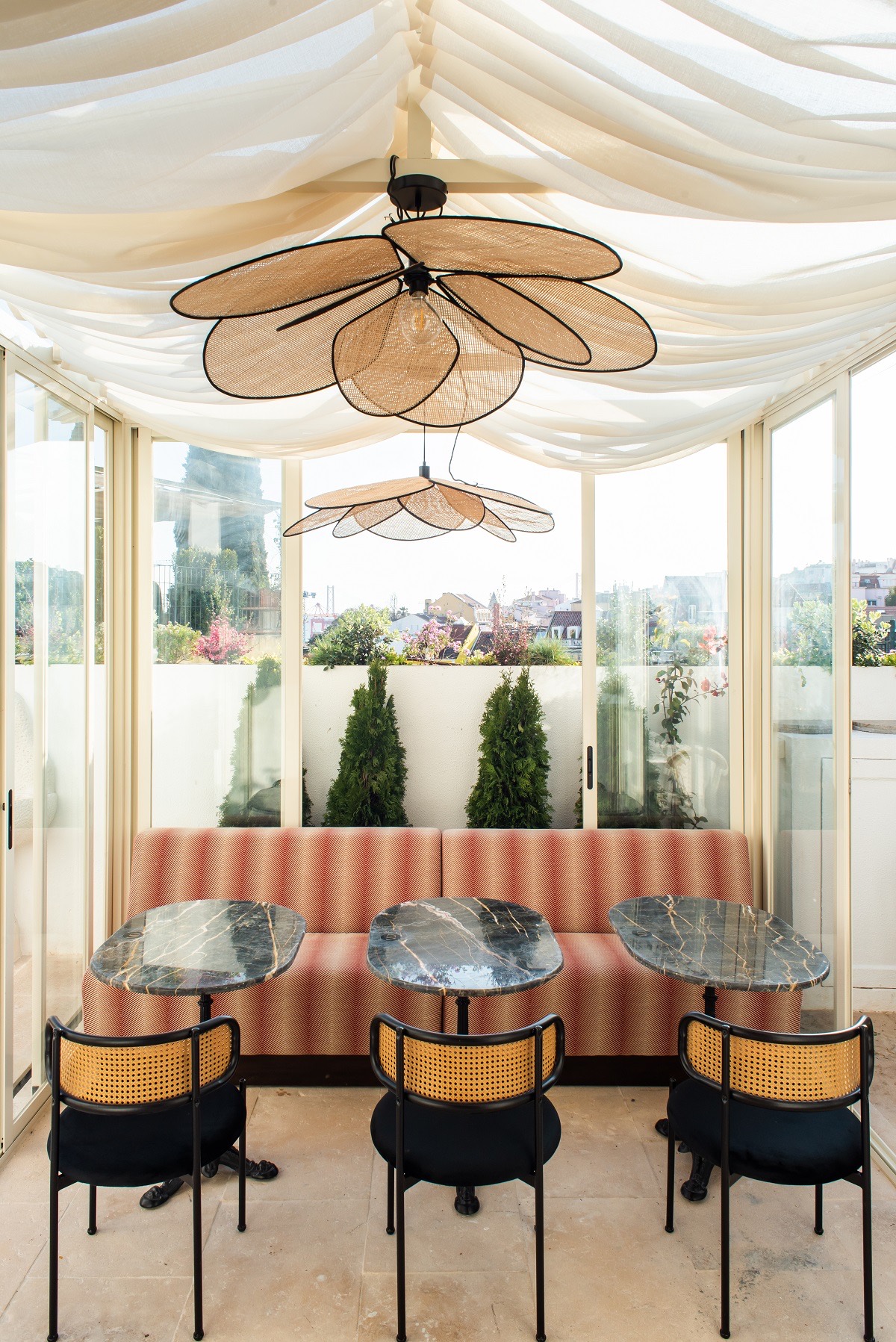
Between the housesThe alley linking the five houses is the central space of this hotel. The paving is traditional Portuguese calçada, and the built-in bench sits under the arch at the far end. ⓒVilla Dorothéa
Daily Hotel
Lisbon locked its rental licences, so five houses became one hotel
2026.08.29
The year Lisbon locked short-term rental licences down district by district, five houses built in 1878 in an old fishermen's quarter opened as a 20-room hotel. No lobby was built. The alley between the houses does that job instead.
1.Villa Dorothéa began trading on 6 June in Lapa, Lisbon. The address is Rua das Trinas 61. In this neighbourhood wedged between the Tagus and the hill, five houses built in 1878 were linked together to make 20 rooms, and the operator is Tradition Signature, founded by Jacob Perez Toledano. It is the company's first property in Lisbon.
2.The people who lived here were of Madragoa. The quarter where the varinas who carried and sold fish through Lisbon made their homes, and the place where this city's azulejo tile tradition began. Those houses are not large, the stairs are narrow and the rooms are small. Terrible conditions for a conversion into a hotel, and here none of it was corrected.
3.Which is to say the five houses were kept as five houses rather than merged into one block. House connects to house through stone alleys and internal passages, a courtyard trained with jasmine sits in the middle, and the roof opens onto a terrace facing the Tagus. There is no floor plan built around a front desk. Guests do not pass through a lobby to reach a room; they walk down an alley and go in their own front door.
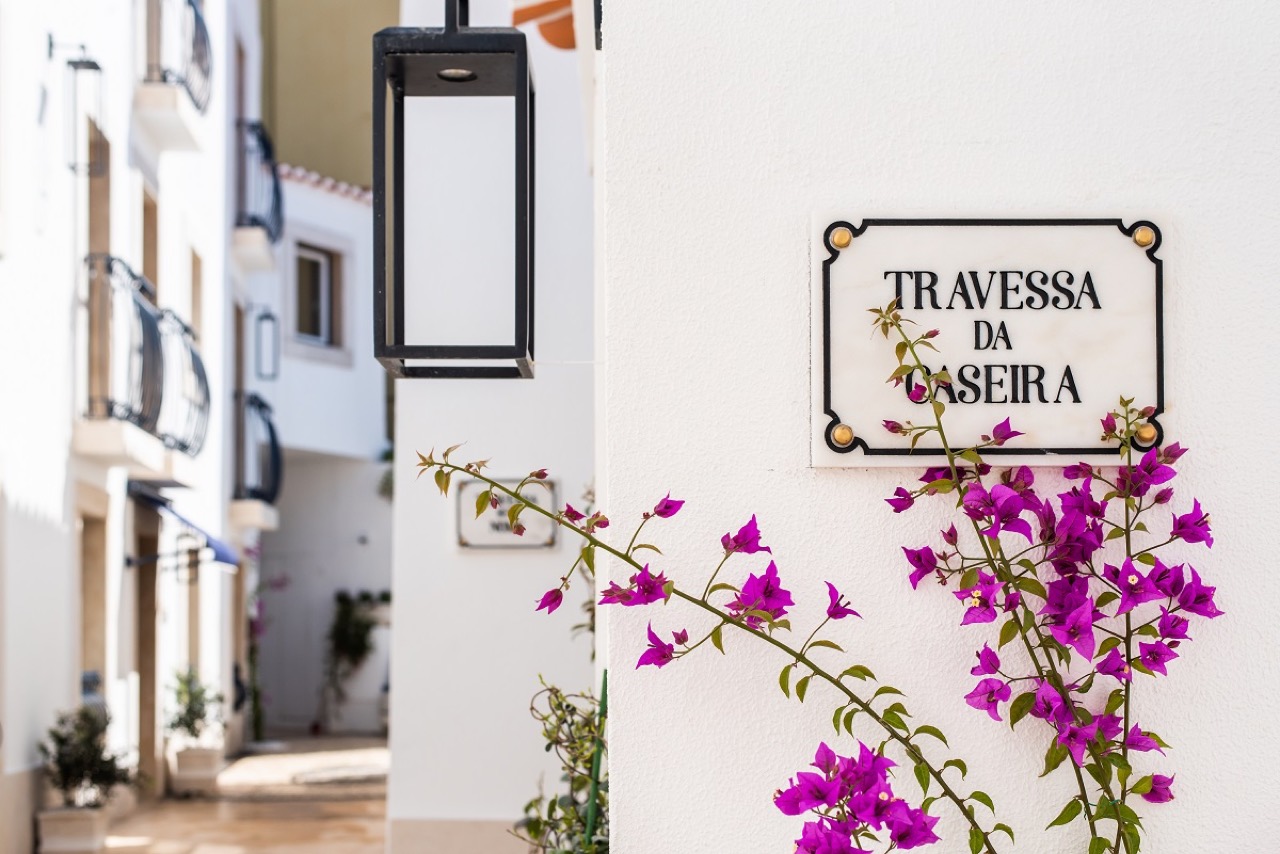
The alley's name plateAn inner path carries a name plate in the same format as a real street sign. A mark that this is a street rather than a corridor. ⓒVilla Dorothéa
4.There is a genuine street sign in that alley. A white enamel plate with a black border, the kind seen anywhere in Lisbon, reading 'Travessa da Caseira'. It declares that guest circulation will be called a street and not a corridor, and one enamel plate sums up what this hotel sells.
5.There are 20 rooms and seven room types. From the 20 to 22 sqm rooms on the ground floor that open straight onto a patio, to 28 sqm with river and city views, a 40 sqm suite holding a separate living area, dressing space and bar corner, and a 42 sqm mezzanine suite across two levels. Seven types across 20 rooms complicates both the cleaning route and the rate card, but with five houses that were each a different home there was no way to make the rooms identical.
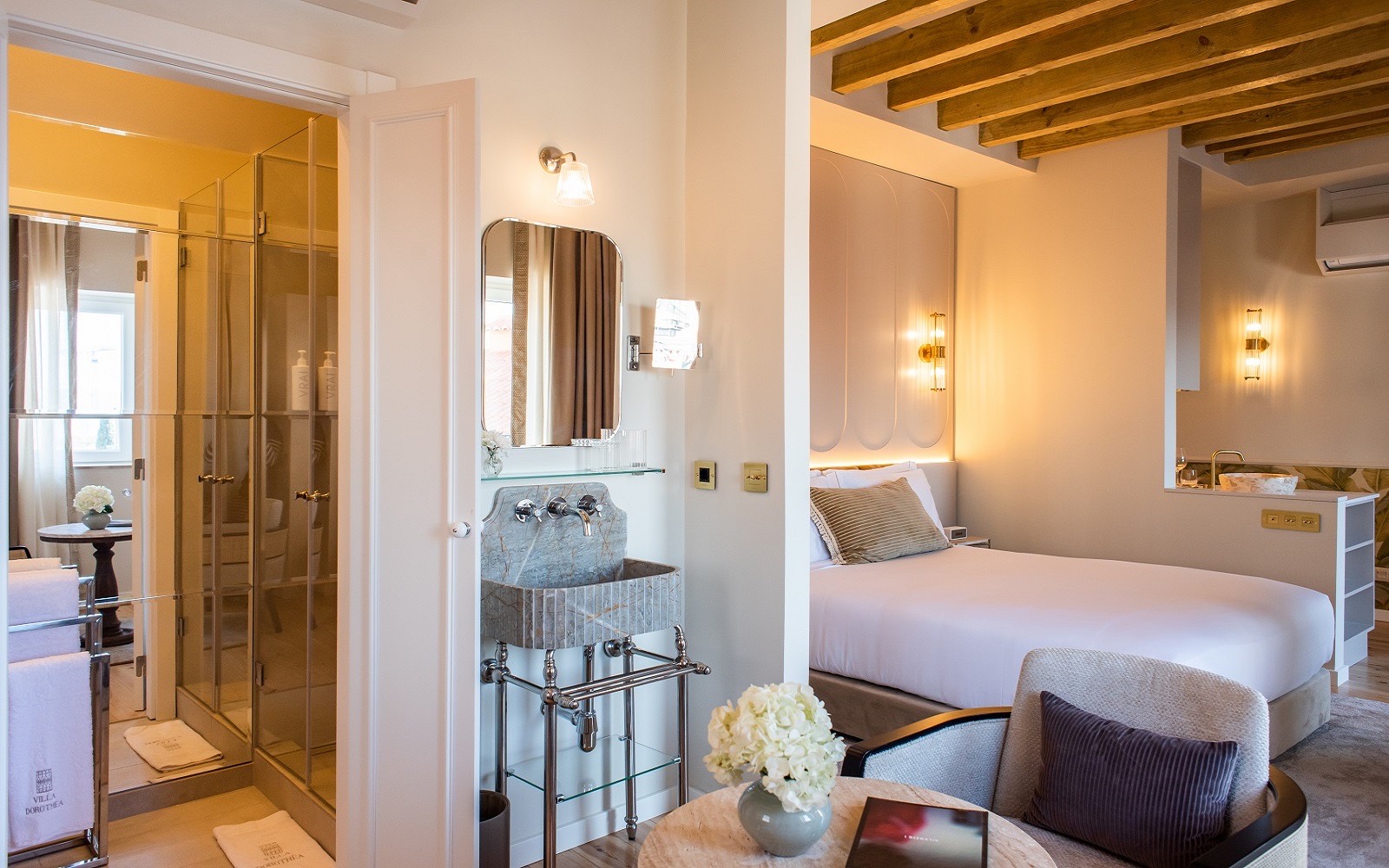
Room mixRoom counts by type are not published, so only the area bands are shown. The 20-room average is estimated at around 27 sqm.Guest roomThe bathroom is not walled off and the basin is pulled out into the room. The ceiling beams are the original structure of the house. ⓒVilla Dorothéa
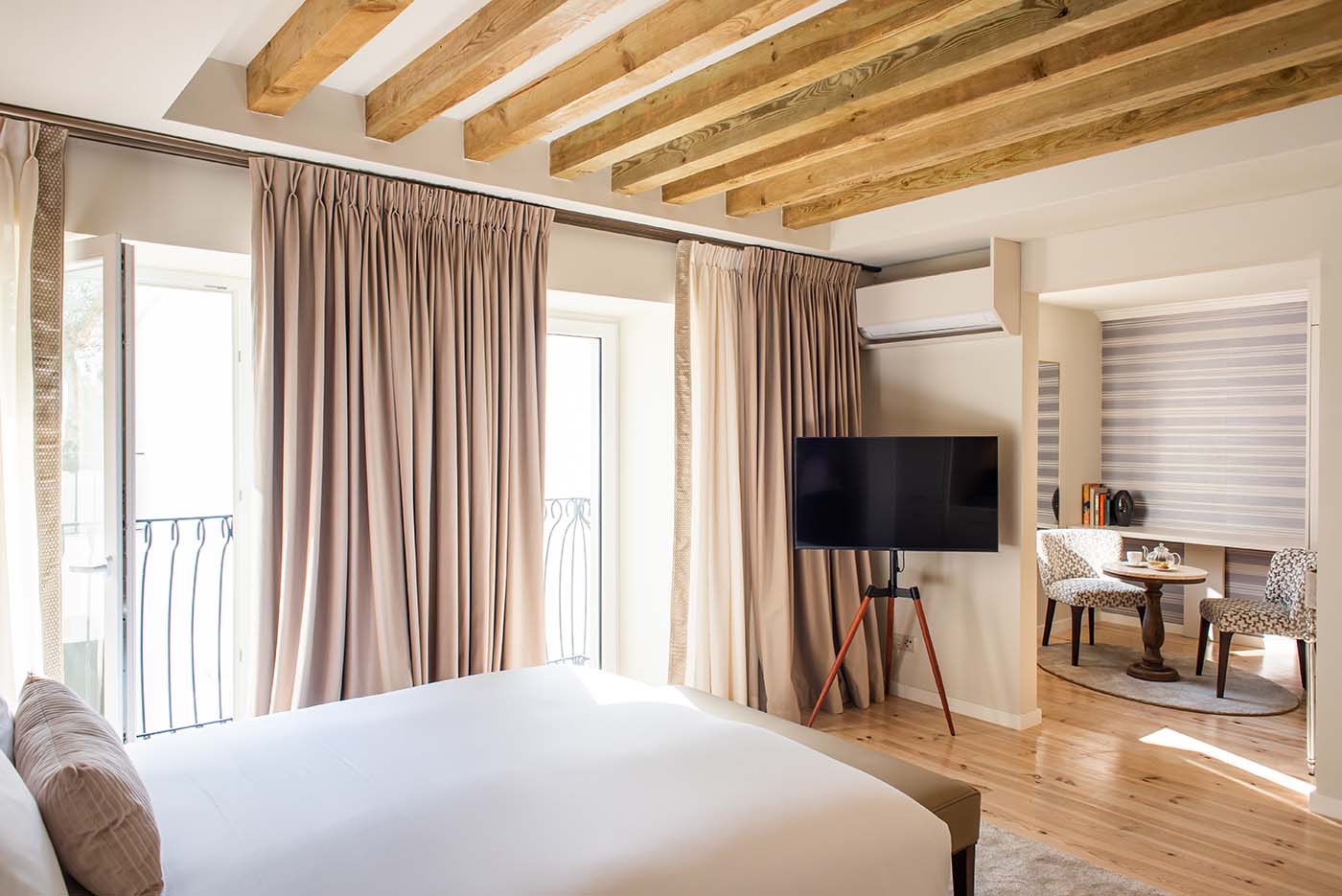
6.Walk into a room and the ceiling catches you first. The pine beams that hung in the original house were left exposed, and wide boards were laid on the floor. The windows are French doors with nothing but an iron rail, so opening them lets the sound of the alley straight in. Jasmine from the courtyard in the morning, ice being shaken at the bar downstairs in the evening. This is not a structure that can boast about sound insulation, so in place of quiet the hotel sells the feeling of standing in the middle of a neighbourhood.
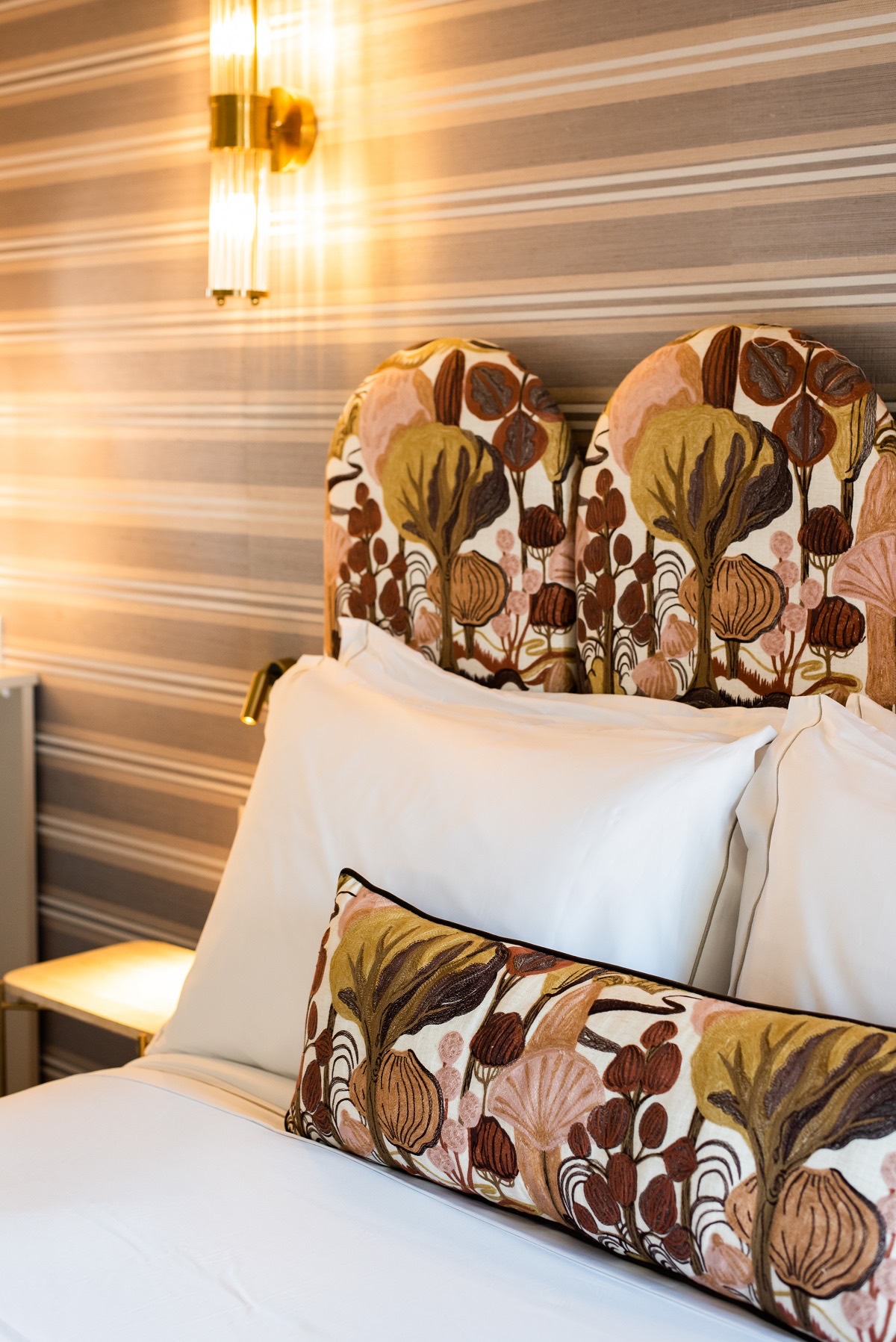
French doorsA rail instead of a balcony. Open the window and the depth of the room runs out to the alley. ⓒVilla DorothéaHeadboardThe same pattern carries through to the cushions. Fabrics differ room by room, so a single bulk order is out of the question. ⓒVilla Dorothéa
7.Published rates start at 280 euros a night. The recent average daily rate for Lisbon's upper-tier hotels was 285 euros at 78.4% occupancy, so the starting line has been drawn in the middle of the market. Taking occupancy down to 68% for a first year and setting the average rate at 330 euros to allow for the wide spread of types gives RevPAR of 224 euros, and annual rooms revenue across 20 rooms of 1.64 million euros. Around 2.5 billion won. This is calculated by the writer from market statistics and is not a result released by the operator.
Revenue estimateRate and occupancy are taken from market averages, so they may differ from actual performance.
8.Putting room area at an average of 27 sqm gives 540 sqm, and adding the stairs and corridors scattered across five houses, the restaurant and two bars and the roof terrace brings gross floor area to around 900 sqm. That is 272 pyeong. Rooms alone come to 780,000 won per pyeong per month, and 980,000 won once food and beverage is added. Set against small city-centre accommodation in Seoul running between 400,000 and 600,000 won, that sits high.
9.The problem is people. Twenty-four hour reception, 24-hour room service, valet parking and concierge, and in-room massage on top of it. Four for reception alone across three shifts, three in housekeeping, six or seven in food and beverage, and a general manager and maintenance on top puts around 19 people onto 20 rooms. One person per room. Set against a mid-sized Korean business hotel running at 0.2 staff per room, an altogether different tier.
10.The reason that headcount is needed sits in the design. With rooms spread across five houses a housekeeping trolley cannot sweep a single floor and be done; it has to cross the alley and climb another house's stairs. Carrying a room service tray across the alley on a rainy day is the same job. In the place where not building a lobby saved construction cost, that money goes out every month as payroll.
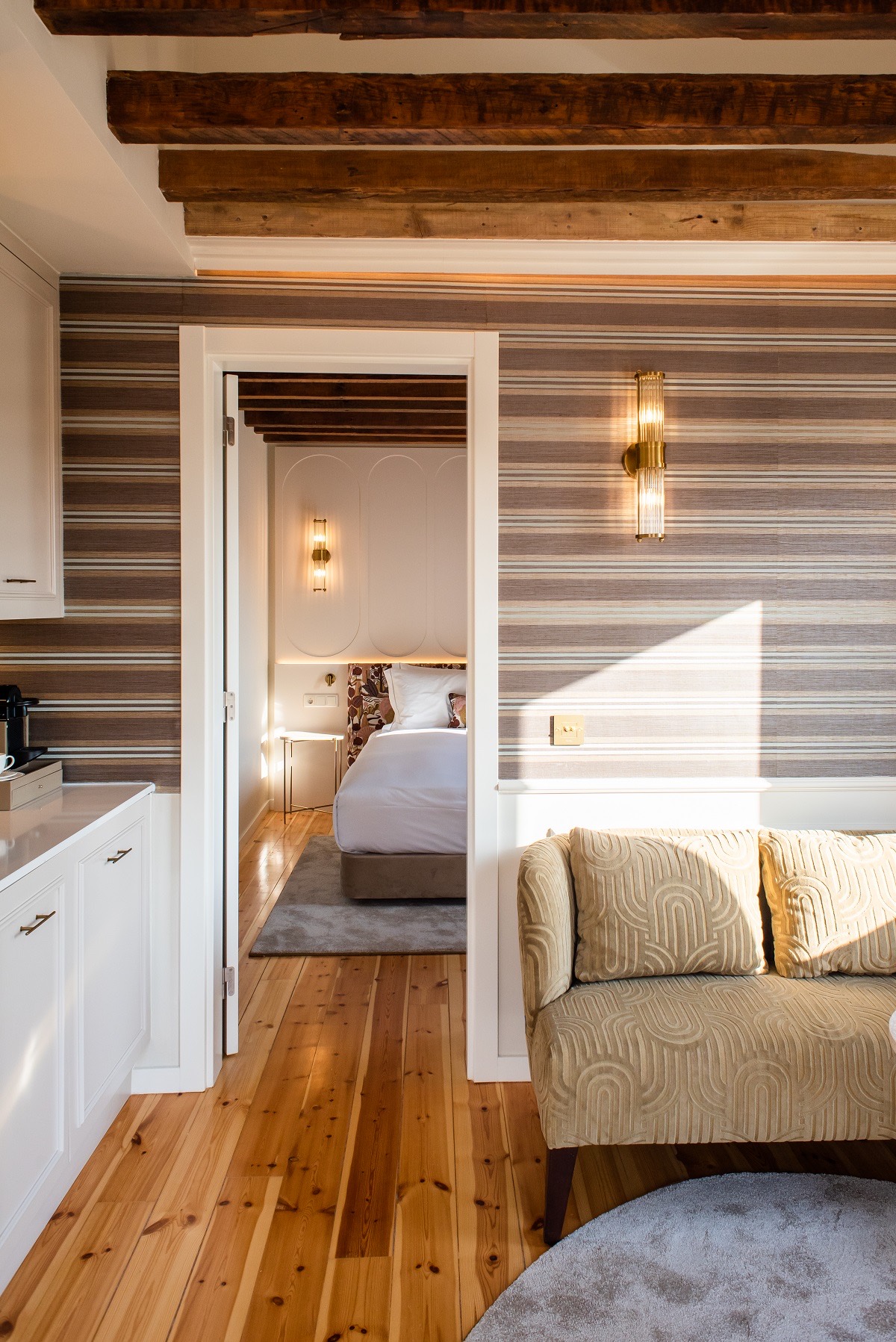
SuiteLiving room and bedroom split by a single door, with a counter attached. A layout put together to take longer stays. ⓒVilla Dorothéa
11.Money from outside the rooms is scattered across three places. The gastrobar The Secret, wedged between courtyard and roof, at 25 seats; a lounge bar with a fireplace; and a cocktail bar with a view of the river. What a star-rated hotel would have pulled from banquet halls and a large restaurant is taken here through one 25-seat dinner room. At 50 euros a head filling it once a day, that comes to 430,000 euros a year, 26% of rooms revenue.
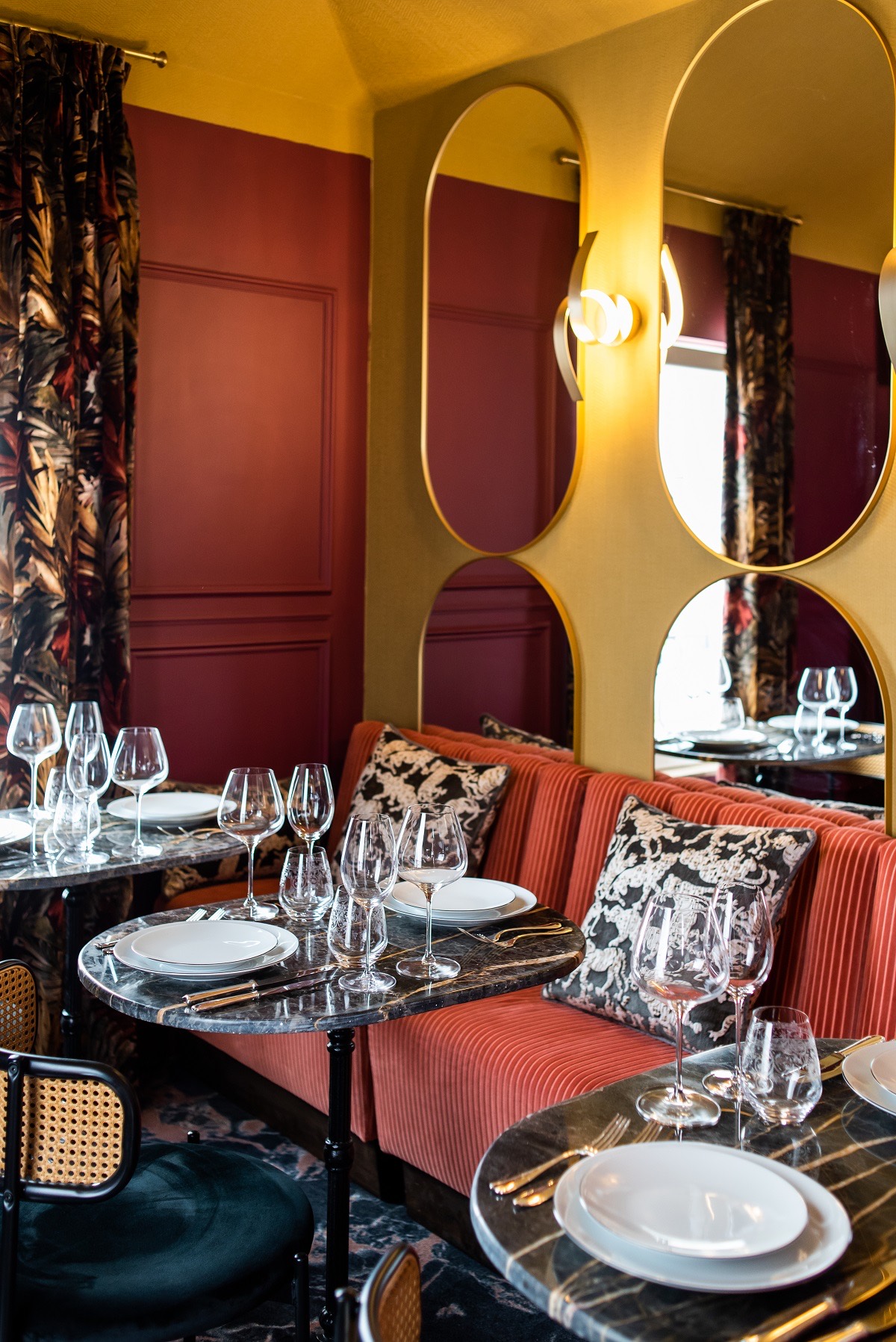
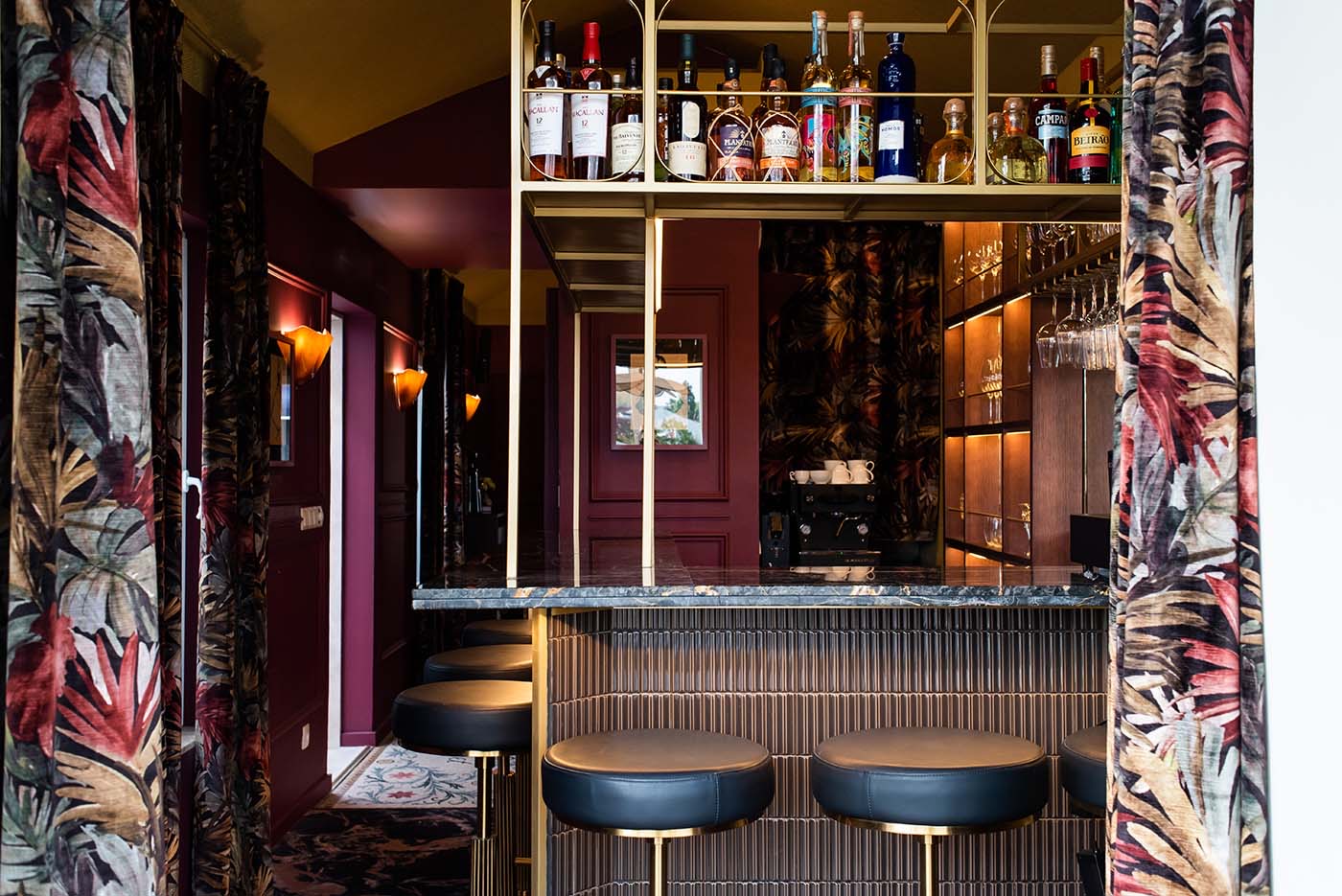
The SecretBuilt-in benches line the walls with small round tables set against them. There are only six tables inside. ⓒVilla DorothéaLounge barThe counter is short, so there are four stools. A size that runs on one bartender. ⓒVilla Dorothéa
12.Being small is not a weakness here. Twenty-five seats and four stools run on one kitchen team and one bartender, and the inventory risk is that much smaller. In exchange this size cannot take neighbourhood custom in volume, so food and beverage does not stand up as a business of its own. Closer to a size that holds the evening of 20 occupied rooms.
Roof diningGlazed all round so it can be used through the year. Six seats or so. ⓒVilla Dorothéa
13.Putting few rooms into old buildings and attaching regional food is something this country turned into policy more than 80 years ago. Pousadas de Portugal began with Law 31.259 of 1941 and opened its first house the following year at Elvas in the Alentejo; a strand converting castles and monasteries appeared in the 1950s, and Pestana Hotel Group now runs more than 30 of them. The five-house version of what the state was doing with castles and monasteries.
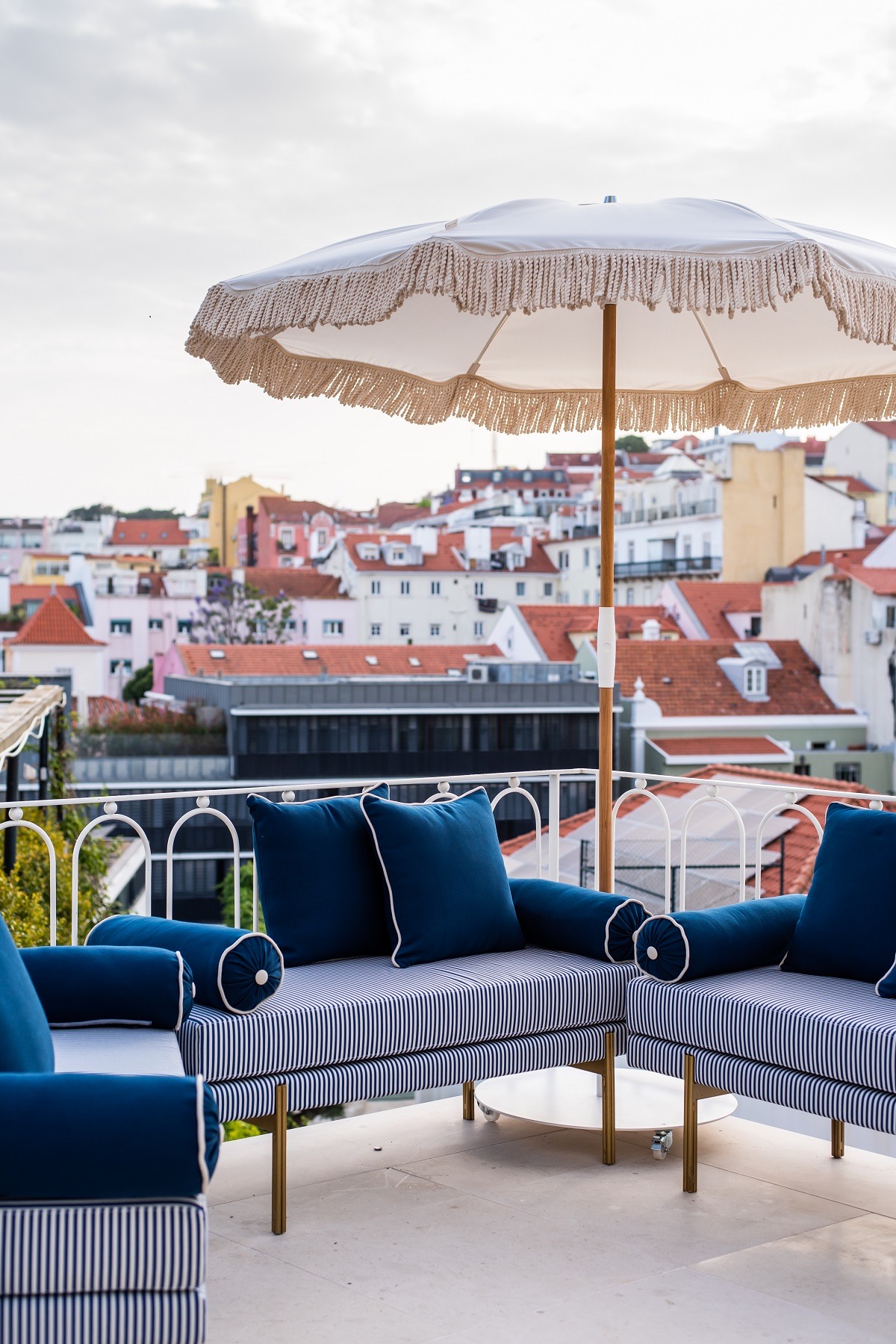
Roof terraceBeyond the rail are the roofs of Lapa. The roof of the tallest of the five houses. ⓒVilla Dorothéa
14.So why did this business have to be a hotel. Lisbon City Council amended its short-term rental rules last November and applied them from this year, blocking new registrations outright once a district's short-term rentals pass 10% of its housing. In February it cancelled 6,765 licences in one go for failure to file proof of liability insurance. More than a third of the 19,000 registered in the city.
15.Estrela, the parish Lapa sits in, came off the outright ban to a permit regime in April's reclassification, and until then it was a district where new licences were blocked altogether. Portuguese law states that a property meeting the requirements of a tourist accommodation development cannot be registered as a short-term rental, so climbing up to meet those requirements switches the whole layer of regulation. Where the route of running five houses as five short-term rentals had closed, the five were bundled and registered as a hotel. The 20 rooms are less a number reached out of ambition than a number filled to meet the registration requirement.
A hotel that keeps five houses as five houses rather than merging them, using the alley between as its lobby, has opened in Lisbon, and the money 20 rooms make in a year is estimated at 2.07 million euros with food and beverage included. Doing the same thing in Korea gets blocked at the land first. Neighbourhoods with alleys like these are often Class 1 or Class 2 general residential zones, and general accommodation cannot in principle be built inside them. The way opens only outside the distance set by ordinance, or on a site cut off from housing by park or green belt. Clear that and there is more. Under the Public Health Control Act a place of business must be an independent site or divided by wall or floor, and depending on whether five separate buildings are read as one business or as five, the room standards, fire safety and parking counts may have to be met five times over. The idea of buying an alley and using it as a lobby is settled on the zoning map before it is ever settled on a drawing.