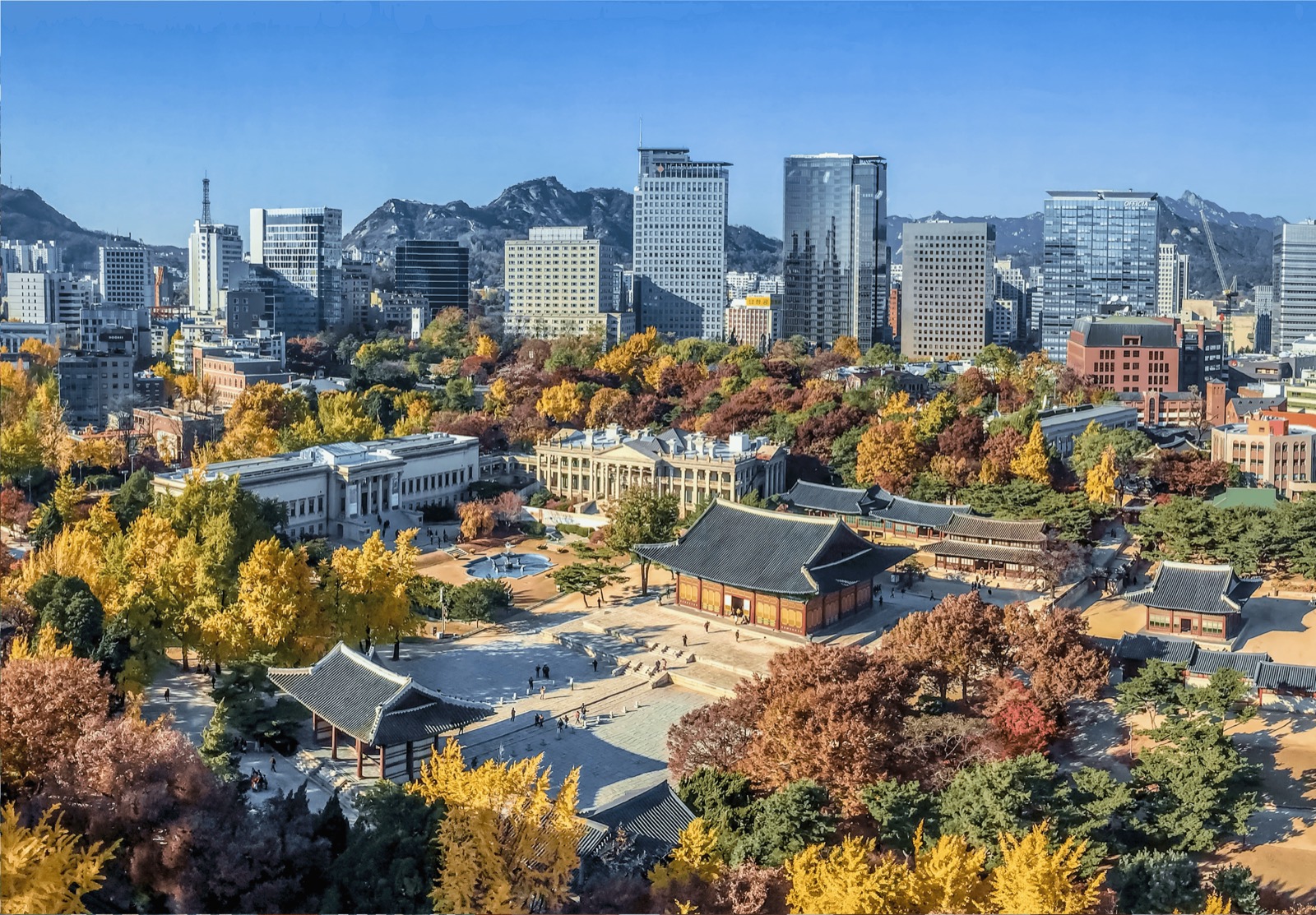
Deoksugung and the city centreOffice blocks line up just beyond the palace wall. Several ageing buildings in this district are being turned into hotels right now. ⓒUHC
Daily Hotel
Nine bathrooms on a floor that used to need two
2026.09.07
A 16-storey office block built in 1971 in central Seoul has reopened as a hotel with 108 rooms. Nothing was added to the structure. Revenue runs more than double what the offices brought in, yet the money left at the end is about the same.
1.A building on Sogong-ro in Seoul's Jung-gu district became a hotel in June. It is called UH Continental SeoulCenter. The original name was the Seoul Center Building, completed in 1971, two basement levels and 16 floors above ground, roughly 11,900 square metres of gross floor area. The 108 rooms occupy twelve floors, from the fifth to the sixteenth. The operator is UHC, a Korean hotel group.
2.The permit application to change the building's use was filed on 21 July 2025. The paperwork described a switch from neighbourhood business use to neighbourhood lodging use, and the room count reported at the time was 117. What is on sale today is 108. Where the other nine went has not been disclosed. Draw guest rooms onto an office floor plate and one or two always disappear into the core and the columns.
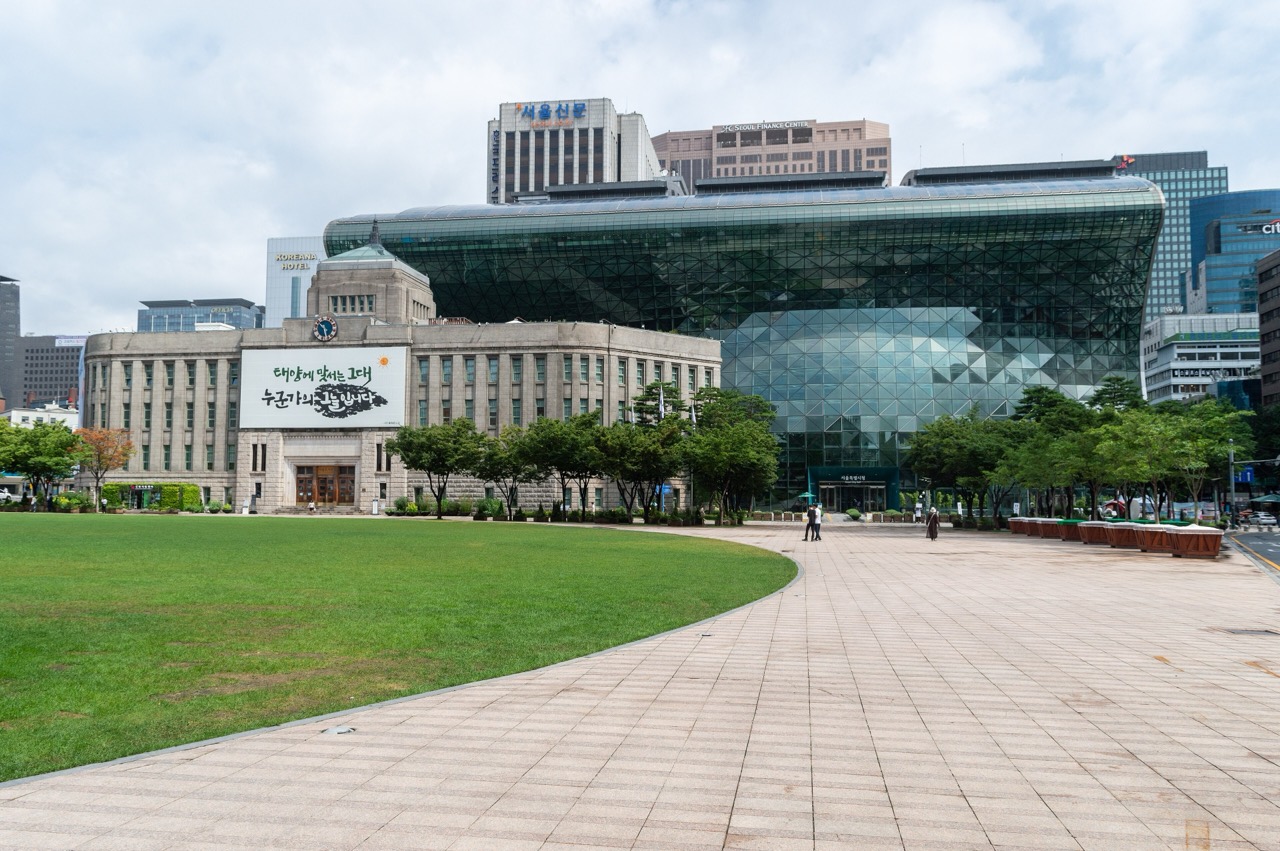
Seoul PlazaA two-minute walk from the hotel. City Hall station on lines 1 and 2 and Deoksugung Palace sit on the same block. ⓒTristan Surtel · CC BY-SA 4.0
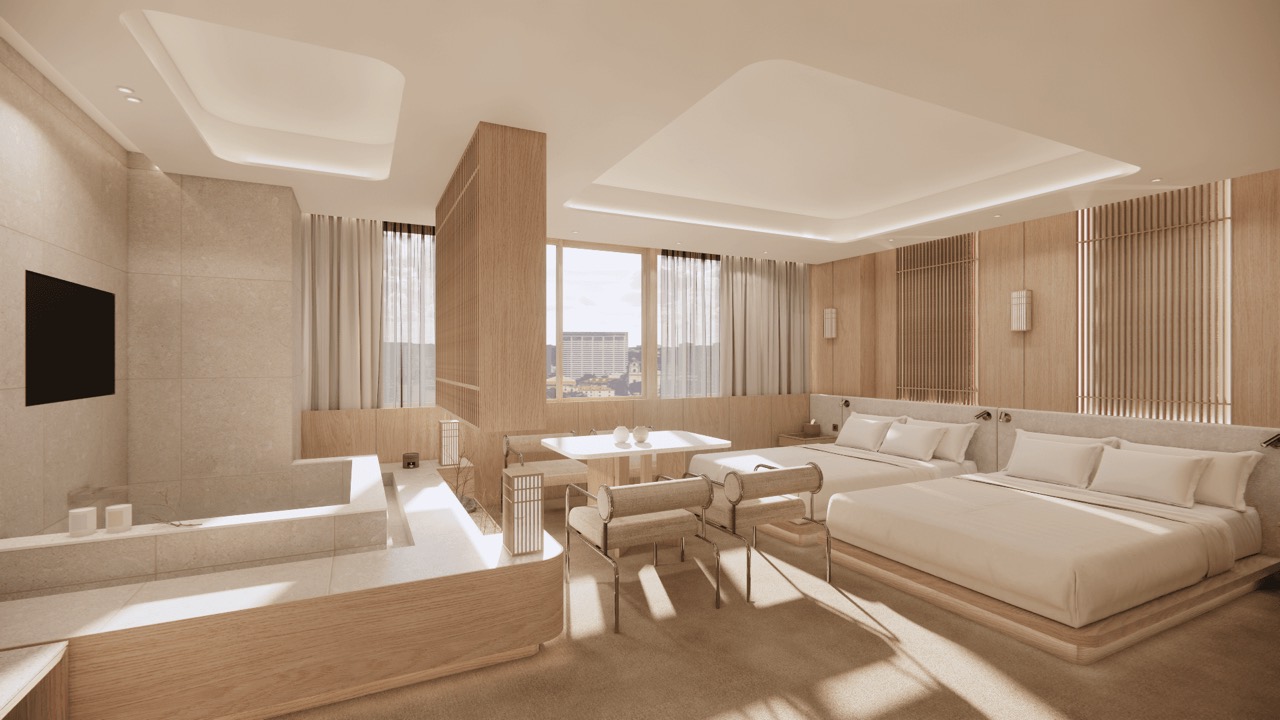
3.There are four room types. The smallest, a deluxe double, is 33 square metres; the twin is 42. A grand suite with three bedrooms sleeping up to eight runs to 71 square metres. Standard rooms in Korean city hotels usually start between 23 and 26 square metres, so the smallest room here is nearly 10 square metres larger. Every room has a bathtub. That is what the brand's spa positioning rests on.
Guest roomA tub in every room. The wet zones were pushed deep into the office floor plate. ⓒUHC · pre-opening rendering
4.Twelve floors, 108 rooms, so nine per floor. As offices, each floor needed two toilets, one for each sex; as a hotel it needs nine, one per room. Cutting the slab to drop waste pipes and building new vertical service shafts is the bulk of the conversion budget, and the first thing anyone in the trade brings up about turning offices into hotels is exactly that: every room needs its own bathroom. This is not the kind of work that swapping finishes involves.
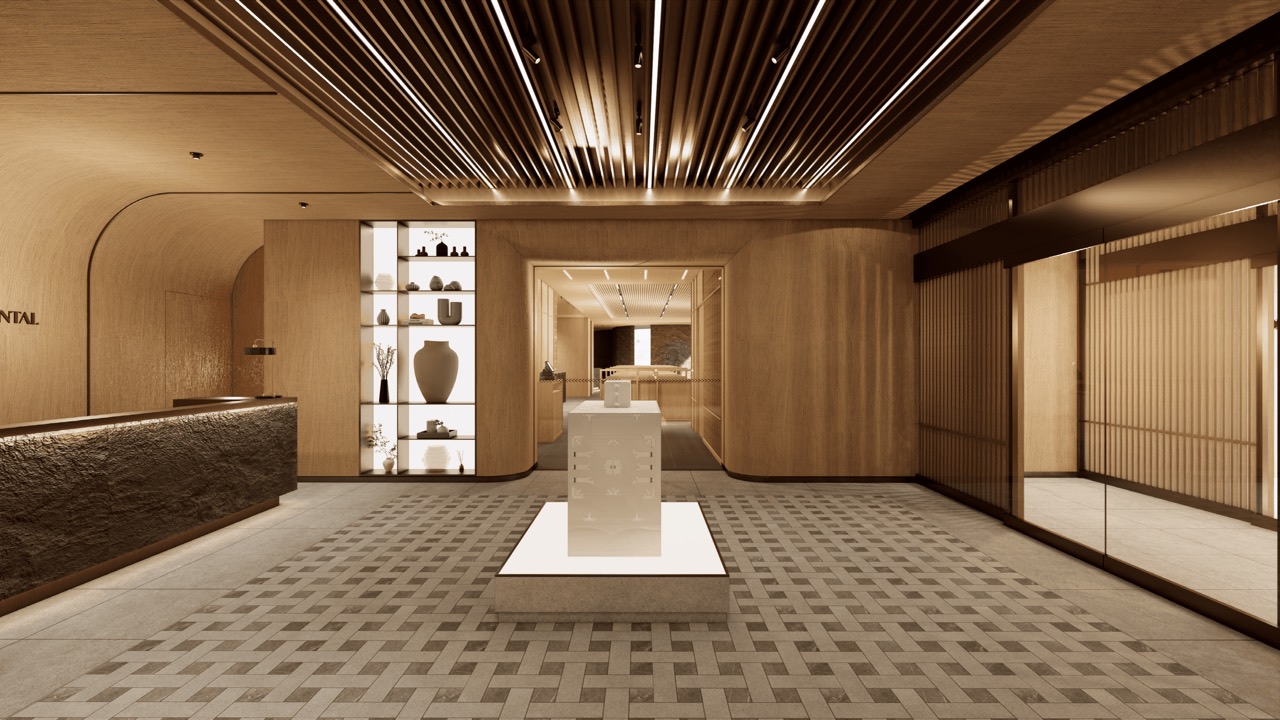
LobbyThe lower floors that held the office lobby now handle guests. The front desk was pushed against one wall. ⓒUHC · pre-opening rendering
5.Windows in a 1971 office block do not open. Floor-to-floor heights are lower than in hotels built today, and there is little room above the ceiling to hide pipework. The 52 guest reviews posted so far average 8.5 out of 10, with cleanliness highest at 9.0 and soundproofing among the lowest-scoring items. Divide a heavy concrete slab with lightweight partitions and the noise next door travels through them. No finish covers that.
Room mixThe smallest room is nearly 10 square metres larger than a standard Korean city hotel room. That is what the old column grid produced.
6.Now the money. The lowest published rate is 214 dollars a night, so around 300,000 won. Allowing for suites in the mix, call the annual average rate 280,000 won. This is the first year open, so occupancy is set at 72%, below the Seoul city average. That gives RevPAR of 202,000 won and about 7.9 billion won in annual room revenue, or 73.6 million won per room. No figures have been published, so these are estimates using market norms.
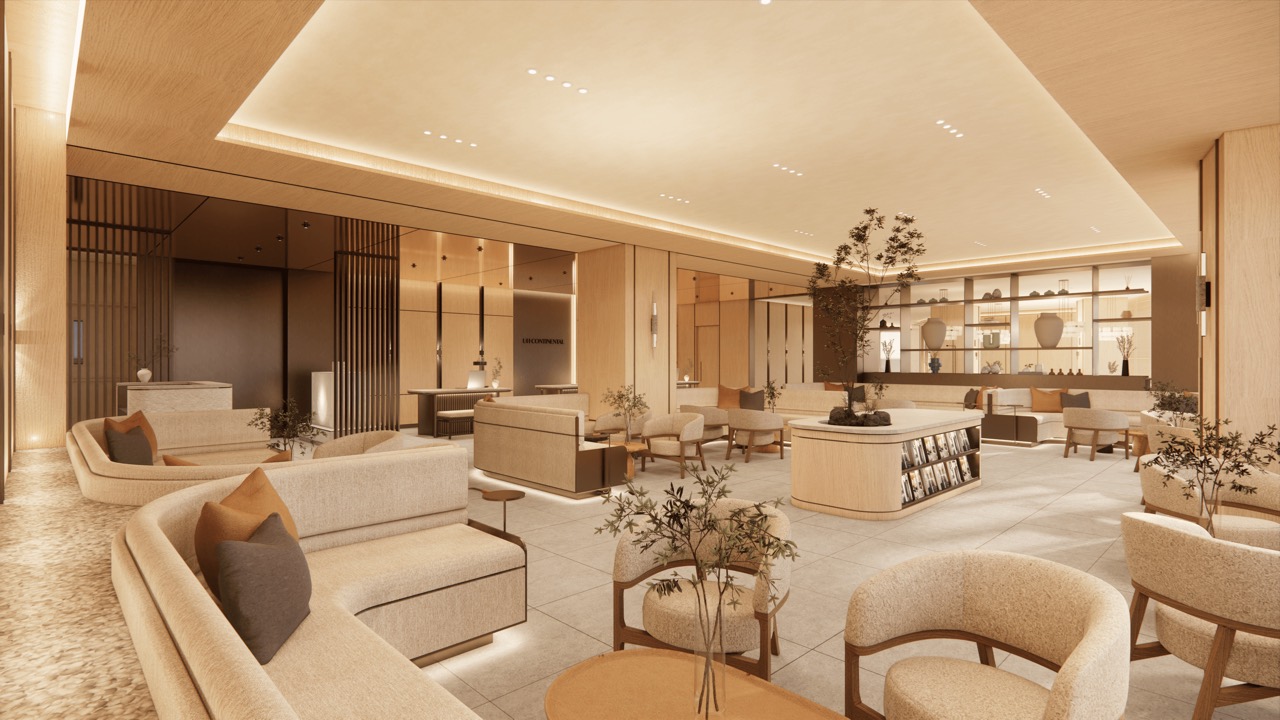
LoungeThe lower floors that could not be turned into rooms carry the guest and food-and-beverage functions. Breakfast is à la carte Korean, 8:00 to 10:30. ⓒUHC · pre-opening rendering
7.Divide that revenue by the building's floor area and you get about 55,000 won per square metre per month. What would the same building have earned as offices? Savills Korea puts the second-quarter headline rent for prime CBD offices at roughly 41,000 won per square metre per month, and a mid-sized building from 1971 does not command that grade. Something in the low 20,000s is closer to reality. On revenue alone the hotel is two and a half times ahead.
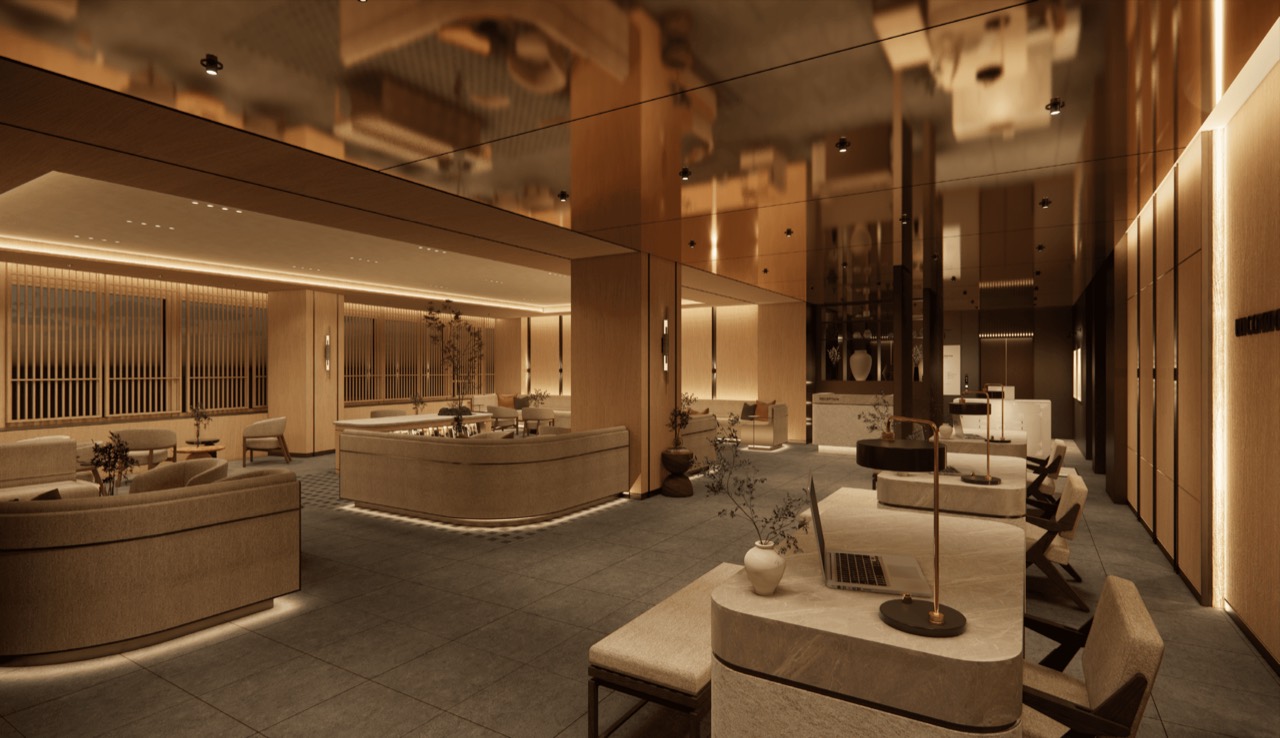
Lounge at nightThe same space works differently after dark. There is a business lounge on the third floor and a restaurant on the seventeenth. ⓒUHC · pre-opening rendering
8.Rent arrives and most of it survives once building charges and property tax come out; hotel revenue only appears when staff show up. Put the operating margin of a Korean upscale hotel in the low 30s and set aside 4% for furniture and equipment replacement, and roughly 2.2 billion won a year remains. Against the net income the offices would have produced, the gap is small. Double the revenue does not become double the profit because cleaning rooms and staffing a front desk are costs a landlord never carries.
Two ways to run the numbersThe reason it became a hotel anyway lies outside this chart.
9.The answer sits on the risk side. Between 2026 and 2032 the central business district will take on 2.56 million square metres of new office space, and forecasts put vacancy as high as 12% if that supply is not absorbed. When new buildings arrive, the ones that empty first are mid-sized blocks half a century old. On the other side, foreign arrivals in the first half of this year rose 21.3% to 10.71 million and hotel occupancy in Seoul recovered to 79.2%. Rent is fixed by contract. Room rates are not.
10.The operator's own structure supports the decision. UHC has built three in-house brands, a suite line, a residence line, and this Continental line, and runs them all directly. It is currently splitting a 15-storey building in Jongno into six lower floors of clinics and ten upper floors of hotel, and converting a former hospital into another. On the Jongno project it took the whole hotel block on a master lease and runs the operation.
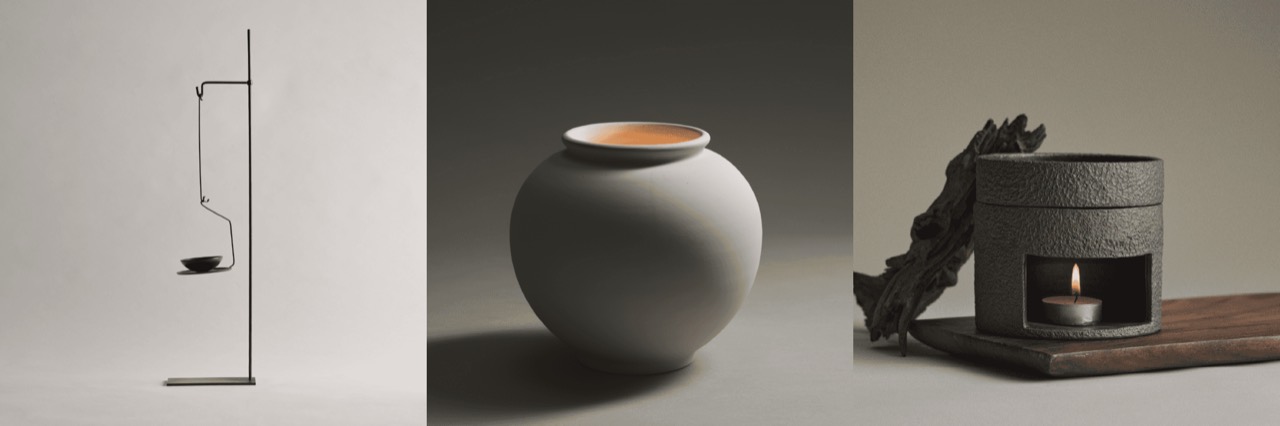
Room objectsMoon jars, incense and tea sets throughout. Low unit cost, high value in photographs. ⓒUHC
11.So why pay more to sleep here? Because the rooms are large. A 71-square-metre room with three bedrooms sleeping eight is rarely built in new city hotels. Carve rooms out of a building whose column grid and core are already fixed and you get large, deep rooms, which is exactly what groups of four to eight foreign travellers want. A new build would have made two rooms out of that footprint.
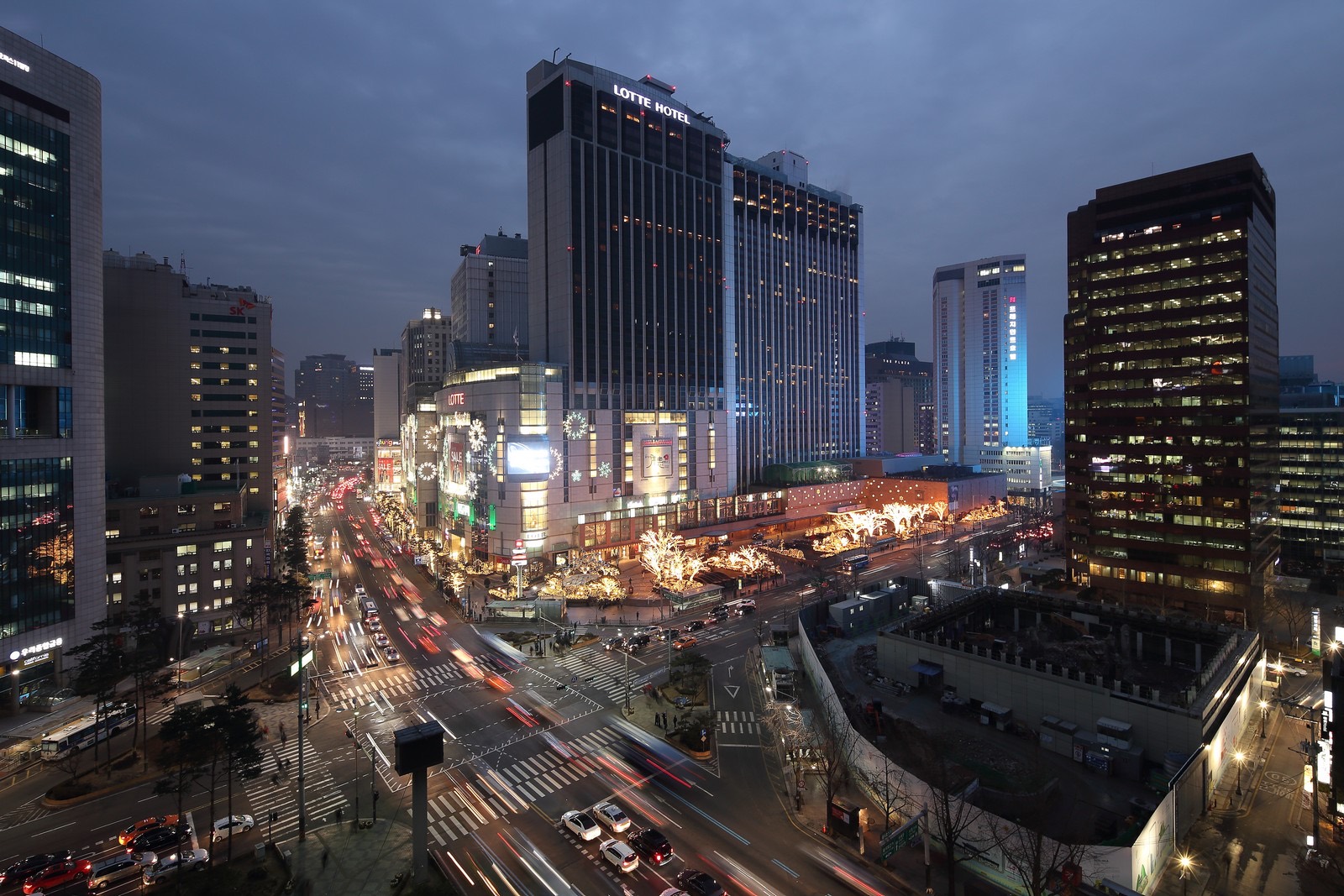
Sogong-dongDepartment stores and large hotels crowd a single block. That density pushed room rates up before it pushed office rents. ⓒThe Seoul Institute · CC BY 4.0
12.The location earns as much as the room size. Two minutes on foot from City Hall station, Deoksugung across the road, Myeong-dong and Gwanghwamun within walking distance. For an office tenant that translates into rent, and rent has a ceiling; for a tourist there is no ceiling. Two industries pricing the same address differently.
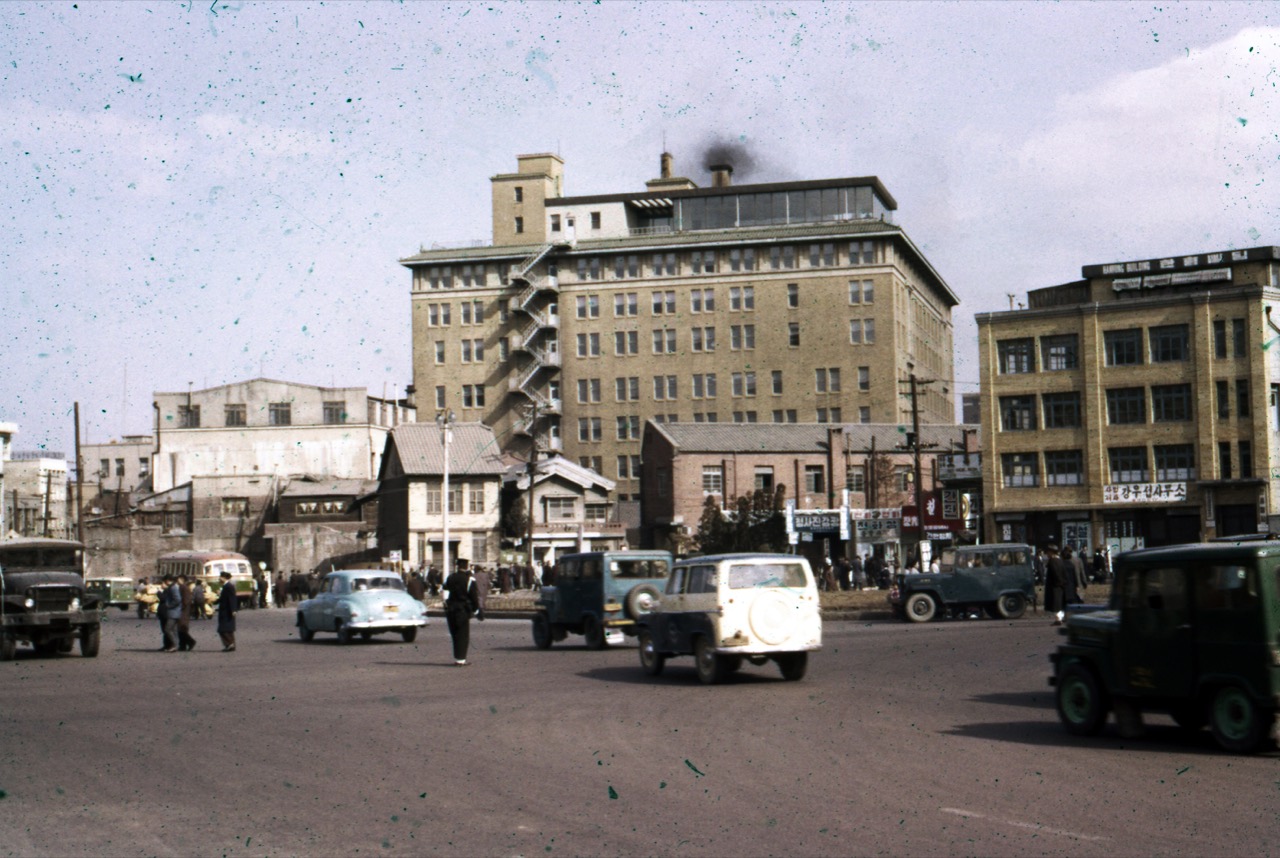
March 1960, near the Bando HotelThe eight-storey Bando Hotel, built in 1938, was the tallest building in Seoul until 1953. ⓒKorea Copyright Commission · CC BY 4.0
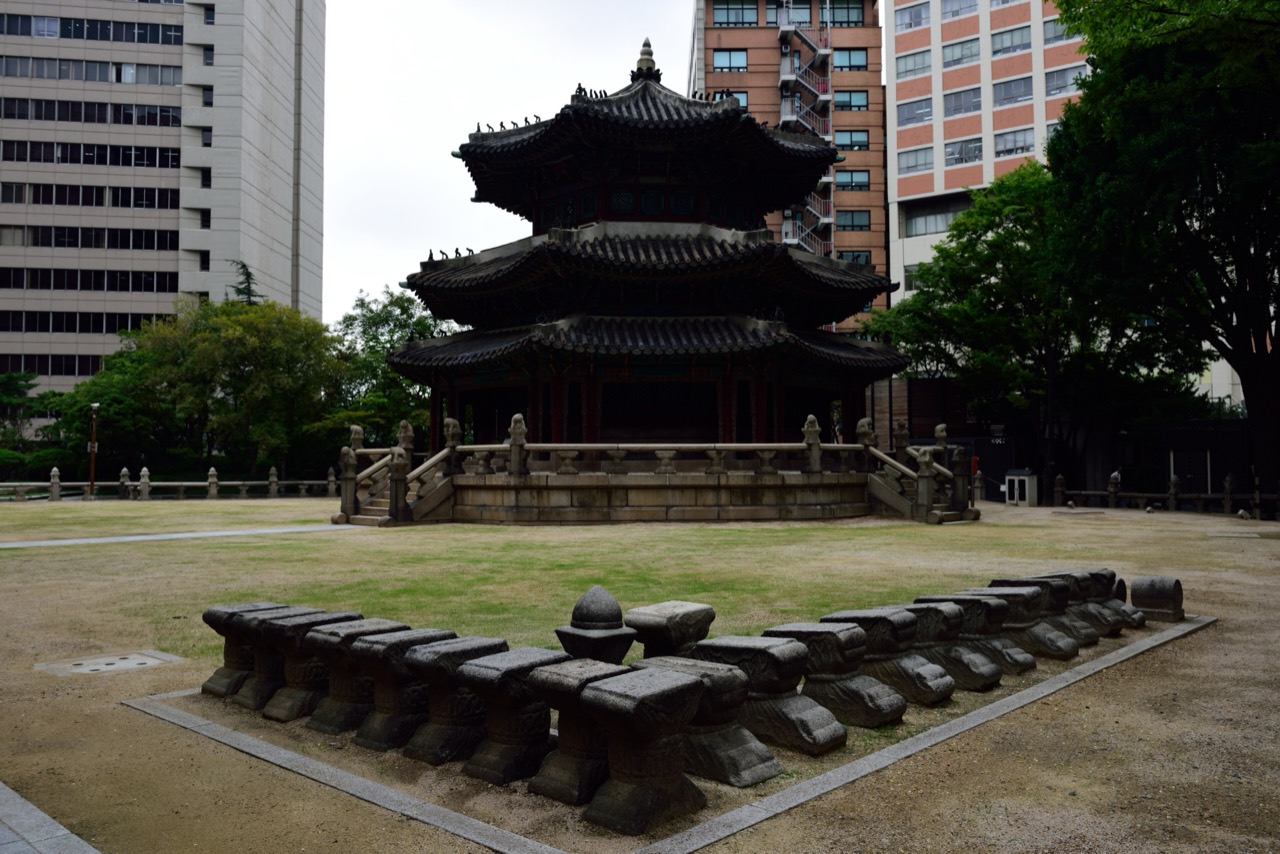
13.This district began as hotel ground. In 1897 Emperor Gojong built Hwangudan in Sogong-dong as an altar for rites to heaven; in 1912 the Japanese Government-General tore it down and put a railway hotel on the site. That building opened in 1914 as the Chosun Hotel. In 1938 the eight-storey Bando Hotel went up beside it and was called the country's first commercial hotel. Office buildings came with the following generation, and the Seoul Center Building is among the last of them.
HwangudanA railway hotel took the altar site in 1912. Only the Hwanggungu pavilion and the stone drums remain in the hotel's yard. ⓒKorea Heritage Service · KOGL Type 1
14.So this conversion is less an invention than a return. The question is how well a 55-year-old frame withstands the return. Soundproofing has already surfaced in the reviews, and a building with new pipework running up twelve floors comes back for repairs a decade later with leaks and noise. First-year occupancy and rates ride the new-hotel effect, but holding the same numbers in the same spot from year three is a different job.
A 16-storey office building from 1971 became a hotel with 108 rooms across twelve floors. Nine per floor, the smallest at 33 square metres, nearly 10 square metres larger than a standard Korean city hotel room. Revenue per square metre is two and a half times the office rent, but once payroll comes out the net income barely differs, and the reason it was converted anyway lies in the gap between seven years of incoming office supply downtown and a 21% rise in inbound tourists. Anyone attempting this in Korea will lose money first on plumbing. Offices need two toilets per floor; a hotel needs one per room, and building those vertical shafts means cutting the slab. On top of that come parking requirements recalculated at the moment of the use change, and sewage capacity and fire systems reassessed under lodging standards. Ceiling heights and column spacing show up on the drawings. These three only show up on the quote.