A 3.2-billion-won-per-room hotel whose sign is a restaurant name
2026.09.20
A 1960s office building in the middle of Madrid reopened on 1 September as Nobu Hotel Madrid, with 50 rooms. The building and the works together cost 100 million euros, and on estimated revenue the restaurant, not the rooms, is what has to pay that back.
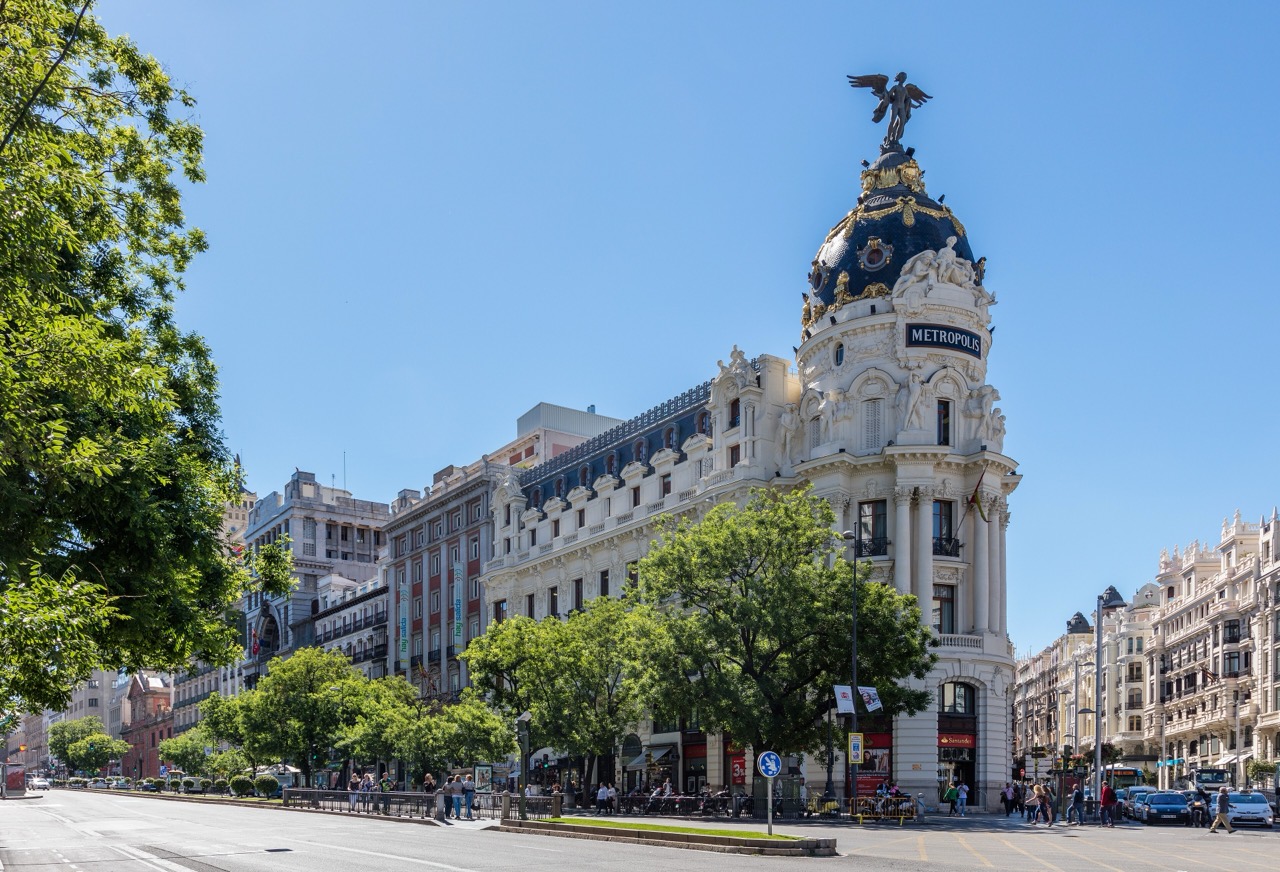
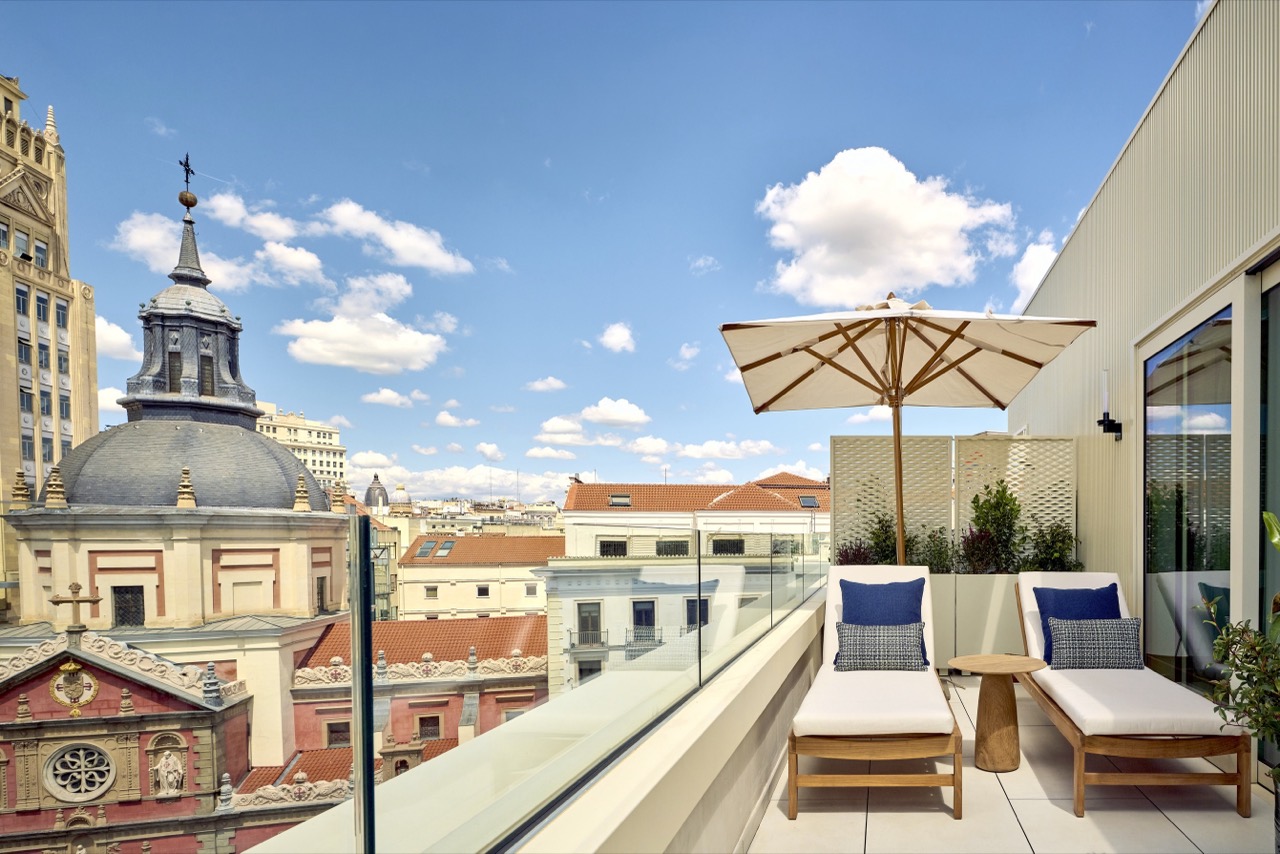
1.Number 26 Calle de Alcalá, a corner building between Plaza de Cibeles and Puerta del Sol. Nobu Hotel Madrid opened here on 1 September. Fifty rooms and suites in all. It is run by Nobu Hospitality, founded by chef Nobu Matsuhisa, actor Robert De Niro and businessman Meir Teper. It is the fifth Nobu hotel in Spain, after San Sebastián, Barcelona, Marbella and Ibiza.
2.The owner is Millenium Hospitality Real Estate, a listed Spanish property company that buys only hotel assets. In December 2021 it bought the office building from the lawyers' mutual Mutualidad de la Abogacía for 36.7 million euros. Forbes España put the total spent up to opening at 100 million euros. That is 2 million euros per room, or 3.2 billion won at 1,600 won to the euro. The hotel quotes rates from 660 euros a night with breakfast.
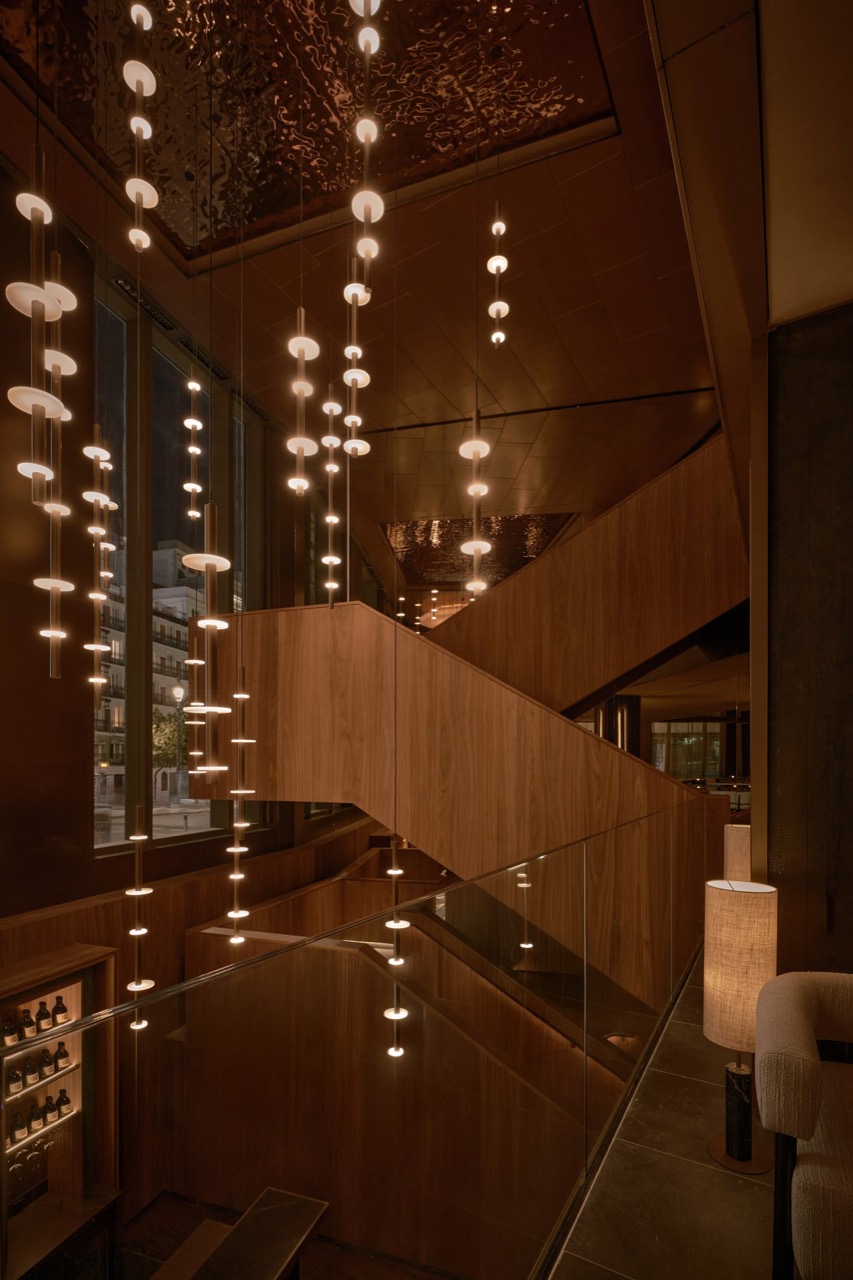
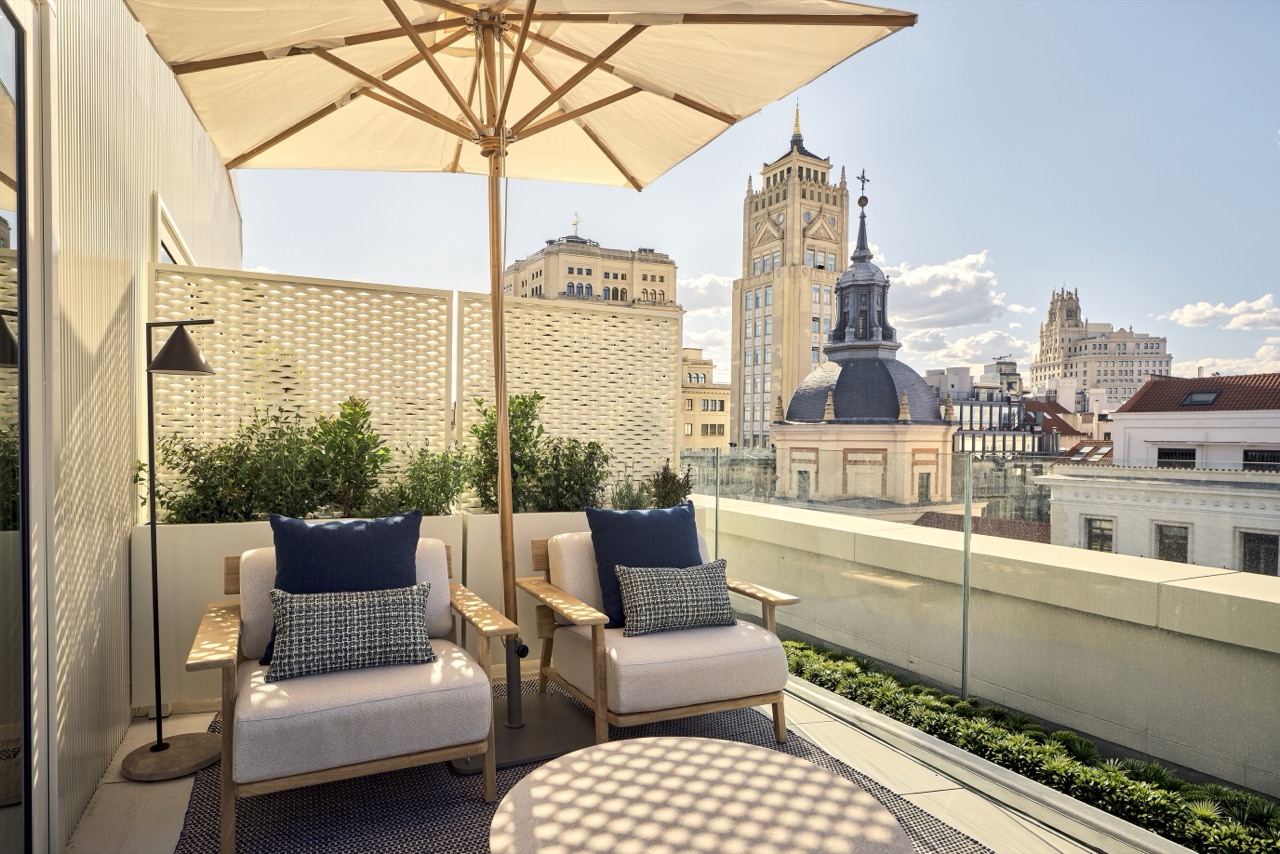
3.As offices, the building had 5,343 sq m of floor area: two basements, then a ground floor, a mezzanine, five floors and an attic. Divide by 50 rooms and each room gets 107 sq m, or 32 pyeong. A city business hotel uses 40 to 50 sq m of floor area per room, so this is more than double, and the difference went to the restaurant and bars. The ground-floor lobby lounge is open to non-guests, and on top of that come a Nobu restaurant, bar and lounge spread over three levels, a separate cocktail bar and a seventh-floor rooftop. Four food and drink spaces in all.
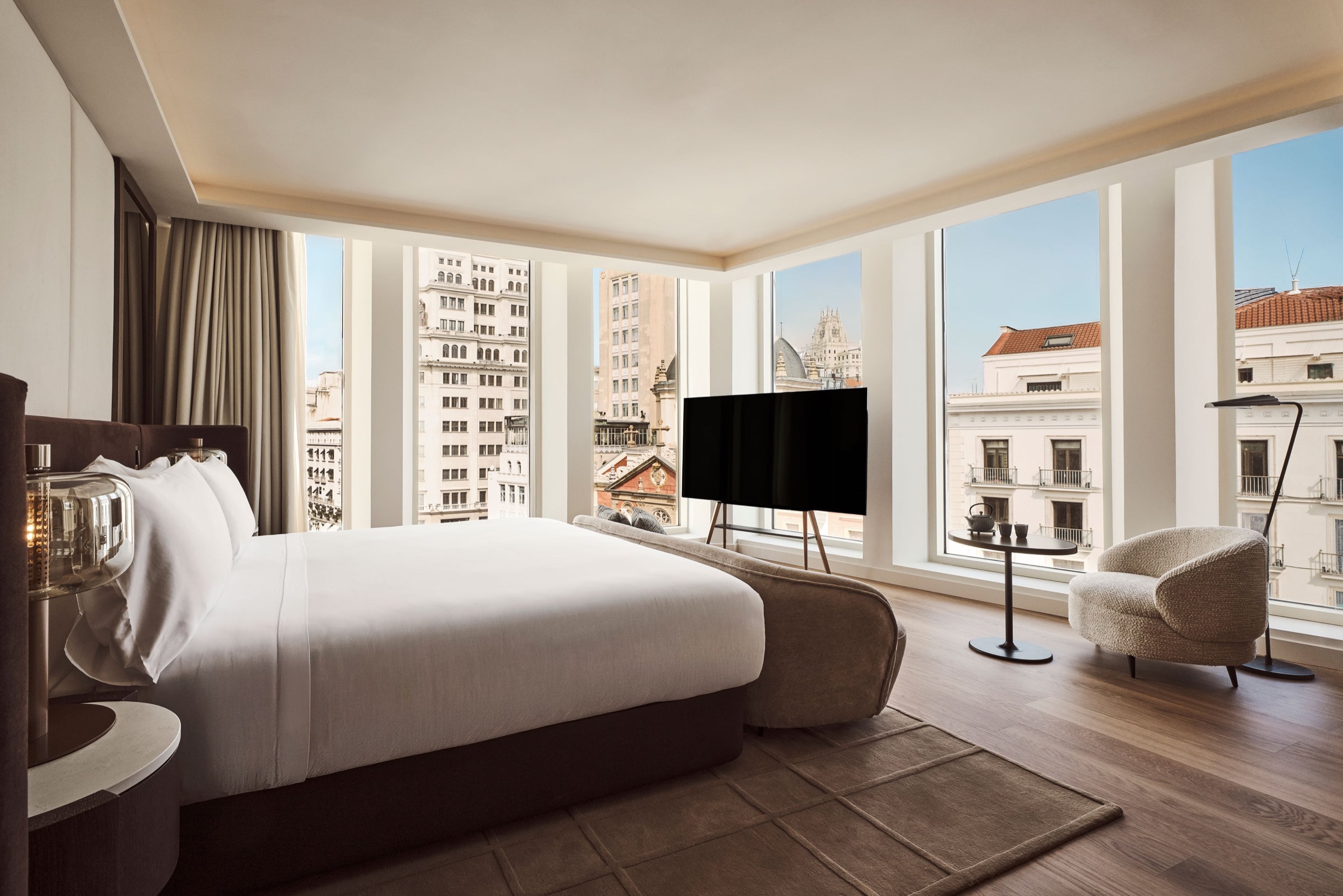
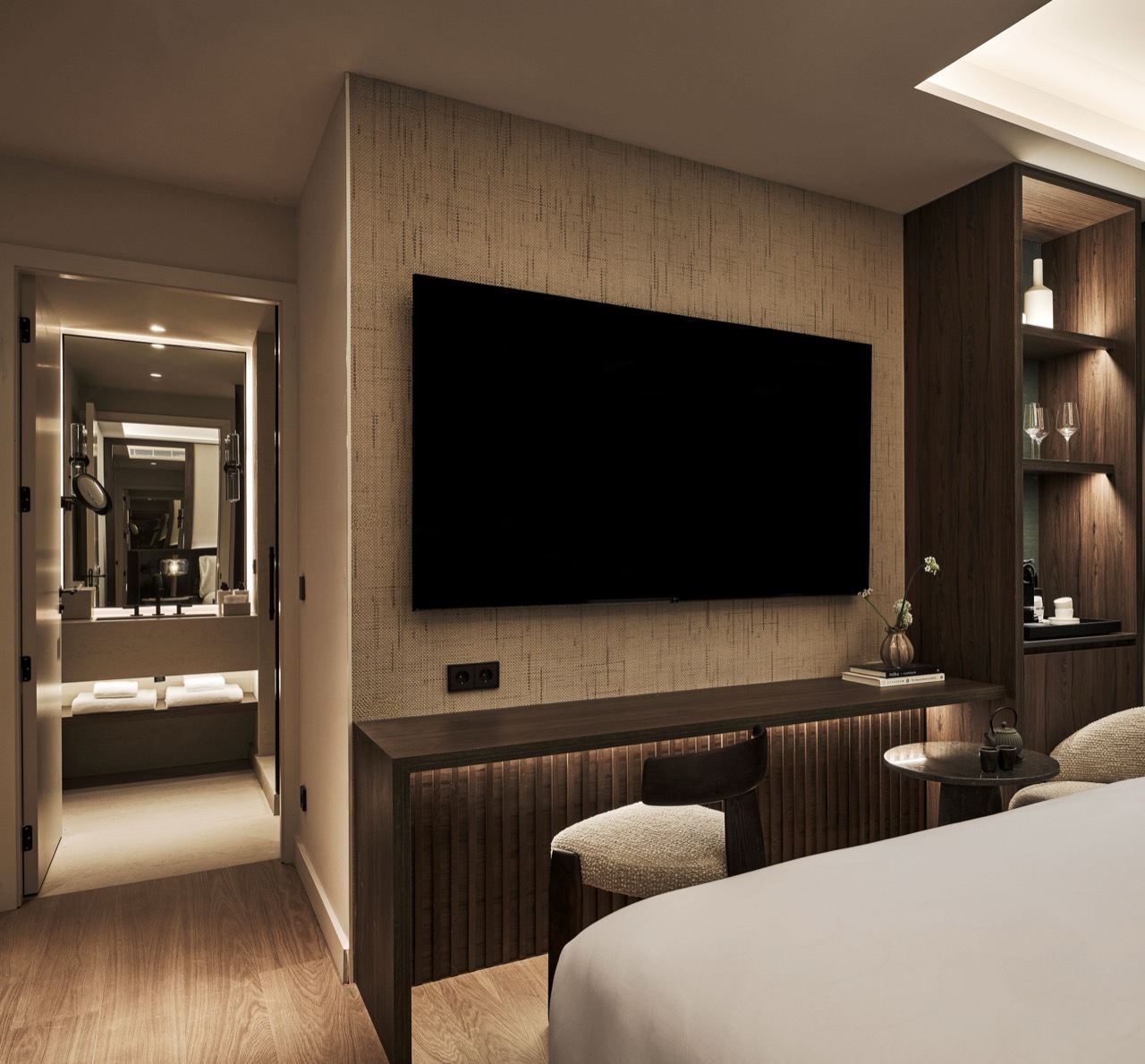
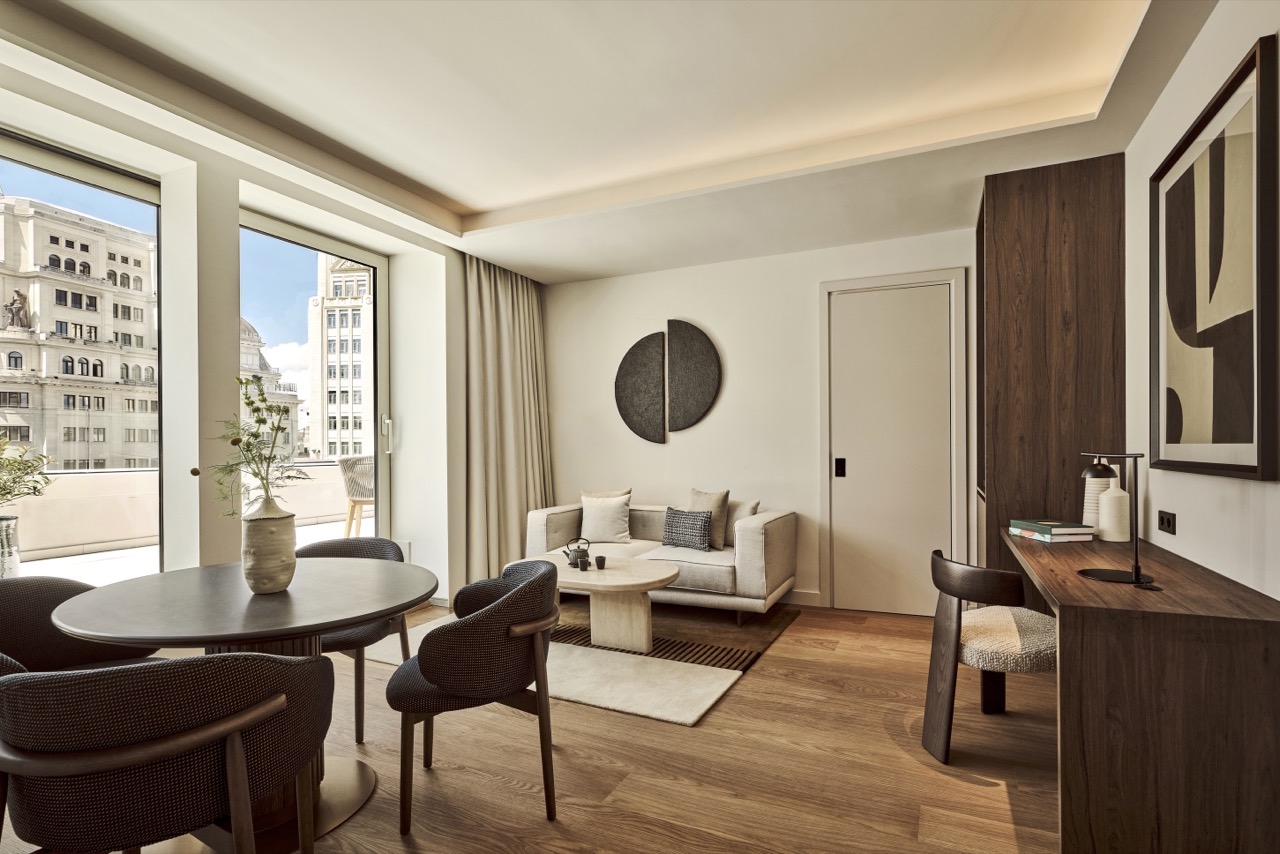
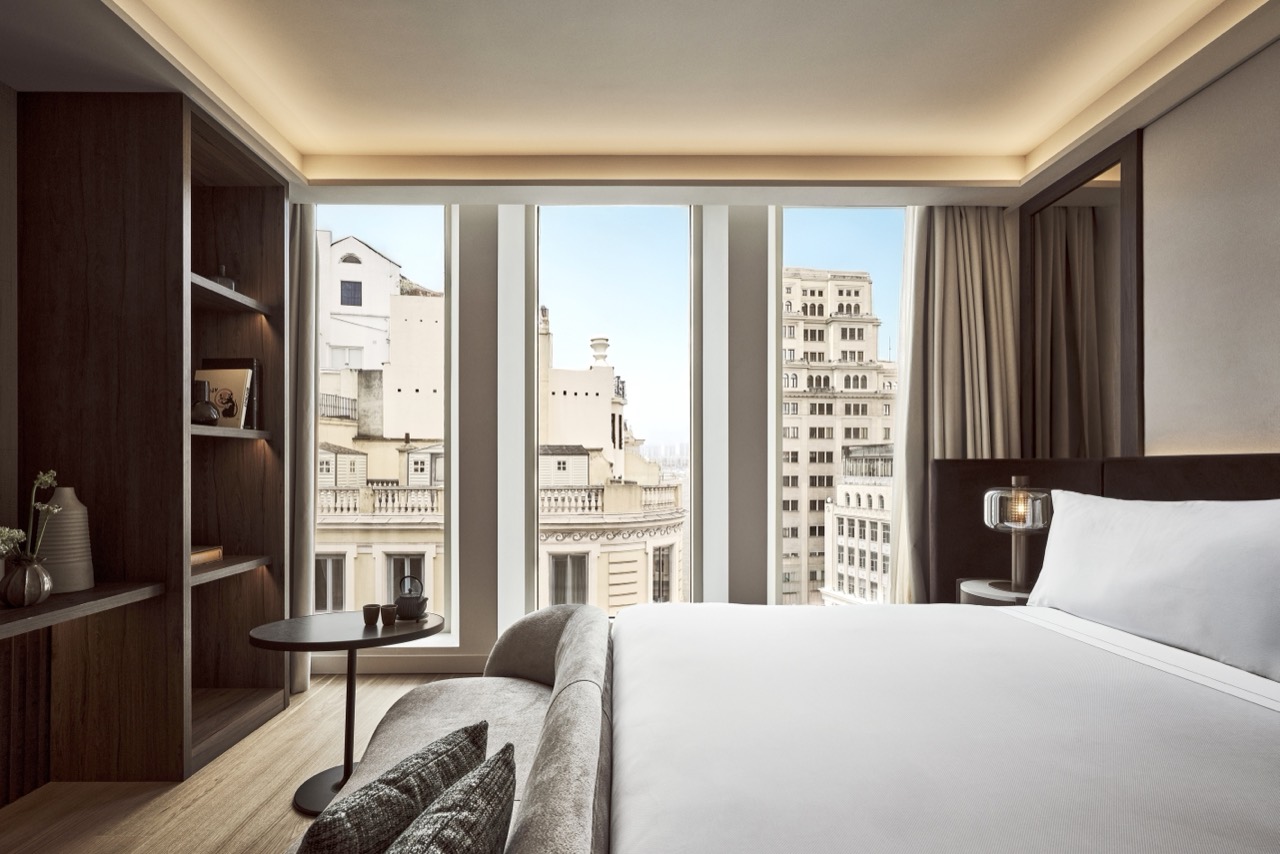
4.The rooms were designed by Tomás Alía of Studio Caramba, the restaurant and public areas by Diego Gronda of GRONDA. The floor-to-ceiling windows of the 1960s offices became the walls of the rooms. Rooms that took a corner got windows on two sides and became suites, named Zen, Hikari, Yuhi and Nobu. The largest, the Nobu Suite, sits on the top floor at 105 sq m with its own terrace.
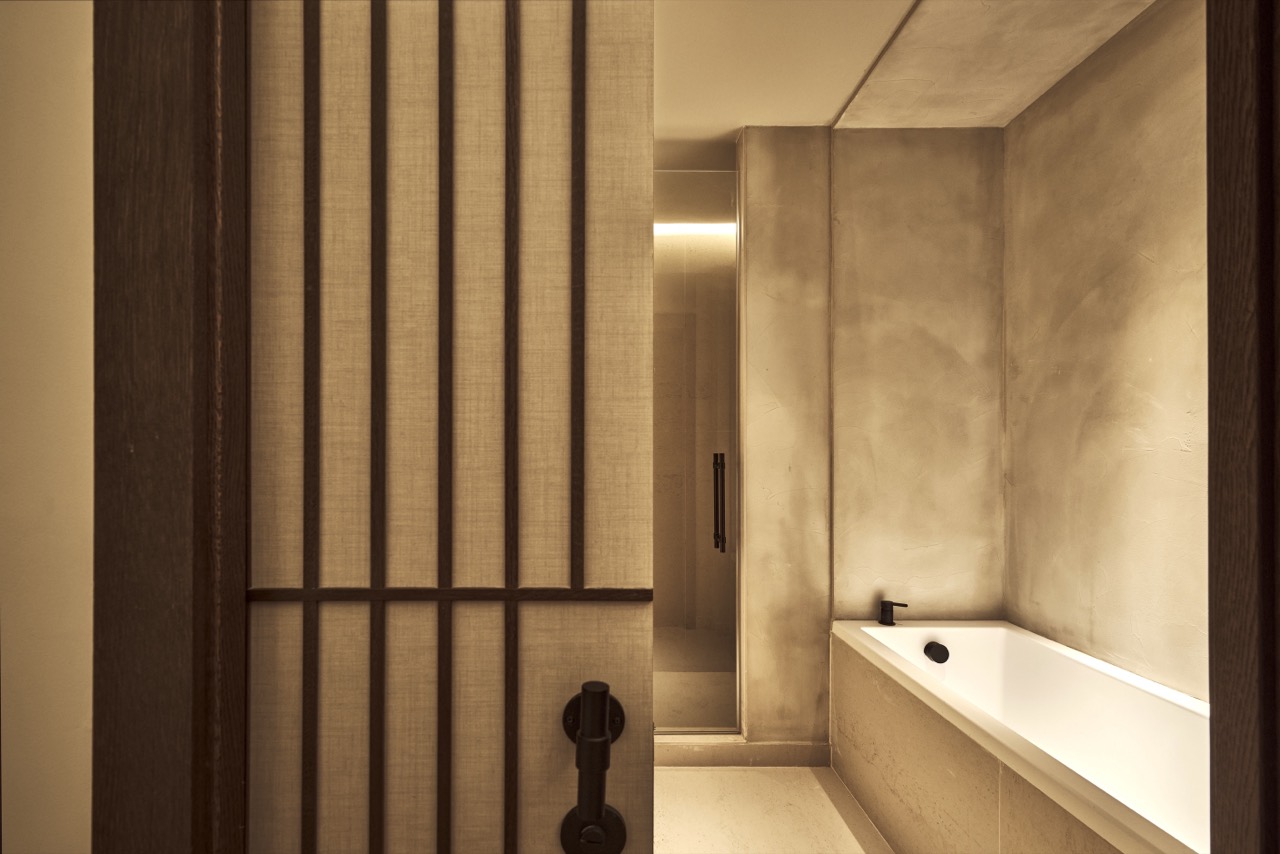
5.Only two colours in the room. Sand-coloured stone and dark wood. The slatted screen in front of the tub slices the light thin and lays it on the stone wall in stripes. At night the crowd drifts downstairs. From Wednesday to Saturday a DJ spins vinyl in the cocktail bar, and music plays on the roof on the same nights. With bars both below and above the rooms, keeping that sound out of the bedrooms is the design's job.
6.The hotel does not publish revenue. STR and Cushman & Wakefield put Madrid's 2025 average daily rate at 178.4 euros and occupancy at 76.8%. This hotel sells at close to four times the city average. For a first year, take an ADR of 700 euros and occupancy of 70%: RevPAR is 490 euros and 50 rooms bring in about 8.94 million euros a year (estimate). Roughly 14.3 billion won.
7.The seat count for food and drink has not been released either. Put 300 people a day across the four venues, each spending 100 euros, and that is 10.95 million euros a year (estimate). The sum says food and drink out-earn the rooms. Of the combined 19.9 million euros or so, food and drink make up 55%. Book by the end of September and the room comes with a 100-euro food and drink credit, which sends money taken for the room straight back down to the restaurant.
As offices and as a hotelRevenue from the same floor area grows close to eightfold, and more than half of it comes from the restaurant and bars (estimate).
8.In a star-rated hotel, food and drink revenue came from the breakfast buffet, the banquet hall and weddings. Even in large city hotels it is usually around a third of total revenue, paid by guests and event customers. The published list of facilities has no banquet hall. The restaurant's customers are Madrileños walking in off the street, and hotel guests get priority booking there. With a hard-to-book restaurant under the rooms, a dinner table is already built into the room rate.
9.Divide by floor area and the gap gets sharper. 5,343 sq m is 1,616 pyeong, and estimated hotel revenue per pyeong comes to about 12,300 euros a year, or 19.7 million won. Keep the building as offices at 40 euros per sq m a month, roughly prime central Madrid, and it earns 2.56 million euros a year (estimate). Even with the basements let, that is only 1,590 euros per pyeong. Each pyeong earns close to eight times more.
10.The money put in grew too. What would have stopped at 36.7 million euros as offices became 100 million. Take a 30% operating margin for the hotel and about 6 million euros a year is left (estimate). The gap over the 2.56 million in office rent is 3.44 million euros, and divided by the extra 63.3 million invested that is 5.4%. Fifty rooms cannot carry 100 million euros, and the sum falls apart the day the restaurant empties.
What the extra money earnsDivide the added profit from the hotel conversion by the added investment and it stays in the 5% range (estimate).
11.Did the owner not see this? Millenium, in which US investor Castlelake holds 49%, does not run hotels itself. It collects rent from the operator. Spanish property outlet Sivarious reported the terms: a 20-year lease, the first five years binding, with rent made of a fixed part plus a part tied to operating profit. The split is not public. In a good restaurant year the owner takes more too, and in a bad one the fixed rent still comes in.
12.People pay 660 euros a night because they met this name first at a dinner table in another city. Since 2019 Madrid has added an Edition, a Four Seasons, a Rosewood and a Mandarin Oriental, all with more than 150 rooms. Fifty rooms will not win that race. This hotel never meant to compete on room count. Instead it fills the lobby and the roof with locals every evening, turning people who never stay the night into customers of the building.
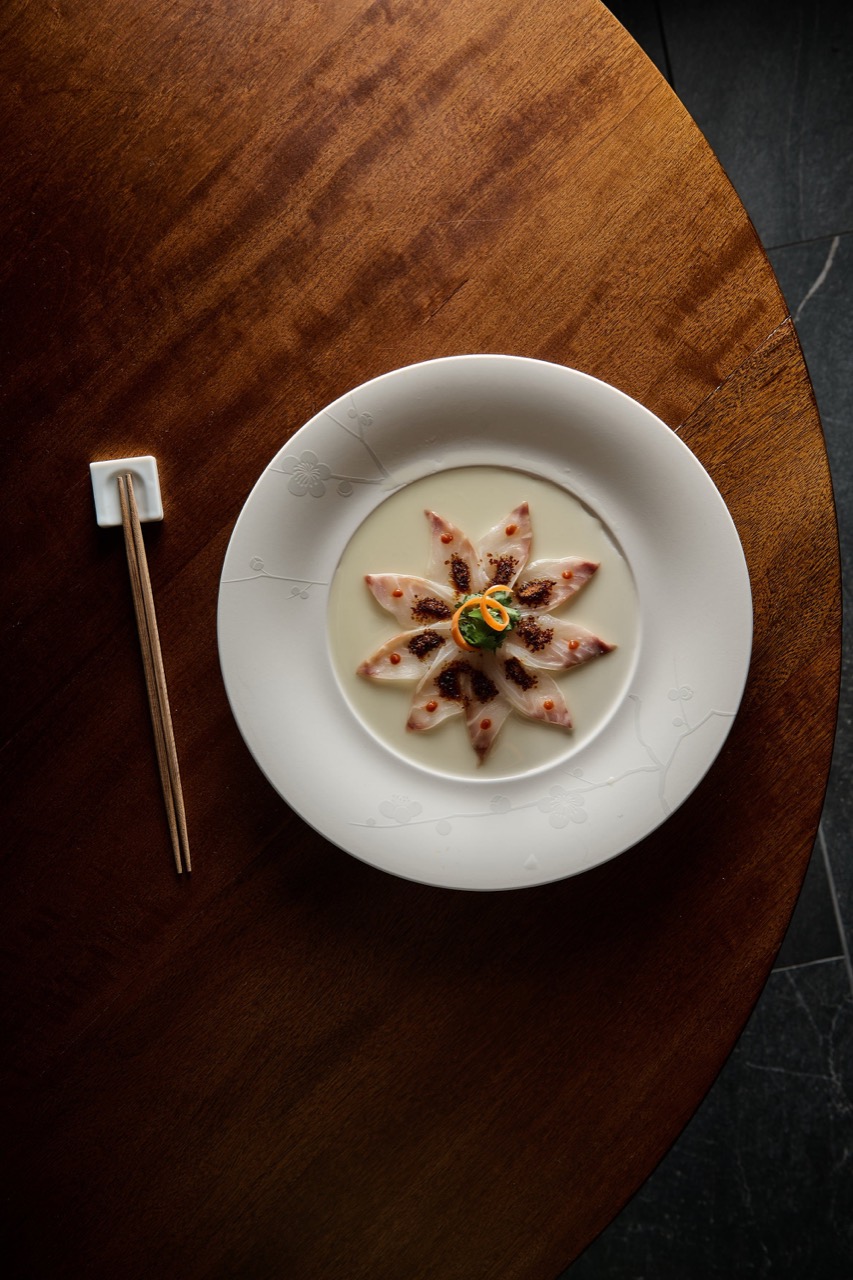
13.The restaurant came first here too. Matsuhisa opened his restaurant Matsuhisa in Beverly Hills, Los Angeles in 1987, and with De Niro, one of its regulars, opened the first Nobu in New York in 1994. The first hotel came 19 years later, in 2013: a 181-room hotel within a hotel inside Caesars Palace in Las Vegas. Let the restaurant name draw the crowd, then add rooms to sleep them. That method has now reached Madrid.
14.The risk is fashion. The Nobu menu has barely changed since the 1990s, and no one can promise Madrileños will keep queuing the way they do in the opening year. If restaurant covers fall 20% in a year, 2.19 million euros drop out of estimated food and drink revenue, and to fill that gap from rooms the ADR would have to rise by about 170 euros. A 50-room hotel that leans on its restaurant earns more, and swings more.
15.Millenium is not stopping at one building. It opened a 20-room hotel with Nobu in San Sebastián first, and is preparing a Nobu hotel in Seville. Scatter small hotels under one brand across several cities, and in each the restaurant makes the name first while the rooms follow. What the money is buying is not rooms. It is the dinner reservation list.
A 1960s office building on Calle de Alcalá in Madrid became a 50-room Nobu hotel for 100 million euros, and more than half of estimated revenue comes from its four restaurant and bar spaces. The same floor now earns close to eight times what it did as offices, but the return on the extra money stays in the 5% range (estimate). Try the same conversion in Korea and structure is the first problem. The structural safety provisions of the Building Act also apply when an office changes use to lodging, so for a building from before the 1970s, heavy additions such as a rooftop restaurant or indoor pool need a reinforcement design checked first.