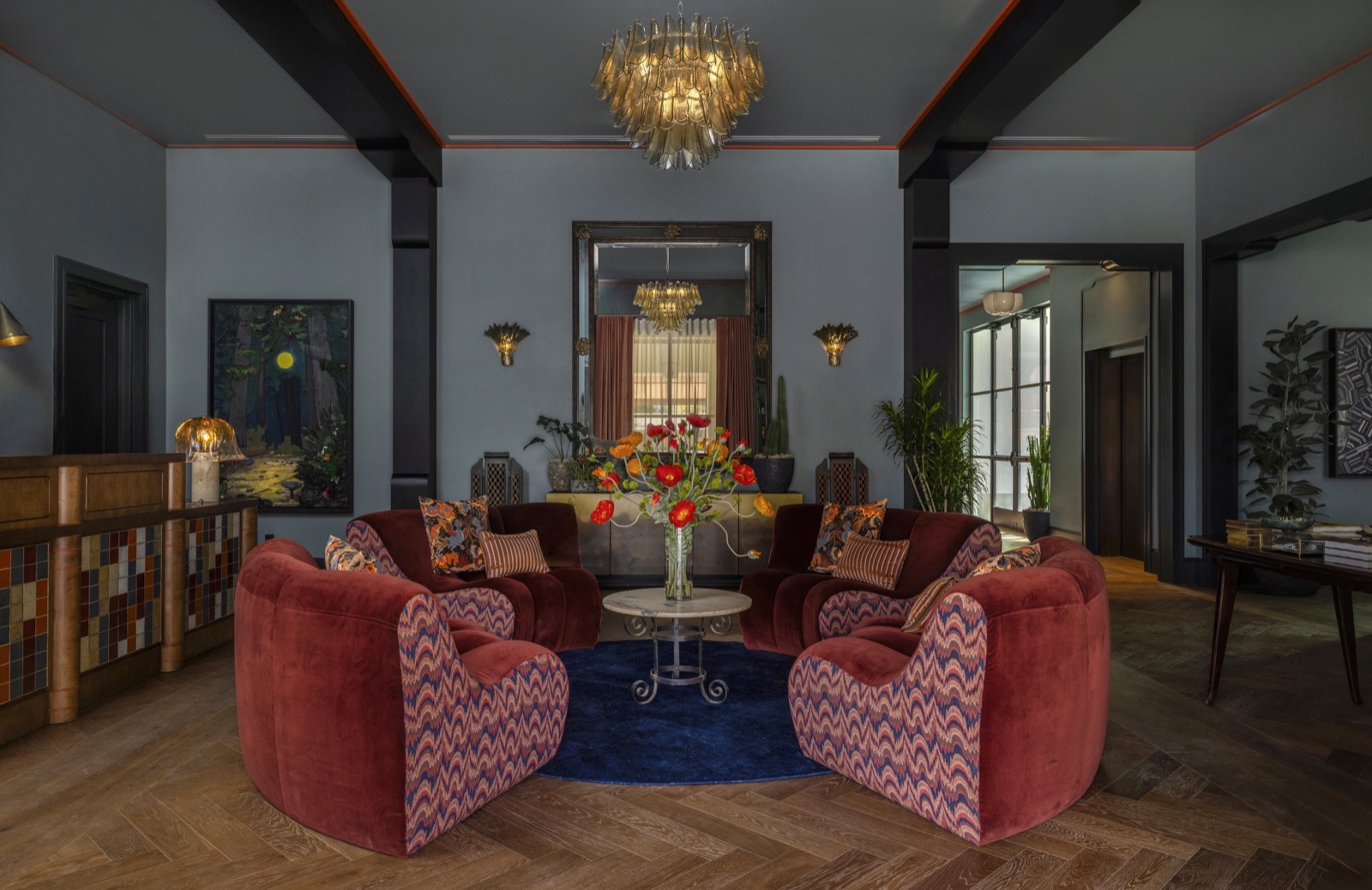
The lobby lounge at Hotel DaphneCurved sofas in wave-patterned fabric under a vintage Murano glass chandelier. On the left, the tile-wrapped front desk. ⓒJulie Soefer · Hyatt
Daily Hotel
A 49-room hotel decided to put in another $15 million four weeks after opening
2026.09.30
A five-story hotel opened with 49 rooms in the Heights, one of Houston's oldest residential neighborhoods, and within a month it decided to add a pool and 10 bungalows. Its rates run three times the city average, and the money a full-service hotel would make from its ballroom comes here from a restaurant, a bar and a library.
1.In early December 2025, Hotel Daphne opened in the Heights, a residential neighborhood of Houston, Texas. It is a five-story new build on the corner of West 20th Street and Ashland Street, with 49 rooms. Austin-based Bunkhouse Hotels runs it, and the developer is Ben Ackerley, on his first project.
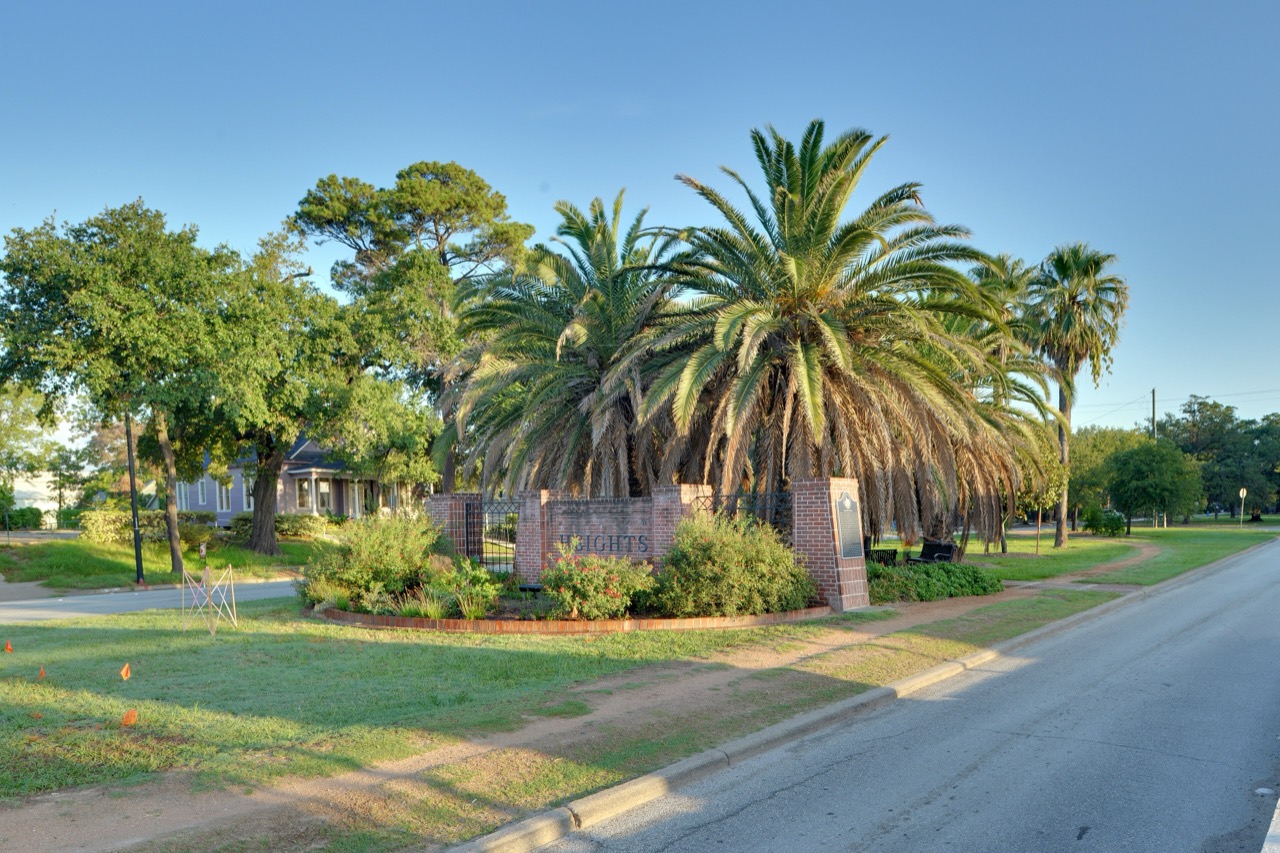
The Heights Boulevard esplanadeThe main street of the Heights, laid out as a planned community in the late 19th century. The hotel is a few blocks away. ⓒEd Uthman (Wikimedia Commons) · CC BY 3.0
2.Four weeks after opening, in late December, the property trade outlet The Real Deal reported that the hotel was lining up a $15 million expansion. The plan adds a pool and 10 poolside bungalow suites, taking it to 59 rooms in spring 2027. In between, on September 18, 2026, it received one Key, the Michelin Guide's hotel distinction, according to local outlet CultureMap.
3.What stood on the lot before was a single house built in 1904. Ackerley won approval from the city planning commission in 2019, so it took six years to open. Blanchard A+D, the architects, gave the building white-painted brick, stepped parapets and steel sash windows, folding the old wooden houses and former industrial buildings of the Heights into one facade.
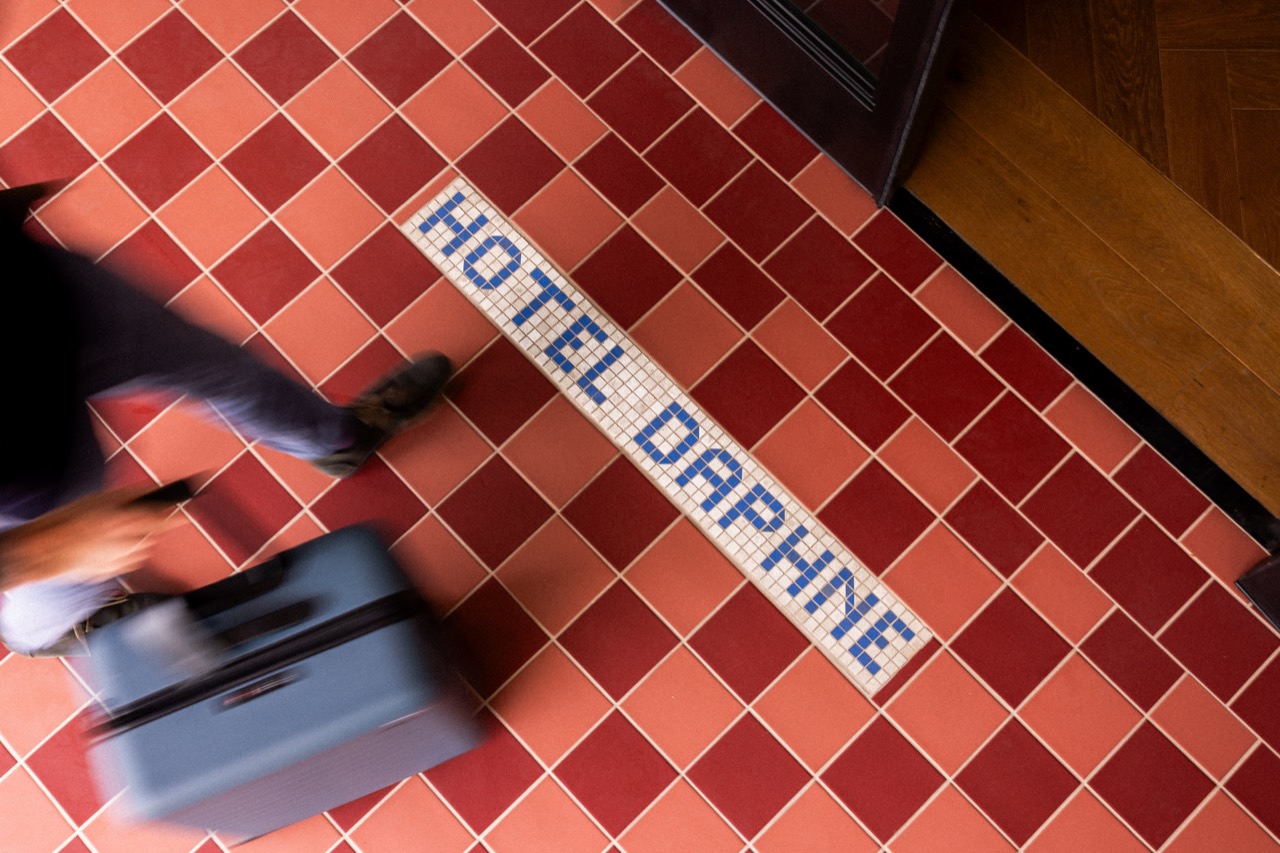
Tile at the entranceThe hotel's name set in mosaic into a red tile floor. ⓒGrant Pifer · Hotel Daphne
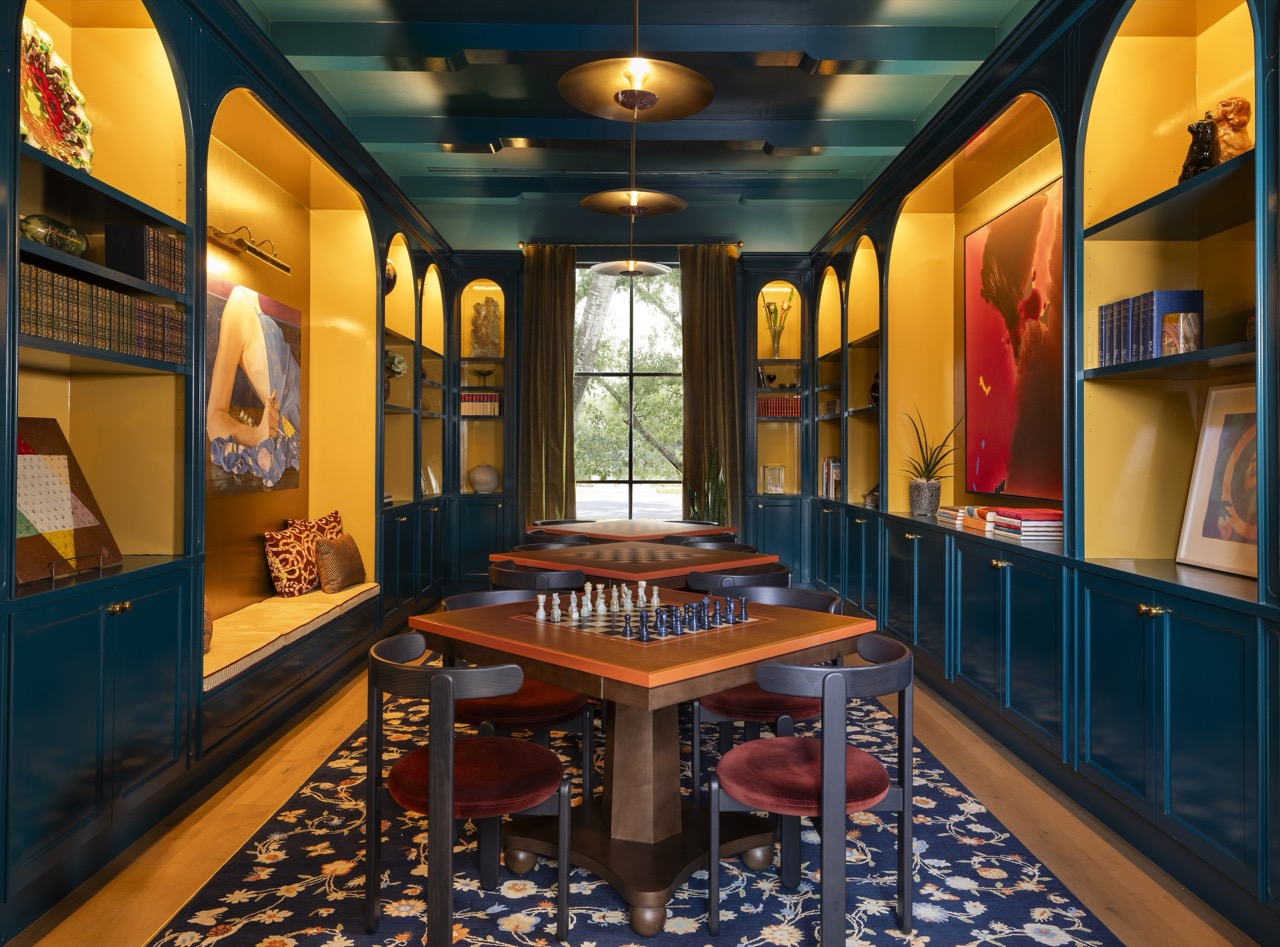
4.The footprint was drawn around century-old oaks already on the site. Where the trees were kept, a walled courtyard formed, and the restaurant Hypsi opened its courtyard wall with a run of windows. Next to the lobby, a library of about 33㎡ (350 sq ft) holds game tables topped with onyx chess sets, and when a booking comes in, the room becomes a private dining room.
The libraryTeal cabinetry and yellow arched niches. With its chess table, it doubles as a private dining room. ⓒJulie Soefer · Hotel Daphne
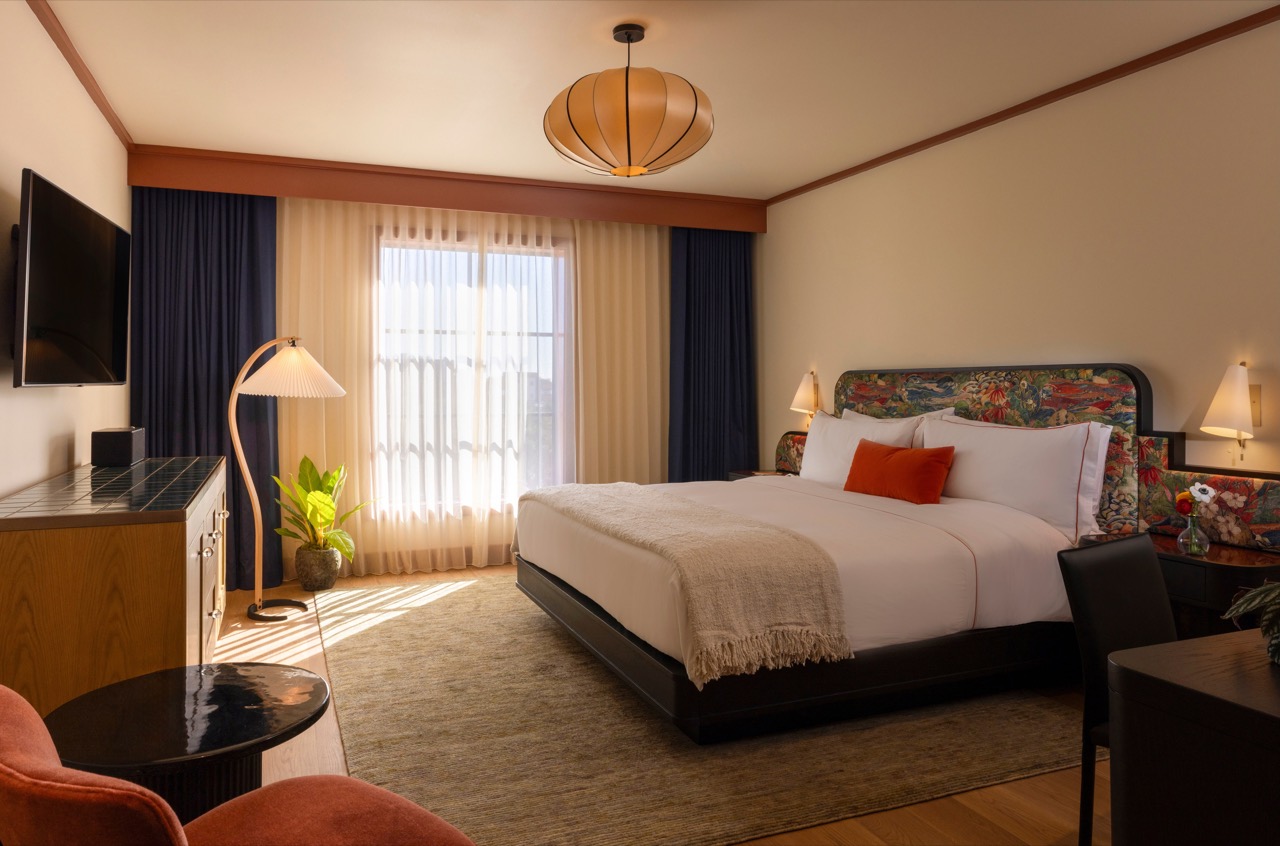
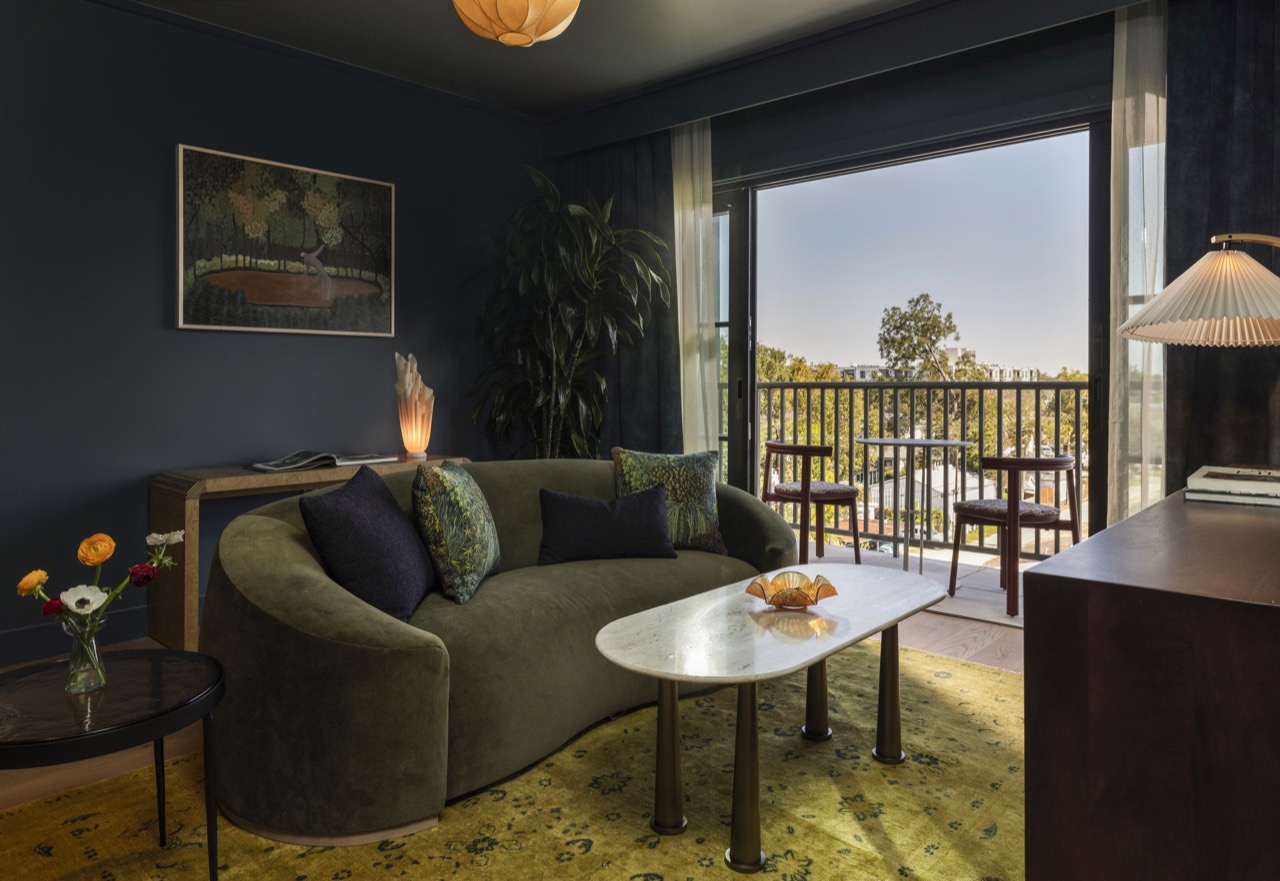
5.Guest rooms are furnished with dark wood beds, mohair seating and Arts and Crafts style credenzas. The carpet is William Morris's textile pattern 'Strawberry Thief', reworked with AI. Some rooms have terraces, and there are two suites: the Balcony Suite (about 79㎡) and the Penthouse (about 107㎡).
King roomA headboard in floral fabric on a dark wood bed frame. ⓒJulie Soefer · Hotel DaphneBalcony SuiteAbout 79㎡. The living room doors open onto the balcony. ⓒJulie Soefer · Hotel Daphne
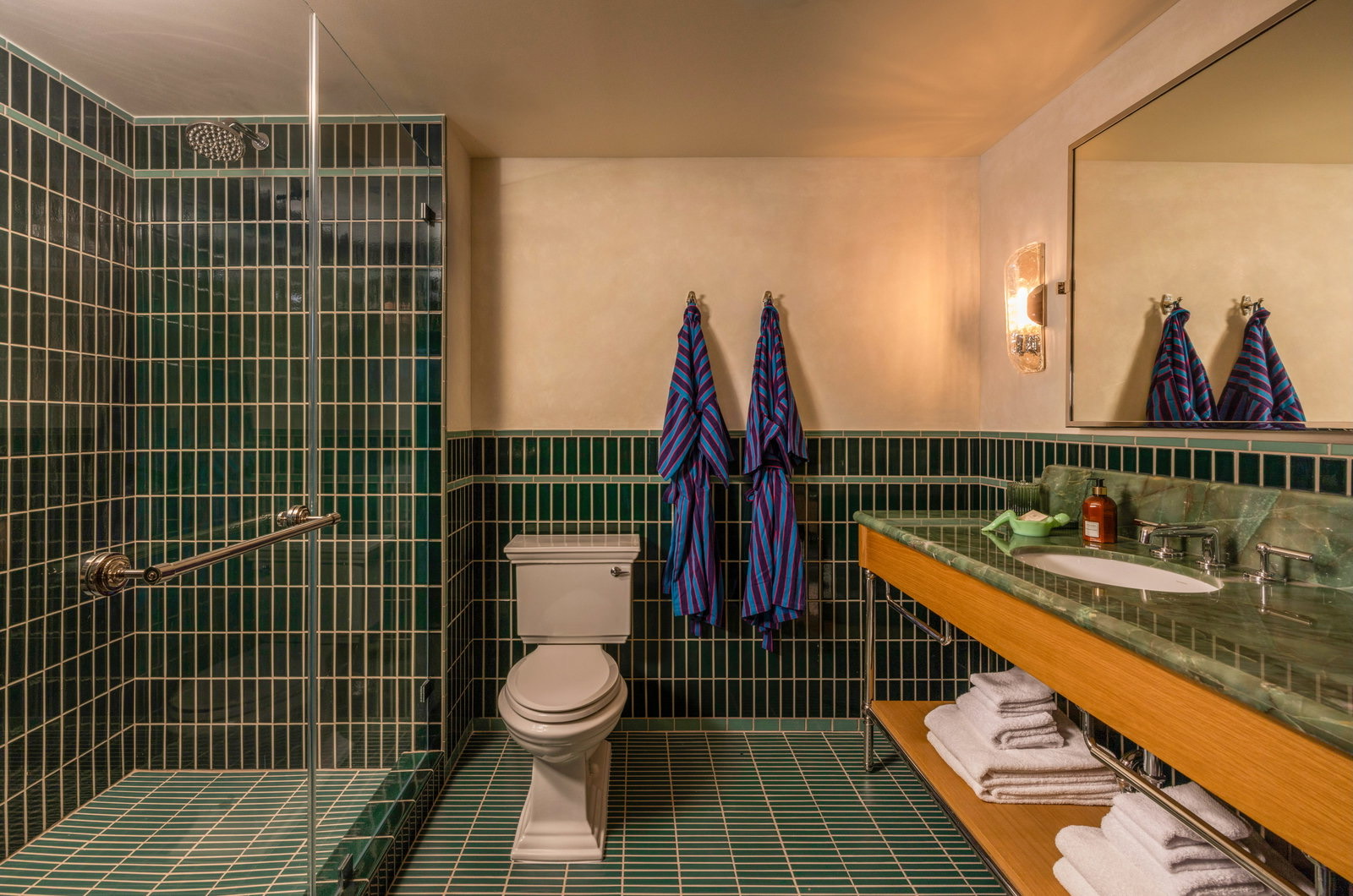
6.Bathrooms are wrapped in deep green Fireclay tile from the floor to waist height, with green onyx on the vanity. In the lobby, handmade tile wraps the front desk, and above it a vintage Murano glass chandelier hangs in gold. The walls carry more than 160 works by Texas artists collected by the Ackerley family, on rotation. It is a lobby designed so that a neighbor without a room key can walk in and sit down without feeling out of place.
Guest bathroomGreen tile and a green onyx counter. The striped robes on the wall are also sold in the lobby shop. ⓒJulie Soefer · Hotel Daphne
7.Rates start at $359 a night. Houston First, the city's tourism and convention body, reported that Houston's average daily rate in 2025 was $120, and occupancy dropped sharply over the year to 59%. In a city where new supply has left rooms empty, the asking price here is three times the average.
8.Mix in suites and weekend rates, assume an ADR of $380 and occupancy of 65%, and annual room revenue comes to about $4.4 million (estimate). RevPAR would then be about $247, 3.5 times Houston's average of $71. Run the same 49 rooms at the city average and room revenue falls short of $1.3 million.
9.At a full-service hotel, revenue outside the rooms would come from ballrooms and meeting rooms. Daphne has no ballroom, only one small private event space. That money is earned instead by Hypsi, open for breakfast, lunch and dinner, by Bar Daphne, which opened in May 2026, and by private dining in the library. Assume the restaurant and bar take $8,000 a day on average and that comes to about $2.9 million a year, close to 40% of total revenue (estimate).
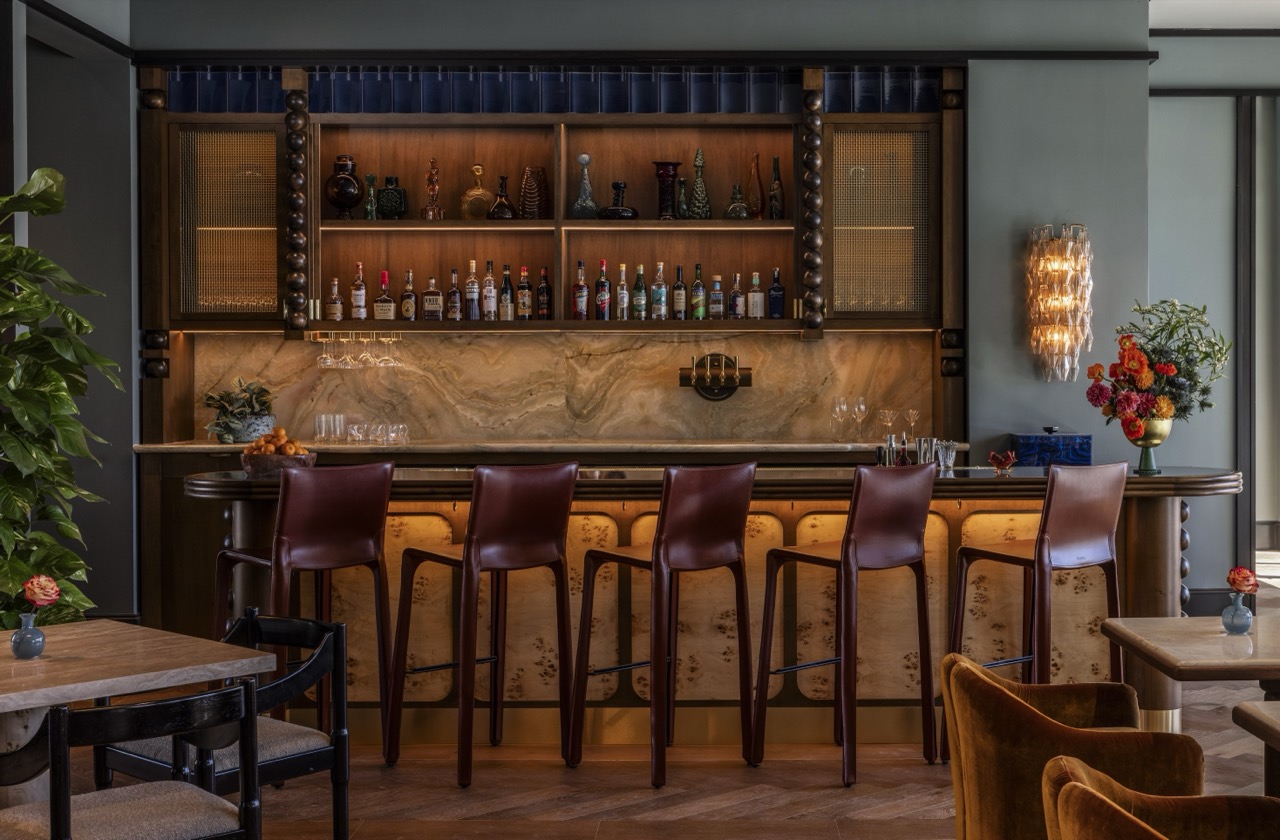
One year of revenue from rooms and from the restaurant and barThe assumed restaurant and bar revenue is more than twice the room revenue at city-average conditions.The bar at HypsiThe wall below the bottle shelves is faced in veined stone. This is the restaurant's bar, a different space from Bar Daphne, which opened separately. ⓒJulie Soefer · Hyatt
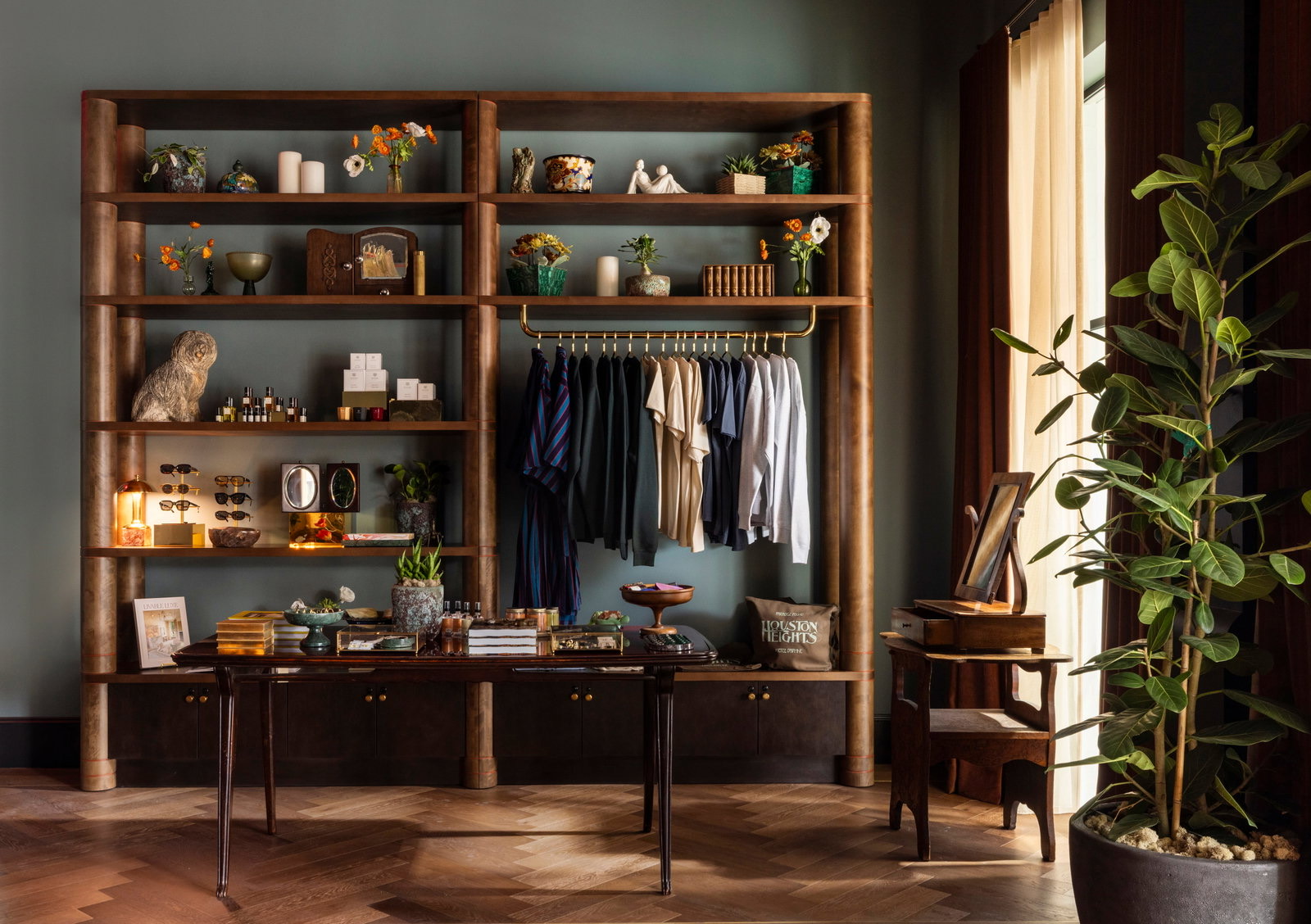
10.The lobby shop sells goods from local stores alongside red and blue striped cotton robes designed by Bunkhouse itself. In the restaurant, a mozzarella cart rolls up to the table, and the bar opens at 5 p.m. every day. There are four places where a guest who has not booked a room can spend money: the restaurant, the bar, the library and the shop.
The lobby shopGoods from local stores hang alongside robes and shirts made by the hotel. ⓒJulie Soefer · Hotel DaphneDinner at HypsiAn Italian-style restaurant serving handmade pasta and plates to share. ⓒJulie Soefer · Hotel Daphne
11.Filings with the Texas Department of Licensing and Regulation (TDLR) list construction at about $24 million, or about $490,000 per room (about 686 million won). Land is not included. Divide the $15 million expansion by 10 bungalows and each costs $1.5 million. That simple sum still carries the pool, but it is three times the cost of the opening rooms.
Money spent per roomThe gap between building rooms and buying contracts is more than sixfold.
12.The Ackerley family owns the building, and Bunkhouse runs it. Bunkhouse's parent, Standard International, was sold to Hyatt in October 2024. The terms were a base price of $150 million plus up to $185 million more as new hotels signed on, and what Hyatt received were management and franchise contracts for 21 open hotels with about 2,000 rooms.
13.Divide the base price alone by the room count and Hyatt paid about $75,000 for the management contract on each room. That is about a sixth of what Daphne spent to build each room. In return, Daphne's rooms can be booked with Hyatt loyalty points and are listed on Hyatt's website. A first-time hotel developer borrows a global chain's member booking channel and pays for it with management fees taken off revenue.
14.The Heights had been a neighborhood where alcohol could not be sold since 1912. Restaurants got around it by forming nonprofit private clubs and admitting diners as members, until a 2017 vote, 61 to 39, lifted the restrictions on restaurants and bars. Hypsi took the private drinking clubs of that dry era as its concept. The way the neighborhood once drank in secret is now the sign over a hotel restaurant.
15.Hotel occupancy in downtown Houston fell to 45% last December. In a city with fewer business travelers, Daphne takes in visitors who come for the shops on 19th Street a block away, while the restaurant and bar stay open to neighbors even on weekdays when rooms sit empty. It is set up so that hotel revenue does not go dark on the days guests thin out.
16.Bunkhouse started from the opposite end. In 1995 its founder, Liz Lambert, bought a run-down 24-room motel on South Congress in Austin with a $550,000 loan her mother cosigned, and reopened it in 2000 as Hotel San José. About $23,000 per room. Twenty-six years later, a hotel under the same banner spends 21 times that per room, and less than a month after opening, it decided on an expansion costing $1.5 million per room.
A hotel that spent about $24 million building 49 rooms in a Houston residential neighborhood decided on a $15 million expansion four weeks after opening. The grounds are rates three times the city average and a restaurant and bar filling close to 40% of total revenue (estimate). Anyone trying to put a hotel in the middle of a low-rise residential area in Korea would hit zoning first. Korea's National Land Planning and Utilization Act enforcement decree does not permit lodging in Class 1, 2 or 3 general residential zones, so a neighborhood like the Heights would require rezoning through a district unit plan, or a lot on the edge of a semi-residential or commercial zone. To have the hotel double as a neighborhood restaurant, a separate general restaurant business report is needed on top of the hotel business registration.