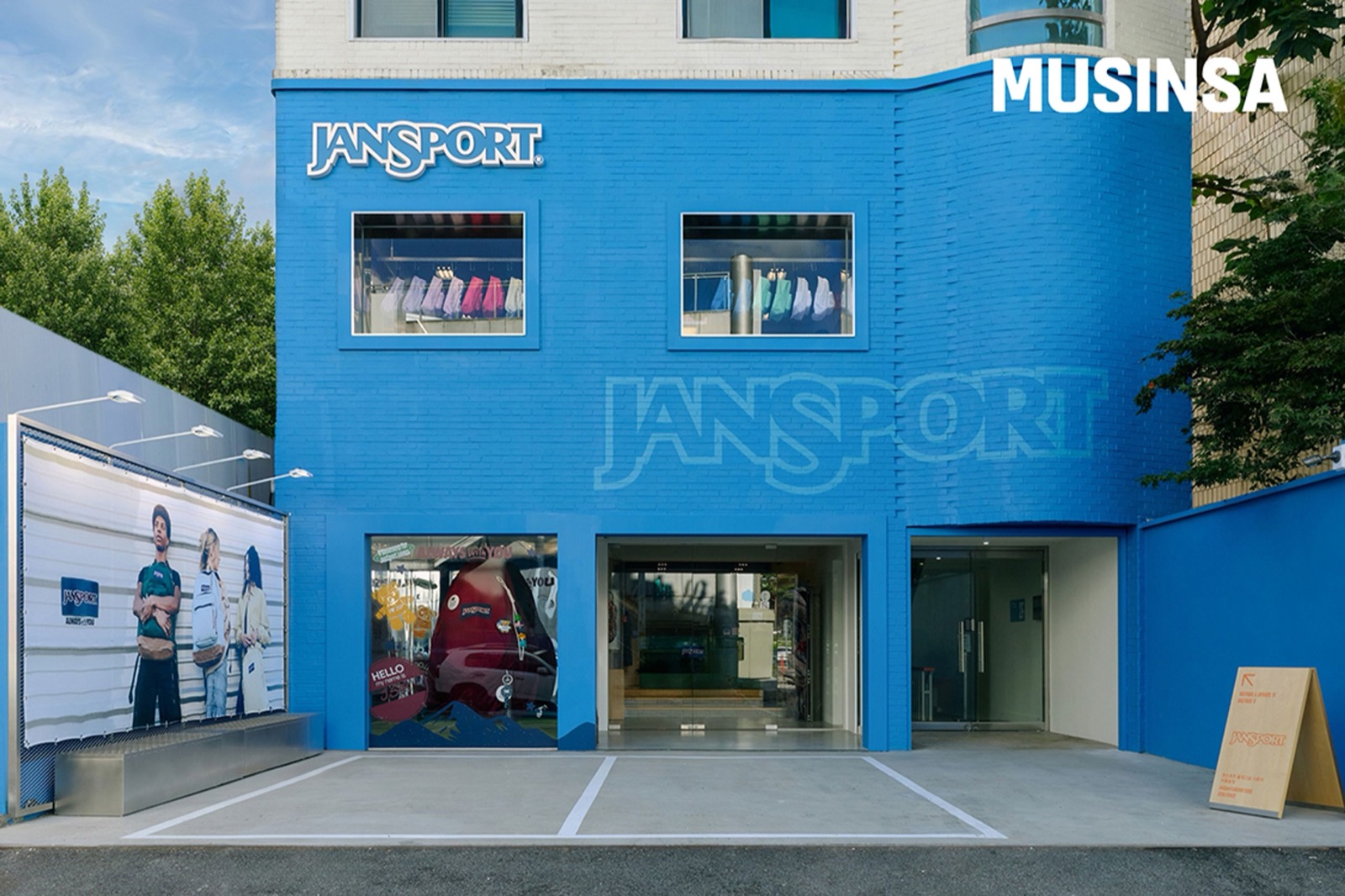
A backpack brand founded in Seattle in 1967 has opened the first flagship store to carry its own name. Not in the United States, but on a narrow lane in Seoul's Seongdong-gu, across two floors totaling about 198 square meters. The company that built it is not the American parent either.
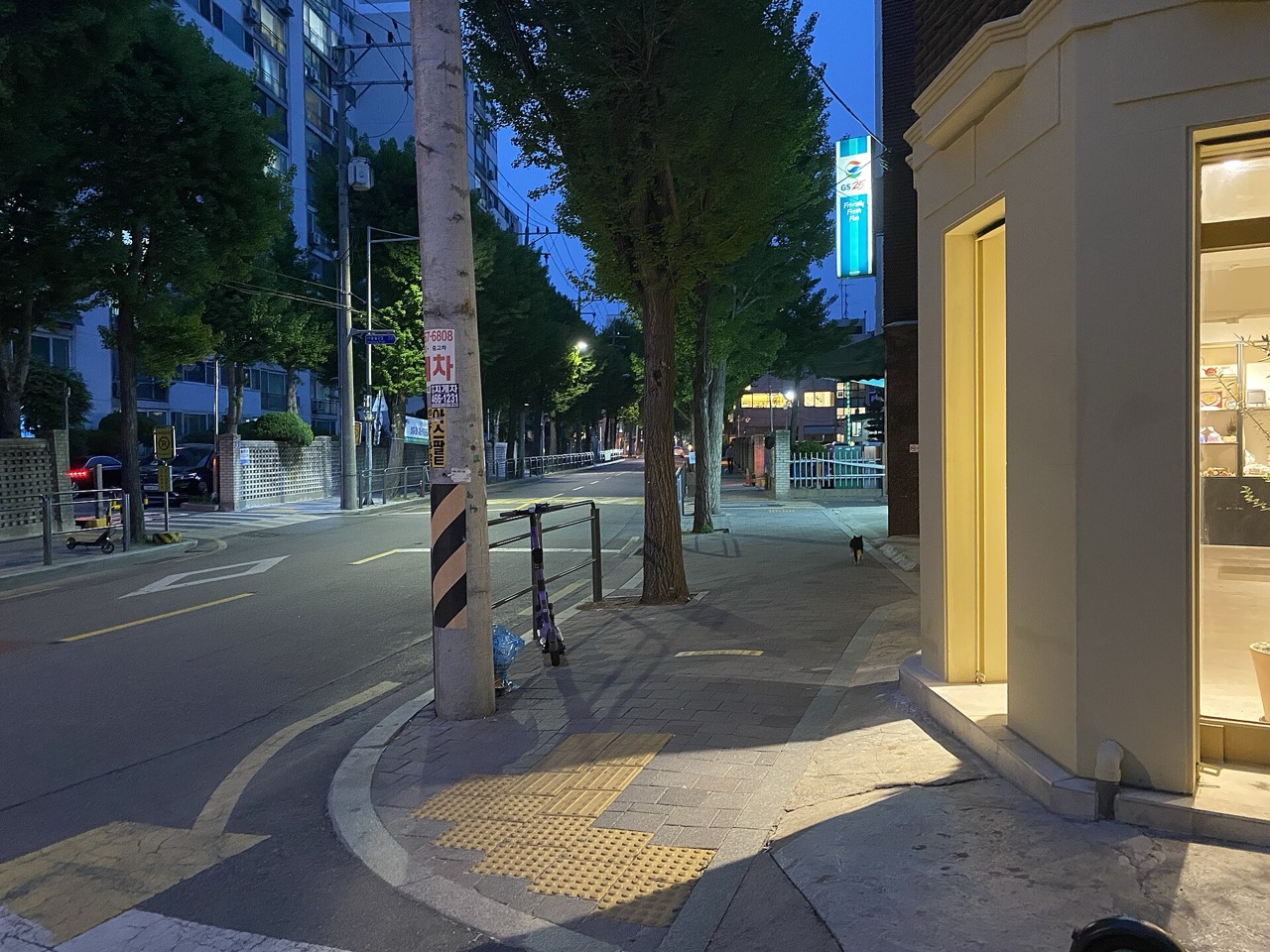
1.July 31, 3 Seoulsup 9-gil, Seongdong-gu, Seoul. JanSport's first flagship store opened its doors. It takes the first and second floors of a four-story building, about 198 square meters. Doors open at 11 a.m. and close at 8 p.m. through Thursday, 9 p.m. from Friday to Sunday. VF Corporation, the American parent, posted the store as company news three days later, on August 3.
2.The brand started in 1967, and for 59 years no flagship anywhere carried its name. The first one stands in Seoul. It is run by Musinsa Trading, not by the American parent. The company signed the official Korean distribution deal in 2021 and now operates nine stores in the country.
3.All nine sit inside department stores and malls: Starfield Suwon and Hanam, Lotte World Mall in Jamsil, Starfield Goyang, Lotte Department Store Nowon. Seoul Forest is the tenth and the first to face a street. It is also the first JanSport store to hang hoodies, T-shirts, pants and caps alongside the bags.
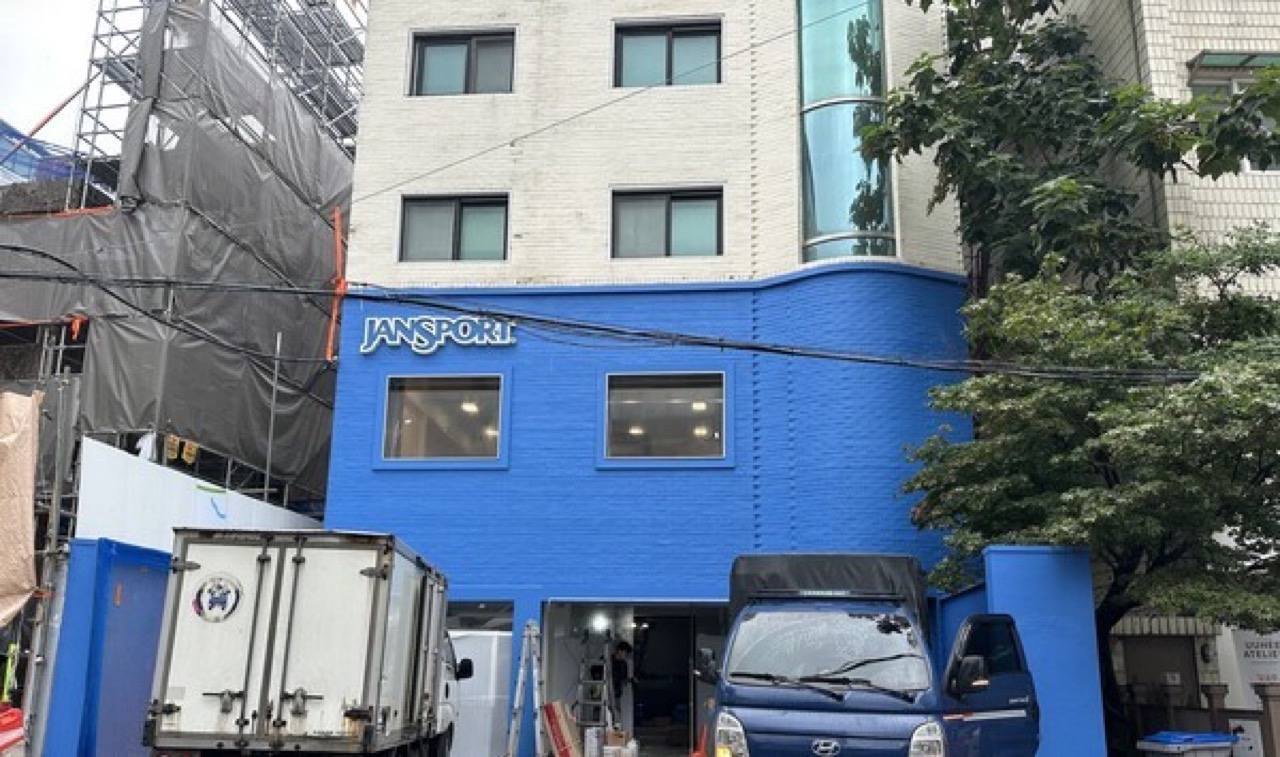
4.The lower facade is brick painted blue. The blue from the logo runs across the whole wall, with white outlined letters set on top. Two second-floor windows are cut so the racks inside read from the street, which turns the display into signage. The lane is too narrow to step back and take in the front, so the building buys its distance with color.
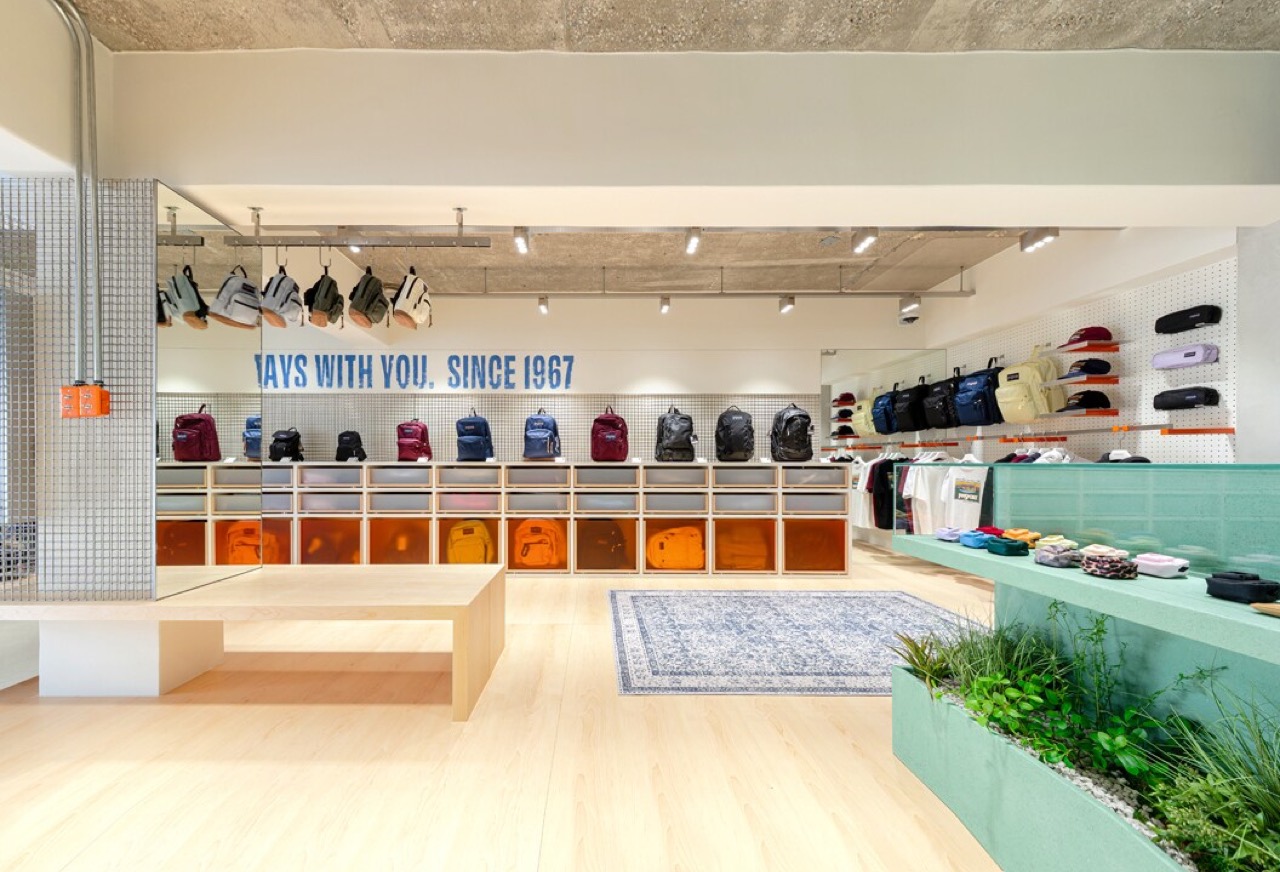
5.The first floor uses every wall. ALWAYS WITH YOU. SINCE 1967 runs large in blue on one side, with backpacks lined up on a low shelf beneath it. Track lighting hangs from exposed concrete, and a planter beside the mint-green counter holds live grass. On the opposite pegboard wall: clothing and caps.
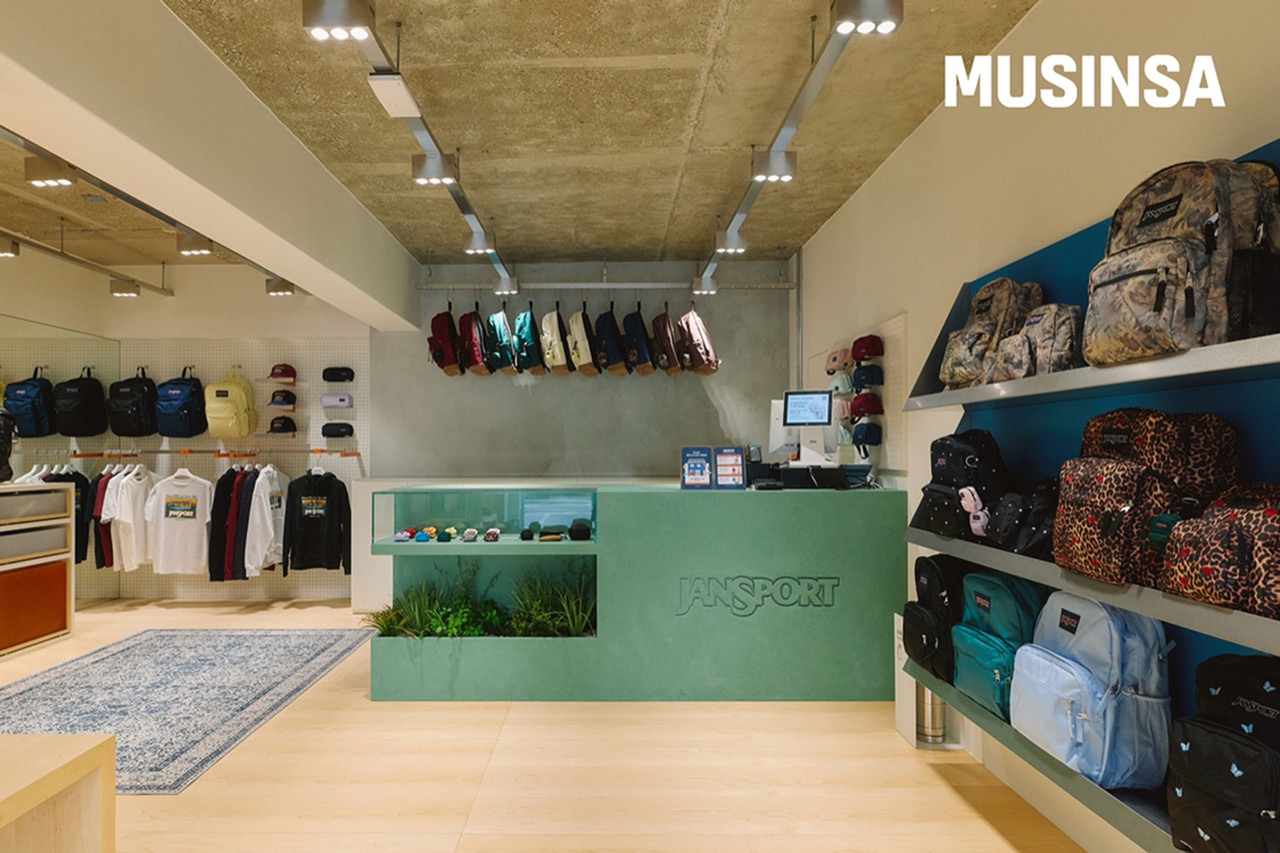
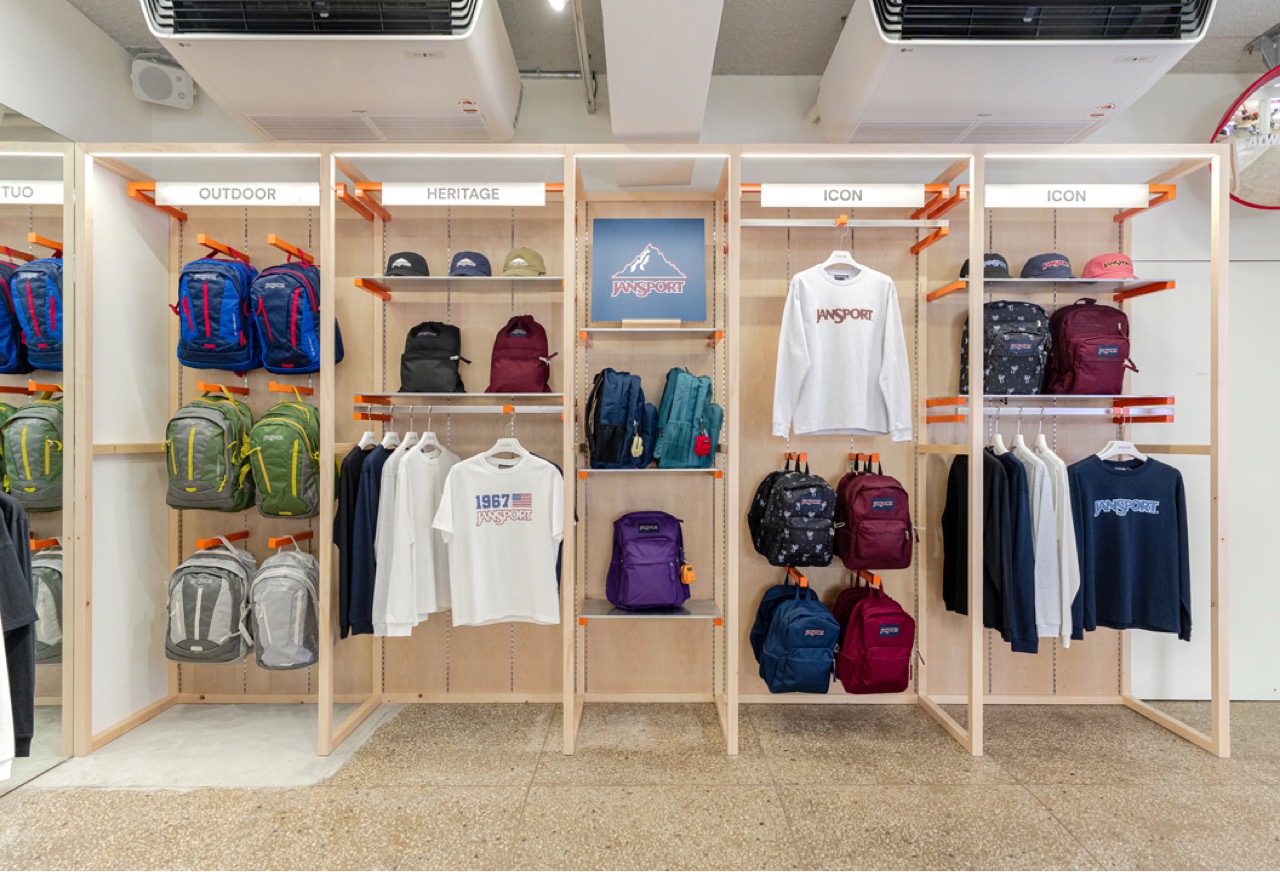
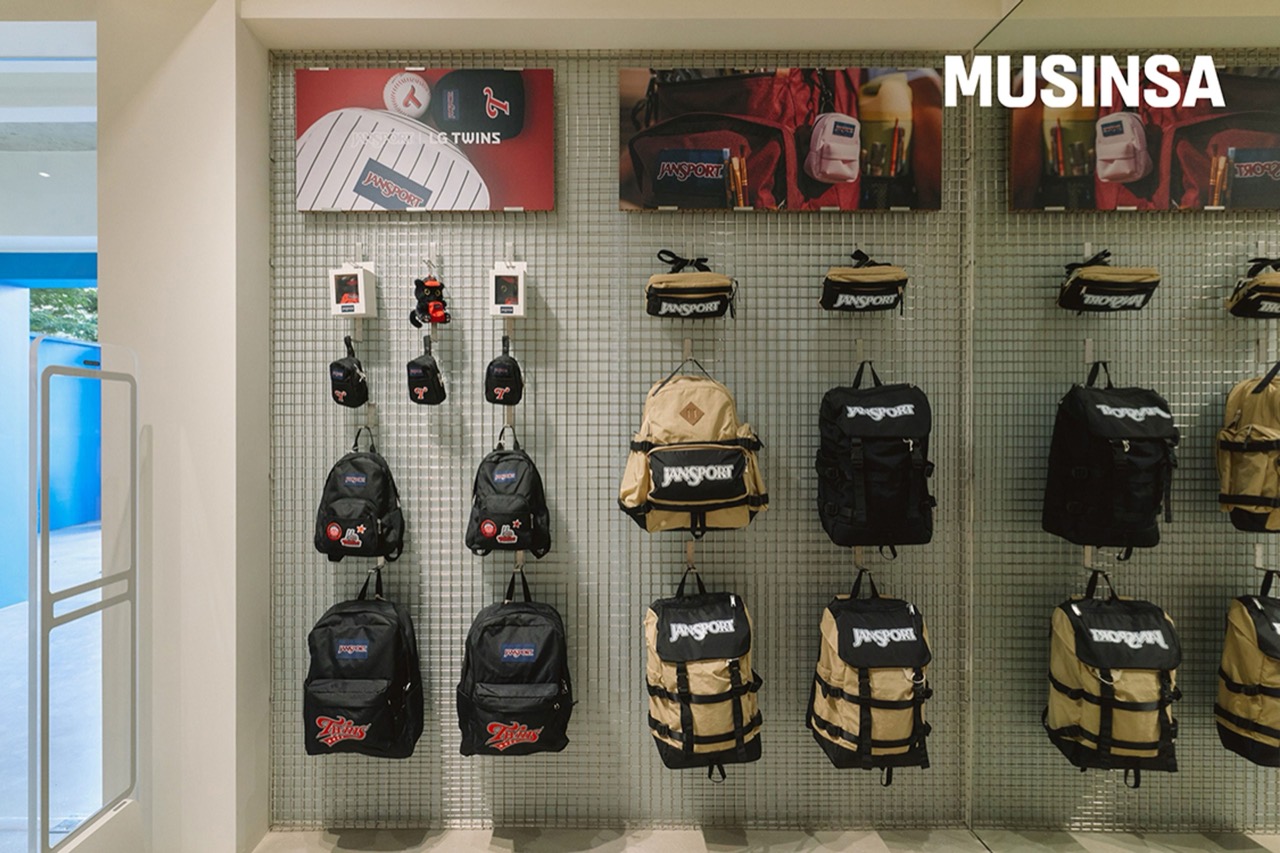
6.Labels divide the display. Bands above the shelves read OUTDOOR, HERITAGE and ICON, and each bay mixes bags with clothes. Orange brackets clamped into timber frames let the shelves and rails move. Collaboration pieces get a wall of their own, and the bags and caps carrying a baseball club's logo were planned in Korea, not by the parent.
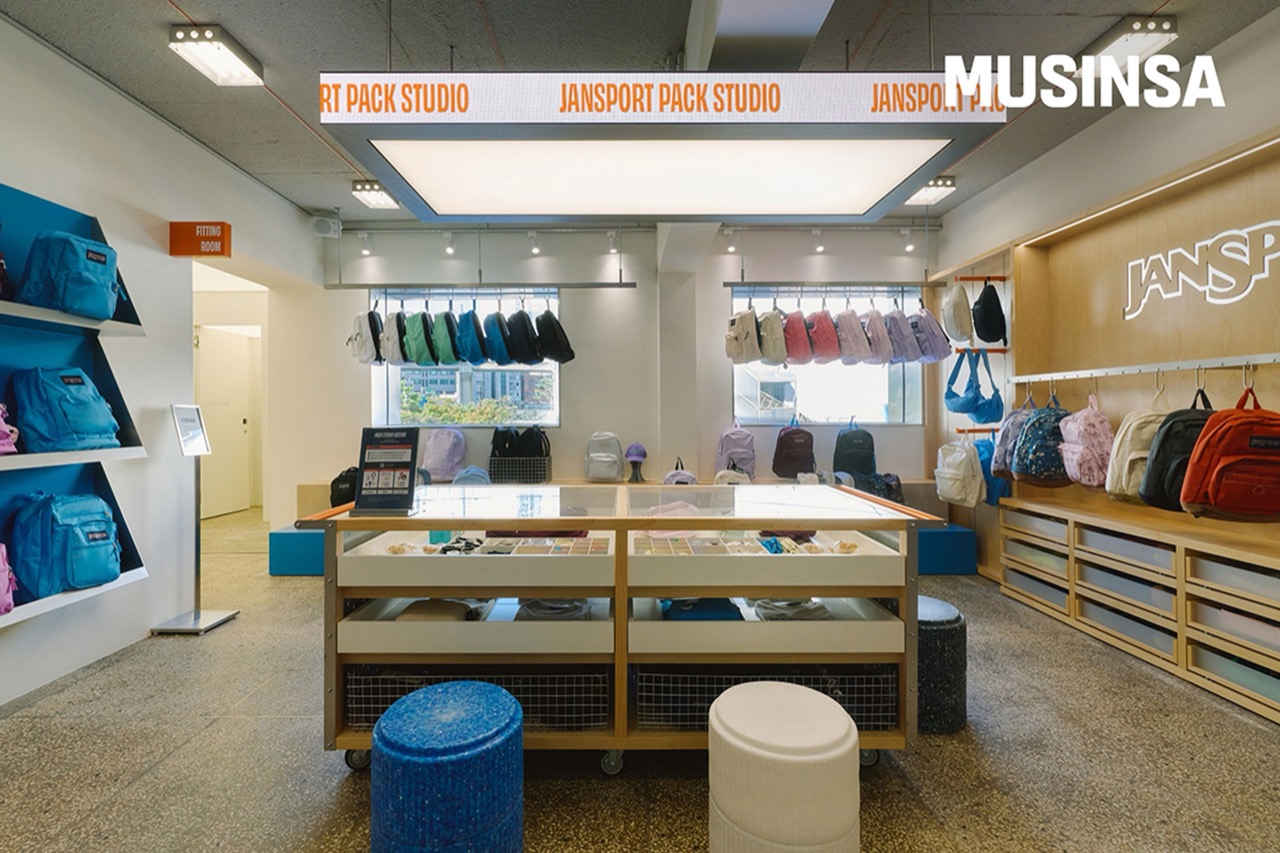
7.The second floor holds people rather than sells to them. A JANSPORT PACK STUDIO band hangs from the ceiling, with a large worktable centered beneath it. Customers pick charms and patches and clip them onto a bag there, and the fitting room sits alongside. Through the windows: trees.
8.Bags take up little store. Hanging one clothing design brings size runs, a fitting room and a queue, while a backpack needs one piece per color to make a display and a single lift onto the shoulder to try. So why do 198 square meters not feel small? Because the entire wall surface is selling floor.
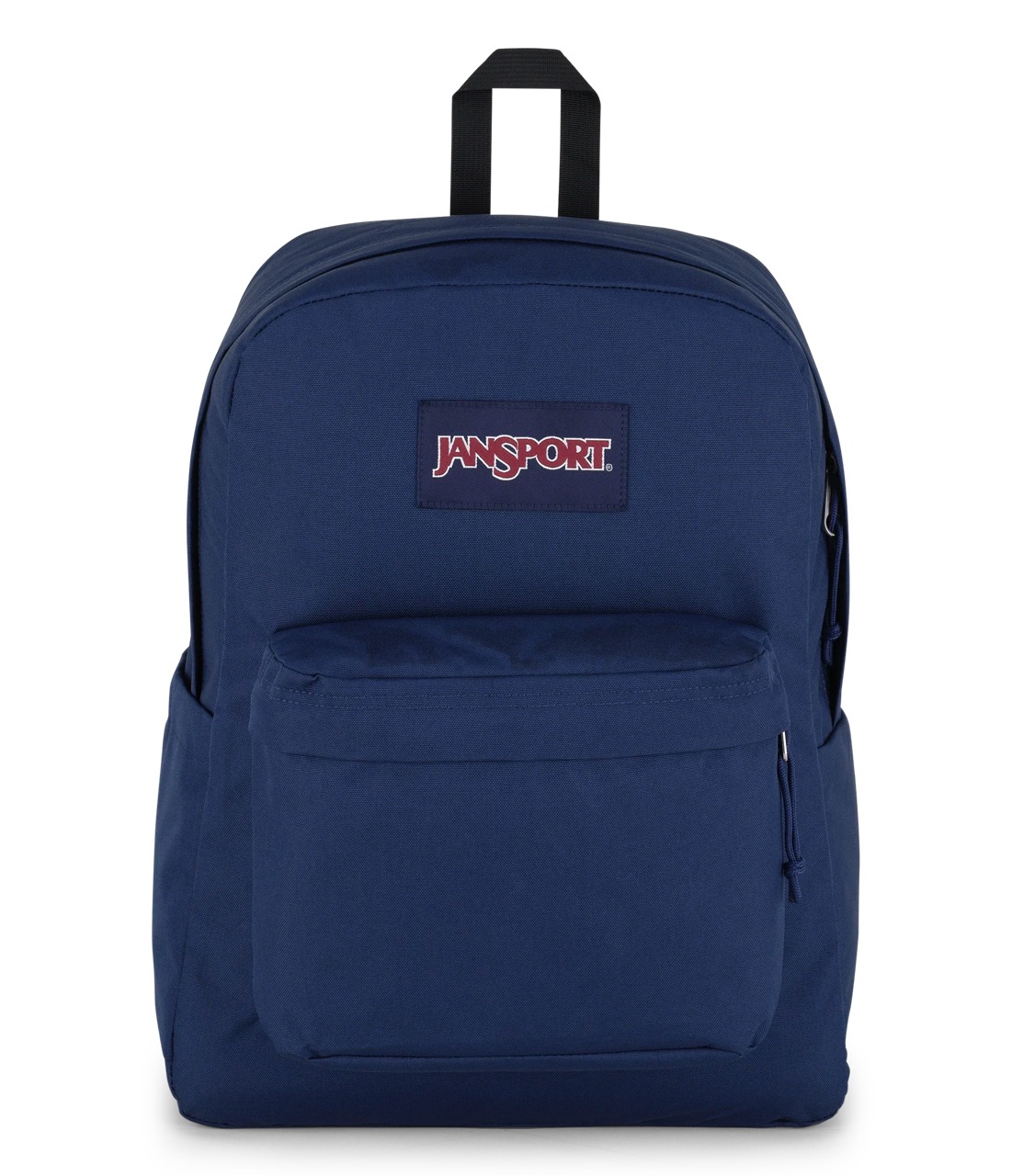
9.The price band fits the neighborhood too. The Right Pack, the signature model, lists at 114,900 won in Korea. On a walk where two coffees and a dessert cost 30,000 won, a 100,000-won bag is not a hard decision. The few minutes spent choosing and clipping on a charm push that decision along. Dwell time bought at the cost of trim.
10.The parent is not in good shape. VF Corporation posted 9.605 billion dollars in revenue for fiscal 2026, up 1 percent, with operating income of 577 million dollars and a 6.0 percent operating margin. Gross margin rose 130 basis points to 54.8 percent. The company says it returned to full-year growth for the first time in three years.
11.In February 2023, VF said it would sell the packs business. JanSport, Eastpak and Kipling were the three brands on the block, and reporting at the time valued JanSport alone at around 500 million dollars. Three and a half years later all three remain inside VF, and in the last fiscal year Eastpak and Kipling declined while only JanSport grew.
12.The Korean numbers climb far faster. Musinsa Trading turned over 76 billion won last year, up 48 percent, and JanSport's Korean sales inside that figure jumped 64 percent. The first flagship in the world was built by the distributor, not by a buyer for a brand on the block.
13.Lease terms are not public. Ground-floor space in this area trades at around 300,000 won per 3.3 square meters, brokers say, and the second floor settles below half that. Thirty pyeong on each floor puts monthly rent somewhere between 13 and 17 million won. Hold rent at 12 to 15 percent of sales and the benchmark lands near 100 million won a month, which at a 90,000-won average ticket means 37 to 46 people through the register every day.
14.It started in one room above an auto shop in Seattle. Murray Pletz, an engineer, told Jan Lewis, who worked a sewing machine, that he would name the company after her if she married him, and they married two years later. Skip Yowell was the third founder. The small daypack released in 1969 sold through the University of Washington bookstore and spread across American campuses, and that shape is the ancestor of the backpacks now on the wall.
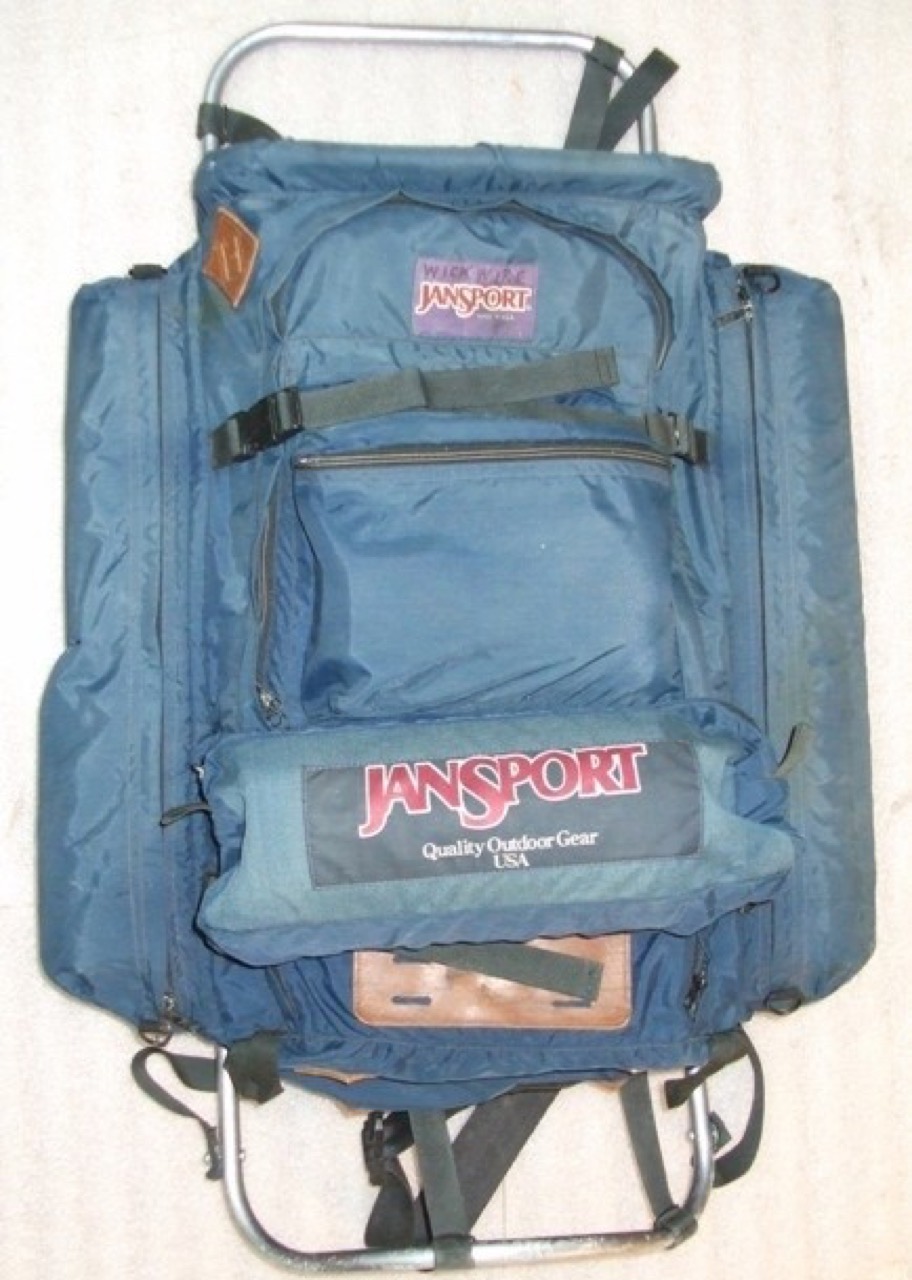
15.There is a crack in this structure. The distributor built the store, planned the collaboration products and picked the location, but the trademark belongs to an American company. The bigger the brand grows in Korea, the more the trademark holder can ask at the next renewal, and a completed sale gives a new owner no reason to inherit the existing contract. Building 198 square meters under a 500-million-dollar trademark is therefore work that starts by reading the back pages of the contract.
16.The first flagship of a 59-year-old American backpack brand stands on 198 square meters in a narrow Seoul lane, and its Korean sales rose 64 percent last year. One thing has not changed: the parent put this business up for sale three years ago. Anyone holding a foreign brand's Korean rights and building a street-level store should check the remaining contract term before the trade area or the rent. Construction and signage are usually written off over five years, and if the license runs three, the last two years become an asset for whoever owns the mark.