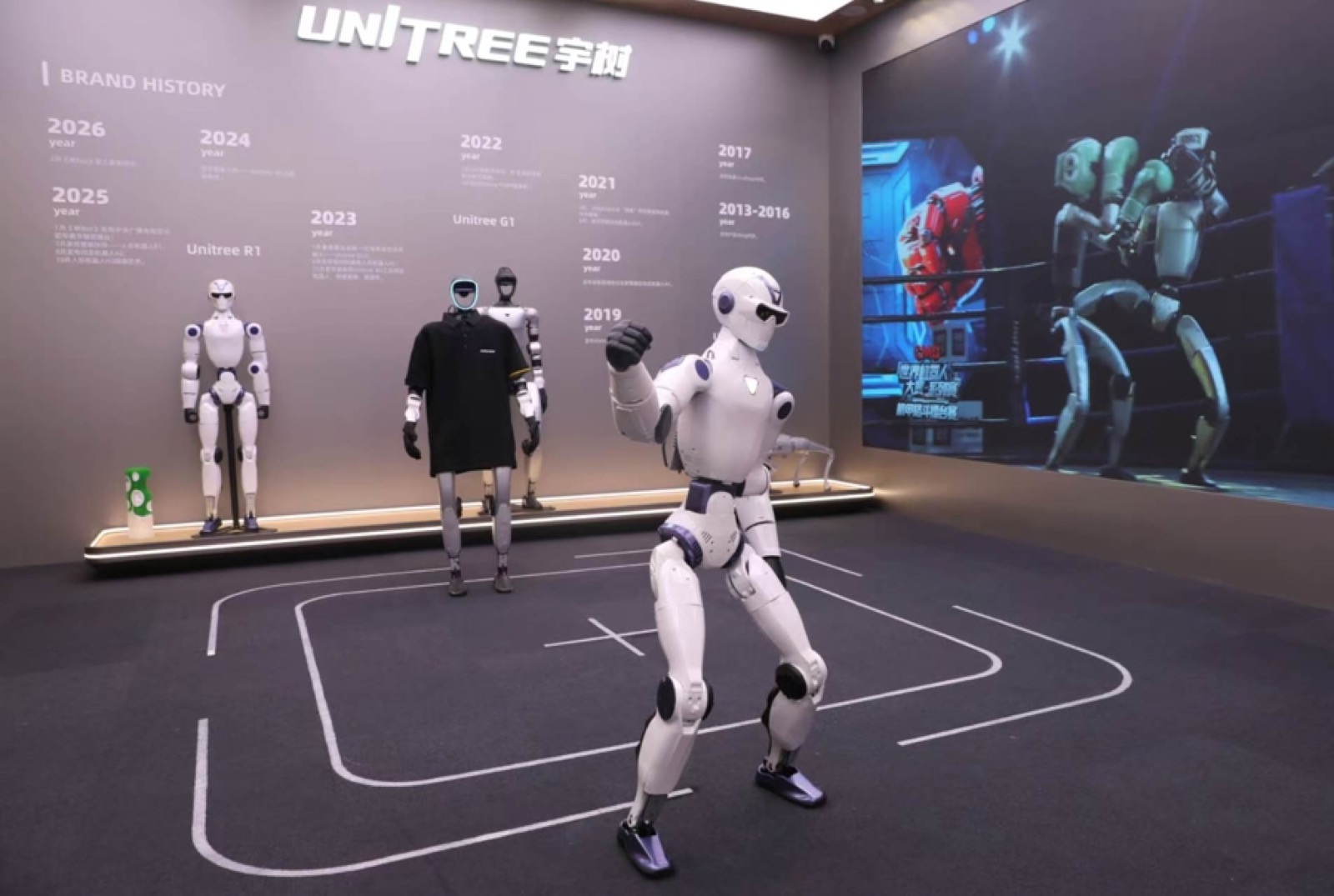
This is the first humanoid robot store to open in Asia. Floor area, 100 square meters. The day after it opened, the Shanghai Stock Exchange reviewed the company's listing, and two months later the offer price was set. Retail subscriptions were oversubscribed 8,288 times.
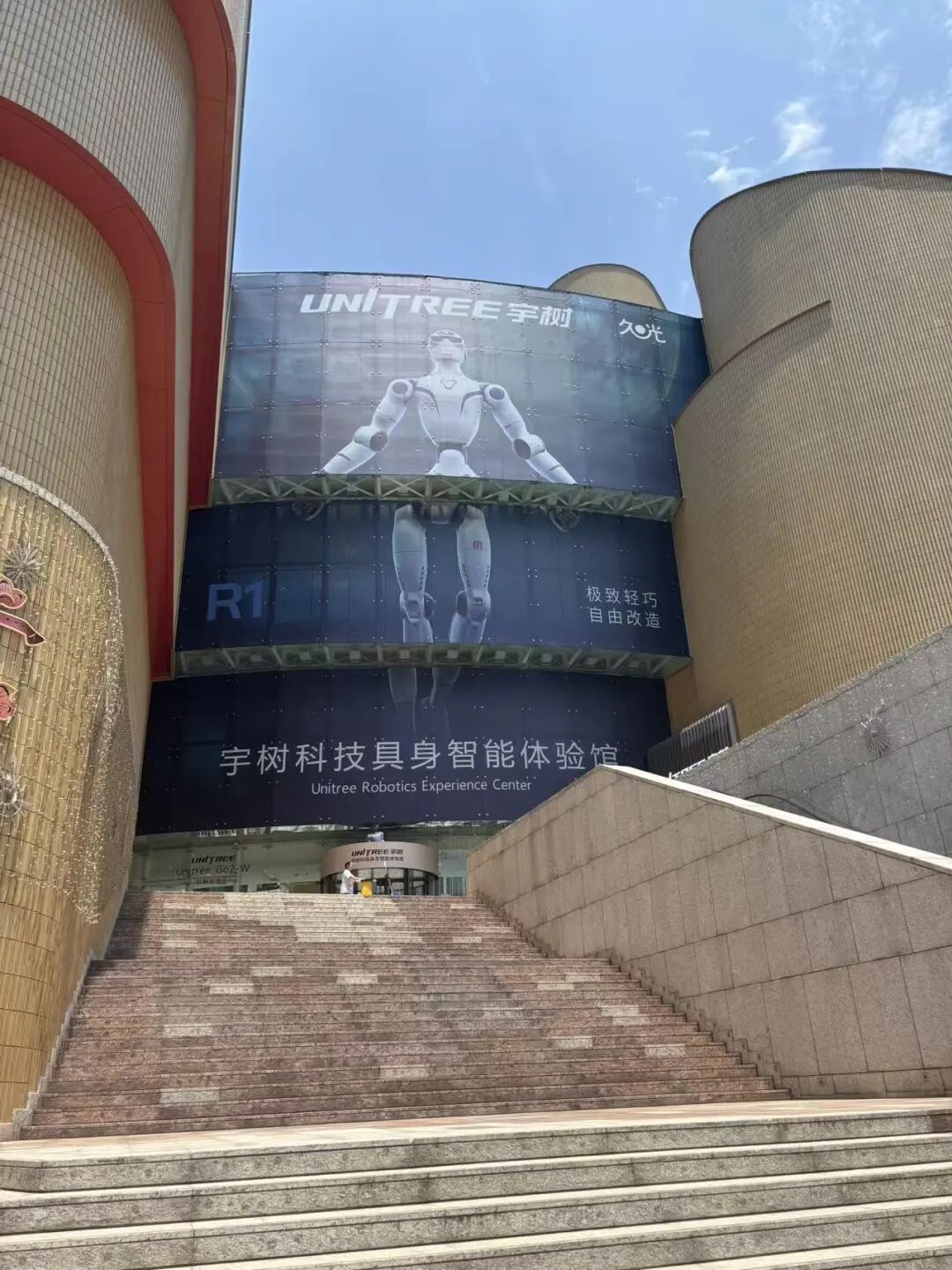
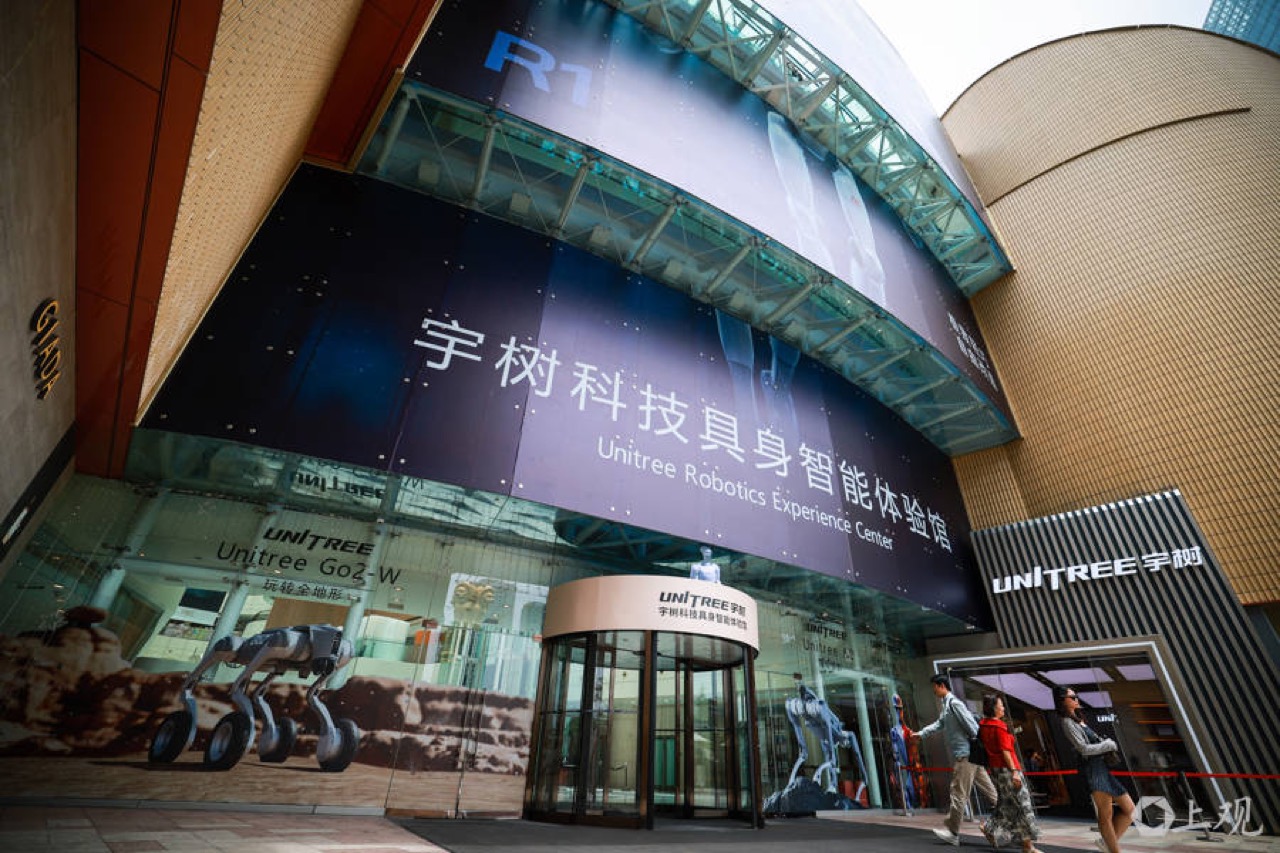
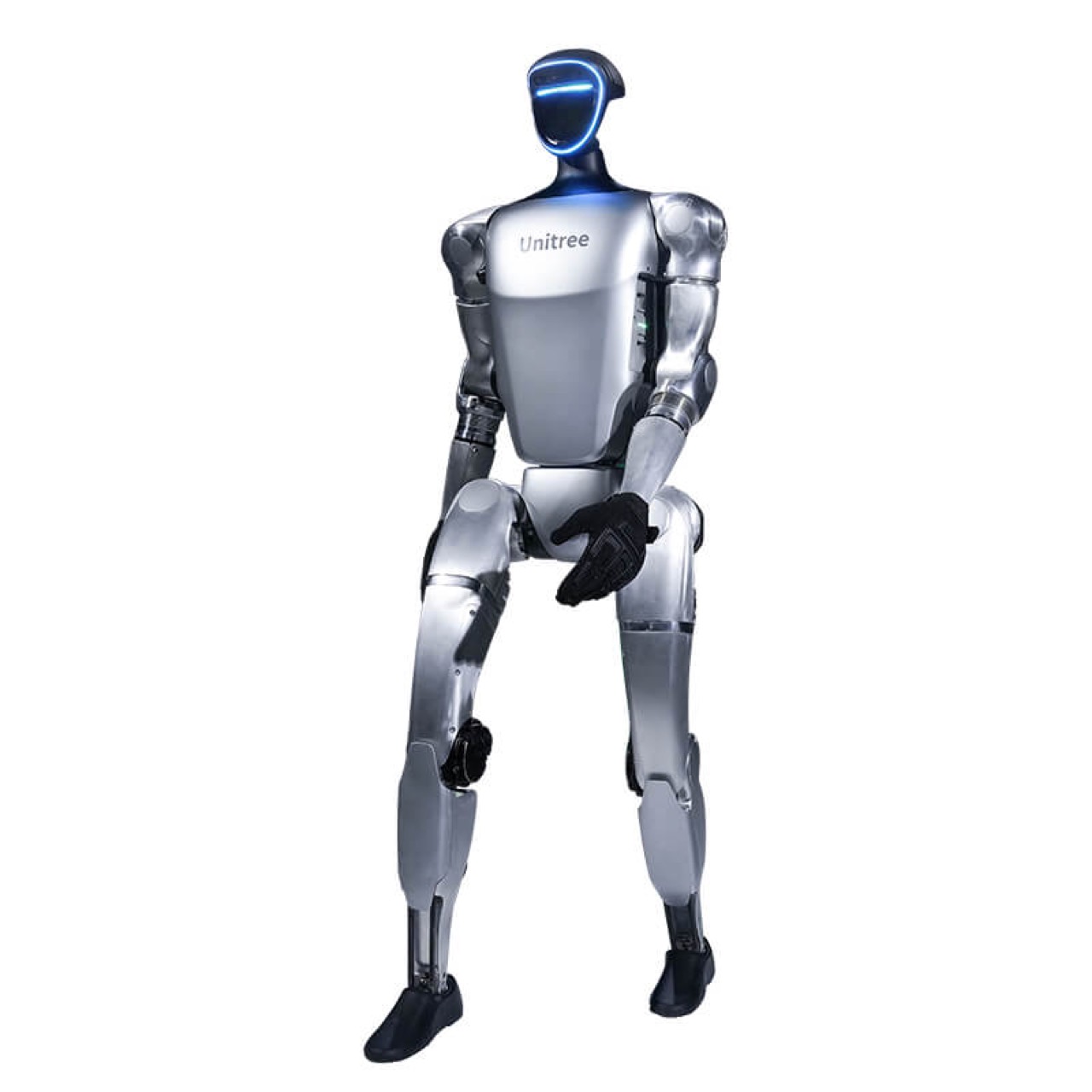
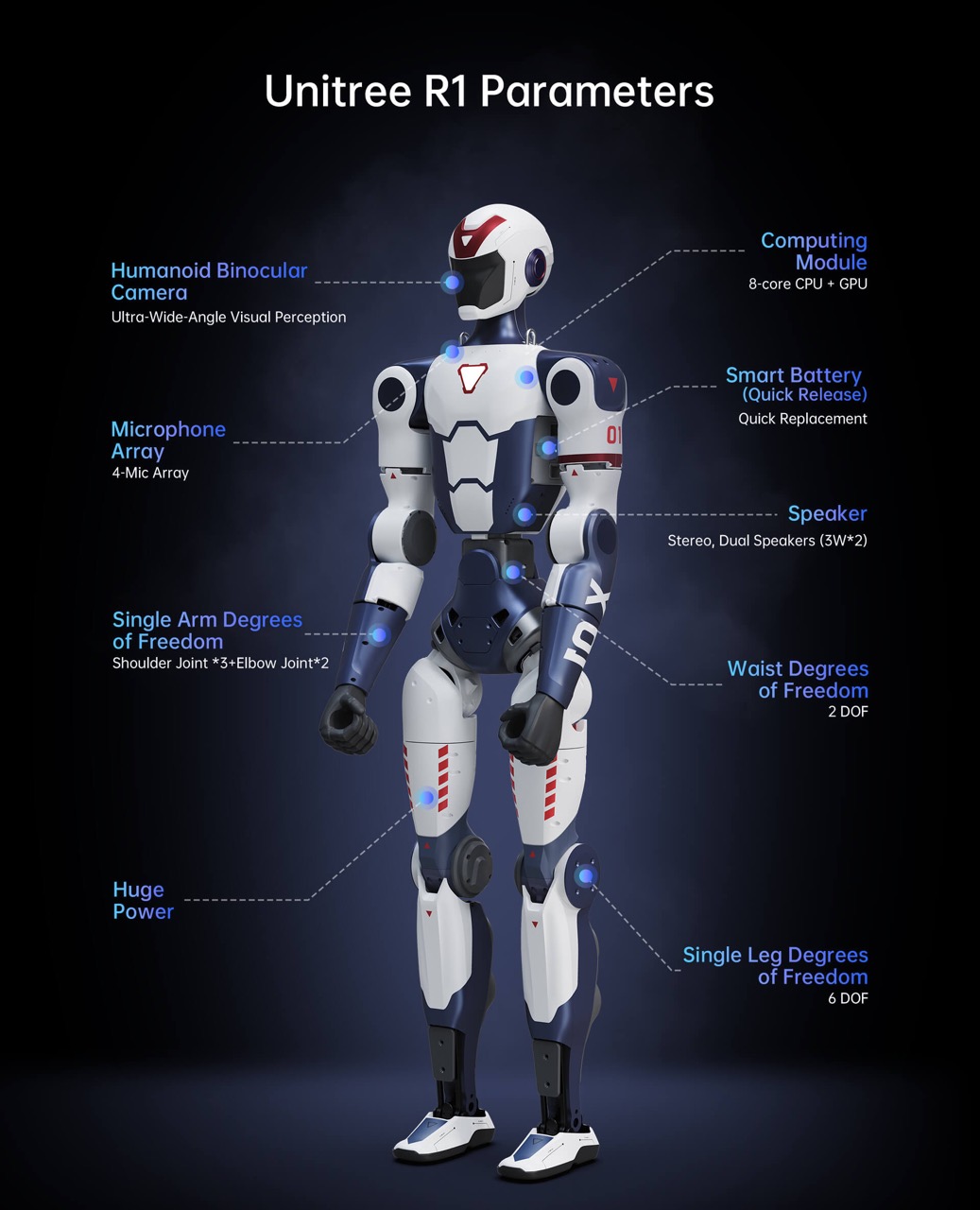
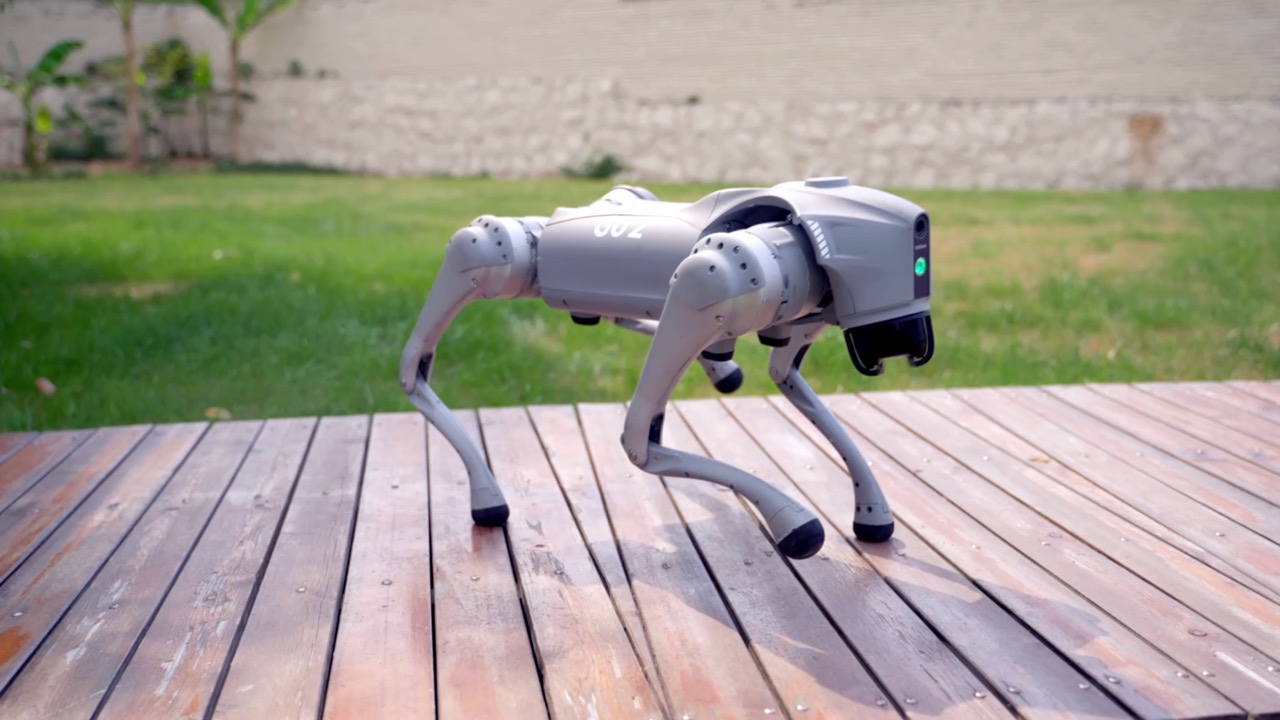
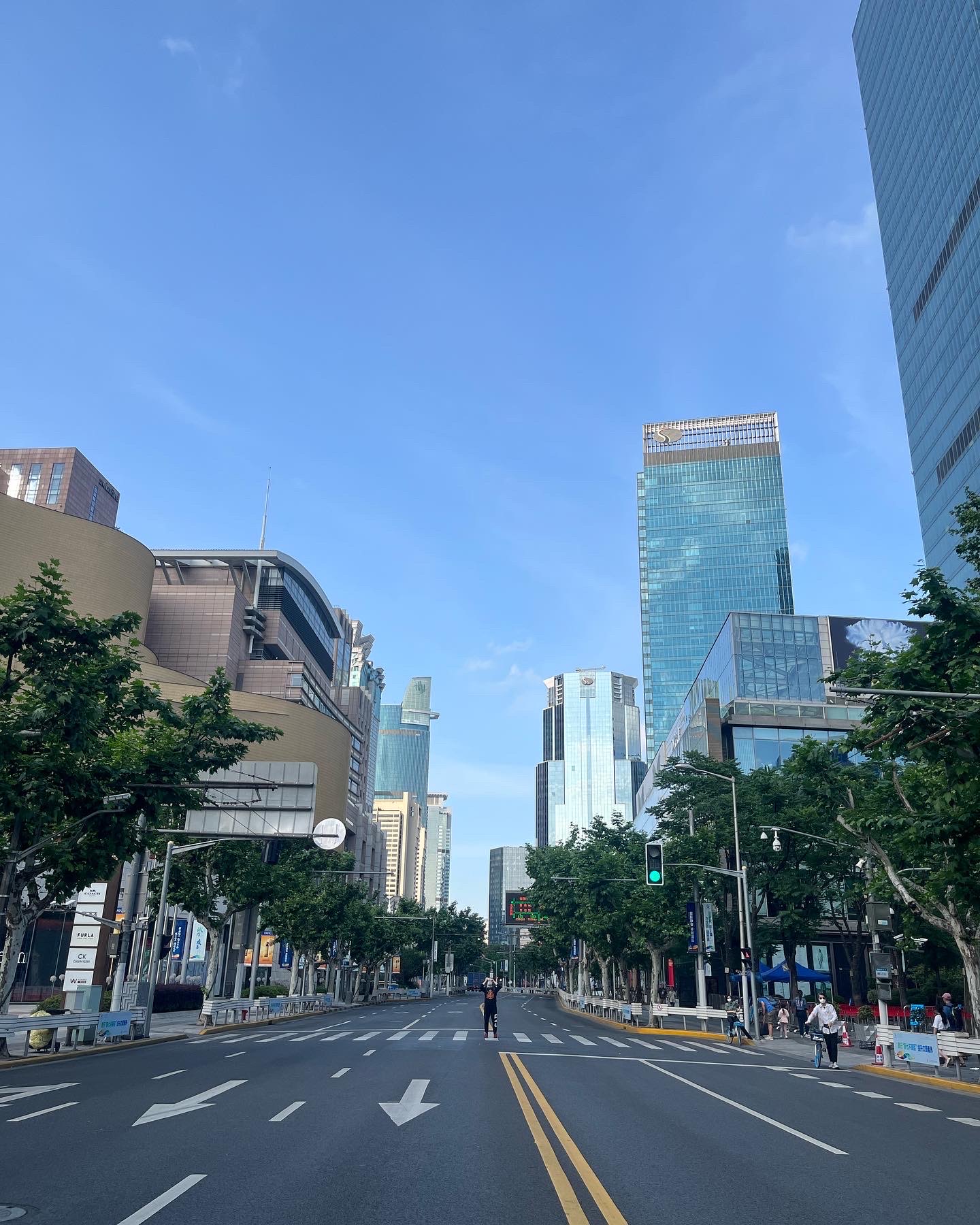
1.May 31, 2026, 1618 West Nanjing Road, Jing'an District, Shanghai. Unitree opened an experience store on the second floor of Jiuguang Department Store. A little over 100 square meters. The company calls it Asia's first embodied intelligence experience hall. On the shelves, the G1 and R1 humanoids and the Go2 quadruped.
2.The next day, June 1, the Shanghai Stock Exchange took up the listing review. The store came first. Three stores arrived in five months: the first offline outlet inside JD MALL in Beijing on December 31, 2025, the first directly operated store at Wangfujing Yintai in88 on April 30, 2026, and then this one in Shanghai.
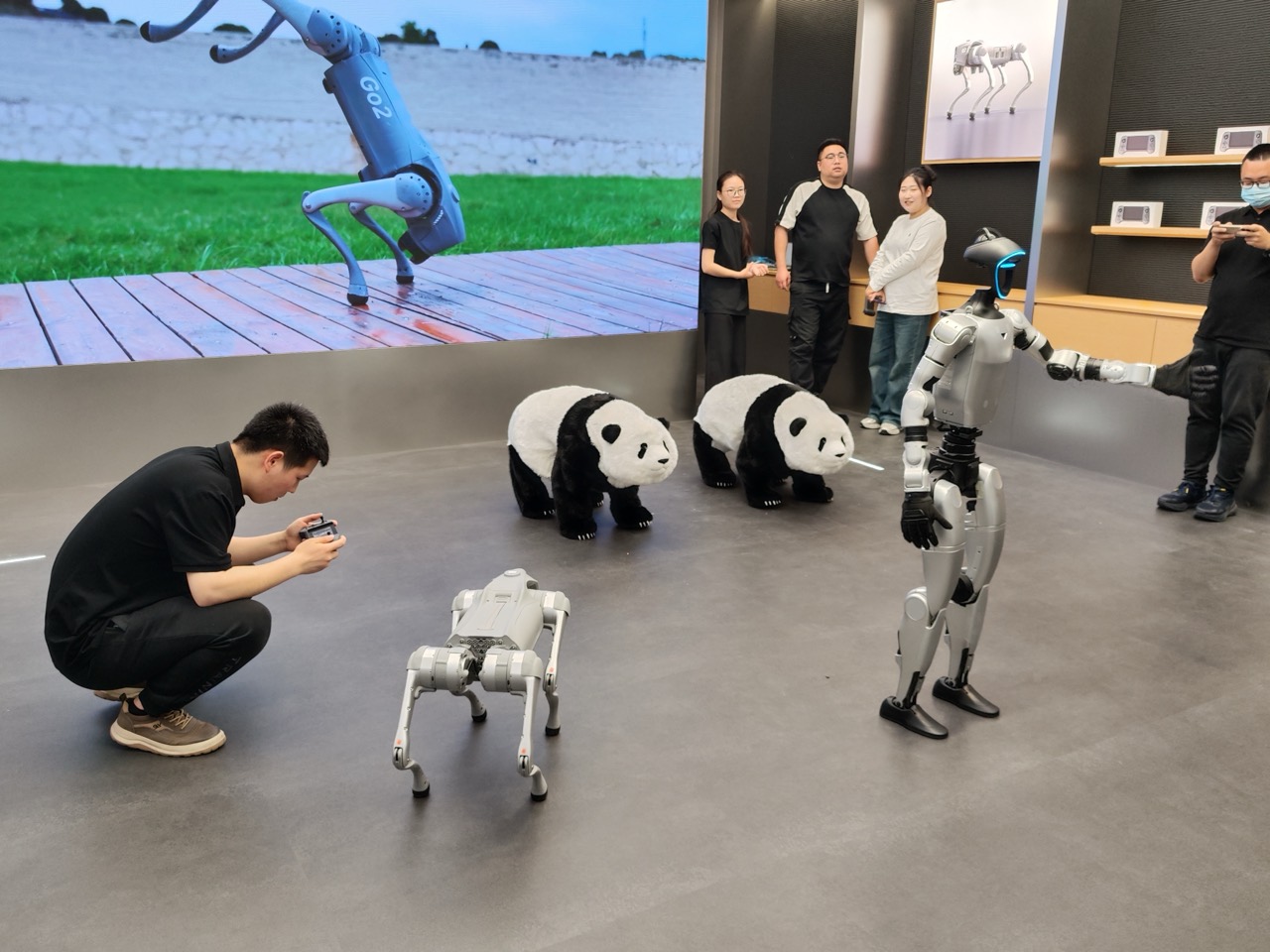
3.On opening day the second floor was blocked. A robot dog came out in a panda suit and was mobbed by children, while outside a humanoid danced and turned backflips. People reached out and touched them. Orders had already come in that morning, the company said.
4.What the 100 square meters does is simple. Customers pick up the controller themselves. The quadruped sits, offers a paw, lunges at people, and the humanoid walks and waves. The whir of servo motors lies thinly over the department store music, and the slap of feet on the floor sits under it. The first thing people ask after touching a robot is how much it weighs.
5.Now the price tags. Go2 arrived in July 2023 from 9,997 yuan, and the Go2 Pro on display starts at 19,999 yuan. G1 launched in 2024 at 99,000 yuan, and in the store it starts at 85,000 yuan. R1 came in July 2025 at 39,900 yuan, or 5,900 dollars, and a 29,900 yuan version with a different torso material stands beside it. Converted to Korean won, these run from 4 million to 17 million.
6.This thing does not sell through photographs. Robot videos are everywhere and there is no way to tell which ones are real, and people believe what they can touch. One shopper in the store put it this way: normally you can only see these at trade shows.
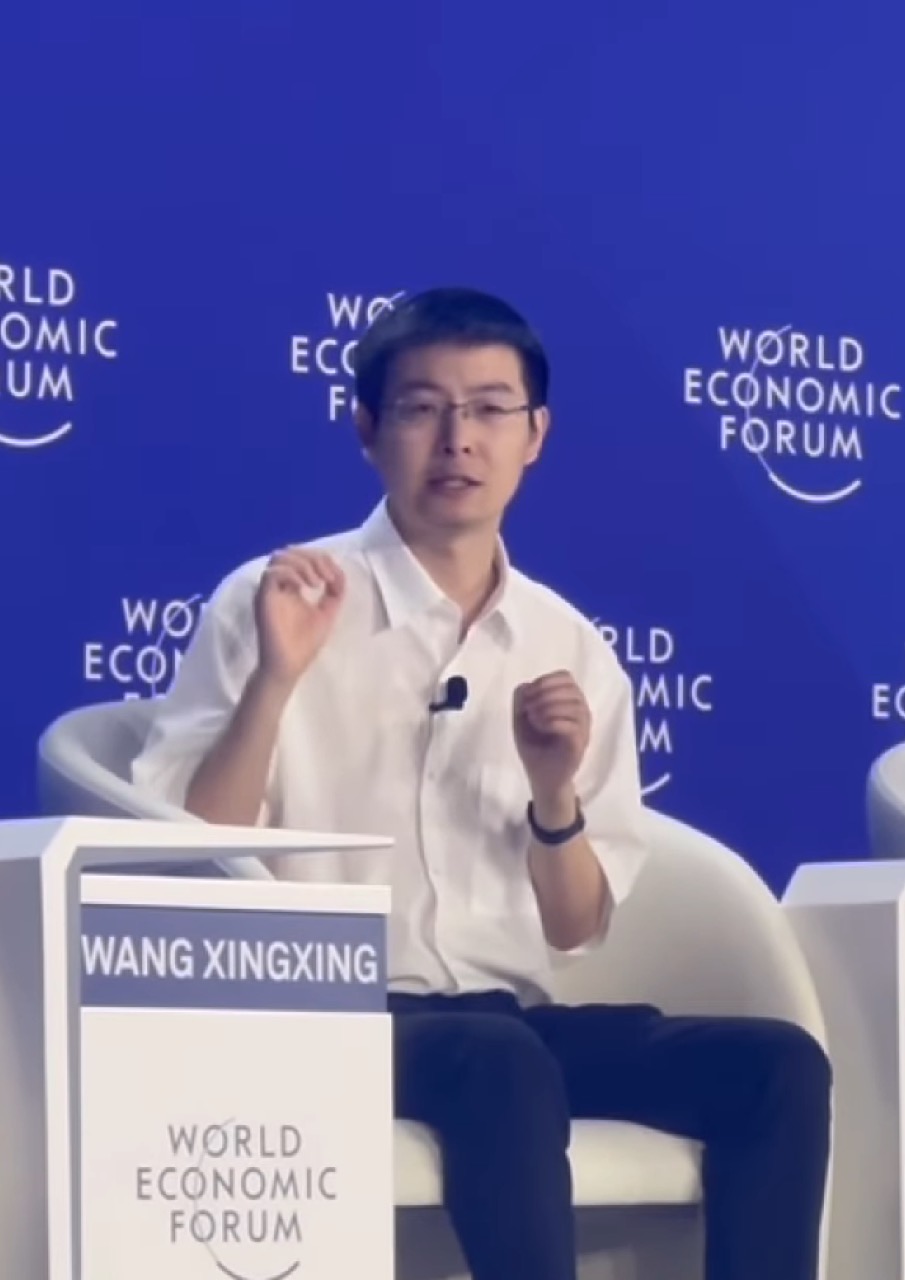
7.Look at who actually buys, and the store changes character. In 2024, quadrupeds were 65 percent of sales and humanoids 30 percent. Founder Wang Xingxing has said that even consumer sales are mostly commercial display and rental rather than individuals buying. In early 2025, industrial deployment accounted for 9 percent of humanoid revenue.
8.So what these 100 square meters sell is not a robot but proof. Not a lab video, an object sitting on the second floor of a department store with a price tag on it. The buyer who paid most dearly for that proof was not a shopper.
9.Start with what the store costs. Ground floor rents around West Nanjing Road run 22 to 30 yuan per square meter per day, and the Shanghai prime ground floor average is 42.5 yuan (Q3 2025). A department store second floor is usually taken at under half the ground floor, so at 20 yuan a day, 100 square meters comes to 60,000 yuan a month. Job postings put store staff pay at 10,000 to 15,000 yuan a month and ask for at least a year of consumer electronics retail experience. Four people is 48,000 yuan. Around 110,000 yuan a month all in.
10.Covering that is not hard. The company's gross margin sits near 60 percent, so one G1 sold at 85,000 yuan leaves 51,000 yuan of gross profit. Two units and a bit cover the 110,000 yuan, or nine quadrupeds if you fill it that way.
11.Seen at the scale of the company, the arithmetic disappears. 2025 revenue was 1.7 billion yuan, four times the year before, 5,500 humanoids sold for a 32 percent global share and first place, and 33,000 quadrupeds cumulative. Even at 12 million yuan a year, one store is 0.7 percent of company revenue.
12.The real return came from elsewhere. The Shanghai Stock Exchange accepted the listing application on March 20 and the China Securities Regulatory Commission granted registration on July 2. One hundred and four days. On August 6 the offer price was set at 150.80 yuan a share, with 40.45 million new shares putting 10 percent on the market. Proceeds of about 6.1 billion yuan, a listing market value of about 61 billion yuan. A price to earnings ratio of 219.
13.In the August 10 subscription, retail orders totaled 53.6 billion shares, 8,288 times the online tranche. A lot of 500 shares costs 75,400 yuan and the odds of winning one worked out to 0.02 to 0.03 percent. On the register, Meituan affiliates hold 9.65 percent as the largest outside shareholder and Sequoia China holds 7.11 percent. The company guided first half 2026 revenue to 1.052 to 1.128 billion yuan and net profit to 258 to 306 million yuan.
14.This is not the first company to sell robots in a store. Sony put aibo out at 250,000 yen in 1999, dropped it in 2006 and revived it in 2018. SoftBank pushed Pepper into shops and homes in 2014 and halted production in 2021. How many plans to sell a human shaped robot to individuals have survived so far.
15.What is different this time is that the company does not pretend its customer is an individual. The store faces operators who do commercial display and rental, plus schools and research labs, and the children and tourists are the backdrop that fills it. In late July the United States put sanctions on the company, and two days later it locked in its listing schedule. The narrower the road abroad, the more the store at home is worth.
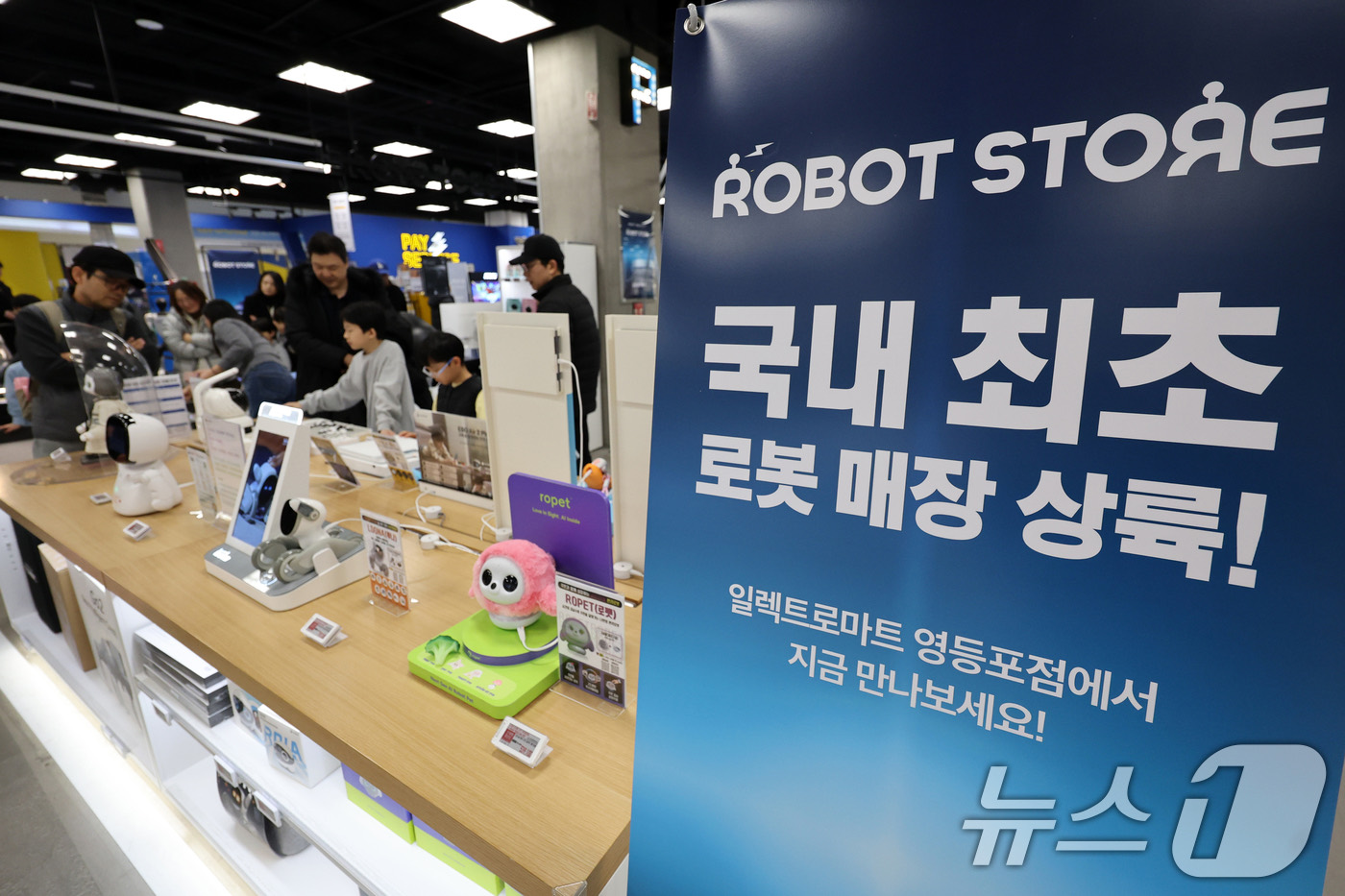
16.Three stores in five months, and in that stretch the company became a listed firm worth 61 billion yuan. What 100 square meters sells in a year rounds to nothing against company revenue. Korea now has the same goods on a shop floor, since E-Mart began selling 14 robot models offline at its Electro Mart Yeongdeungpo branch in February 2026, with the G1 listed at 31 million won. The 85,000 yuan in the Chinese store is around 17 million won, so the gap runs 1.8 times. What catches first in Korea is not that price but the repairs. The place to buy exists, and nobody has yet said where parts and service come from.