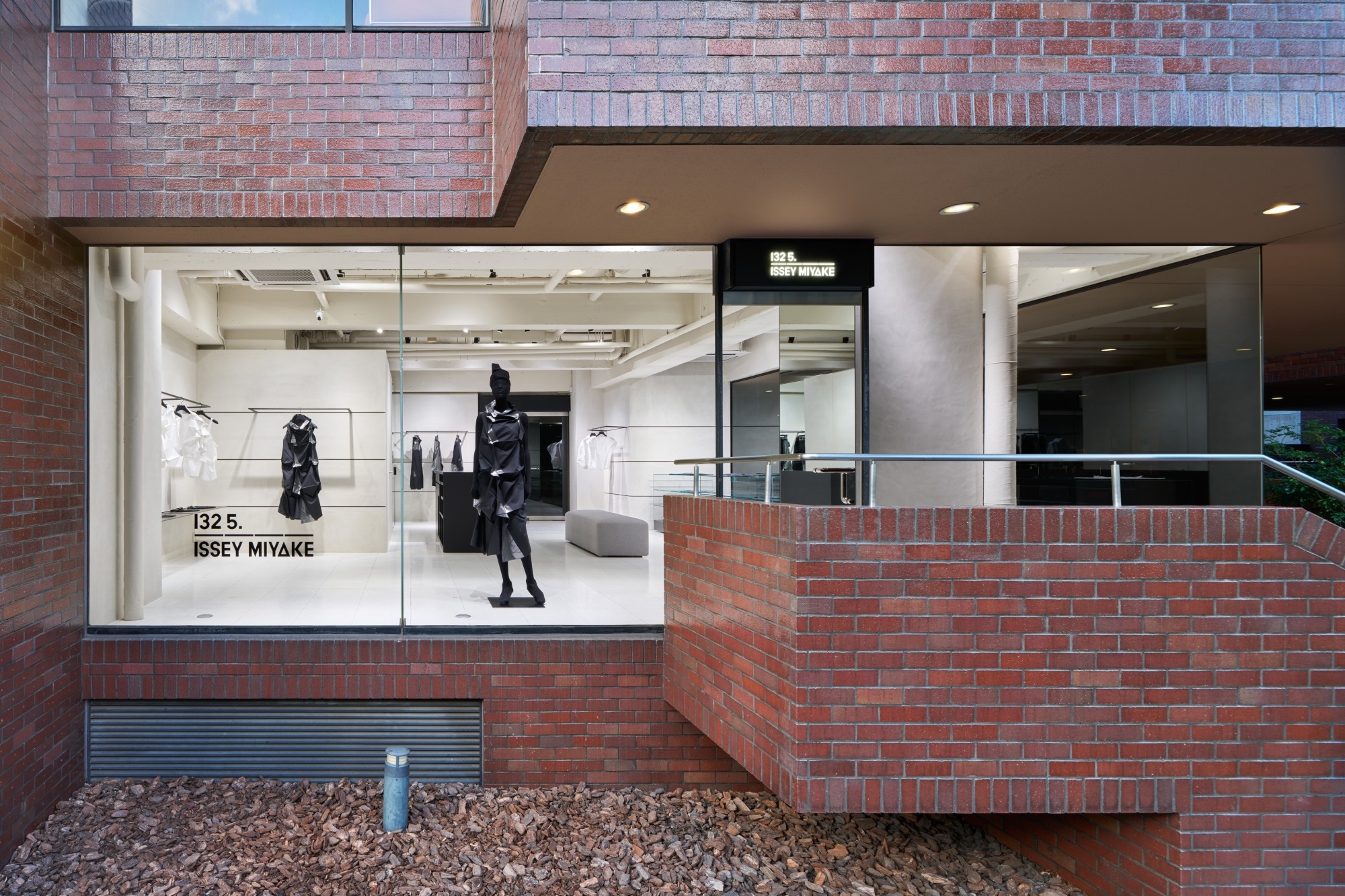
ISSEY MIYAKE opened a flagship for its 132 5. line in Minami-Aoyama, Tokyo on August 7. The floor area is 56 square meters. It sits in the very building, on the very spot, where the brand's first store stood in 1976. A single garment starts at 77,000 yen.
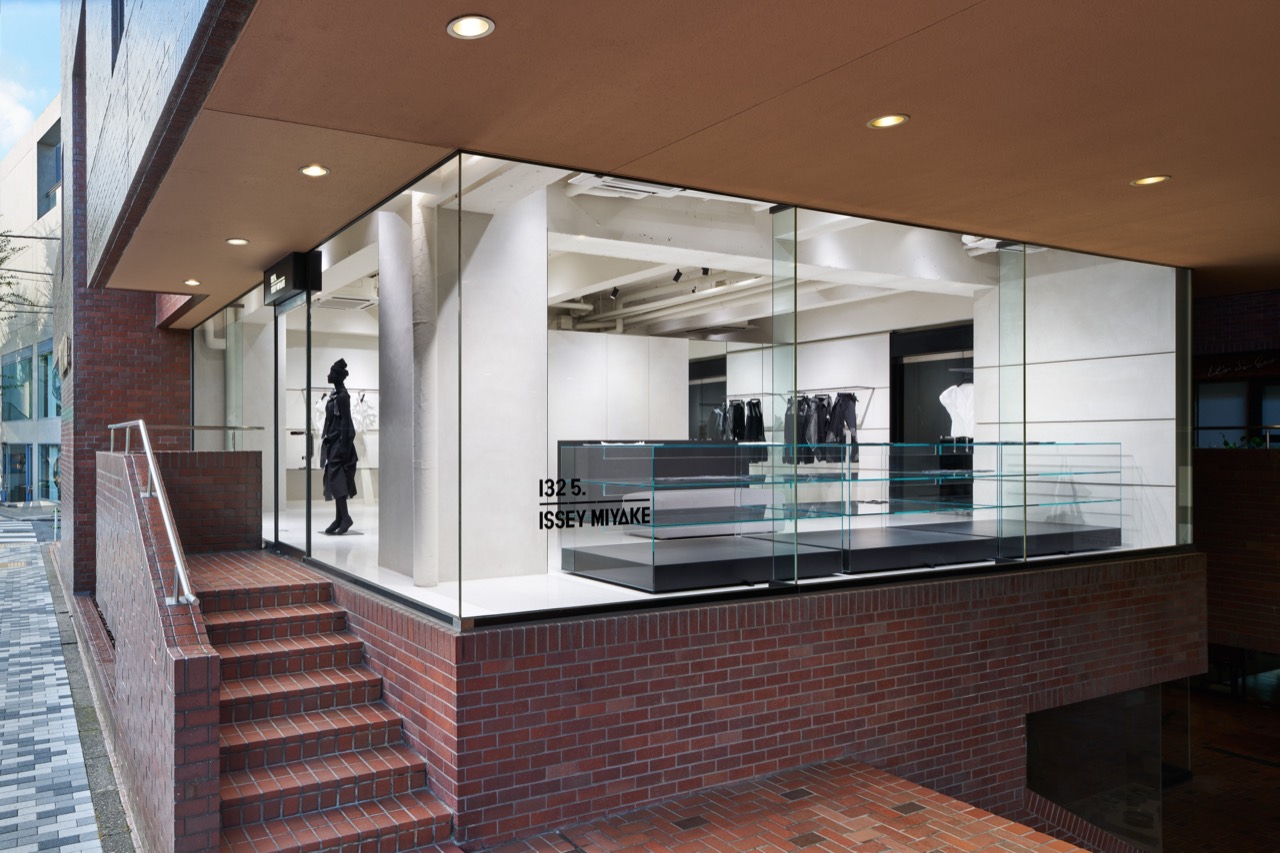
1.Minami-Aoyama 5-3-10, Minato-ku, Tokyo, in the front left corner of the FROM-1st building, completed in 1975. 132 5. ISSEY MIYAKE / AOYAMA opened here on August 7. The space runs 56 square meters, about 17 tsubo. Tokujin Yoshioka handled the spatial design, and the doors are open from 11 in the morning until 8 at night.
2.This building is where the brand began. The first ISSEY MIYAKE store stood here in June 1976, and the first 132 5. store went into the same building in November 2010. In 2013 a store carrying the research team's own name, REALITY LAB., joined them. Fifty years, and back to the same address.
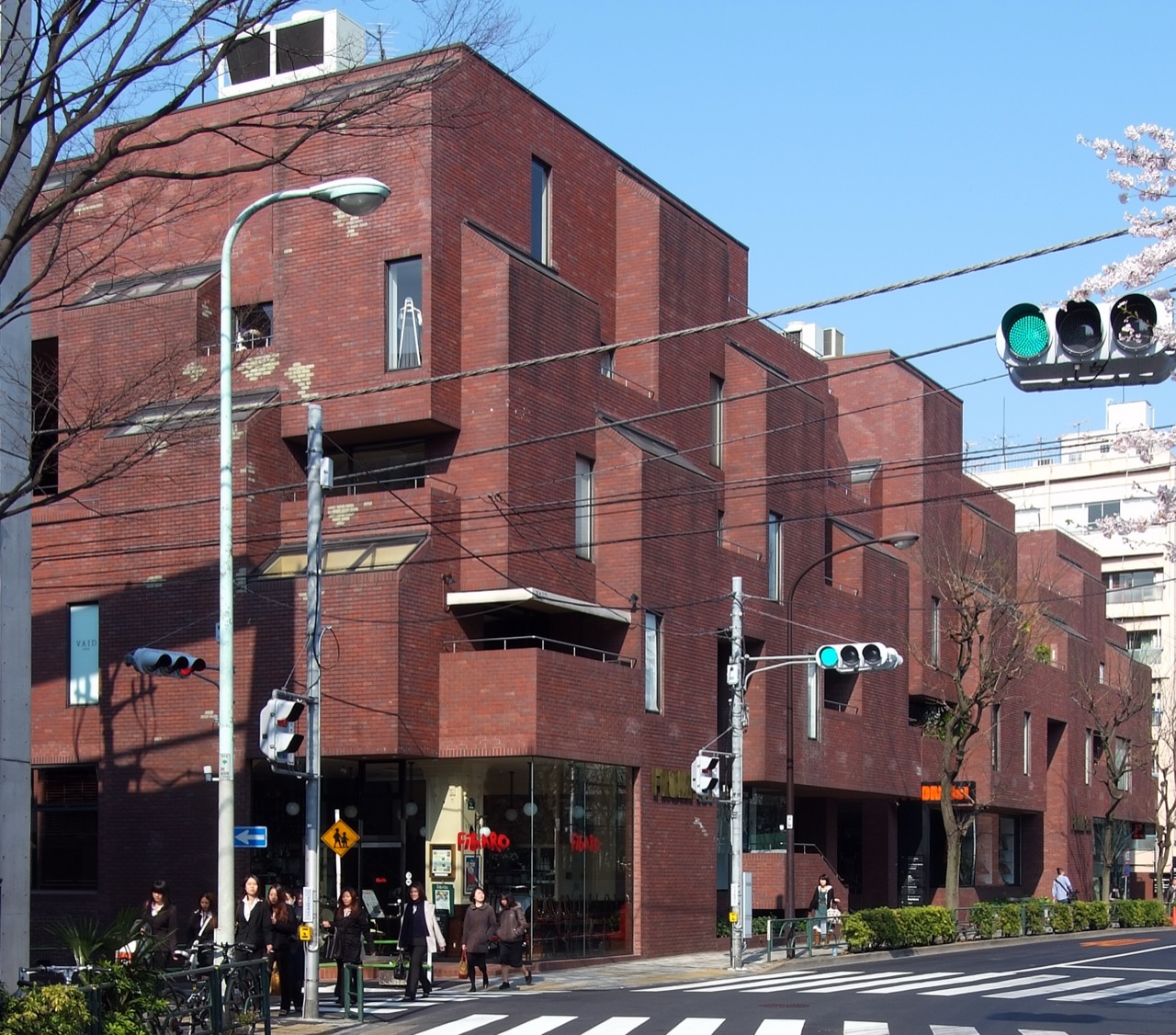
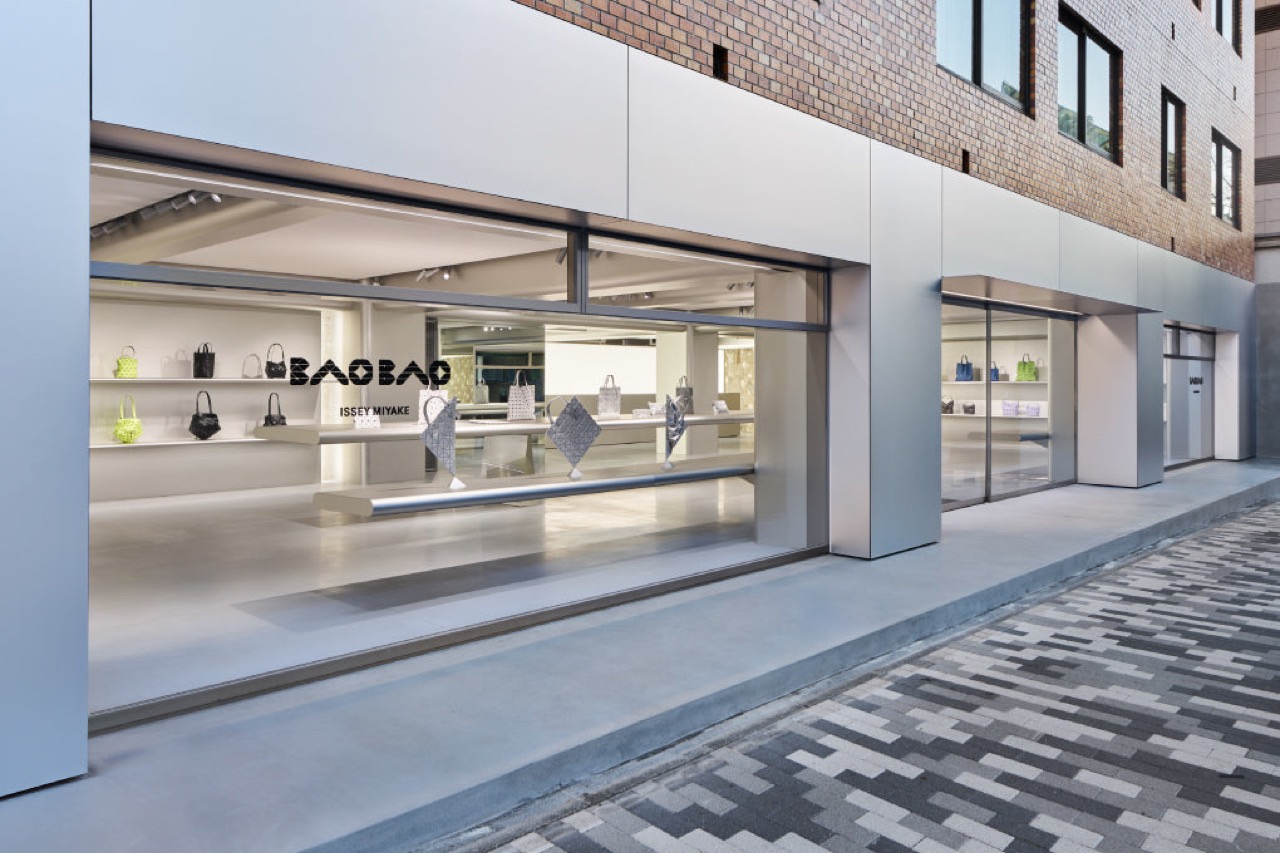
3.This is the third opening in Aoyama this year. A BAO BAO store opened at Minami-Aoyama 3-17-14 on April 24. On September 4 the A-POC ABLE flagship expands and relocates within this building, taking 240 square meters across basement level one to the second floor, the company says. Three stores in four and a half months, all designed by the same hand.
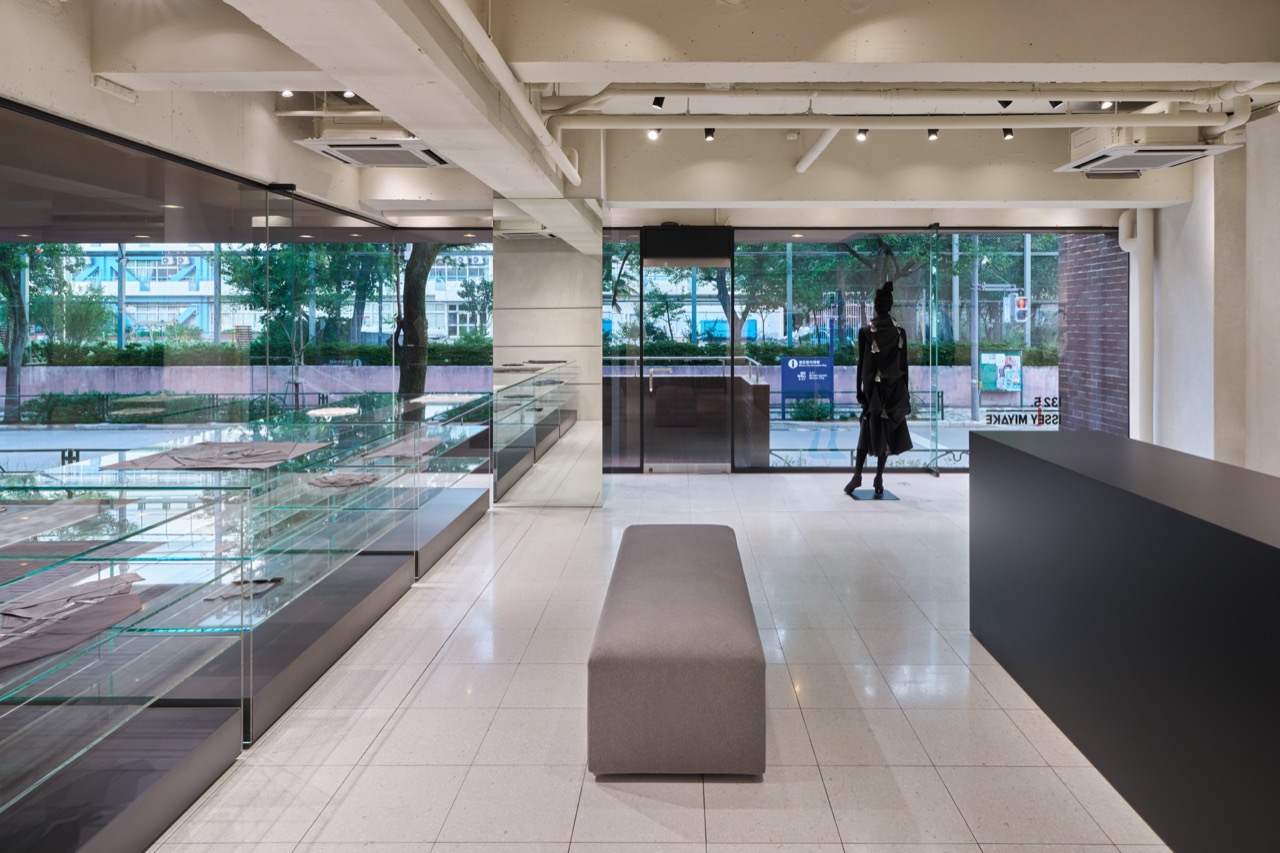
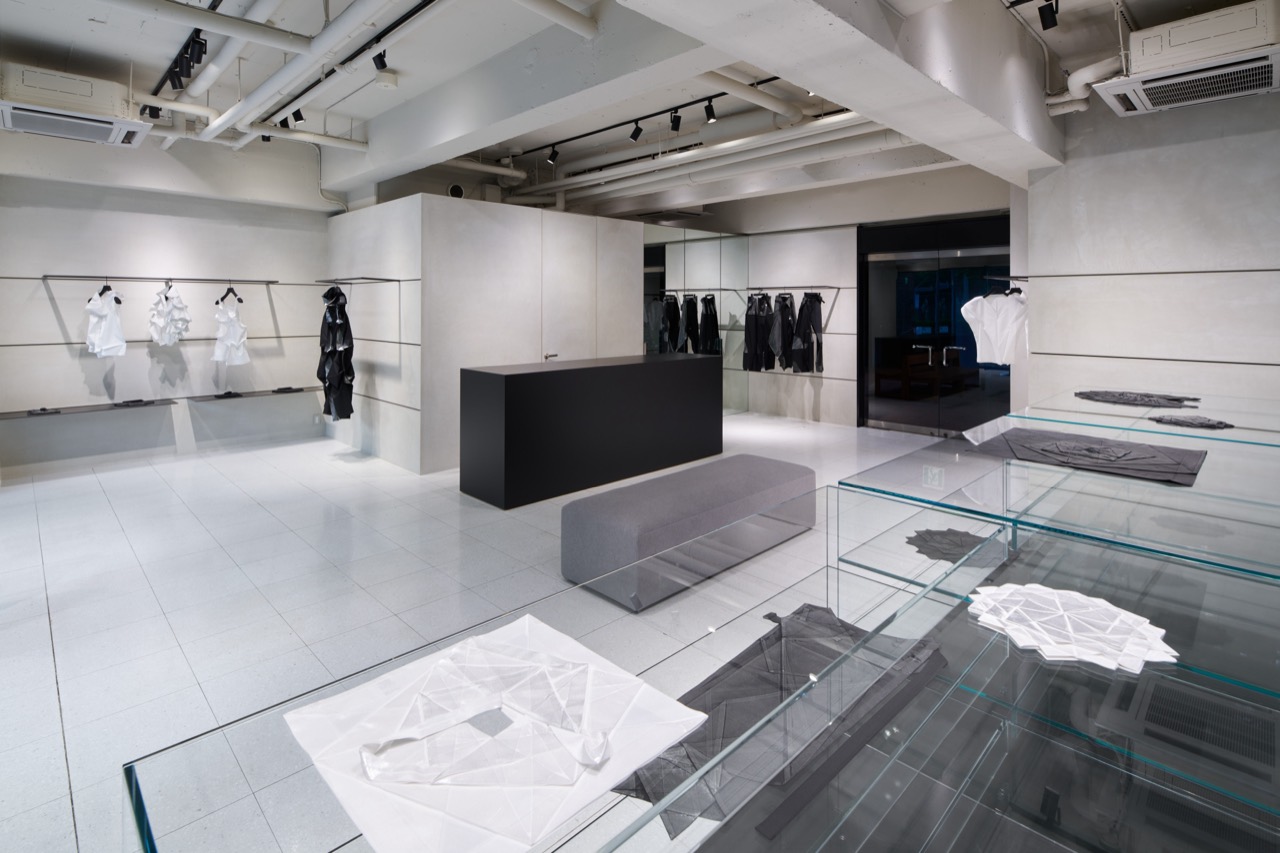
4.The store is at street level with a fully glazed front. Thin rails on the inner walls carry three or four garments each, spaced far apart, while a low run of glass cases stretches along the window side. What lies inside those cases is not clothing but the plane a garment comes from. A single sheet of cloth, scored with fold lines, rests there like a specimen, and one section is left empty for visitors to unfold pieces themselves.
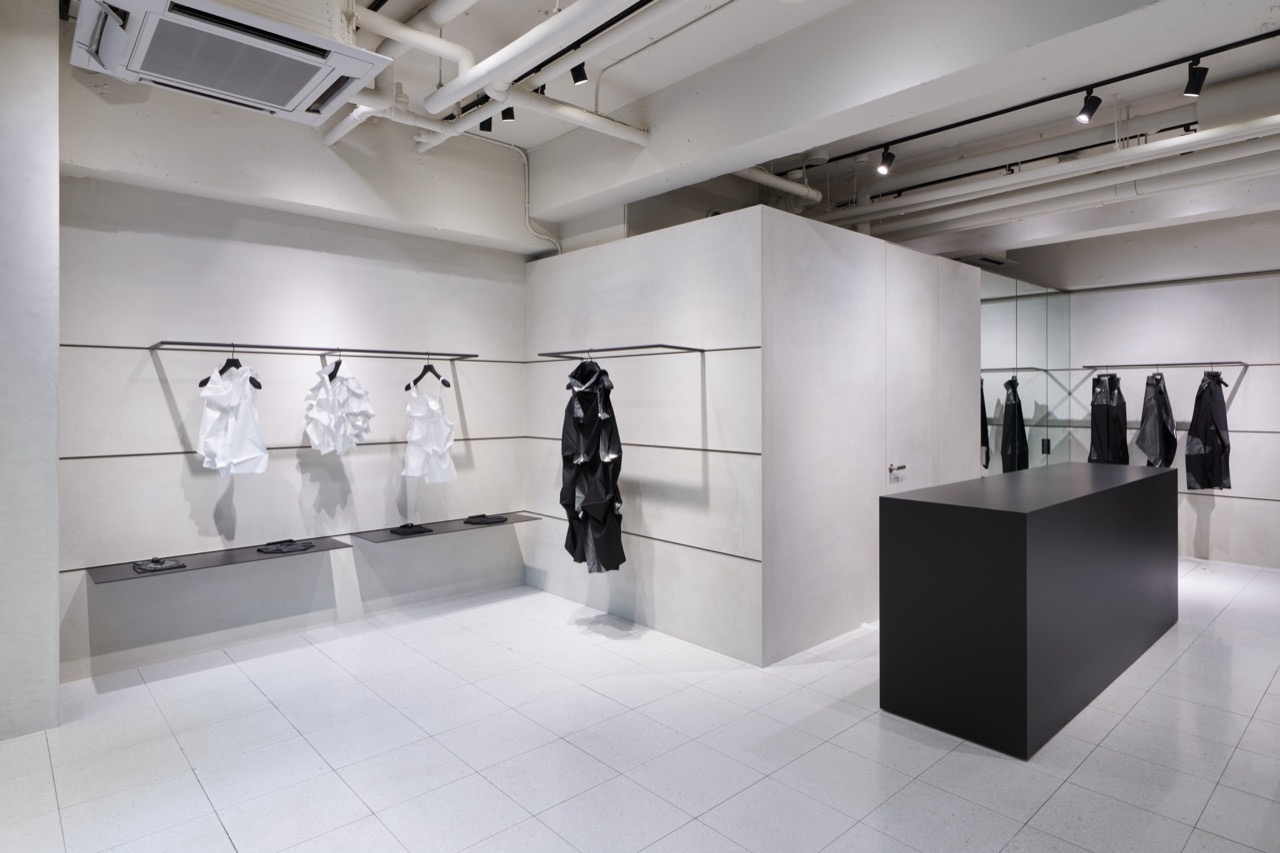
5.On the wall shelves, fully folded pieces sit as bundles no bigger than a palm. Heat-pressed creases catch under a fingernail, and each angled facet holds its own geometry. The weight is almost nothing, yet opened out, what stands is not fabric but sculpture. There is no way to move those few seconds into a photograph.
6.The name is a written record of the process. One piece of cloth is 1, folded flat it is 2, opened into volume it is 3, and worn by a person it goes beyond, to 5. Using folding algorithms from Jun Mitani, a mathematician at the University of Tsukuba, the three-dimensional form is designed first, then pressed flat so cutting lines can be added, then fixed with heat. The fabric is recycled polyester drawn from PET bottles. Reality Lab., assembled in 2007, spent three years on it.
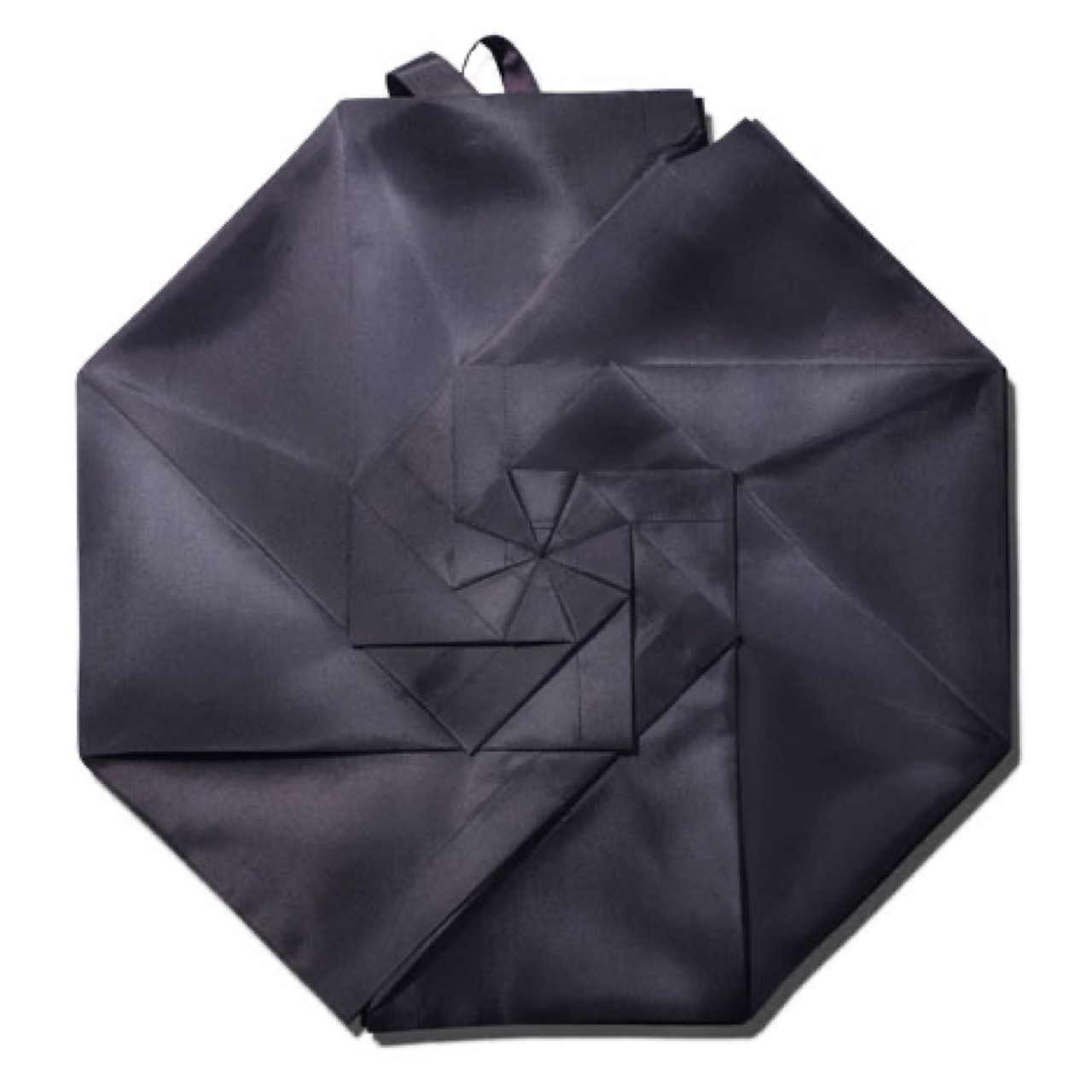
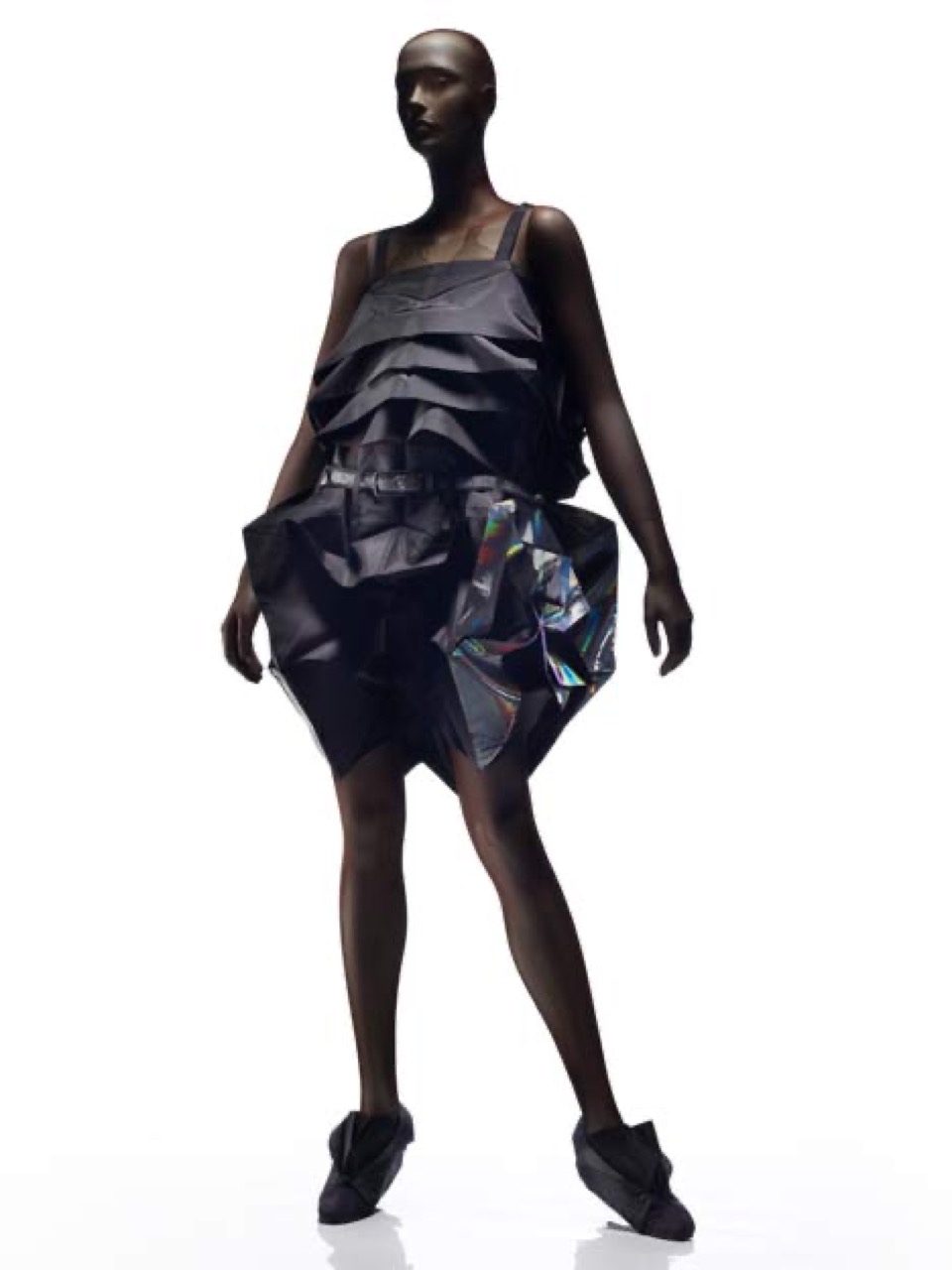
7.These clothes come with an explanation attached. Cooper Hewitt and the Art Institute of Chicago have registered pieces from this line into their collections. Telling someone they can buy the same object that entered a museum works faster than any marketing line.
8.The second thing is bulk. Folded, it is the thickness of an envelope, needs no ironing, and goes into a washing machine. It takes up almost nothing in a suitcase. What PLEATS PLEASE has sold for more than 30 years came down to the same thing. Taking people out of the labor of maintaining clothes.
9.The third thing is what justifies this store. In an online photograph the garment is just an angular dress. The moment a hand opens the folds is the argument for the price, and since all you need is room to create that moment, there is no reason for the store to be large. Without a store at all, the brand loses the place to show what it says it sells.
10.Tops run 77,000 to 110,000 yen and skirts 88,000 to 154,000 yen. Dresses go from 110,000 to 143,000 yen. Converted, that is roughly KRW 700,000 to 1.5 million, and the material is polyester out of PET bottles.
11.Ground-floor retail in Minami-Aoyama averages 50,154 yen per tsubo per month, with the priciest addresses at 120,344 yen. Four minutes on foot from Omotesando Station, this location belongs above the average. At 60,000 yen per tsubo, 17 tsubo comes to 1.02 million yen a month. Sitting off the main avenue, inside Miyuki-dori, pulls that figure down somewhat.
12.Two people can run it. Put Tokyo apparel sales staff at 350,000 yen a month each including social insurance and that is 700,000 yen, which with rent makes 1.72 million yen in monthly fixed cost. Apply a 68% gross margin, typical for directly operated luxury apparel, and the break-even comes to 30.4 million yen a year. All of this is an estimate built from published market rates.
13.At an average ticket of 100,000 yen, that is 304 garments a year. Sell a little more than one a day and the store pays for itself. Stock is said to rotate every two months, and with so few pieces to lay out across 17 tsubo, there is nowhere for inventory to sit and age.
14.Set against the size of the company, this store rounds down to nothing. ISSEY MIYAKE posted 55.065 billion yen in fiscal 2025, up 10.493 billion yen in a single year, with 856 employees. Even at 60 million yen a year, these 17 tsubo are 0.1% of company revenue.
15.How many times can one company sell the same idea across 55 years? It began in 1970 with Miyake Design Studio, then PLEATS PLEASE in 1994, A-POC in 2000, BAO BAO and 132 5. in 2010, A-POC ABLE in 2021. One idea, a single piece of cloth, split again and again into line names, with a store following each time.
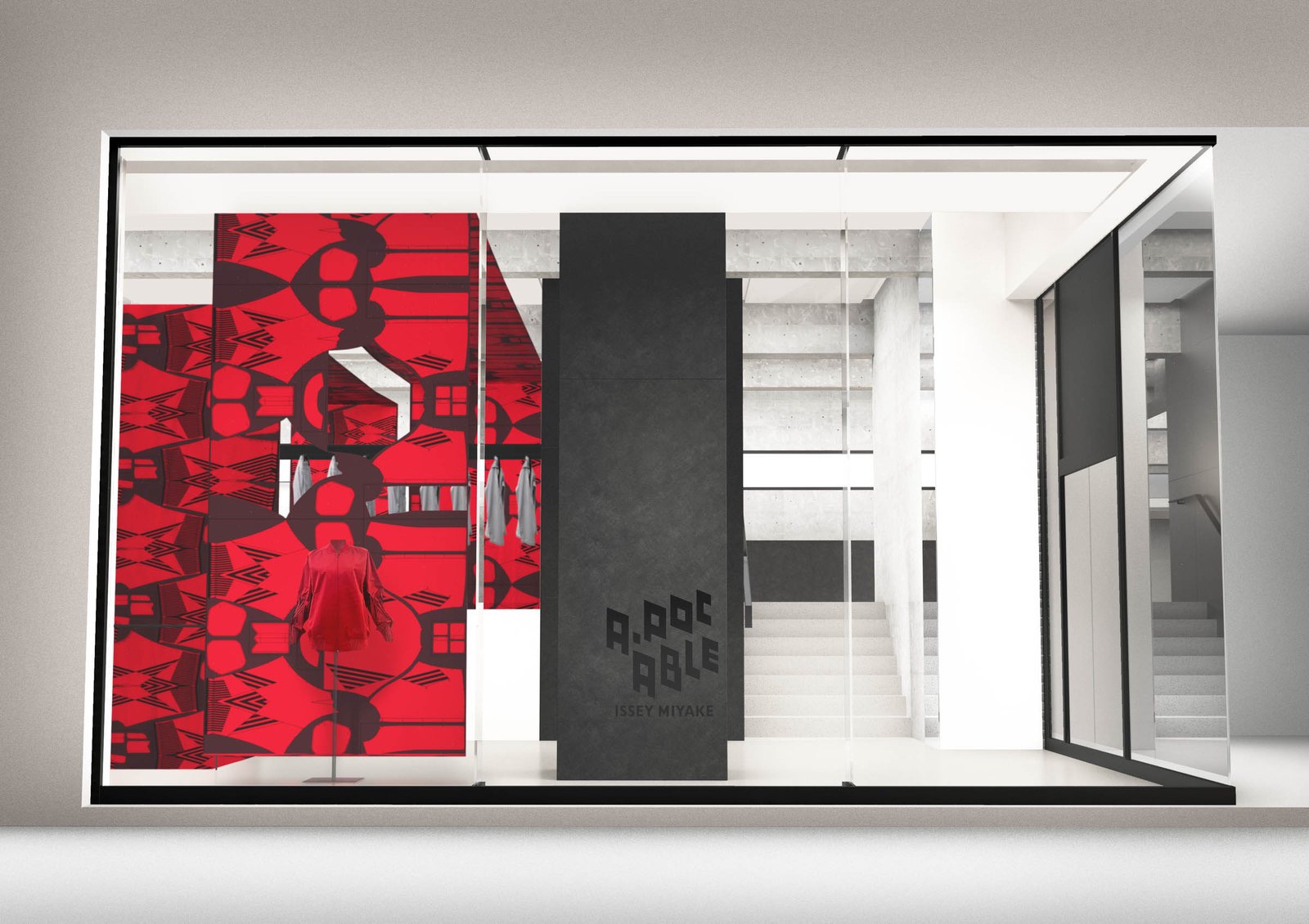
16.Tokujin Yoshioka is the person who built this brand's flagships in Paris, Milan and London. In Paris he set orange aluminum walls inside a 19th-century building. What he was given in Tokyo is 56 square meters, on an inner street beside a 50-year-old building rather than the Omotesando avenue. This brand has stepped out of the contest over big stores.
17.A line that folds and unfolds a single piece of cloth has come back to the site of its first store as 17 tsubo, and those 17 tsubo are built to break even on one garment a day. Anyone attempting the same thing in Korea runs into distribution first. ISSEY MIYAKE sells there through roughly 20 department store counters and an official online store, with no standalone shop, and once department store commissions pass the 30% range the break-even climbs from one garment a day to two or three. A brand that sells only when a hand opens the folds then has to manufacture those few seconds on a department store table, for the same reason.