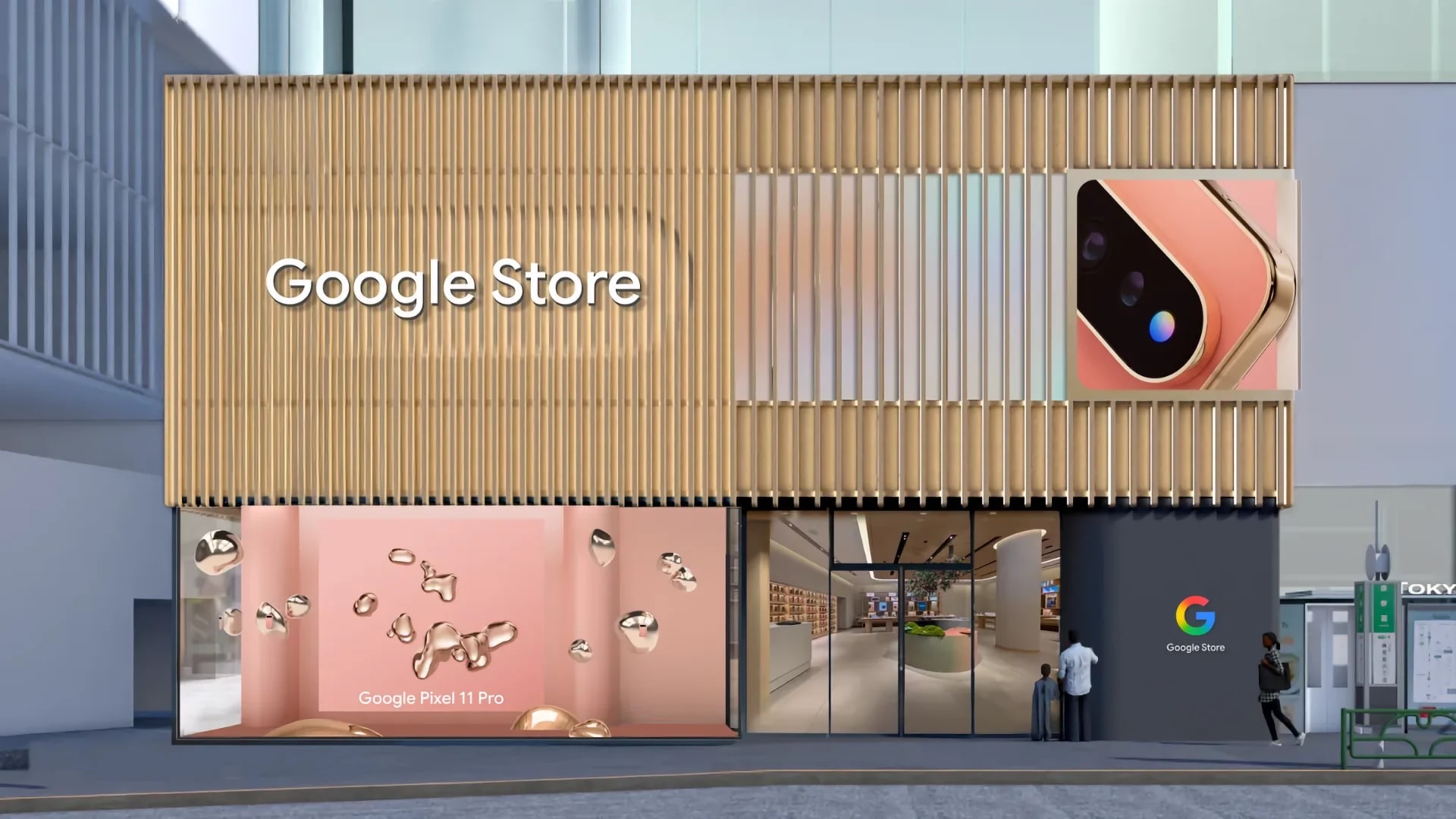
Google Store Omotesando opened on August 13 at 4-30-3 Jingumae, Shibuya-ku, Tokyo. It sits inside Tokyu Plaza Omotesando "Omokado" and spreads 1,158 square meters across three levels, from the first basement to the second floor. This is the first Google-operated store outside the United States, the eleventh worldwide, and the largest the company has built. It opened on the same day Google announced the Pixel 11 series. The phones themselves went on sale a week later, on August 20.
1.Opening day was Thursday, August 13. Some 1,158 square meters, about 350 pyeong, split across three levels from B1 to the second floor. No store in the United States is bigger.
2.The first store came in the summer of 2021, in Chelsea, New York. Selling space of 465 square meters, less than half the size of this one. Ten more followed, all of them in the United States, and the eleventh became the first outside the country. The nation it chose is where Google opened its first overseas office 25 years ago.
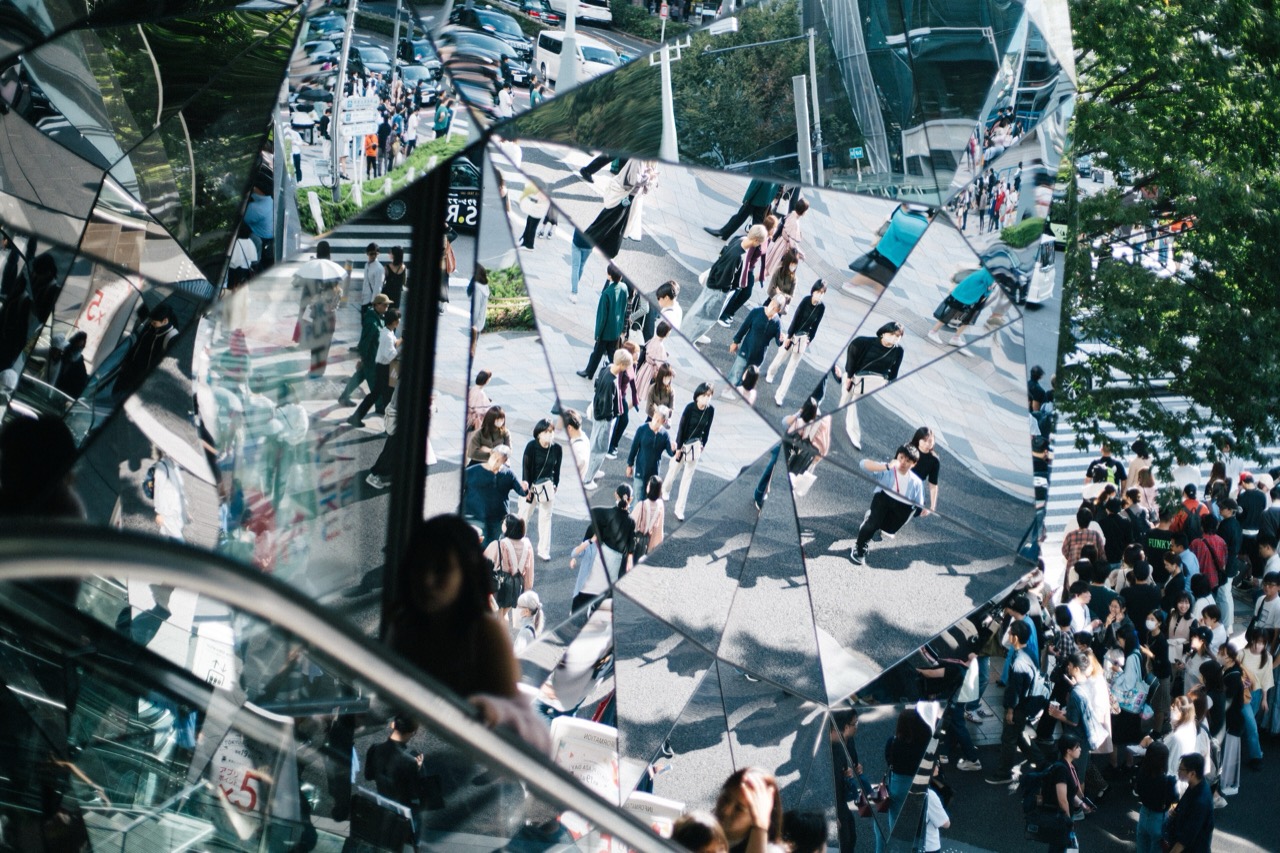
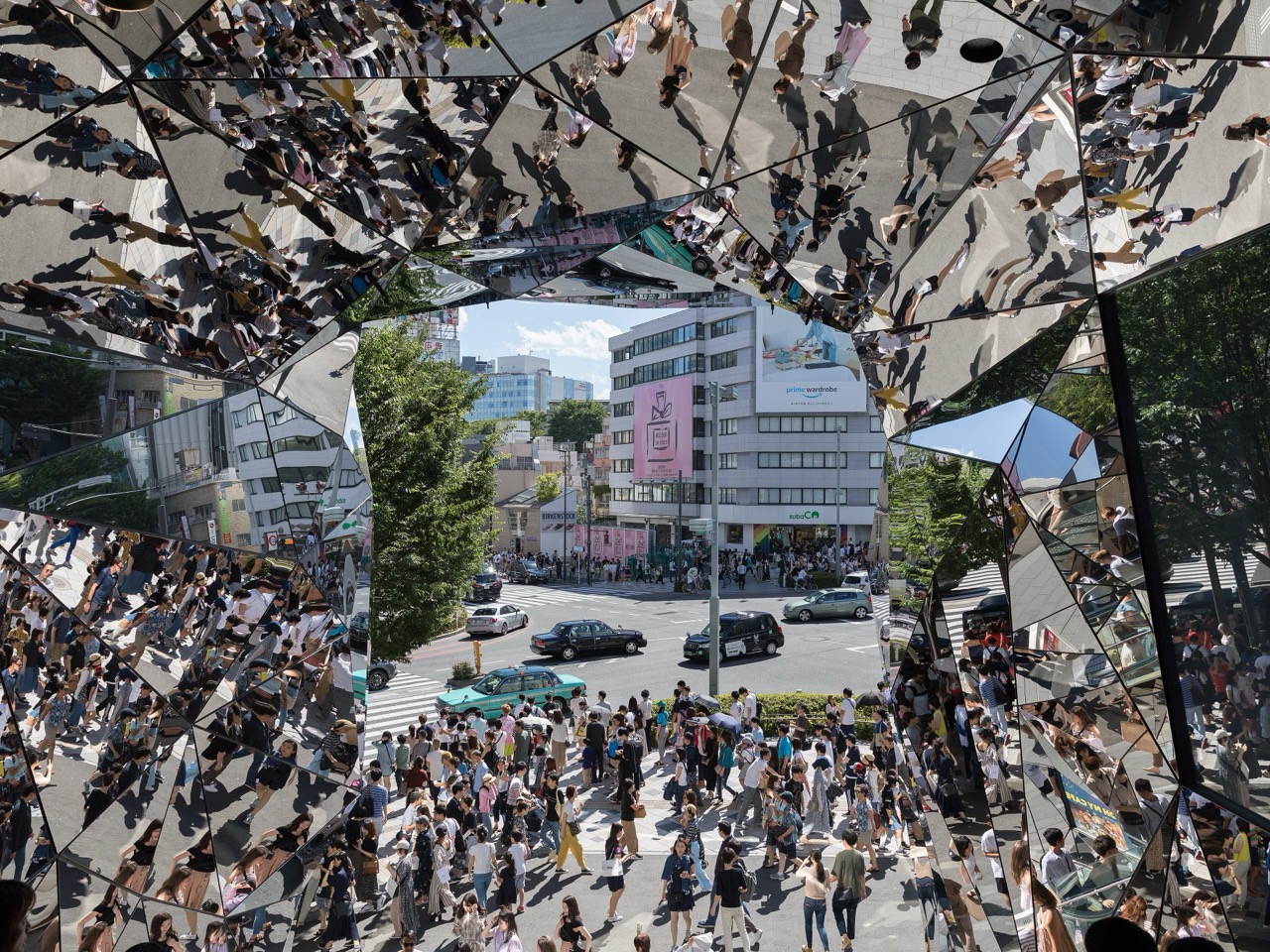
3.The street face is a run of vertical timber fins. Light leaks out between them, and at night the company says the whole front reads like a paper lantern. The building itself went up in 2012 to a design by Hiroshi Nakamura, the one whose entrance stair is lined with faceted mirrors that break the Harajuku crowd into fragments across the walls and ceiling. Thirty-five tenants share its floor area, and a single one has taken a tenth of it.
4.The ground floor is the one you touch. Pixel 11 handsets, Pixel Watch, Fitbit and Google Home sit on plinths, and one wall is given over to cases. The center is held by an installation called "California Dreaming: Landscape of Colors 2026," a pink desert, green moss and black rock built out in the room, with devices in matching colors standing beside each landscape. Phones are not the only thing that reaches the register here: six watch straps woven from recycled fiber, 5,500 yen each.
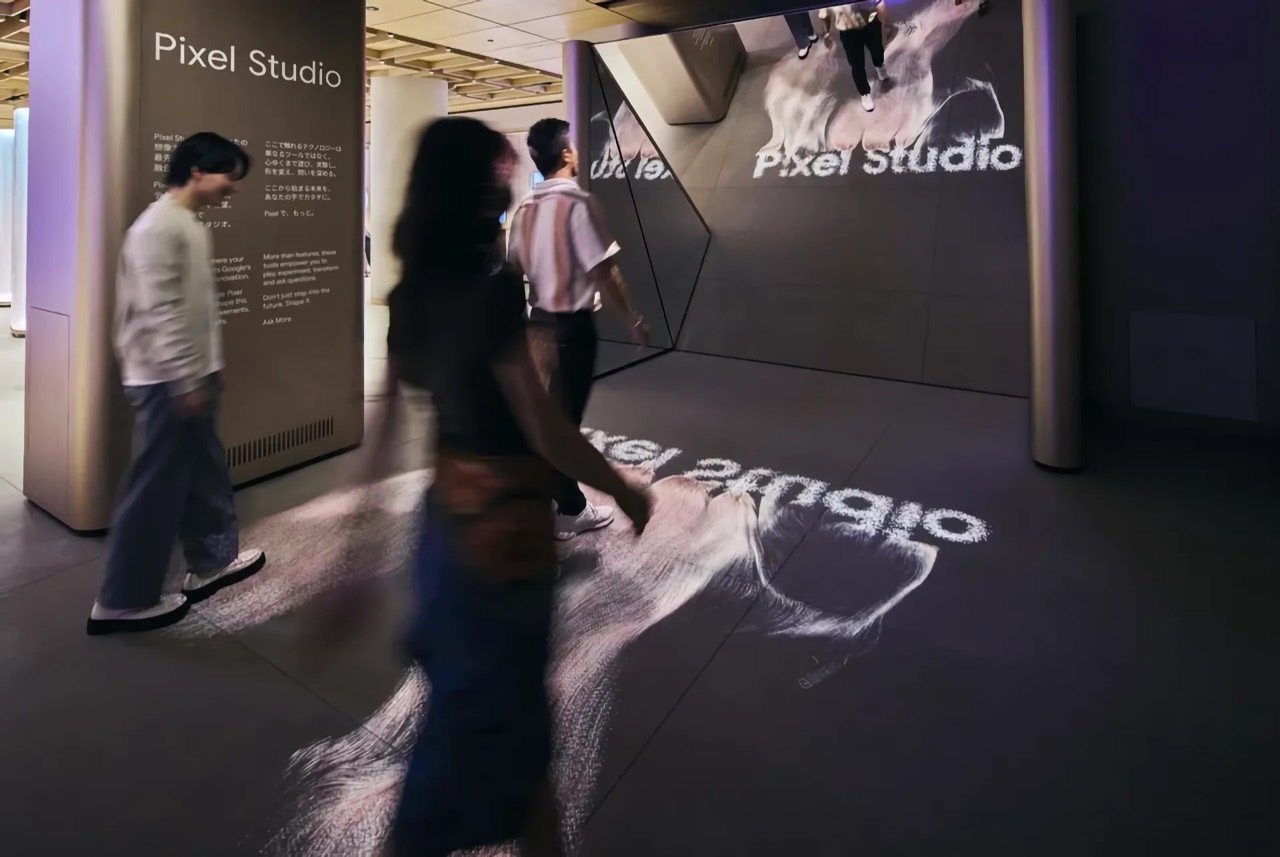
5.Climb to the second floor and the light drops a notch. The words "Pixel Studio" are projected onto the floor and walls, smearing underfoot as people cross them, while a canted mirror wall folds the ceiling back once. From here on there are no display units.
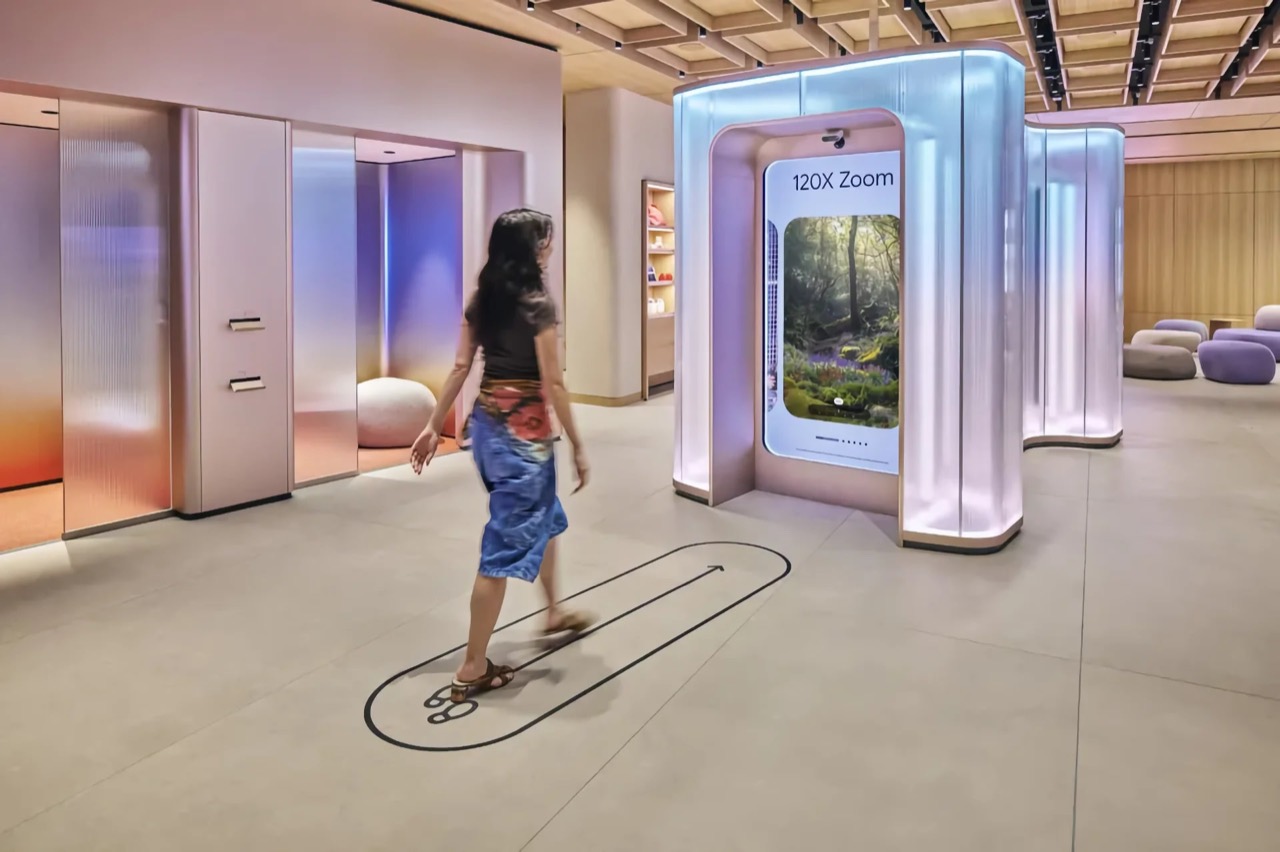
6.Deeper in, an oval is drawn on the floor. It starts at a pair of footprints, follows an arrow out and comes back, a distance built inside the store so that a 120x zoom lands in your hand. A booth wrapped in milky curved panels stands where the line ends, a mossy forest floating on its screen. The device keeps customers walking instead of standing, and it eats a wide patch of floor to do it.
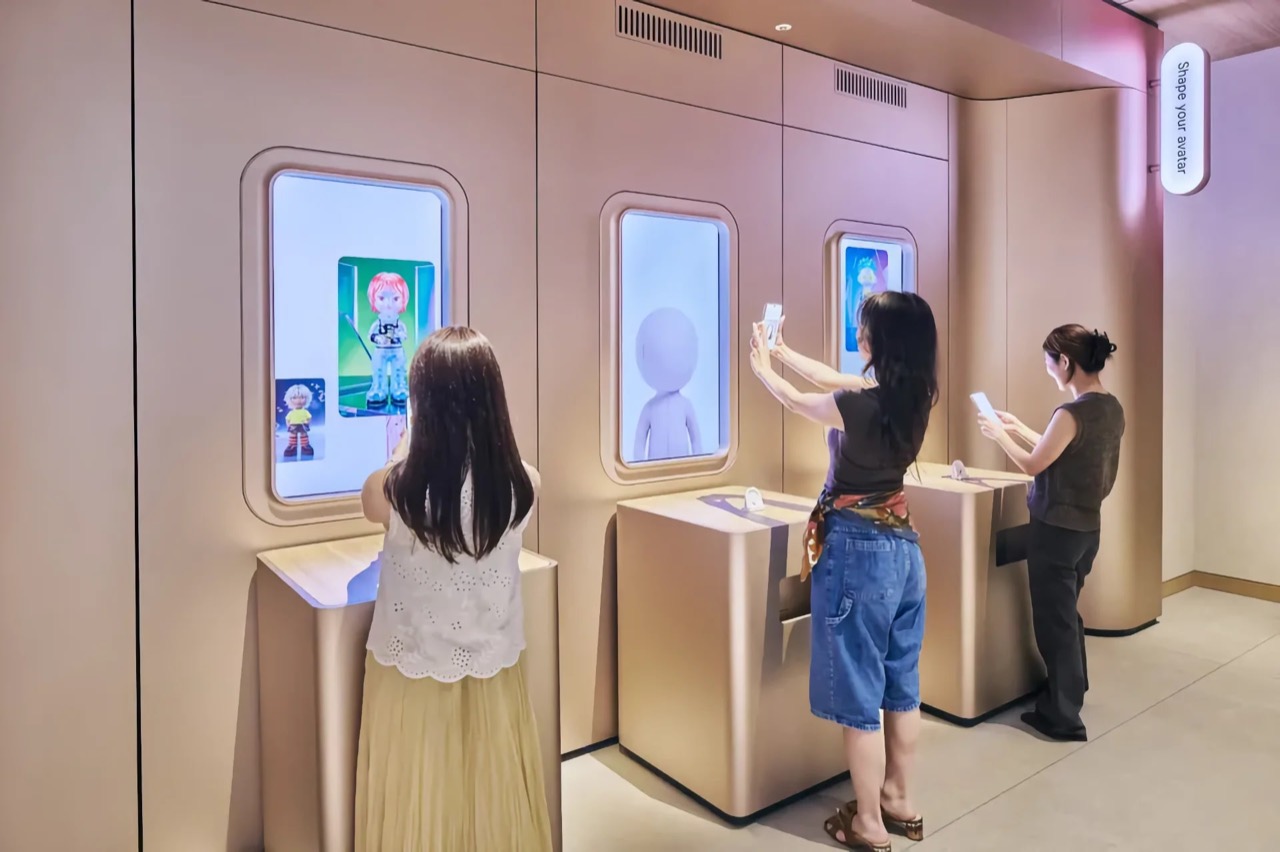
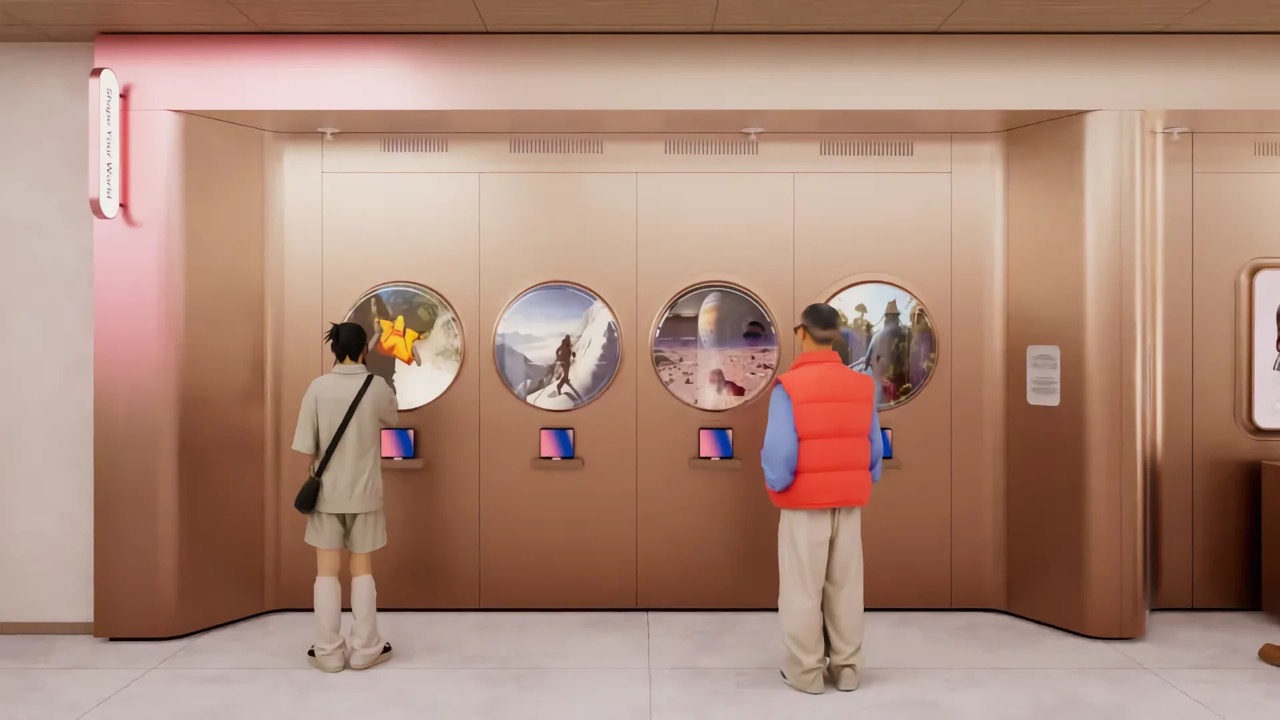
7.At the vertical screens along the wall, Gemini turns a face into an avatar and prints it out as a single card. Four round openings cut into a copper-toned wall belong to Project Genie, a research prototype that turns one sentence into a 3D space. One window each for a wingsuit, a snowfield, the surface of Mars and a mushroom forest.
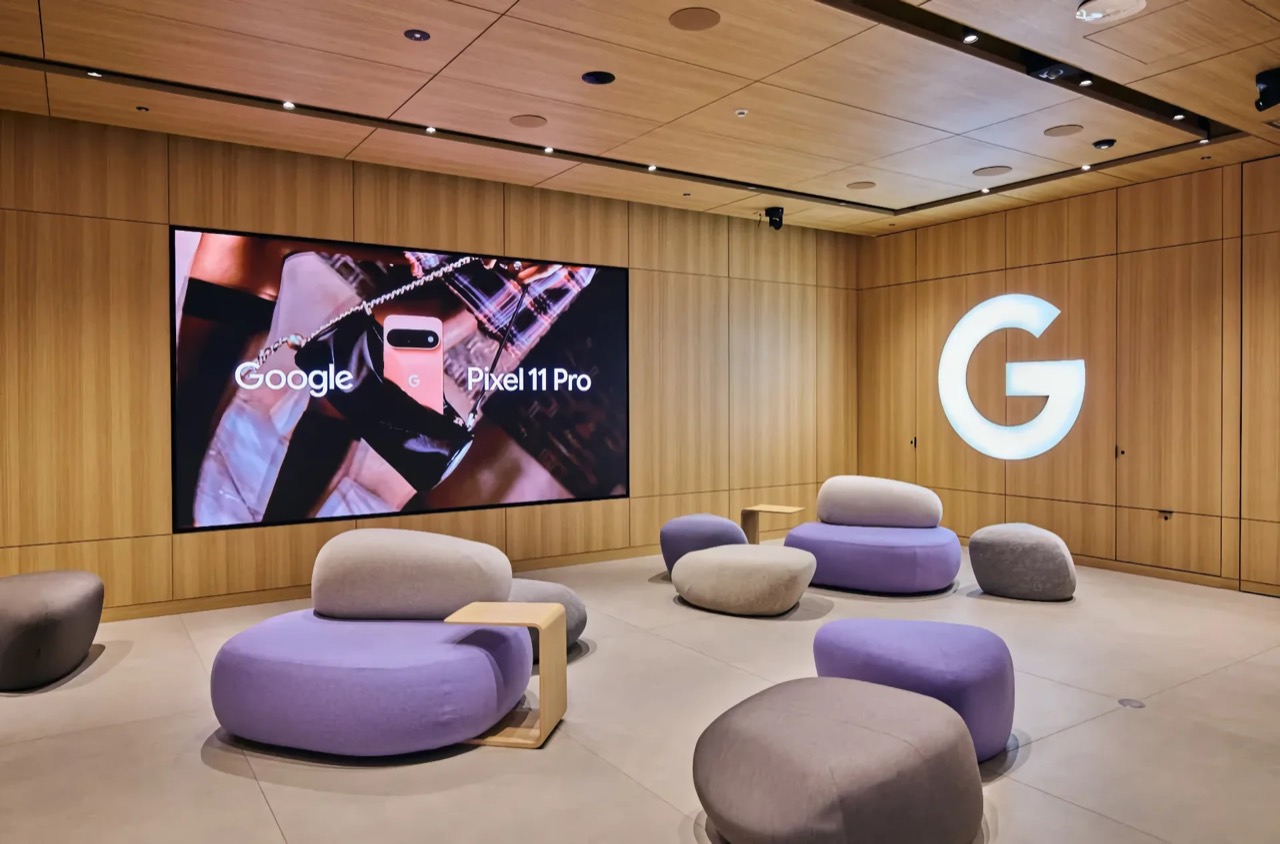
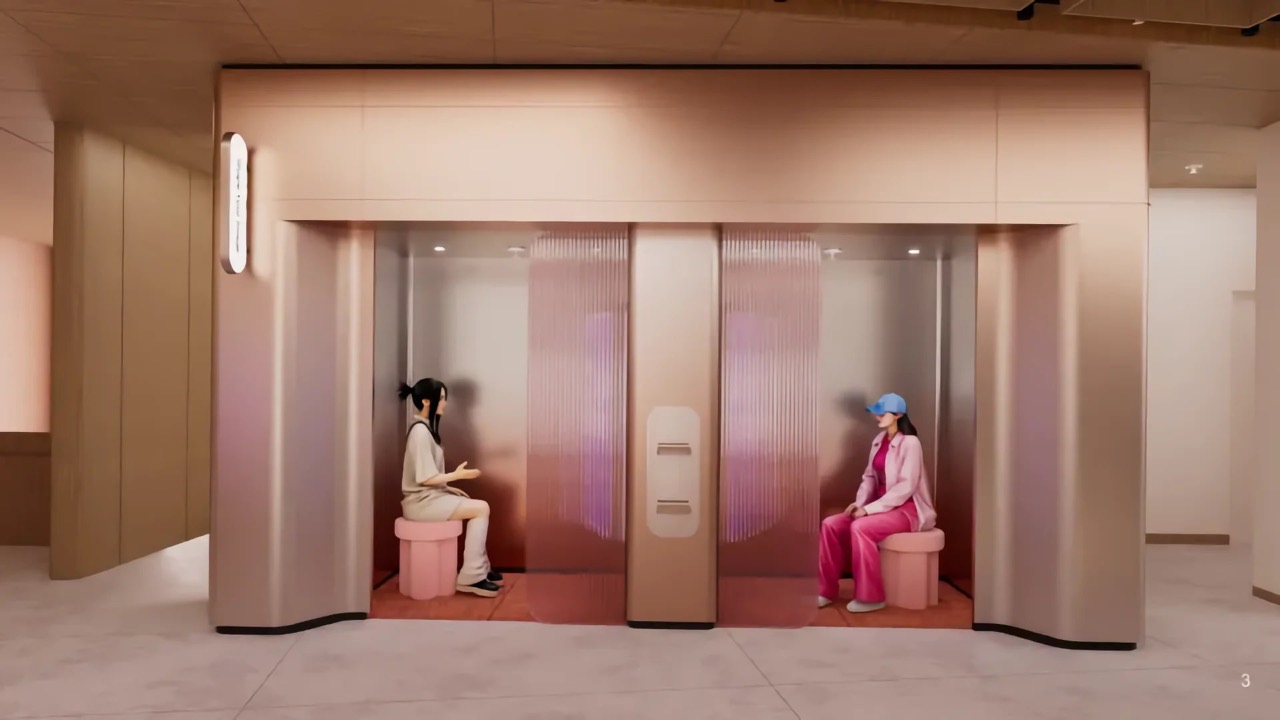
8.Furthest in sits a room lined in timber. A large screen, one glowing G, and a dozen or so lavender seats blunt as river stones. Nothing in the room is for sale, and the company says it hosts workshops and creator gatherings. Beside it stand two single-person booths, half screened by ribbed glass, each with one pink stool.
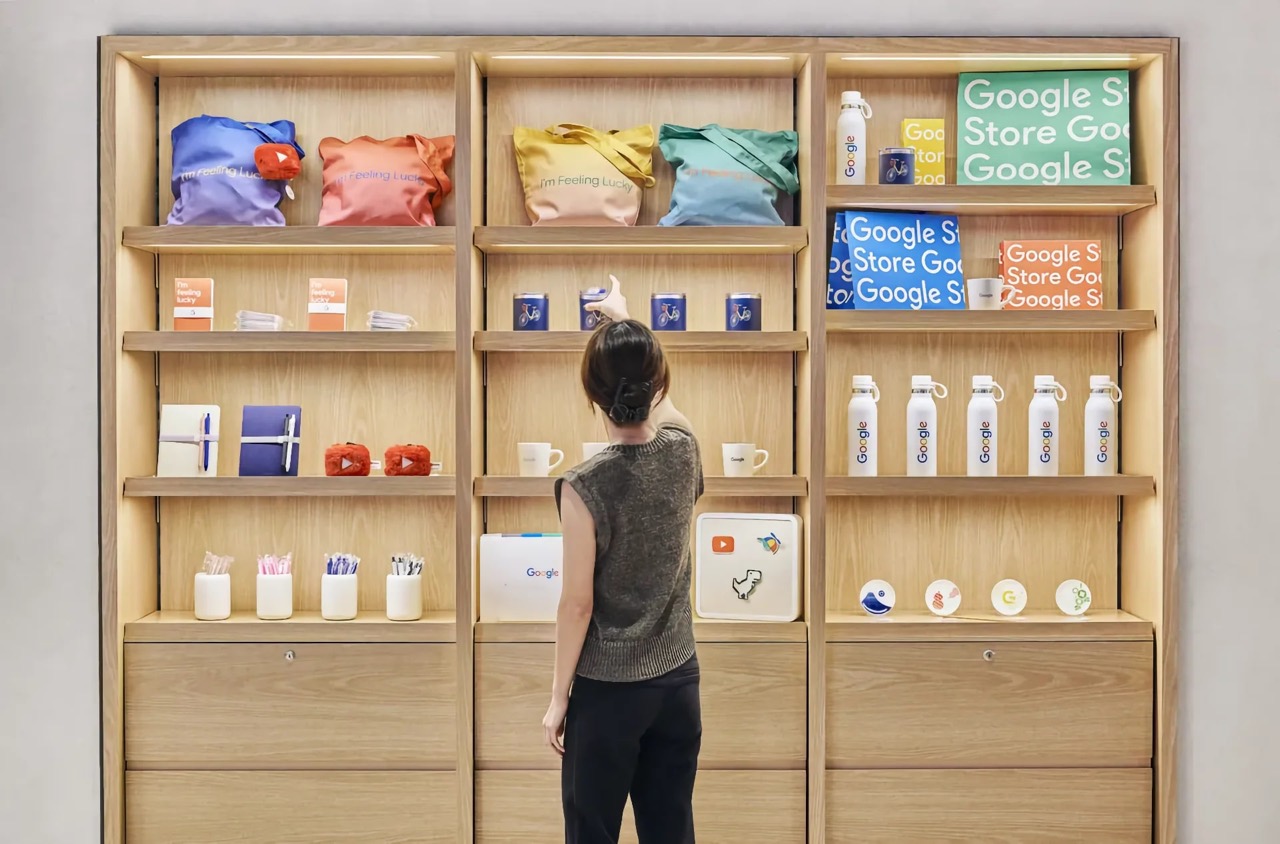
9.One shelf on the same floor carries 25 store-exclusive items. Tote bags stamped "I'm Feeling Lucky," tumblers, stickers. Go down to B1 and you reach the level that repairs things. Pixel phones and watches are fixed the same day when parts are in stock, the company says. Data transfer and setup are handled one to one here, along with online order pickup, returns and trade-ins. Three levels were leased, and only one of them sells anything.
10.The lease terms were not disclosed. Ground-floor street frontage on Omotesando ran 54,000 yen per pyeong a month in the second half of last year, and applying the usual step-downs for upper and basement levels puts the three floors together at roughly 1.5 billion won a year. That is 360,000 won per pyeong a month. For a prime Tokyo address, not a frightening number.
11.To hold that rent at 12% of sales, the store needs to move about 1.3 billion yen a year. At 136,800 yen for the base Pixel 11, that works out to 27 units a day. Only the ground floor can take those 27 units, so measured against selling area alone it comes to roughly a seventh of what an Apple store is said to turn over in the same footprint. Which raises the question of whether rent is really what this store has to repay.
12.Set against the parent company, the figure disappears into rounding. Alphabet booked 403 billion dollars in revenue last year, and the subscriptions, platforms and devices segment that contains hardware accounted for 12% of it. Industry estimates put Pixel hardware alone at around 5 billion dollars, which means a business worth 1.2% of company revenue built the company's largest store.
13.Japan carries the highest iPhone share of any country, and it is also the only market where Pixel has reached double digits. As the yen weakened the iPhone climbed past 150,000 yen, and Pixel moved onto carrier shelves with an entry model at half that price. Messaging runs on LINE here, so switching costs little.
14.Yet this store does not sell carrier contracts. NTT Docomo, SoftBank, au and Rakuten Mobile all carry the four Pixel 11 models, while what is on offer here is SIM-free hardware only. The channel that has actually sold this phone in Japan has no presence inside the store. Timing the opening to the announcement, a full week ahead of the on-sale date, points the same way. It was built as a place to handle things and walk out, not a place to buy them.
15.A business worth 1.2% of Alphabet's revenue chose 350 pyeong in Tokyo for its first store outside the United States, and put the register on only one of three levels. An estimated 1.5 billion won of annual rent rests on that single selling floor, so the store has to pay that rent back in minutes spent rather than units sold. Anyone attempting the same thing in Korea runs into the channel first. Once the subsidy disclosure requirement disappeared last July, price competition swung back to carrier dealers, and a manufacturer's own store became a place that cannot win on price. That this company's phones have never launched officially in Korea is the next problem after that.