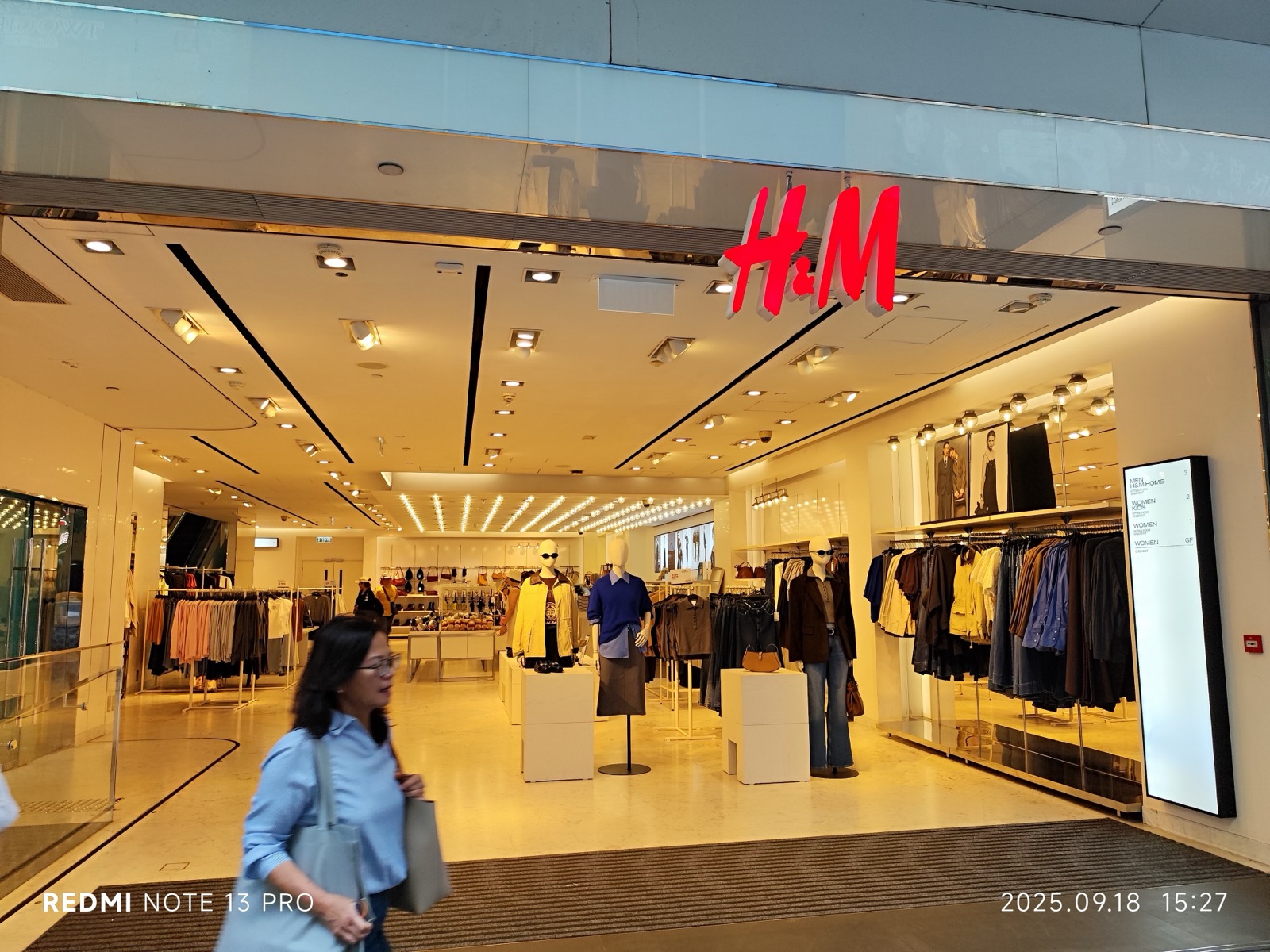
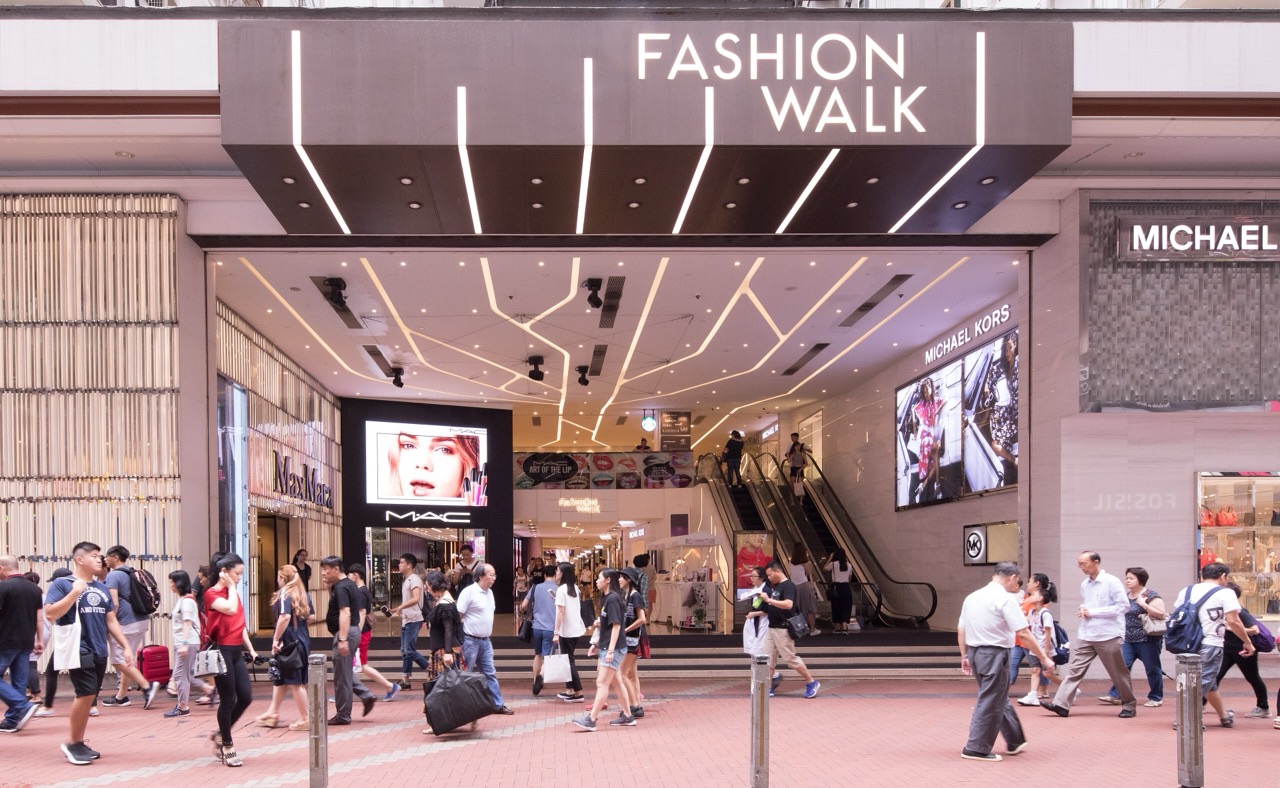
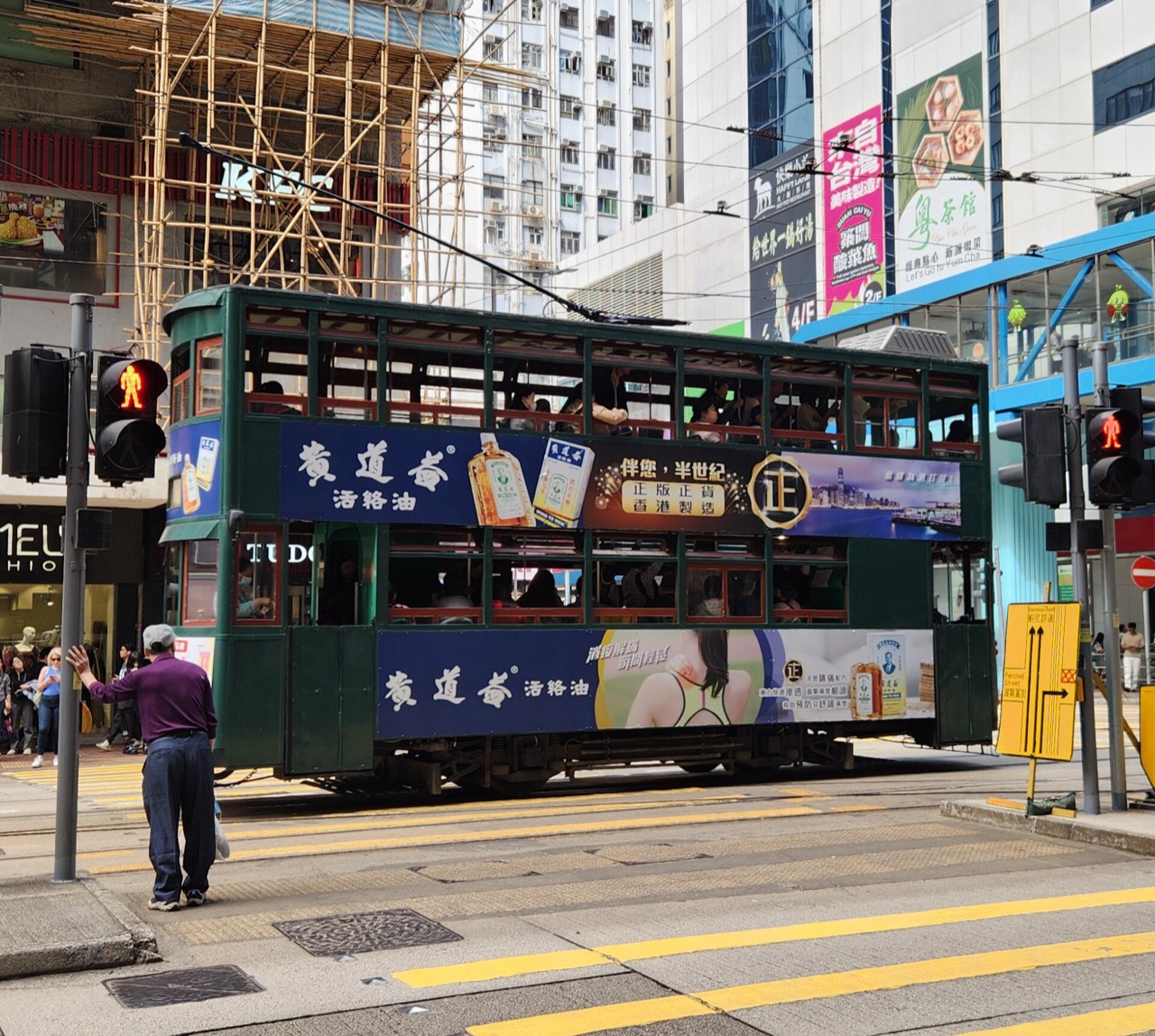
Fashion Walk on Paterson Street in Causeway Bay, Hong Kong. The four floors that H&M leased in 2013 for HK$10 million a month, calling it the largest store in Asia, closed on 21 February. The space was cut into three, and China's W.MANAGEMENT took 30,000 square feet across three of the floors. Rent is a little over HK$2 million a month. The company started in Hangzhou and is only in its fourth year.
1.The deal became public on 25 August. Thirty thousand square feet, 2,787 square metres, spread over three above-ground floors. About two-thirds of the 46,000 square feet H&M occupied across four floors.
2.The building is Hang Lung Centre, owned by Hang Lung Properties. H&M took everything from the basement to the third floor in 2013 and announced it as the largest store in Asia. Rent then was HK$10 million a month. By the end of the lease it had fallen below HK$4 million, local property media report. The Festival Walk branch in Kowloon closed the same month, leaving one Hong Kong store in Tsuen Wan out of the 13 the chain once had.
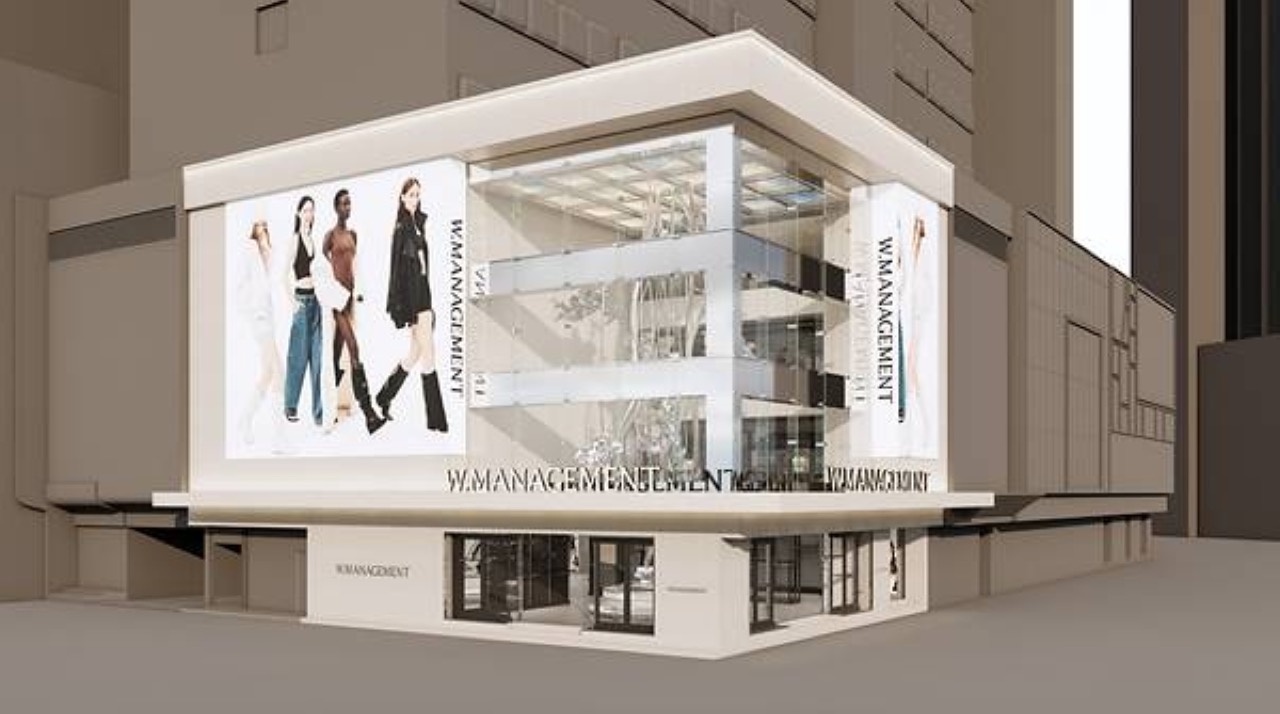
3.The vacated space did not go out in one piece. Lung Fung Group took the 10,000 square feet at street level for a pharmacy at HK$1.2 million a month, and food and beverage filled part of what was left. It had to be cut into three to move. Where in Hong Kong is the street-level tenant that can absorb 46,000 square feet at once?
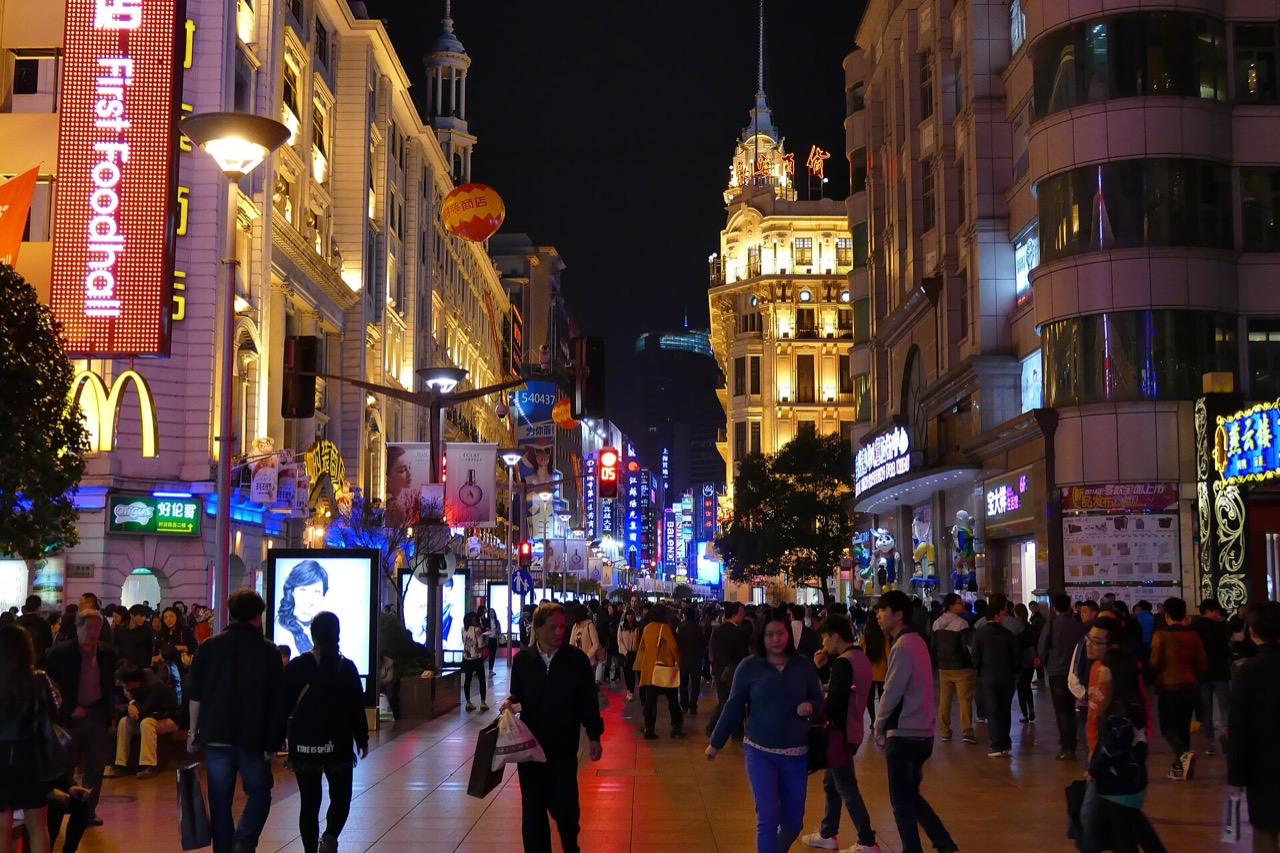
4.W.MANAGEMENT is headquartered in Hangzhou and sits under Ningbo's Yuyi Group. Company materials date the launch to 2022; several Chinese outlets put the first store in 2023. Forty-one stores in 29 cities in two years. Most run over 1,000 square metres, and the flagship on Nanjing East Road in Shanghai is the same 30,000 square feet as the Hong Kong site.
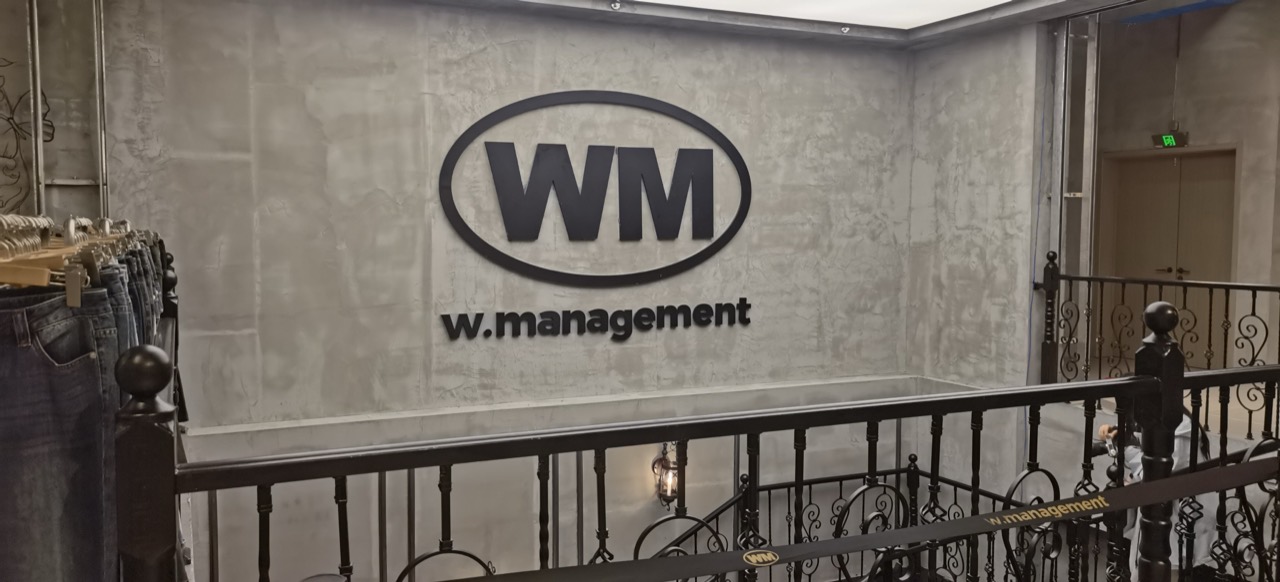
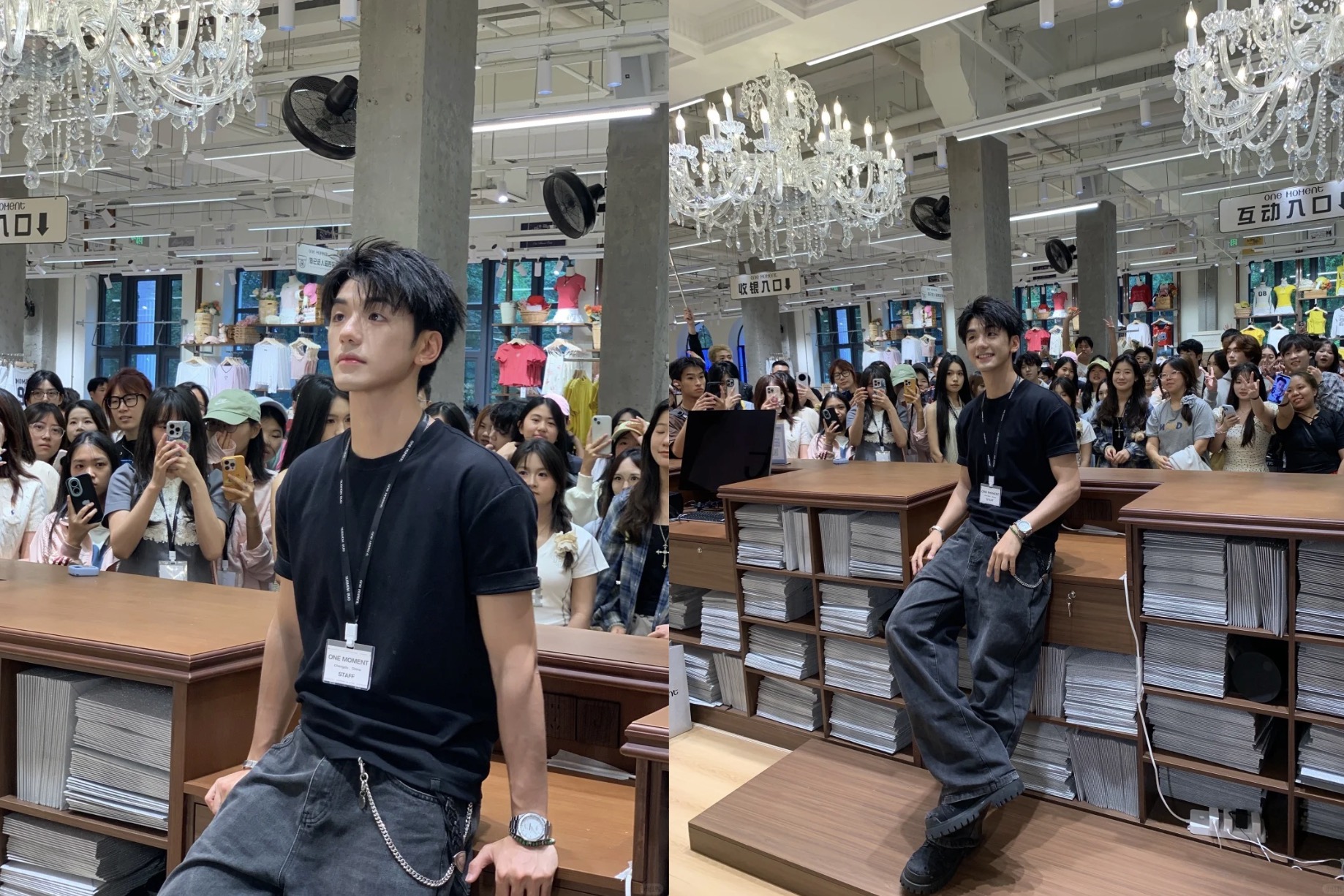
5.Inside, the look runs to ornate revival. Black WM plaques on grey mortar walls, cast-iron balustrades along the stairs between floors, candle-shaped lamps. Chandeliers hang from the ceiling on some floors. Fitting-room curtains were swapped for velvet green and the lighting is dimmable, so photographs taken inside need no retouching.
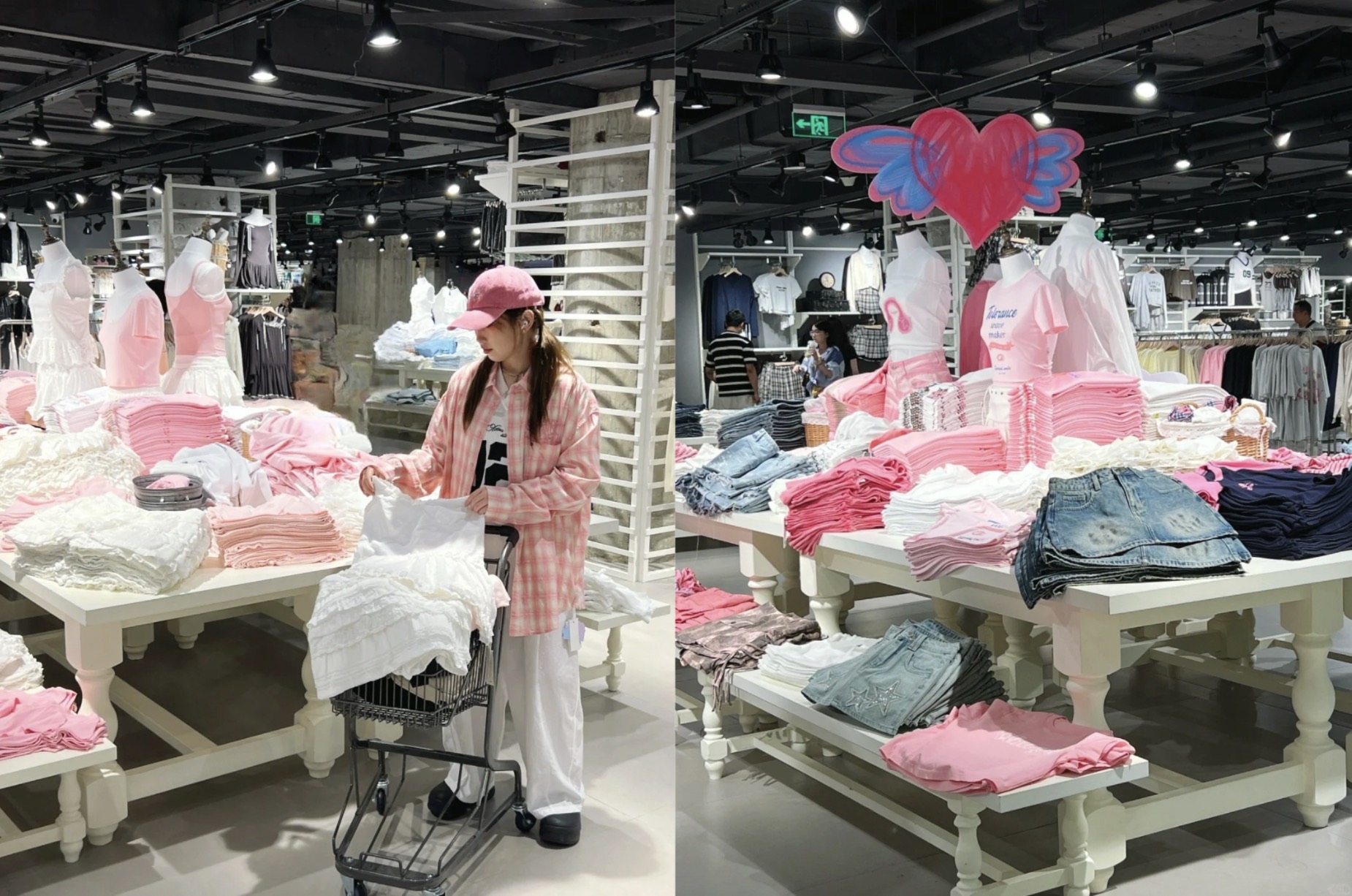
6.Womenswear leads, with menswear, bags, hats, socks and accessories alongside. Prices sit between RMB 100 and RMB 300, which is most of the range in the 20,000 to 60,000 won band. The clothes mix American vintage with streetwear, which is why the brand gets called a stand-in for Brandy Melville, yet the company leads with the store rather than the clothes.
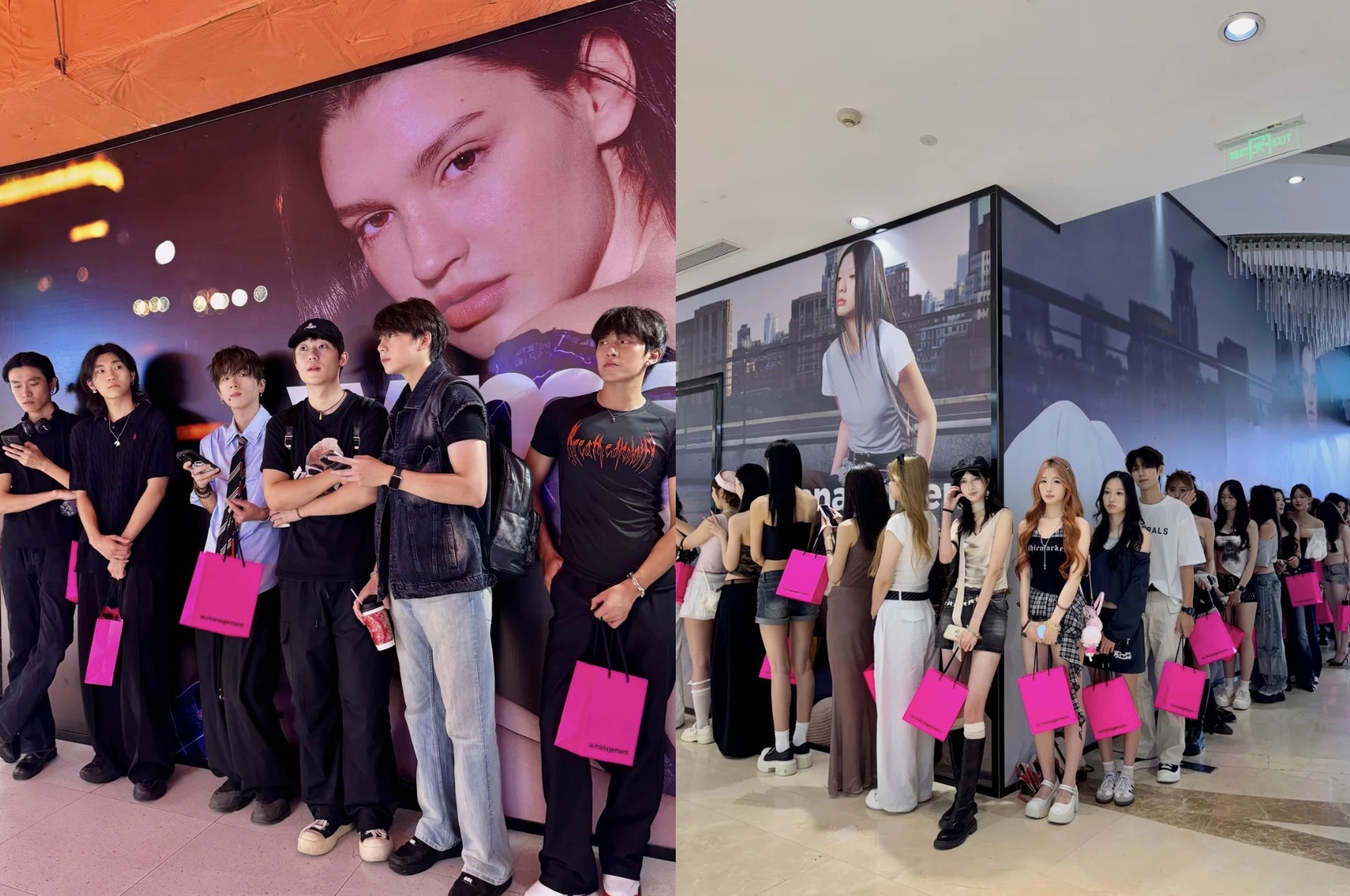
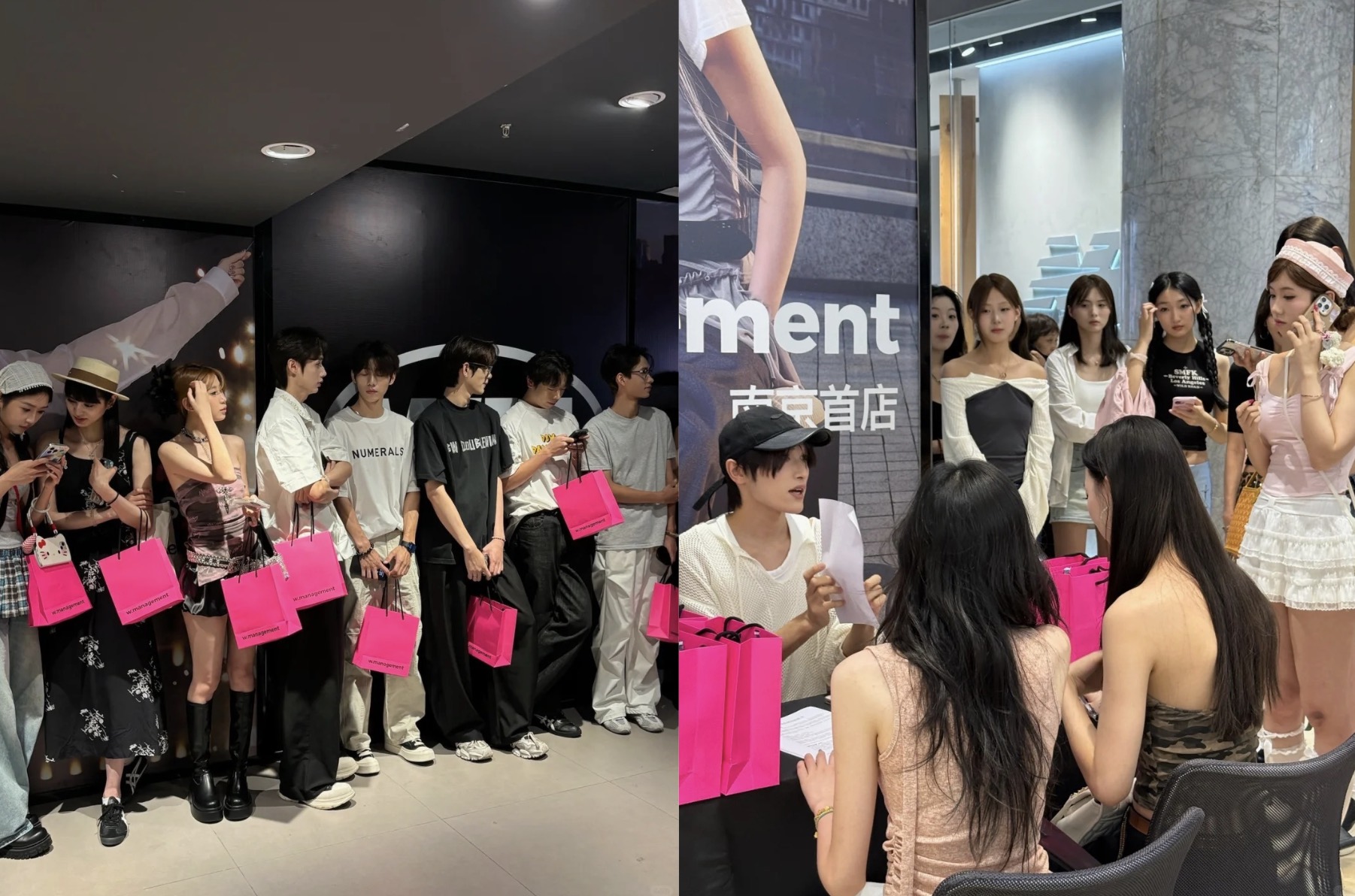
7.Hiring is where the noise started. When the first Nanjing store opened, applicants queued down the corridor each holding a pink shopping bag, and the queue itself became content. About 60 staff per store, 70% of them on temporary contracts. Hourly pay is RMB 50 on weekdays, RMB 70 on weekends.
8.At some stores 30% of the staff are models. Average height is 180cm for men and 170cm for women, Chinese retail media report. Full-time pay above RMB 10,000 a month is clearly above the mainland retail rate, but what the company is buying is not service technique. It is the picture a customer will post from inside the store.
9.On the day a rack called "what the manager is wearing" went out in a 500-piece run with a guest manager on the floor, that store took RMB 820,000. Three-point-four times a normal weekend. It is not an event for selling clothes but for making people come to see a person, and once it sells out nothing replaces it.
10.Product is split three ways: 30% other people's overstock, 30% ODM, 30% in-house design. A garment takes 20 days to develop and costs around 20% less than Zara, by industry accounts. First orders run 500 pieces per style, and once sold the style comes down and is never remade. About 150 new styles go up each week.
11.One store's monthly numbers have been published by Chinese retail media. On a 1,000 square metre basis: RMB 8 million in sales, RMB 360,000 rent, RMB 350,000 payroll, RMB 80,000 fit-out depreciation. Gross margin 55%, net margin 18%, and the investment comes back in 14 months. Which puts one store at roughly 3.3 billion won of profit a year.
12.What happens if that formula is laid over Hong Kong? Mainland rent works out at RMB 12 per square metre per day. Divide HK$2 million a month by 2,787 square metres and you get RMB 22 a day. Ground 1.8 times as expensive, and they are taking 2.8 times the floor area.
13.Assume the same RMB 8,000 per square metre per month as the mainland and rent takes 8.2% of sales in Hong Kong. That shaves 3.7 points off an 18% net margin, which still holds. The trouble comes when you calculate off the Shanghai flagship. Its RMB 150 million in annual sales spread over the same area is RMB 4,485 per square metre per month, and at that level rent eats 14.7% of sales.
14.Hong Kong retail is recovering. Sales rose year on year for 13 consecutive months through May, HK$171.5 billion cumulatively, 10.6% above a year earlier. Ground-floor vacancy in Causeway Bay and Central has been zero for two straight quarters. Brands are coming back and there is nowhere to put them, so prime street rents will rise 5% to 10% this year, property advisers expect.
15.In a recovering market, H&M left and a Chinese brand took the space. A third of Hong Kong card spending already happens outside the border. The calculation is to sell in Causeway Bay the same clothes people were crossing into Shenzhen to buy, and the company has already signed sites in Macao, Bangkok, Singapore and Tokyo. Early talks with investors put the value somewhere between US$2 billion and US$3 billion, by reported accounts.
16.For a store paying 350 million won a month on 2,787 square metres to work the mainland way, sales per square metre have to run 1.8 times the mainland average. But what this company sells is not cheap clothing, it is a store that gets photographed, and that requires burning money on payroll and fit-out without pause. What drains this company is not rent but that upkeep. In a major Seoul retail street, 2,787 square metres means monthly rent starting in the hundreds of millions of won before deposit and key money, and the clothes to fill it cannot be made at RMB 100. Add import cost with duty and freight to local retail wages and the price doubles, and the moment it doubles the reason for the queue is gone.