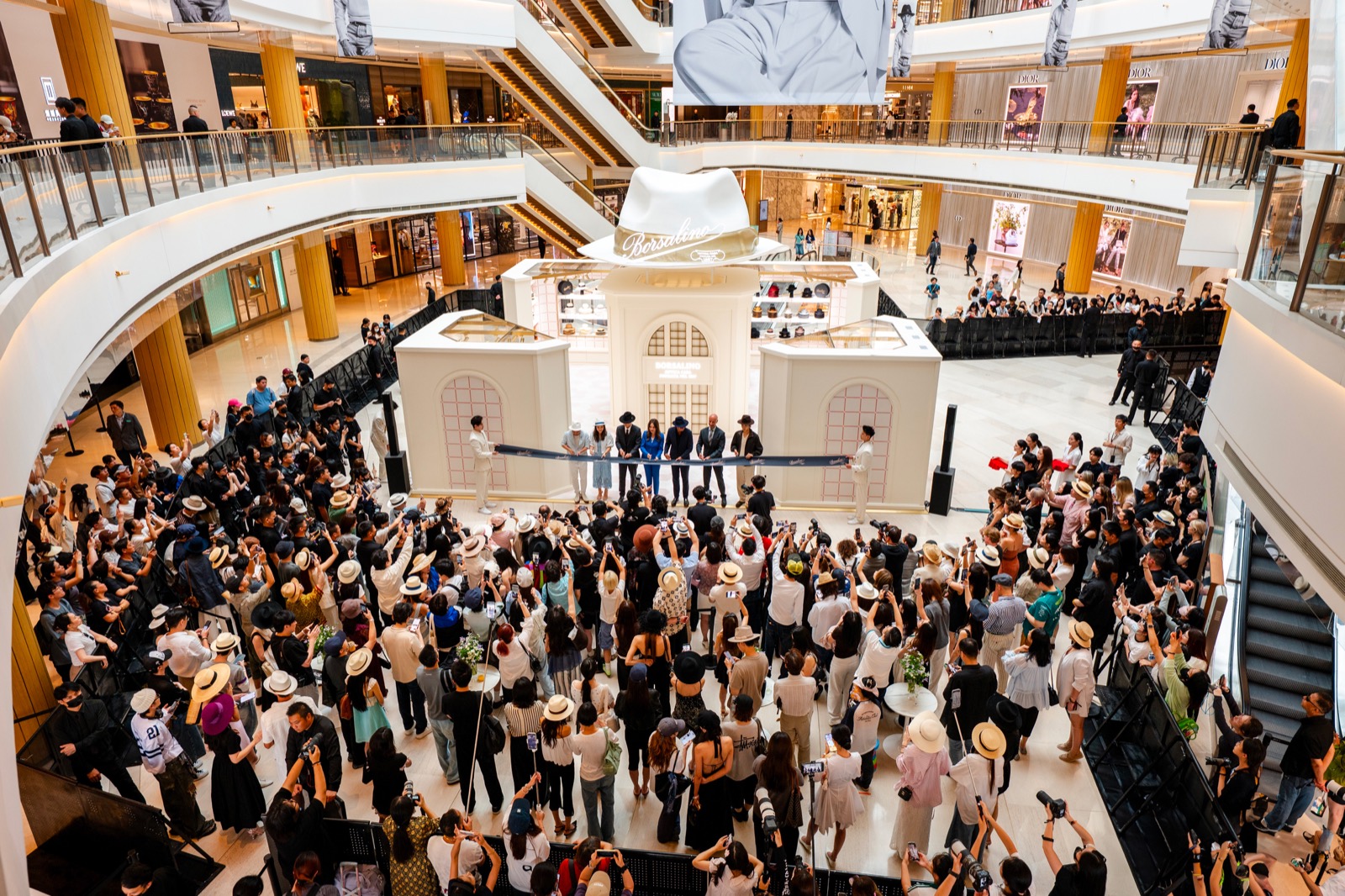
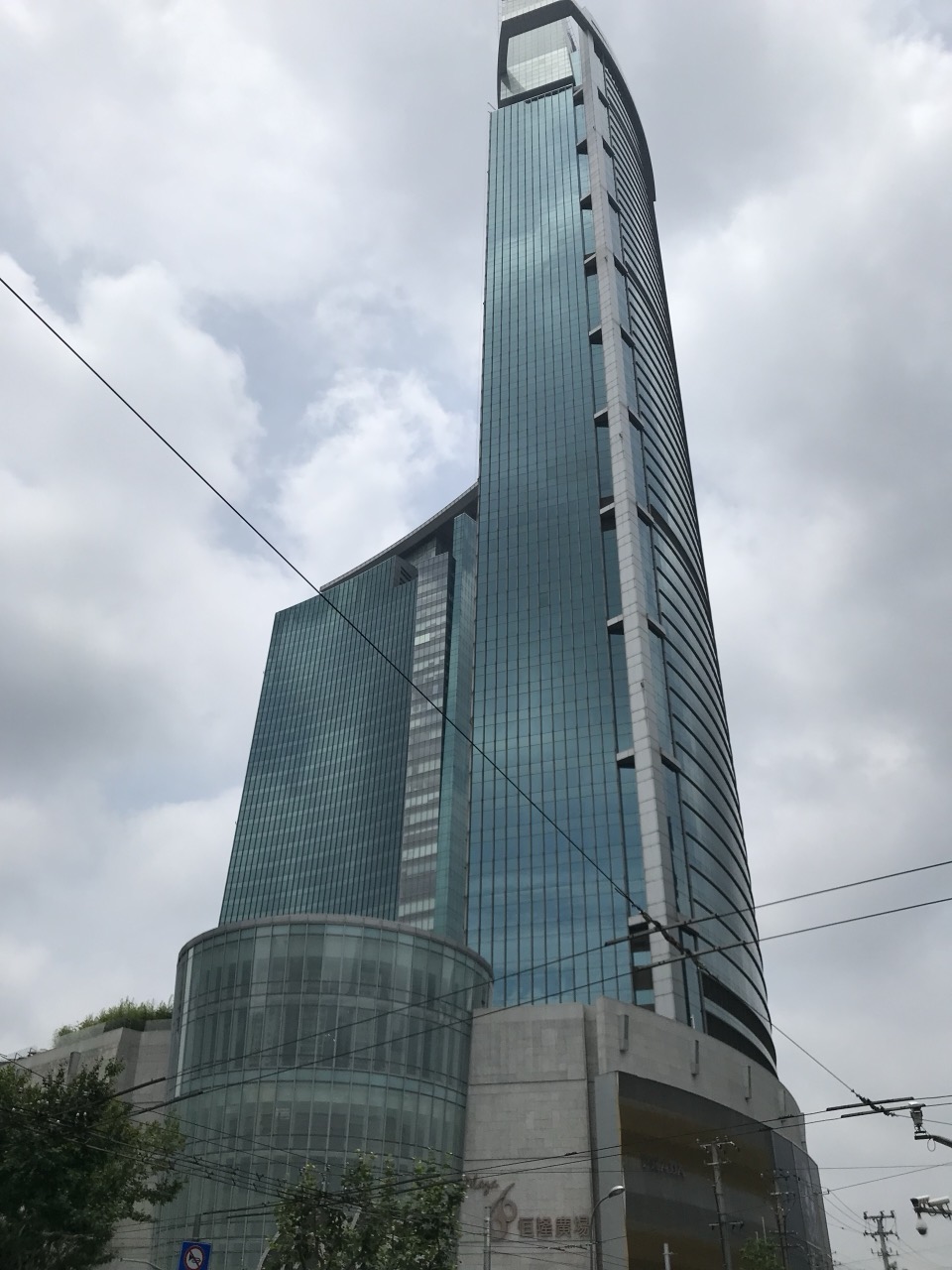
Plaza 66, the luxury mall on West Nanjing Road in Shanghai. Italian hatmaker Borsalino opened its first permanent store in Greater China here on August 25. This was not the company's first time inside the building. Four months earlier, in April, it put up a glass box in the middle of the atrium and sold there for a limited run, and this opening turns that spot into something permanent. A house founded in 1857, declared bankrupt once in 2017, chose that order for its entry into China.
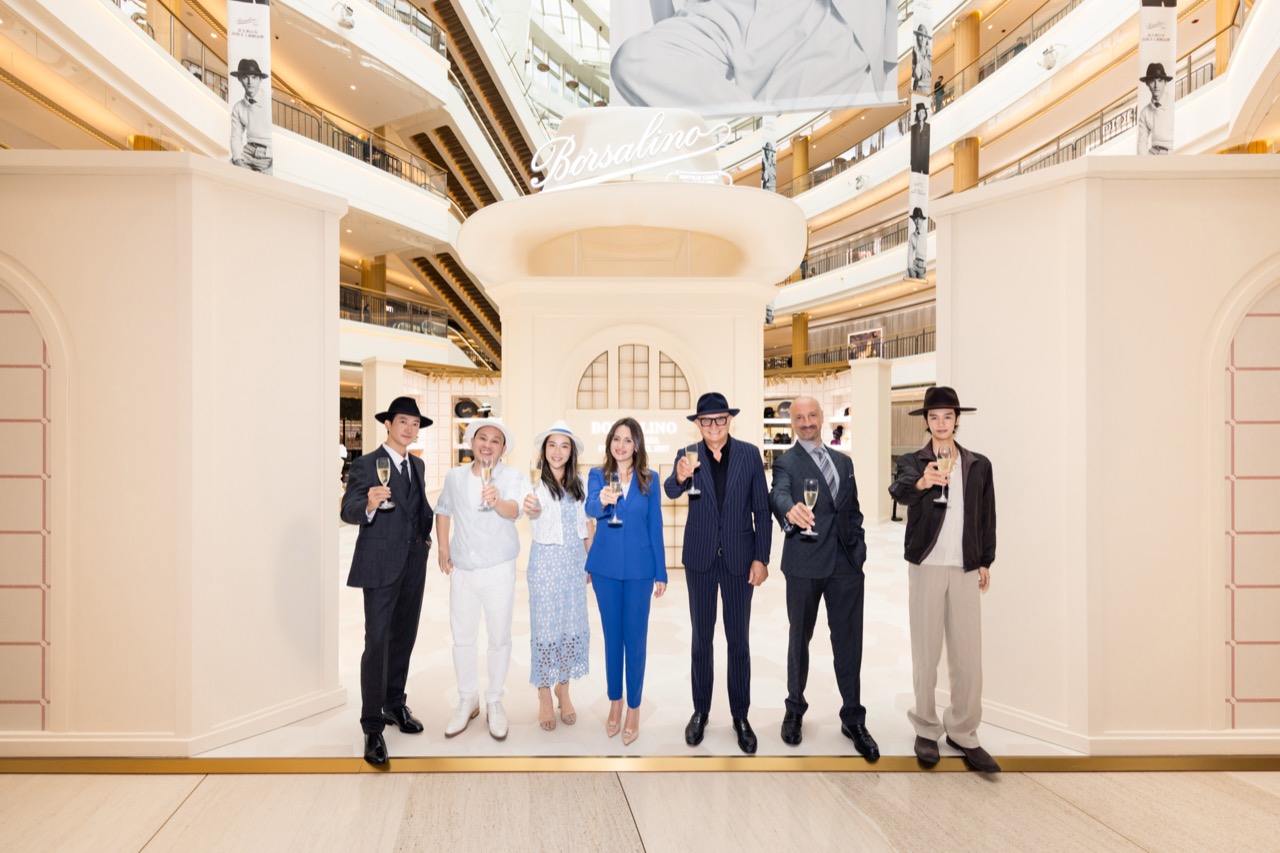
1.The atrium filled up on opening day. A ribbon was cut in front of a white pavilion, with Italian government officials and mall executives standing side by side. The partner is Chinese distributor Essence Group. This is the first time Borsalino sells directly in Greater China; until now it had only appeared as a counter inside someone else's store.
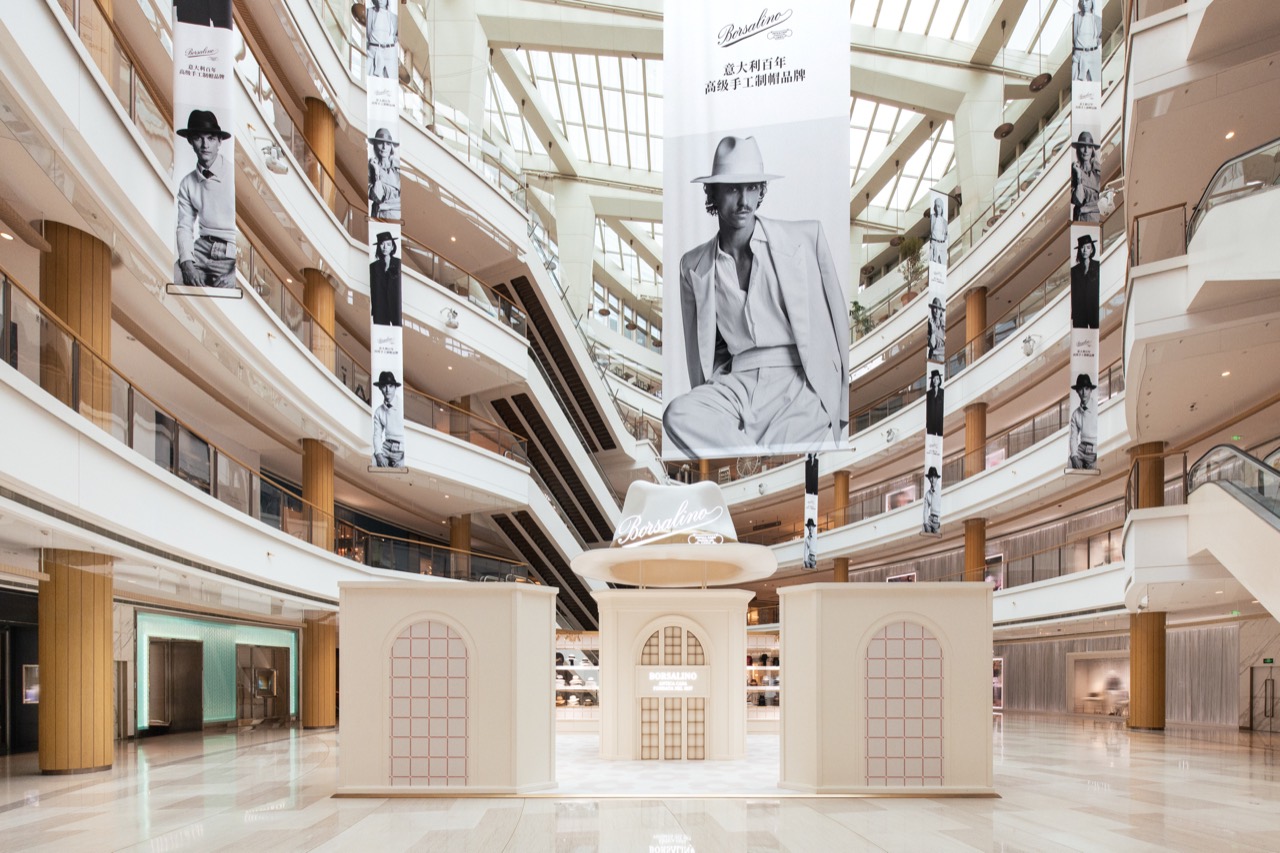
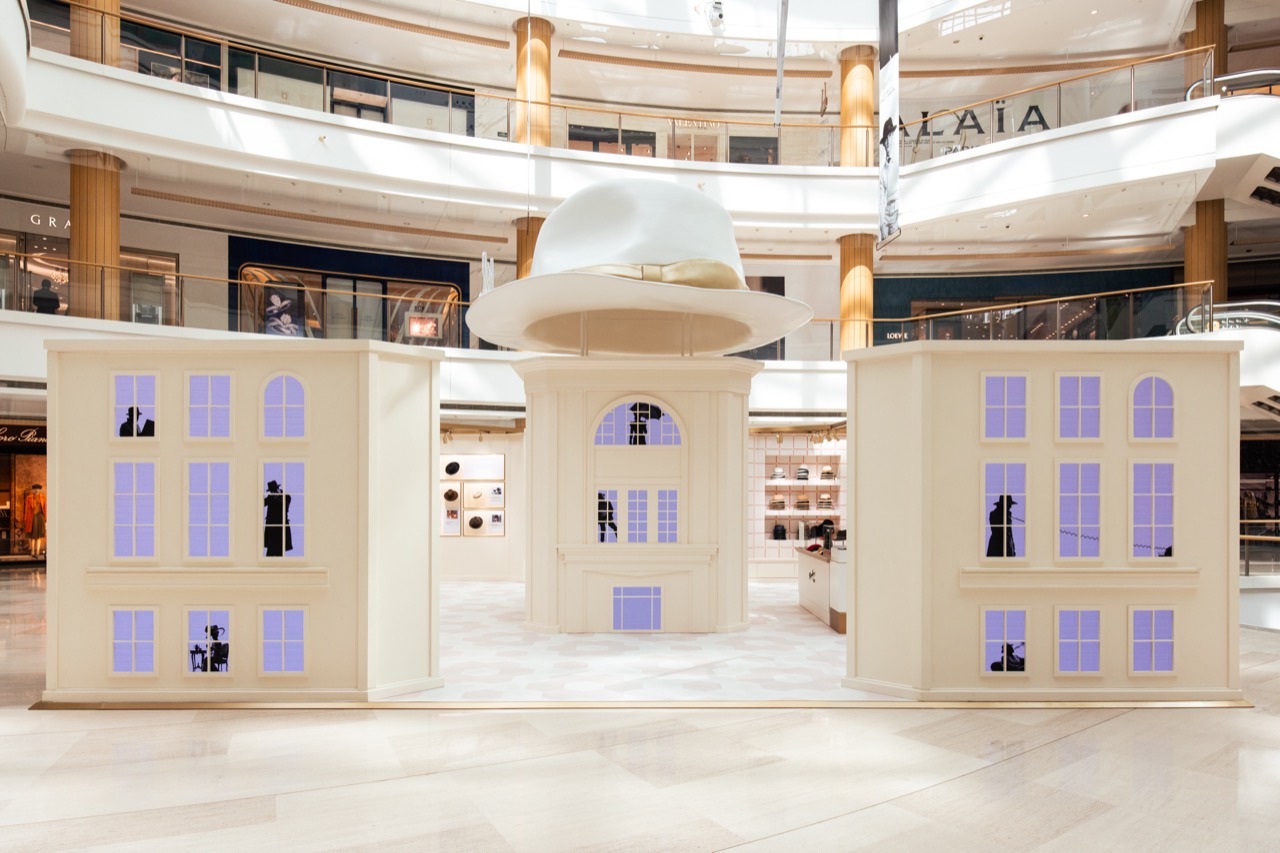
2.The pavilion is a shrunken Italian facade. Arched windows cut into cream walls, filled with pale violet glass, and where a roof would sit, a white fedora scaled up dozens of times. Black-and-white portrait banners hung vertically from every railing above, wrapping the whole atrium in one brand. An arrangement that turns every upper floor toward a single point.
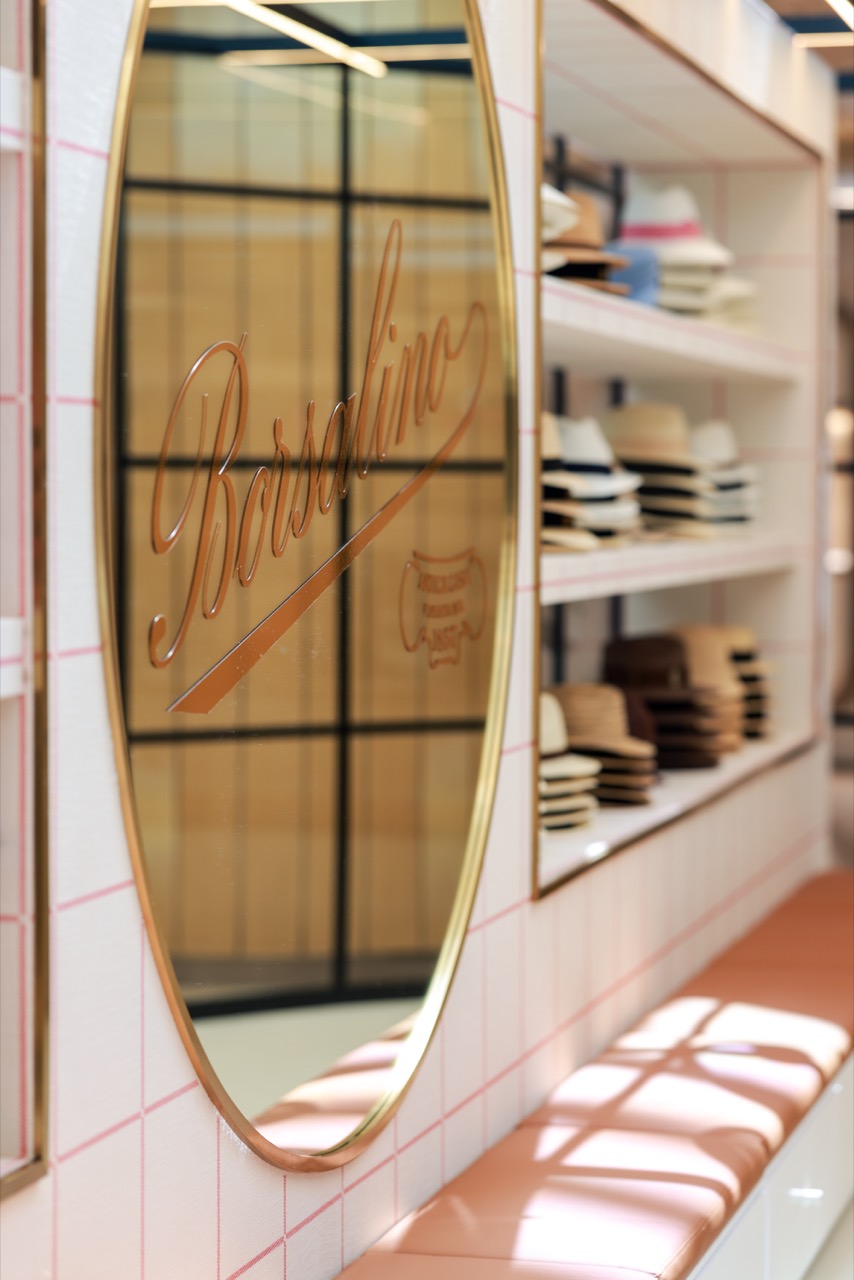
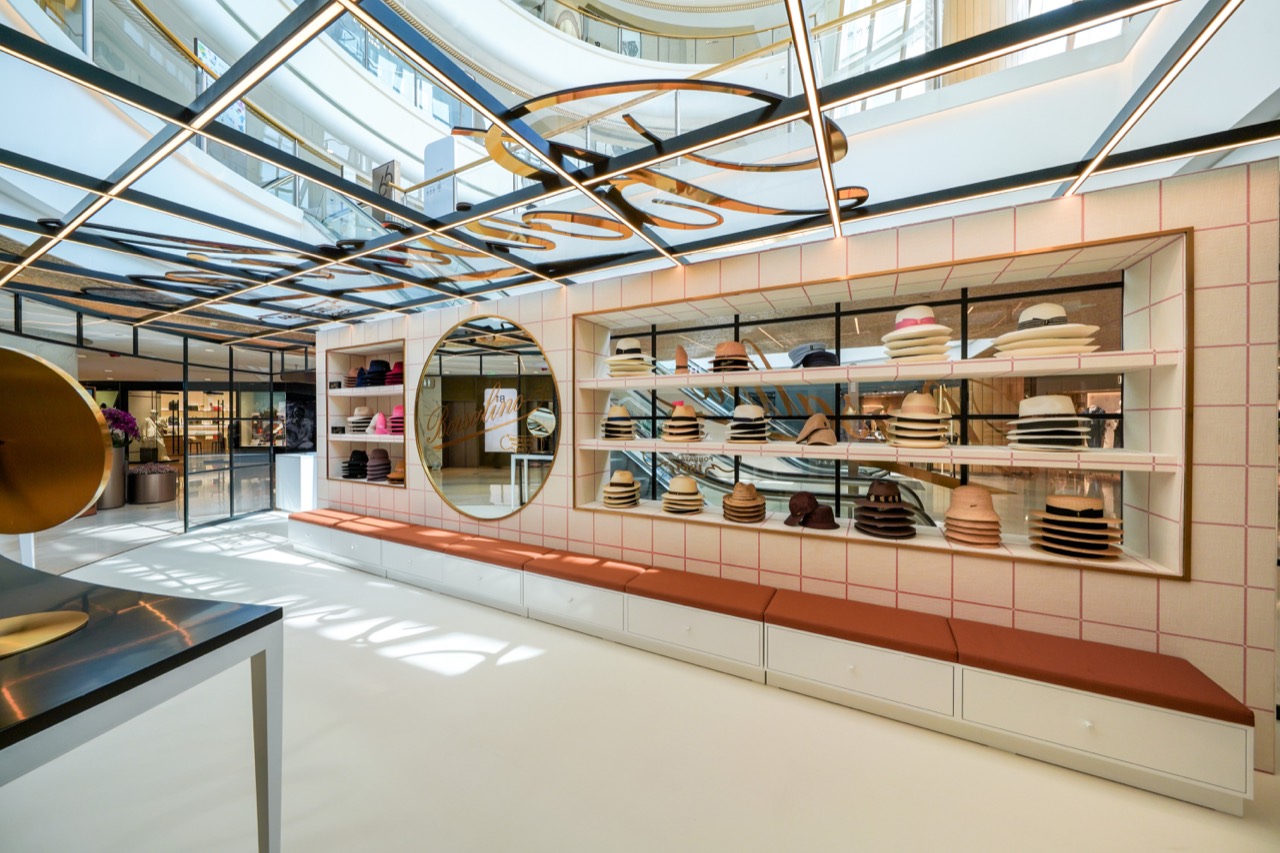
3.The April pop-up looked different. An oval box of glass set in black metal framing sat on the atrium floor, its base rimmed in brass. Inside, pale pink tile with red grout. At the center of the wall, an oval mirror with a brass rim. The brand's script was engraved into it.
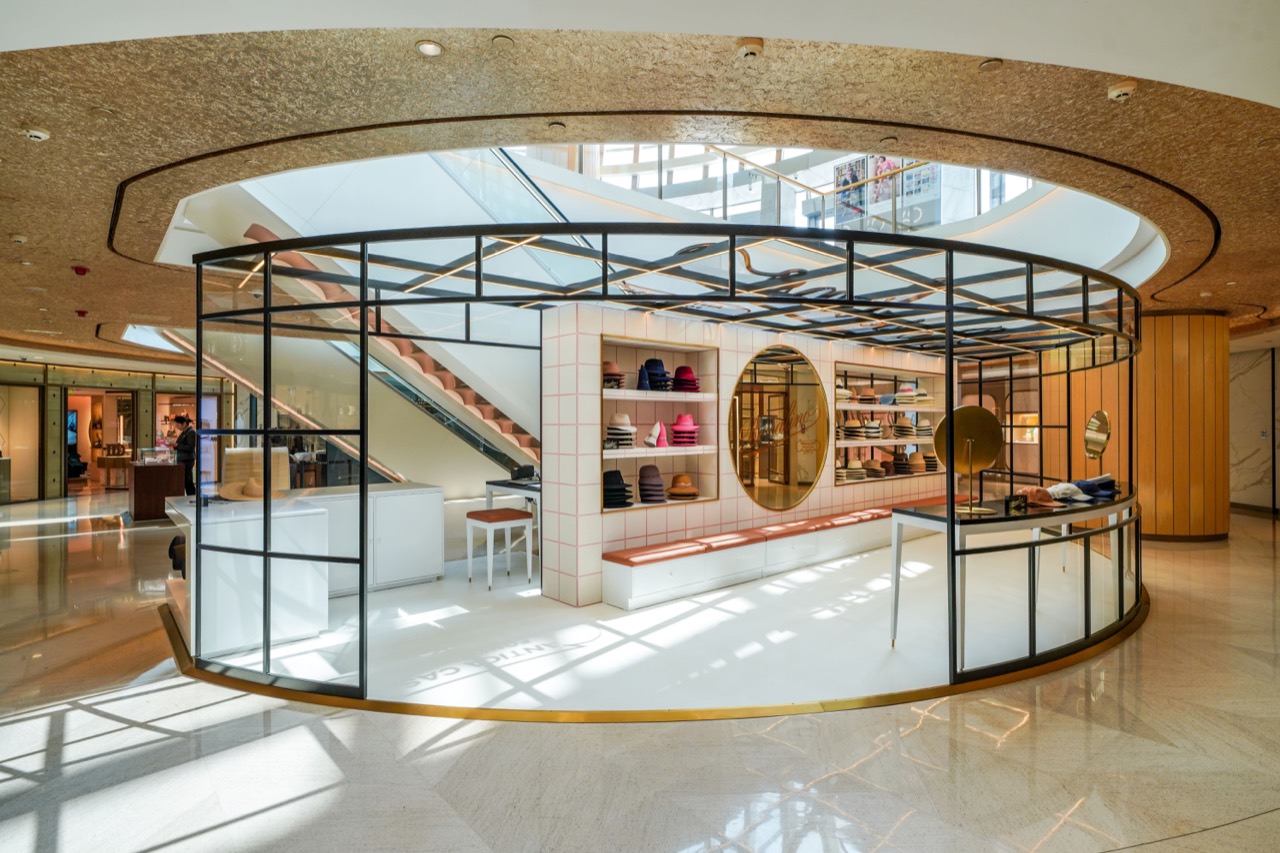
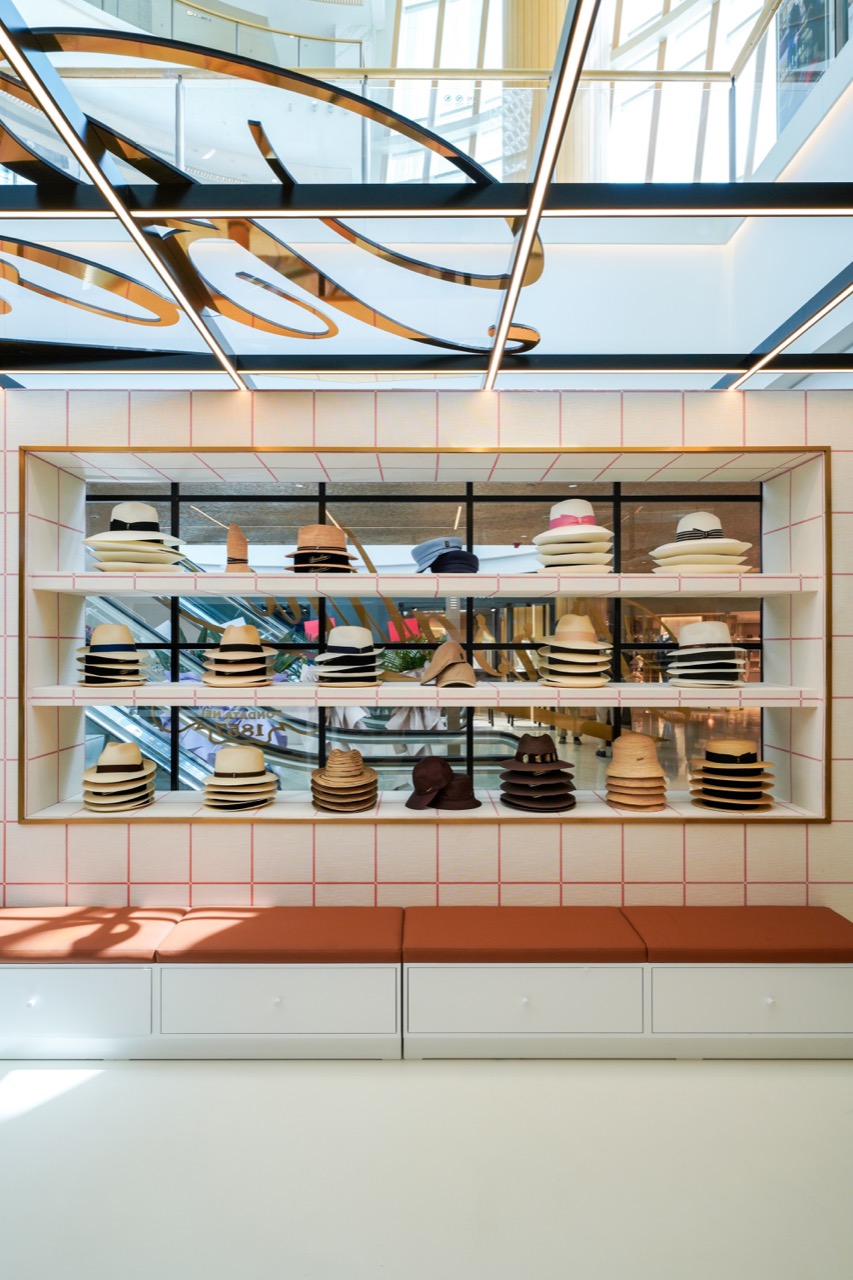
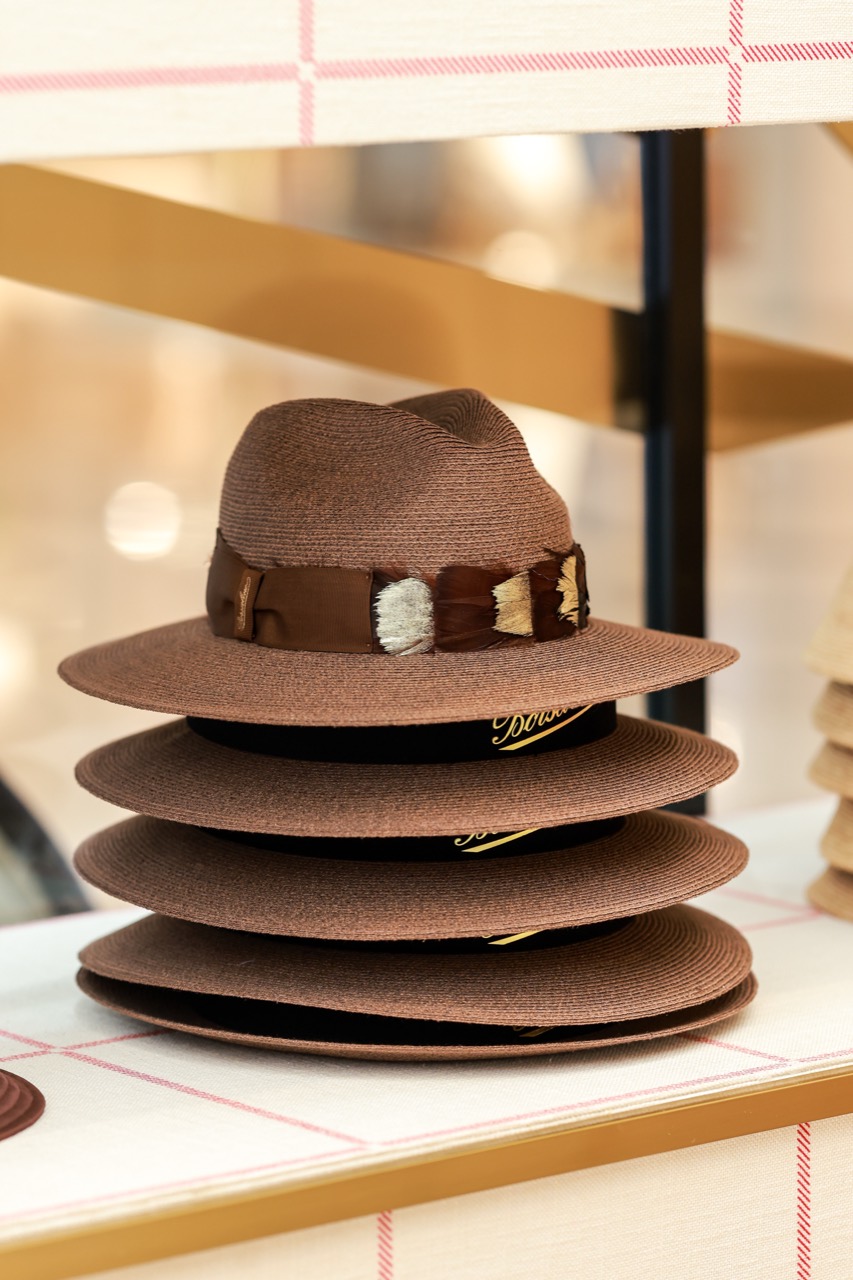
4.A hat store displays stock differently from a clothing store. Brims stack upward. Pile four or five of the same model in different colors and the brim edges become layers, the gold script on the black inner band running down the side in a row. Below the wall case, a long red leather bench. Trying hats on takes time, so the seat came first.
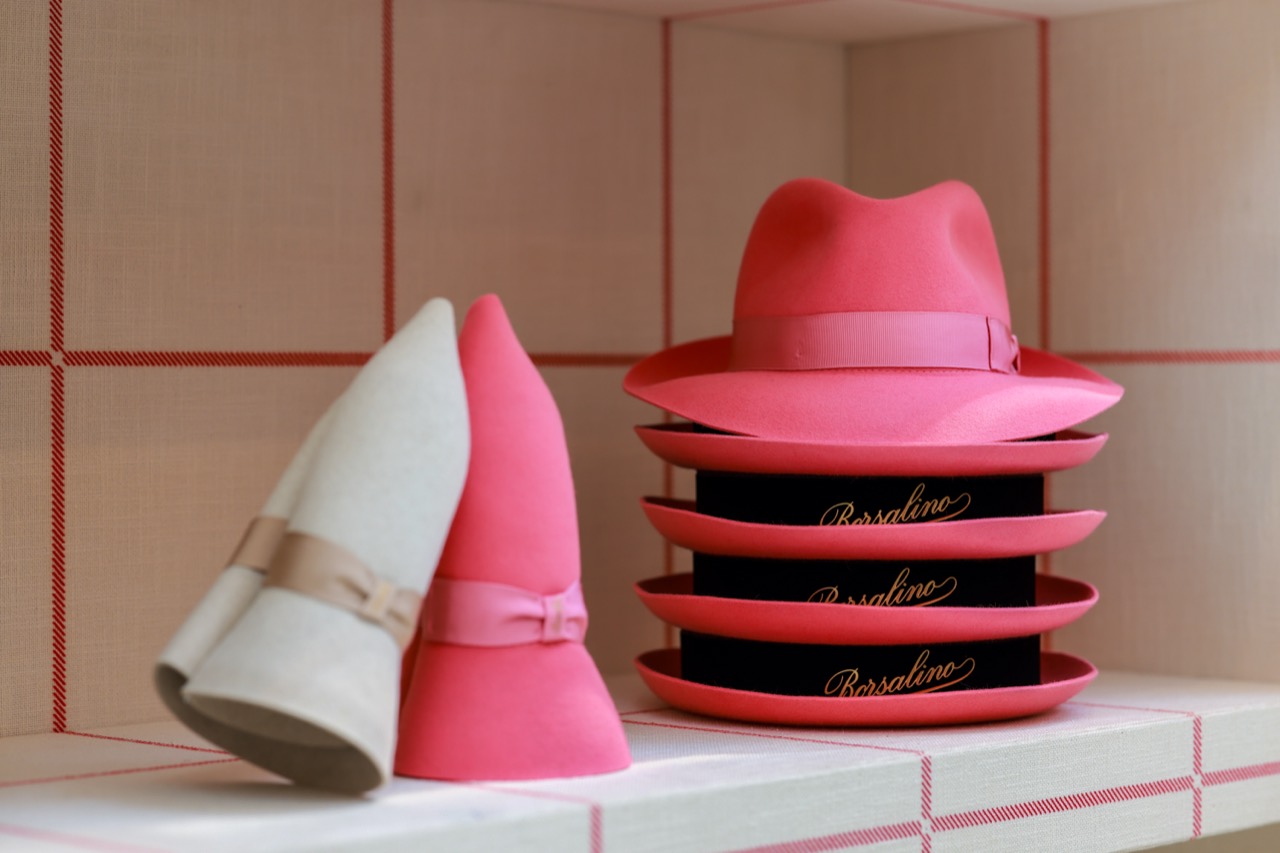
5.One hat takes seven weeks. Pressing rabbit fur into felt runs to roughly 50 stages. Most of that is done by hand. Three hundred thousand hats a year out of the Alessandria factory. On the brand's official US store a rabbit felt hat runs in the mid-400s in dollars, and beaver felt is listed as high as 975.
6.Hats sell poorly online for a simple reason. Head circumference differs person to person, and even at the same size the brim sits at a different angle depending on the shape of the forehead. An object whose purchase is settled only after a few turns in front of a mirror. That is why this category cannot drop the store. In exchange, each store has to carry a larger sales figure.
7.The timing is not a good year. Chinese luxury spending fell 10 to 15 percent in 2025, and the trade reads the first recovery signals as arriving early this year. Hats, though, sit one price tier below bags and watches. In a market that has cooled, what a shopper picks up on the way out of a luxury store falls in that lower tier, and the mid-400s land squarely in it.
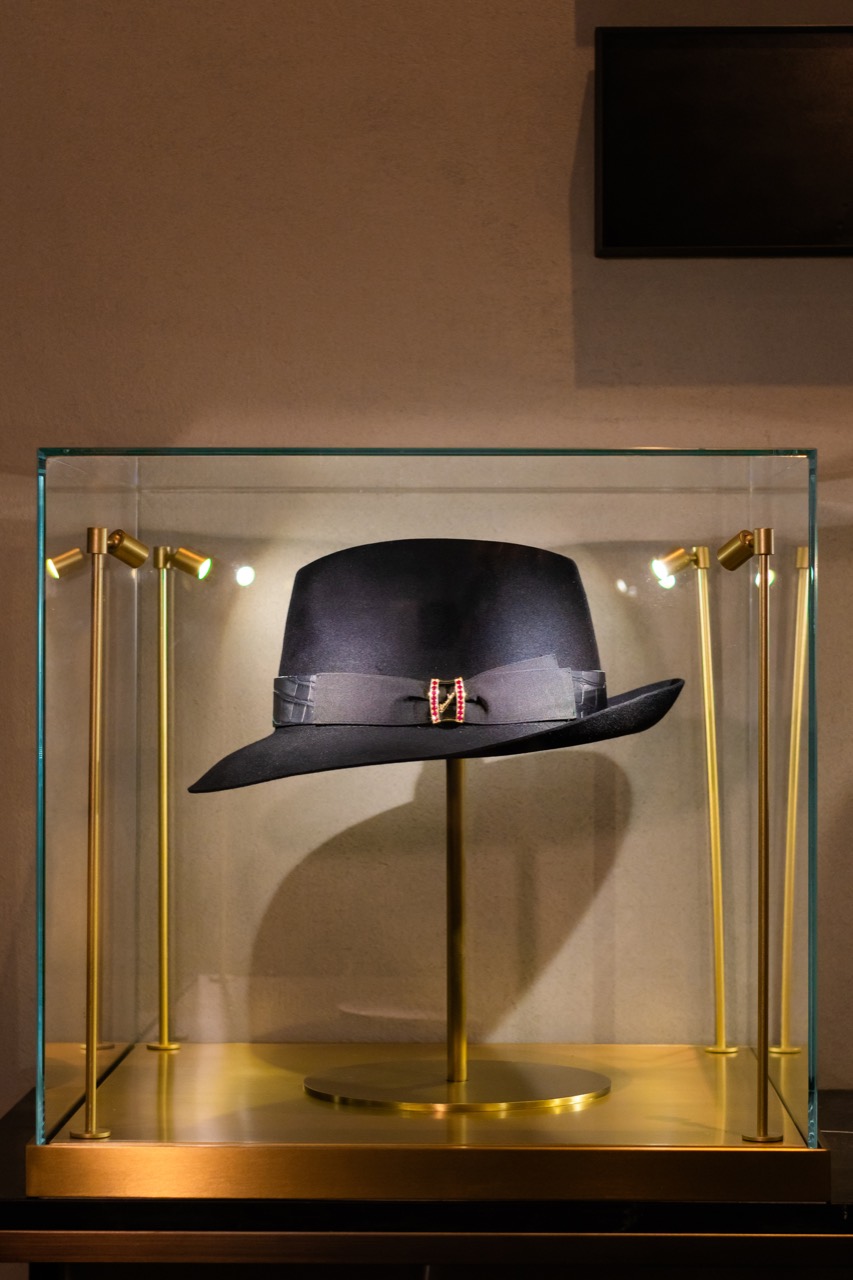
8.The top of the price range was built separately. Timed to the opening, a limited edition: a fedora carrying an 18-carat gold logo set with rubies, sapphires and diamonds. It sits in a glass case with brass lights aimed at it from four directions. The price is undisclosed. How many actually sell is beside the point; making the 400-dollar hat beside it look cheap is why this one piece is there.
9.What four months of pop-up bought was a site survey. An atrium unit is not a mall lease but an event-space use agreement, and the term and the strike date go into the contract first. Fold it and walk out if it fails. Having confirmed that it worked, the brand switched to permanent inside the same building. The risk of picking the wrong location was paid off in four months of usage fees.
10.The reason for switching to owned retail is margin. This company's core business was wholesale, and it still has roughly 300 accounts. Wholesale hands goods over at under half of retail and pushes inventory risk onto the shop, but the remaining share is thin and the brand cannot control where or how its goods sit. Owned retail is the reverse. It takes the full price, and rent, payroll and inventory are all its own. So which side keeps more.
11.So it held its own speed down. While seeing room for up to 40 locations across Greater China, it set additional openings this year at four. Managing director Mauro Baglietto says he does not want a plan that is too aggressive. His stated reason: China now demands a more disciplined approach than it once did.
12.There is a history behind that caution. In December 2017 the Alessandria court threw out the rescue plan and the company went bankrupt. The trademark had already gone to the investment firm Haeres Equita that May for 18 million euros, and the following July the bankruptcy auction handed over the factory, machinery and employment contracts for 6.4 million. A house whose brand and factory were split apart once and then joined back together.
13.The company also knows a single product category cannot fill a store. From September it takes a five-year license with the Swiss firm Gamat for leather bags and accessories. What it wants is display area and basket size. Going the license route means no new production plant. What the factory makes is still only hats.
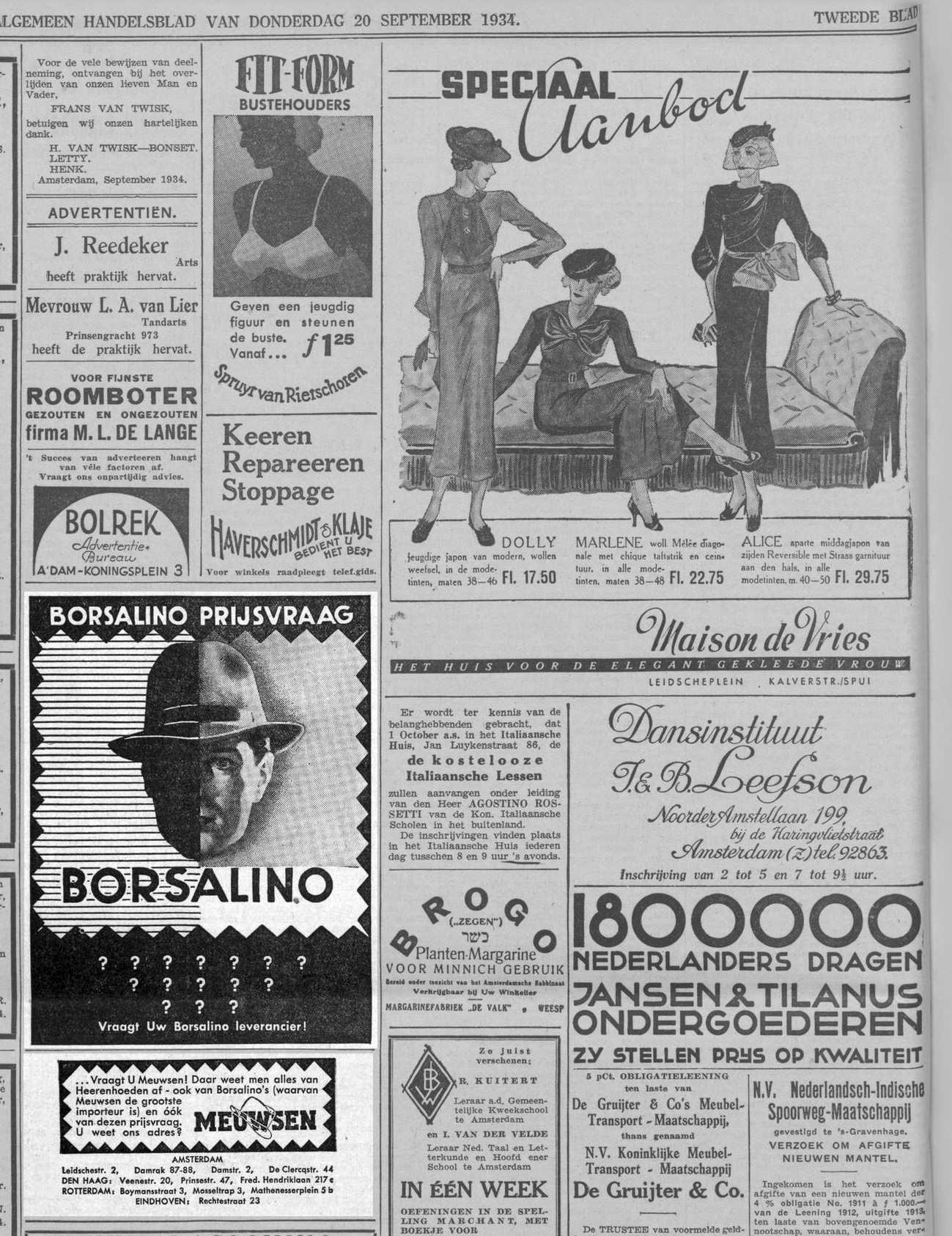
14.It began in 1857 in Alessandria, in a workshop opened by Giuseppe Borsalino. In the twentieth century, film sold the object. The wide-brimmed felt hat worn on screen came to be called by the brand's name, and that name is now the raw material for the black-and-white banners hanging in a Shanghai atrium. Not many companies can use their old photographs as they are.
15.Choosing the mall atrium is worth reading on its own. A regular store means fixed floors and fixed units, so you wait for a good spot to come free, while the atrium is space the mall turns over for events and you get in as long as the calendar lines up. Foot traffic there is the highest in the building, and it is a spot seen straight down from the floors above. It is not a place for calling in people who know the brand, but for catching the eye of people who do not.
16.A 169-year-old hatmaker used four months as a trial and then opened a permanent store in the same building, and behind it sits a factory that went for 6.4 million euros at a bankruptcy auction. Anyone trying the same sequence in Korea hits the contract form before the location. Event space in department stores and large malls is booked not as a lease but as a commission arrangement, taking a set percentage of sales, and that percentage is not far off regular tenancy. If the trial is not cheap, the value of the trial shrinks too, and the math starts pointing toward negotiating regular tenancy from the outset.