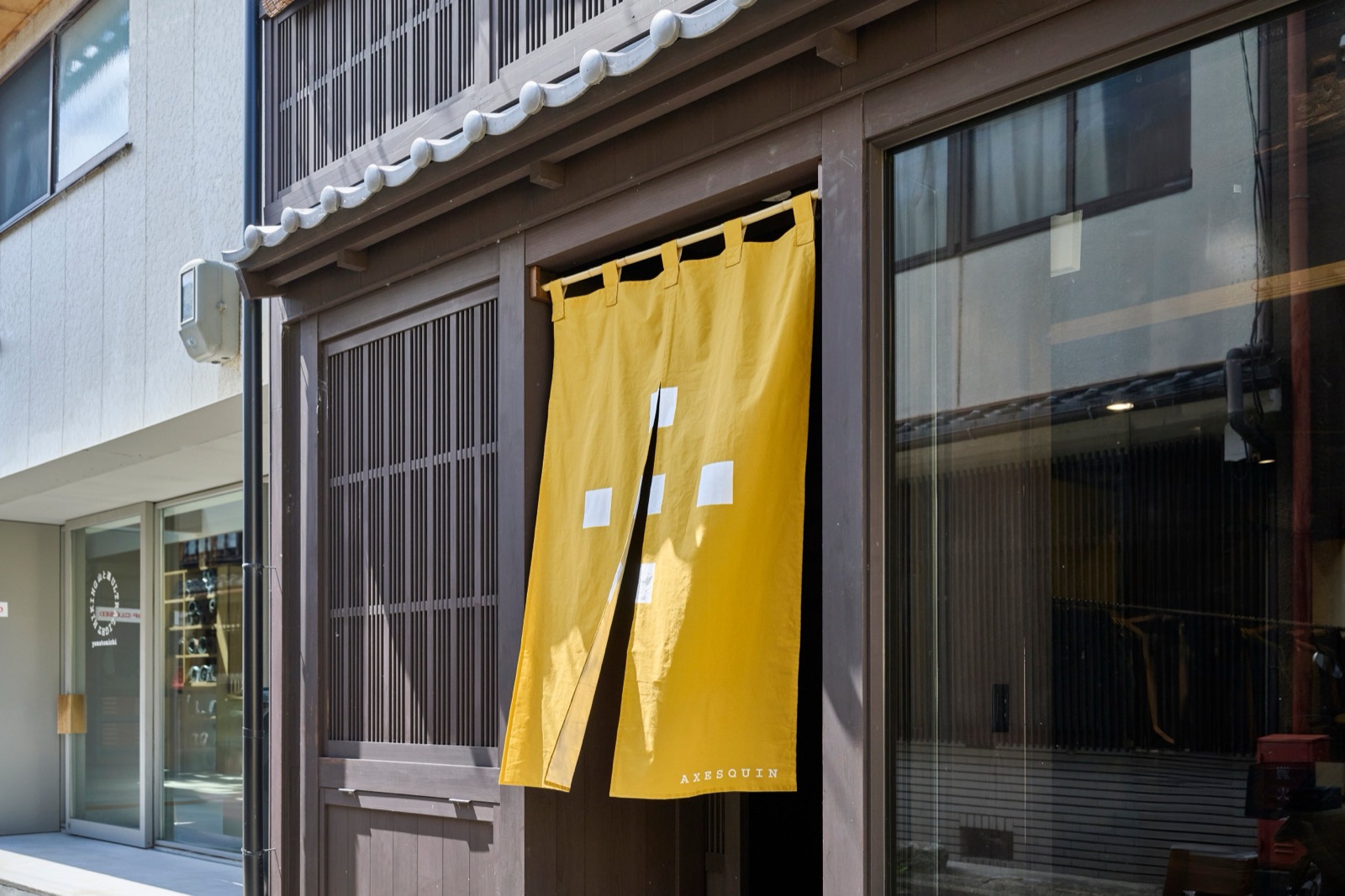
AXESQUIN Kyoto omoya opened two days ago inside an old wooden merchant house in Kyoto's Shimogyo Ward. The word omoya is written 母屋 and means the main house, the counterpart to the detached annex. It is the first standalone shop the Japanese outdoor brand has ever run on its own, and it opens only on Fridays, Saturdays, Sundays and public holidays, roughly 165 days a year. The company behind the brand has 29 employees. Here is how a shop that opens four days a week still adds up.
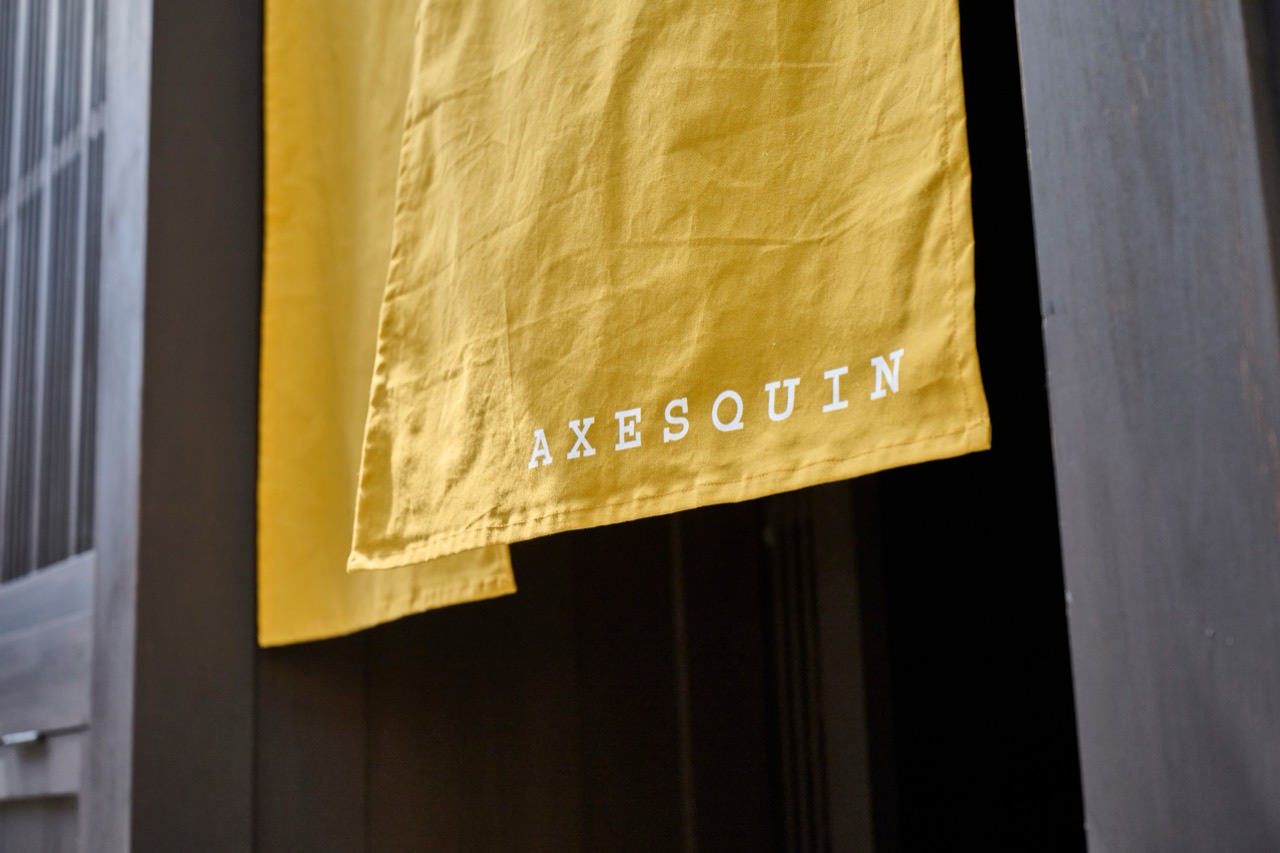
1.The address is 312 Hayao-cho, Shimogyo Ward, Kyoto. It sits on a lane one block north of Gojo-dori, not a street tourists walk down. Doors opened at 11am on Friday, 4 September 2026. There is no signboard. A single mustard noren with the brand name printed small along the bottom is all there is.
2.The building is a kyo-machiya. Reed screens cover the upper facade, wooden lattice runs beneath them, and a tiled eave passes low over the ground floor. One lantern hangs beside the door. A Kyoto city survey counted roughly 47,000 of these houses in 2008-09; the 2024 survey found about 34,000. Three in ten vanished in fifteen years, and one of the survivors is now a Tokyo company's outdoor shop.
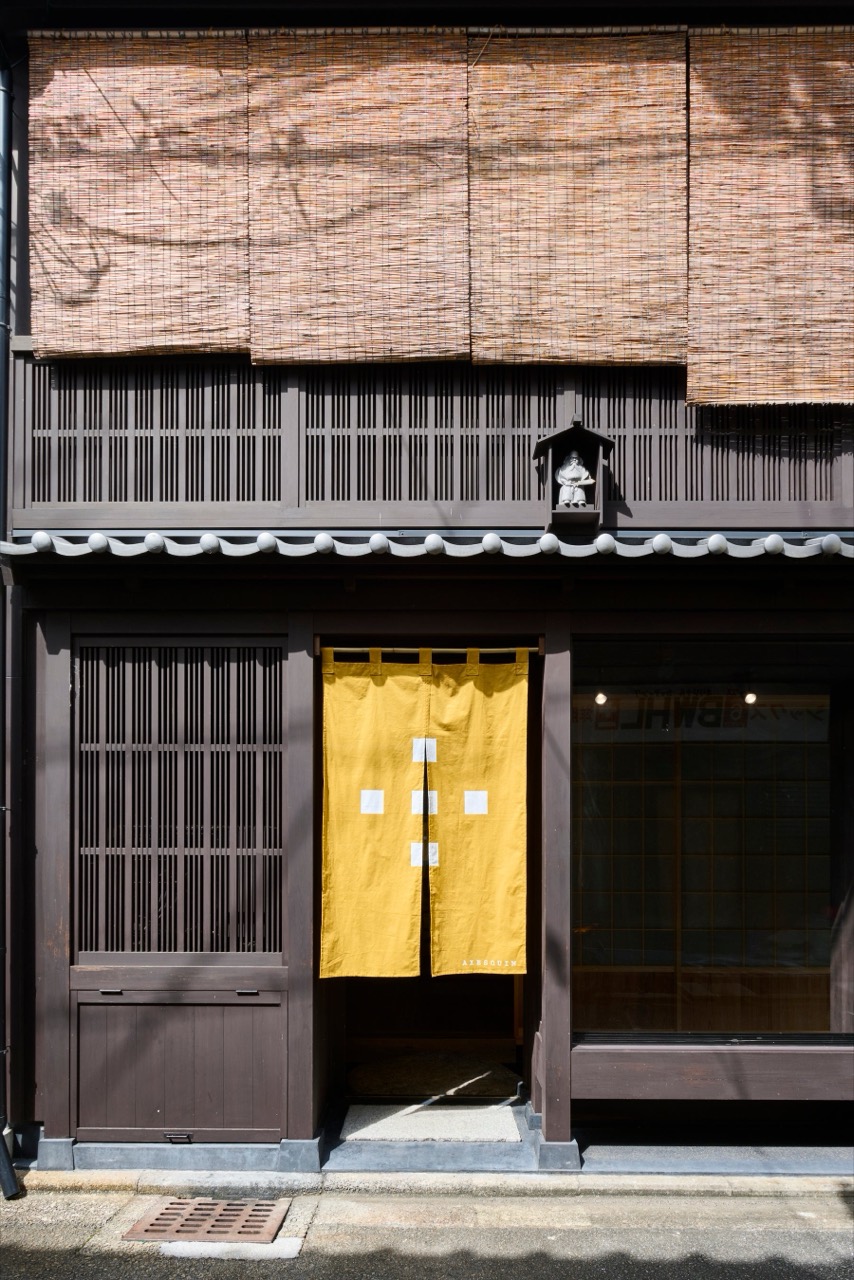
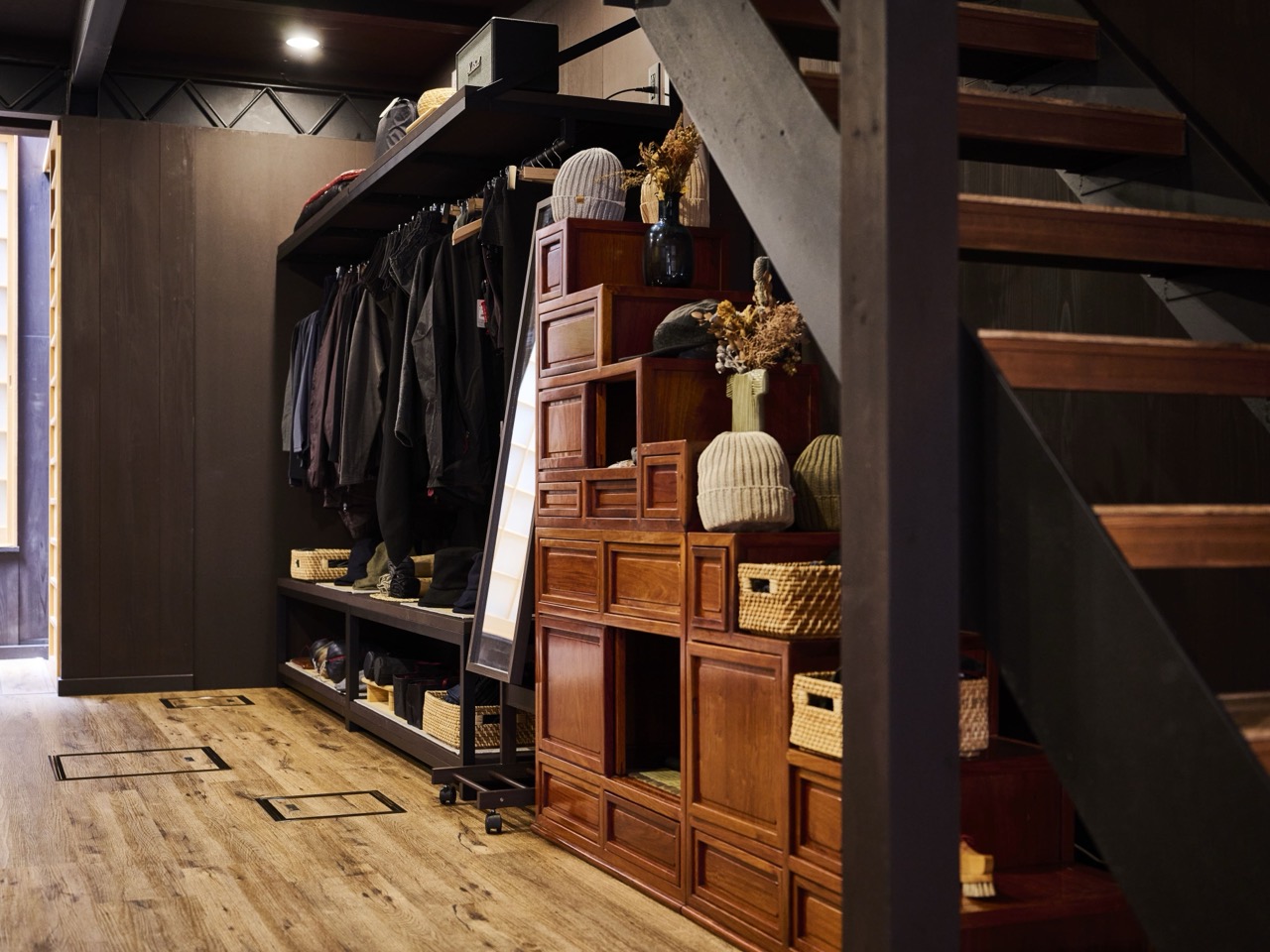
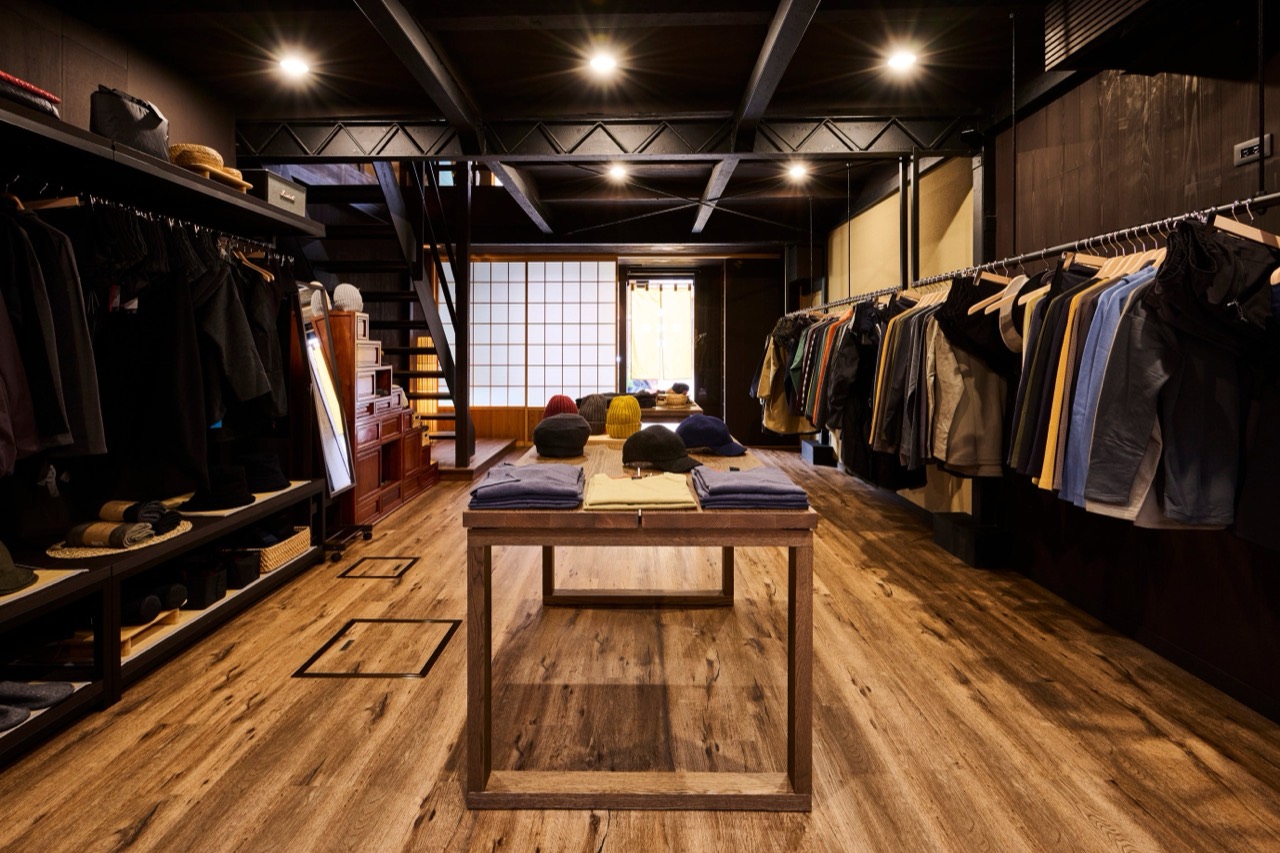
3.Push the noren aside and you find a room that is narrow at the front and long toward the back. It is the standard kyo-machiya plan, a single bay three or four times deeper than it is wide, with goods lining both walls. The left wall is one continuous rail, a wooden table sits in the middle, and the right side is a black-painted steel stair.
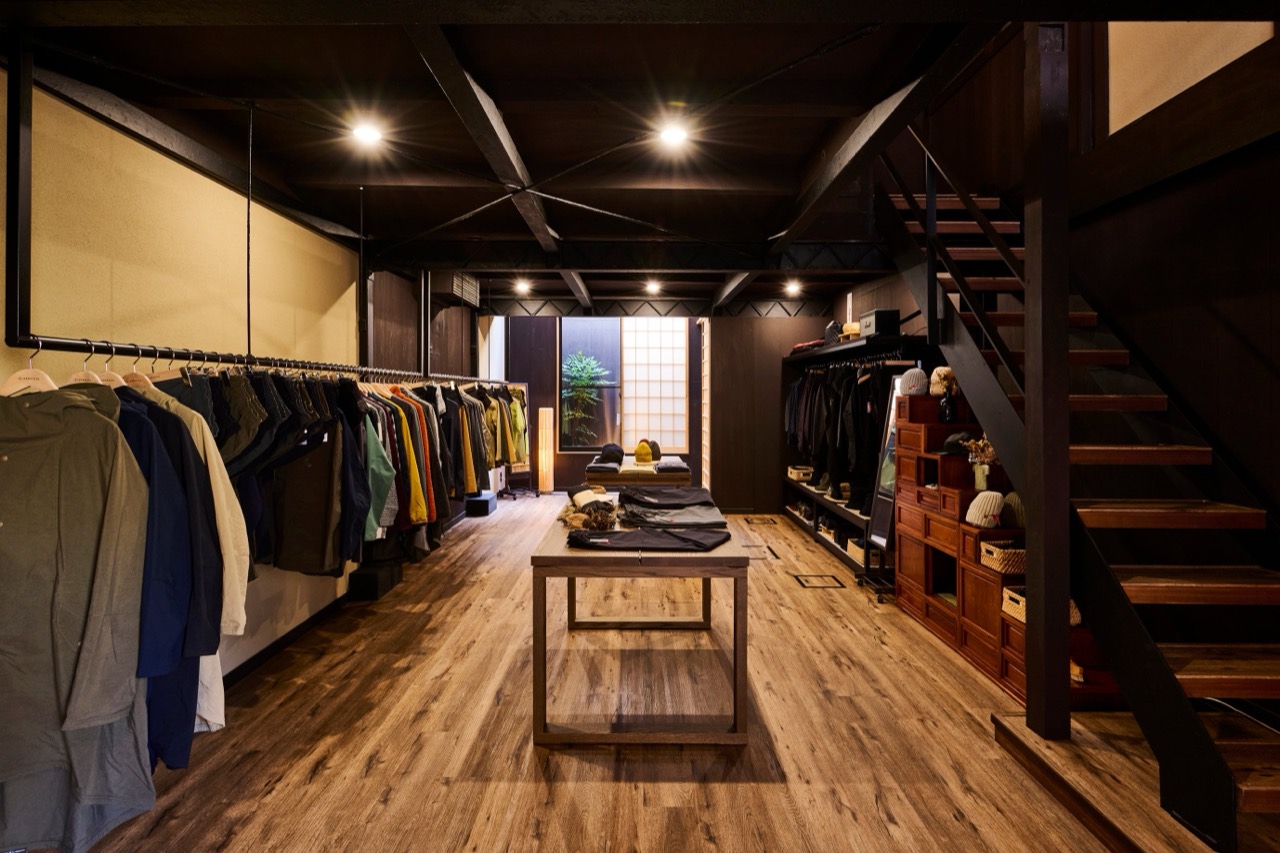
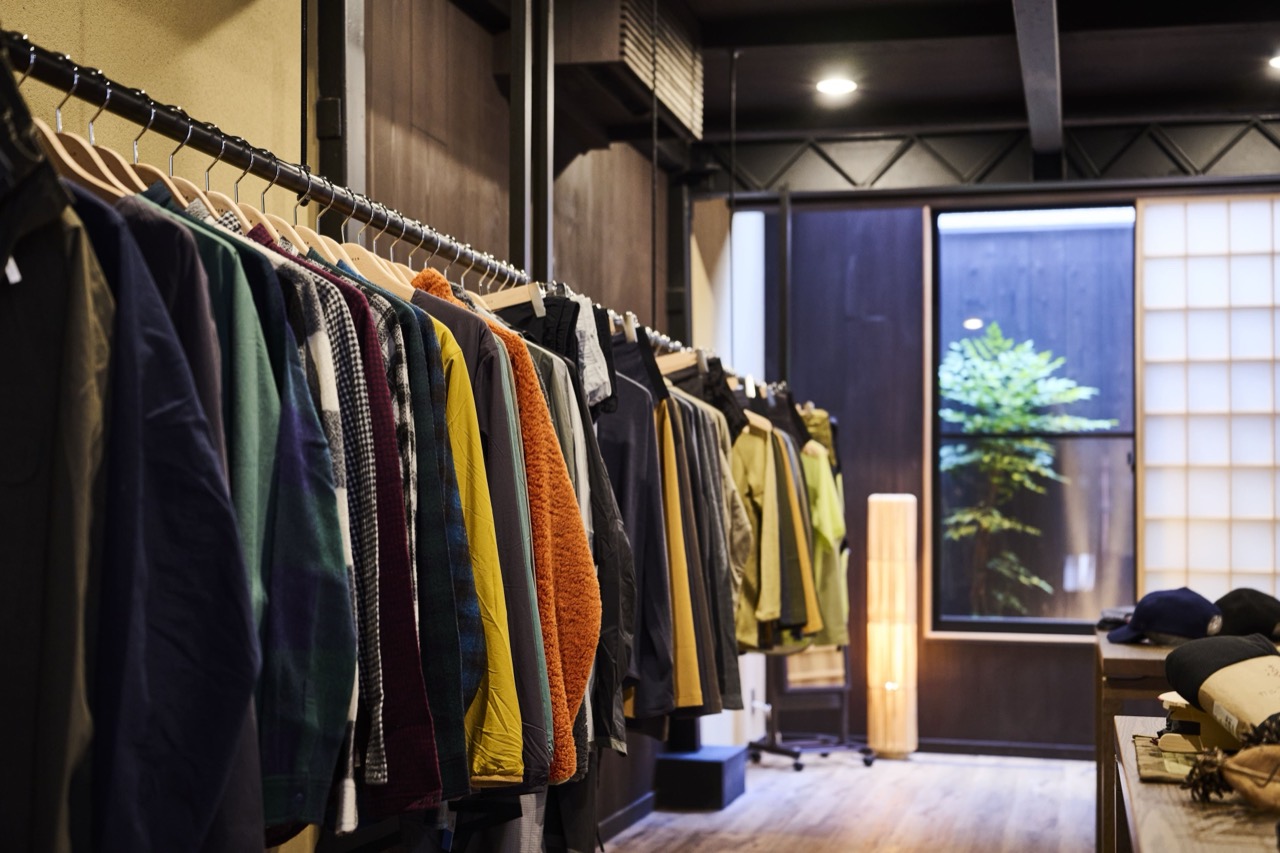
4.Light comes in from the far end. A single tree stands in the courtyard behind the glass, with a paper lamp burning in front of it. Houses built long front to back get no light from the sides, so the middle stays dim, and this one left that dimness alone and kept only the courtyard light. On a rail packed with dark colours, one orange fleece stands out.
5.Under the stair sits a stack of red wooden chests. Merchant houses once used this furniture as stairs and storage at the same time, and what now rests on those drawers are knit caps and baskets. Instead of building new fixtures, the shop turned things that would plausibly have lived in the house into display. Two square lids sit flush with the floorboards.
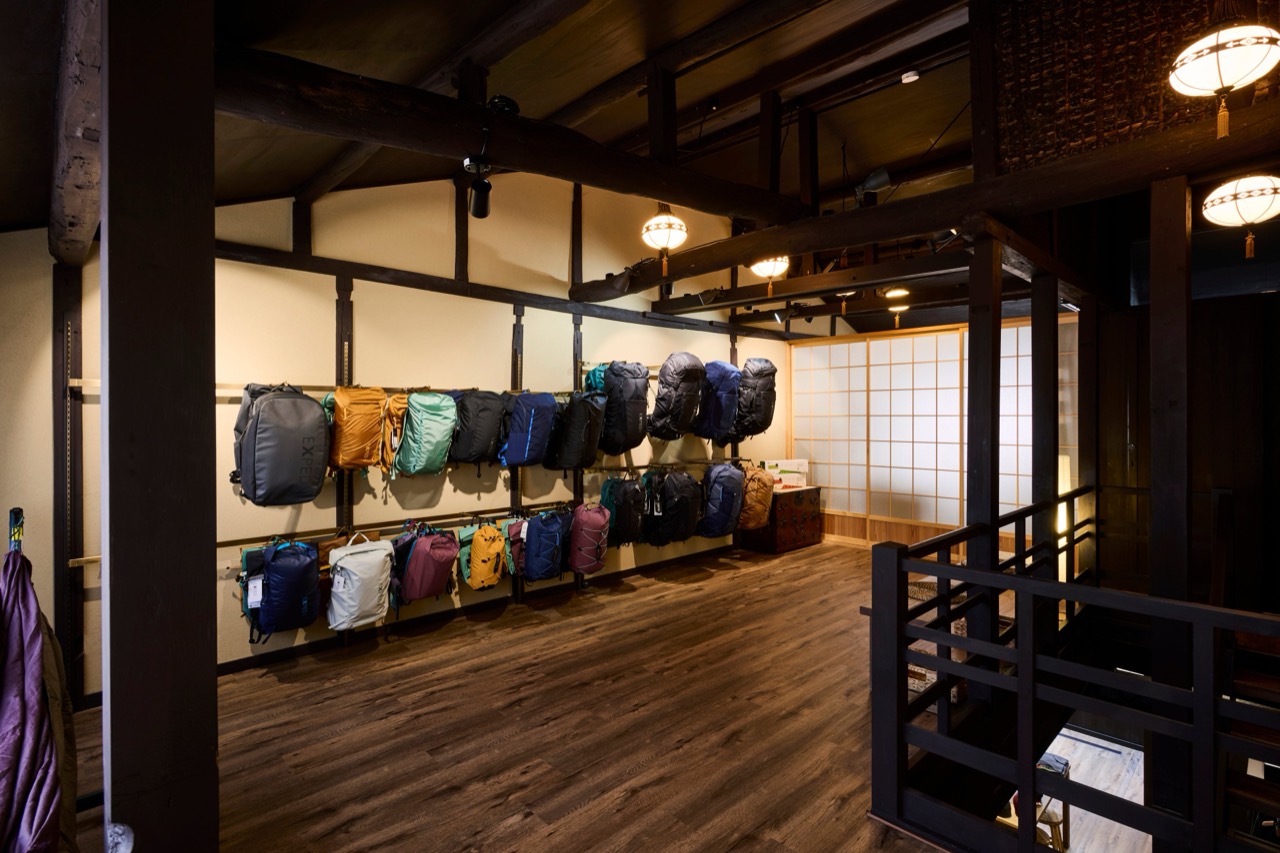
6.Upstairs the character flips. Black beams cross the ceiling, the roof pitch is left exposed, and the windows are shoji, so the light arrives filtered. More than twenty packs hang on two walls beneath them, and a hammock is slung in the middle of the room. Clothing and gear are separated by a single flight of stairs.
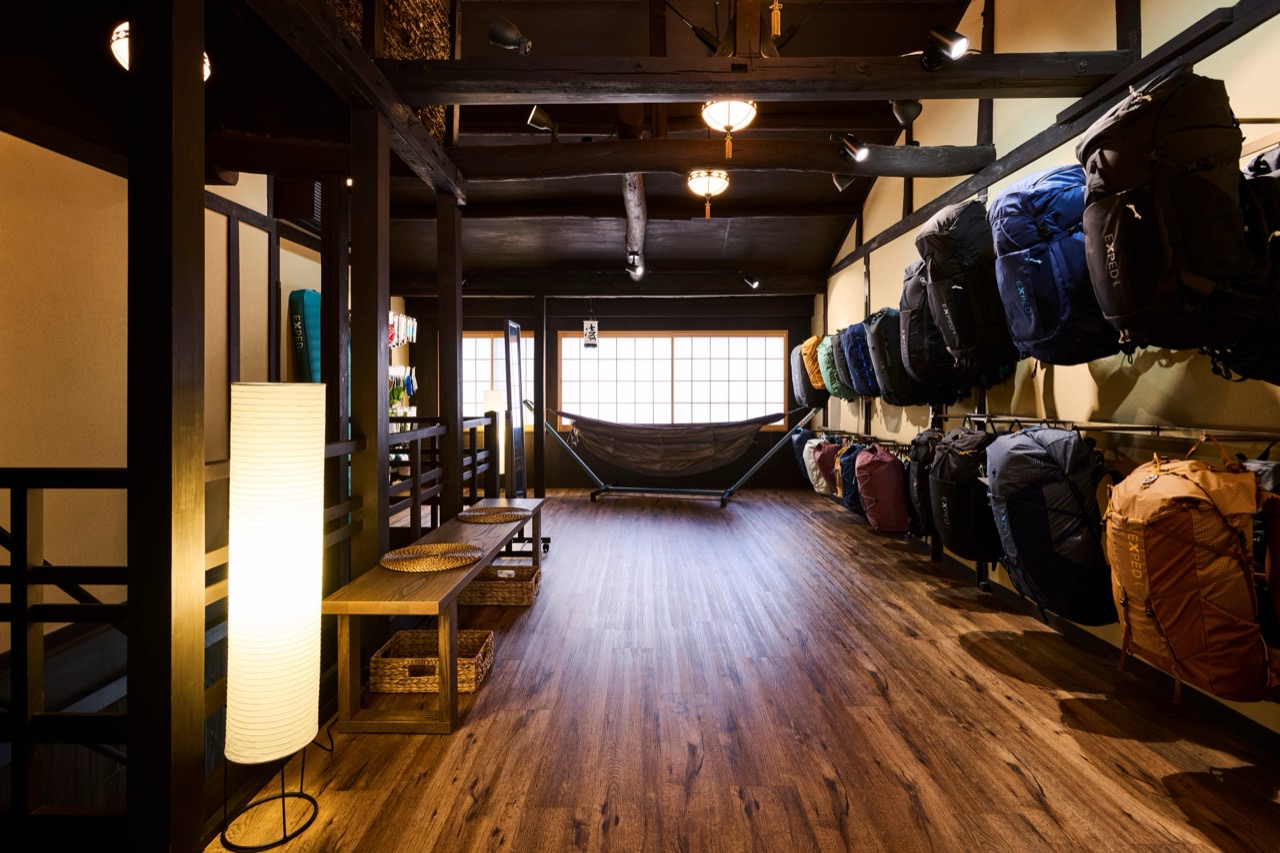
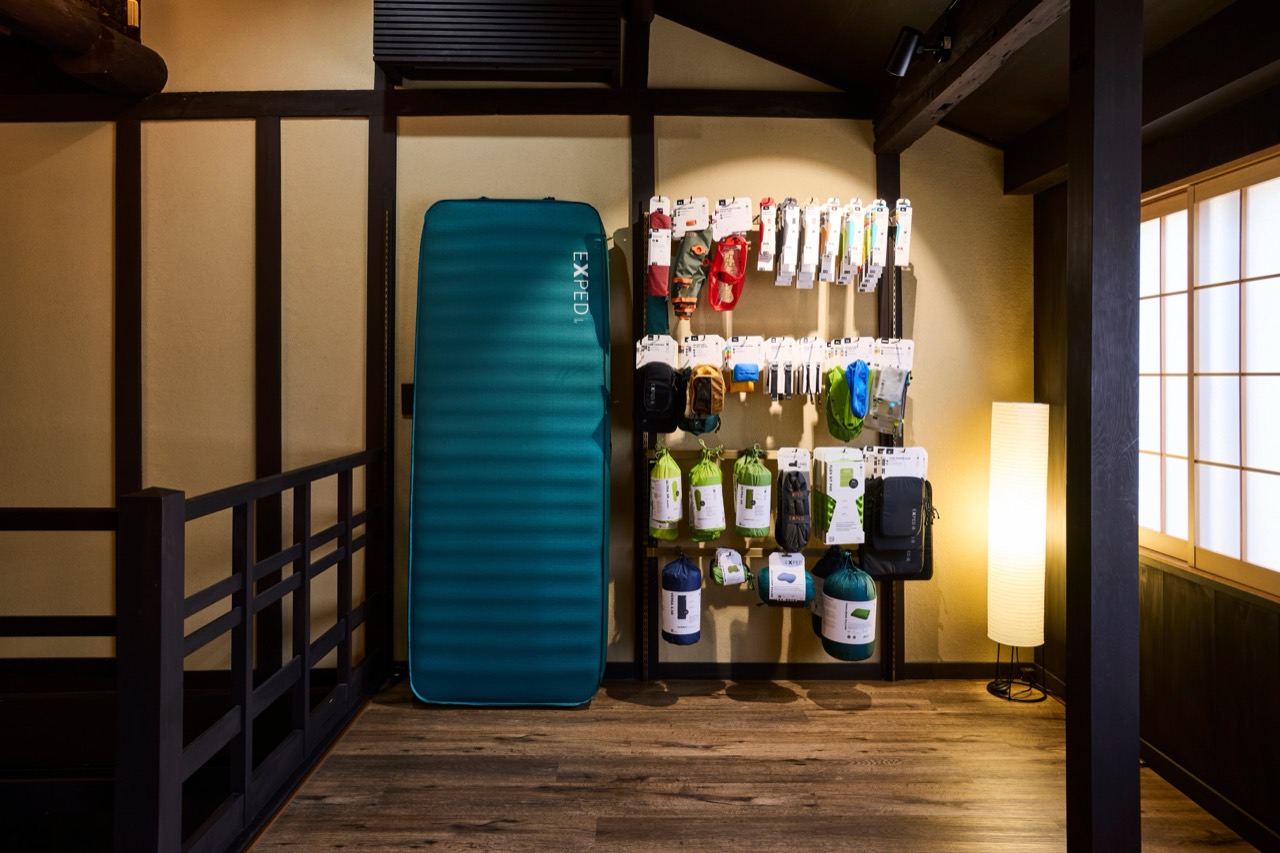
7.Most of what hangs up here is EXPED, the Swiss brand. AXESQUIN began in 1988 in Kanda, Tokyo, as a maker of mountain clothing. It took on a MOUNTAIN EQUIPMENT licence in 2002 and an EXPED distribution deal in 2011, and has run import distribution alongside its own label ever since. Its own clothes and someone else's gear standing in one shop comes out of that history.
8.The other name this company launched in 2011 is Shinogi. Clothing for people who walk the hills behind town through all four seasons, below the treeline, rather than the Alps or the Himalaya. The product names come straight out of the vocabulary of Japanese mountains. The Matagi pullover, 88 per cent wool, sells for 24,860 yen.
9.Japan's market for outdoor gear, facilities and rentals reached 463.4 billion yen in fiscal 2024, up 5.2 per cent, and the Yano Research Institute expects 505.9 billion yen for fiscal 2025. What filled the space left by the fading camping boom was clothing. As pieces bought for their function started being worn as everyday clothes, outdoor apparel alone kept growing.
10.The brand belongs to Soshin, based in Kyobashi, Chuo Ward, Tokyo. It is a fishing tackle company founded in July 1954. It runs one factory in Echizen, Fukui Prefecture, and waders and life vests are still the core business. Twenty-nine people in total handle four fishing brands and five mountain brands.
11.When 29 people supply more than 300 stockists, the money the brand receives is fixed in advance. The kakeritsu, the wholesale rate in Japanese apparel, usually runs 50 to 60 per cent. Sell that 24,860 yen pullover through a retailer and the brand sees roughly 12,000 yen before tax; sell the same piece in your own shop and the full 22,000-odd yen comes in. Same garment, 1.8 times the revenue.
12.This is not the company's first shop, though. Five already exist, in Ikebukuro, Tokyo Station, Shinjuku, Yokohama and Osaka, and every one of them is called Hanare. All five are shops-in-shop inside Ishii Sports outlets: the sixth floor of a Yodobashi Camera building, the eleventh floor of Daimaru Tokyo. The name annex was accurate. There was no main house.
13.Fridays, Saturdays, Sundays and holidays come to a little over 165 days a year. Rent is paid on all 365. The floor area has not been disclosed; eyeballing the photographs, the two floors together look like 110 to 130 square metres. Prime street-level rents in central Kyoto run 20,000 to 70,000 yen per tsubo per month, and since this address is a block off the main road, taking the low end puts it around 500,000 yen a month. That is 36,000 yen for every trading day. Add two people's wages and it reaches the 55,000 yen range.
14.Why four days shows up in that wage line. Running one shop seven days a week takes at least three or four staff on rotation; cut it to four days and two will do. In a company of 29, the gap between two and four does not end with a single hire. Rent is paid regardless, but people are only paid for the days the door is open.
15.Five or six garments a day means five or six customers. On the sixth floor of a Yodobashi Camera that number is hopeless; for a wooden house down a side street that opens four days a week, it reads differently. What sells here is clothing for the hills behind town, and there is not a single layer between the person who comes for it and the thing itself. Even the opening gift is one metal mountain badge, given with any purchase over 11,000 yen. Not something you can make inside an Ishii Sports.
16.A 29-person company opened the first shop under its own name after 38 years, and that shop opens 165 days a year. The most honest number here is those 165 days. When the gap between the wholesale price you took inside someone else's store and the retail price you take in your own grows wide enough to carry the rent, cutting trading days to cut wages becomes a workable choice. In Korea the landlord blocks it first. A lease written around four-day trading tends to be refused on the grounds of managing the retail mix, and shopping complexes often write trading-hour clauses into their management rules. Without taking a whole street-level building, there is no room to even raise the calculation.