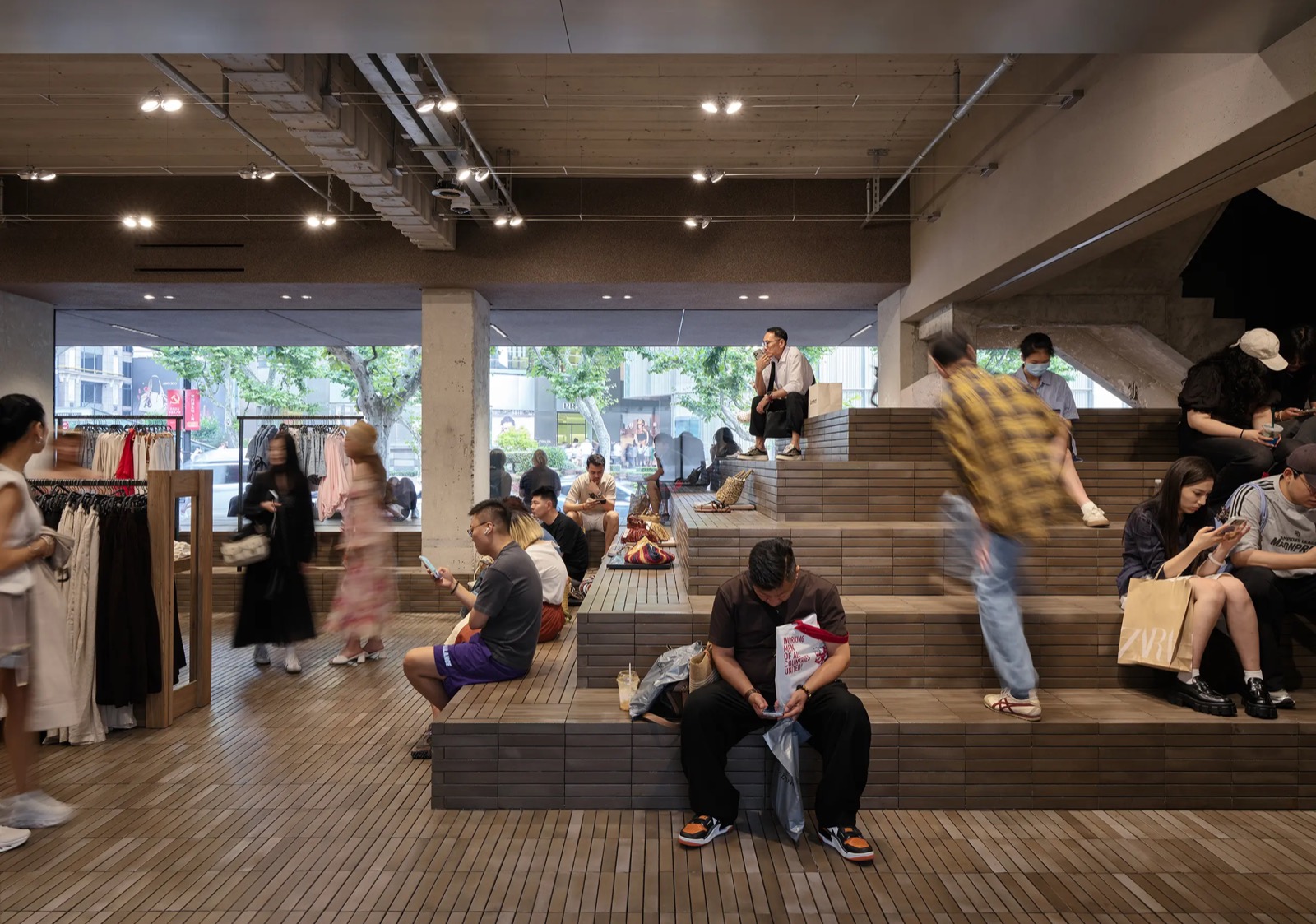
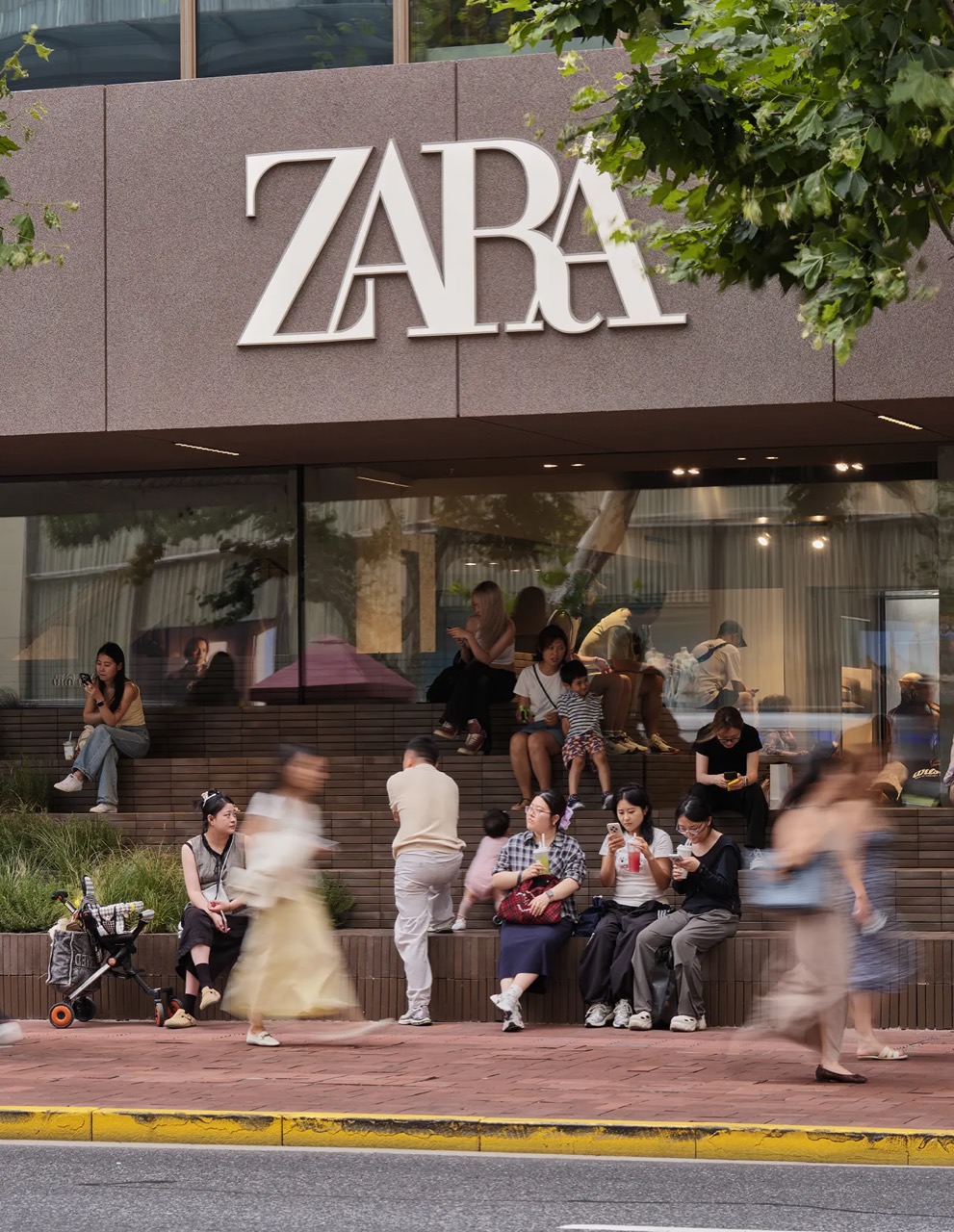
Zara has opened a five-storey store on Huaihai Middle Road in Shanghai. The front of the ground floor is taken up not by rails but by brick steps, and shoppers sit on them scrolling their phones. Some 300m down the same street, Uniqlo is shrinking the 8,000㎡ store it has run for 13 years to 2,800㎡ and moving it. On a street the luxury houses have been leaving one by one, the two companies have settled on sizes that are not far apart.
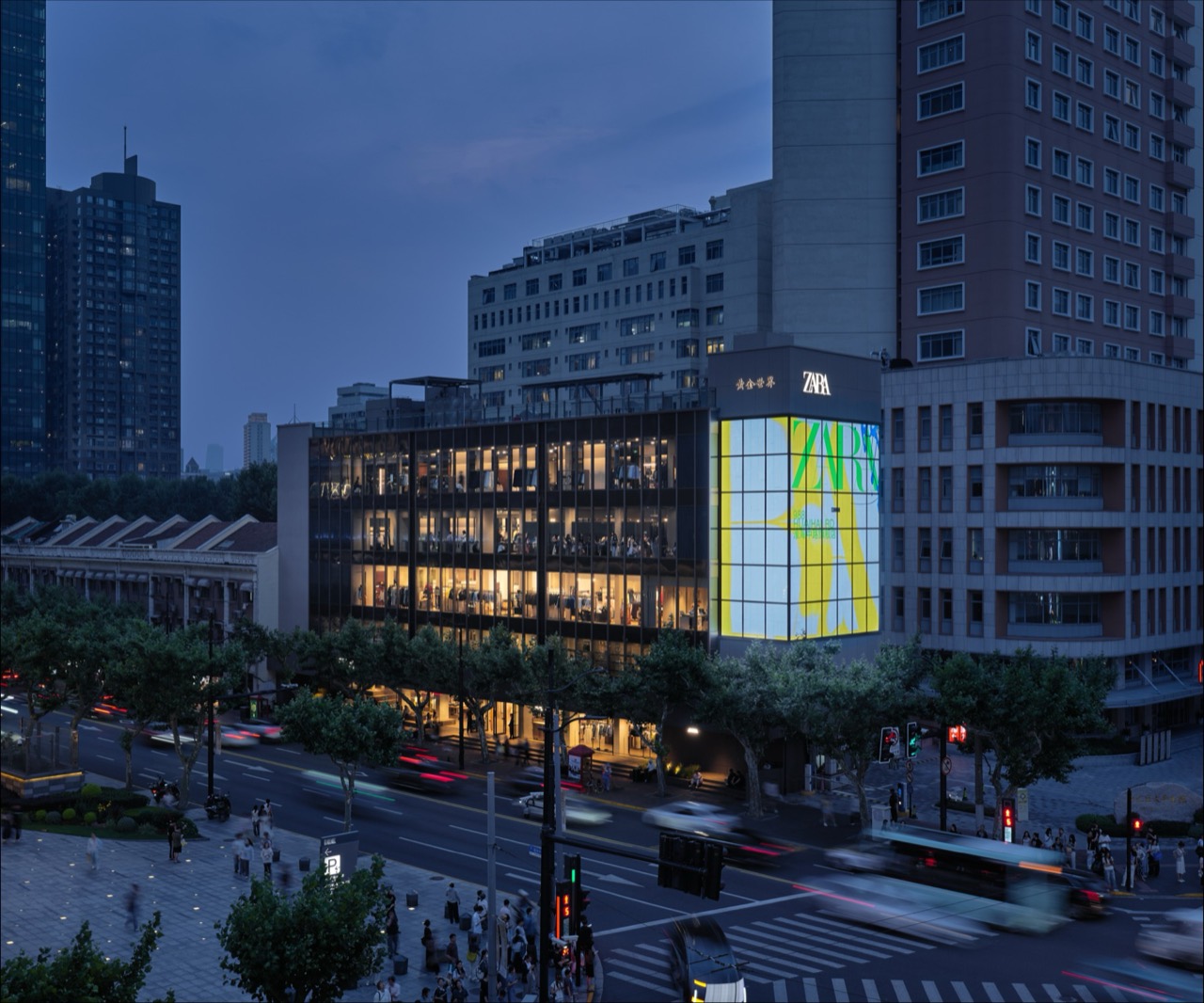
1.It opened on 6 June, across the road from the iapm mall, filling five floors of one building. Inditex puts the sales floor at close to 2,000㎡, and AIM Architecture, which designed it, gives the building area as 3,500㎡. The store marks Zara's 20th year in mainland China and is the second big investment in Shanghai after the Nanjing East Road store, refitted and reopened late last year.
2.On 27 August, Uniqlo announced it would move its global flagship on the same street. The store has occupied more than 8,000㎡ at No. 887, from the first basement to the fifth floor, since 2013. On 30 October it moves to No. 755, a little over 300m away: three floors above ground and about 2,800㎡ of sales space. Local press cite ageing equipment after 13 years, damp that caused trouble with stock storage, and rent.
3.Zara's building is an existing commercial block made of long, narrow floor plates stacked on top of each other. According to superfuture, it was once called the Golden World Shopping Centre. AIM Architecture, on its fourth project with Zara, did not rework those long floors and instead made them the spine of the circulation. A brick podium starts on the pavement, passes the glass line and runs into the building as tiered seating, and its steps double as display for bags and shoes.
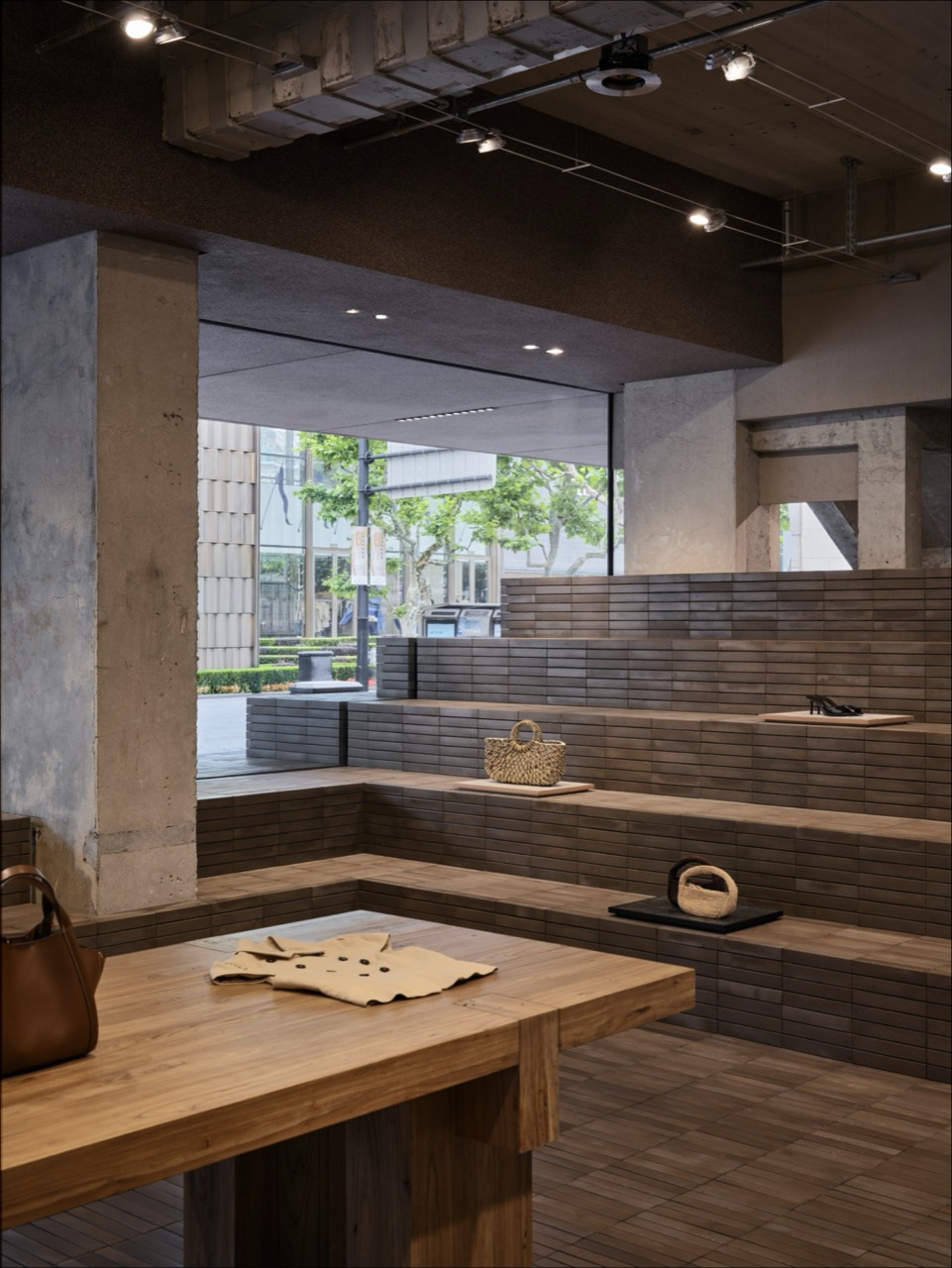
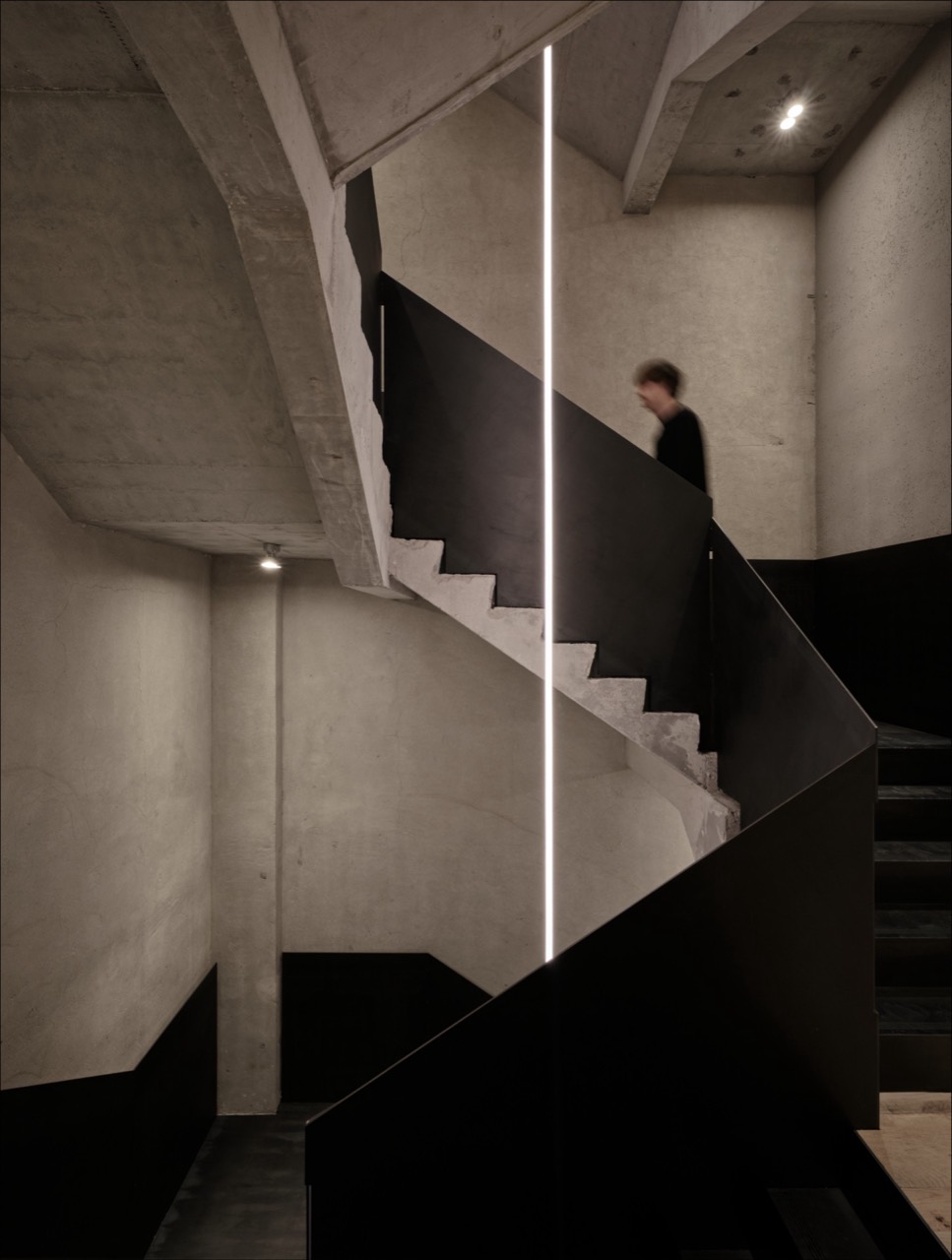
4.The building's bones are left in view. Concrete columns and the coffered ceiling stay uncovered, and the concrete floor is ground to a polish. Timber, linen and stainless steel sit lightly on top. The original staircase was stripped back to its concrete treads, with black steel railings and a single tall vertical light strip beside them. The escalators are gathered into a passage along the glazed rear facade, so that from the street you see the silhouettes of people moving up and down, floor after floor.
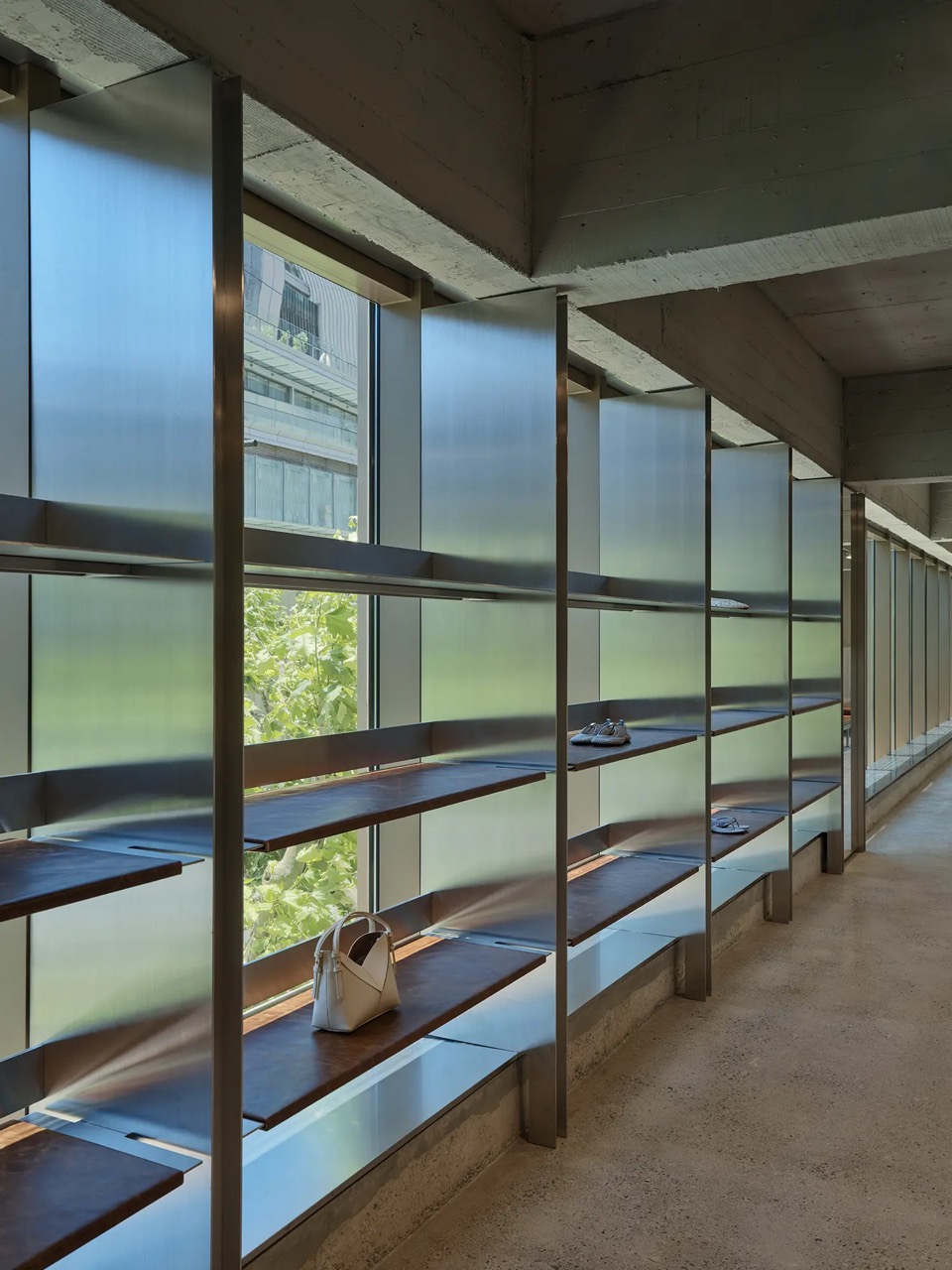
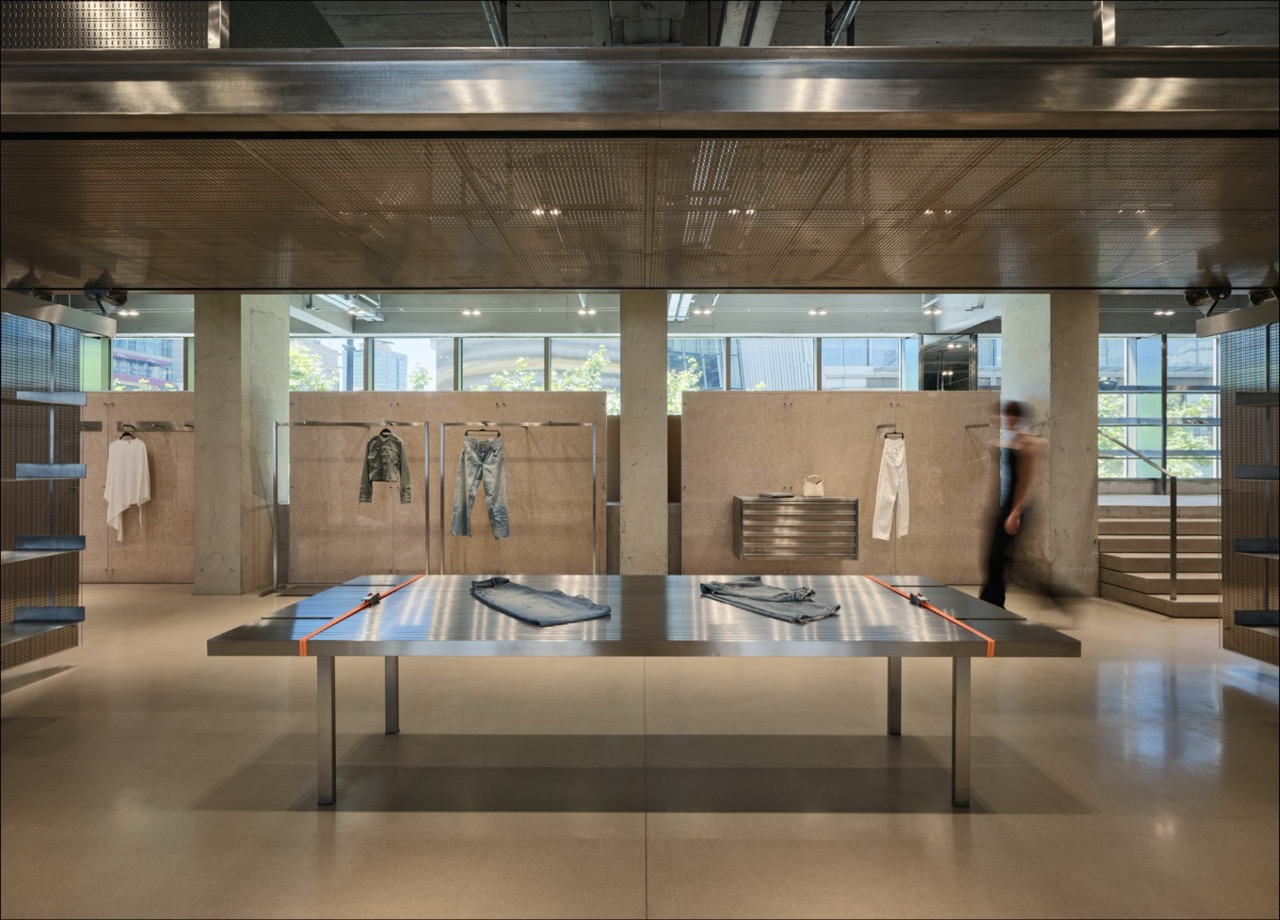
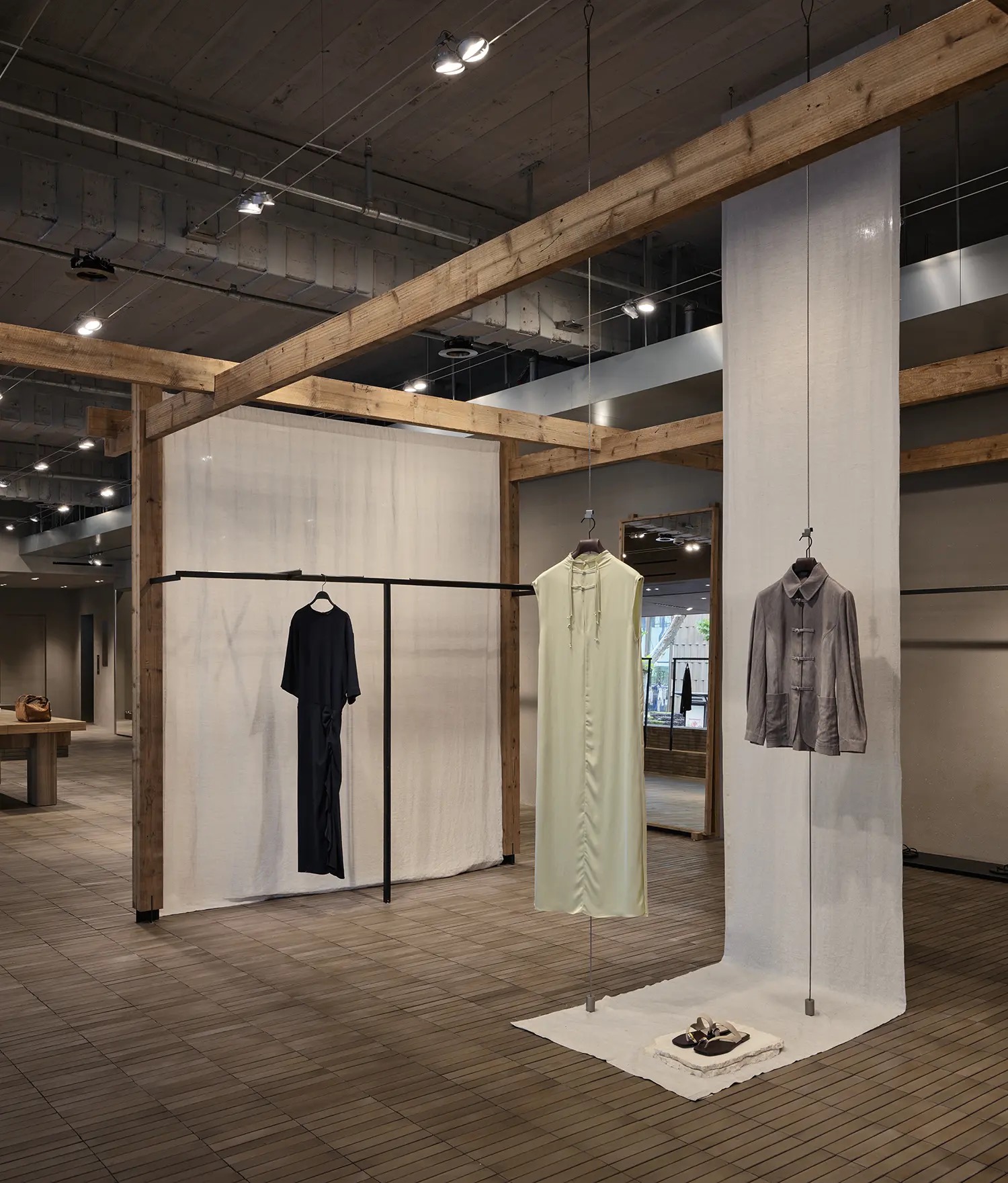
5.Each floor gets its own set. The designers describe the TRF line as a warehouse, womenswear as a gallery, ZARA Man as a workshop and the top floor as a Shanghai loft. On one floor jeans lie flat on a long stainless steel table; on another, linen hangs between rough timber posts and garments are suspended one at a time.
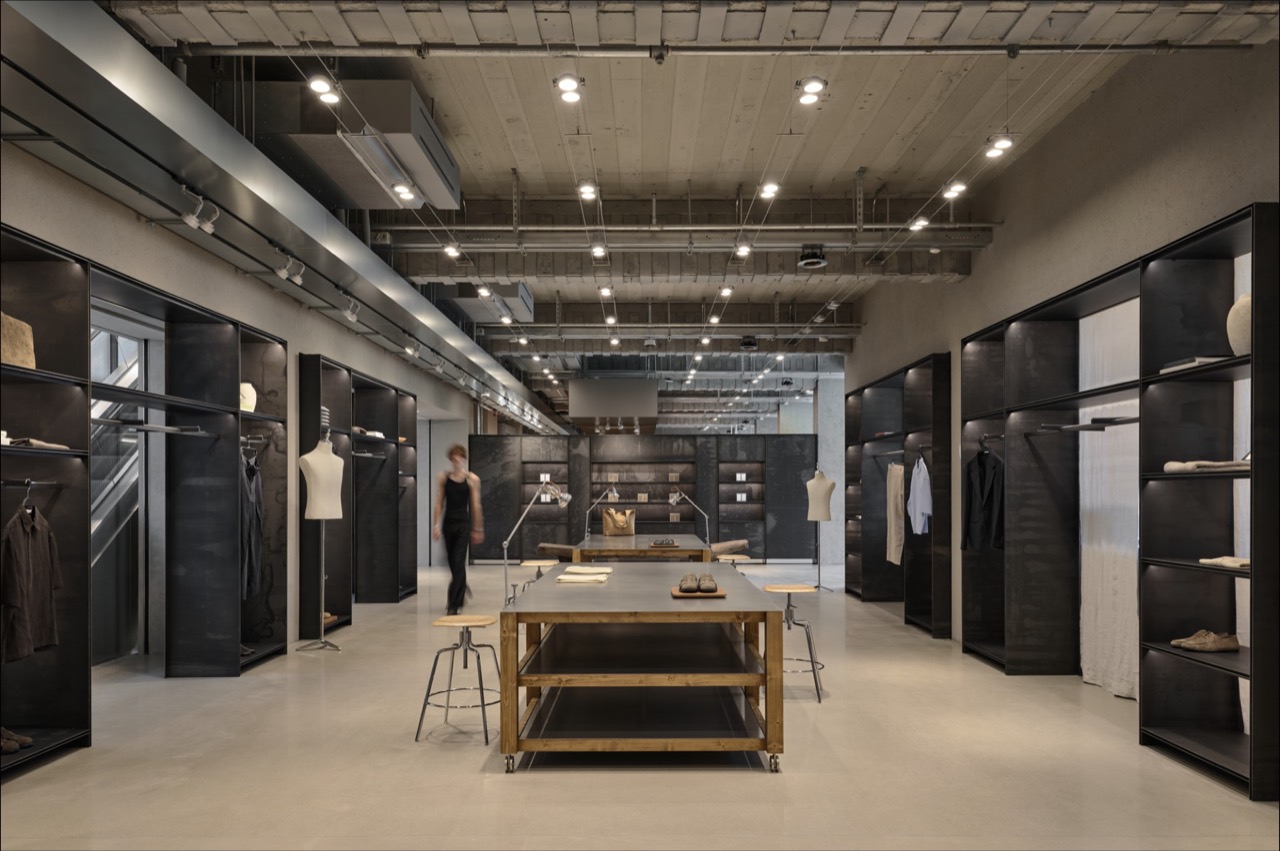
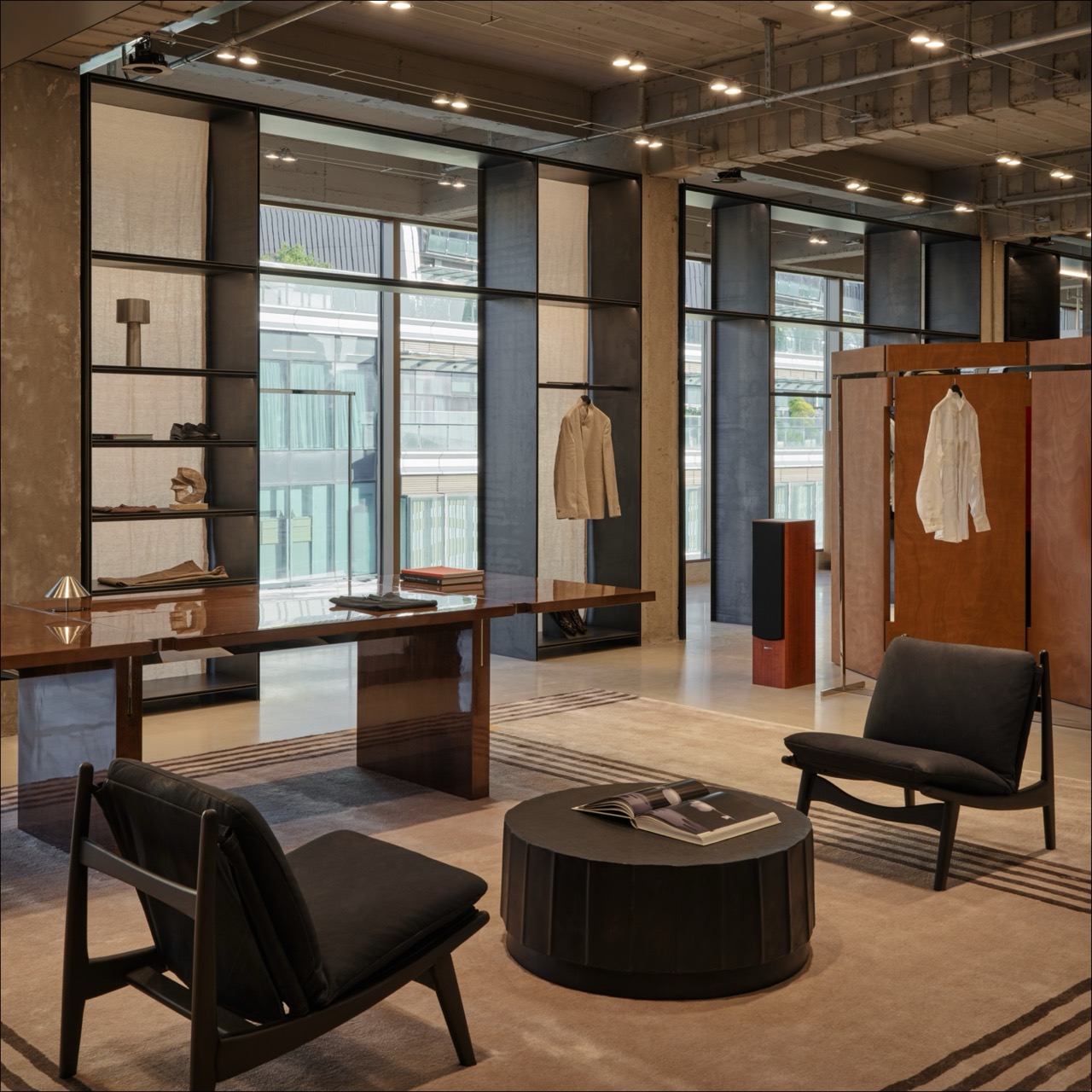
6.In menswear, black cabinets line both sides with a timber worktable on castors in the middle. Another area is dressed like a living room, with a glossy timber table, low chairs and a rug. Zara Salon sits apart, with its own fitting rooms and a place to rest. Every floor has self-checkout, a returns counter and a used-clothing collection box.
7.Luxury has been leaving this street for a decade. Louis Vuitton closed its flagship in 2016, and Zegna, Burberry and Dolce & Gabbana followed. Tiffany halved its store at Hong Kong Plaza, Cartier left K11, and in March this year Gucci closed at iapm, across the road from Zara. The gaps are being filled by mass-market brands. In the space Tiffany gave up, Zara's sister brand Massimo Dutti is moving in.
8.Has the street declined, then, now that luxury has gone? Shanghai's press does not think so. The 21st Century Business Herald reported young shoppers queuing outside Zara after the luxury exits, and the street's new-store rate was 25.72%, second only to Nanjing East Road. Reverse daigou shoppers, tourists from Russia and the Middle East buying goods cheaper than at home, are also counted among the new customers. A street people came to for expensive bags has become one they wander through. Zara laid brick steps on the ground floor to make them stop.
9.Nor does the store earn money only at the till. Presenting its first-half results on 9 September, Inditex named its model of tying stores and online together as the first reason. This store, too, lets shoppers check stock floor by floor in the app and has a returns counter on every floor. How much of last year's EUR 10.7 billion in online sales passes through stores like this is not disclosed.
10.Zara's mainland China store count fell from around 180 in 2018 to 96 in early 2024 and to about 60 by January this year. In January alone it closed five mall stores in Shanghai, Hangzhou, Beijing and elsewhere. Chinese media call it '开大关小'. Close the small stores, open the big ones.
11.The group as a whole is moving the same way. Last year Inditex cut 103 stores yet grew store space by 1.5% to 4.72 million ㎡. The room to hand an expensive ground floor to a set of steps comes from margin. First-half sales this year were EUR 19.755 billion, with a gross margin of 58.7%.
12.Divide last year's store sales, excluding online, by store space and you get roughly RMB 139 per ㎡ per day (estimate). JLL puts average ground-floor rent in Shanghai's core retail districts at RMB 41.8 per ㎡ per day. Sell only at the group average and ground-floor rent takes 30% of sales.
13.Split this store's 2,000㎡ into 400㎡ per floor and price the upper four floors at half the ground-floor rate, and annual rent comes to RMB 18.3 million, roughly KRW 3.6 billion. To keep that within 15% of sales, the store must sell 20% more per ㎡ than the group's average store. Price all five floors at the ground-floor rate and it has to sell twice the average, and the area for hanging clothes is smaller still, since the front of the ground floor went to the steps.
14.Uniqlo's numbers, 300m away, point the other way. Its Greater China revenue fell 4% in the last fiscal year and business profit dropped 12.5%. The decision to cut a 13-year-old store to a third of its size was made on top of those figures, and local press describe it as a shift from opening stores to opening good ones.
15.This is not the first time Zara has poured effort into a big store. Its Asia-scale store at Xinjiekou in Nanjing, opened in March last year, was also designed by AIM Architecture. What differs here is that this one was built to be taken apart. The designers say they left the existing structure untouched and slotted in furniture, displays and fitting rooms lightly, so the building can change again later. A company known for changing what hangs on its rails quickly has made a store it can change just as easily.
16.On a Huaihai Middle Road that luxury has abandoned, Zara has built a store of about 2,000㎡ across five floors and given the front of the ground floor over to seating, while Uniqlo on the same street moves from 8,000㎡ to 2,800㎡. In Korea, 3,000㎡ is the line for a standalone store of this size. The Distribution Industry Development Act treats stores with a combined sales floor of 3,000㎡ or more as large-scale stores and requires a commercial-district impact assessment and a local cooperation plan at registration. The 8,000㎡ Uniqlo is leaving would need that paperwork first. Zara's 2,000㎡ sits below the line.