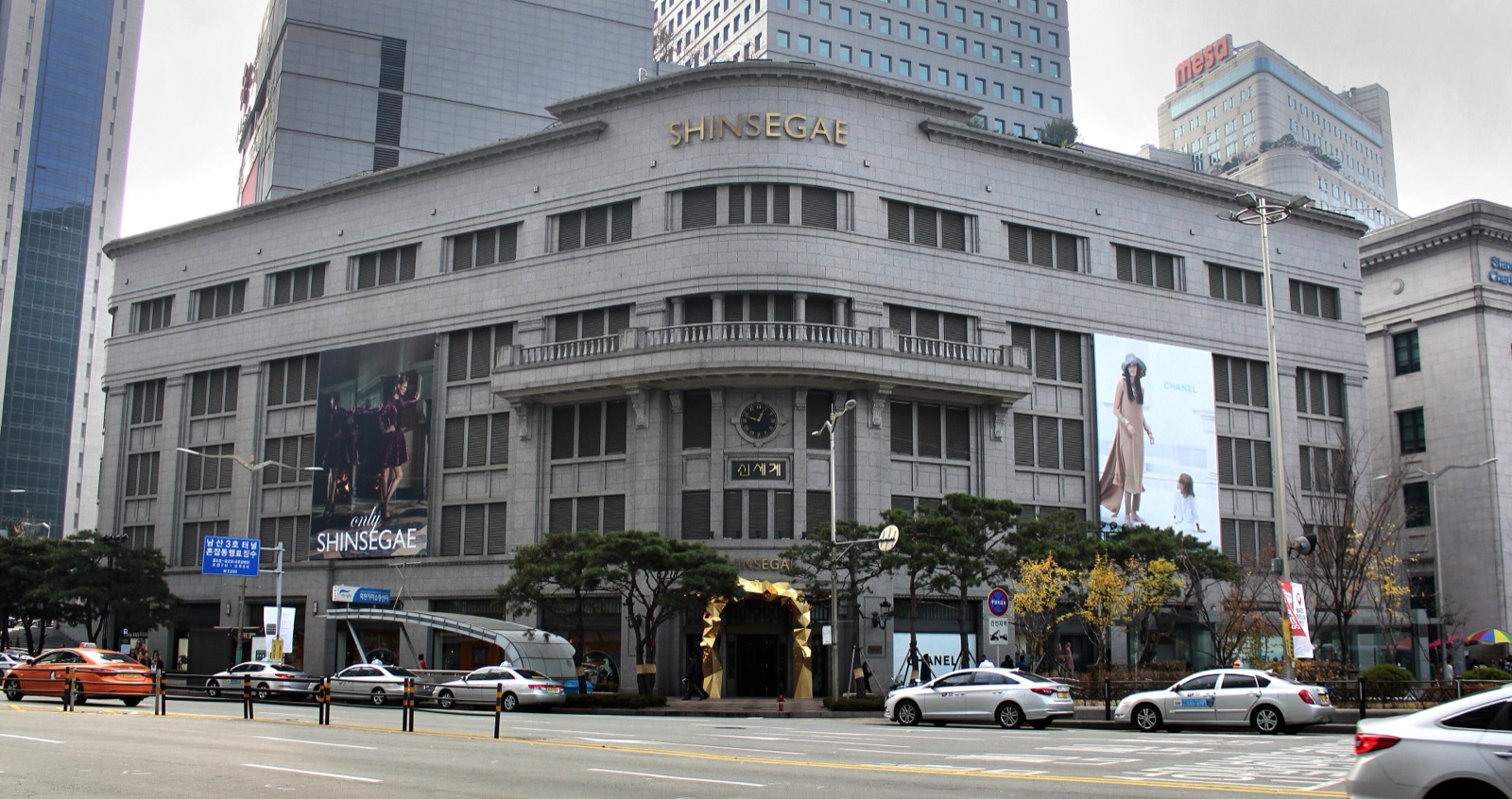
British label Margaret Howell opens its first store in Korea on September 22, inside Shinsegae Department Store's main branch in Seoul. The door is being opened by Samsung C&T's fashion division, and the brand's ultimate parent is a clothing company listed in Tokyo. The London company posted a loss in its last financial year, while the brand sells far more in Japan.
1.Margaret Howell will open its first Korean store at Shinsegae Department Store's main branch in Seoul on September 22, according to the American fashion trade paper WWD. The store is being opened not by the brand but by Samsung C&T's fashion division. As exclusive distributor for the main line and the casual line MHL, it plans to widen distribution across department store doors, its own multibrand chain Beaker and its SSF online store. Store size and Korean retail prices have not been released ahead of the opening.
2.The owner of this British brand is not in Britain. The company that designer Margaret Howell started with shirts in 1970 signed a licensing deal in 1981 with the Tokyo clothing company Anglobal, and opened its first Japanese store in Tokyo's Aoyama in 1983. In 1990 it sold a majority stake to Anglobal. The ultimate parent named by the London company itself is TSI Holdings, listed on the Tokyo Stock Exchange. One Seoul store ties together a British brand, a Japanese owner and a Korean distributor.
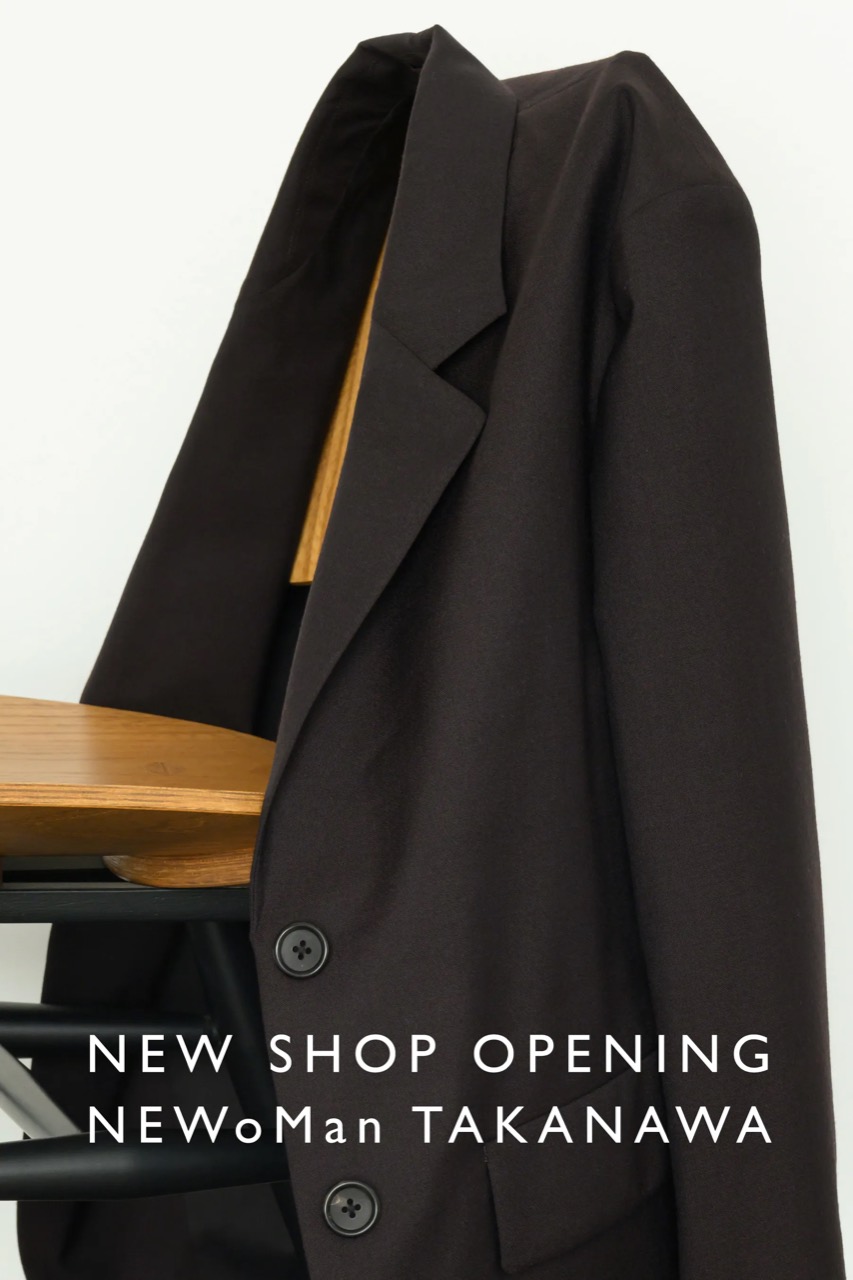
3.In Japan the brand has been opening stores that go beyond a clothing shop. The store that opened in March 2025 on the first floor of the south building at Grand Green Osaka carries menswear, womenswear, MHL and home products such as furniture, with a cafe attached. In September it opened a store at NEWoMan Takanawa's third floor with the cafe that has the most seats in Japan. Will the Shinsegae store get a cafe too? That has not been announced.
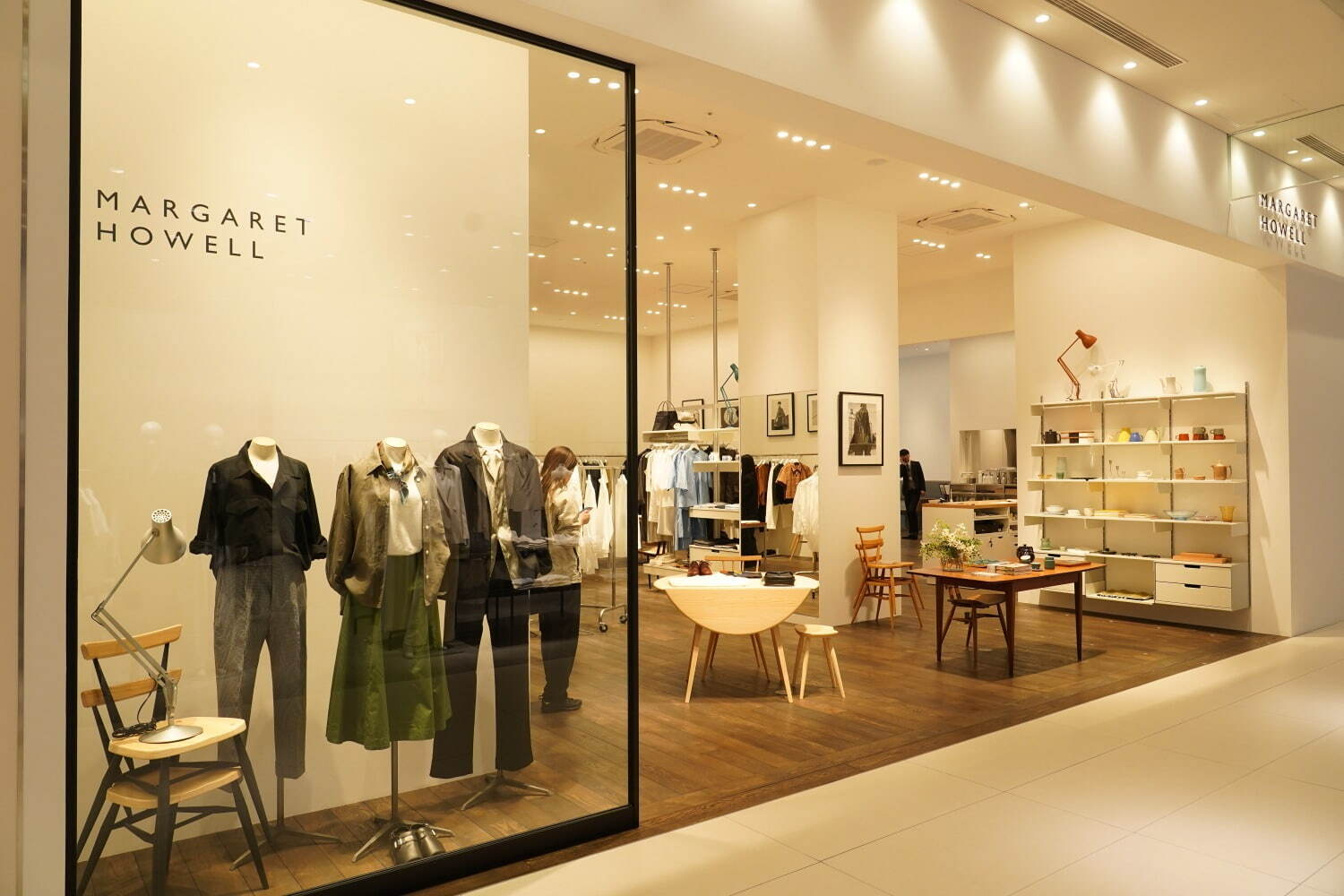
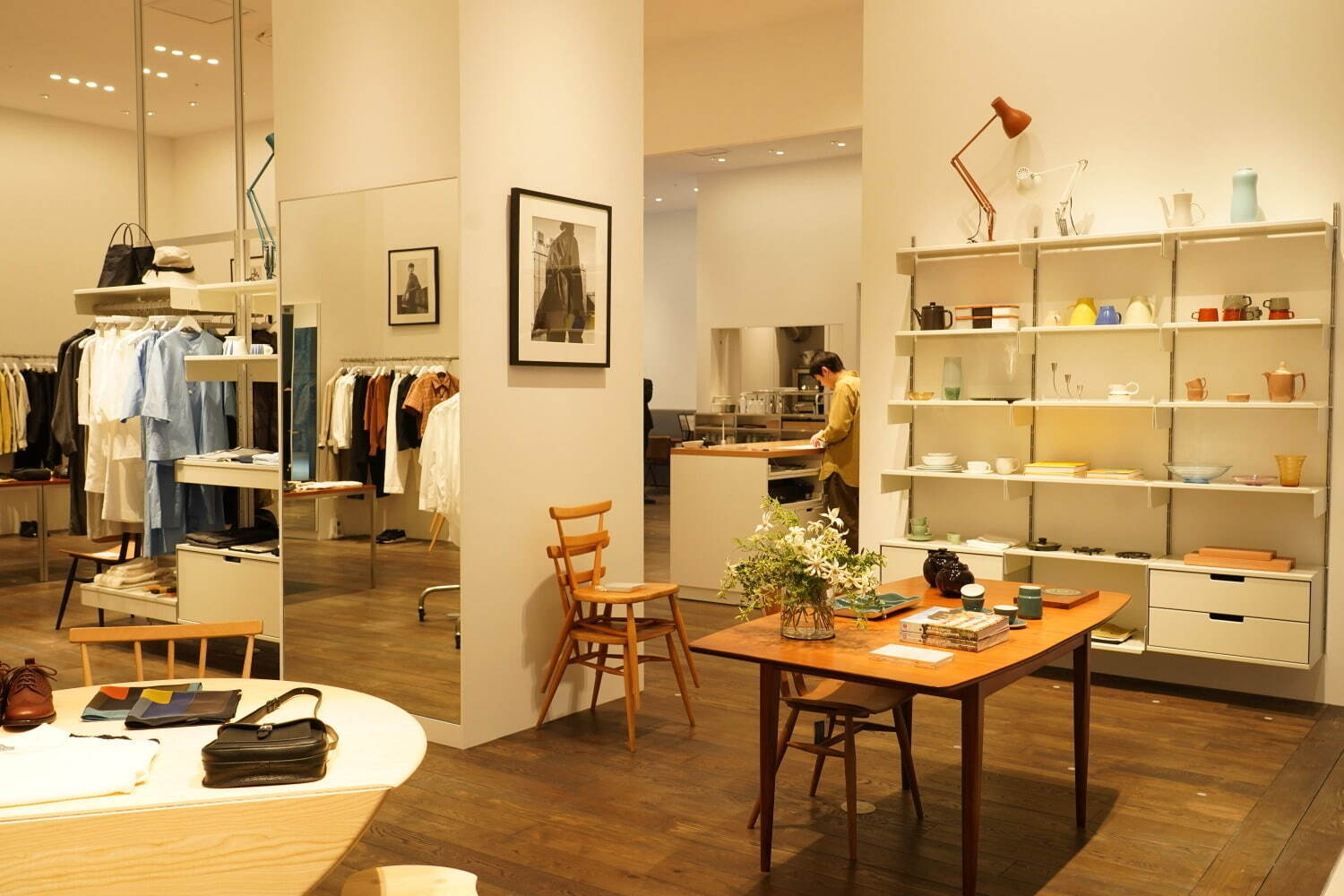
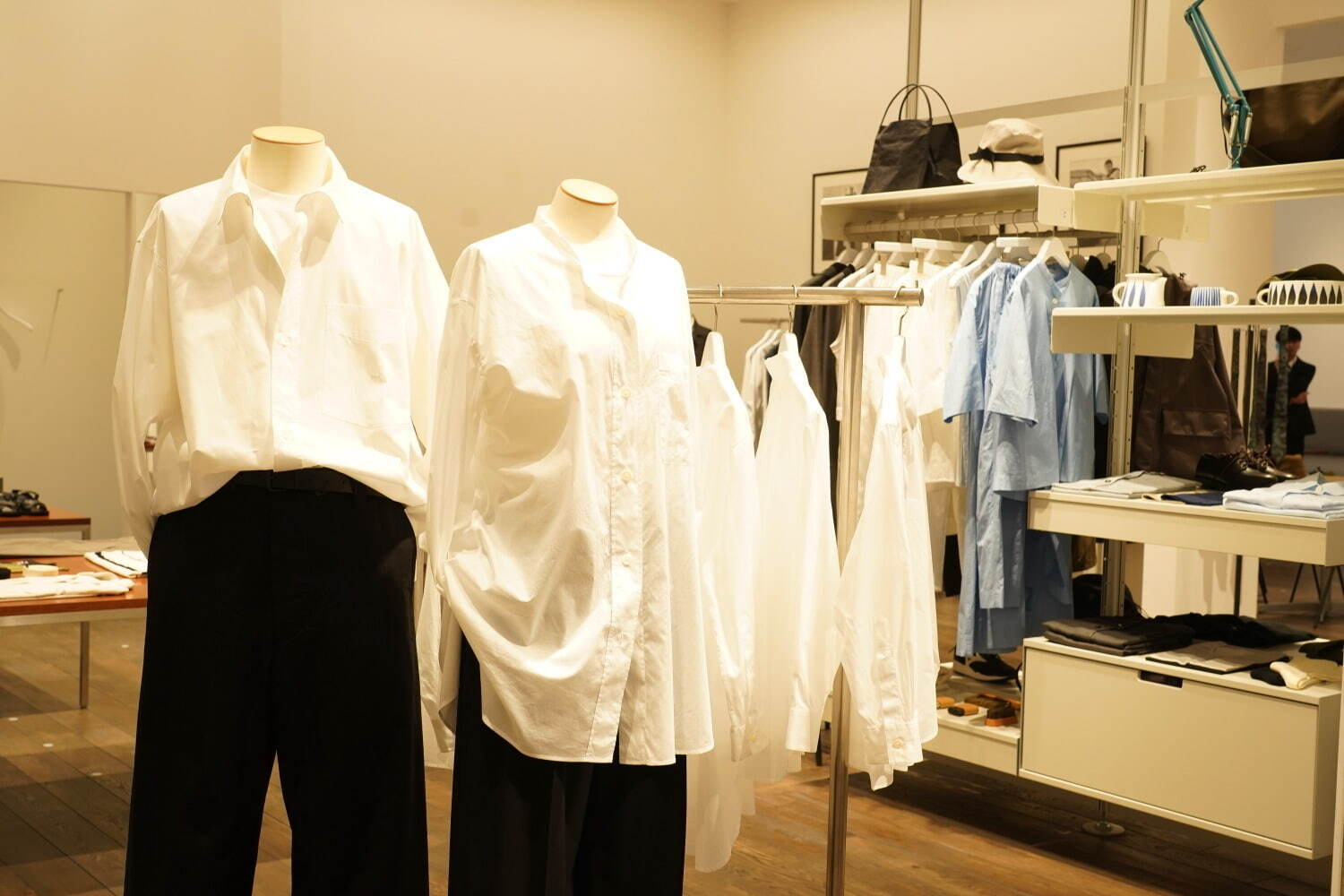
4.The Osaka store pairs white walls with a dark timber floor. On white shelves fixed to the wall, cups and bowls in a range of colours stand in rows, and over a wooden table in the middle an angled desk lamp bows its head. A few black-and-white photographs hang on the wall. The rails hold little besides logo-free white shirts and black trousers. It is less a room for selling clothes than a living room where the wardrobe takes up one wall.
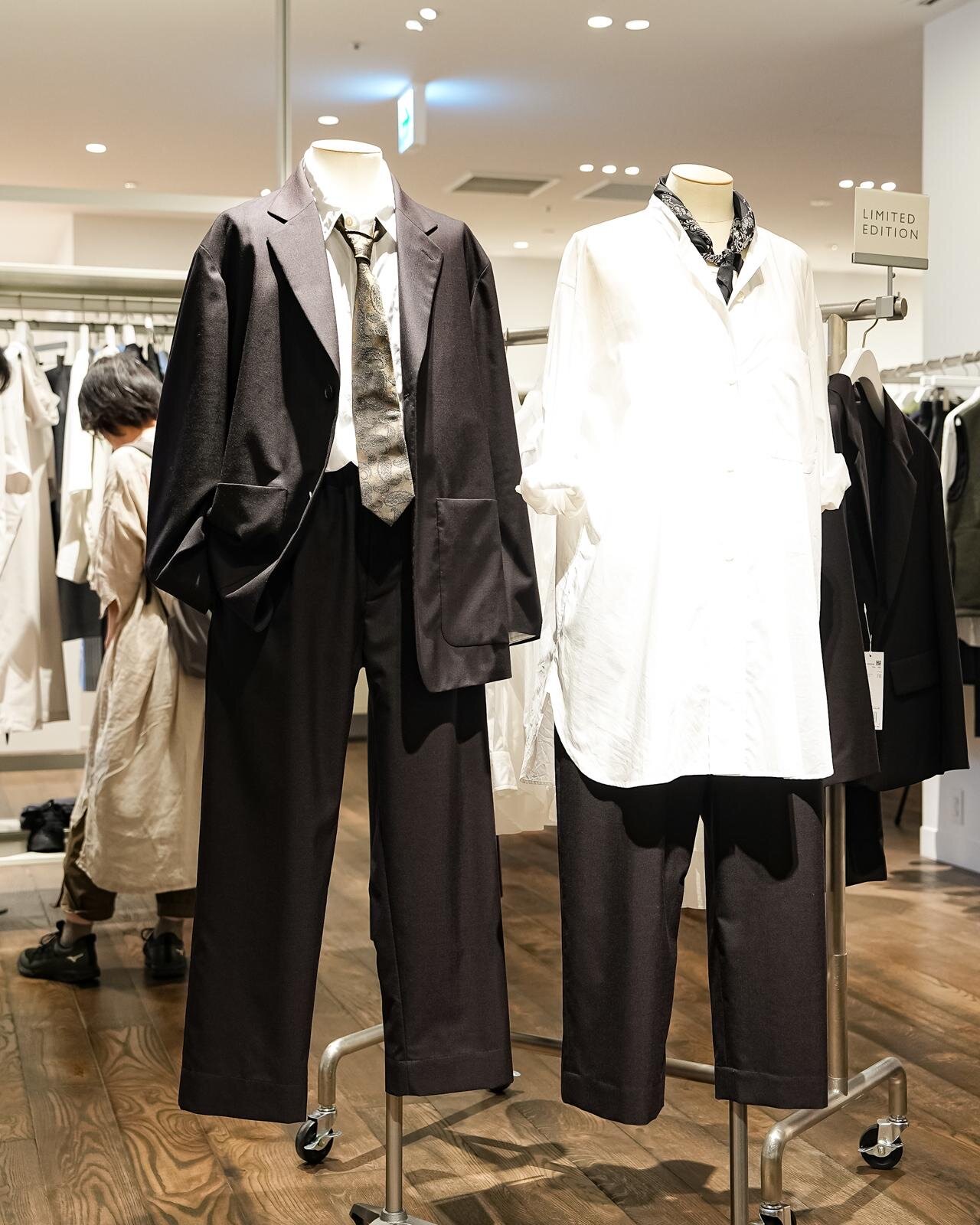
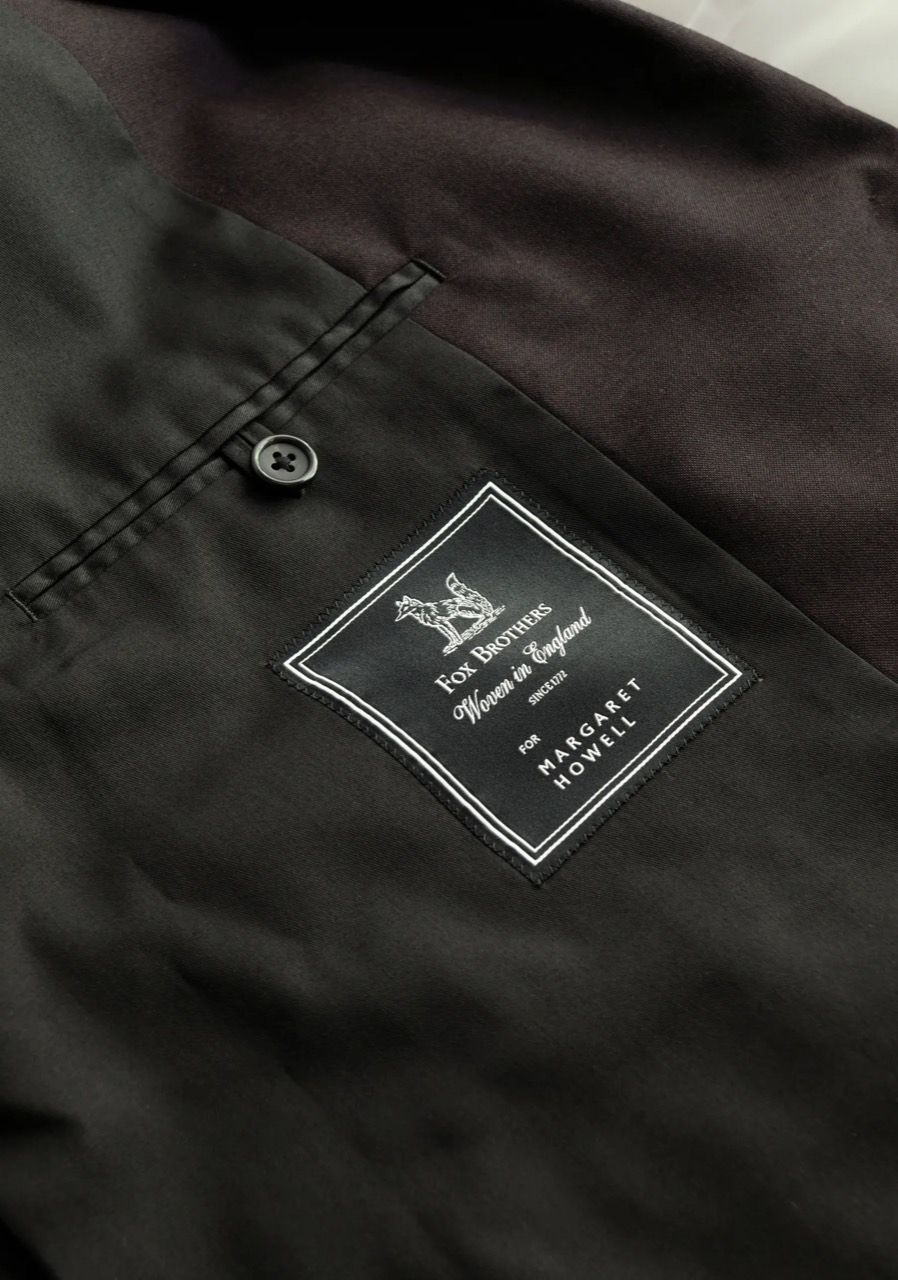
5.The cloth gets named before the clothes. The limited-edition jacket made for the Takanawa opening is cut from summer wool by the English weaver Fox Brothers, and the inside label carries both company names side by side. The men's jacket costs 110,000 yen (about 1.02 million won). What explains that price is less the shape than who wove the cloth.
6.People pay 300,000 won for a logo-free shirt because of how slowly the clothes age. In a 2013 interview with the British press, the designer herself put her stable sales down to never changing policy whatever the economy was doing. Since the shapes do not flip every season, a shirt bought years ago and trousers bought this year still sit well in the same wardrobe. The faster trend clothes lose their value, the less expensive a price tag for long-lasting clothes looks.
7.The cafe brings in people with no plan to buy clothes. A coffee and a slice of cake cost far less than a shirt, and while they sit, customers drink from cups the brand chose and lean back in chairs the brand chose. Clothes get bought once or twice a season, but a cafe gets visited several times a month. The cafe keeps the visits coming; the bulk of revenue still comes from clothing.


8.Samsung C&T has done this before. About 30 imported brands bring in roughly 30% of its fashion division's revenue (Apparel News, 2024). Near the top of its own online store sit Ami, Maison Kitsuné and Lemaire. This is a company that has already grown an imported label that does not lead with a logo. In 2025 the fashion division booked revenue of 2.02 trillion won and operating profit of 123 billion won, down 28% on the year.
9.The London company's accounts for the year to February 2025 are not in the black. Group sales rose 0.5% to £18.31 million (about 33.9 billion won), and the operating loss was £1.08 million (about 2 billion won). Gross margin was a high 66%, but overheads such as salaries and rent came to £13.22 million, more than the gross profit.
10.In the same accounts, design and royalty income fell 6% to £3.9 million (about 7.2 billion won). What about Japan? Japanese media figures drawn from TSI Holdings materials put the brand's sales at 12.8 billion yen (about 119 billion won) for the year to February 2023. The years differ, so a direct comparison does not hold, but more than three times the London company's total sales comes out of stores in Japan.
11.Prices are similar in the two countries. The basic shirt costs £175 (about 320,000 won) on the official UK online store, and in Japan a shirt made with a partner company went on sale at 33,000 yen (about 310,000 won) on that partner's online store and sold out in a day (Senken Shimbun). In Seoul, customs duty and the department store's commission get added on top of the import price. The Fair Trade Commission's published effective commission rate for department stores sits around 20%, so Korean prices are likely to land above both countries (estimate).
12.Store numbers tilt the balance further. In a 2013 article carried by the UK government, Japan had 94 stores against 4 stores and 1 outlet in Britain. The 2025 accounts say that shops, concessions and online together exceed 80 across the UK, Japan, France and Italy. In the last financial year the Dublin and York stores closed.
13.In the early 1980s British designers went into Japan all at once. In the same interview, Margaret Howell said many British designers were taken up by Japan around that time, and that expansion goes wrong without careful control. As of 2013, Paul Smith had more than 200 stores in Japan, Cath Kidston 30 and Anya Hindmarch 25.
14.This is a case where the licensee bought the licensor. London designs the collections and collects fees, but London's owner sits in Tokyo. Samsung C&T keeps whatever profit the Seoul store makes, and the cost of the imported clothes flows back to the brand side. Whether the clothes coming to Korea will be the London collection or product planned in Japan has not been announced.
15.A British brand whose London company lost £1.08 million is opening its first Seoul store in a department store under a Japanese parent. For a Korean distributor growing a brand like this, the sticking point is the length of the contract. It can build a label from a Beaker shelf to standalone stores, but if the contract ends and the brand sets up its own Korean subsidiary, the stores and customer lists built up along the way leave the distributor's hands.