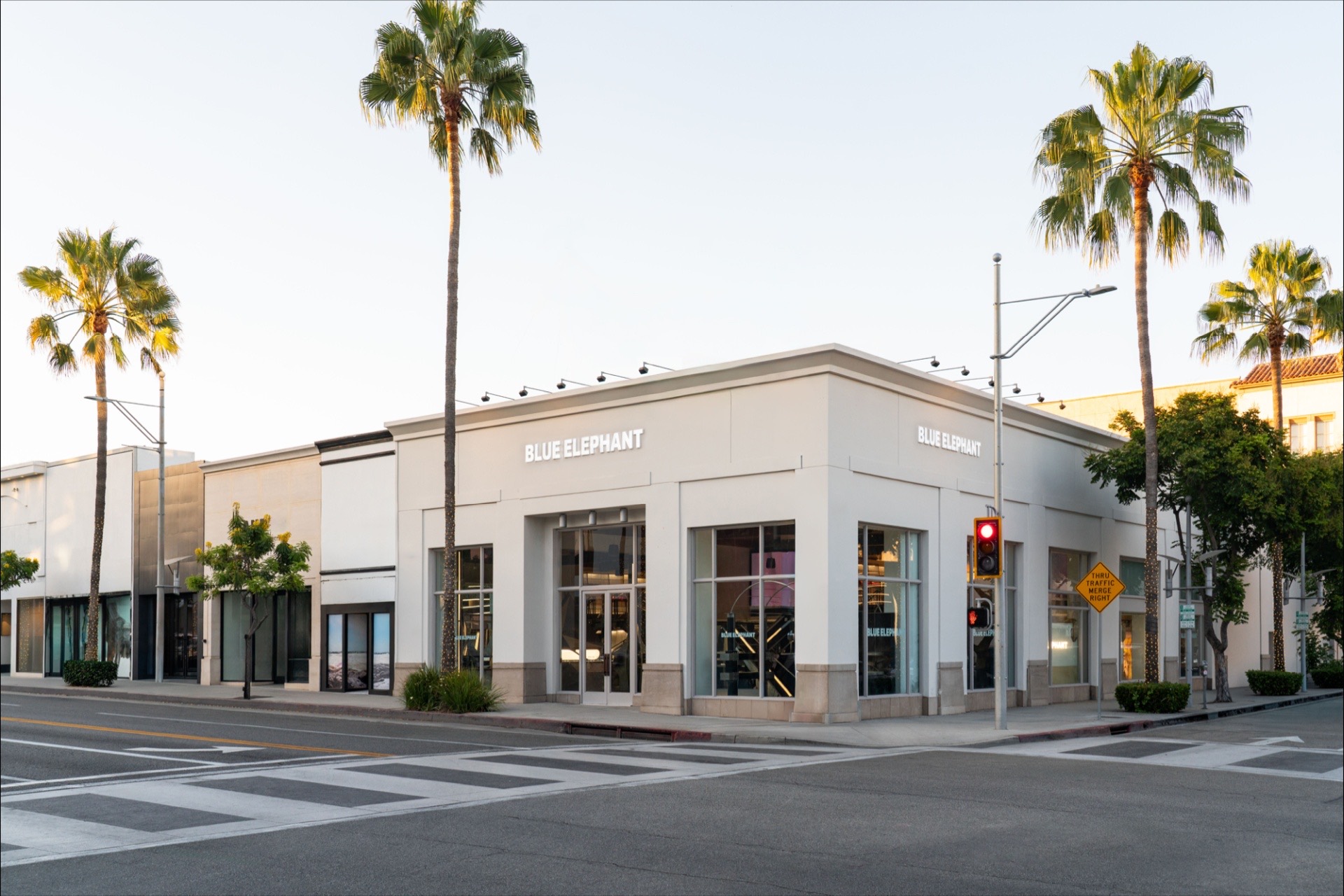
Korean eyewear brand Blue Elephant opened its first US store in Beverly Hills, Los Angeles, on August 13. A 1940s building once used by a furniture chain, 660㎡. Last year revenue rose 69% while operating profit fell 74%. Ten days before the doors opened, the company signed a KRW 100 billion investment deal with a private equity firm.
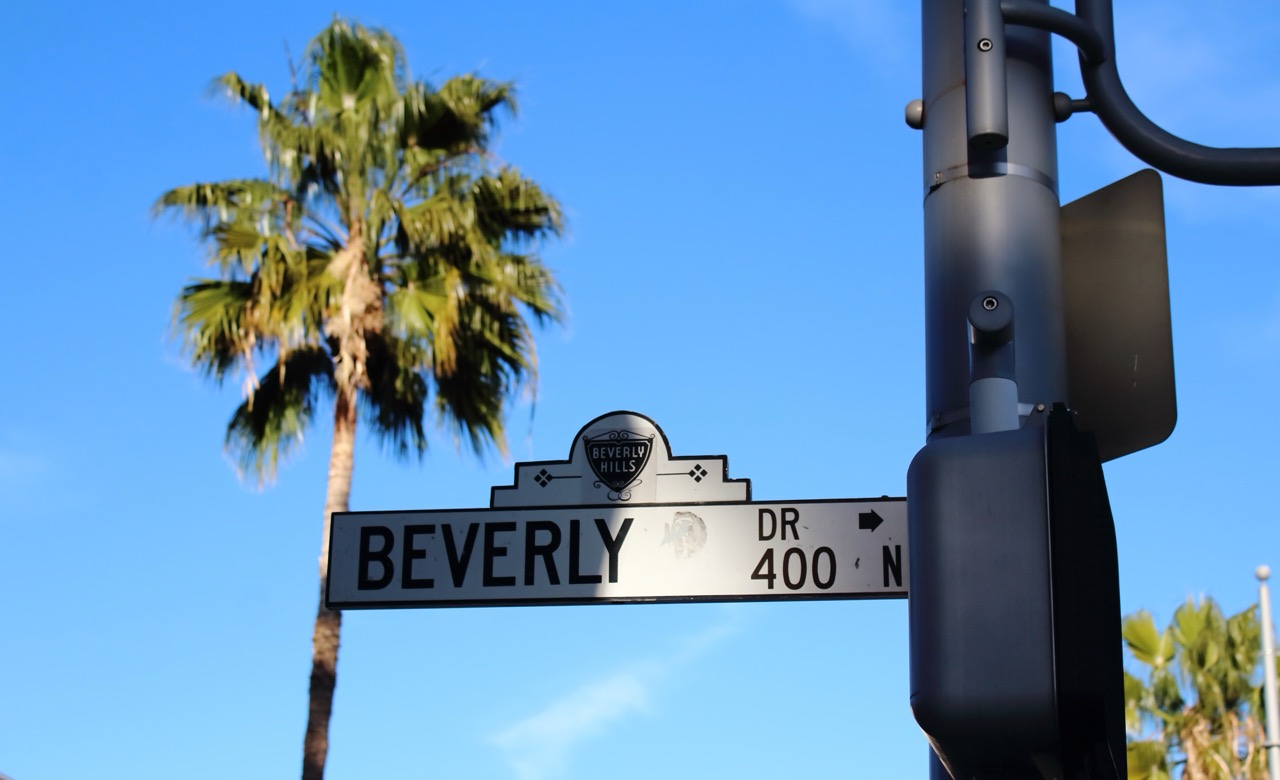
1.Blue Elephant opened its first US store at 300 North Beverly Drive on August 13. The building dates from the 1940s, and the space was previously home to the furniture chain Pottery Barn. It measures 660㎡, a little under 200 pyeong. The brand started in Seoul in 2019, and this is its third country after Korea and Japan; The Korea Herald reported that the store brings its count to 35.
2.The price tags carry the same numbers as in Seoul. Frames that sell for KRW 49,900 and KRW 69,900 in Korea sell here for $49.90 and $69.90. At KRW 1,400 to the dollar that is roughly KRW 70,000 and KRW 98,000, so the company only swapped the currency sign, yet in won terms the price goes up 40%. The LA Exclusive collection of 10 models, sold only at this store, sits at the same two price points. The company says the shapes were drawn from California beaches, the Hollywood sign and the palm-lined streets of Beverly Hills.
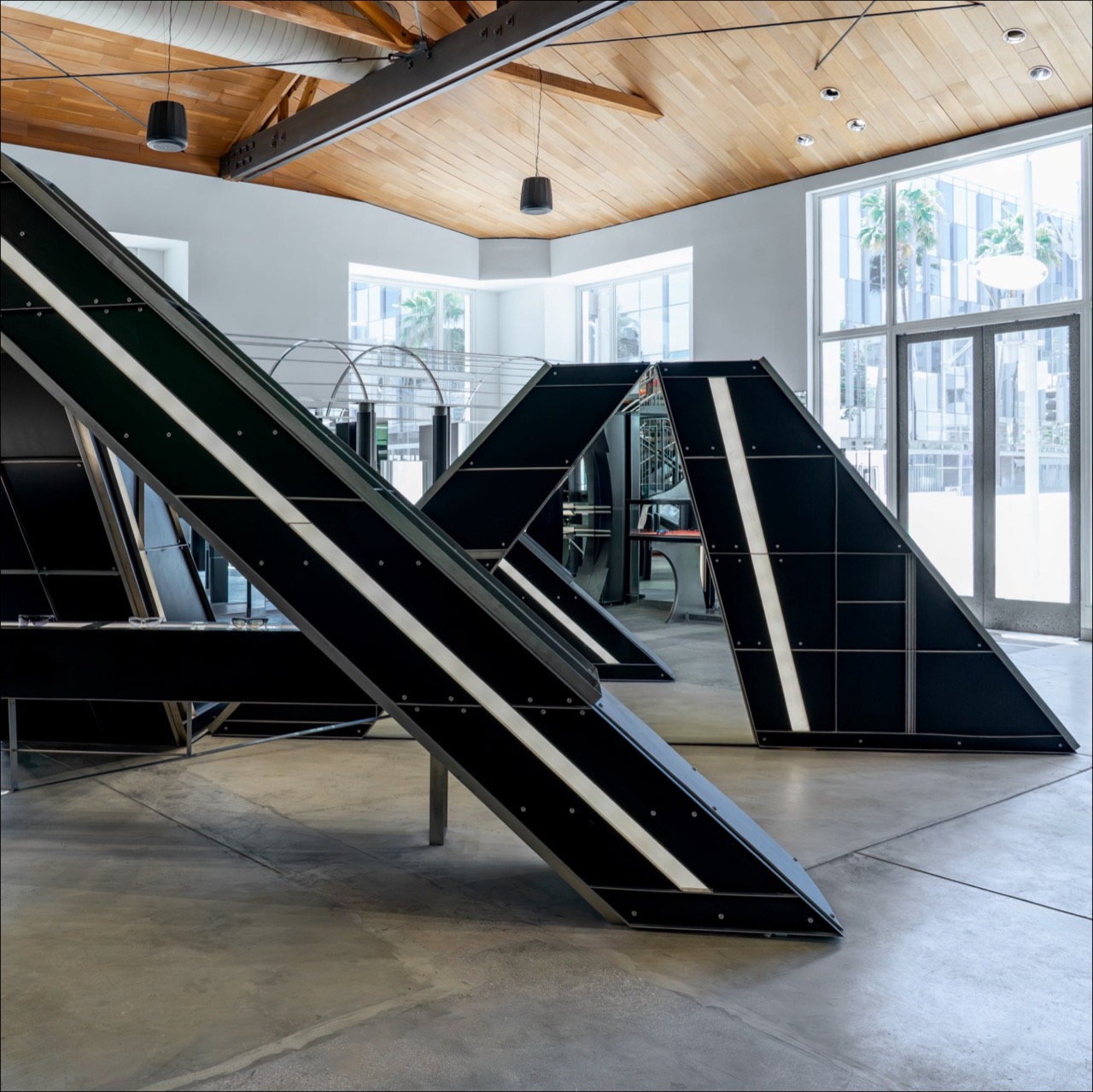
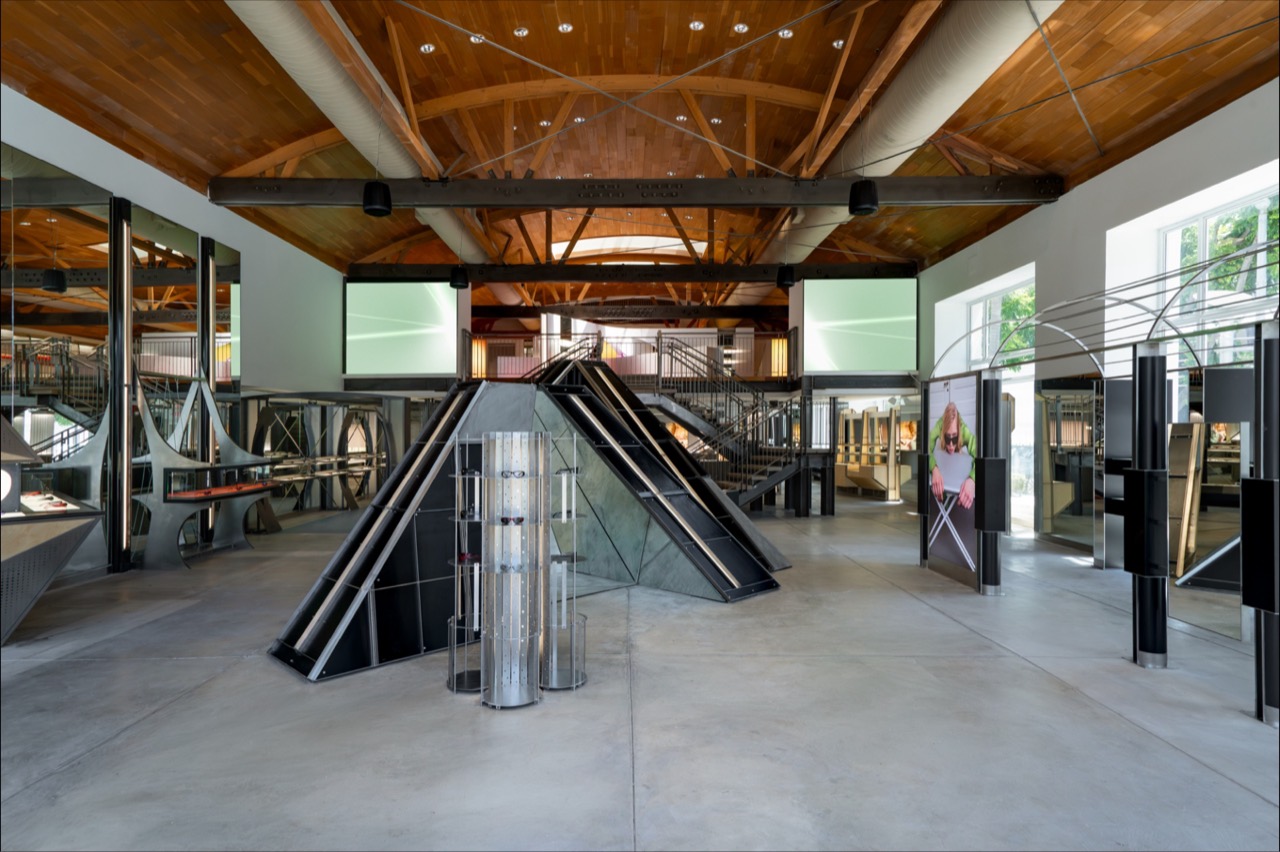
3.The bones of the building were kept. A timber-clad bowstring truss spans the ceiling, and beneath it a single polished concrete floor runs from end to end. In the middle of the ground floor, a giant black sculpture shaped as the letters L and A doubles as a display, and further in, a row of arches forms a passage that walks you along the frames. The design was done in-house, with no outside studio.
4.The mezzanine upstairs is another world. Red carpet covers the entire floor, and several curved white walls stand layered against one another. Footsteps that rang on the concrete go quiet in the carpet once you reach the top of the stairs. Light from the skylights lands on the red floor in squares. Each wall holds only a few frames, so to see the next one you have to walk around the wall.
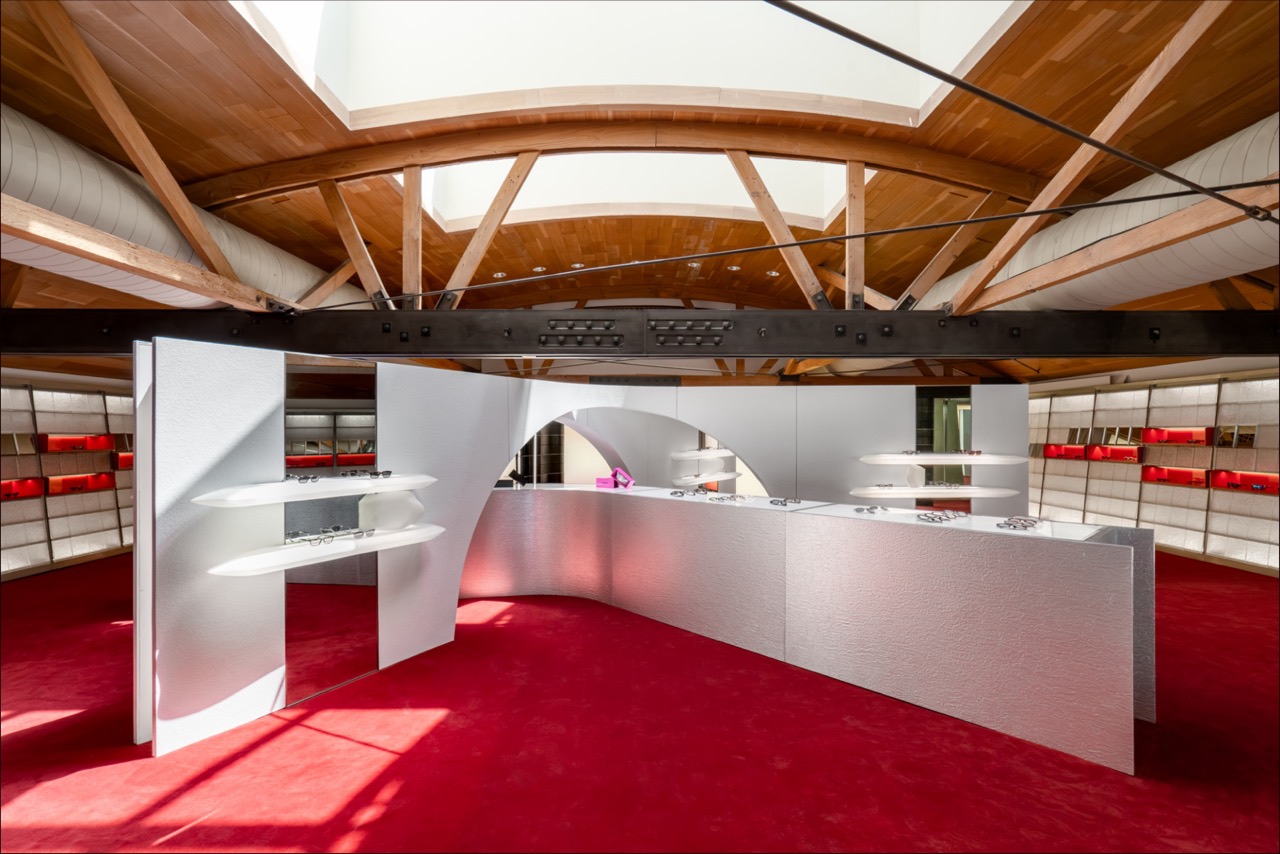
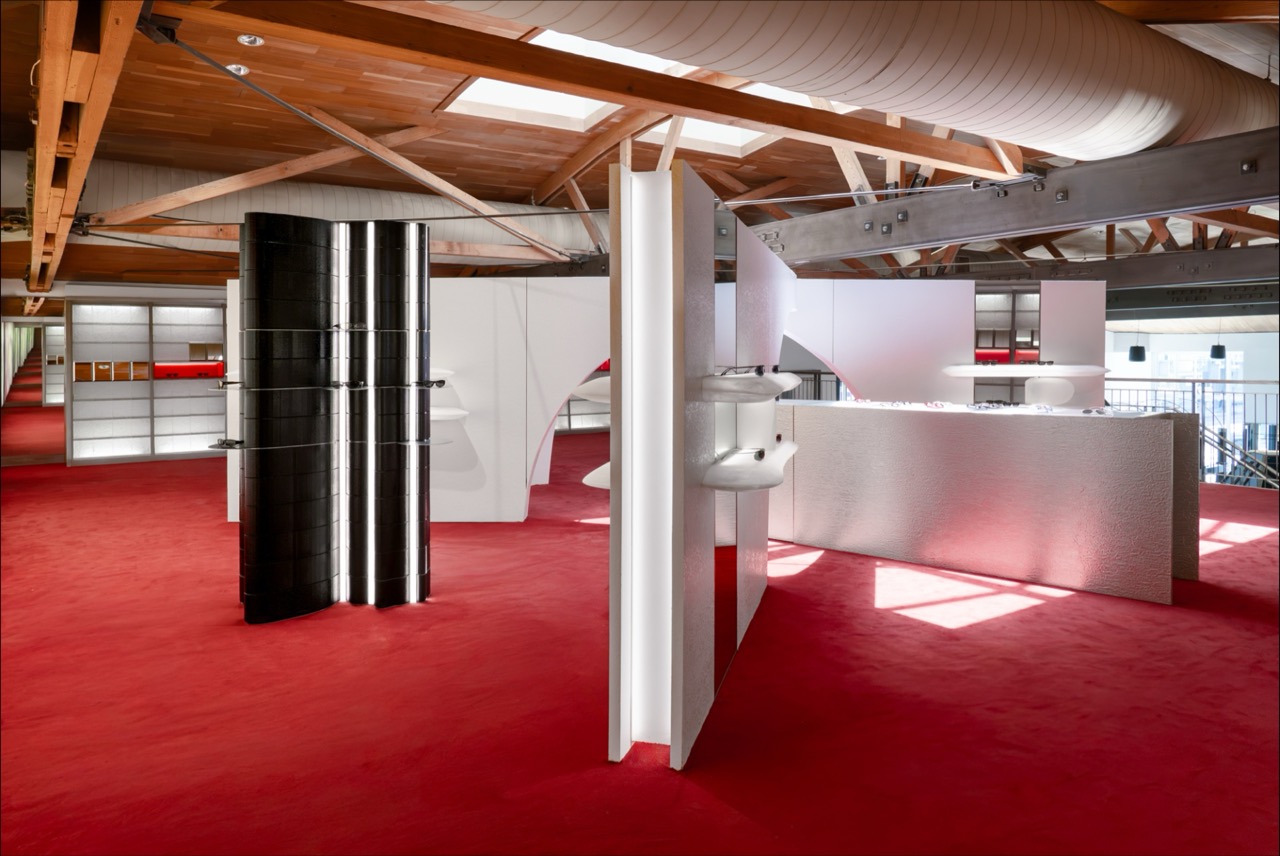
5.The company calls its approach of redesigning the store for each city Space 2.0: it reads the architecture and culture of the host city and builds the space anew. In Tokyo, its Harajuku and Shinjuku stores built word of mouth on their gallery-like layouts. In Beverly Hills, the truss roof and the LA letters do that job.
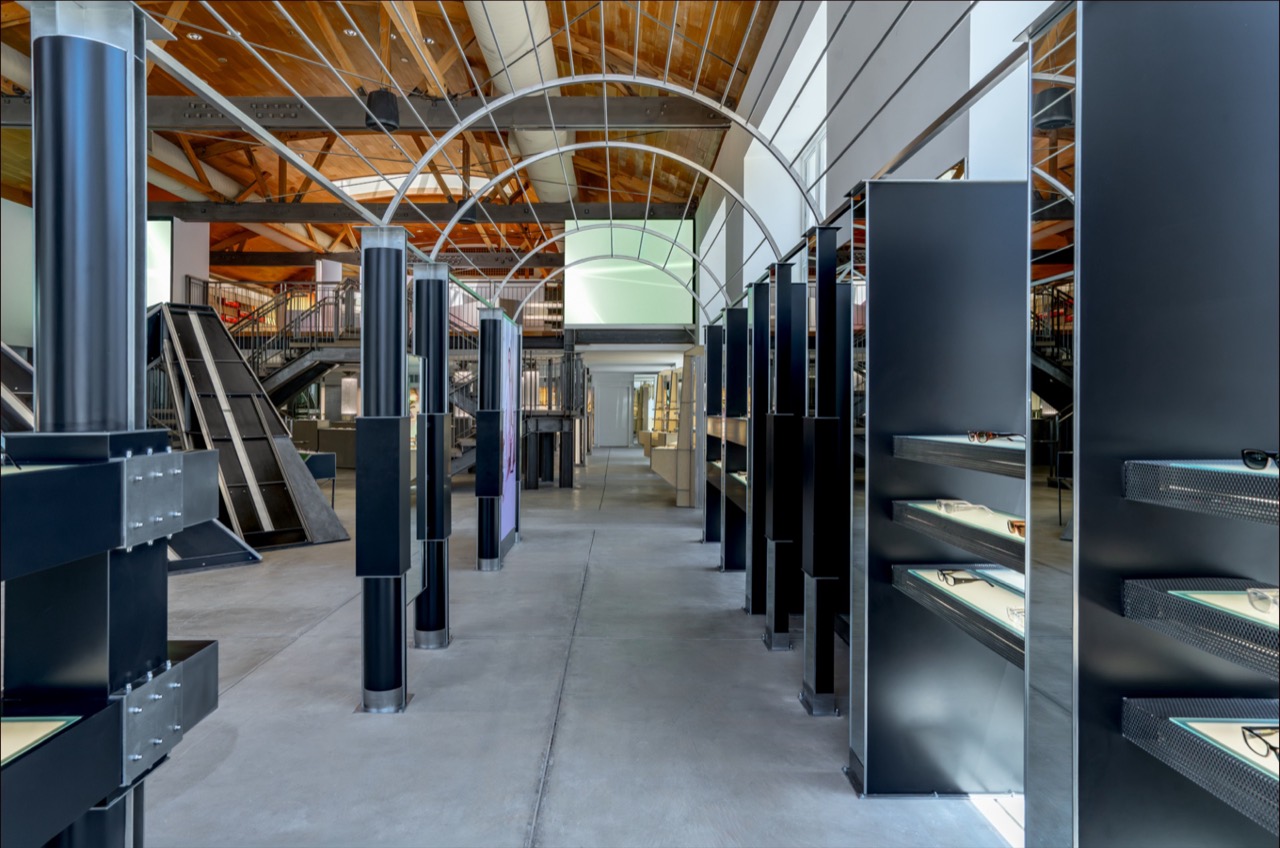
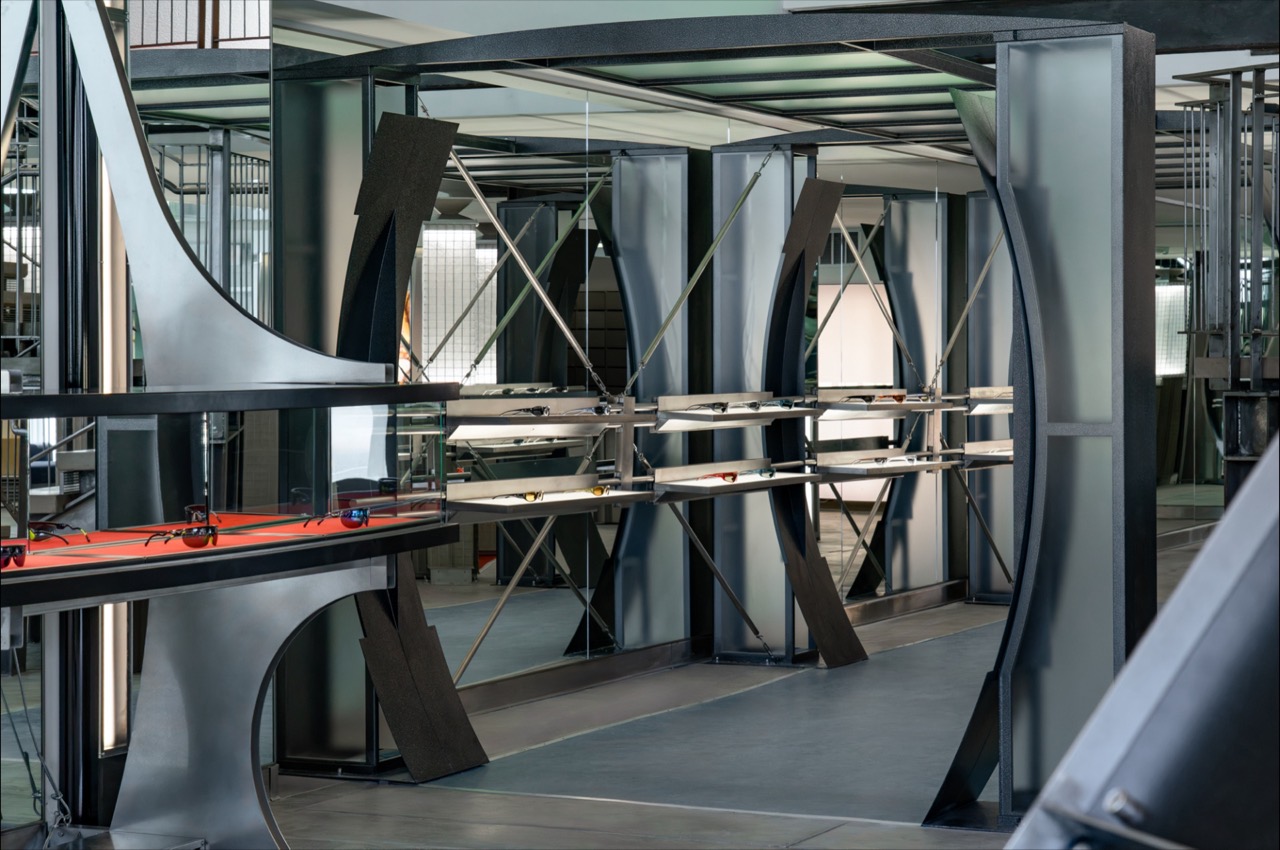
6.For someone who walks in to buy a KRW 50,000 frame, 200 pyeong is not a bonus. Glasses are worn on the face and judged in a mirror, so the time spent in the store becomes the reason to buy, and a photo taken in front of the mirror becomes an ad. When the price is low, it is easy to pick up two or three frames in different colors at once. The wider the gap between the cheap product and the expensive space, the more customers leave feeling they got a deal.
7.The company says it will use the store as a base for developing products suited to American shoppers and for cultural events. A Korean brand now has a place to study local face shapes and tastes firsthand. Warby Parker, which holds the low end of the US eyewear market, sells glasses with prescription lenses from $95. Blue Elephant's price tags sit below that.
8.Revenue climbed from KRW 1.0 billion in 2022 to KRW 5.8 billion in 2023, KRW 30.0 billion in 2024 and KRW 50.7 billion in 2025. The best margin year was 2024, with operating profit of KRW 12.8 billion, or 42.7% of revenue. Last year operating profit fell 74% to KRW 3.3 billion, and the margin dropped to 6.6%.
9.The missing profit went into stores. SG&A rose from KRW 10.4 billion to KRW 35.0 billion; within it, rent went from KRW 1.2 billion to KRW 8.8 billion, interior costs from KRW 4.0 billion to KRW 14.5 billion, and advertising from KRW 2.5 billion to KRW 5.3 billion. Over the same period the store count nearly doubled, from 14 at the end of 2024 to 27, according to Bloter. The company attributes the lower margin to overseas expansion, new stores and investment in quality.
10.Inventory piled up too. Inventory assets grew from KRW 2.3 billion to KRW 6.3 billion, and inventory turnover fell from 5.8 to 2.8 times a year. The shortfall was covered with debt, in Dealsite's analysis. Short-term borrowings went from KRW 2.8 billion to KRW 33.7 billion, and the debt ratio stood at 307% at the end of last year. Operating cash flow was an inflow of KRW 12.4 billion in 2024 and an outflow of KRW 2.5 billion in 2025.
11.With those books in hand, the company signed a KRW 100 billion investment deal with Affirma Capital on August 3. KRW 75 billion goes in first, with an option to add KRW 25 billion within six months; fully exercised, the stake reaches up to 25.8%. The valuation recognized was about KRW 400 billion. The plan is to bring the debt ratio below 60% and expand stores and online sales in the US and Japan.
12.KRW 400 billion is 7.9 times last year's revenue, and 121 times last year's operating profit. Against the 2024 operating profit of KRW 12.8 billion, it is 31 times. What the investor priced was not last year's books but the expectation that margins can return to 2024 levels. For that to hold, the newly opened stores need to pay back their interior costs quickly, and the most expensive of them is Beverly Hills.
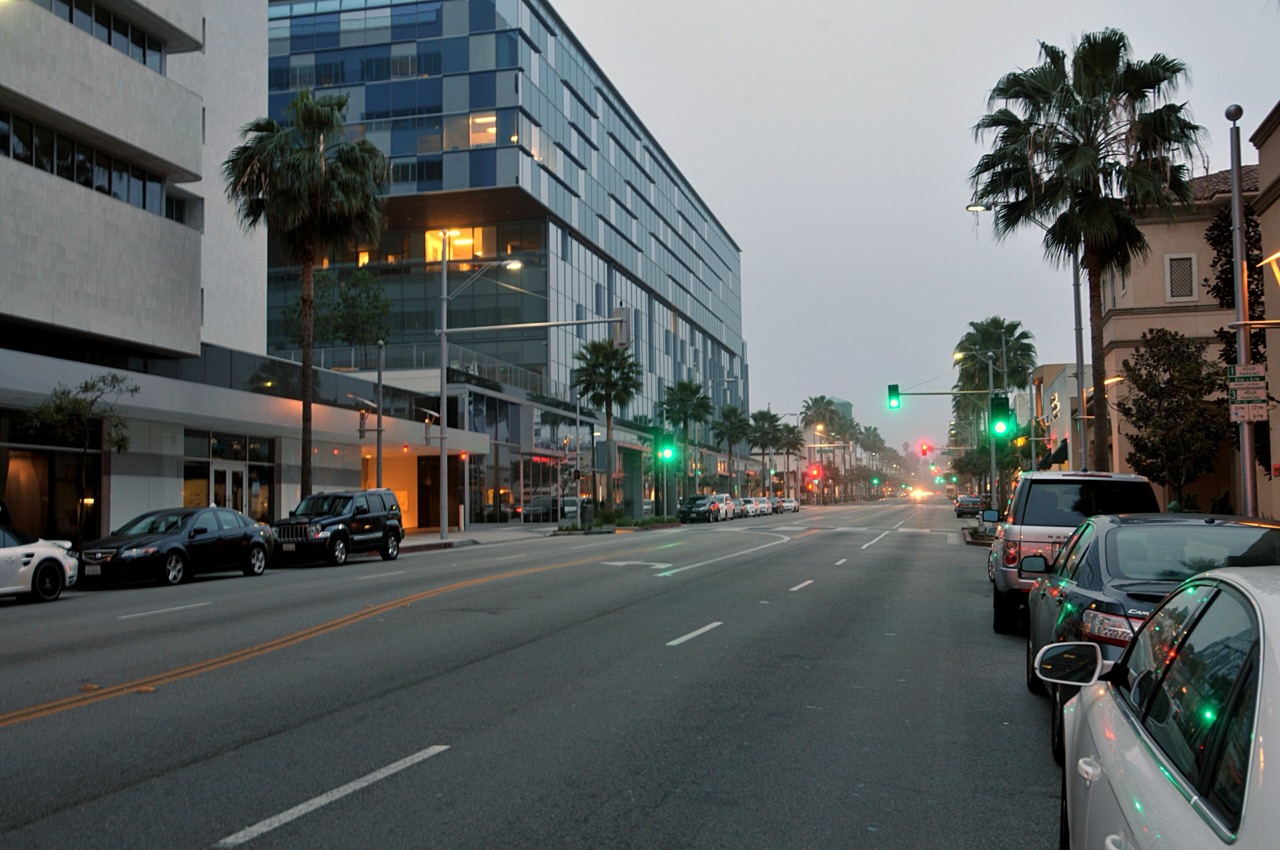
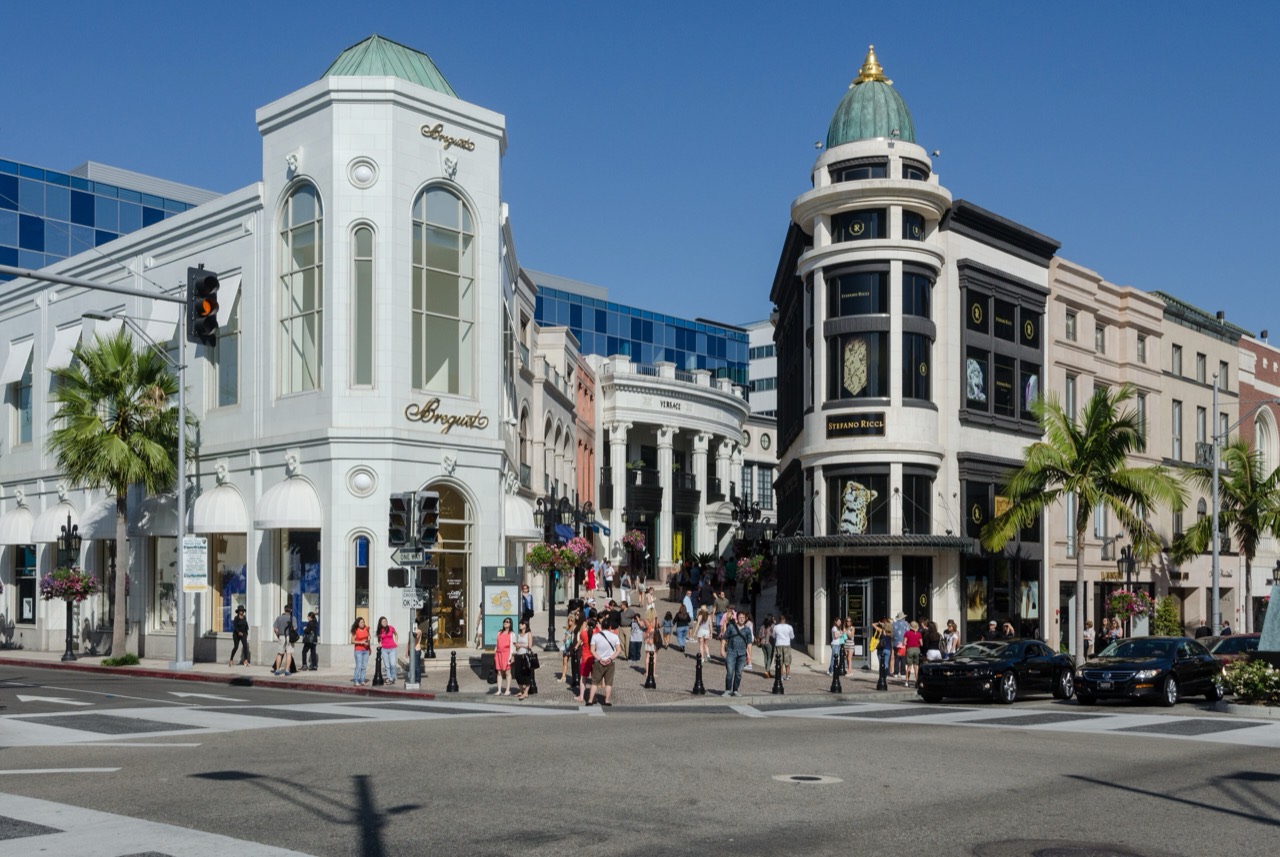
13.How much is the rent here? The company has not said. Taking street-level retail rent on North Beverly Drive at $100 to $150 per square foot a year, 660㎡ (7,104 sq ft) would cost KRW 1.0 billion to 1.5 billion a year (estimate). Dividing last year's total rent of KRW 8.8 billion across 27 stores gives a simple average of just over KRW 300 million each, so this one store equals three or four average stores.
14.To keep rent within 15% of sales, this store has to sell KRW 6.7 billion to 10 billion a year. In $69.90 frames (about KRW 98,000), that is 190 to 280 a day. Last year's revenue of KRW 50.7 billion divided by the store count gives an average of just over KRW 1.8 billion per store, so the math only works if this store sells four to five times the average (estimate). As a point of sale it is a heavy store; as a billboard that introduces the brand to America, the story changes.
15.Gentle Monster was the first Korean eyewear brand to build stores like galleries. Blue Elephant applied that approach to frames around KRW 50,000 and passed KRW 50 billion in revenue within six years. The two companies are now in civil and criminal litigation over alleged violations of Korea's Unfair Competition Prevention Act, and no ruling has been issued. In the US there is one more hurdle. Prescription glasses require an optometrist's prescription, and public sources do not confirm whether the Beverly Hills store fits prescription lenses.
16.The year after operating profit shrank to a quarter, Blue Elephant agreed to take KRW 100 billion and, ten days later, opened 200 pyeong in Beverly Hills. To carry its rent, the store has to sell more than 200 frames a day (estimate). For anyone in Korea who wants to sell cheap goods in expensive spaces, the first thing they run into is interior cost. A store rebuilt for every city has to earn back its fit-out within the lease term, and when the pace of opening stores outruns the pace of payback, revenue grows while profit shrinks, as this company's books showed last year.