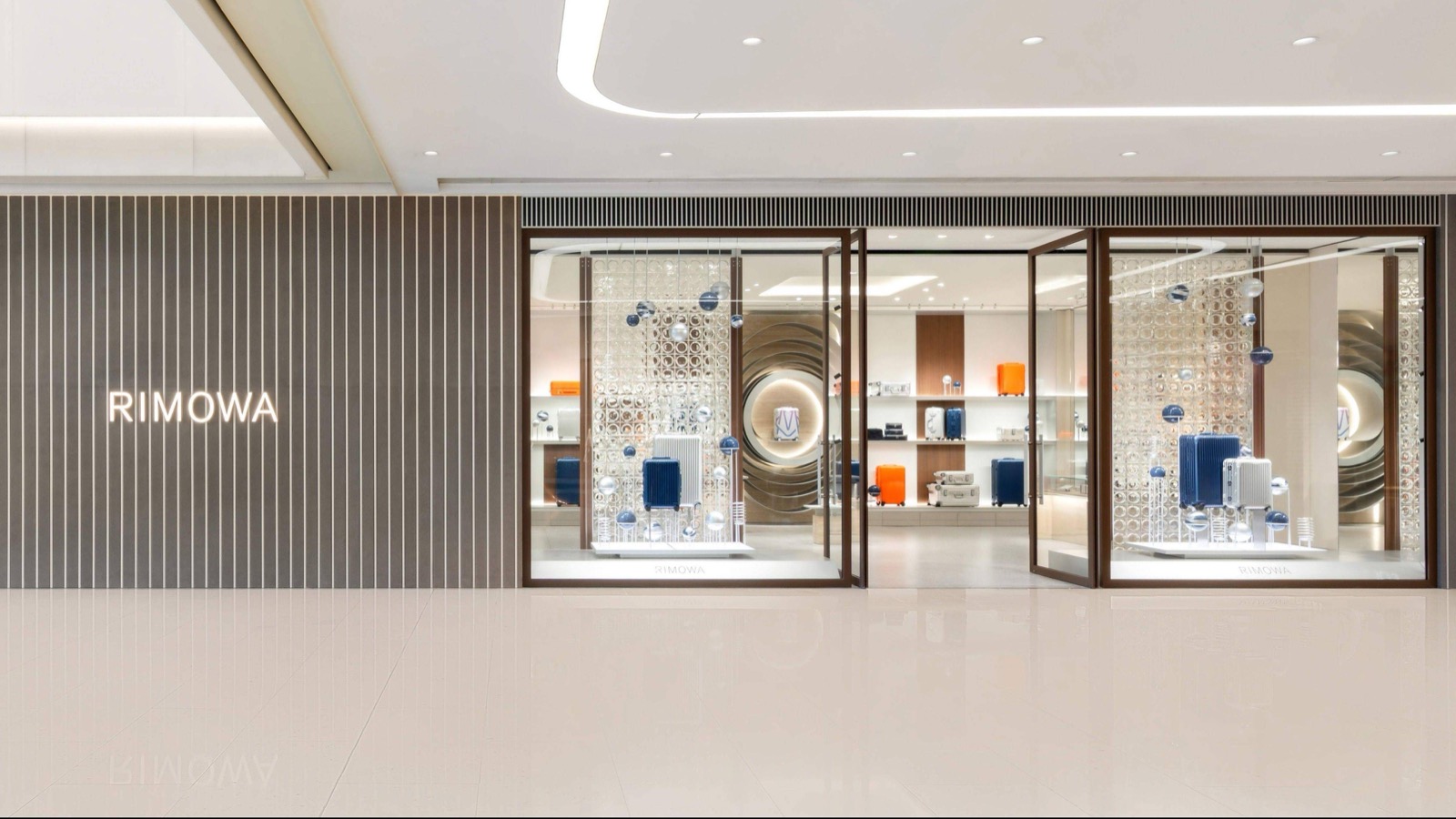
German luggage brand RIMOWA opened its first mainland China flagship at Shanghai's Jing An Kerry Centre and held the official launch on September 16. In a store of just over 200 sqm, the first thing it put forward was not a new product but a repair bench and a buyback of old cases. Bring in a used aluminium suitcase and you get a RMB 2,000 voucher.
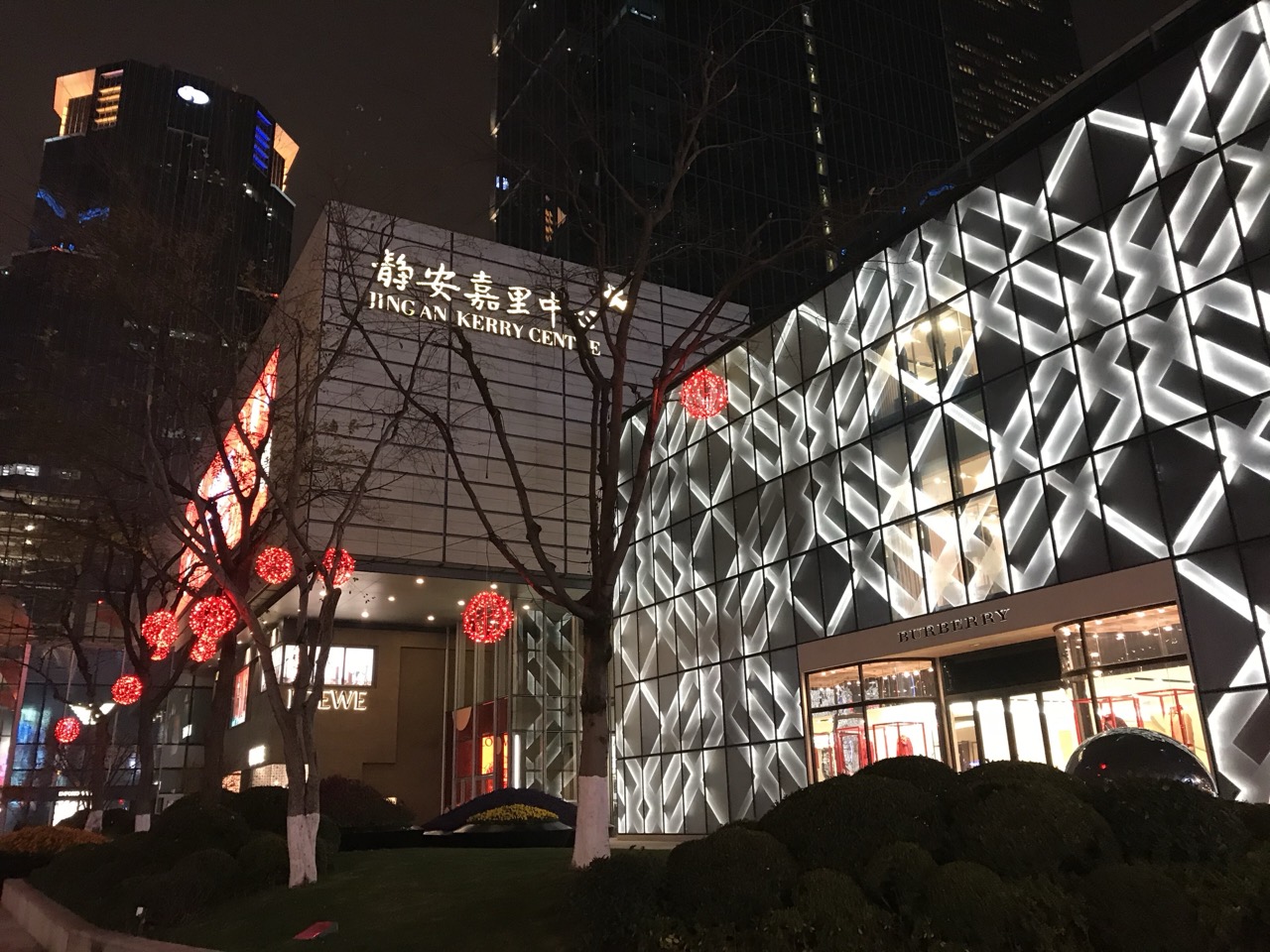
1.The store sits in unit N1-08 on the ground floor of the north zone of Jing An Kerry Centre on Nanjing West Road. It opened in late June, and on September 16 the brand brought in table tennis player Fan Zhendong and actor Greg Hsu for the launch event. The floor area is a little over 200 sqm. It is RIMOWA's first flagship in mainland China and its fifth store in Shanghai.
2.The company led with three services at the launch. A repair centre that handles more than 85% of repair requests inside the store, Re-Crafted, a buyback and resale programme making its China debut, and Crafted For You, where customers order a case with their own choice of size, fittings and colour. The buyback terms: bring in a used aluminium case and you receive a voucher worth RMB 2,000, about KRW 390,000. It can only be spent on purchases of RMB 4,000 or more, and each person can trade in two cases a year.
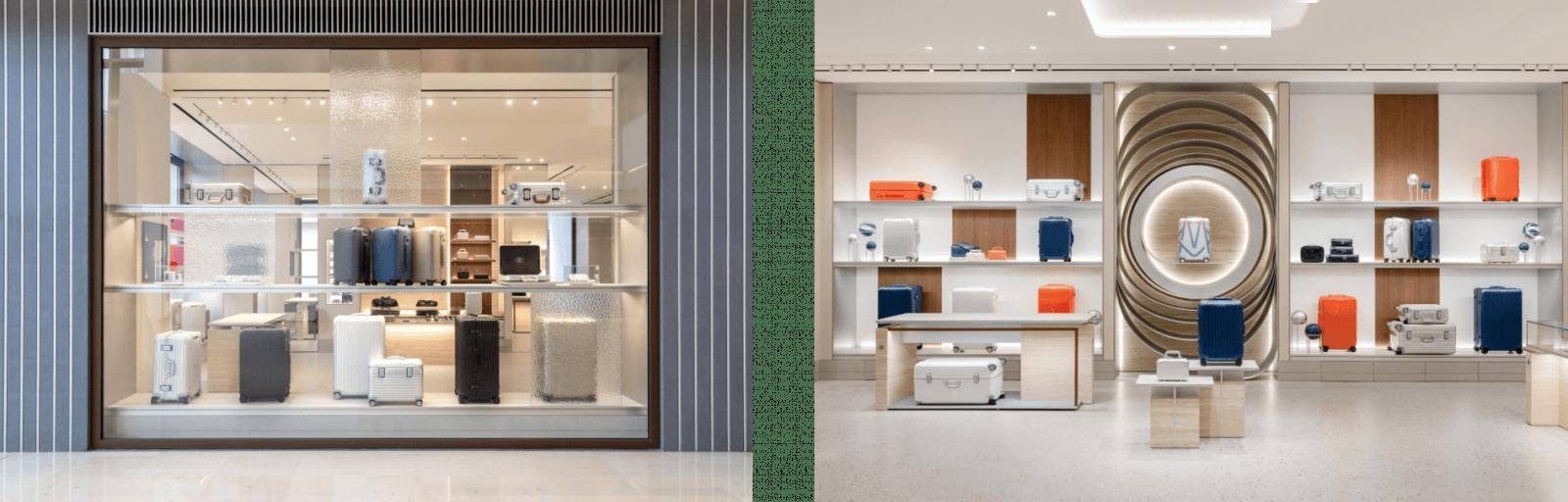
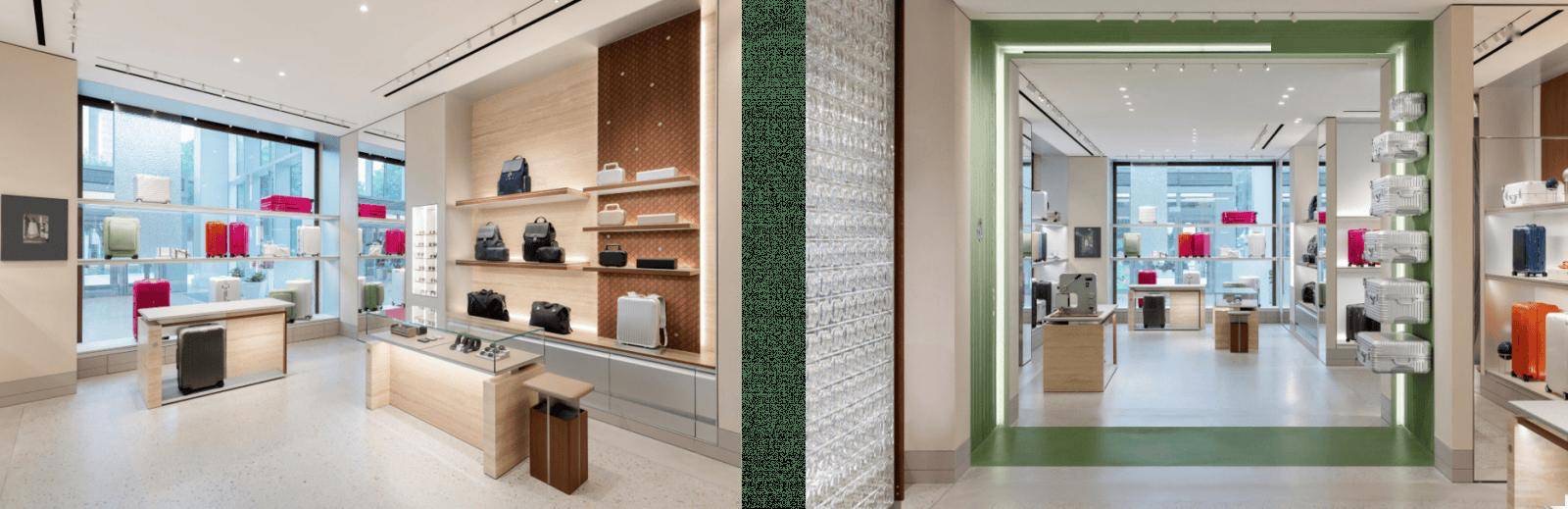
3.In the middle of the back wall stands an installation of aluminium bands wound into concentric rings. Inside the rings is a backlit stone panel, and on the shelf in front of it sits a single limited-edition case. White shelves on either side alternate orange and navy cases. Where the light lands, every groove in the aluminium picks up a thin line.
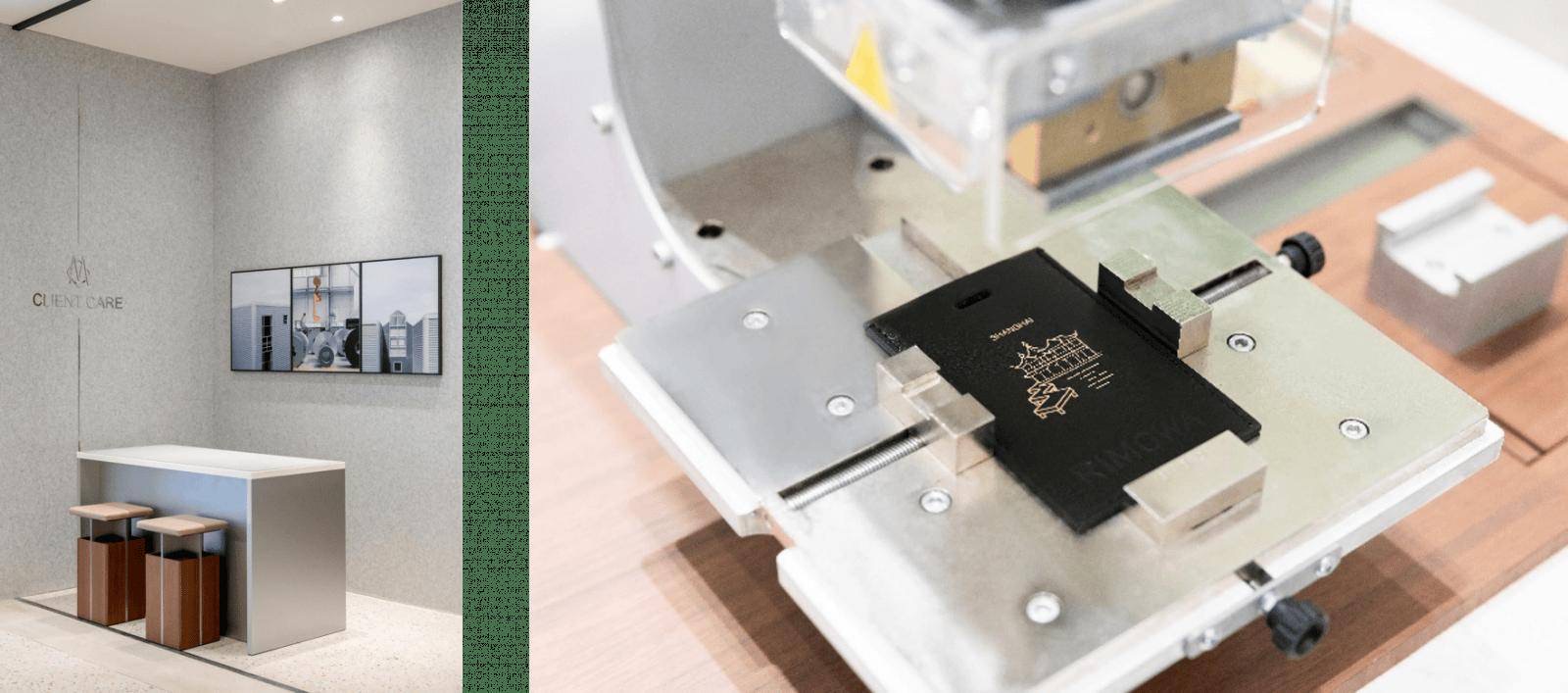
4.One corner is a grey wall with nothing on it but the words CLIENT CARE. A stainless steel counter, two wooden stools, three small screens on the wall. At the workbench next to it, black leather name tags are clamped into a metal jig and stamped with a gold pattern. Two patterns are available only here: one of Jing An Kerry Centre, the other of the Jiuqu Bridge in Yuyuan Garden.
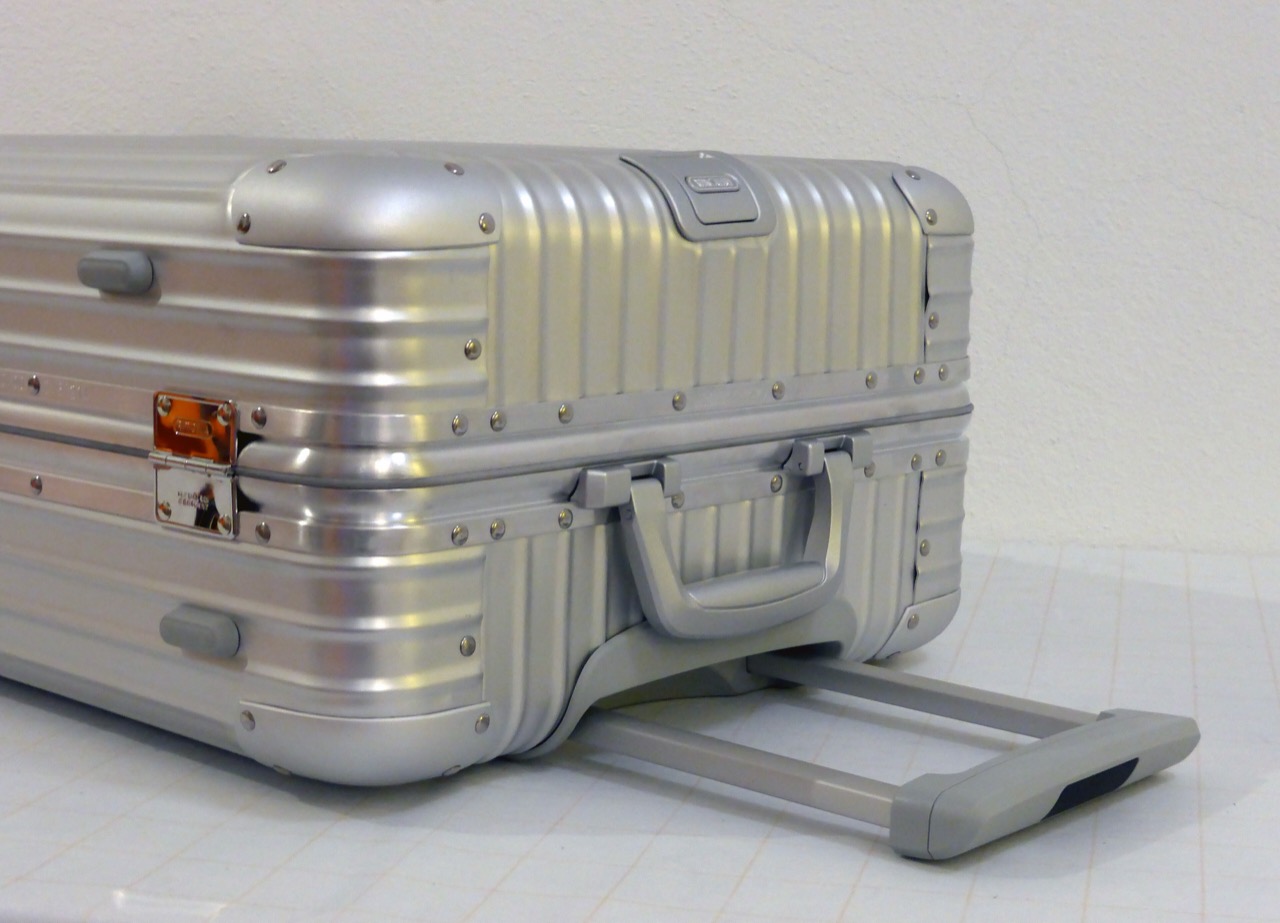
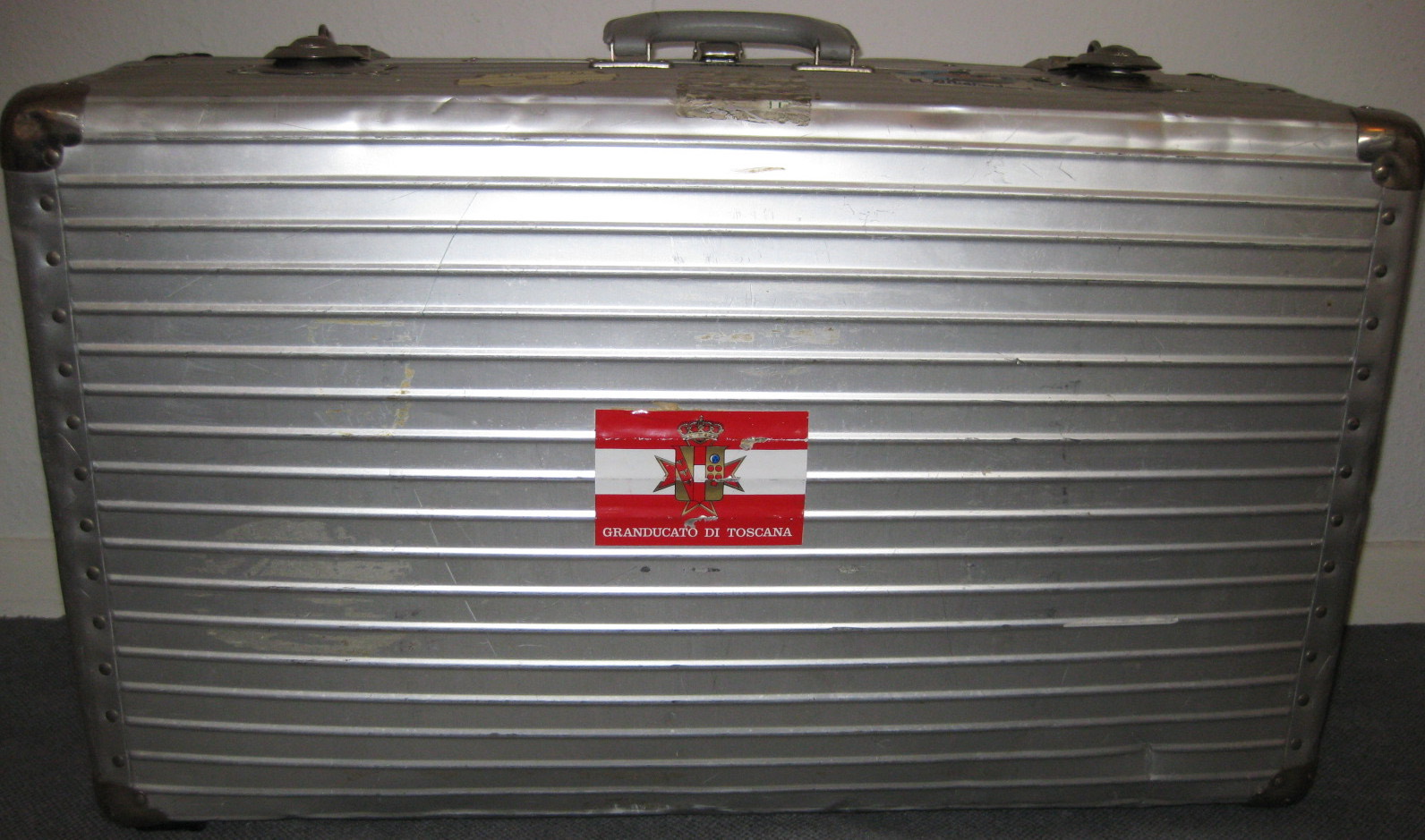
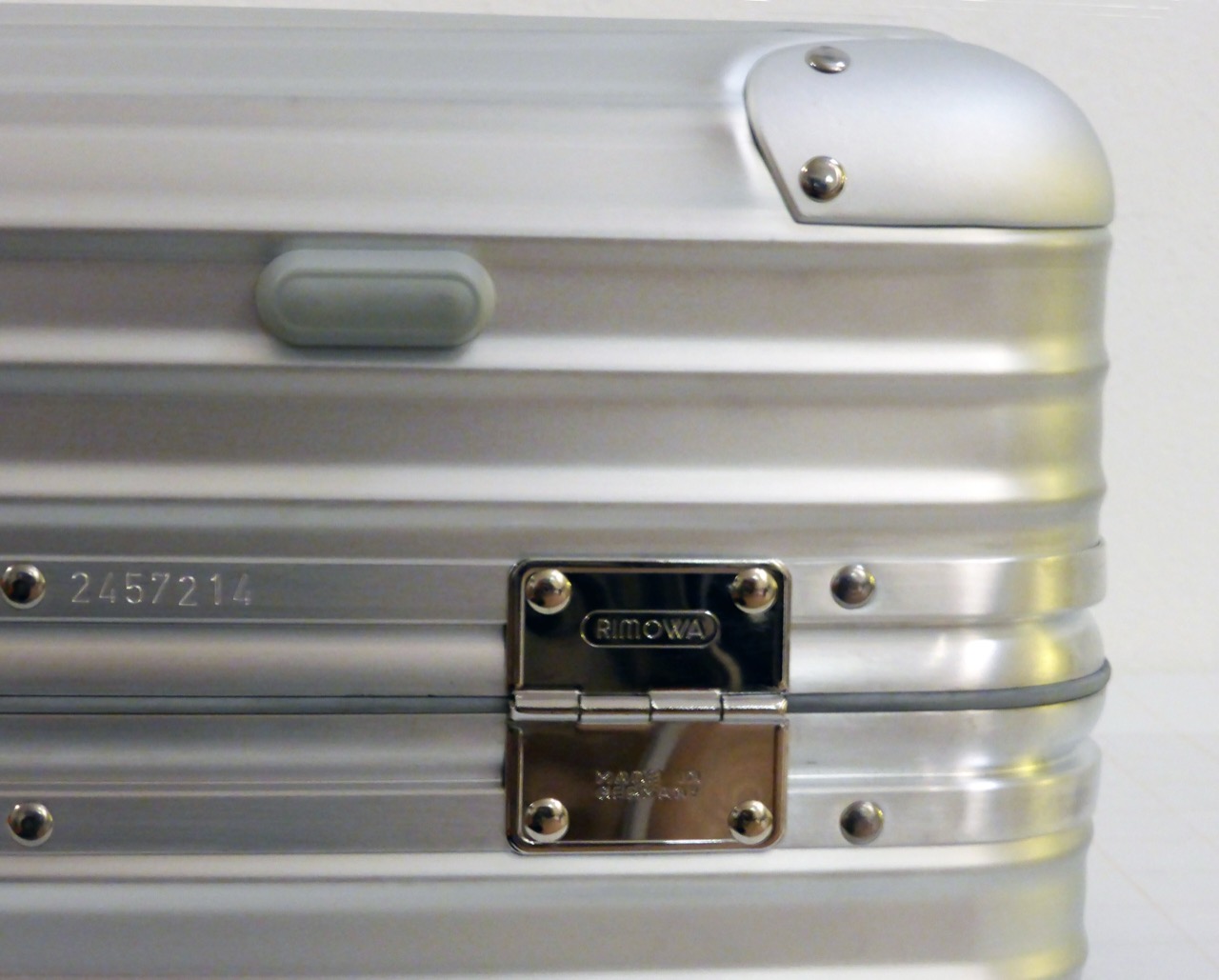
5.A few trips through airports and an aluminium case gets dented corners and a build-up of scratches along its sides. Re-Crafted leaves that surface alone. Only the inside, wheels, handles and lining, goes through a 30-point check and repair, and the case is resold with a two-year warranty. Even travel stickers someone else stuck on stay where they are.
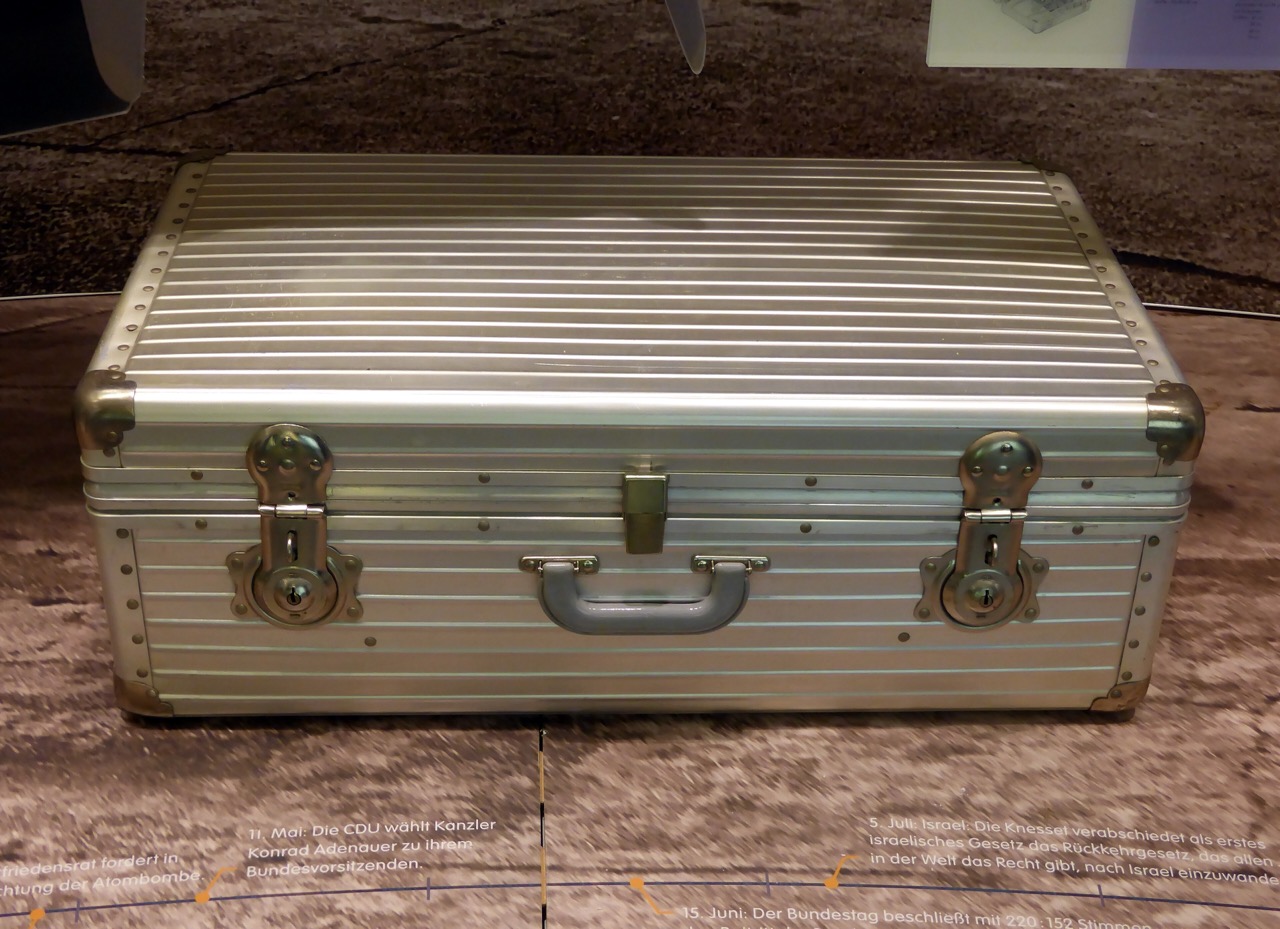
6.The secondhand market was already there. Aluminium cases last for decades, and in China listings for the brand are always up on the resale app Xianyu. The trouble was that buyers had no way of knowing whether a case was genuine or whether the wheels still worked. Once the brand buys cases back, repairs them and adds a warranty, trades that used to happen between individuals move to the store's till.
7.It also mattered that buyers did not want an old case made to look new. A dented corner is a record of trips someone actually took, and the wear is what this programme sells. Batches released in Germany, then Korea and Japan, sold out within hours, in some places within minutes. US online sales opened on March 25, 2025.
8.The timing helped. Bain & Company estimates that mainland China's luxury market shrank 18 to 20% in 2024. In a year when it is hard to give people a reason to buy something new, what brings them into a store? A customer who came in to replace one wheel still ends up standing in front of the shelf next to the counter.
9.The clearest figures come from the US. The voucher for a used case is $300, the refurbished case resells for $600 to $1,000, and a new aluminium cabin case of the same kind costs more than $1,400. Every case that goes through the cycle leaves a spread of $300 to $700, and what remains after parts and repair labour is the company's.
10.There is one more calculation in the fact that the voucher is not cash. Spending RMB 2,000 requires a purchase of at least RMB 4,000, so every old case brings a new sale in with it. The real cost to the company is not the face value of RMB 2,000 but the cost-of-goods share of the discount on the new product. The buyback price is a discount, and the discount only goes out attached to a new sale.
11.Fixed costs are not light. Cushman & Wakefield put the average ground-floor asking rent in Shanghai's mid to high-end malls at RMB 728.7 per sqm per month in Q3 2025. Applying just that average to 200 sqm gives annual rent of about RMB 1.75 million, roughly KRW 340 million (estimate). Rents at Jing An Kerry Centre, in the heart of Nanjing West Road, are likely above average.
12.To keep rent at 15% of sales, the store has to sell about RMB 11.7 million a year. At around RMB 10,000 per aluminium cabin case, that is a little over three cases a day (estimate). The floor given to the repair bench and the client care corner adds nothing to that number. Leaving it off the sales floor looks like a bet on customers bringing their cases back instead of throwing them away, over the profit and loss of one store.
13.The company's roots are in a luggage workshop founded in Cologne in 1898. Paul Morszeck co-founded it, and after a factory fire in the 1930s burned almost everything but the aluminium, it turned to metal cases. LVMH bought an 80% stake in 2016 for 640 million euros. Annual sales were a little over 400 million euros at the time, and the industry now estimates them at about 1 billion euros.
14.Brands buying back their own used goods is nothing new. Patagonia takes in old clothes through Worn Wear, repairs them and resells them, and Rolex opened a certified pre-owned programme in 2022. What sets the Shanghai version apart is the repair method. To restore archival cases, it used juci, the traditional Chinese technique of joining broken porcelain with metal staples. A repair that shows its seams rather than hiding the damage. The city guide map was made with Jin Yucheng, the Shanghai writer behind the novel Blossoms.
15.In its first mainland China flagship of about 200 sqm, RIMOWA gave part of the floor to a repair bench and put a KRW 390,000 voucher on each old case to turn it back into a new sale. A brand trying to build the same structure in Korea first runs into the store's lease terms. Most imported brands sit in department stores paying a commission on sales, so repair space that produces no sales is booked straight as a loss. They would also need a separate place near the store for the bought-back cases and the repair technicians.