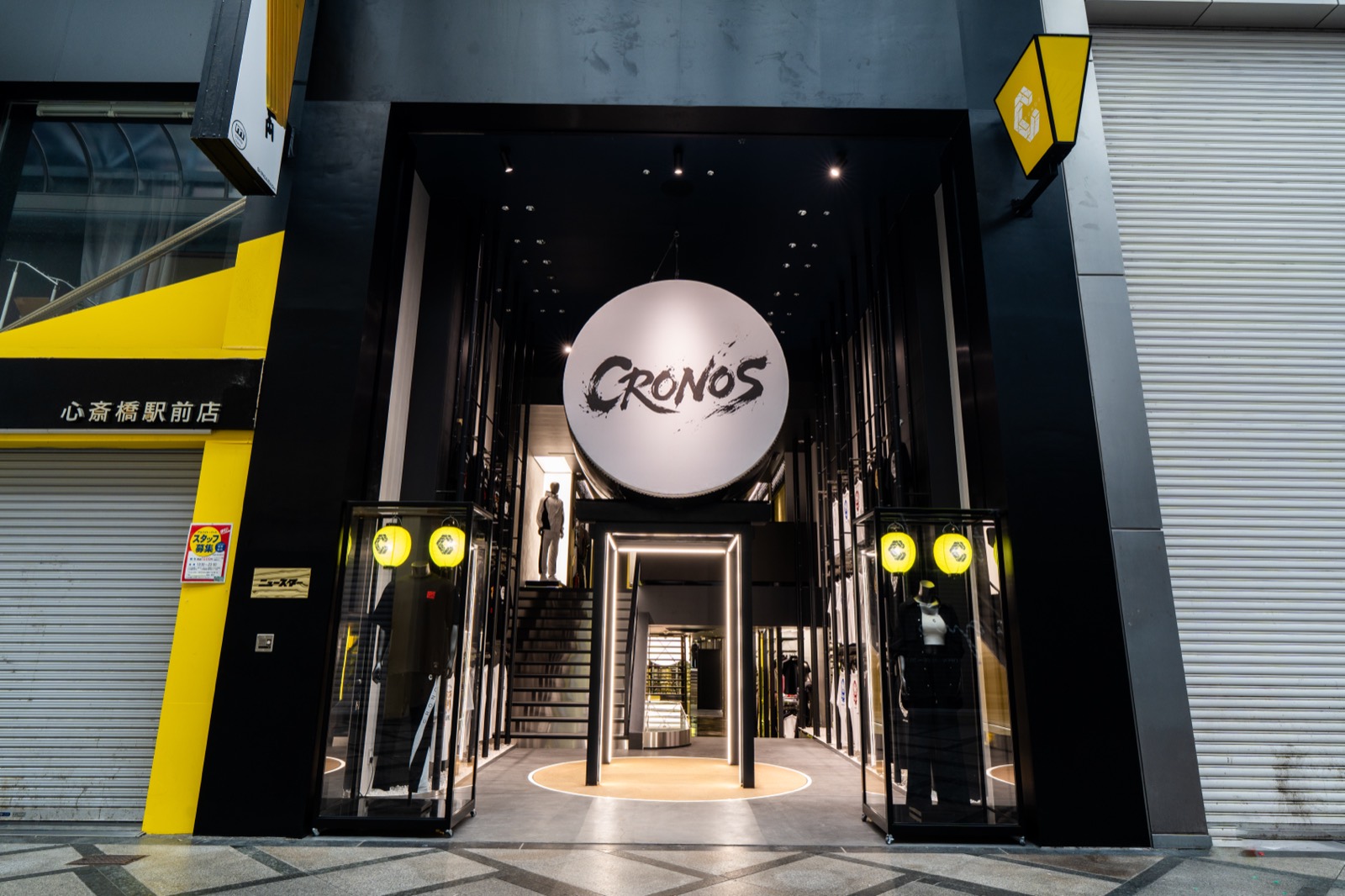
Japanese activewear brand CRONOS opened an 88.5-tsubo store on Osaka's Shinsaibashi-suji shopping arcade on September 12. The brand is owned not by an apparel company but by a personal-training gym chain. Clothes that trainers used to wear on the job have grown into a business selling close to 200 million yen a month, and now they hang on a street full of tourists.
1.CRONOS opened its Shinsaibashi store on September 12 in 1-chome of the Shinsaibashi-suji arcade in Osaka. The floor area is about 88.5 tsubo (about 292㎡), nearly one and a half times the roughly 200㎡ flagship it opened in Omotesando, Tokyo, last May. It is the brand's first large store in the Kansai region, and for two days before opening it hosted a preview event with actors and athletes. The company's own description: "the largest-class store in Kansai."
2.The brand was created by World Fit, headquartered in Shibuya, Tokyo. The company runs around 170 BEYOND personal-training gyms including franchises, and in 2017, the year it was founded, it started making its own clothes for trainers to wear. Those clothes are CRONOS. The gyms were the core business and the clothing a side line, yet today the brand has 26 stores and its own online shop.
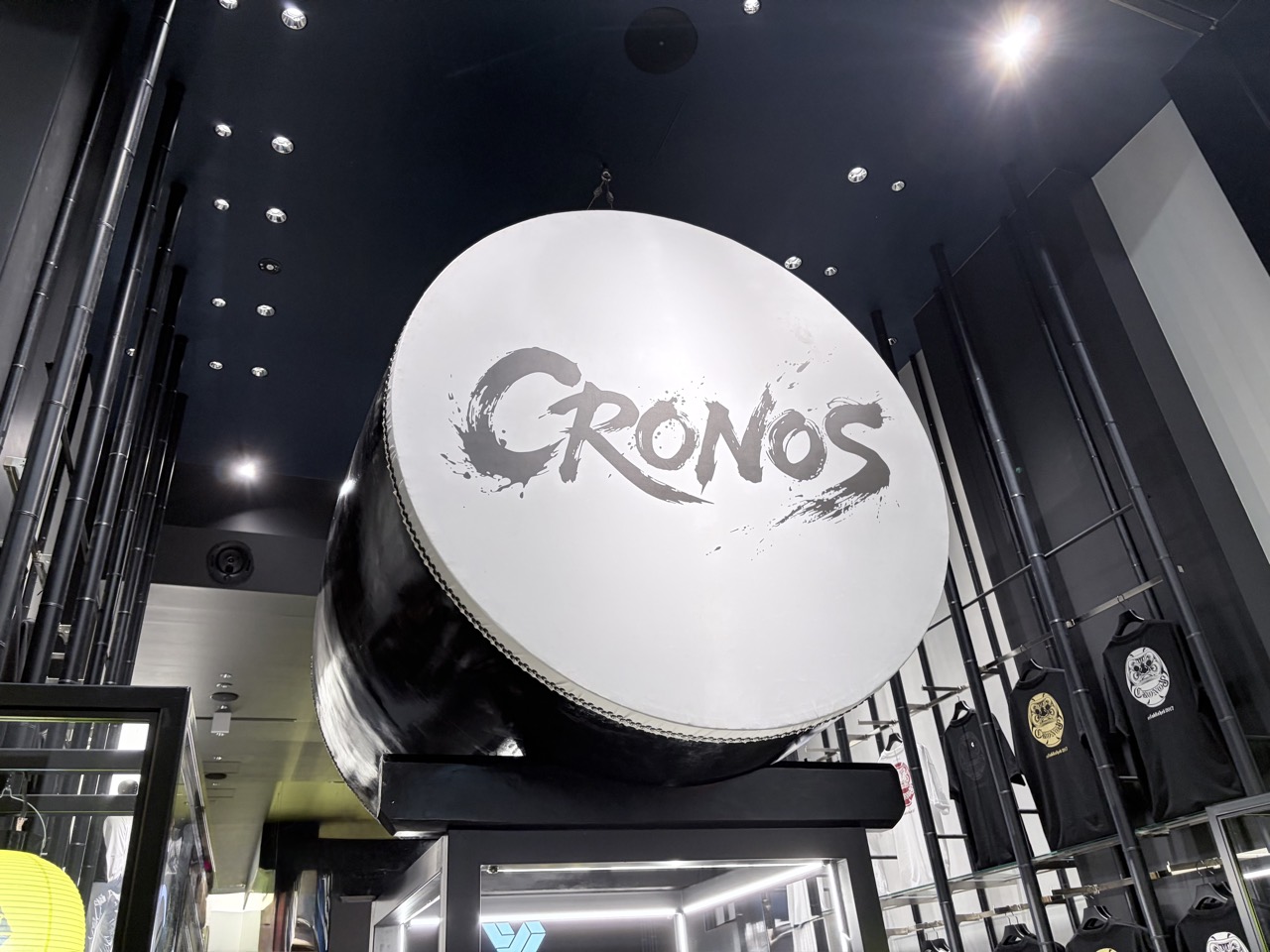
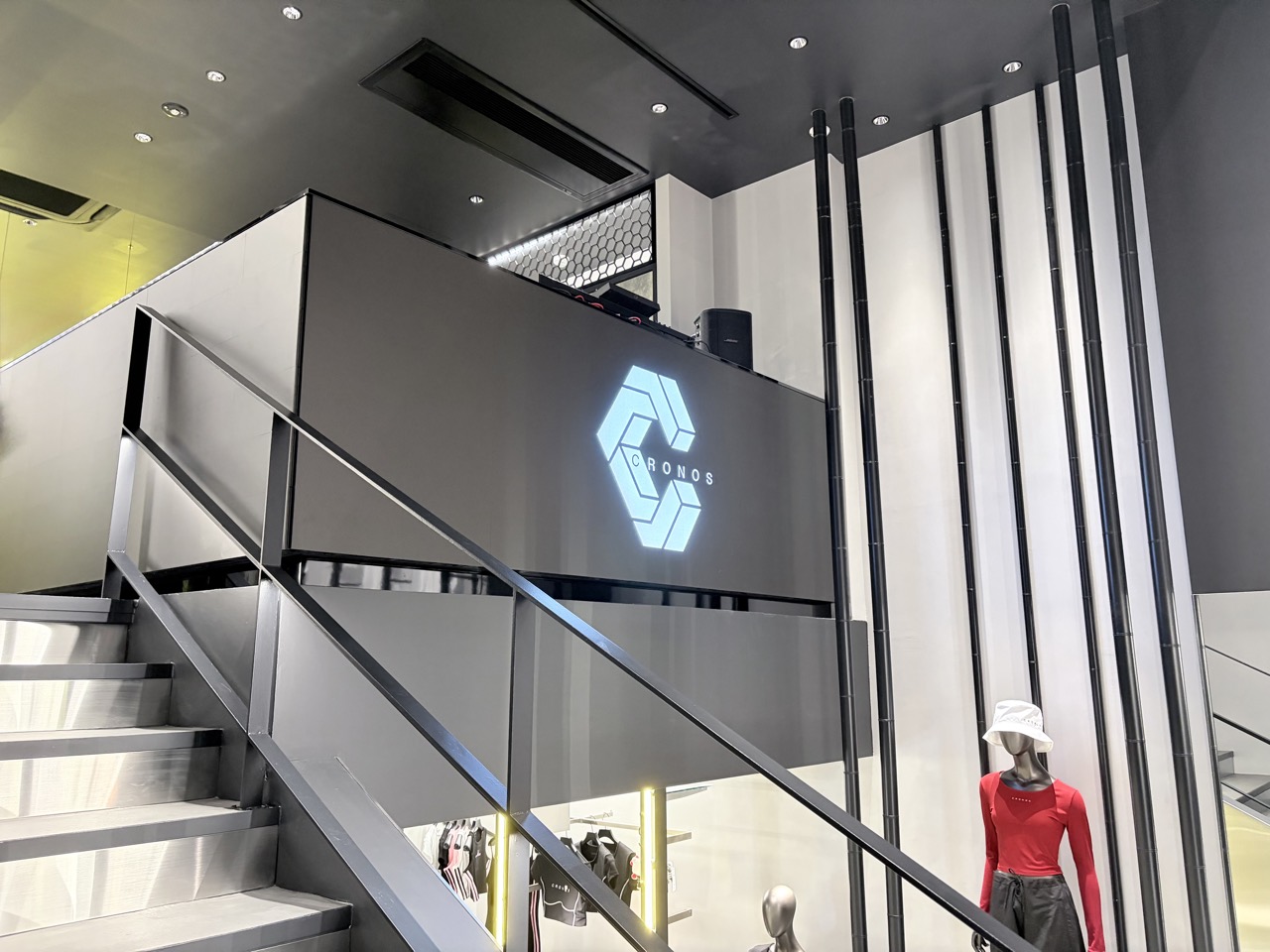
3.At the Shinsaibashi entrance stands a large taiko drum. The CRONOS logo is painted in brush lettering where the drumhead would be, the facade carries lantern-shaped signs, and several paper lanterns hang above the door. Where the Omotesando store was built only from black steel and glass, the Osaka store lays festival props from Japan on top of that.
4.Step inside and the black floor mirrors the ceiling lights while racks run the length of both walls. The upper walls are finished in lattice panels, and yellow light leaks from inside the display bays. The operator says it borrowed materials and details from Japanese gardens. A round white table in the middle holds folded new arrivals. The upper floor is reached by stairs at the end of the aisle.
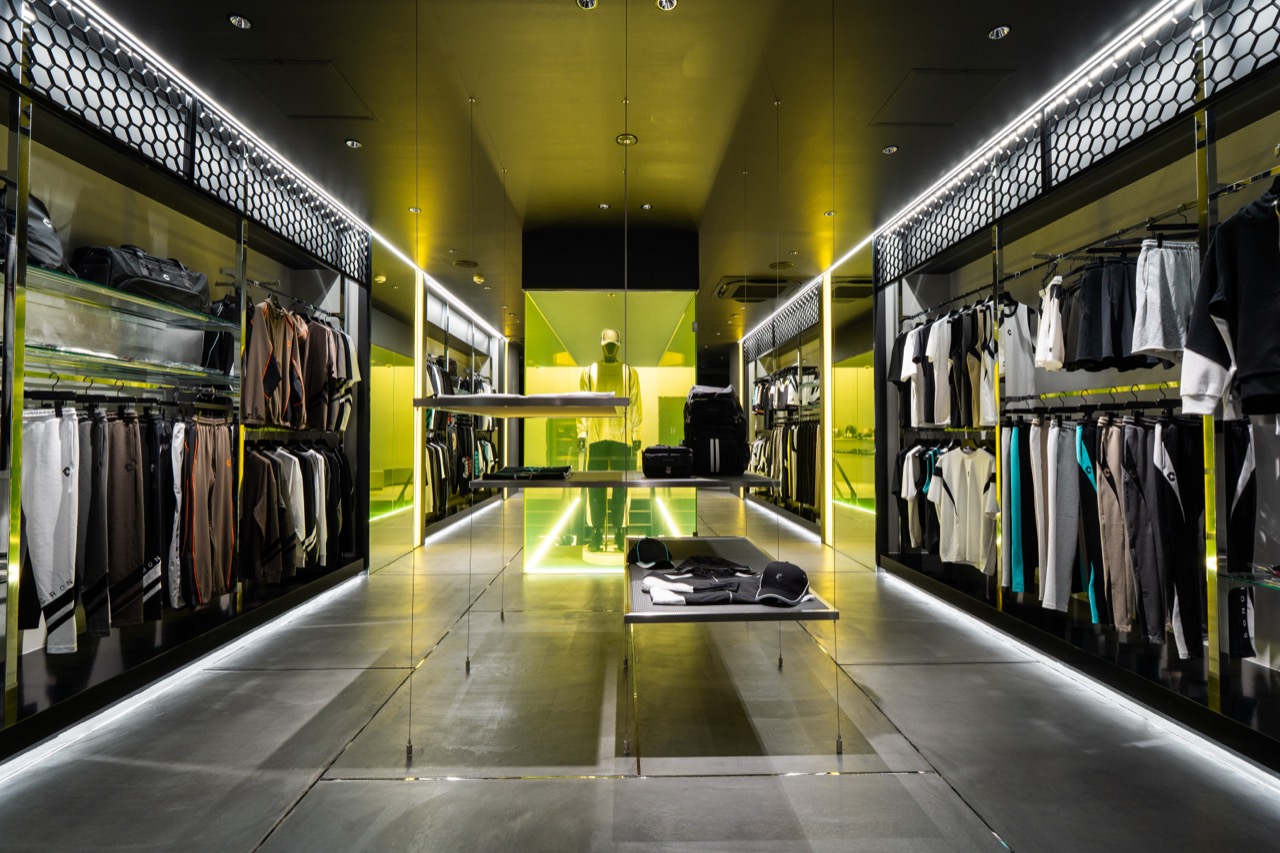
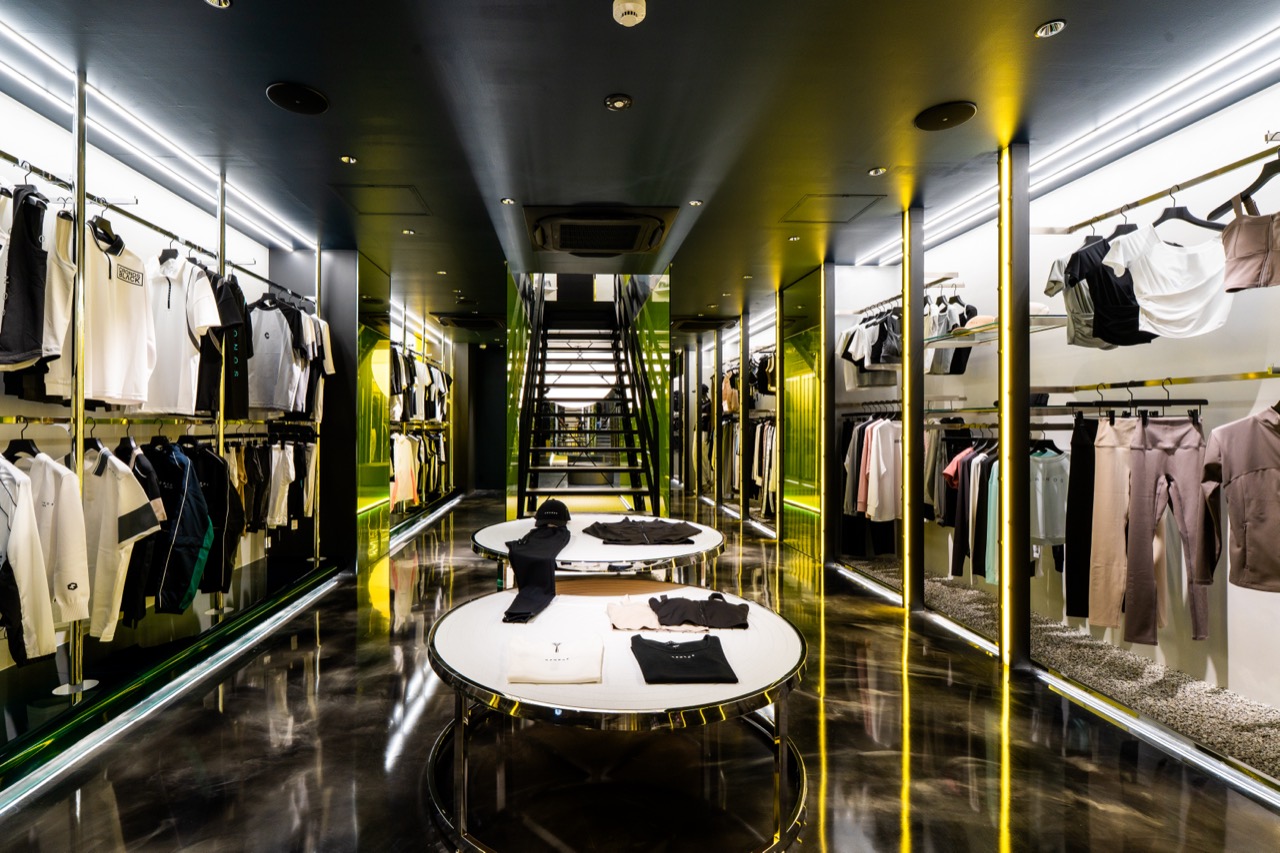
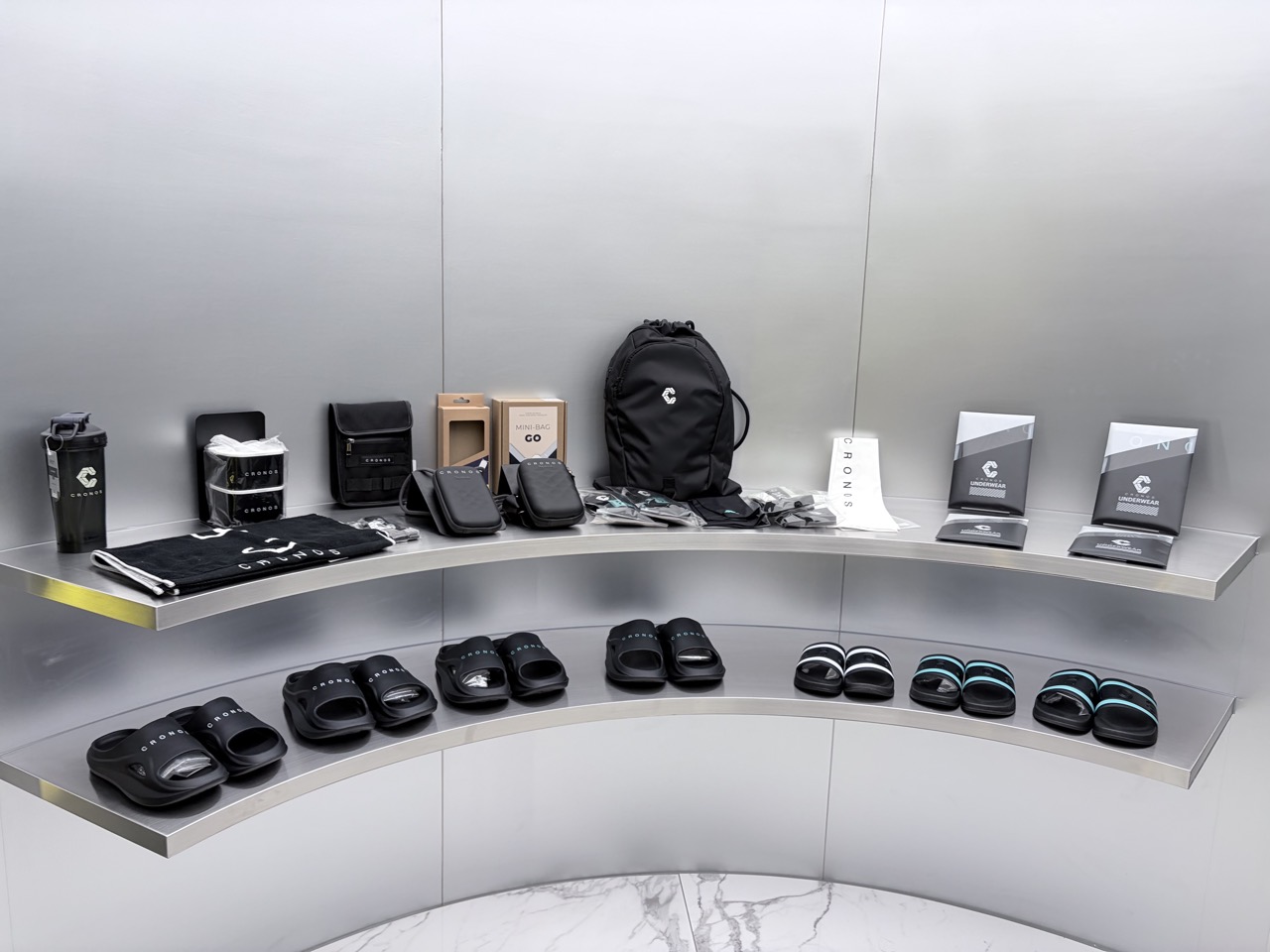
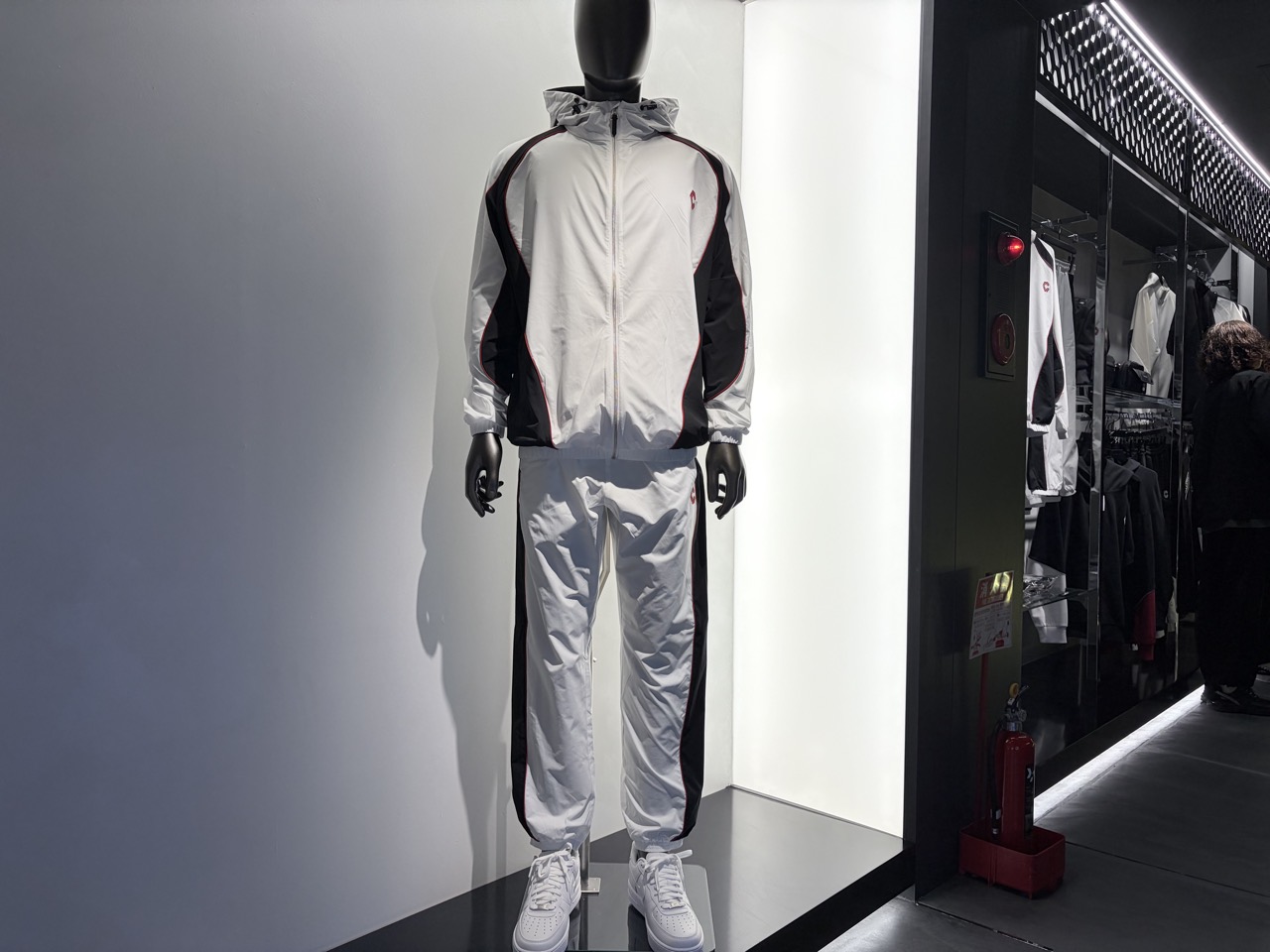
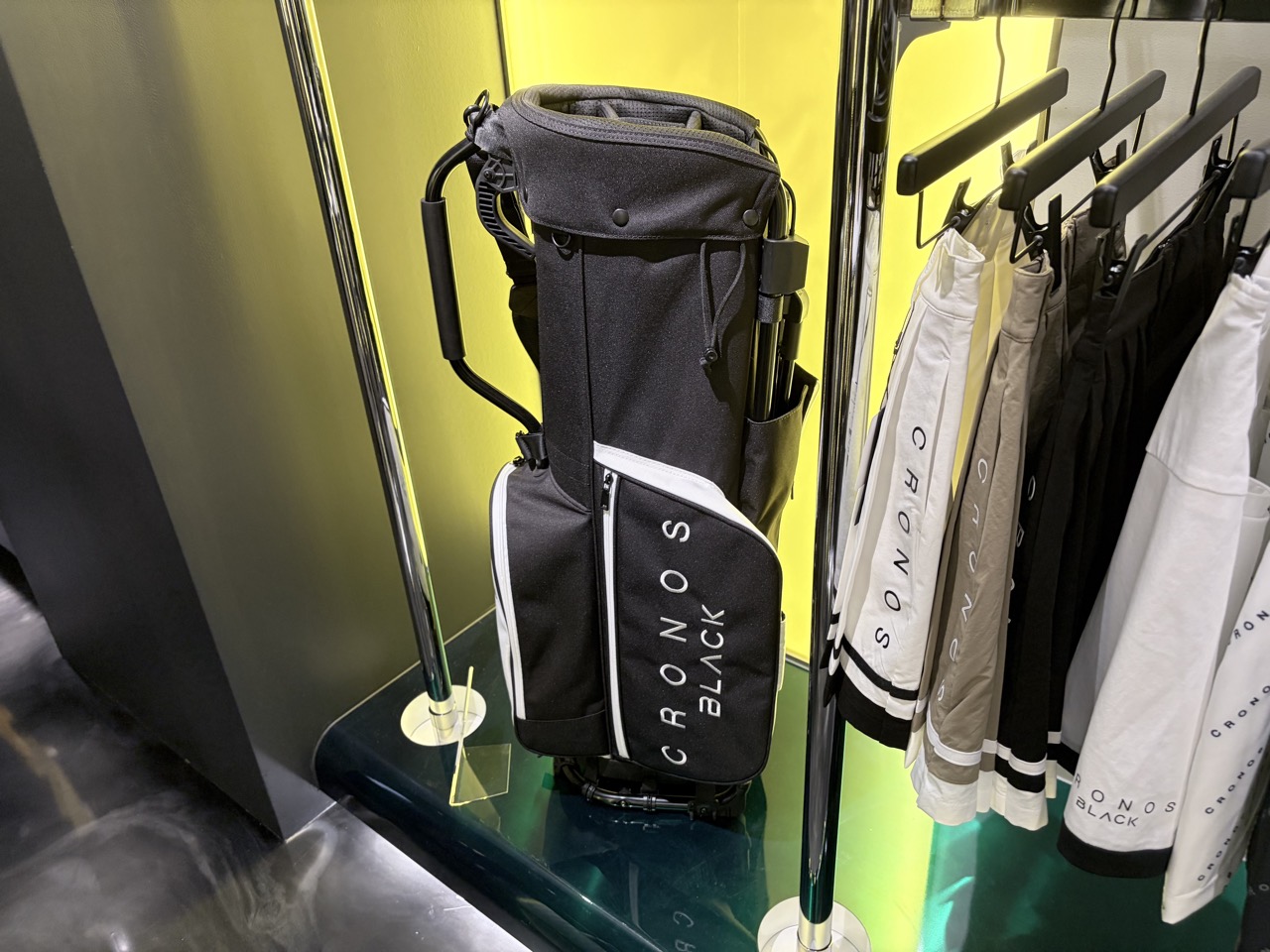
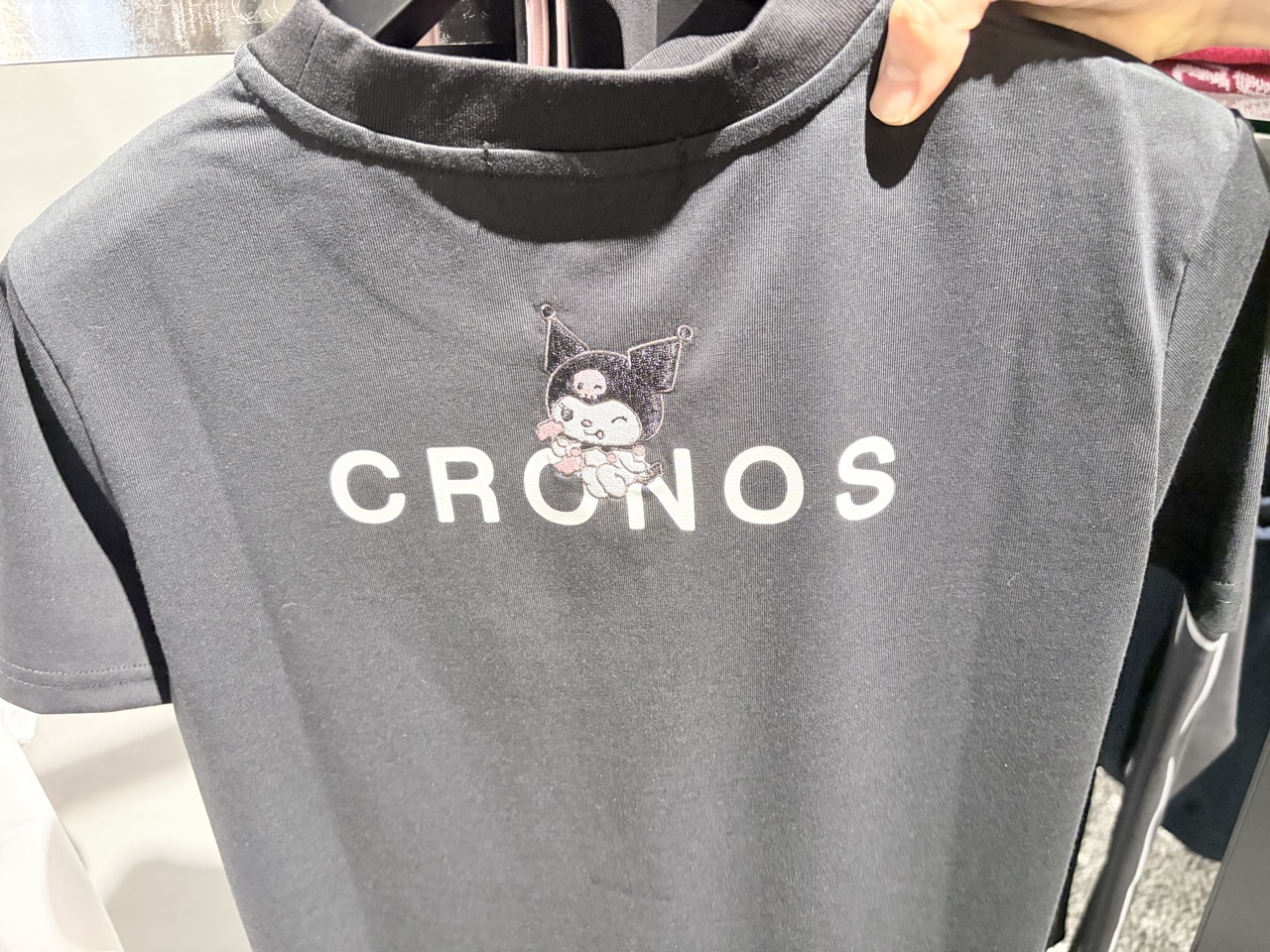
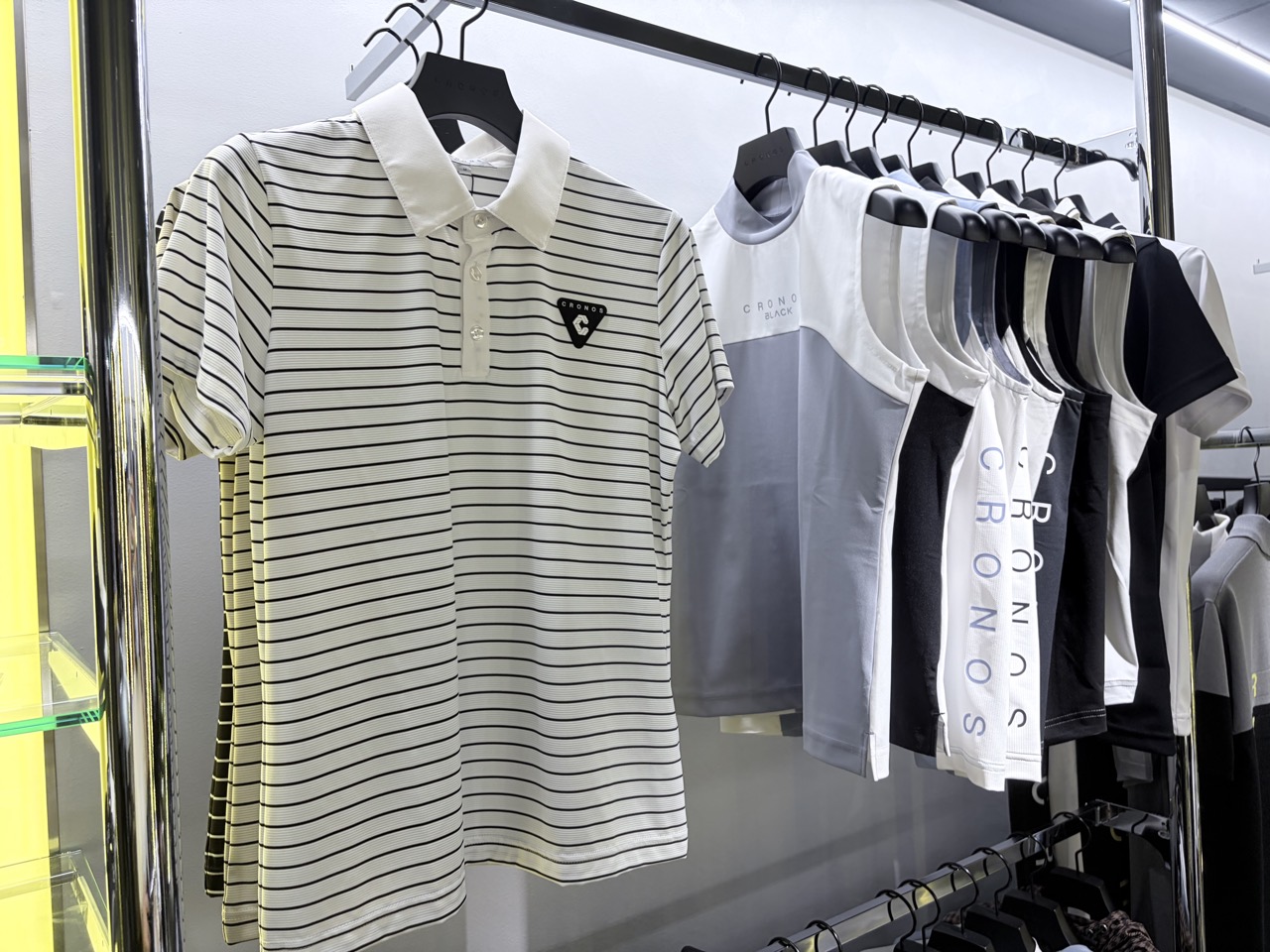
5.The range falls into four groups: training wear, a lifestyle line for everyday use, the golf line CRONOS BLACK, and accessories such as slides, tumblers and bags. Hoodies and pants in black-and-red and white colorways are sold only at this store. For the opening, a collaboration with Sanrio featuring Hello Kitty, Kuromi and Bad Badtz-Maru also went on the racks.
6.Whose body are these clothes cut for? Someone who has built up shoulders and back with weights. The basic silhouette drops loose on top to show the width of the shoulders and narrows close to the body below, in stretch fabric that dries sweat quickly. A shirt from an ordinary store pinches at muscled forearms or hangs loose at the waist. This brand took that body as the standard and set its sizes around it.
7.The company already owned the place where that body is on display. Trainers at some 170 BEYOND gyms work in these clothes, and members look at them for an entire session. In a 2024 trade-press interview, the CEO said that every new gym adds another place where people experience what the clothing does. When an instructor with a large following wears it, it reaches that following too. The scene an apparel company has to buy with ad spend and store rent, this company gets free from its core business.
8.The push to reach customers beyond the gym became visible in 2024. A golf line launched and sold well, and the company says stores in GINZA SIX and Omotesando brought in casual exercisers and bigger spenders. Womenswear got its own racks, and character collaborations followed. In August the brand opened in Kichijoji, Tokyo, on the second floor of a street building rather than in a mall. The trade press describes it as a test of whether people will come on purpose.
9.Apparel sales were a little over 100 million yen a month in 2023, about 1 billion yen for the year. By spring 2025 they were close to 200 million yen a month, and the company set a target of 250 million yen a month by year-end. Over the same period stores went from 7 to 20, and to 26 with the Kichijoji opening this August. Stores nearly quadrupled in two and a half years while sales doubled, so each added store earns less than the early ones did.
10.These are not cheap for activewear. T-shirts run 10,000-15,000 yen, hoodies 18,000-20,000 yen, pants 20,000-25,000 yen, and CRONOS BLACK jackets 30,000-40,000 yen. A top and bottom together come to more than 30,000 yen. Personal-training members already spend heavily on sessions every month, so they do not hesitate much at paying this for what they train in.
11.Shinsaibashi is counted as the most expensive retail district in Kansai. CBRE put ground-floor high-street rent in Shinsaibashi at 204,000 yen per tsubo per month in Q3 2023. Apply that to all 88.5 tsubo and you get 18.05 million yen a month (about 170 million won). Upper-floor rent is cheaper, so the real figure is lower (estimate). Even so, divide spring 2025 monthly sales of 200 million yen by 20 stores and the average store does 10 million yen (an upper bound that includes online sales). The rent ceiling on this one store is larger than an average store's monthly sales.
12.So this store cannot pay for itself on its own numbers. Shinsaibashi-suji carries foreign tourists all day, and the new ground-floor tenants in the district lately are drugstores, secondhand shops, sneakers and character goods, businesses aimed at tourist wallets. The taiko drum, the lanterns and the Osaka-only colorways give that visitor a reason to take a photo and carry something home. The next step the company has long talked about is expansion into Asia starting with Taiwan, and this street is where it meets those customers before they head home.
13.Activewear brands that grew by using training bodies as billboards are nothing new. Britain's Gymshark dressed fitness influencers and grew online, opening its first store on London's Regent Street only in 2022. The difference is who owns the floor where the body is shown. Gymshark borrowed other people's bodies and other people's screens; CRONOS used its own gyms and its own trainers. Even the place where a customer first sees the clothes sits inside the company's business.
14.That strength becomes a burden when the brand widens. These clothes sold because of sizing cut for muscled bodies, and the further it moves into golf, womenswear and character collaborations, the more it serves customers without that body. Outside the gym there is no trainer wearing the clothes in front of you either, so a big store on a tourist street is a decision to replace that scene with staging.
15.A brand that a gym chain started as trainer uniforms now sells close to 200 million yen a month and has taken a Shinsaibashi site worth up to 18.05 million yen a month at ground-floor rates (estimate). Anyone trying to build the same structure in Korea first runs into the shape of the personal-training market. There are plenty of sessions, but few chains have hundreds of trainers a single company can dress alike, and in activewear the brands that grew on leggings already hold the department-store and online shelves.