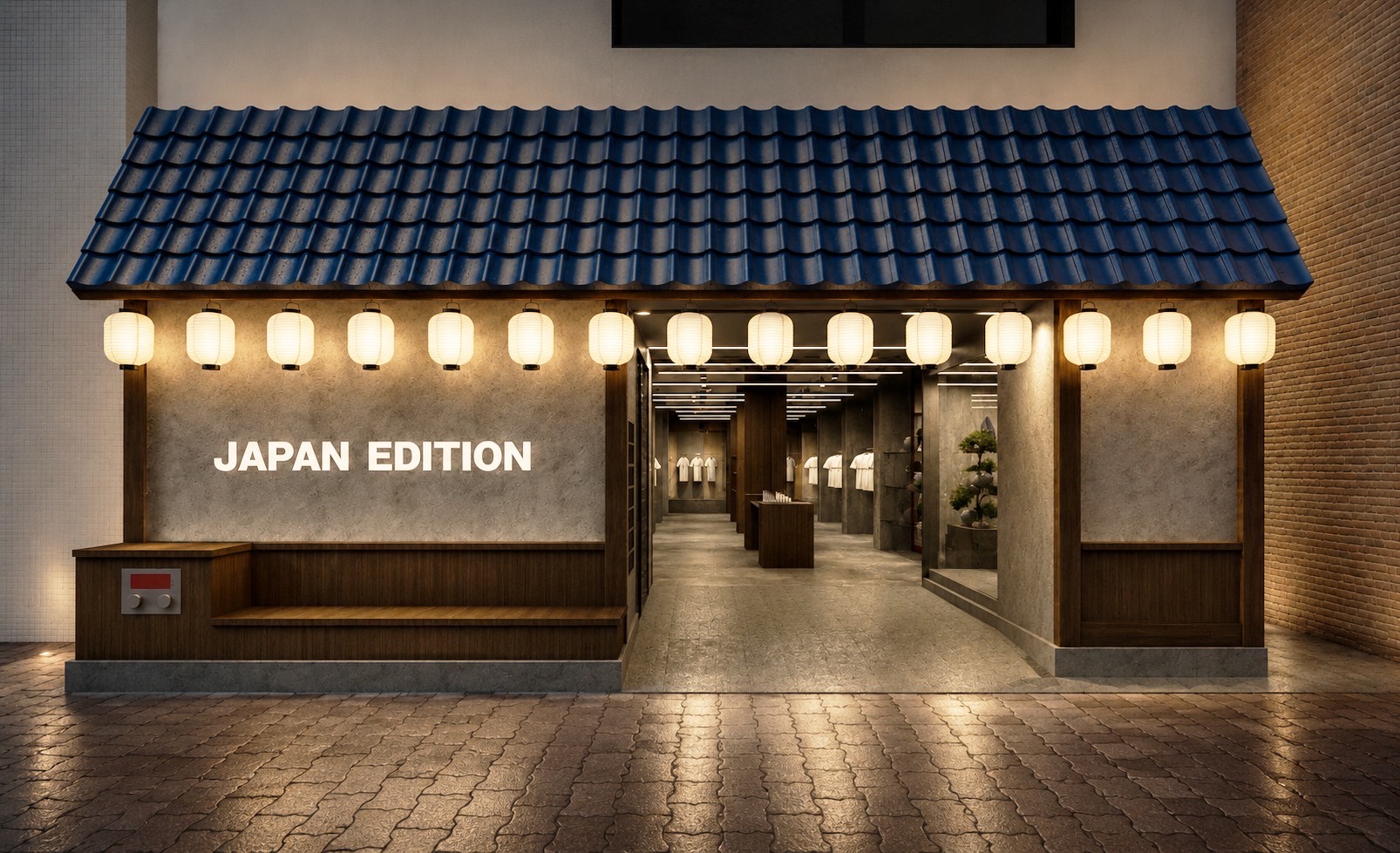
JAPAN EDITION Ginza, opened July 16. A bench under the eaves, with the ground floor visible straight through the open front (ⓒTOKYO BASE)
Daily Space
JAPAN EDITION Ginza: A Showroom of Light Above, a Kura of Shadow Below
2026.07.18
The most expensive luxury street in Tokyo for rent. In the middle of that block, lined with Louis Vuitton and Tiffany, a Japanese company has hung clothes made by craftsmen from its own provinces, and down the stairs there is not a shop floor but an old storehouse.
1.On July 16 a store opened on Namiki-dori in Ginza, Tokyo. It is called JAPAN EDITION, the flagship of TOKYO BASE, a listed Japanese apparel company, a select shop curating craftsmen, traditional techniques and regional handwork from across Japan in a contemporary frame. The company motto is blunt: FROM JAPAN TO THE WORLD.
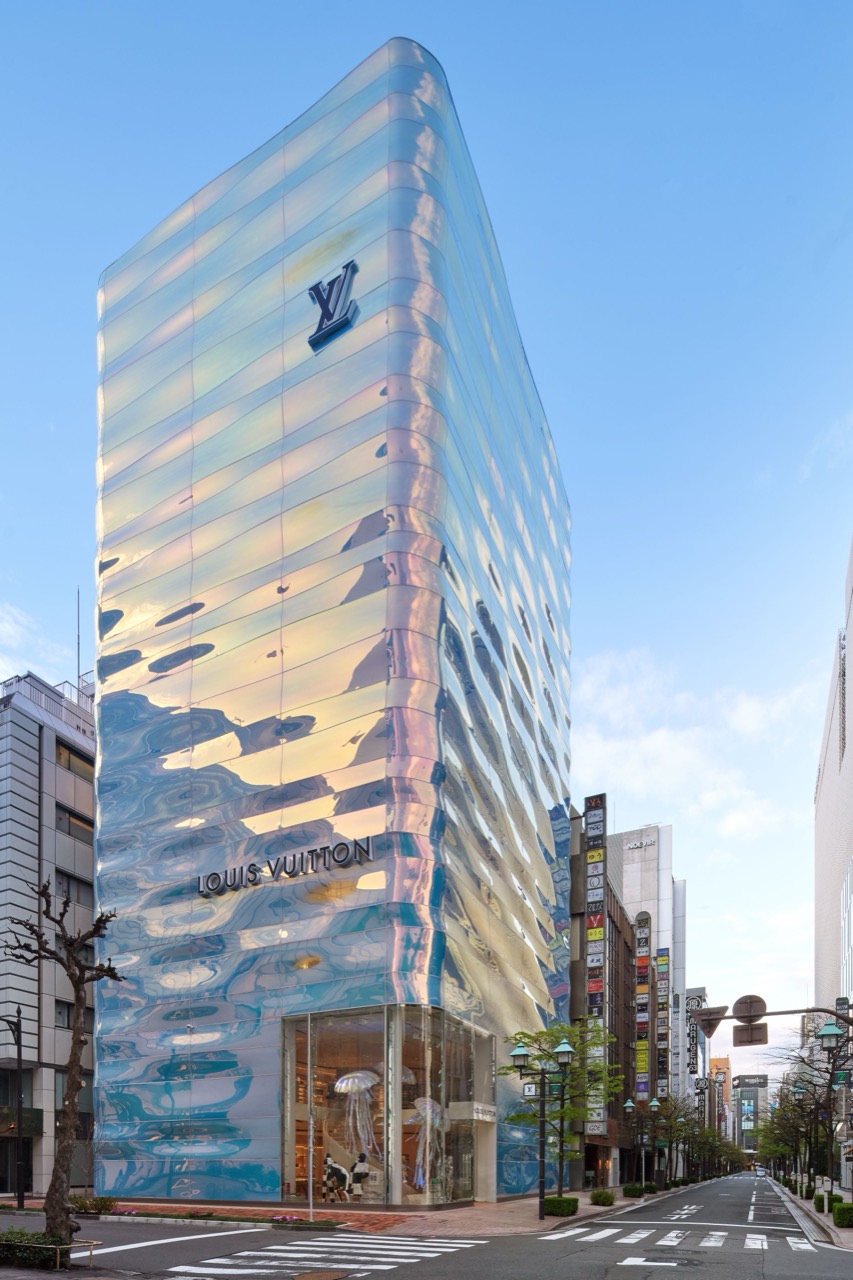
2.The address is everything. Namiki-dori is Tokyo's priciest luxury street, with Louis Vuitton, Tiffany, Grand Seiko, Omega and Harry Winston in a row, and a domestic denim label has driven a plot in among them.
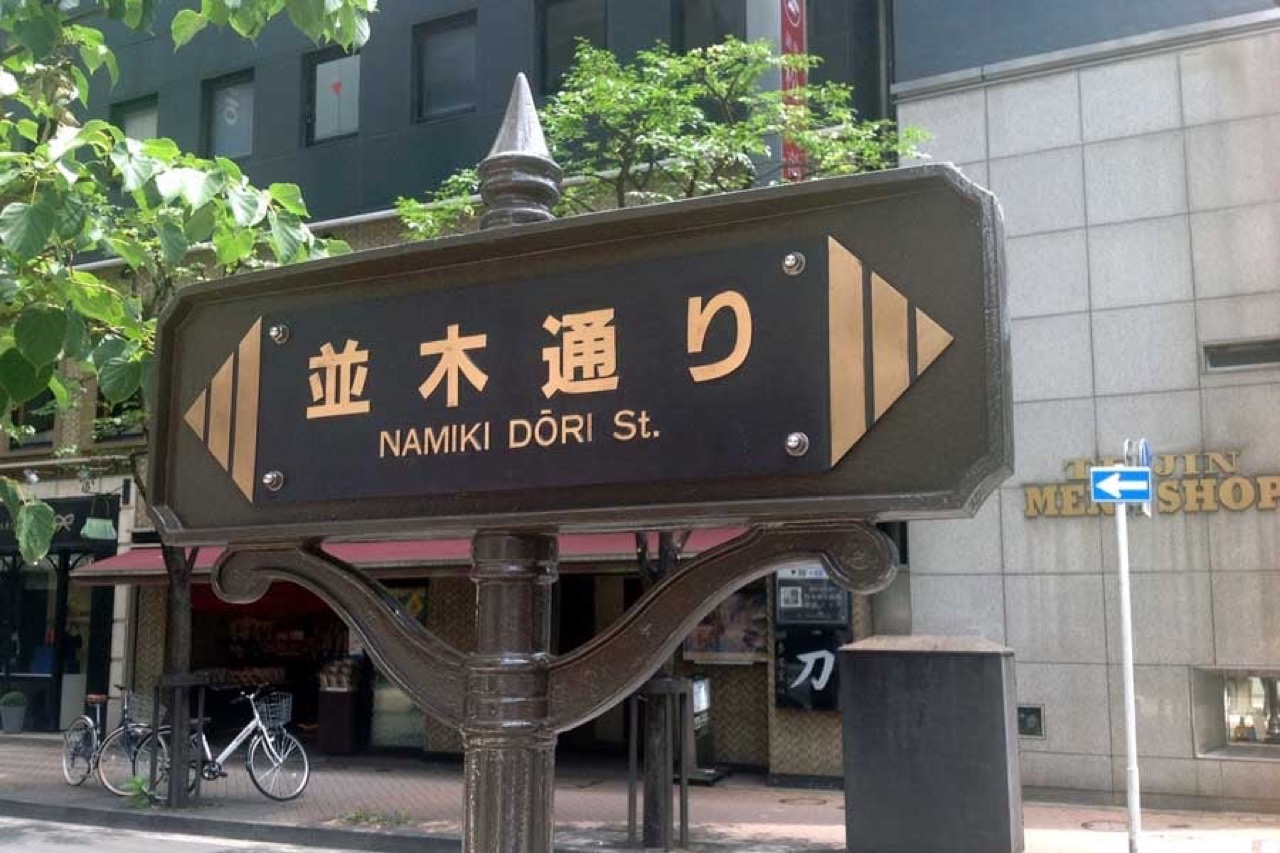
The Louis Vuitton store on Namiki-dori. A glass facade that reflects the sky in ripples (ⓒVOGUE JAPAN·Daici Ano)The Namiki-dori street sign (ⓒUrban Life Tokyo)
3.The exact floor area has not been disclosed. The structure is split level, a ground floor with one basement, and given the nature of Namiki-dori plots this is not a large store, by estimate. Shuhei Kamiya of KAMIYA ARCHITECTS designed it.
4.The exterior sits apart from the street. A denim blue tiled roof presses the eaves low, and paper lanterns hang in a line along them, swinging. On a street plated in glass and marble, this one bay does not throw light back.
JAPAN EDITION, a shop curating clothes by craftsmen from Japan's provinces (ⓒHypebeast)
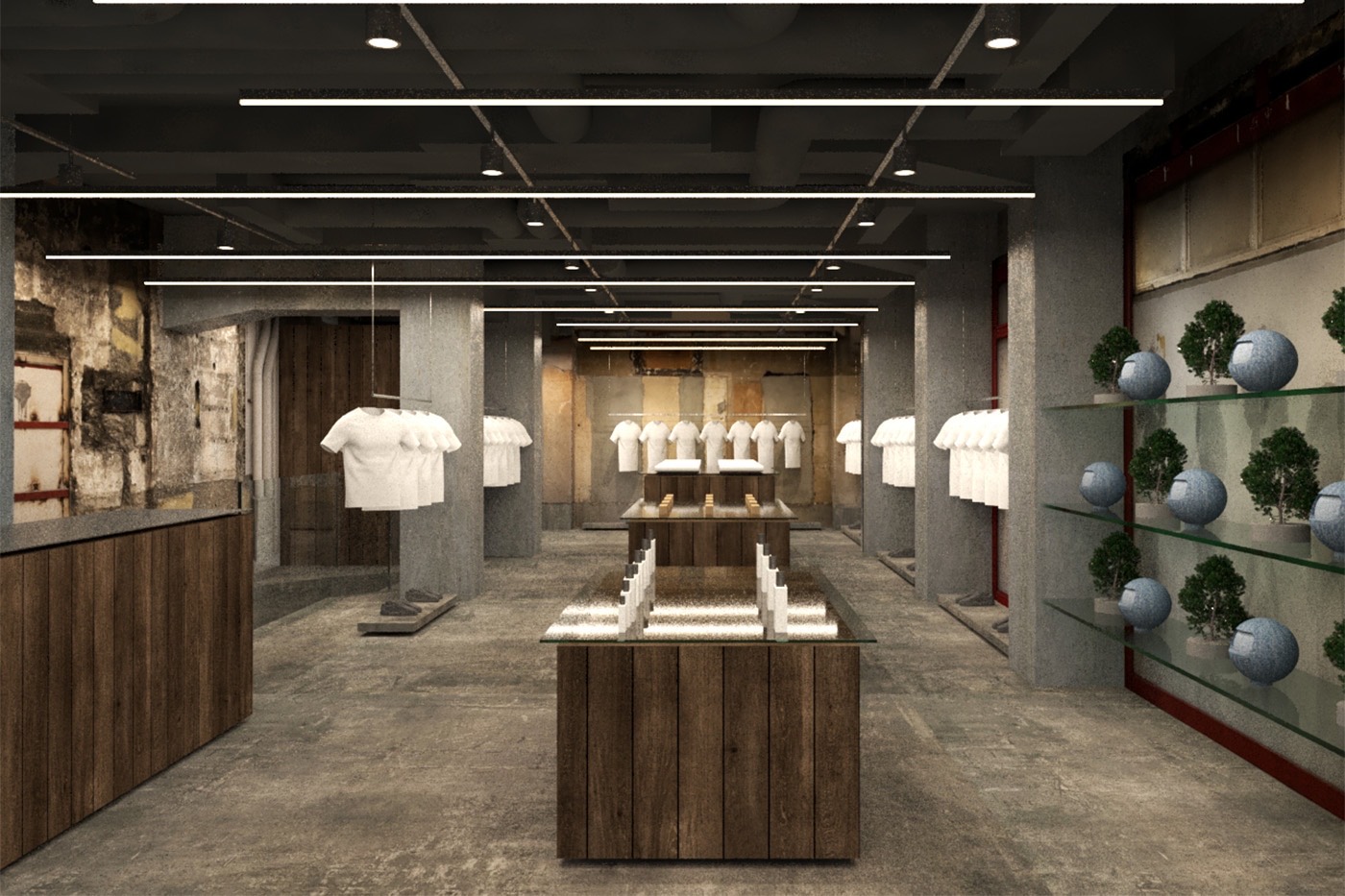
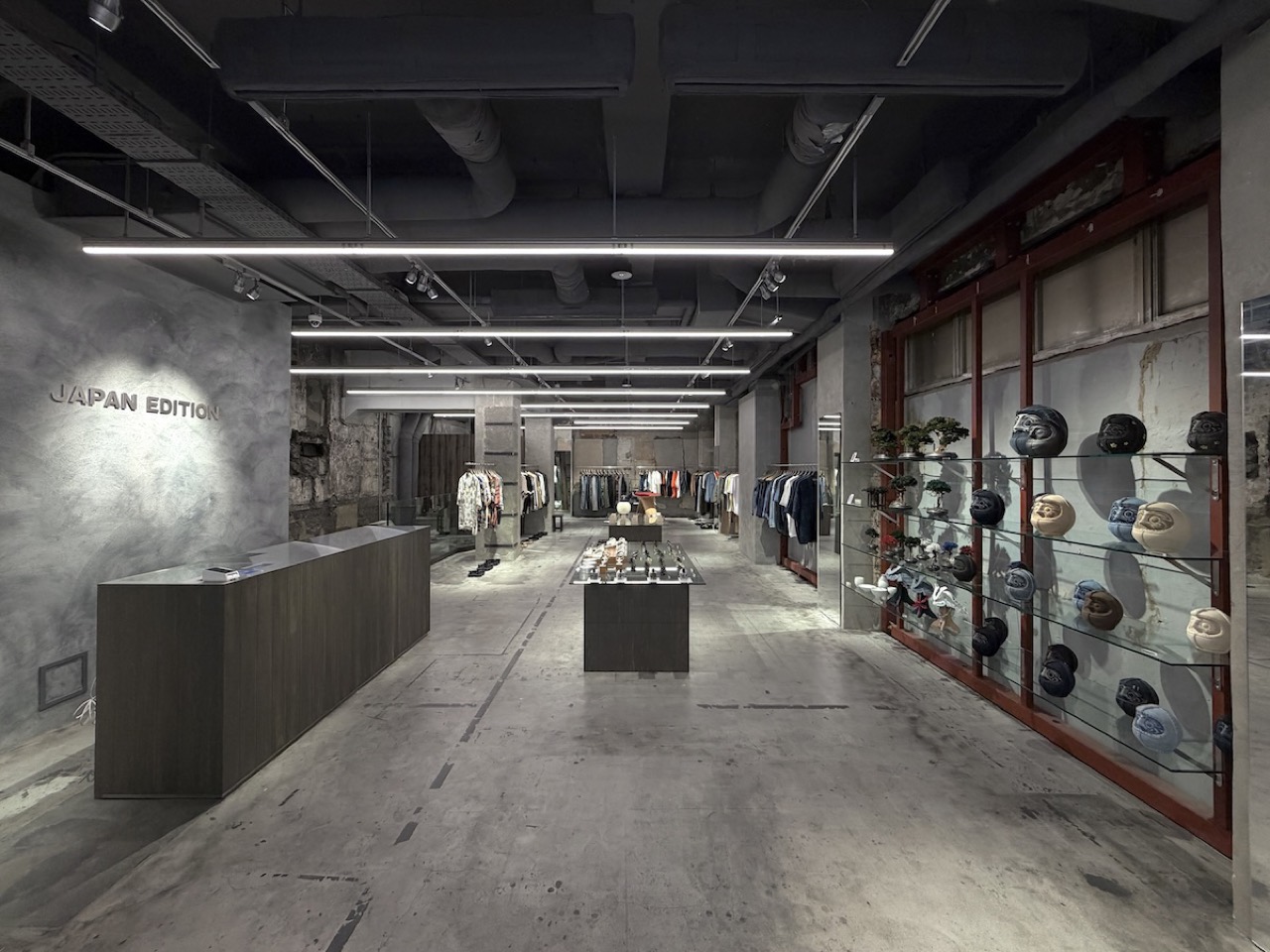
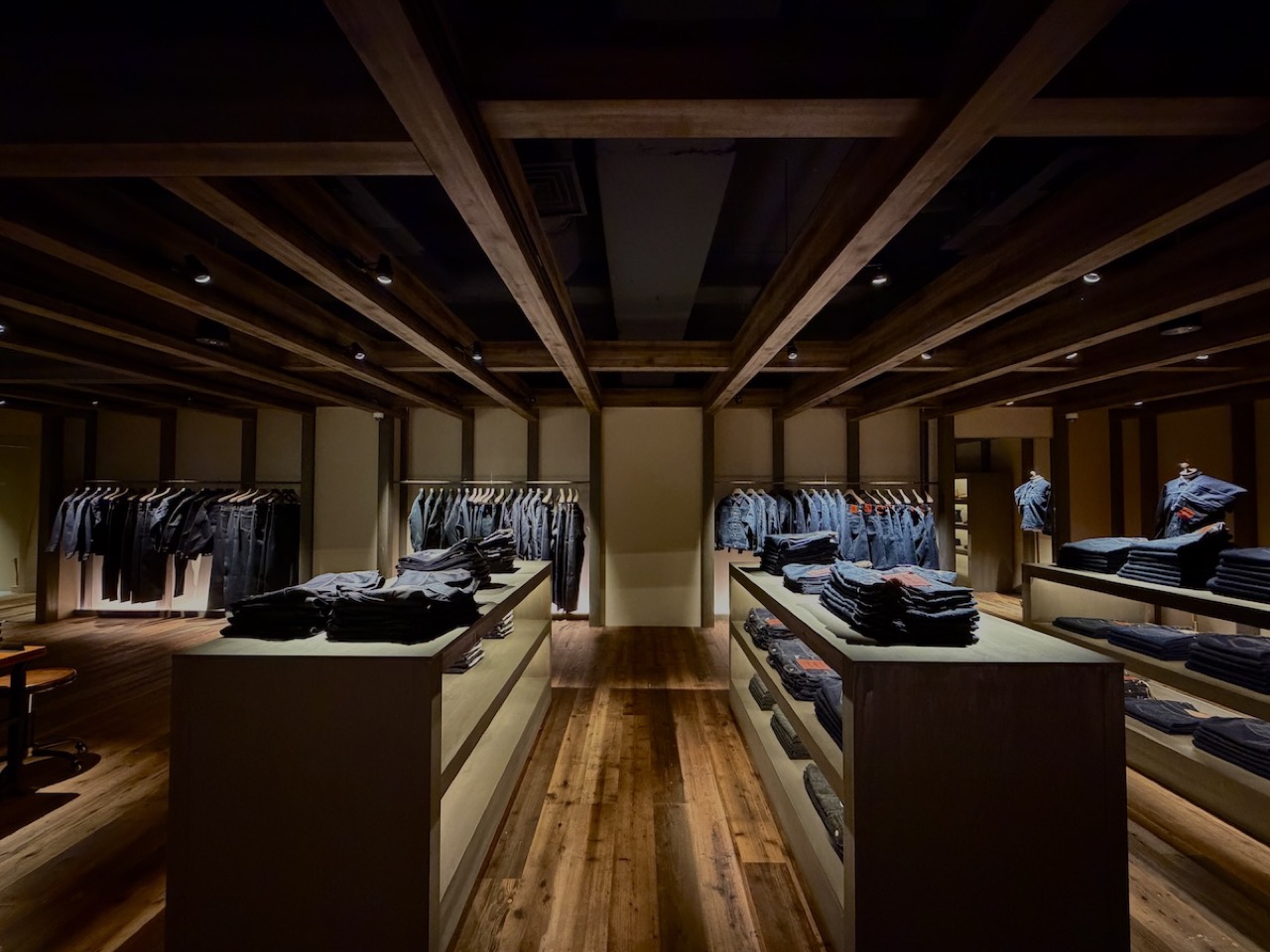
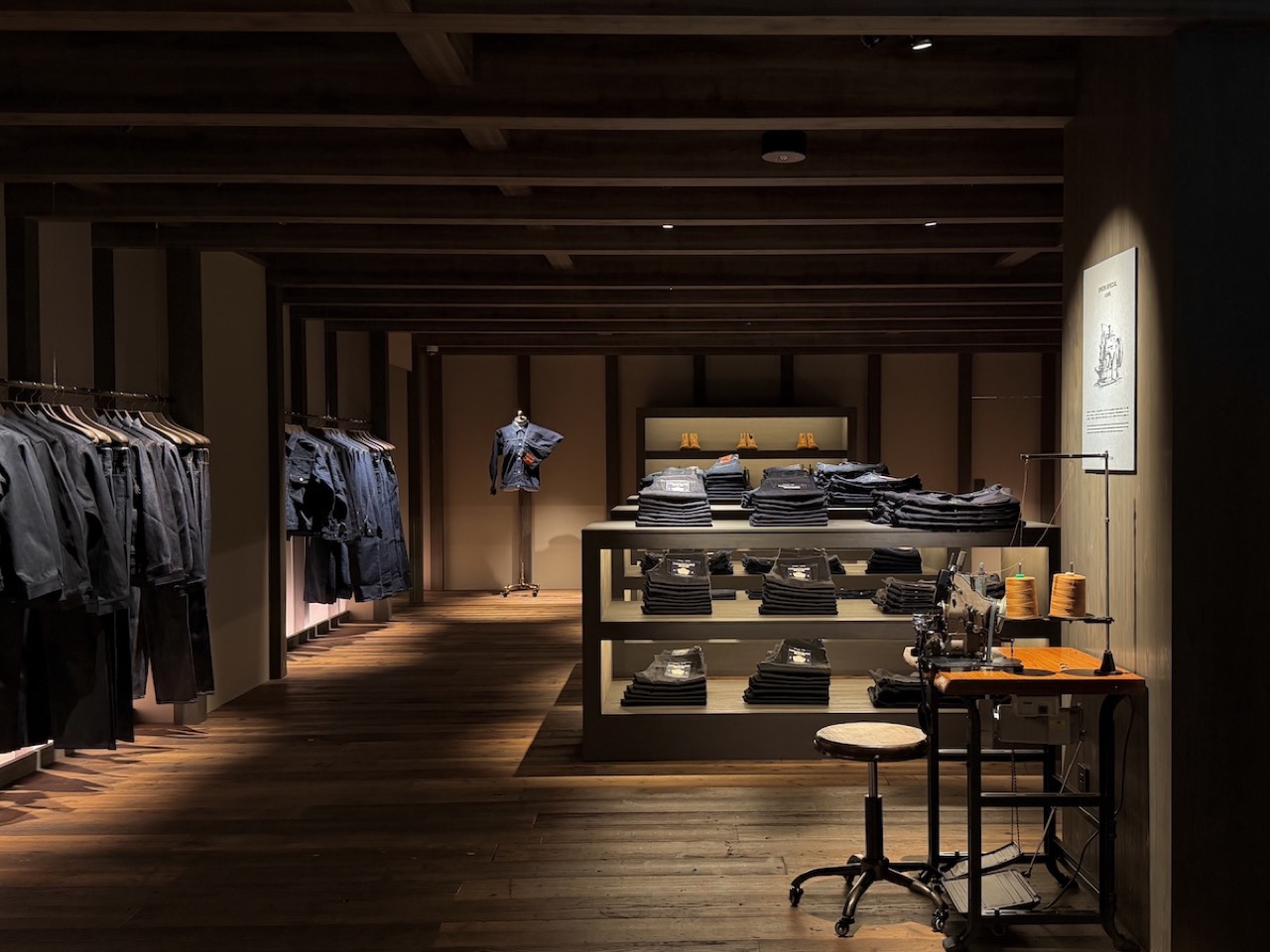
5.The ground floor is light. A bright showroom laid out to pull people through by light, with new arrivals and collaborations spread out in full view. The basement is shadow. It rebuilds the kura, the traditional storehouse, pressed dark with warm lamps and shade, closer to a barn where goods are put to sleep than to a shop.
Ground floor. Under a concrete floor and exposed ceiling, bonsai and ceramic figures sit on the red lattice cabinet at right (ⓒWWDJAPAN)Basement. Timber beams woven into a lattice overhead, denim stacked on stepped display tables (ⓒWWDJAPAN)
6.The story stands vertically. Light above, shadow below. While the customer walks down the stairs, new arrival turns into inheritance, and the same garment is sold twice at two temperatures.
Ground · light · showroom · the floor that shows the product
Basement · shadow · kura · the floor that sells the story
7.The origin marking is unusual. This company stamps its own garments with a prefecture rather than a country. Not Made in Japan, but which prefecture it was made in, printed on the tag.
8.Why does domestic denim sell standing beside French luxury on a street that is anything but cheap. What it touches is national pride, the idea that homegrown equals luxury. It puts the hands of provincial craftsmen on the same street and at the same eye level as imported luxury. That arrangement is itself a sentence: ours has the standing to stand next to that.
An old industrial sewing machine and bobbins beside the basement display (ⓒWWDJAPAN)
9.Provenance premium sits on top. In an age of anonymous production where nobody knows who made what or where, this sells the opposite of that fatigue: this denim came from this factory in this prefecture. The prefecture tag is the proof, and traceability has itself become a luxury.
10.The kura downstairs nails that feeling down. Walking down into a storehouse rather than a shop carries the sense of buying something precious that was stored and aged, so the set is selling age and roots rather than goods.
11.This did not come out of nowhere. Ginza has been Japan's showcase street since Meiji, the first Western-style shopping district of the modern era and now the display window of Asian luxury. The grammar by which taking an address here is itself a declaration of national representation and premium has run for more than a century.
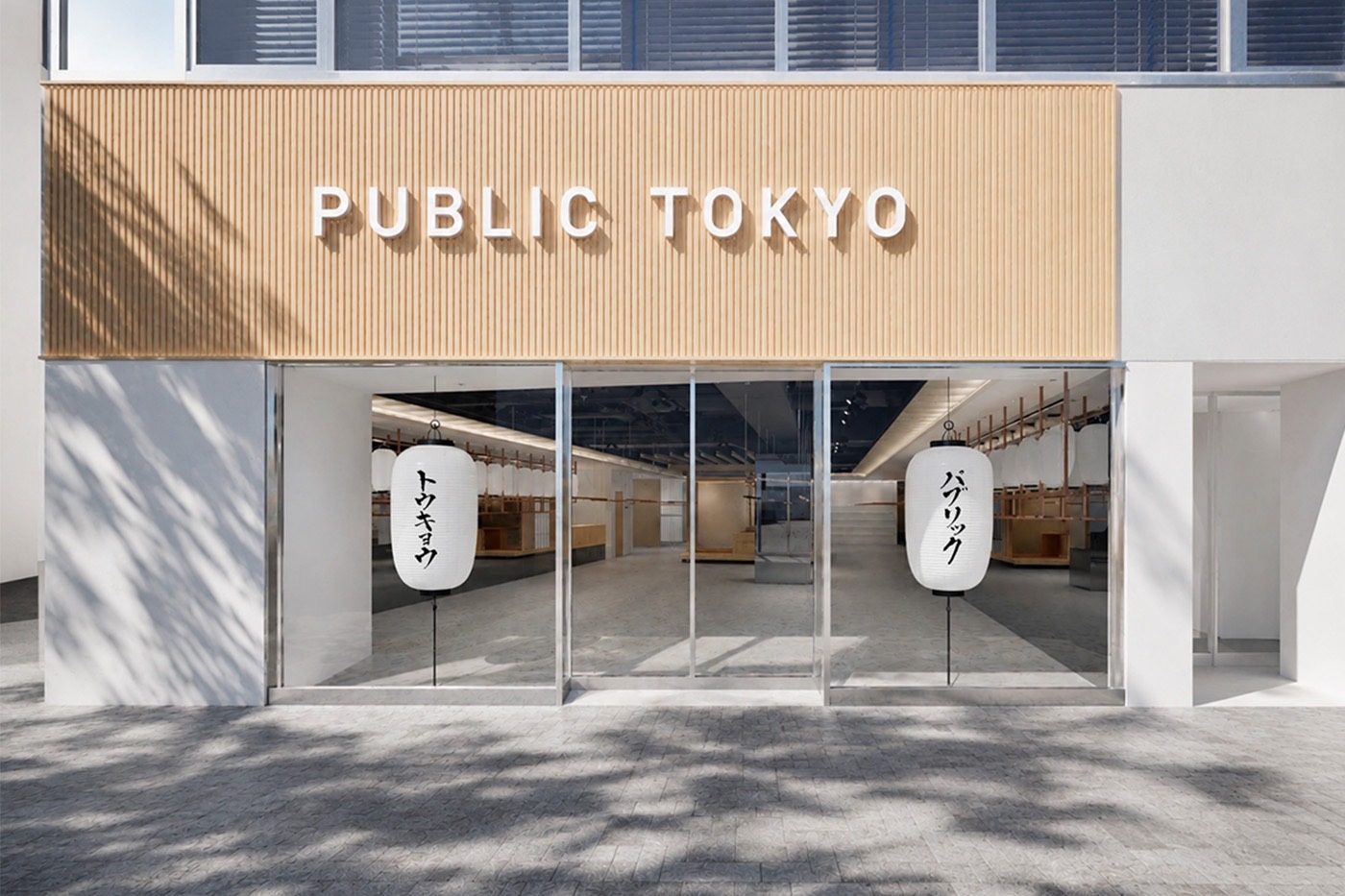
The PUBLIC TOKYO flagship in Jingumae, grown by TOKYO BASE (ⓒHypebeast)
12.The company's own path is consistent. TOKYO BASE started as STUDIOUS in 2008 and grew UNITED TOKYO and PUBLIC TOKYO, brands that hold to domestic production in full and pull high margins from it. JAPAN EDITION is the summit of that line.
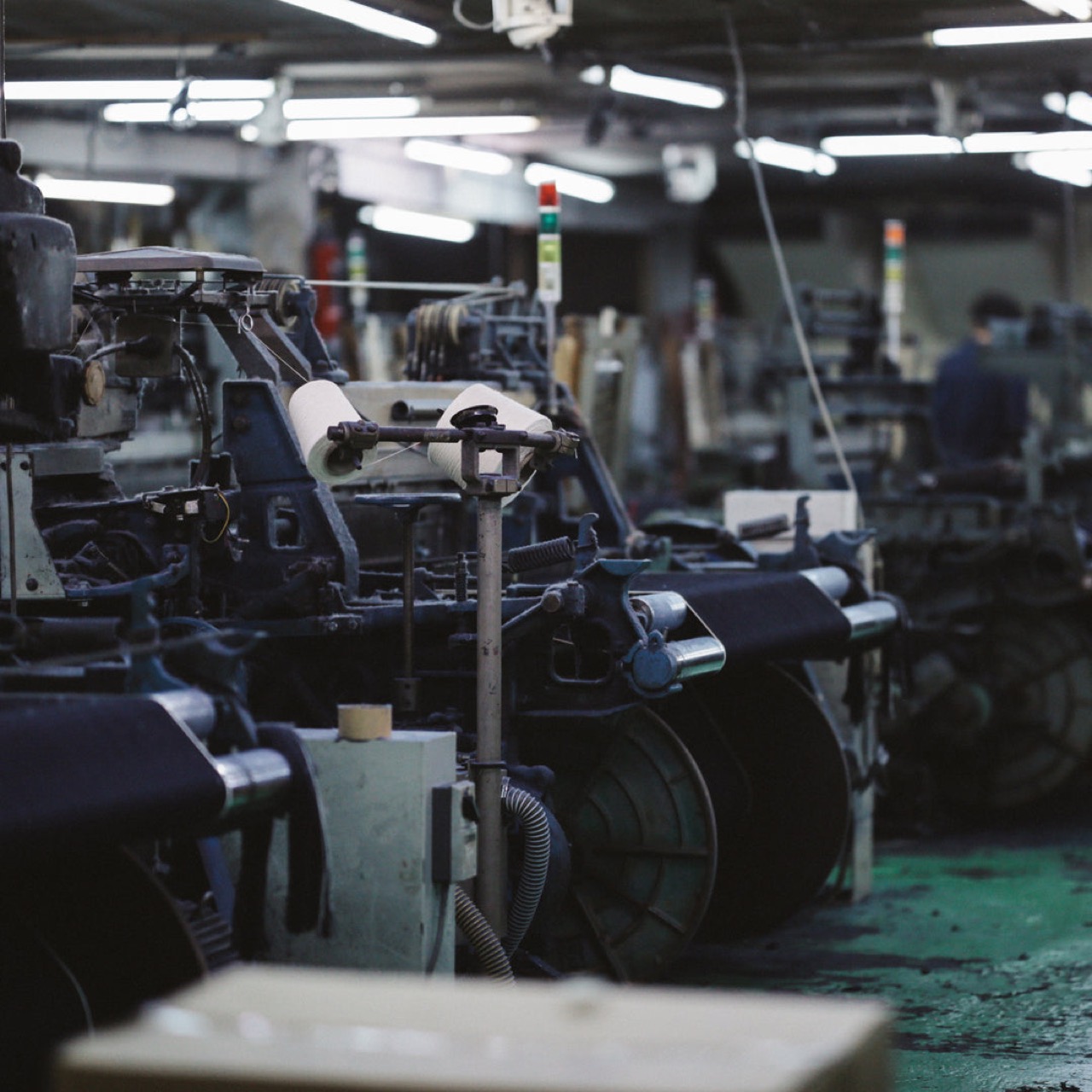
An old shuttle loom in Okayama. Selvedge denim comes off this slow machine (ⓒMOLTEMANI)
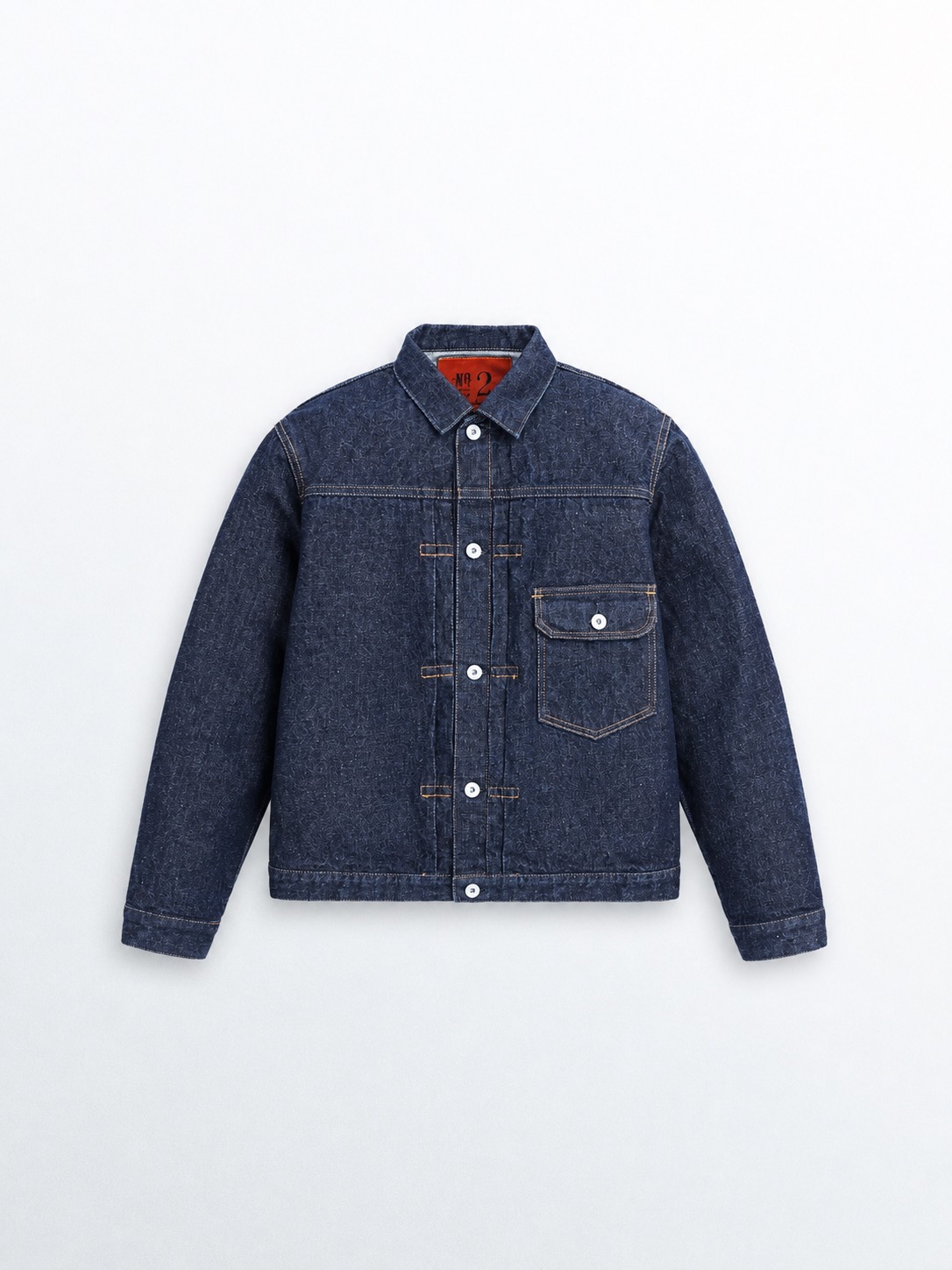
13.The current that made Made in Japan a luxury runs longer still. EVISU and its founder Hidehiko Yamane led the selvedge denim revival, and visvim and KAPITAL followed. Japanese craft denim already sells at a premium worldwide. Pairing this opening with the denim house YAMANE INDUSTRIES is a device for summoning that current, right down to an exclusive denim jacket, straight jeans and an acetate sukajan.
The denim jacket made with YAMANE INDUSTRIES for the opening (ⓒTOKYO BASE)
14.Full domestic production costs more and refuses the move to cheap overseas labor, and this company holds high margins anyway. The trick is staying out of wholesale discount distribution. Selling only direct and only at list price removes the margin band that sales erode. Look at the prefecture tag again from here and it is a device that raises price at zero cost, since one more line of a regional name costs nothing to print while perceived value rises.
15.This flagship was never a store meant to earn its rent. Ground-floor frontage on Namiki-dori trades at around 200,000 yen per 3.3 square meters a month by industry estimate, and if you take the 12% of revenue that apparel retail commonly runs at for rent, these two small floors would have to post revenue in the billions of won a year merely to break even. The arithmetic of recovering rent on Asia's priciest street through shop revenue does not stand up in the first place.
16.This is an antenna shop, an export showcase. Ginza is the most photographed shopping street in Asia, tourists from everywhere post their pictures, and in that moment the store becomes a free global PR device. What it sells is not clothes but the story of Made in Japan, while the actual money comes from expansion into China and the United States and from every other store and online. What these two floors do is advertising for a national brand, not selling.
JAPAN EDITION, the domestic craft select shop from the listed apparel company TOKYO BASE, opened on Namiki-dori in Ginza on July 16, built as a showroom of light above and a kura of shadow below so that one staircase sells the same garment twice. The number that stays is rent at 12% of revenue, and the moment you drop that ratio onto these two floors the store's own profit and loss stops adding up, which is when the address shows itself as bought exposure rather than bought sales. That is exactly where anyone trying to move this gets stopped. Score a prime-street flagship's P&L on revenue per unit area and it will always come out in the red, so exposure, content and story export have to be booked on a separate line, with recovery designed from the start to come from online and later stores. A small brand that misreads that accounting gets eaten by a single antenna shop. One line of a tag that narrows origin from a country to a town costs nothing, and it sets a price only when a stage with two temperatures, one above and one below, is standing there first.