retailHoteldiningdrinkCultureSpaceCafeBrand
ArticlesTravel
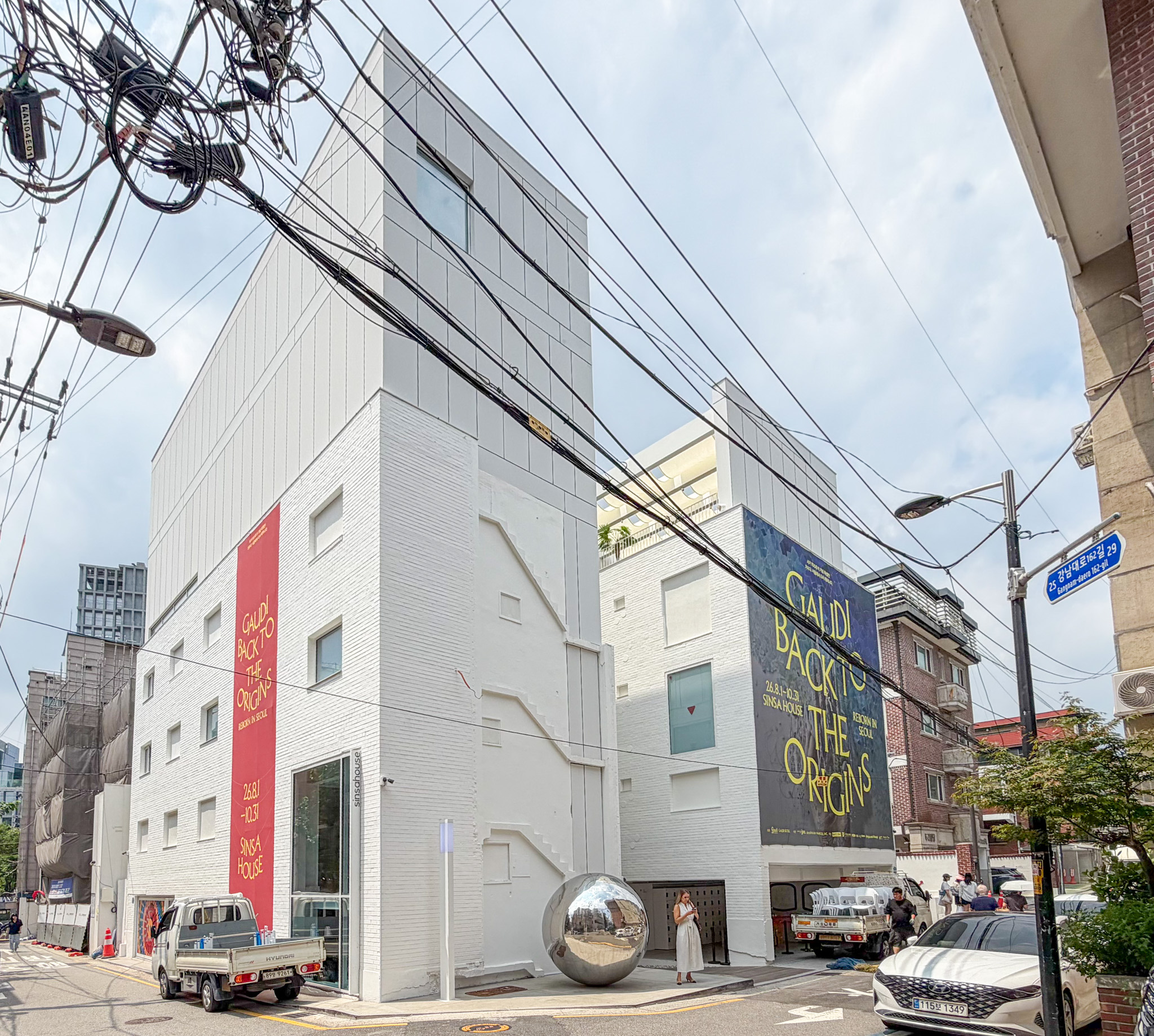
The two buildings after renovation · Left and right once stood as separate buildings. ⓒBRIQUE Magazine
The two buildings after renovationLeft and right once stood as separate buildings. ⓒBRIQUE Magazine
Daily Space

Two houses a month from demolition now sell tickets (Seoul, adaptive reuse)

2026.08.28

In an alley in Sinsa-dong, Gangnam, Seoul stand two multi-family houses built in the mid-1990s. Four years ago they were a month away from demolition. Today the two are joined into one building and charge adults 27,000 won for a ticket.

1.Gaudí: Reborn in Seoul opened on 1 August at 27 Gangnam-daero 162-gil, Gangnam-gu, Seoul. It closes on 31 October, so it runs 91 days. The site is an alley behind Garosu-gil, and the building is called Sinsa House.
2.Open daily from 10:00 to 20:00, last entry 19:00. Suggested viewing time is 60 minutes. Tickets sell through Fever at 27,000 won for adults, 22,000 won on weekdays. That is the price a former apartment building now charges.
3.On the register one building has a gross floor area of 431.13㎡, about 130 pyeong. Occupancy was approved in September 1995 and the registered use is Class 2 neighbourhood facility. Two such buildings sit side by side, and the exhibition runs across five floors that link them.
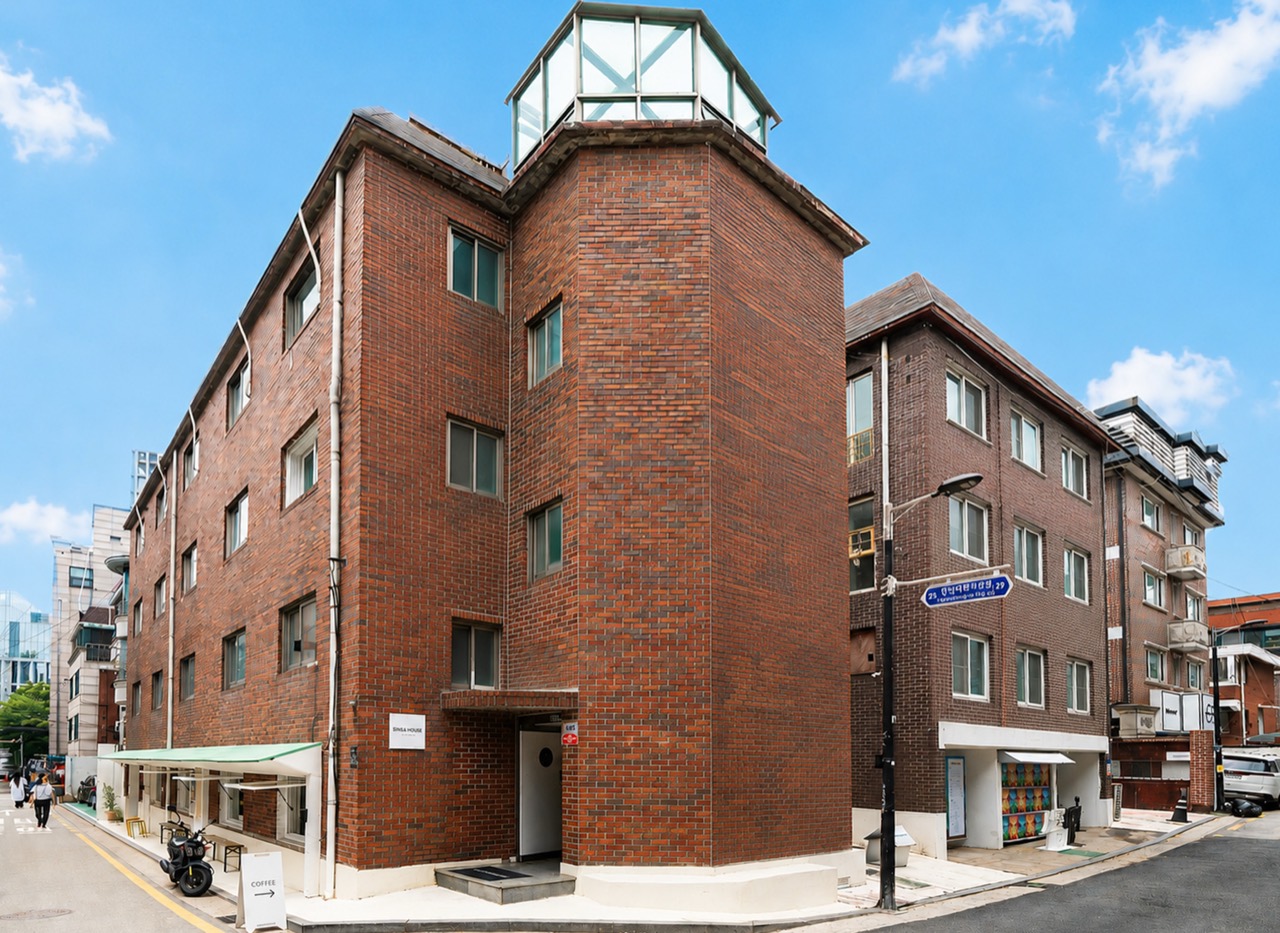
Before the white paint · Red brick and the rooftop glass box were the original face. It was already in use as an exhibition space. ⓒSinsa House
Before the white paintRed brick and the rooftop glass box were the original face. It was already in use as an exhibition space. ⓒSinsa House
4.What makes that price odd is the location. Cushman & Wakefield measured Garosu-gil's 2025 vacancy rate at 43.9%. That is the highest among Seoul's major retail streets, more than ten times Seongsu. Four of every ten storefronts sit empty, and on that street two multi-family houses started selling tickets.
열 곳 중 넷이 비어 있는 거리 2025년 서울 주요 상권 공실률 · Cushman & Wakefield 조사 가로수길 43.9% 한남·이태원 11.2% 홍대 10.4% 명동 4.9% 성수 3.4% 1층 임대료는 평당 월 30만~35만 원선을 그대로 부른다
How to read the chartOnly the black bar is Garosu-gil. The other four combined do not reach half of it.
5.Go back to 2022. A month before the scheduled demolition, Maison Korea leased the whole building. Maison to Maison 2022. Thirty-two rooms went to creators, one each, to furnish in their own taste, and the visitors who came asked for the building to be kept. It held on for three more years. What stopped the demolition was not a preservation campaign but the number of people who bought tickets.
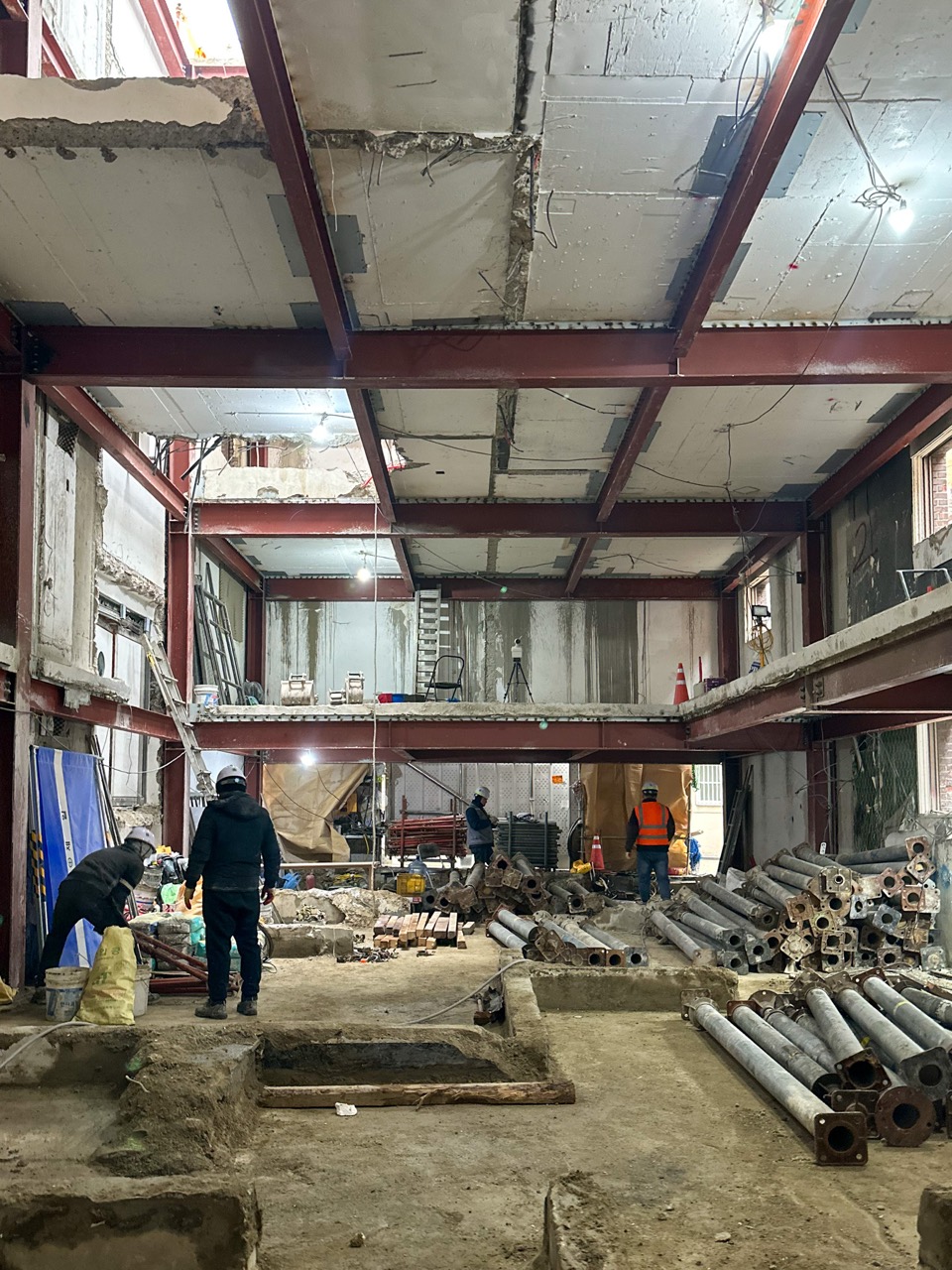
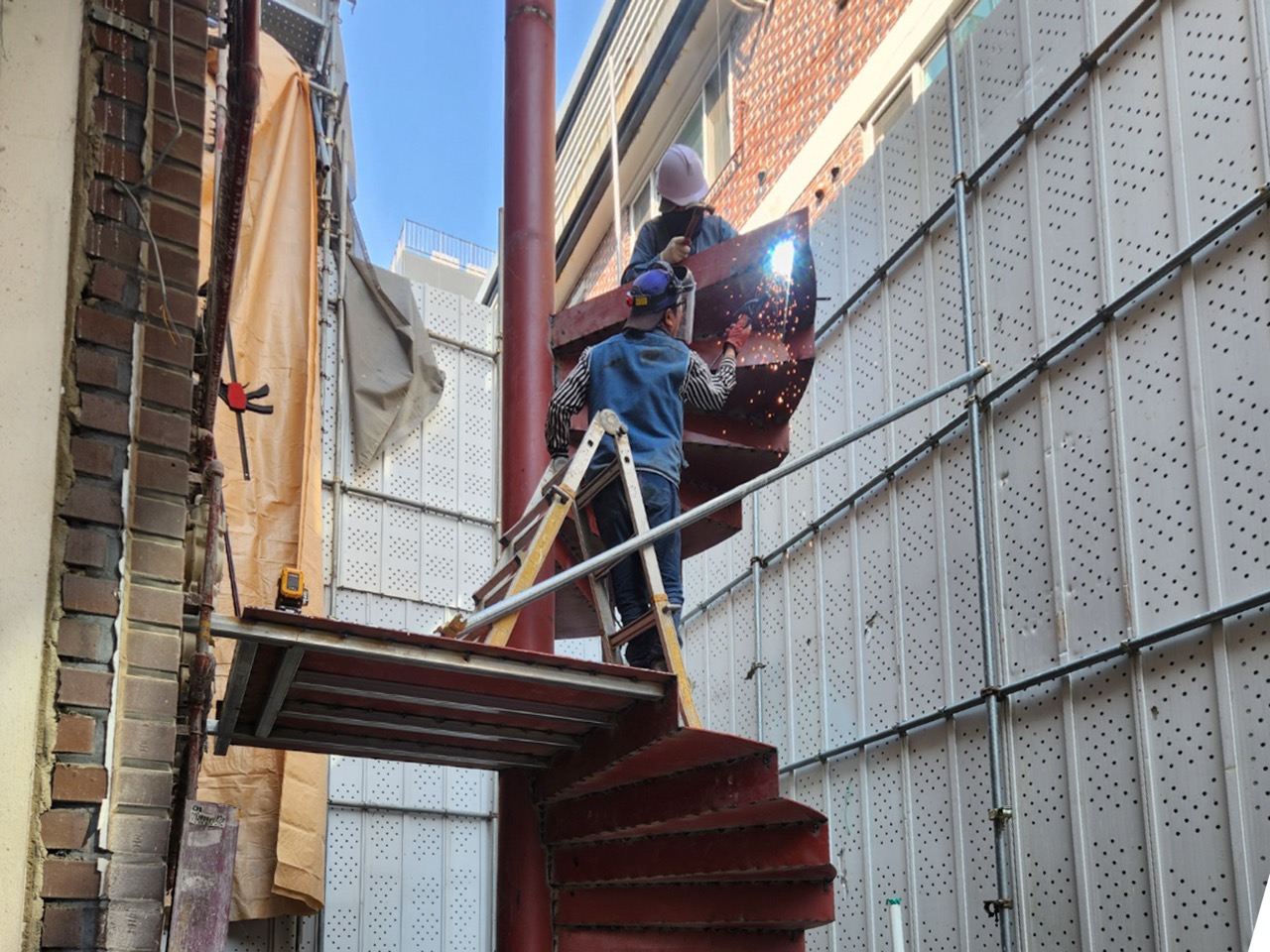
6.Andrew Park, who runs the place, handed the design to Iroje, and preparation and construction took two years. An excavator's grapple broke through the brick facade to cut openings, and parts of the slab came out while red H-beams went in to carry the load again. In the yard between the two buildings a new external steel stair was welded up.
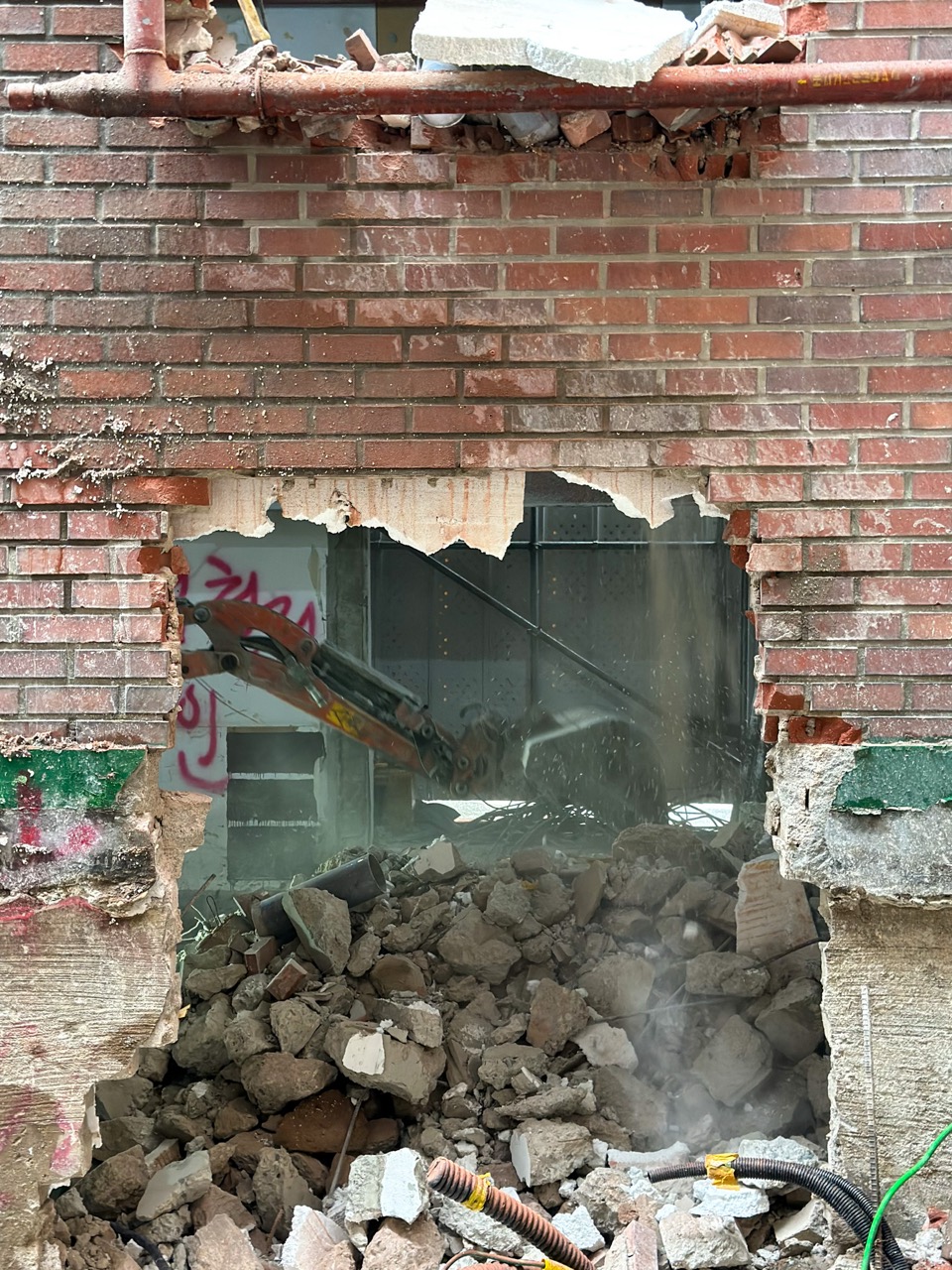
Breaking the wall · The grapple tore the brick wall open. ⓒSinsa House
Breaking the wallThe grapple tore the brick wall open. ⓒSinsa House
Slab out, steel in · The red members are the new H-beams. ⓒSinsa House
Slab out, steel inThe red members are the new H-beams. ⓒSinsa House
7.The red brick went white, but the cut faces of the openings were left unfilled. Brick courses show through under the paint, and the bolt heads of the new steel stayed in place, painted white. Seung H-Sang describes it as editing time rather than stopping it. Redevelopment erases Seoul's memory fast, he says, so he wanted a space that keeps the marks of having been lived in while still feeling new.
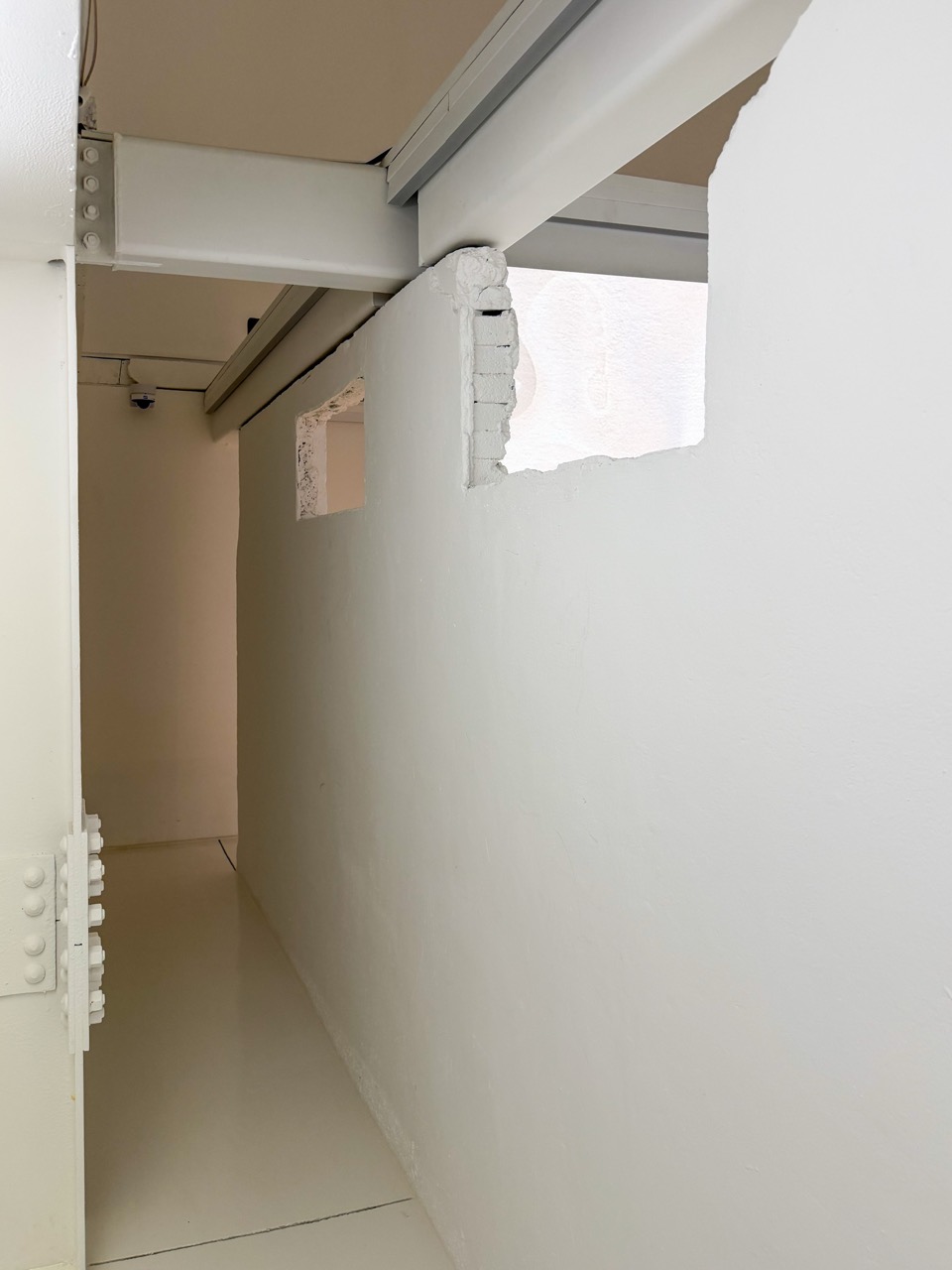
A section left unfilled · Brick courses stay visible where the wall was cut. ⓒBRIQUE Magazine
A section left unfilledBrick courses stay visible where the wall was cut. ⓒBRIQUE Magazine
The stair that joins the two · An external stair welded up in the yard. ⓒSinsa House
The stair that joins the twoAn external stair welded up in the yard. ⓒSinsa House
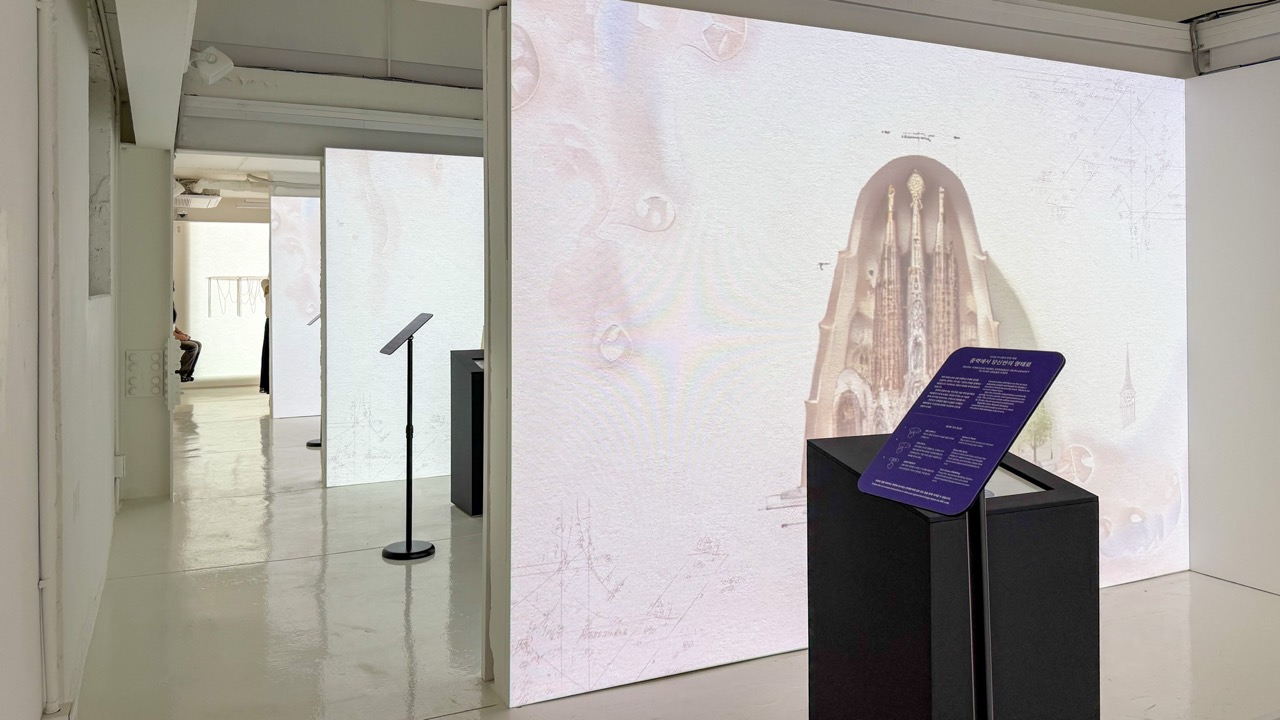
8.Here is where studio-sized rooms turn from a defect into an asset. This exhibition needs seven themed spaces, and in a white cube you would build partition walls to make rooms and tear them out at the end. Here the rooms were already standing. There are more than 30 of them and the ceiling heights all differ. Original material that needs low light suits a small, low room, while a projection that takes a whole wall needs the height gained by removing a slab. Forty-two authorised reproductions and media art by NAKED are distributed across that variation.
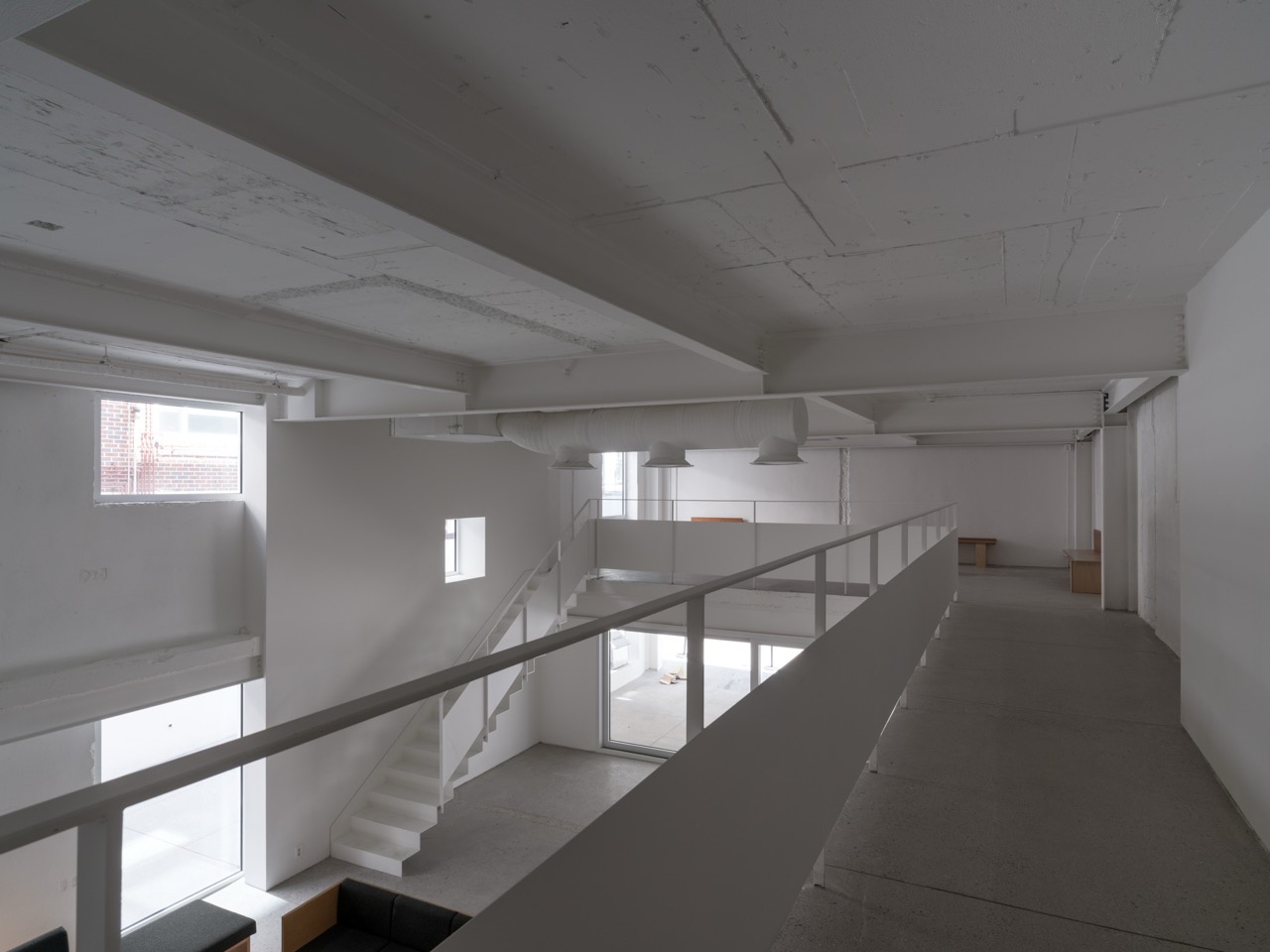
Where floors were opened up · Height gained by taking out a slab. ⓒBRIQUE Magazine
Where floors were opened upHeight gained by taking out a slab. ⓒBRIQUE Magazine
Room to room · A projection that takes a whole wall. ⓒBRIQUE Magazine
Room to roomA projection that takes a whole wall. ⓒBRIQUE Magazine
9.What left Garosu-gil first was not the tenants but a reason to stay. Online took the reason to go buy clothes, and coffee is everywhere. A business that holds someone for 60 minutes and charges twenty-odd thousand won for it works in that gap.
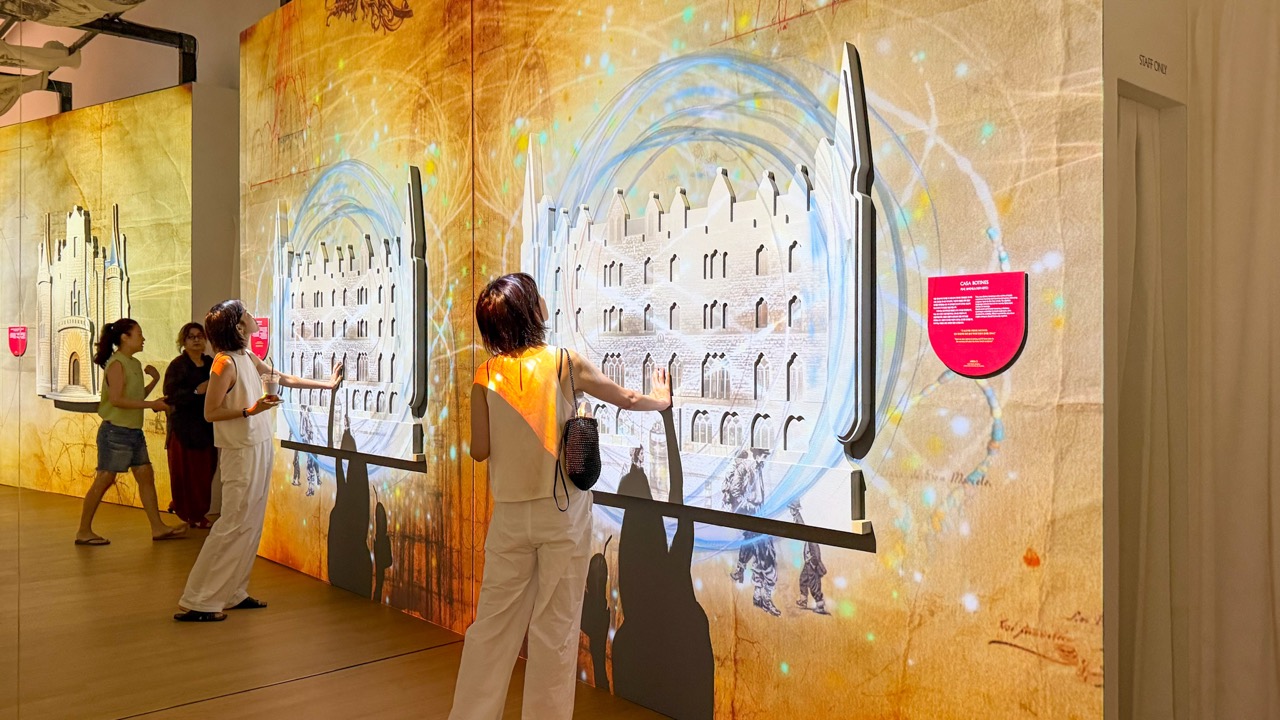
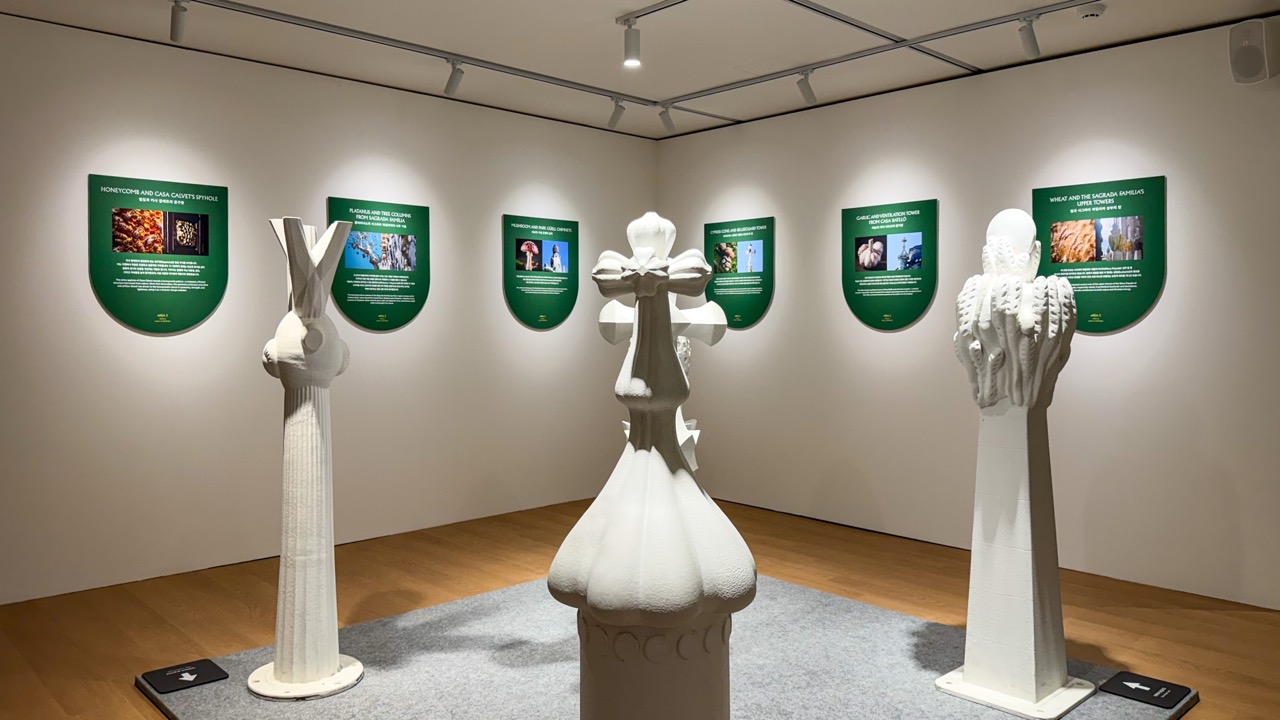
An exhibition you touch · Visitors putting their hands on the wall-mounted building reliefs. ⓒBRIQUE Magazine
An exhibition you touchVisitors putting their hands on the wall-mounted building reliefs. ⓒBRIQUE Magazine
10.Split by floor and let out as shops, one building brings in around 18 million won a month, so 36 million won a month for the two. That assumes 300,000 won per pyeong on the ground floor, the going Garosu-gil rate, with upper floors and the basement set far below it (estimates from here on).
11.The question is whether that money actually comes in. Apply the 43.9% vacancy rate and it drops to around 20 million won a month. The more you slice the floors, the more units go empty, and empty units still owe management fees. It is not that landlords cannot cut rents. Cut them and the building's appraised value follows, so they choose to leave it empty.
12.The exhibition side runs differently. Take the exhibition area of the two buildings and the viewing time, and the ceiling comes to 1,200 people a day. Assume half of that turns up and an average ticket of 20,000 won, and three months brings revenue in the 900 million won range. The figures behind the calculation are in the chart below.
13.What an immersive exhibition pays for space runs around 12 to 15% of ticket revenue. Against the figure above that is 36 to 45 million won a month. It matches or beats a fully let building, and it comes from one tenant on a fixed term. On a street that cannot fill up, that difference is everything.
쪼개서 놓느냐, 통째로 빌려주느냐 두 동 합계 월 수입 · 공개 수치로 계산해 본 값이며 실제 계약 조건이 아니다 층별 상가 임대 · 만실 가정 3,600만 원 층별 상가 임대 · 공실률 43.9% 반영 2,000만 원 전시 대관 · 티켓 매출의 12~15% 3,600~4,500만 원 계산 전제 · 1층 평당 월 30만 원, 위층과 지하는 그보다 한참 낮게 · 건폐율 57%로 한 층 34평 전시 면적 600㎡, 1인 5㎡, 관람 60분, 하루 10시간 운영으로 수용 상한 1,200명 실제 방문은 상한의 절반, 객단가 2만 원, 91일 기준
How to read the chartOne black bar is one tenant. The two rows above need every unit filled.
14.The same exhibition drew more than 330,000 people through Tokyo and Osaka. The content is already sold goods, and what Seoul tested is the container. Can you rent a multi-family house in an alley instead of building a permanent hall on museum scale? So far the answer is that there is no reason you cannot.
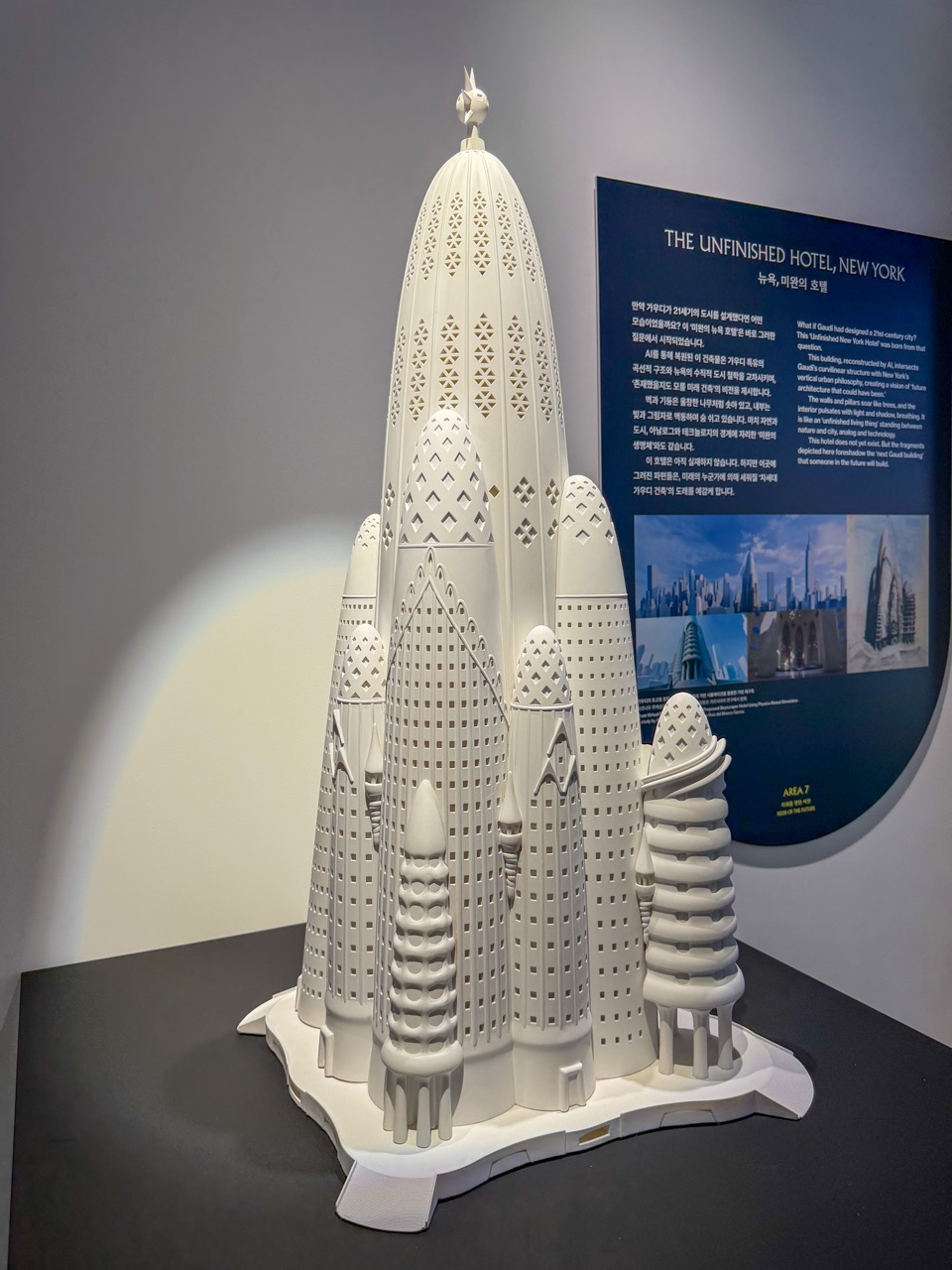
A hotel never built · A design that never rose in New York. ⓒBRIQUE Magazine
A hotel never builtA design that never rose in New York. ⓒBRIQUE Magazine
15.The exhibition ends in three months, though. Two years of construction cost cannot be recovered in three, and the value of this building is set by the next tenant. A building with more than 30 rooms left standing and ceiling heights all over the place sells to the next content for the same reason. Value that would have vanished had it been flattened into a white cube.
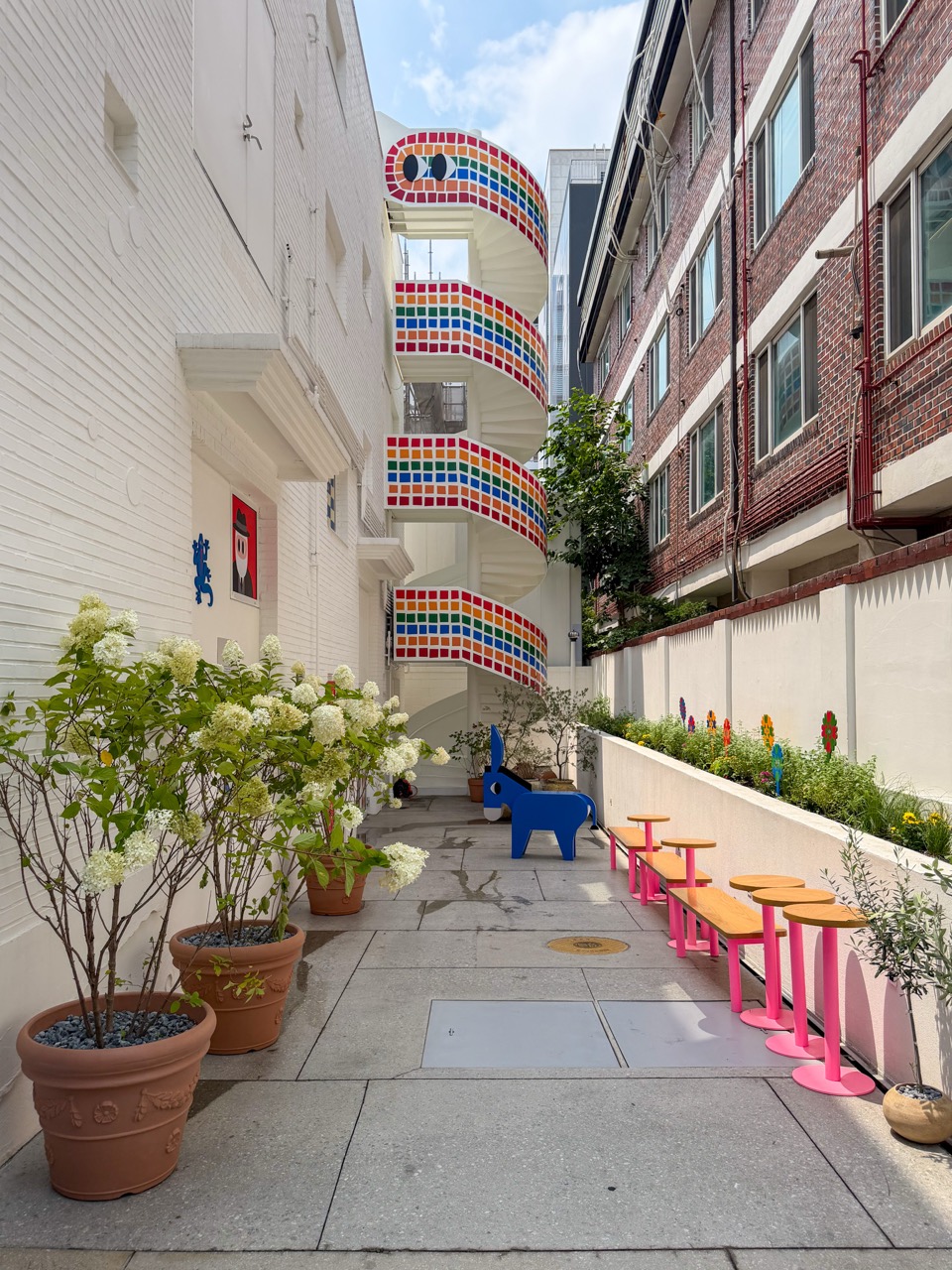
Between the two buildings · Exhibition graphics wrapped around the welded stair. ⓒBRIQUE Magazine
Between the two buildingsExhibition graphics wrapped around the welded stair. ⓒBRIQUE Magazine
One unit, one theme · A single studio room turned straight into a gallery. ⓒBRIQUE Magazine
One unit, one themeA single studio room turned straight into a gallery. ⓒBRIQUE Magazine
16.An exhibition opened a month before demolition bought time, and after two years of work that multi-family house sells tickets. On a street with a 43.9% vacancy rate, one tenant filling the whole building on a fixed term is the whole play. To run a ticketed exhibition permanently in a neighbourhood facility you have to convert it to a culture and assembly facility, and escape stairs and parking counts arrive with it. This building has three parking spaces on record.
Sources: BRIQUE MAGAZINE, August 2026, on how two multi-family houses became one exhibition hall · Harper's Bazaar Korea, August 2026, on Sinsa House · Design+, 2026, on Gaudí's architecture shown in Seoul for the first time · Daily Art, 2026, on Gaudí: Reborn in Seoul · Fever ticketing page · gaudiseoul.com · BRIQUE MAGAZINE, 2022, on Maison to Maison 2022 held in a multi-family house facing demolition · OUR LABOUR, Recollective: 25 guest rooms · Zippoom building record for 522-23 Sinsa-dong · Etoday, 2 June 2026, Garosu-gil field report citing a Cushman & Wakefield survey · Korea Real Estate Board small retail rent index. Confirmed figures are as follows. Exhibition runs 1 August to 31 October 2026 (closed 25 September), open 10:00 to 20:00 with last entry at 19:00 and a suggested 60 minutes, adult list price 27,000 won with weekday discount 22,000 won, general discount 23,000 won and student tickets in the 15,000 won range, about 30 original items, 42 authorised reproductions and 7 themed spaces, design by Iroje (Seung H-Sang) with spatial planning by jpa, media art by NAKED and organisation by the Gaudí Foundation and Gaudí Seoul, Maison to Maison 2022 was organised by Maison Korea with 32 rooms and 28 creators, and the building at 522-23 Sinsa-dong has a site area of 199.5㎡, gross floor area 431.13㎡, three floors above ground and one below, maximum height 8.8m, reinforced concrete, occupancy approved 20 September 1995, Class 2 neighbourhood facility, three registered parking spaces, site coverage 57% and floor area ratio 158%, with a May 2021 sale at 6 billion won. Seoul 2025 vacancy rates were Garosu-gil 43.9%, Hannam and Itaewon 11.2%, Hongdae 10.4%, Myeong-dong 4.9% and Seongsu 3.4%, Garosu-gil ground-floor rent runs 300,000 to 350,000 won per pyeong a month, and the Tokyo and Osaka runs of the exhibition drew more than 330,000 people. Monthly rental income of 18 million and 36 million won, the 20 million won vacancy-adjusted figure, the 1,200-person ceiling, 500 visitors a day, a 20,000 won average ticket, three-month revenue in the 900 million won range, and the 12 to 15% space share with 36 to 45 million won a month are values calculated from public figures, not disclosures from the operators. Actual lease terms, construction cost and visitor numbers have not been published. The combined floor area and exhibition area of the two buildings are estimated from one building's register and the published floor arrangement, and whether the building changed its registered use cannot be confirmed from public records. Notes on use conversion, escape routes and parking summarise general standards, so individual projects turn on the relevant review. Photos ⓒ each copyright holder as credited. Quoted with sources for private reading.