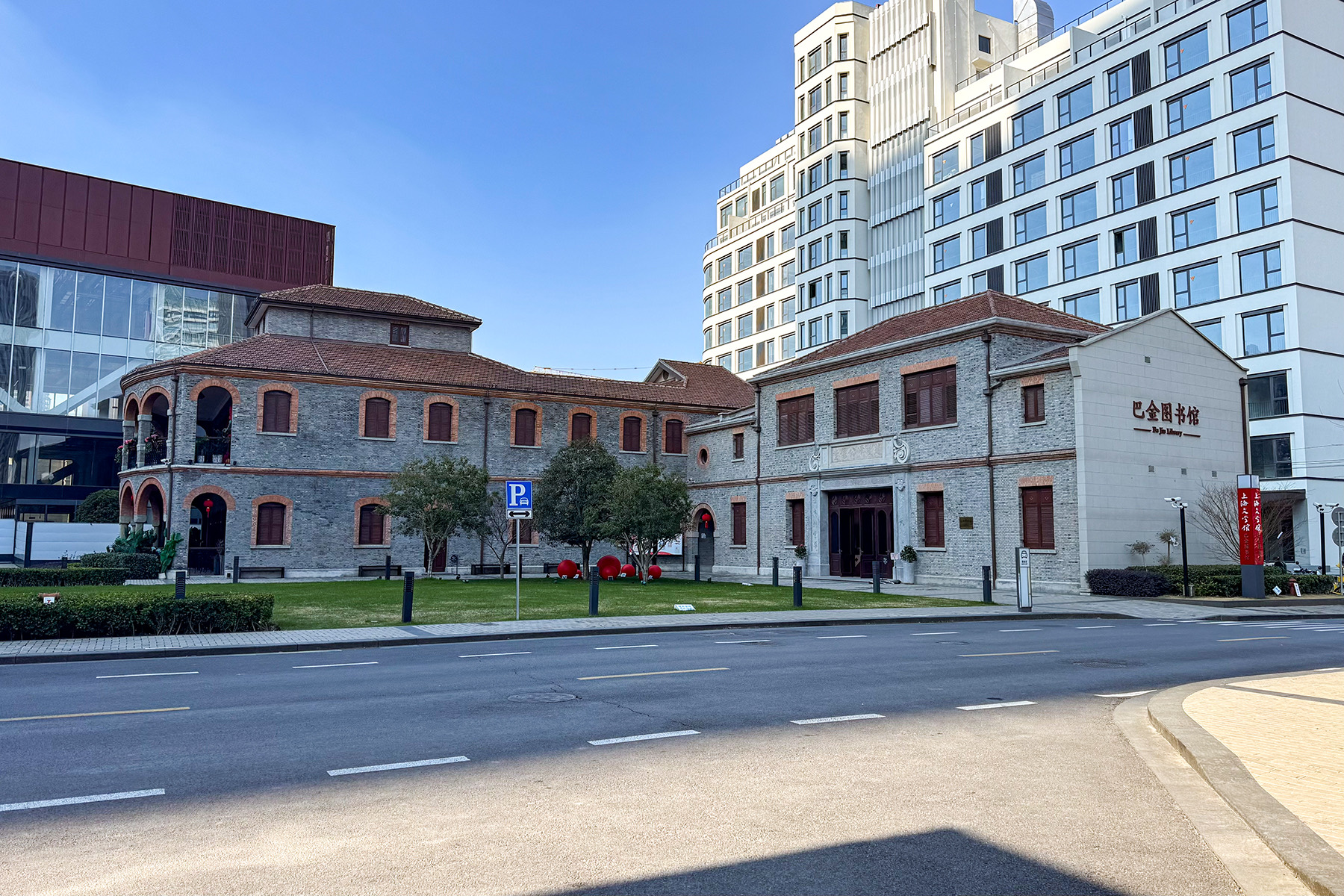
The Shanghai Literature Museum opened on August 27. Roughly 14,000 sqm above ground, zero admission, no booking. It was built not by the city but by the property developer that won the land.
1.The Shanghai Literature Museum opened its doors on August 27. It sits on the corner of North Jiangxi Road and Wujin Road in Hongkou District. About 14,000 sqm above ground, made up of three listed heritage buildings and one new block. Five permanent galleries carry the titles Time, Left Wing, Metropolis, Light and Shadow, and World, each paired with Shanghai. Admission is free throughout and no reservation is taken.
2.The new main block runs five storeys. Its upper mass is wrapped in deep red metal panel, its base opened up in glass. In the middle of the lawn stands Yihong Garden, ringed by two levels of arched loggia, and beside it a grey brick house banded in red brick. The new building does not turn its back on the courtyard, it opens onto it.
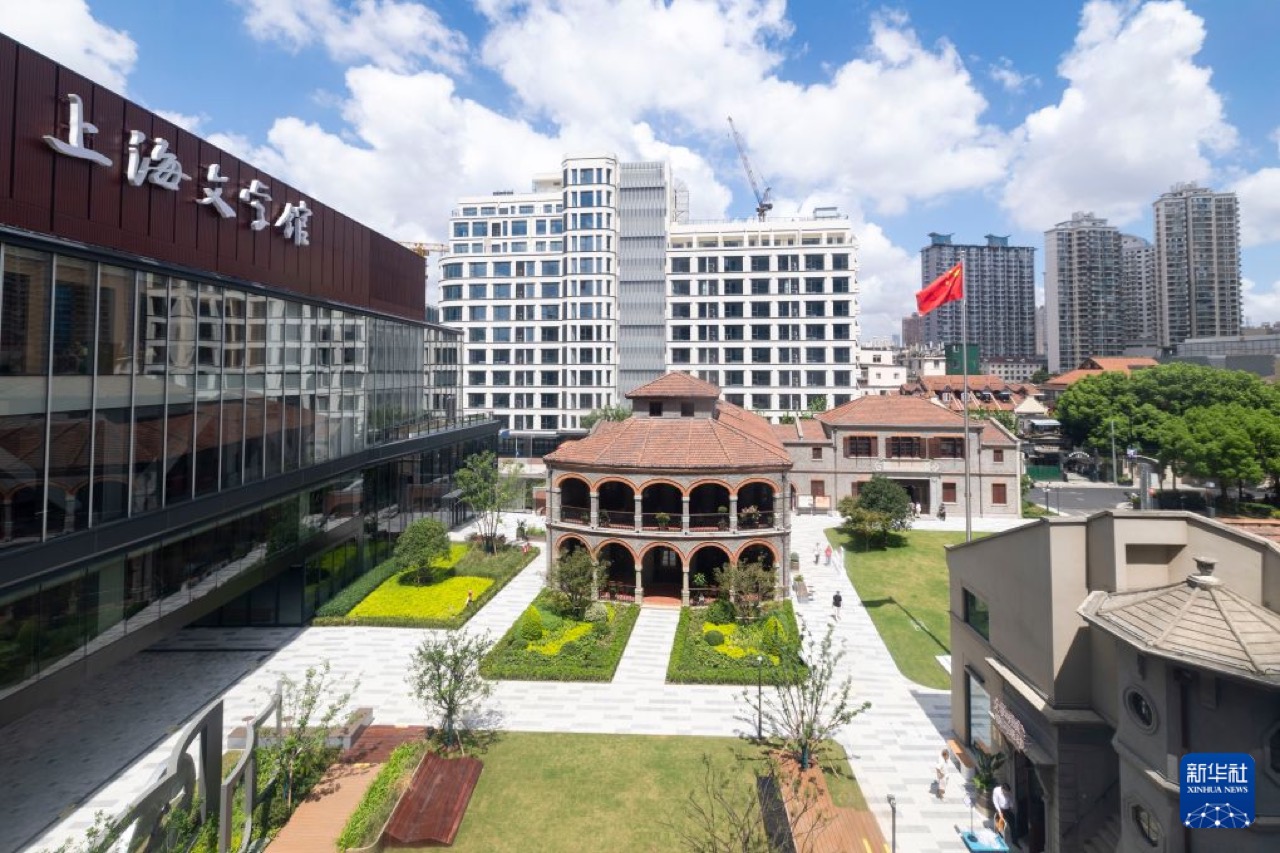
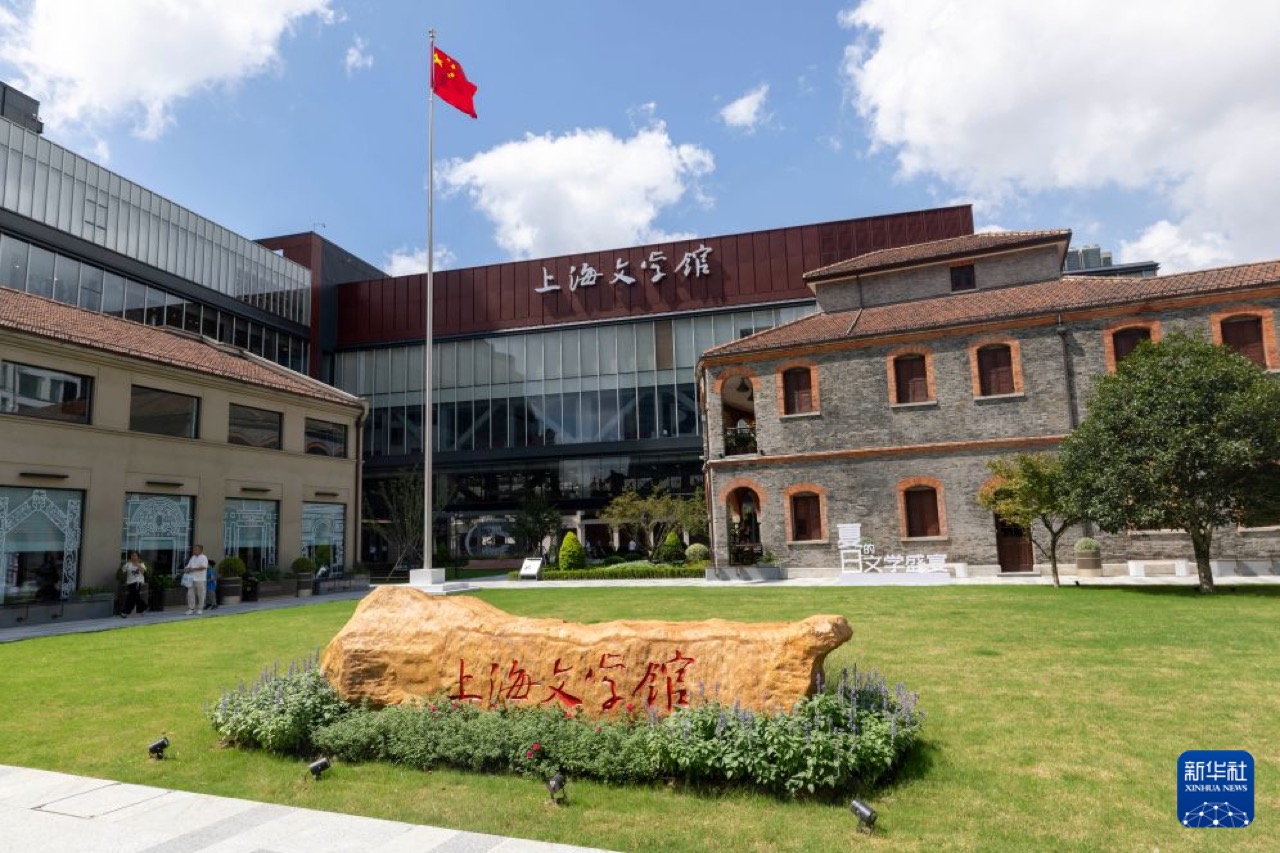
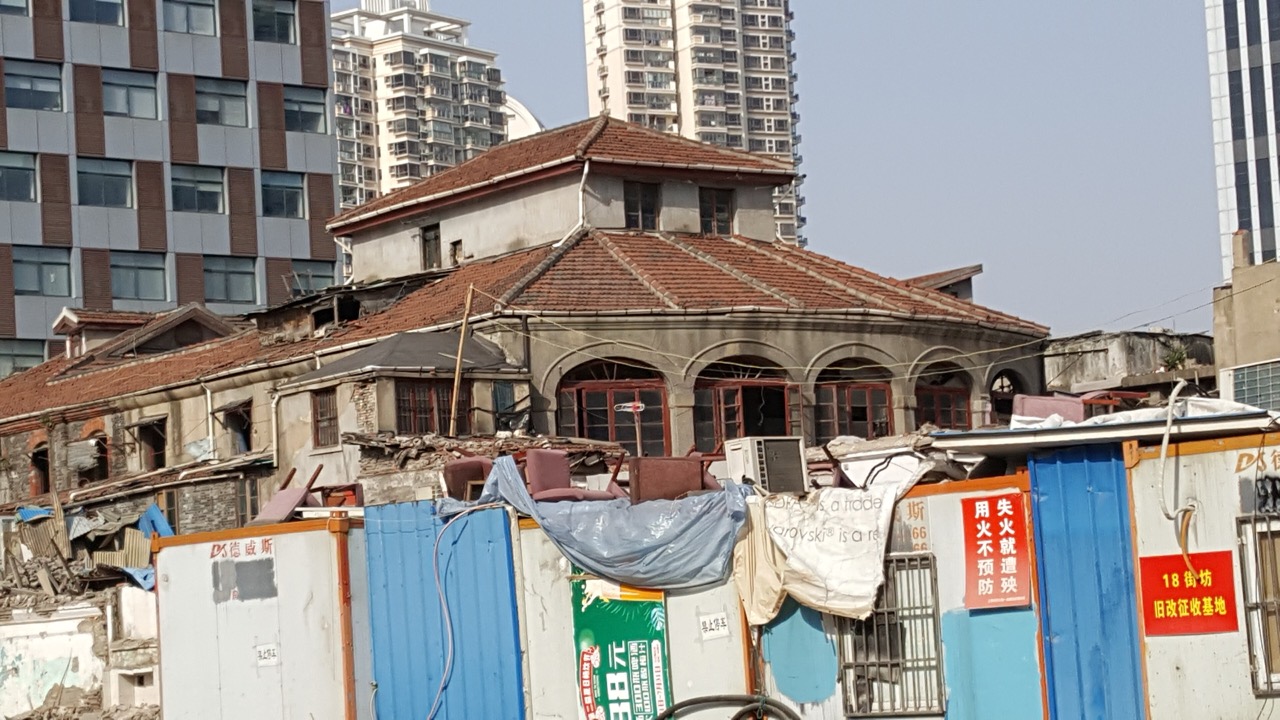
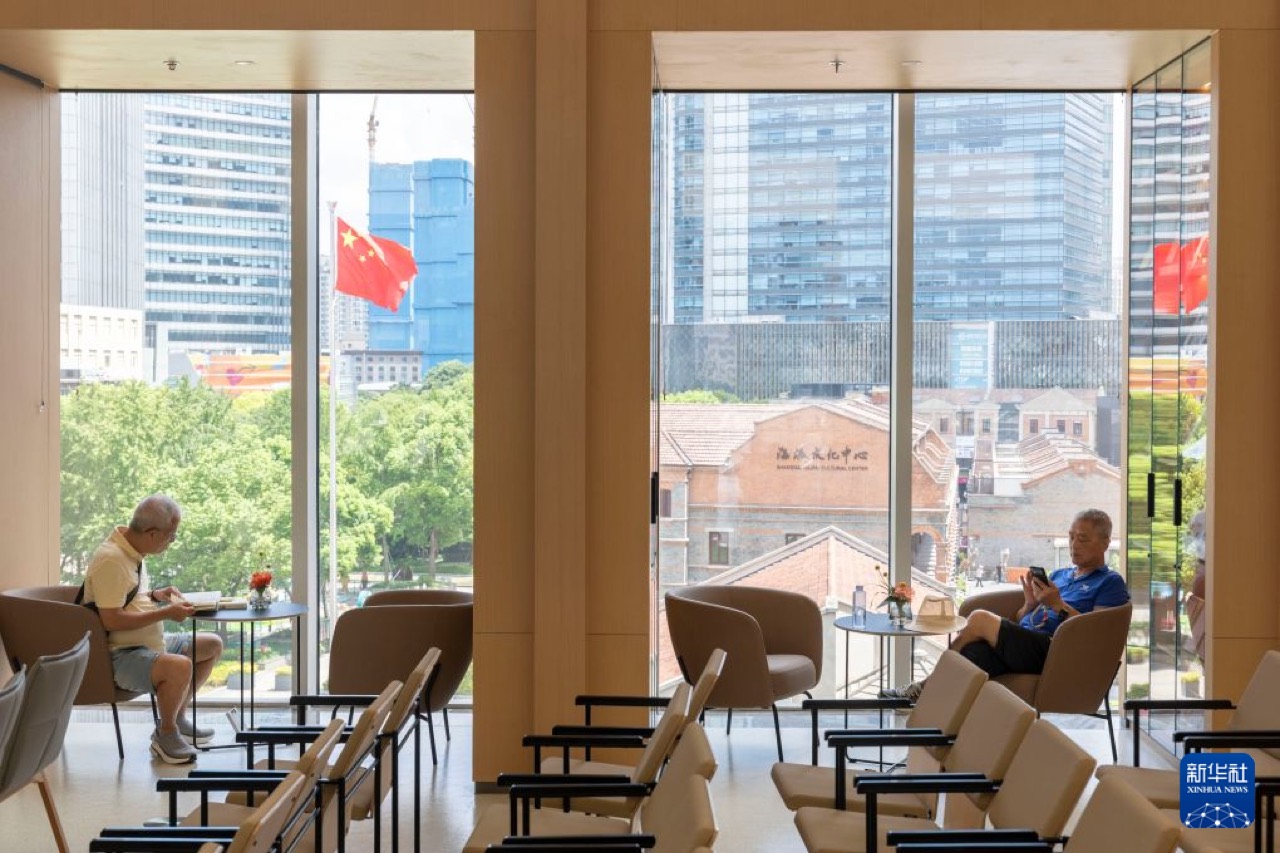
3.Yihong Garden is a villa built in the early 20th century, originally called Zhao Family Garden. Sun Yat-sen visited three times, and the building is on Shanghai's register of outstanding heritage architecture. Clearance of this block was completed in 2014, and after every house around it came down this one stayed. Inside it now sits the Ba Jin Library. A museum within the museum, it opened ahead of the rest in November 2024.
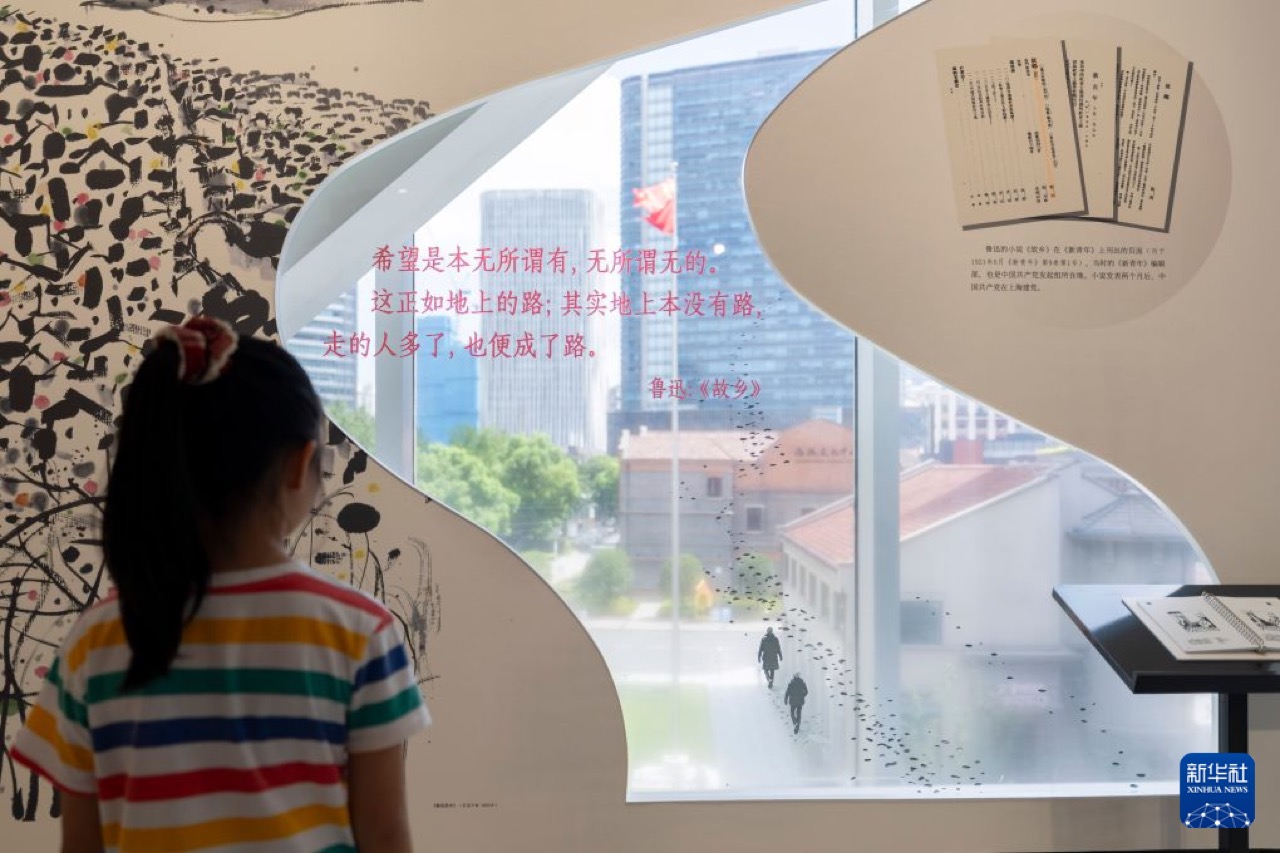
4.On the fourth floor a glass panel taller than a person stands against the gallery wall. The closing lines of Lu Xun's story My Old Home are set into it in red, and through those characters you see the tiled roofs of the courtyard and the office tower across the road. Silhouettes of walking figures are printed low on the glass, so a visitor standing there shares one frame with the pedestrians outside. There are 17 of these glass installations in the building.
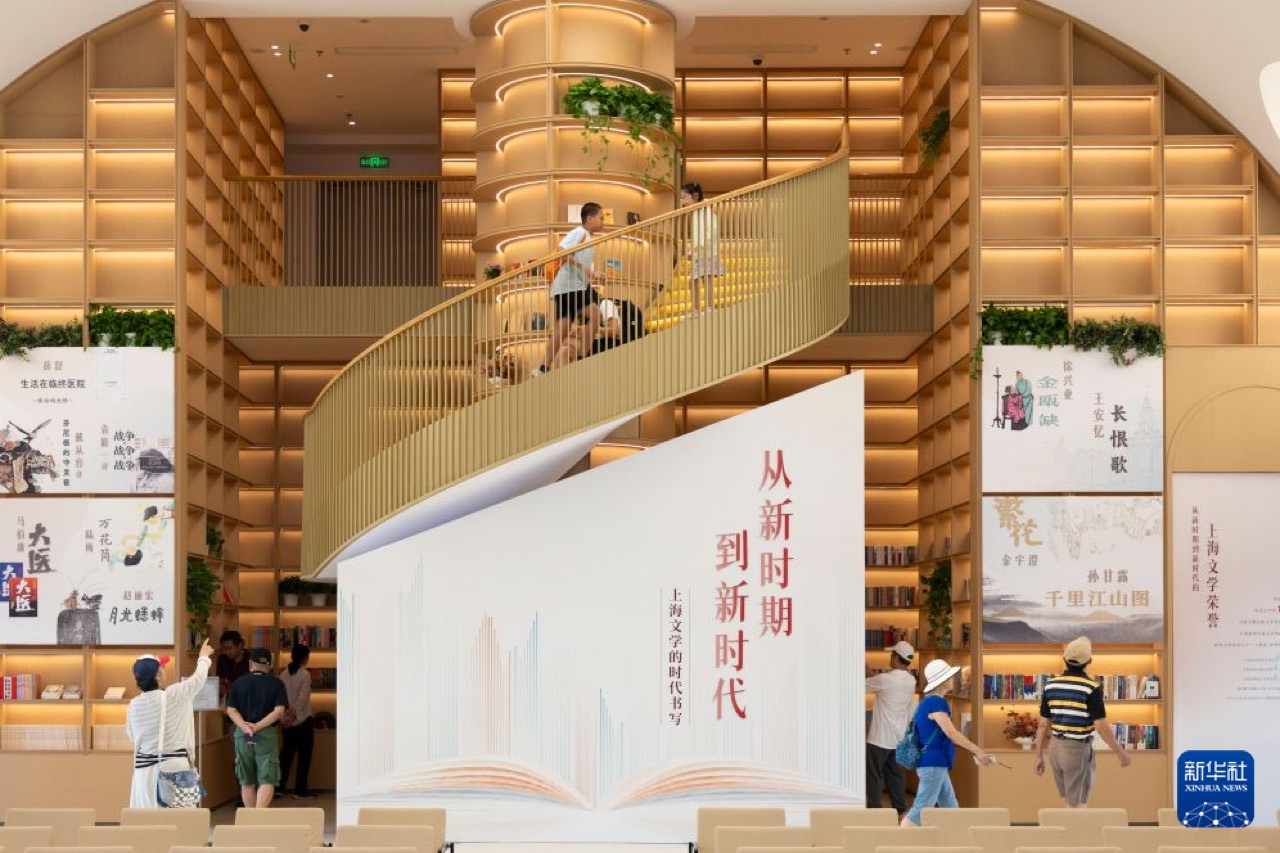
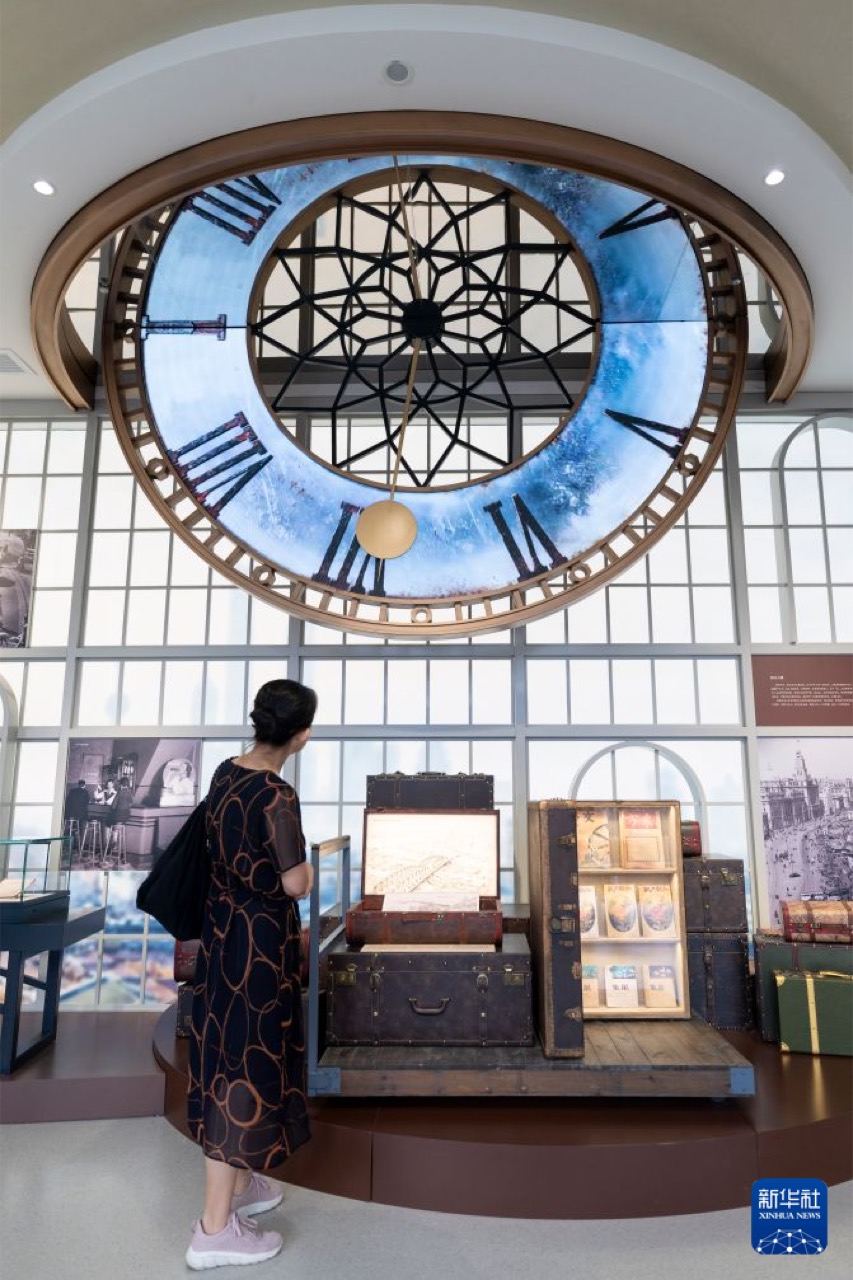
5.Gallery and reading room were never separated. Books, shelves, tables and chairs are mixed together on every floor, and a single spiral stair cuts straight through the stacks. Between the black framed shelves hang stethoscope shaped devices that read a novel aloud when held to the ear, and rows of lecture chairs are laid out by the windows. This is not a layout for a quick look, it is a layout for spending the day.
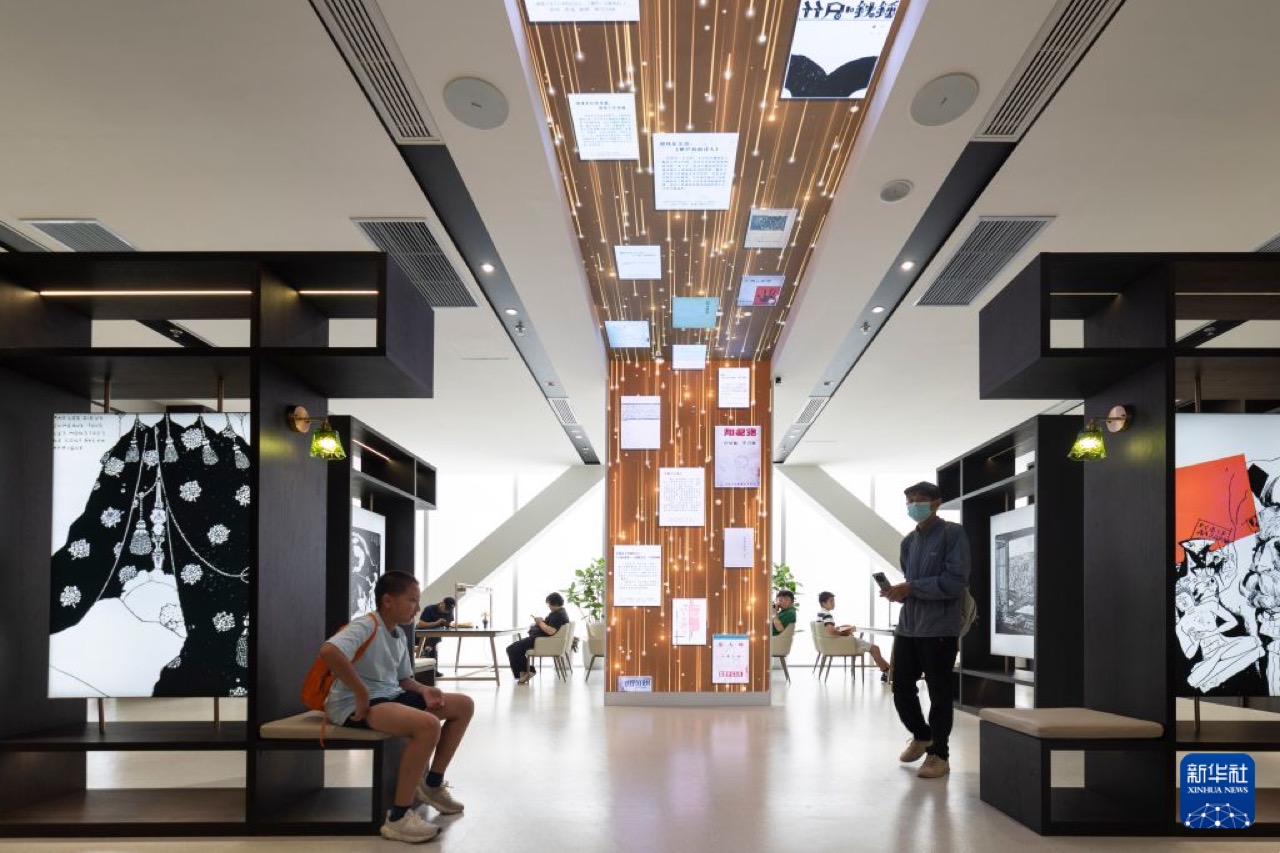
6.Free entry here is a design condition, not generosity. With no tickets there is no queue for the box office and no one checking stubs, and instead more people wander in with nothing to do. What the museum wants is not the visitor who does one lap but the one who settles in. Someone who walks in off the street and stays two hours is the score sheet for this building.
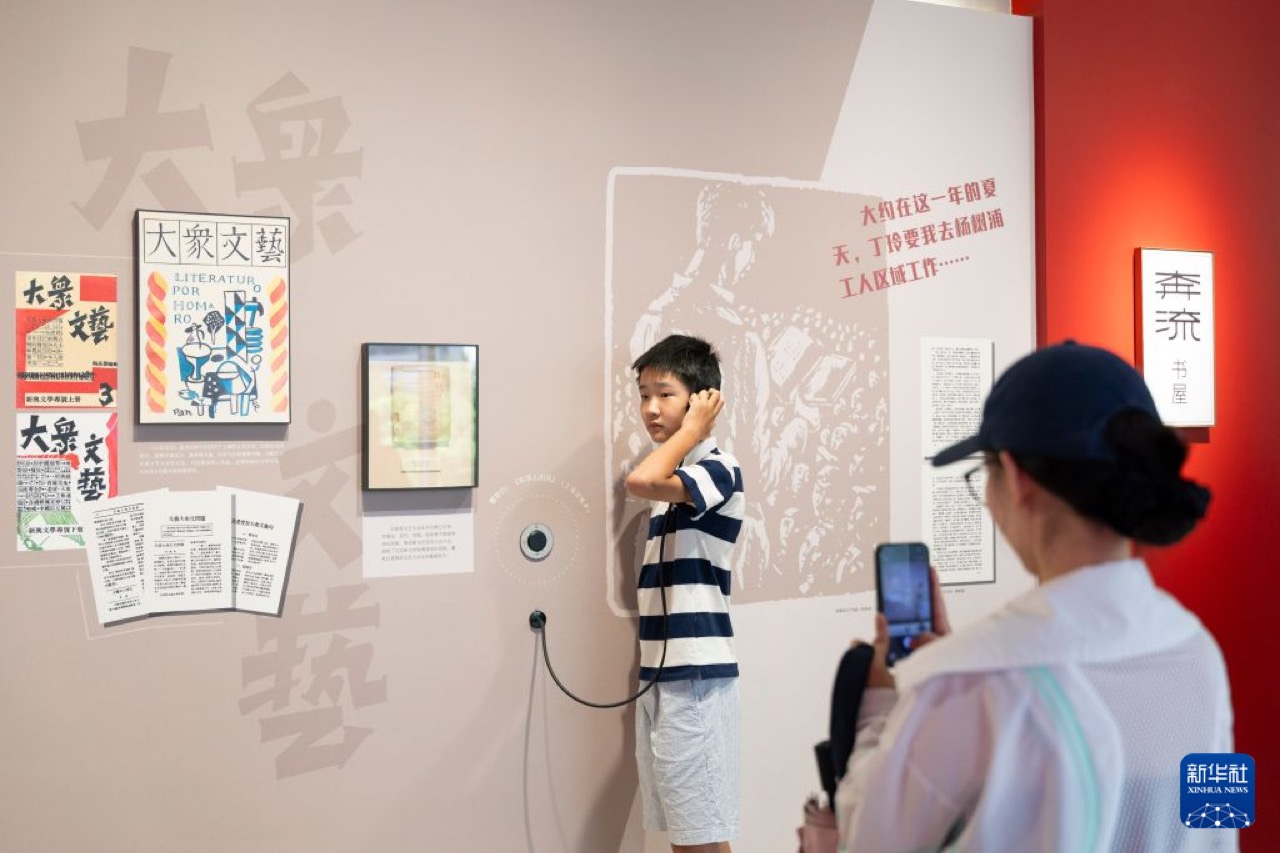
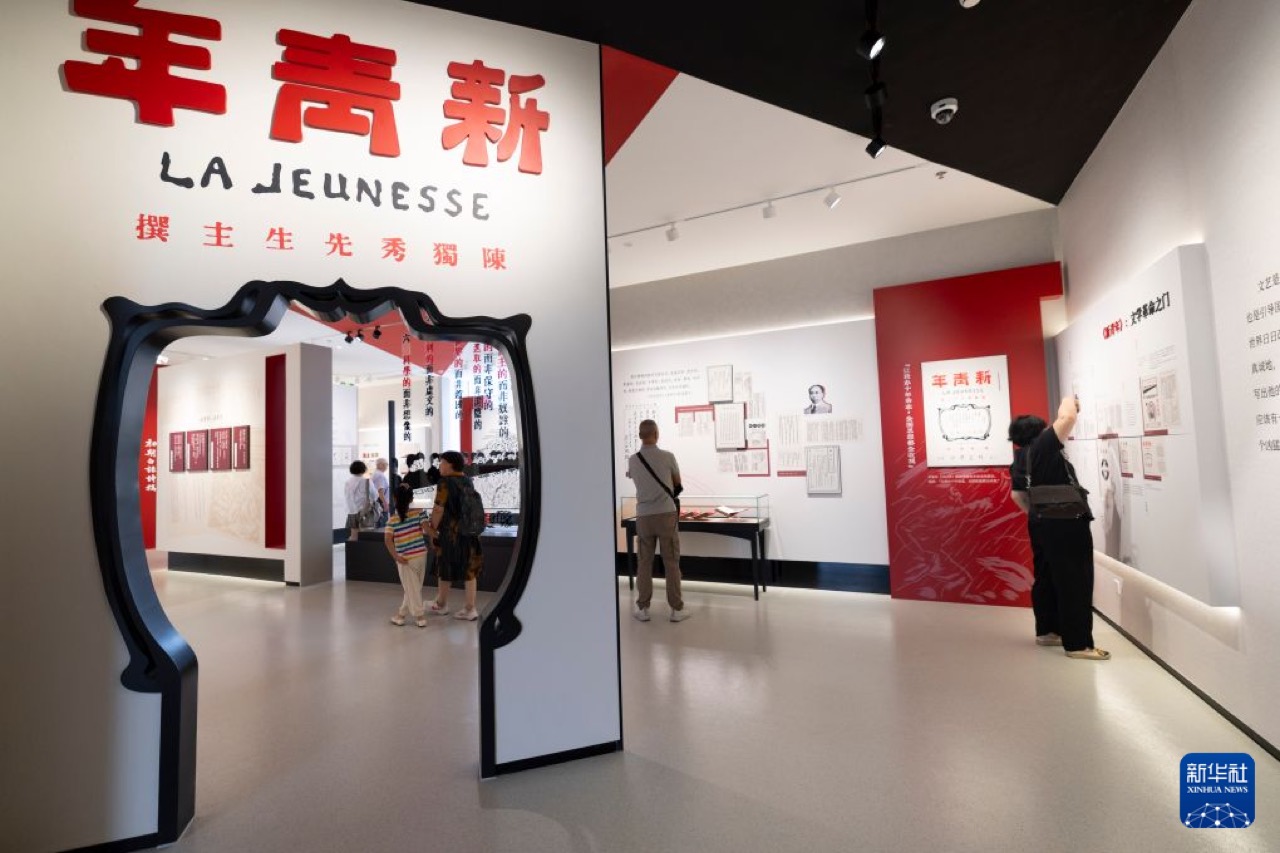
7.The subject matter was a gift. Hongkou is where the left wing writers of the 1930s lived, and where Lu Xun spent his last nine years. The city already owns this story, so nothing had to be invented. Blow up the masthead of the first issue of La Jeunesse to the size of a wall and that alone is the neighbourhood's history.
8.The land was sold in July 2018. Hongkou Block 18, 46,100 sqm, went to the Hong Kong based Chongbang Group at the opening price of RMB 7.1 billion with no competing bid. That is roughly KRW 1.35 trillion at 190 won to the yuan. Total investment across the block is reported to run past RMB 15 billion.
9.Conditions came attached. The developer restores the protected buildings left on the site, and builds part of it as a cultural facility to hand over. The museum was established by the Shanghai municipal government, Hongkou District commissioned the developer to build it, and on completion the Shanghai Writers' Association took it over to curate and run. Shanghai calls this a cultural project built jointly by city and district.
10.The developer did not lose out either. The restored houses reopened as commerce in November 2021 under the name Jinchao 8 Lane, and the museum sits directly beside it. People brought in by a free facility buy no tickets, but they do eat. All this arrangement amounts to is sharing one courtyard.
11.A conservation zone cannot use its plot ratio. The 15,300 sqm holding 60 shikumen houses and eight detached buildings yields 12,700 sqm of floor area, a ratio of 0.83. That is a fifth of the 4.23 permitted across the block. So where did the rest of the ratio go. Right next door, 90,000 sqm of offices and 109,000 sqm of shopping centre are going up separately.
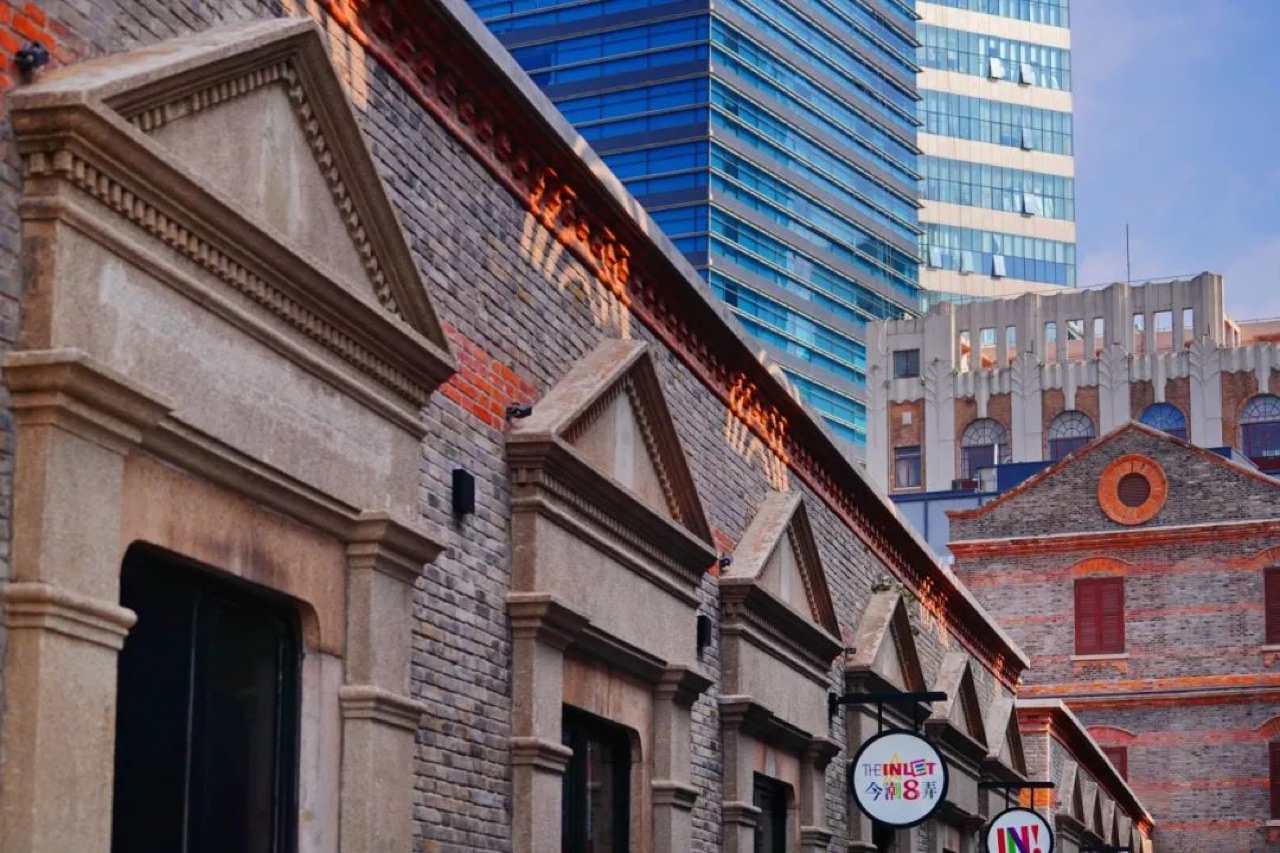
12.Jinchao 8 Lane was made by restoring the old houses along eight alleys. Sixty shikumen and eight detached buildings. Outer walls were patched with bricks sourced from the same period, and the stone dressing above each gate was matched to the original dimensions. Trade, however, has not met expectations. A 2023 field study recorded that only the restaurants facing the street were busy while the inner alleys stayed thin.
13.Office workers and residents nearby buy what they need for daily life and walk past the culture merchandise. The operator put forward two answers. Rotate the product mix every two to six months so something is always new, and grow the population itself. The offices and shopping centre rising next door are the second answer.
14.The template for turning shikumen into retail is Xintiandi, from 2001. Keep the shell, empty the inside, bring in tenants who can pay high rent. Here the arithmetic only half worked. The shell survived but the tenants who could pay that rent did not arrive, and what did arrive five years later was 14,000 sqm that charges nothing.
15.A developer bought 46,100 sqm of land, restored 68 old houses on it, built one new block as a literature museum and handed it to the city. Since August 27 that building has taken no tickets. On land cost alone it occupies a plot worth about KRW 97 billion. Doing the same thing in Korea, the trouble starts after completion. Who pays how much to run a donated cultural facility often goes unwritten in the agreement, and then the building stands there unable to open. The money it takes to open a place never shows up the way the money it takes to build one does.