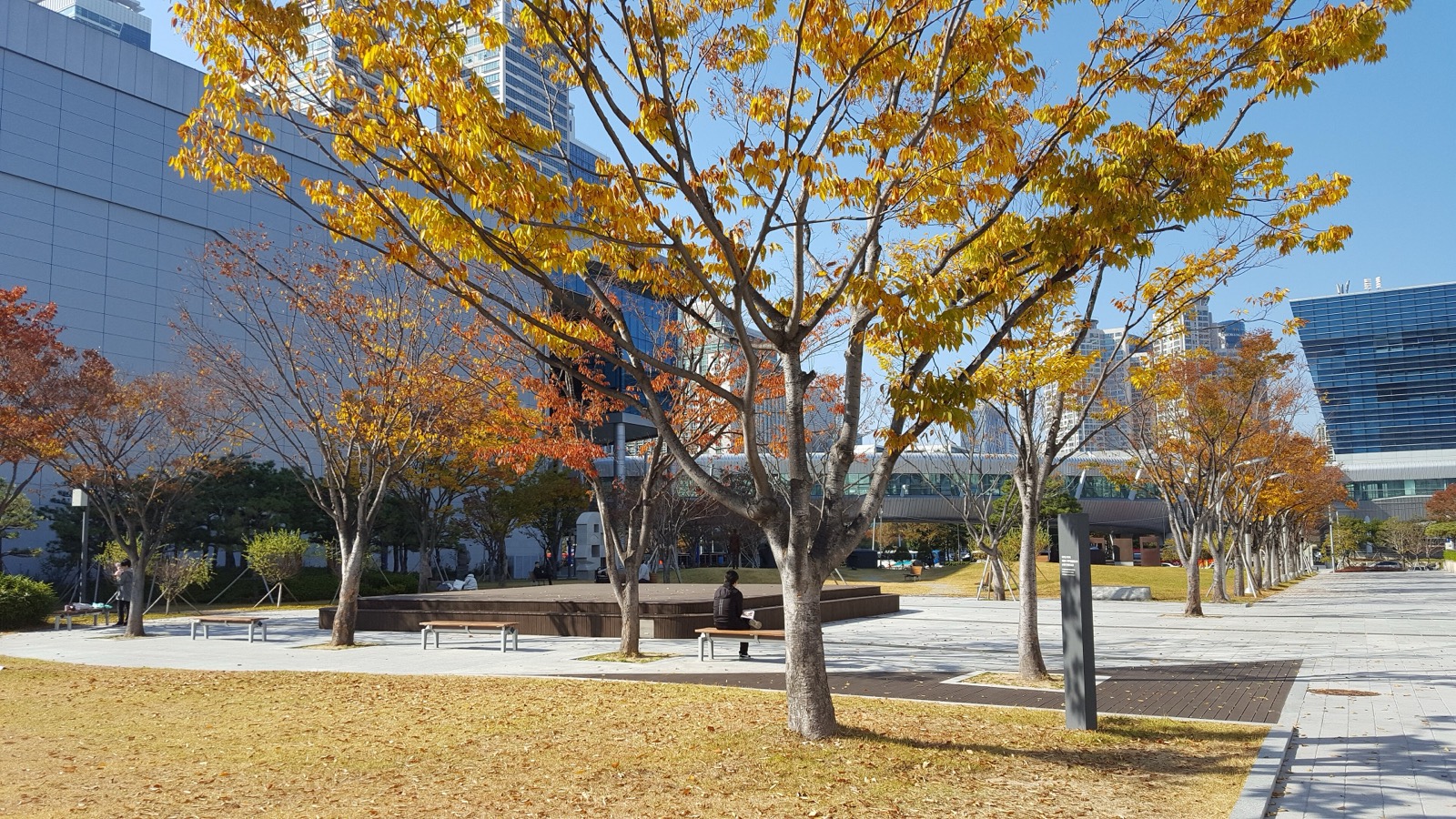
The main building of the Busan Museum of Art reopens in eight days. It stayed shut for 33 months and swallowed KRW 43 billion, roughly USD 32 million. Yet the floor area where art actually hangs is 30% of the gross. The money went into the other 70%.
1.58 APEC-ro, Haeundae-gu, Busan. The main building opened on 20 March 1998, shut its doors on 18 December 2023, and reopens on 17 September 2026. Thirty-three months dark. Total project cost, KRW 43 billion.
2.The site covers 27,343㎡, the main building 21,425.7㎡ across two basement levels and three above ground. An 840㎡ addition brings it to 22,265.7㎡. Ilshin Architects & Engineers drew the 1998 building; the retrofit design went to Kim Seong-su of Irim Architects, who won the proposal competition in July 2022.
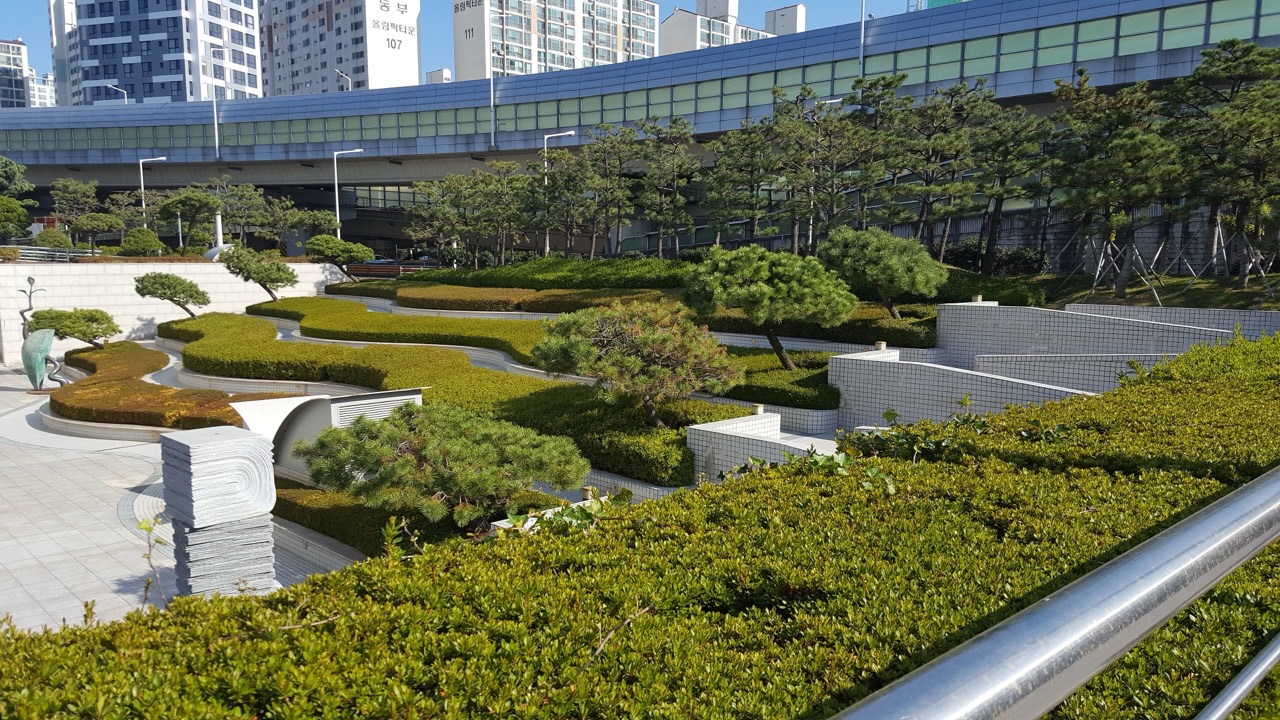
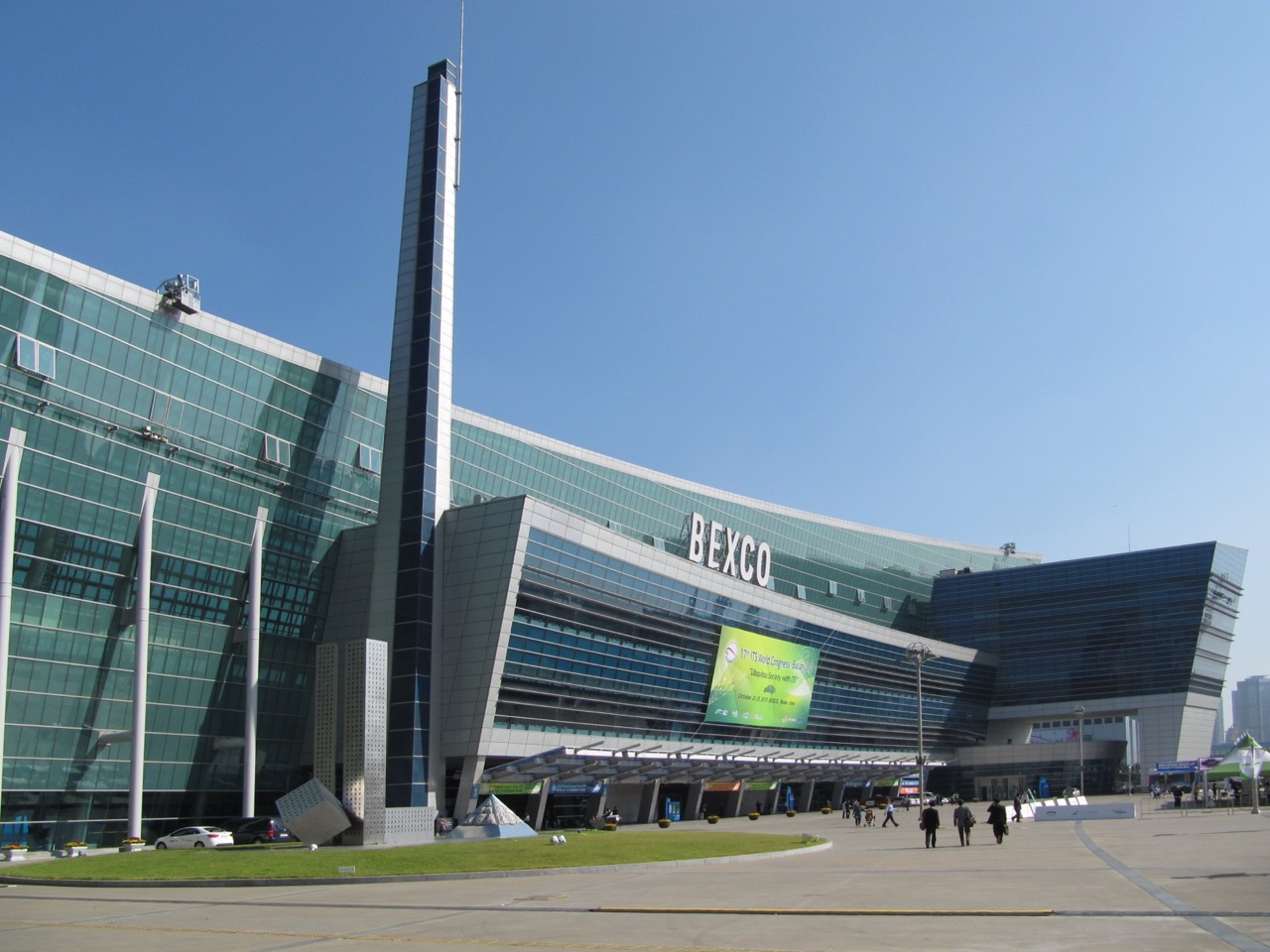
3.Set aside the mechanical work and the biggest move in this design is where the front door faces. After reopening, the main entrance turns toward BEXCO Exhibition Hall 1. You cannot pick a building up and move it, so they turned its face instead.
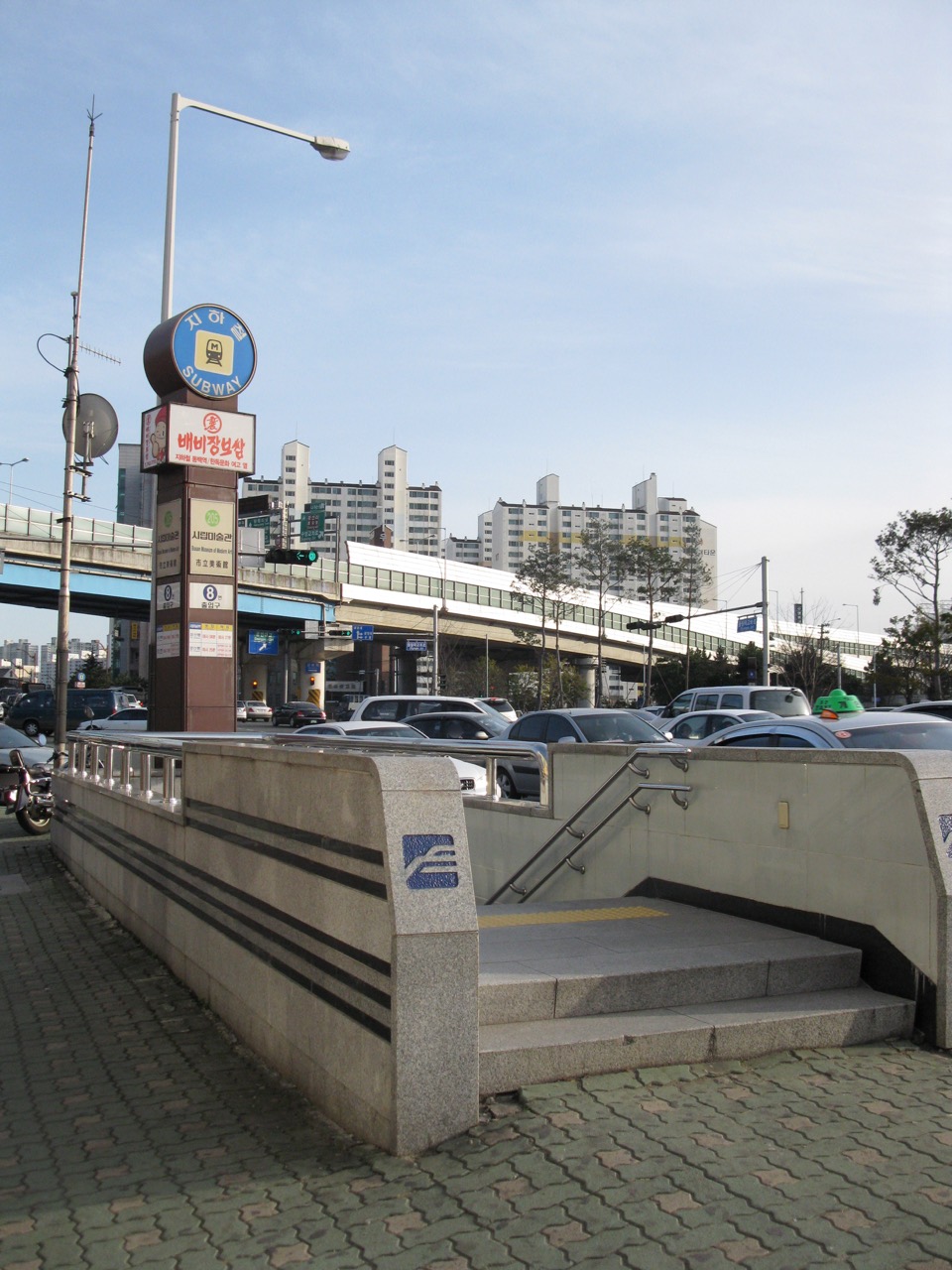
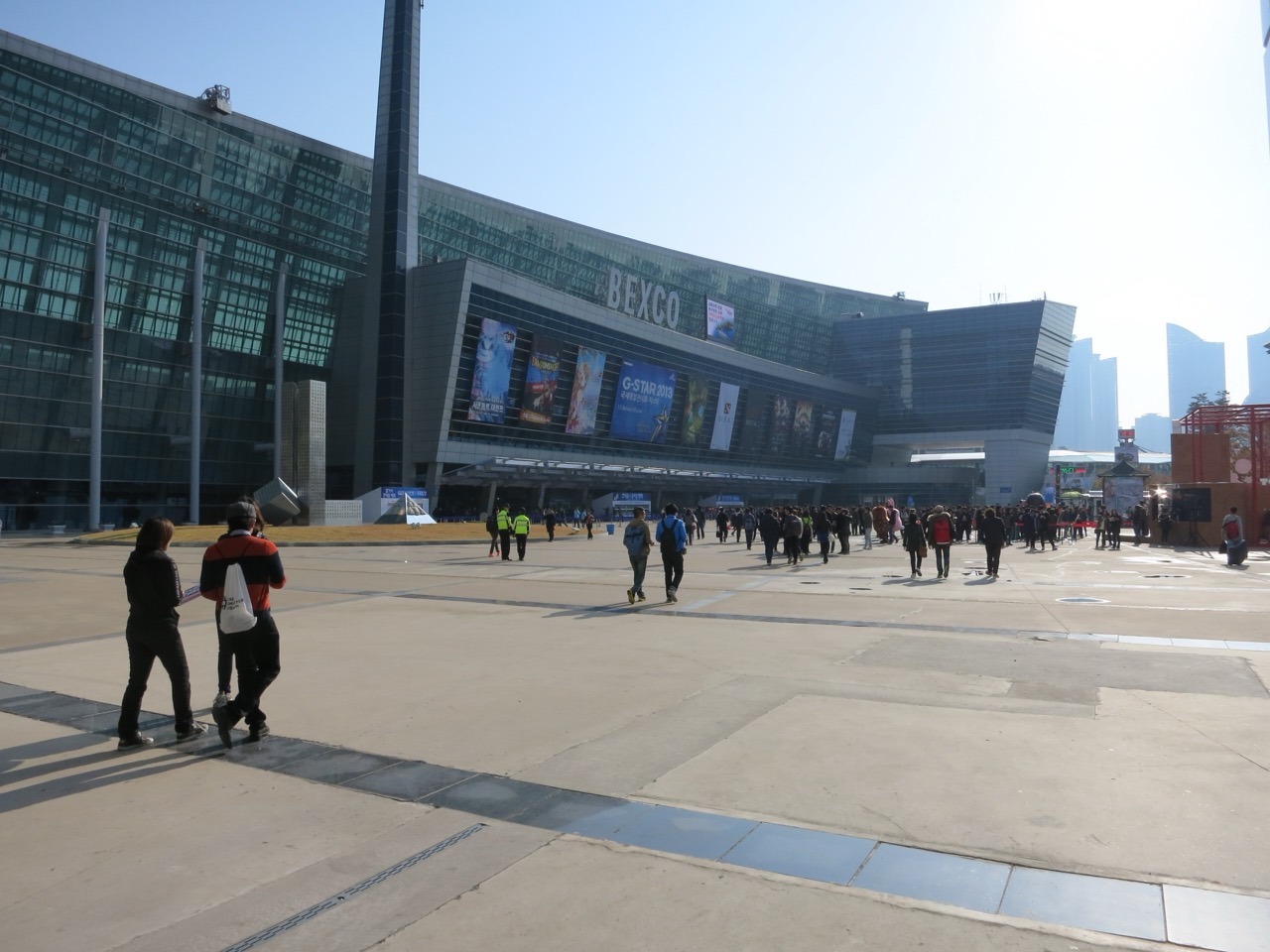
4.The neighbour's numbers explain the choice. BEXCO hosted 1,172 events in 2025 and drew 3.3 million visitors, running at 63% utilisation, its highest since opening. For 28 years the museum stood with its back to that flow.
5.The real spending sits where nobody looks. The galleries had no climate control from the day they opened, and after Typhoon Hinnamnor passed in September 2022 water came through the ceiling. That leak wrecked the run of a Takashi Murakami show. In a museum the most expensive equipment is the equipment a visitor never sees.
6.On the gallery side the work splits like this. The third floor becomes one continuous room, a permanent gallery of about 330㎡ goes into the second, and a cafe and a curated shop take the ground floor. Each level shifts to an open plan with movable walls so a room can serve as gallery, performance space or storage, which is how the museum describes it.
7.Add up the exhibition area floor by floor and you get 6,414.8㎡. Basement level one, 183.3㎡; ground floor, 74.1㎡; second floor, 3,261.6㎡; third floor, 2,895.8㎡. That is 30% of the 21,425.7㎡ gross.
8.Divide KRW 43 billion by the enlarged 22,265.7㎡ and you get KRW 1.93 million per ㎡, or KRW 6.38 million per pyeong. Building the place from scratch in 1998 cost KRW 36.4 billion, which works out at KRW 1.70 million per ㎡ and KRW 5.62 million per pyeong. Fixing it cost more than building it 28 years ago. These are nominal figures with no inflation adjustment, so the comparison will not hold up on its own, but those are the two numbers the client signed off on.
9.The KRW 43 billion did not start at 43 billion. The 2022 design competition advertised a total project cost of KRW 26.1 billion, of which construction was 23.6 billion and design 1.04 billion. Prices rose, the plan changed, and four years later the figure was up 65%.
10.So what pays this back? Not admission. The Busan Museum of Art has been free since 2020, and before that the main building charged KRW 5,000. To recover 43 billion at 5,000 a head you would need to sell 8.6 million tickets. Funnel every one of BEXCO's 3.3 million annual visitors into the galleries and it still takes two and a half years.
11.Money at a public museum comes from the floor, not the turnstile. The existing cafeteria runs to 285.96㎡, the art shop to 136.09㎡, and the auditorium seats 160 in 213㎡. Enlarging the ground-floor cafe and shop is not a matter of taste; it widens the only floor area that can charge anyone inside a free building.
12.The staffing ledger reads like this. As of June 2024 the authorised headcount was 34 with 31 filled, plus 32 outside the establishment, including security officers and public-service workers. On top of that the museum is recruiting 33 volunteers a day to watch the works during the reopening shows, filling three shifts between 10am and 6pm.
13.What would those 33 people cost as wages? At the 2026 minimum of KRW 10,320 an hour, 89 hours a day comes to KRW 920,000, and 300 days to KRW 276 million a year. The shift split is not public, so this much is an estimate, though it shows plainly which part of a free museum's running costs volunteers are covering.
14.The most urgent item in that 70% is storage. The collection runs to 2,984 artworks, 51,588 archival items and 17,666 books. This job enlarges the vaults but does not solve the problem, and the museum says the answer is the shared regional store Busan is now planning. The bottleneck is not hanging the work. It is putting it away.
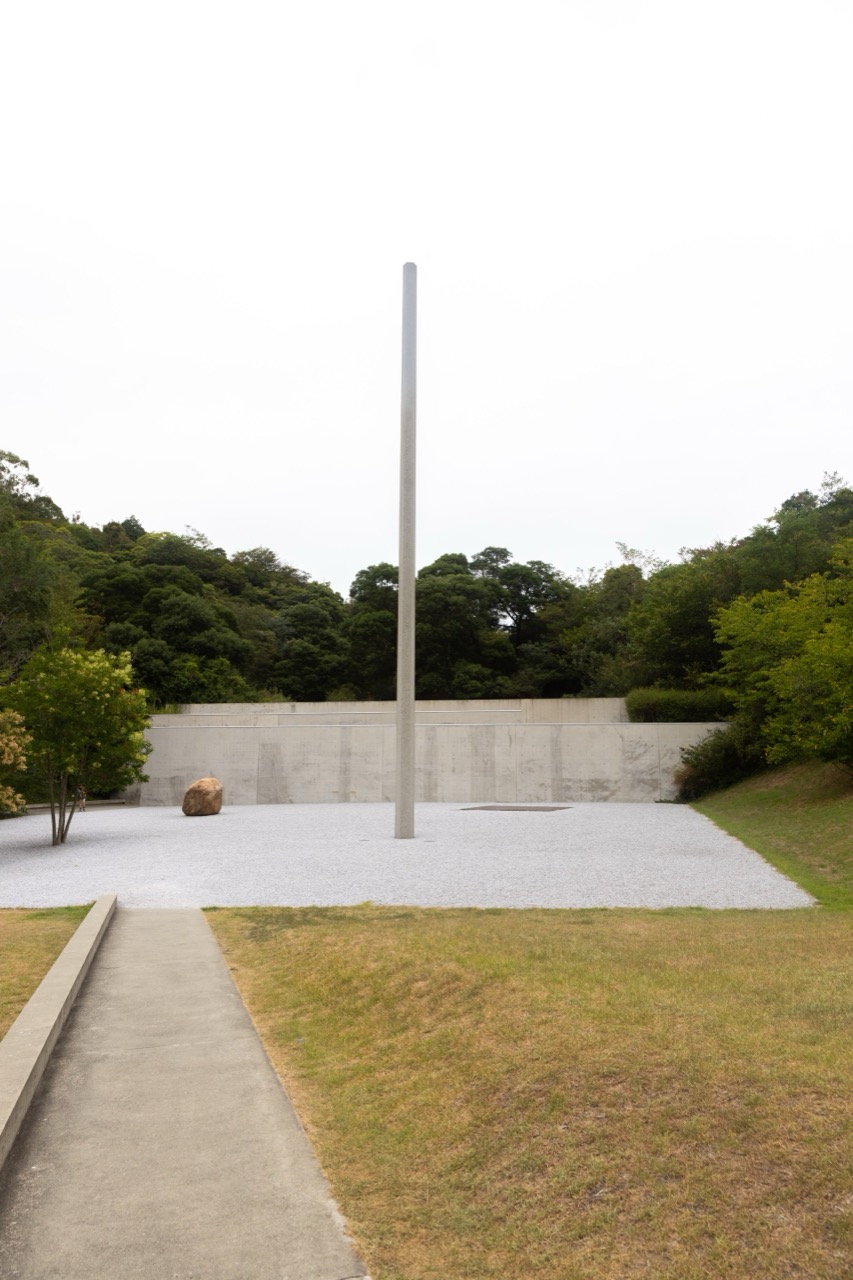
15.Through all 33 months the only part of the museum still open was the annex, Space Lee Ufan. It opened on 10 April 2015, covers 1,400.83㎡ and cost KRW 4.7 billion. The artist took part in the design, and it is the second Lee Ufan museum in the world after Naoshima. For nearly three years, while 21,426㎡ sat empty, the visitors were received by a 1,401㎡ annex.
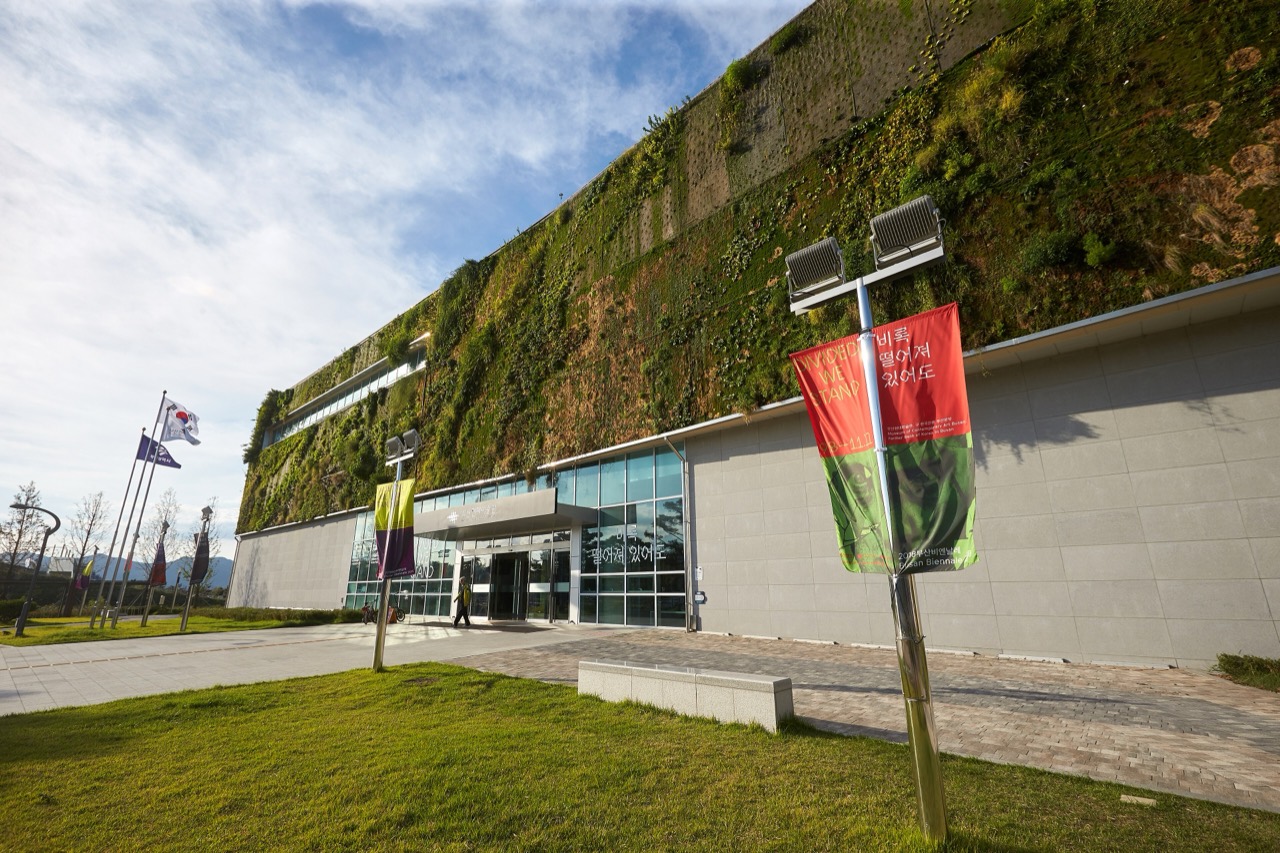
16.Look again at the reopening date and it lands in an odd spot. The 2026 Busan Biennale opened on 29 August and runs 65 days to 1 November under the title 'Dissident Chorus', with 46 artists from 22 countries. Its venues are the Museum of Contemporary Art Busan on Eulsukdo, Space One-ji in Yeongdo and the former Busan Nam High School. The city museum is not among them. It opens in the middle of the biennale and outside it, hanging four shows of its own instead: 'Future Museology'; 'But We Are Still on the High Waves of This Sea: 1945-1953'; 'A Museum of All These Yesterdays', which turns the collection on the museum itself; and a children's exhibition, 'Safe Base'. On 19 September it also hosts a free international forum with Irit Rogoff as keynote.
17.A building shut for 33 months with KRW 43 billion in it opens in eight days. Most of that money went not into the 6,414.8㎡ where art hangs but into the 15,010.9㎡ that keeps the art from spoiling, and with admission at zero there was never a route to earning it back. Korea's rules on local public investment require a second review when a project's total cost rises 30% after approval. This one went from 26.1 to 43 billion. Inflation is excluded from that calculation, so what actually triggers the review is the part of the plan that changed. Retrofitting a public cultural building follows one line: the more systems you add, the higher the cost; the higher the cost, the longer the review; the longer the review, the more months the doors stay shut. The first number anyone in this business should write down is not the construction budget. It is the count of months without a door.