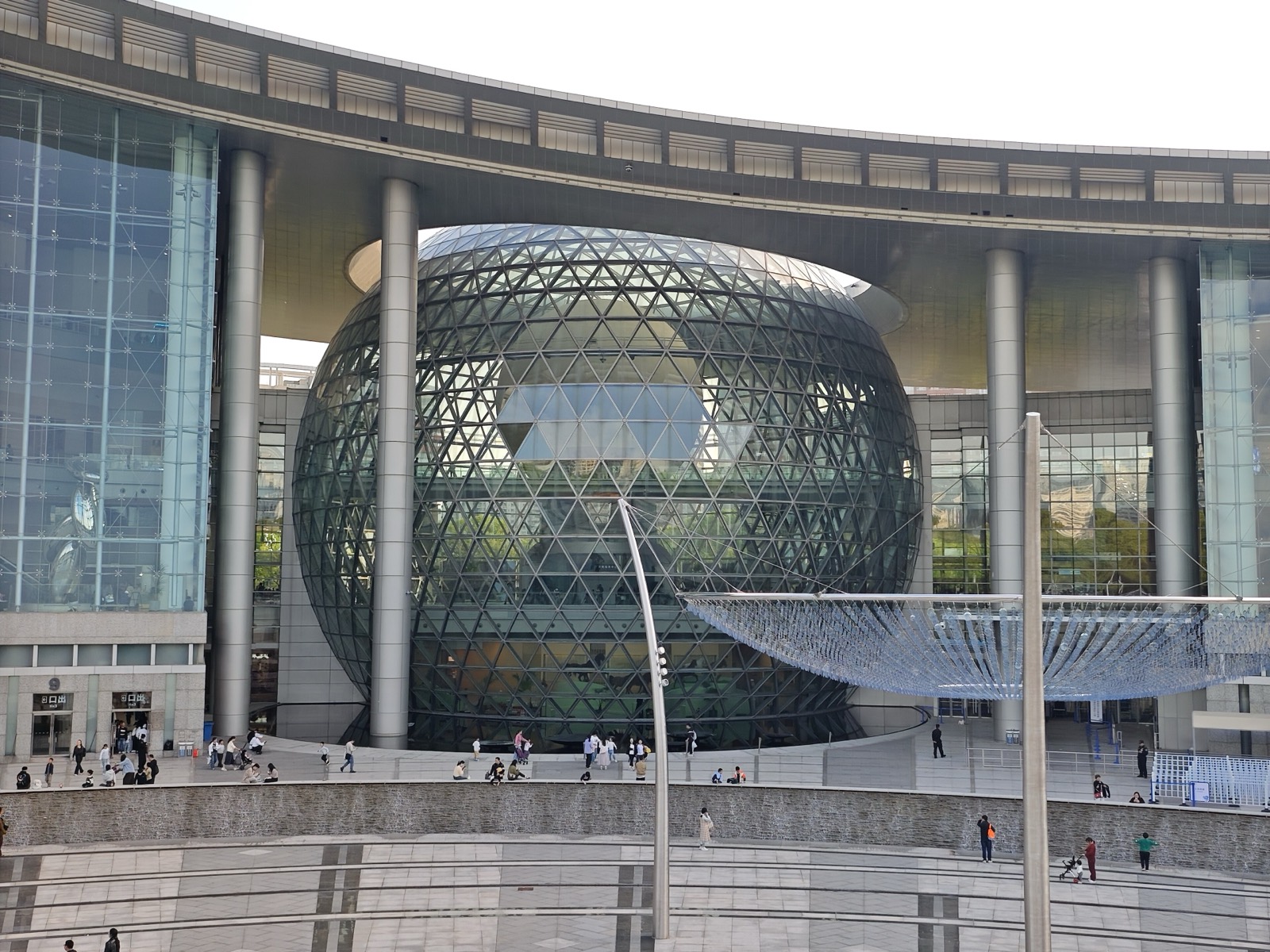
The Shanghai Science and Technology Museum in Pudong reopened on the first day of this year's Spring Festival, after two years and ten months shut. Nobody touched the spiral roof or the glass sphere. The RMB 820 million went into building systems and exhibitions.
1.Morning of 17 February 2026, the first day of the Lunar New Year. The Shanghai Science and Technology Museum at 2000 Century Avenue in Pudong New Area opened its doors again. It had closed on 31 March 2023, a little under three years earlier, and the Metro Line 2 station outside still carries its name. Every ticket was real-name and tied to a time slot, yet about 20,000 people came in on day one.
2.The works cost about RMB 820 million, roughly KRW 160 billion at 195 won to the yuan. Building repairs covered 100,600㎡, the new exhibitions 21,000㎡, and a separate 1,400㎡ of science education space was added. The city government calls it the largest retrofit of an existing building among Shanghai's public cultural venues.
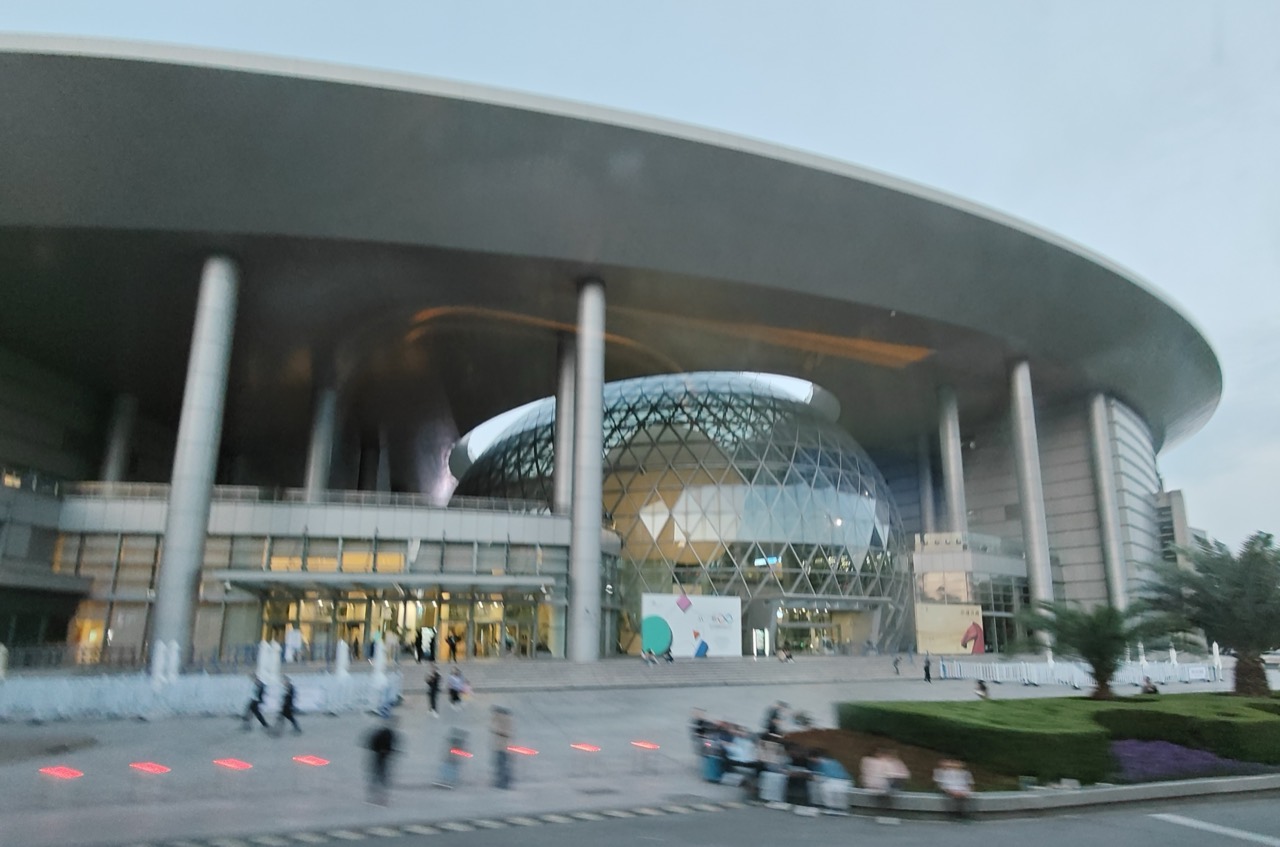
3.The building first opened in December 2001. It was designed by the American firm RTKL with the Shanghai Institute of Architectural Design and Research, and its roughly 98,000㎡ of floor area climbs in a spiral from the first to the fifth floor. At the centre, a single glass sphere. The renovation started from one rule, keep the structure and the facade, so from outside it is almost impossible to tell apart from photos taken 25 years ago.
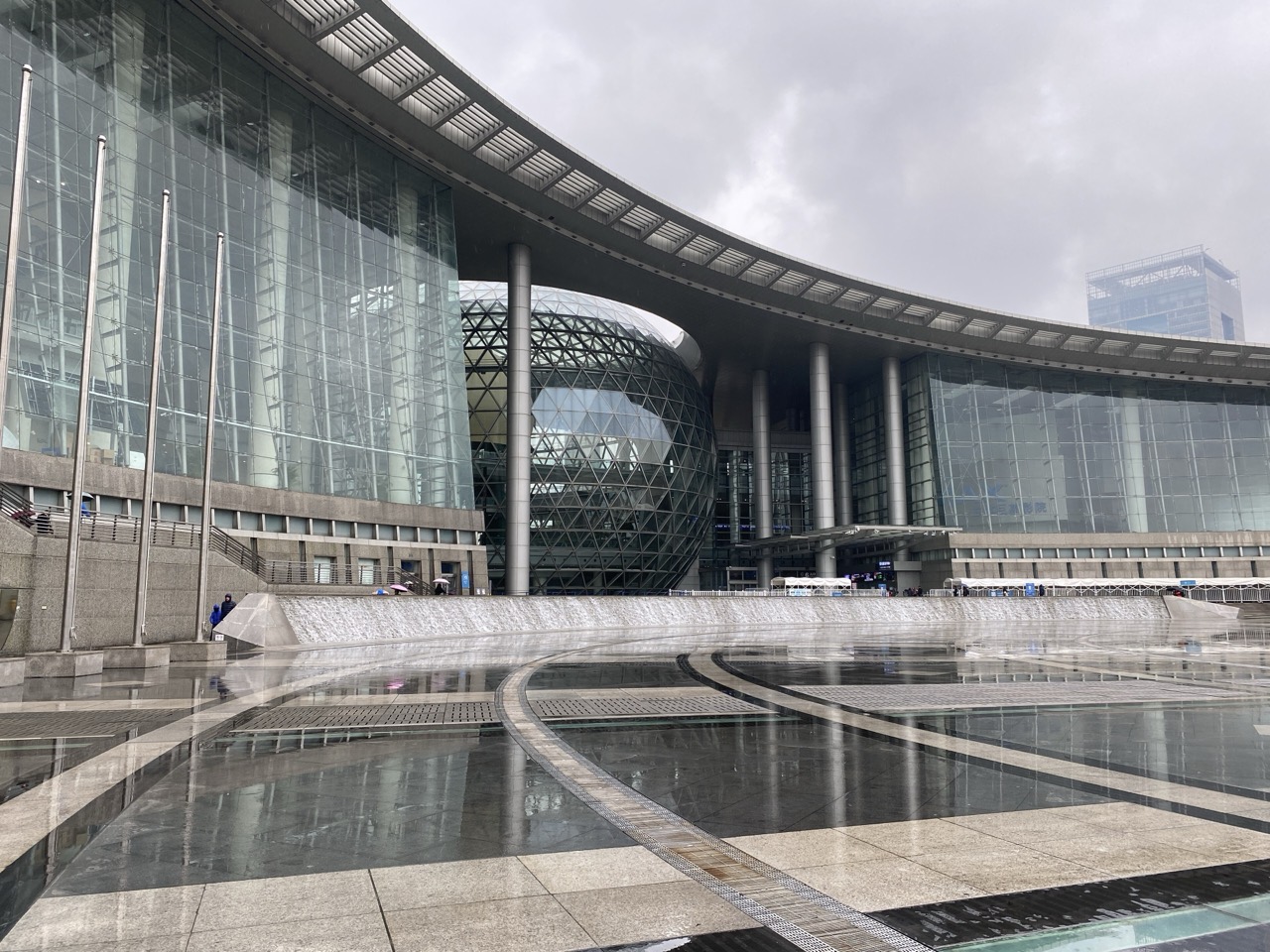
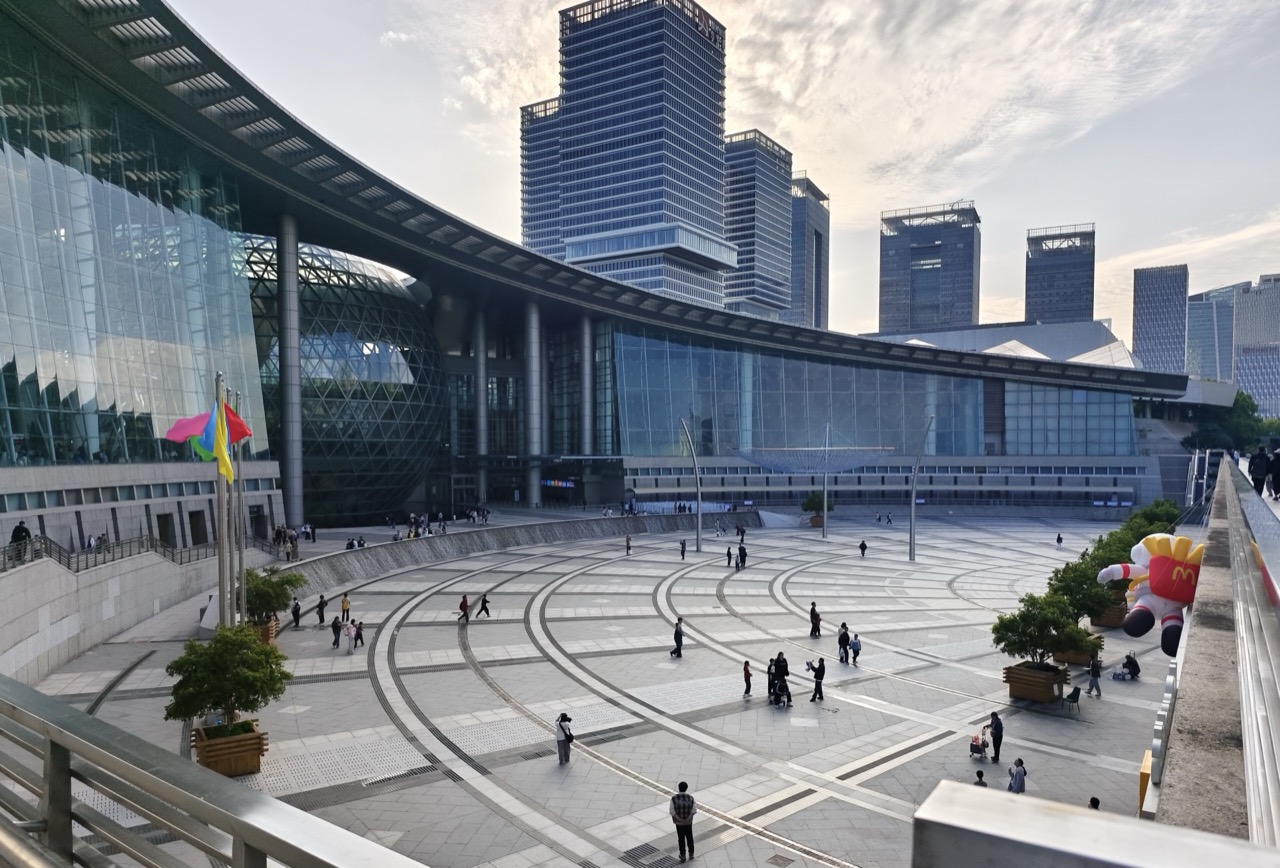
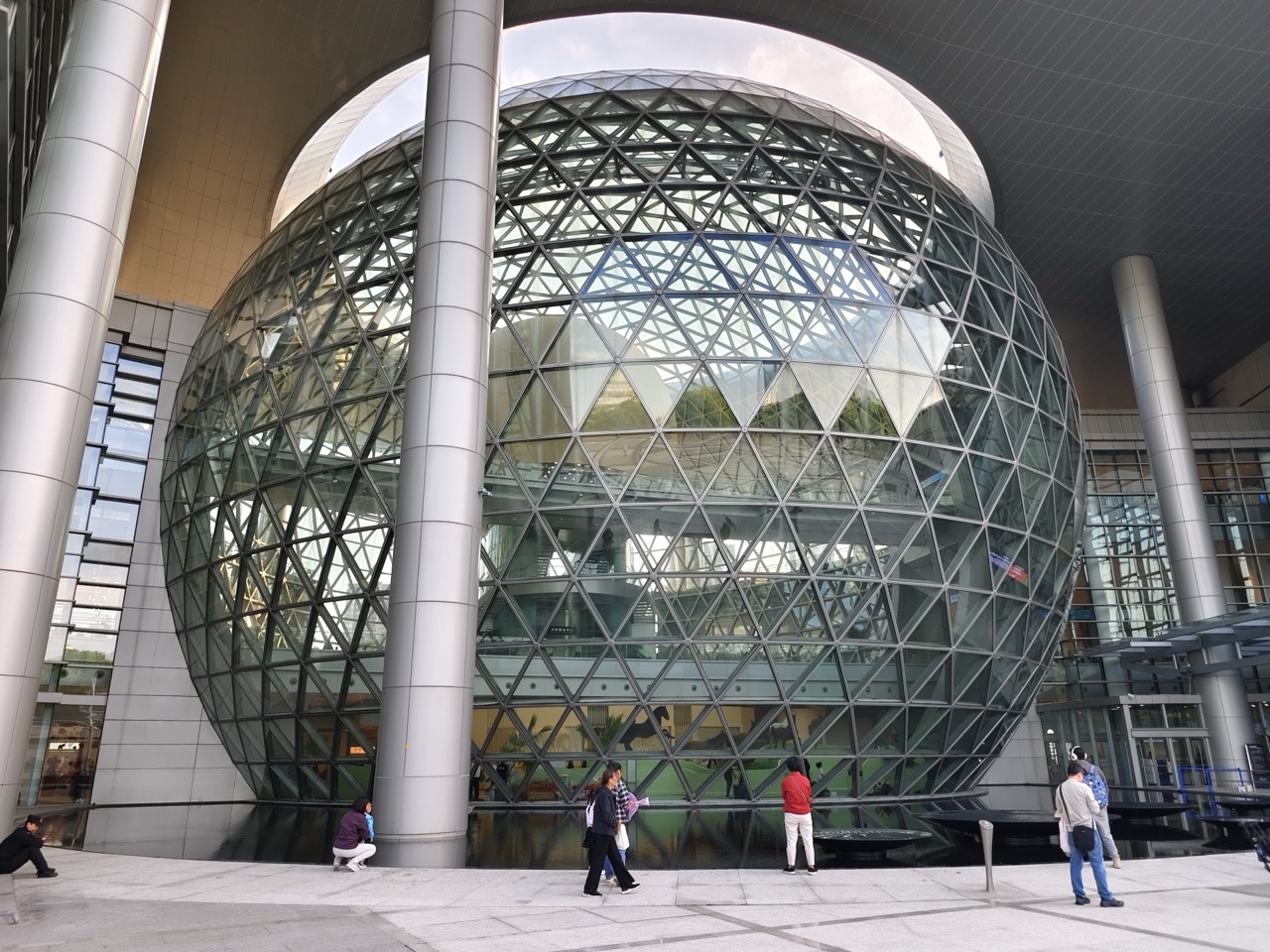
4.The sphere is triangular glass panes set into a steel lattice. Up close, each pane cuts the sky and the columns into fragments, and the floors inside stack up behind them. The plaza paving is scored in concentric joints around the sphere. Shanghai Construction Group, the main contractor, described the job as a "blood vessel replacement": the shell stays, the mechanical and electrical systems are swapped out wholesale.
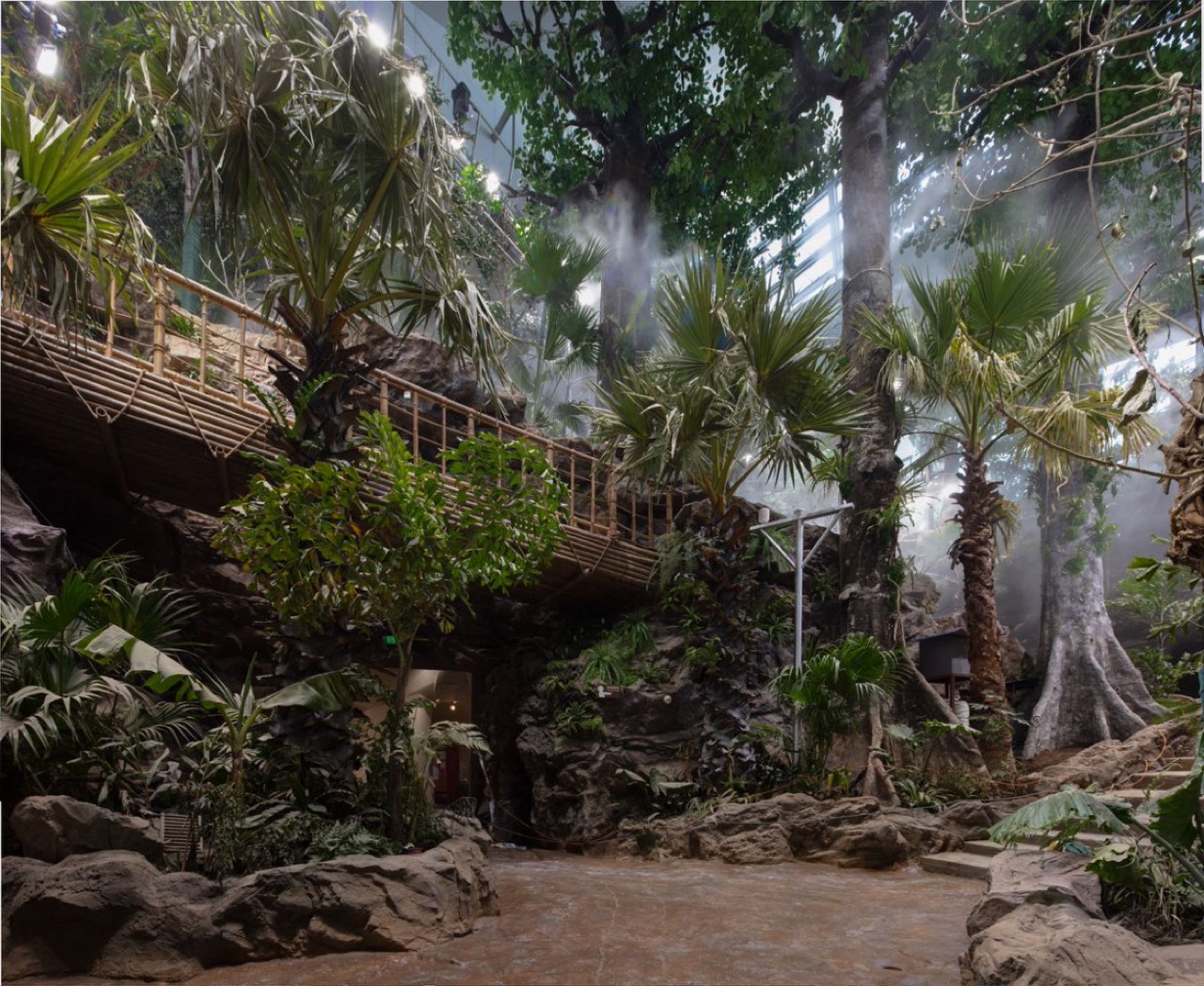
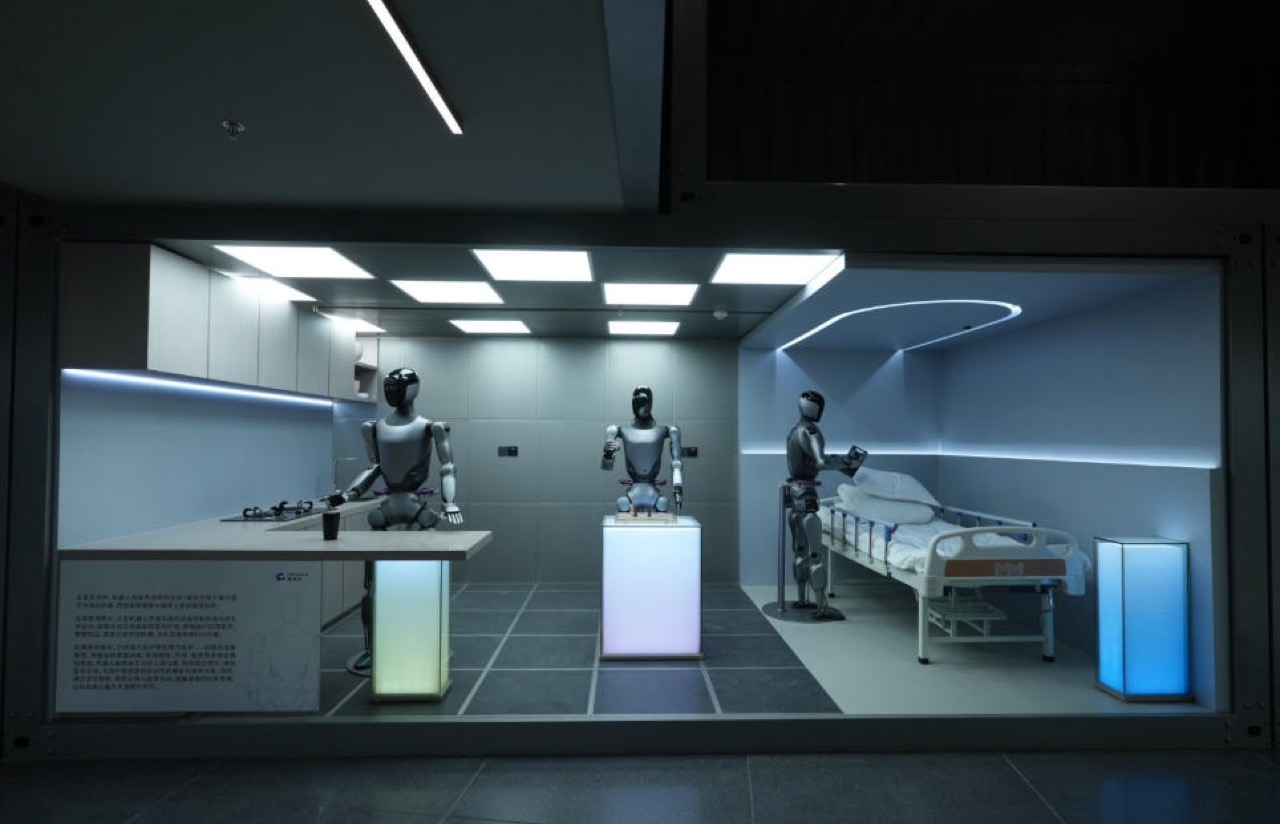
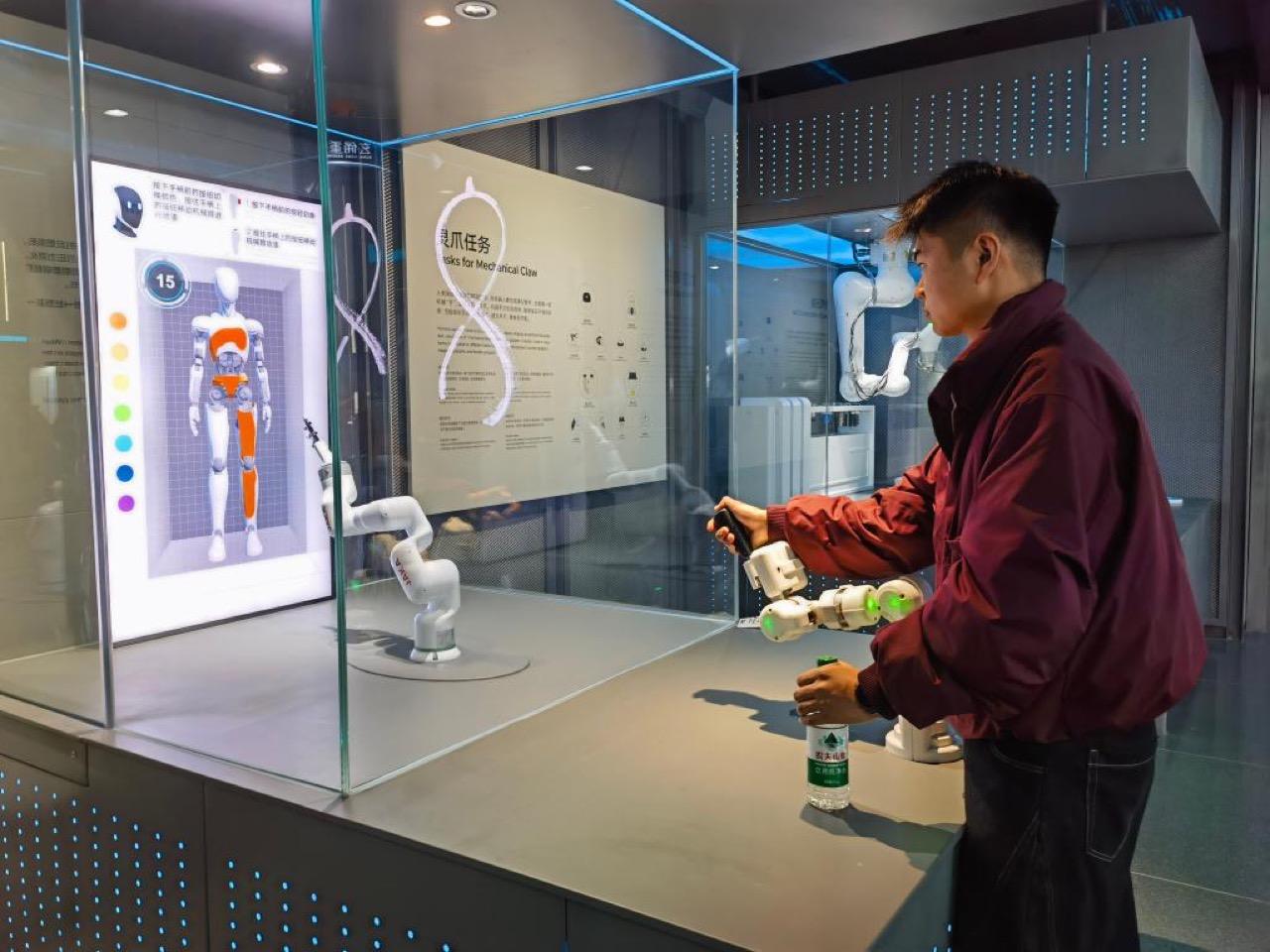
5.Inside, almost everything is new. Ten permanent zones, 405 exhibit groups, 926 objects. Eighty percent of the exhibits are hands-on, and 87% were developed by the museum itself. The largest zone, Rainforest Realm, covers 3,170㎡ and is an indoor forest with mist drifting between the trees.
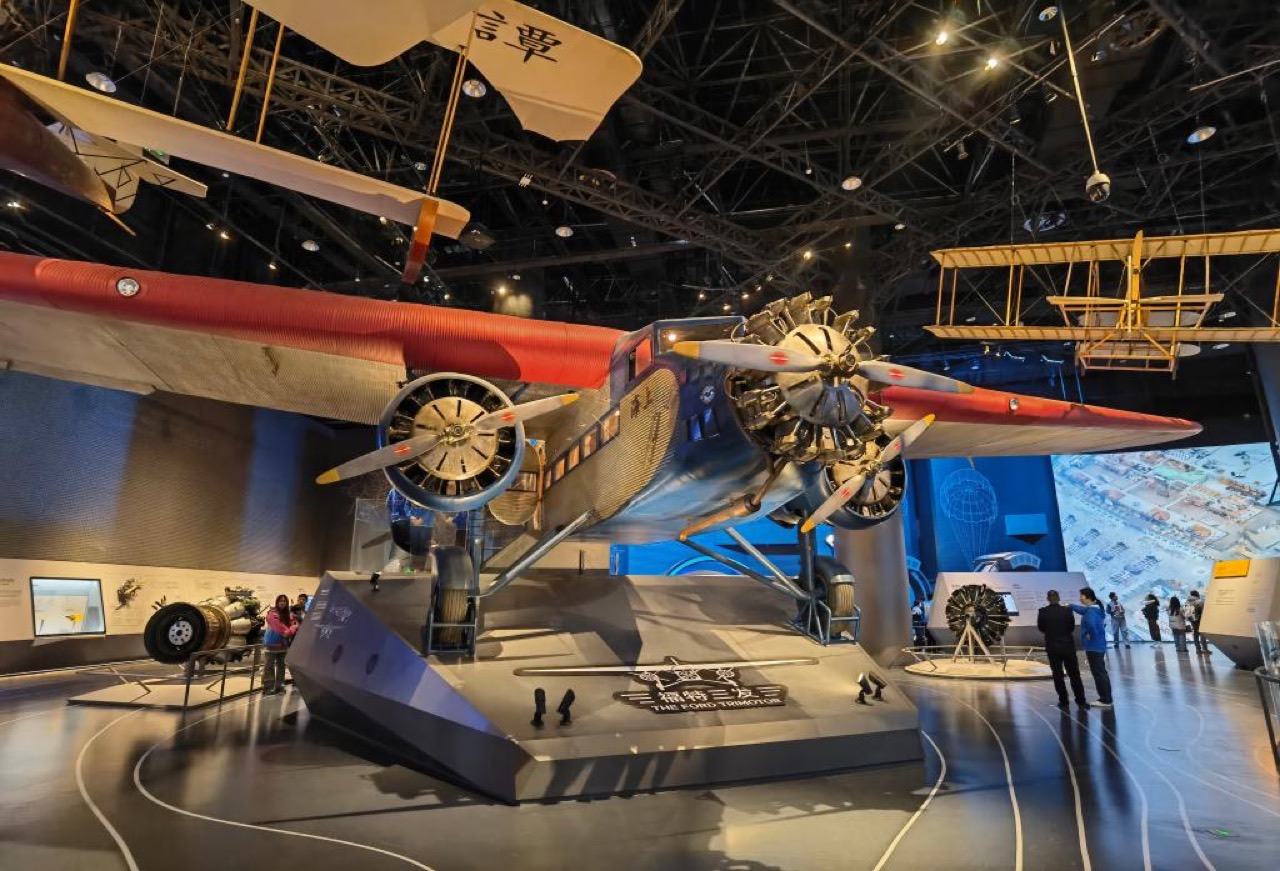
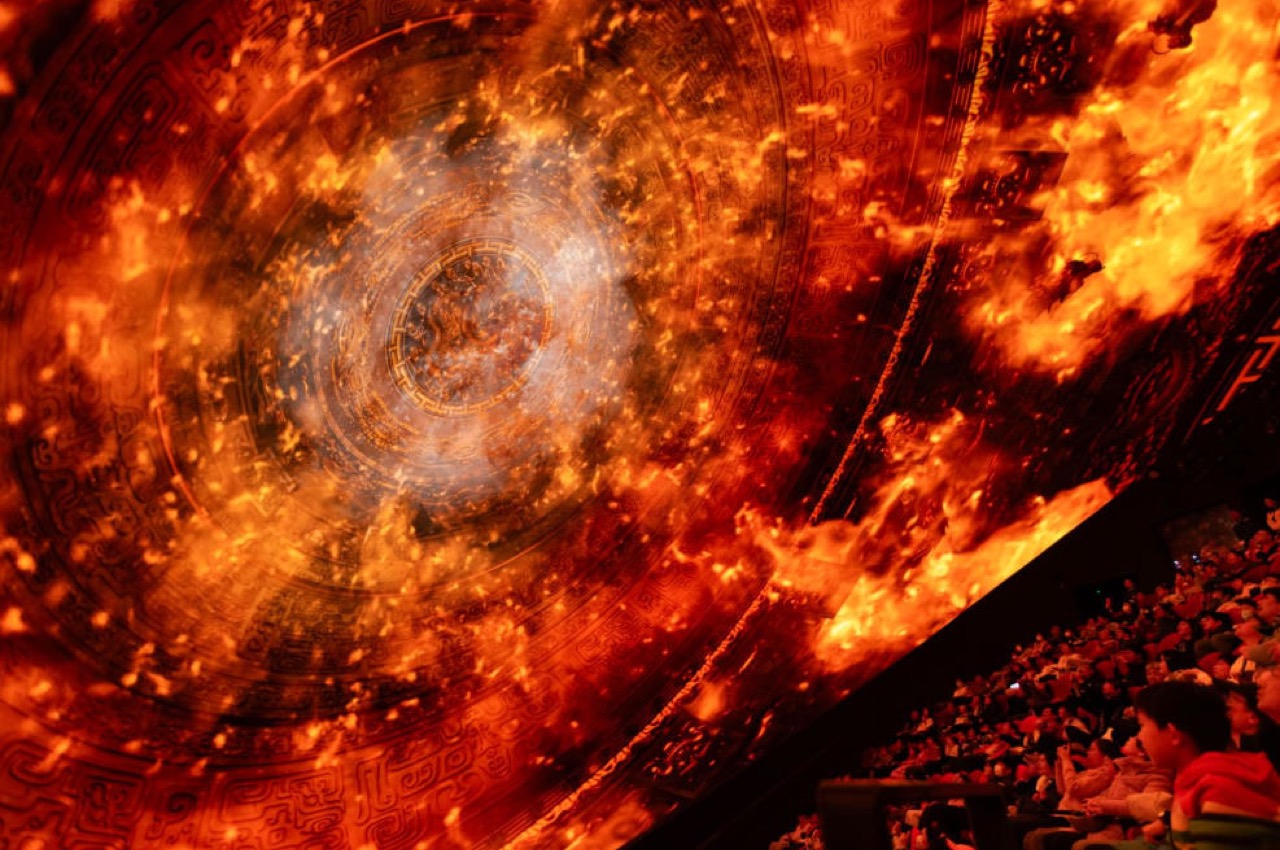
6.A real 1930s Ford Trimotor and a set of biplane models hang in the aviation zone. The museum also put in an 8K dome cinema with a 23-metre circular LED screen, which it bills as the largest LED dome theatre in any Chinese science museum.
7.Who fills the place? Parents holding a child's hand. Children under 1.3 metres or under six get in free, students pay RMB 22, adults RMB 45. On Saturdays and public holidays the doors stay open until 8 pm. Extending evening hours only on those days is a timetable built around the family day out.
8.Keeping the facade was part of the calculation too. Before it closed, the museum drew around 3 million visitors a year on average. A generation that grew up seeing the glass sphere at the end of the big avenue in Pudong now brings its own children. A new building would have had to build that memory from scratch. Because the old one stayed, the queues formed on the very first day.
9.Divide RMB 820 million by the 100,600㎡ of repaired area and you get about RMB 8,150 per square metre. In Korean terms that is KRW 1.59 million per ㎡, or about KRW 5.25 million per pyeong. Sources disagree on the original construction cost, putting it between RMB 1.5 billion and 1.75 billion, but either way the retrofit came in at roughly half the nominal construction cost of 25 years ago.
10.Admission will not pay this back. If 3 million visitors a year paid an average of RMB 30, ticket income would be around RMB 90 million a year (estimate). Even before a single yuan of operating cost, recovering the works would take nine years. On this museum's books, tickets cover part of operations, not the construction, and the construction is paid for by the city budget.
11.The bigger cost was the time the doors stayed shut. Taking 3 million a year as the base, about 8.7 million visits vanished over 35 months (estimate). So the effort went into shortening the closure. UDG, the design lead, started work in early 2019, while the museum was still taking visitors. Four years went into design, and the doors closed only for construction. The design team stayed on site through the works, seven years in all up to handover.
12.Most of the money went where visitors cannot see it. The new exhibitions account for 21% of the repaired area, and most of the rest appears to be building services and finishes: air conditioning, electrics, fire protection. The museum says energy efficiency across the building improved by more than 15%. A large share of the budget went into cutting the power and heating bills that drained operations every year.
13.Several English-language outlets reported the cost as RMB 8.2 billion (about USD 1.2 billion), reading the Chinese "8.2亿元" ten times too high. At that figure the works would exceed RMB 80,000 per square metre, four to five times the original construction cost. The real number says otherwise. Saving the shell kept the cost per square metre at about half of what it took to build.
14.The visitor mix is shifting too. From January to July this year about 200,000 foreigners visited the three sites, the main museum plus the Natural History Museum and the Planetarium, close to 5% of the total. Working backwards, the three sites drew around 4 million visitors in seven months (estimate). Most visitors are still families from Shanghai and nearby cities, but the museum has started appearing on tourist itineraries.
15.Shanghai kept the roof and glass sphere of a 25-year-old science museum, put RMB 820 million into systems and exhibitions, and saw 20,000 people come back on the first day of Spring Festival. The job came in at RMB 8,150 per square metre, about half the original build cost, and design began four years before the closure. Korea, too, has a growing number of public science museums and museums past their twentieth year. What gets in the way first is not the construction bill but the closure. Public cultural budgets usually justify themselves by visitor numbers, and writing nearly three years of zero visitors into a budget is the hardest decision.